Reviews

  • Hell’s Angels (1930)

    Hell’s Angels (1930)

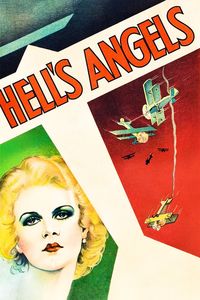
    (On Cable TV, April 2021) For movie buffs and viewers of Martin Scorsese’s The Aviator, his 1930 war epic Hell’s Angels doesn’t need much introduction: It was Howard Hughes’ ambitious fusion of his interests in aviation and moviemaking and (perhaps apocryphally) the movie in which he realized the use of clouds in filming exciting aerial sequences. The film’s famously long production process straddled the silent and the sound era, meaning that the film aesthetically feels a bit weird, especially in its use of title cards for the German dialogue. It’s hard to avoid comparisons with that other WW1 aerial war film Wings — both in topic matter and in approach, although Wings is probably the best overall film. What Hell’s Angels does have going for it, though, is spectacle. Even for modern viewers, the film’s action sequences still pack a punch. Stuff blows up real good, to borrow a phrase (oh, that zeppelin sequence!) and the aviation footage does look exciting—considering that three people died filming it and Hughes himself got seriously injured flying one of the scenes, you have to appreciate the result. Jean Harlow shows up in her feature film debut, and she’s directed by the noteworthy James Whale, whose next films would be classic Universal Monster movies. The Pre-Code nature of the film (especially coming from Hughes, a known huckster) can be seen in unusually frank dialogue and sexual refences. All of this boils down to a film that still holds quite a bit of thrills and interest even today — it’s clearly an early sound film, but you can see (especially in the colour sequences!) how it was pushing the envelope of what was possible at the time and how it was meant to be a blockbuster from the get-go. Hell’s Angels, despite its significant narrative shortcomings, completely deserves its reputation as an essential film of its era.
  • Hotel (1967)

    Hotel (1967)

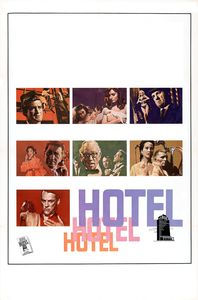
    (On Cable TV, April 2021) As someone who read almost all of Arthur Hailey’s novels as a teenager, I knew what I was getting into in approaching Hotel: A sprawling, ensemble-cast look at a particular environment, with a narrative built of subplots exploring that environment. Some call it didactic fiction — I just liked the stuff. Now, novels like Hailey’s can’t very well be replicated in film: viewers won’t stand for it in the same way that readers do, and there’s only so many subplots you can fit in a two-hour film (as opposed to, say, a miniseries). So, it’s not a surprise if Hotel-the-film is a markedly simpler thing than Hotel-the-novel, nor if the depths of the docufiction aren’t as satisfying. Accordingly, I got far more fun out of the film’s first half than the second, as the job of the hotel manager protagonist is demonstrated, as the subplots are set in motion, as the film takes some time (even fleetingly) to explore its setting. There’s a beautiful one-shot, for instance, coming out of an elevator into the hotel lobby, tracking the protagonist as he takes care of business, then goes back into the elevator. After that, well, the subplots take over and don’t necessarily converge toward a happy ending, and the hotel itself is not allowed to remain the central character like it did in the book. Still, I liked the final result quite a bit — Rod Taylor brings his square-jawed charm to the role of the hotel manager, Catherine Spaak plays a great femme fatale in very 1960s style, the incredible racism of the hotel owner is a reminder of how far we’ve come in fifty years, the production design is impressive and Richard Quine’s direction has its moments. There probably wasn’t room to fit anything more in the film short of turning it into a TV show (which is still not a bad idea, hint). Fleetingly, Hotel did take me back to earlier days reading through Hailey’s brick-sized novels, and that’s also a plus.

  • Mogambo (1953)

    Mogambo (1953)

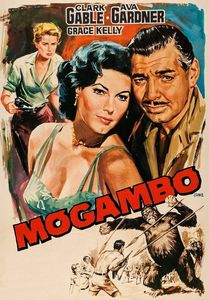
    (On Cable TV, April 2021) It’s hard not to think about Howard Hawks’ 1962 Hatari in seeing Mogambo. The comparisons are more than superficial: Both are American films from legendary directors (here, John Ford) starring aged screen legends (here, Clark Gable) as strong men living on the African savannah and falling in love with a passing American. Both make the most out of their on-location shooting, both presenting a very familiar safari-based portrayal of Africa. There were other famous African-set studio pictures in the early 1950s (The African Queen, The Snow of Killimajaro and King Solomon’s Mines come to mind) but it’s the later Hatari that comes closest to it. In a role almost custom-made for an actor of his stature, Gable plays the great white hunter, with the amazing backing of a captivating Ava Gardner, and a star-making turn from a young Grace Kelly. It’s almost pointless to say that the film does feel quite racist today, as white protagonists have free rein over the savannah for a gorilla hunt (!)… but there you go. Not quite as technically polished as Hatari, Mogambo nonetheless benefits greatly from its location shooting, interaction with animals and Ford’s eye for capturing widescreen landscapes. The film is not that good, but it’s easy enough to watch in between the love triangle (wobbly but effective) and the nice location footage. Plus, I don’t recall another film in which Gardner shares the screen with a baby elephant and (later) a big cat.

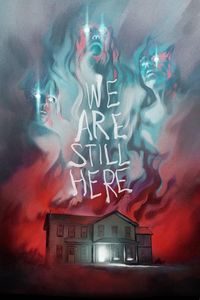
  • We Are Still Here (2015)

    We Are Still Here (2015)

    (In French, On Cable TV, April 2021) I started hoping for writer-director Ted Geoghegan’s We Are Still Here to be good from its opening moments, as it heads deep in wintry upstate New York and, in doing so, looks a whole lot like the rural Quebec and Ontario landscape in which I grew up. The idea of horror in a farmhouse, isolated in the middle of winter, carries a far more familiar weight for me than countless warmer settings, and I really wanted We Are Still Here to be good. Alas, it takes more than snowdrifts and iced windows to make a good horror film: the cinema-vérité style of the direction quickly became irritating, and the pile-up of familiar elements did nothing to help. The premise, as thin as it is, has a middle-aged couple moving to a house while grieving for their son, and slowly coming to realize that the house demands sacrifices. I’m not necessarily against horror clichés when they’re well done, but I found myself more bored than entertained by We Are Still Here. The revelations seemed obvious, the acting too naturalistic for my tastes, and the entire thing too dull to be interesting. The setting is great and the cinematography (by noted Quebec-based Karim Hussain) is often wonderfully evocative, but the rest… not so much.

  • The Old Man and the Sea (1958)

    The Old Man and the Sea (1958)

    (On Cable TV, April 2021) If you didn’t already know that Ernest Hemingway’s The Old Man and the Sea was a classic of American literature, simply watching the 1958 film adaptation will clue you in. Handled with an omnipresent reverence for the written text, this film often feels like a narrated novel given the amount of slavish adherence it shows toward Hemingway’s voice. Spencer Tracy delivers both the lead performance as the titular Old Man (appearing in nearly every shot of the film) and the voice-overs taken from what I presume must be excerpts of the novel describing his actions as well. Most commentators agree that the film is not only slavishly faithful to the text, but is among the most faithful screen adaptations ever made. Of course, being slavishly faithful does not mean a great movie — especially given the technical requirements of showing a drawn-out fishing battle between man and marlin. The special effects clearly don’t hold up today, and even threaten to overwhelm the rest of the film. Still, Tracy gives it all he’s got, and he got an Oscar nomination out of it. Still, The Old Man and the Sea is a more interesting film than most, if only because of the way it illustrates the pitfalls of an overly reverential screen adaptation. By the end of it, you won’t agree so much with the “original text is sacred’ school of Hollywood adaptation commentary.

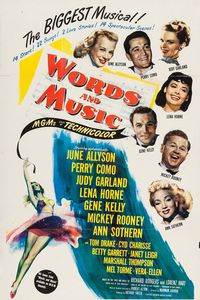
  • Words and Music (1948)

    Words and Music (1948)

    (On Cable TV, April 2021) Hollywood based many musicals on the life of Broadway composers—you wouldn’t believe how many. On one level, the attraction is easy to understand: it’s a made-to-order way to insert musical numbers as part of the show, the rights to the music come in as a bundle, and audiences of the time presumably had fond memories of the tunes and their context. A modern equivalent would be the musical jukebox-musical biopic, which is alive and doing very well. On the other hand, Hollywood often mismanaged the material: The lives of the composers were often scrubbed of any detail that wouldn’t be acceptable by the Production Code (and considering the higher-than-average proportion of homosexuals as Broadway creatives, there’s an entire aspect of early Twentieth-century pop culture that simply isn’t covered in its Hollywood dramatizations). Nowadays, “Rodgers and Hammerstein” is a legendary duo of composers, but in 1948 the audience knew the duo as a still-fresh replacement for “Rodgers and Hart,” and Hart’s story is the one we see in Words and Music. Played by then former boy matinee idol Mickey Rooney, Hart’s character is not faithfully represented at all: Alcoholism and depression? Yes. Homosexuality? Again, no. (Which led to some hilarious reviews telling viewers that the film wasn’t accurate, but the reviews themselves were unable to specify why.)  Generally speaking, Words and Music is not all that interesting in its first half, as both the successes and the tragedy ramp up quite a bit in the second half once the duo makes their way to Hollywood and Hart’s self-destructive actions reach a tragic ending. From a musical fan’s perspective, the film (from the fabled Freed unit) is far more interesting at the edges than in the core of its story, because that’s where we find short appearances by MGM players such as Gene Kelly (dancing with Vera-Ellen in—yes—a gangster ballet), Judy Garland, Cyd Charisse and, far more strikingly, Lena Horne — Her first number “Where or When” is a sedate reminder about her talents as a signer, but then she starts tearing into “The Lady is a Tramp” and we know it’s the film’s single best number. Meanwhile, the central story of Hart and Rodgers unfolds along predictable lines all the way to the tragic ending. Rooney is not bad as Hart, with the movie making good use of his small stature in portraying a man complexed by his own short height. Words and Music is not near the top of MGM’s best musicals, and its appeal can be found in either appreciating the contributions of the bit players, or seeing this as the cleaned-up prequel to the far better-remembered Rodgers and Hammestein partnership. Either way, it’s a movie that is perhaps best defined by factors other than its main premise, which is a bit odd but not uncharacteristic of other second-tier MGM musicals at the time.

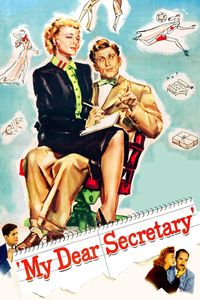
  • My Dear Secretary (1948)

    My Dear Secretary (1948)

    (On TV, April 2021) There’s not a whole lot worth remembering about My Dear Secretary. From the title, we can suspect it’s going to be some hideously sexist romantic comedy, and the result doesn’t disappoint much, although (in keeping with Hollywood standards), there’s a bit more equality and reciprocity to make most viewers happy. At 94 snappy minutes, it barely has an impression to make, and the light subject matter doesn’t help. On the other hand, it is a film about novelists, and I can seldom get enough of those — and better yet, it’s a lot of fun seeing young and dashing Kirk Douglas as an author discussing matters of writer’s block and acting a cad whenever the screenplay gives him the latitude to do so. The initially one-sided relationship that begins when he hires a young intelligent woman as his secretary gets far more interesting when they end up marrying, she ends up being a better writer, they start having affairs and she ends up hiring a (male) secretary of her own. But don’t fret — My Dear Secretary goes back to enduring love by the time the credits roll. On the one hand, this is very familiar material with a few late-film twists and turns. On the other, Douglas is worth watching as a surly novelist, there are a few inspired lines of dialogue, and Laraine Day gives as good as she gets as his secretary-then-wife-then-competitor. Due to the terrible image and sound quality of the (public domain) version shown on TV, I’m probably going to watch this again in the future for a better experience, and we’ll see if familiarity breeds contempt. This is not such a bad pairing with the almost-contemporary Adam’s Rib even if the two are not in the same league.

  • Night Must Fall (1937)

    Night Must Fall (1937)

    (On Cable TV, April 2021) You wouldn’t necessarily expect a 1937 Production Code film to play so gleefully with the idea of a sociopathic serial killer carrying a previous victim’s head in a hat box, nor to see then-romantic idol Robert Montgomery playing the killer… but here we are with Night Must Fall. Reportedly an experiment by MGM with the larger goal of keeping Montgomery happily under contract, Night Must Fall has aged better than its initial commercial performance suggested — current audiences are liable, despite the creakiness of the static execution, to find more familiar material in the handsome-lead-turned-psychopath twist. Rosalind Russel shows up as the one suspecting that something is afoot, but she’d get better roles elsewhere. Elsewhere in the cast, Dame May Whitty is a bit showier as a cranky old woman. Night Must Fall feels a bit too long and stiff for what it’s trying to do, but the substance remains more interesting than many other crime thriller movies of the time. Those efforts led to two Oscar acting nominations: one for Whitty, but also one for Montgomery’s dark turn as the charmer turned killer, inaugurating one timeless way for good-looking actors to polish their image and be taken seriously.

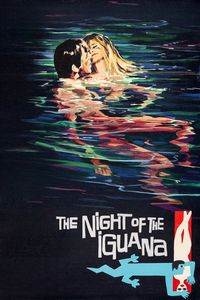
  • The Night of the Iguana (1964)

    The Night of the Iguana (1964)

    (On Cable TV, April 2021) I wasn’t expecting much from The Night of the Iguana (what a dull title!)—but from the opening moments, in which a priest (Richard Burton) completely loses it in front of his congregation, the film gets more and more interesting. Once past the prologue, we find ourselves in Puerto Vallarta, alongside the disgraced priest now acting as a tour guide for a busload of tourists. The film kicks in high gear once our protagonist mechanically strands the bus near a small hotel run by an old acquaintance — and the tourists aren’t happy despite his manic explanation that this is simply the best vacation spot around. But the real reason to watch the film is obvious as soon as we enter the hotel — Ava Gardner looking her best with barely restrained curly black hair, a pleasant roundness to her face and some interesting wrinkles. But her appearance is nothing compared to the strength of her character—a reluctant tough-love saviour, perpetually amused by the protagonist’s mounting problems and capable of taking care of herself all the way to a beach frolic with two young men. When her character encounters the protagonist, sparks fly and do justice to the script based on the Tennessee Williams play. It’s combustible mixture, and I found myself increasingly invested in the film as it went on, as the complications pile up for our poor protagonist, as his face crumbles, as Gardner’s acting becomes better and better, and as the finale ekes out a bit of hope for everyone (well, except for that Miss Fellowes because she doesn’t deserve any). It’s a surprising film — most film historians have extensive notes about its shooting and how intricate psychosexual dramas played out between much of the cast and director John Huston. But what shows up on screen is really good, and it’s the film (more than The Barefoot Contessa) that really cements Gardner’s appeal for me. I still think that The Night of the Iguana is a bit of a weird title for the kind of supercharged theatrical drama that the film is, but go past the title: it starts out strong and keeps getting better.

  • I Am Paul Walker (2018)

    I Am Paul Walker (2018)

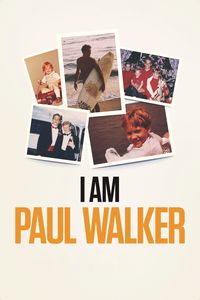
    (On Cable TV, April 2021) The blunt, superficial version of Paul Walker’s life and death is very misleading: Actor known for action roles dies in a car crash. But as I Am Paul Walker sets out to demonstrate, there was quite a bit more to it. For one thing, Walker was almost an accidental movie star — growing up near Los Angeles and being gifted with great looks as a child, he was regularly cast in small parts, to the point where becoming an actor felt almost natural, perhaps even a nuisance. At the end of high school, Walker had essentially dropped out of the acting circuit to focus on the lifestyle of a surfer bum and indulge in his love for the sea. It’s only when debt collectors came calling that he felt responsible for the well-being of his daughter and ex-girlfriend and returned to acting as a relatively easy way to make ends meet. But Hollywood kept calling, director Rob Cohen cast him in The Fast and the Furious… and the rest is history. Except that Walker kept trying to get out of the business, talking about taking lengthy breaks that never materialized, and putting off dreams of pursuing marine biology. The circumstances of his fatal accident are detailed only to the point of making it clear that it wasn’t his fault, and reinforcing the opportunities cut shot by his death. As with other “I am” biographies from Network Entertainment, I Am Paul Walker is meant to be a warm, affectionate, uncritical look at the man by friends and family — while points of contention are sometimes mentioned, they’re never explored in any detail. Not that there’s a lot worth investigating here — Walker-the-man was noticeably lower key than Walker-the-action-persona, spending as much time away from Hollywood as he could. It’s a great documentary for going a little deeper than the facile summary of his life that his death cemented.

  • The Last Remake of Beau Geste (1977)

    The Last Remake of Beau Geste (1977)

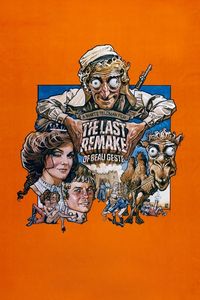
    (YouTube Streaming, April 2021) I’m not often surprised by movie discussions, but when a colleague suggested The Last Remake of Beau Geste in the same lineage as Airplane! and Top Secret!, I had to admit that I’d never even heard of the film. Moments later, as I was looking up the film, seeing Ann-Margret in the cast sealed a hasty viewing. And my colleague was right — as far as silly absurdist comedies go, this is a film that feels more modern than its production date. Writer-director-star Marty Feldman goes for a wide variety of comic devices here, from dumb slapstick to meta-moviemaking jokes. The story takes off from the classic Beau Geste novels but soon turns to utter lunacy, as Michael York plays the impossibly virtuous Beau Geste, Feldman plays his bug-eyed “twin” brother and Ann-Margret schemes to steal the family fortune. We end up in the desert with the French Legion, taking aim at wartime movie clichés and meeting Gary Cooper (through the magic of editing shots of his 1930s take on Beau Geste against Feldman goofing off). A surprising number of familiar actors show up, from James Earl Jones playing a tribal chief to Terry-Thomas and Skip Milligan reinforcing the decidedly deep roots of the result in British comedy. Not every joke lands, is witty, or has aged well. (There’s a “used camel salesman” bit that really isn’t funny these days.) But the comedy has a fast-paced, almost anarchic quality that feels as if it emerged from the 1980s rather than the 1970s. The result is quite funny, and it’s a surprise to find out that The Last Remake of Beau Geste is somewhat forgotten today, perhaps overshadowed by later, more celebrated examples of the same kind of broad-shot comedy.

  • I Want to Live! (1958)

    I Want to Live! (1958)

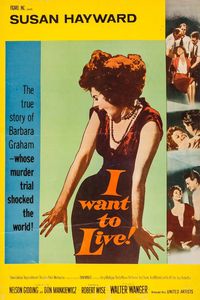
    (On Cable TV, April 2021) If you’re surprised at the I Want to Live’s downbeat conclusion, then you really haven’t been paying attention to the film’s opening moments, which scream and insist that this is a true story based on the author’s reporting and the letters of its protagonist, a woman on death row. A 1950s issue movie, this is about a woman (Susan Hayward, in a very good performance) who falls on the bad side of the law and is eventually convicted of murder. The flip side of her story is the journalist who comes to believe her innocence and fights for her release. Again—it’s not much of a spoiler to say that it doesn’t end well—but you don’t have any idea how cruel the film becomes in dangling one shred of hope after another before taking it away. There’s a reason why I Want to Live is often considered a late-period film noir — there’s a built-in fatalism in the way our protagonist goes from one bad break to another, getting herself deeper into a situation she can’t escape. (But keep in mind the difference between movies and reality — there’s plenty of evidence, elided from the screenplay, to suggest that the accused was guilty. Of course, this doesn’t excuse anything about the use of the death penalty.)  Hayward is very, very good in the lead role, and she received an Oscar for her portrayal. The procedural aspect of the film is definitely grounded in mid-century California to good effect. I Want to Live may not be fun or pleasant to watch, but it’s certainly memorable.

  • Les vacances de Monsieur Hulot [Mr. Hulot’s Holiday] (1953)

    Les vacances de Monsieur Hulot [Mr. Hulot’s Holiday] (1953)

    (On Cable TV, April 2021) I’m arriving late to Les vacances de Monsieur Hulot – widely hailed as a comedy classic, it has acquired a reputation outside France as a bucolic representation of beach vacations. The star of the movie, obviously, is writer-director-star Jacques Tati, who creates an unforgettable comic character with Monsieur Hulot, a gangly, well meaning but incredibly gaffe-prone protagonist who ends up creating havoc everywhere he goes. Much of the continued comedy of Les vacances de Monsieur Hulot lies in the impeccably choreographed gags, sometimes a bit on-the-nose and predictable, but usually leading to a big final laugh. The atmosphere of the film also makes it easy to like the result. In heading from Paris to a small beach resort, the character exemplifies a postwar lifestyle that carries to this day (there are a lot of movies about the annual summertime migration out of Paris and on to beach resorts). Adding to the unique atmosphere of the film is its refusal to rely on dialogue as anything more than added detail — much of the comedy is purely physical, and it could have very well been a silent film with only a few tweaks. There are plenty of small themes weaved into the framework of what looks like a silly comedy — so hours of entertainment for those who like to pick things apart. Still, there’s no real need to go beyond the surface to appreciate the result, the constant gags and the inventiveness of some of the material. Les vacances de Monsieur Hulot often feels out of time, meaning that it’s as fresh today as it ever was.

  • Le nez [Empire of the Scents] (2014)

    Le nez [Empire of the Scents] (2014)

    (On TV, April 2021) As far as documentaries go, Le nez has an asset that most lack — a first-rate filmmaker in French-Canadian writer/director Kim Nguyen, here taking a break from fiction feature films. (In the arc of Nguyen’s career, Le nez comes right before his turn to better-known English-language films such as Two Lovers and a Bear, as well as The Hummingbird Project.)  Le nez, as the title suggests, takes aim at the sense of smell, and just about everything related to it — perfume, food, emotions, seduction and sex. The film benefits from a great variety of interviewees — most notably chemist François Chartier, whose work on the chemistry of taste remains definitive (he has an evocative moment in which he describes the experience of tasting a very old and expensive wine that practically puts you there.), astronaut Chris Hadfield describing the smell of space (similar to cordite, if you’re curious), and journalist Molly Birbaum (who evocatively describes her loss of smell after a severe accident). Other highlights include an intriguing exploration of the world of fragrance, a look at ambergris, and a squirm-inducing segment on the link between smell and sexual attraction. From a filmmaking perspective, Le nez is put together far more strikingly than most documentaries, but the topic itself remains fascinating even if there’s an impression that Nguyen has only scratched (and possibly sniffed) the surface of the topic.

  • Save Yourselves! (2020)

    Save Yourselves! (2020)

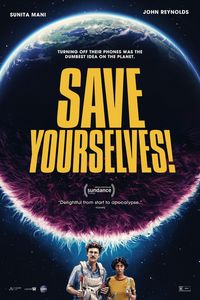
    (On Cable TV, April 2021) One of the reasons why it’s so difficult to tear anyone away from their cell phones is the oft-repeated “What if I miss something important?” Hence the built-in irony in Save Yourselves’s premise of seeing a hip Brooklyn couple head upstate for a week-long digital detox… right before an alien invasion begins. Much of the film’s first half is a drawn-out joke, as background gags keep suggesting world-changing events even as our characters are too busy bickering to care. Thanks to funny, fast and hip execution from writers-directors Alex Huston Fischer and Eleanor Wilson, Save Yourselves is seldom dull even when its lead characters are at their most grating. Much of the film’s likability comes from the irresistible Sunita Mani as one of the two leads — compared to which John Reynolds’ irritating man-child character takes far more time to become sympathetic. But they eventually get there, and the film is at its best when its protagonists become mildly competent at understanding the alien threat and working together to fight back. Save Yourselves (which provides the punchline to one of the jokes in the film) makes the most out of a limited budget and restrained filming locations — the dialogue is good enough to be interesting by itself, and the structure of the film is solid enough to keep viewers invested. It does become quite a bit more serious in the third act, and I’m still mulling over what I think of the ending — it’s an expansive logical conclusion that fits into my idea of how Science Fiction conclusions should push the extrapolation to its limit, but part of me would have liked to see our now-likable hipster family go back to their apartment after such an experience and cope with that. Still, I liked Save Yourselves quite a bit. “Pouf on the roof!” still has me chuckling days later, and I won’t need too much prompting to watch anything else featuring Mani. What could have been an irritating one-joke film becomes something better than that, and the comedy treatment of the apocalypse is exactly what we need in Pandemic Year Two.