Reviews

  • A King in New York (1957)

    A King in New York (1957)

    (On Cable TV, August 2020) Film historians widely recognize A King of New York for being Charlie Chaplin’s response to being exiled from the United States at the height of McCarthyism—a way for him to talk about his exile while flipping the situation over, by playing a European king exiled to New York. As such, there’s a poignancy to the comedy here—wrestling with fame, isolation, money problems and a good old identity crisis. As our protagonist comes home, his money is absconded, leading him to increasingly uncomfortable dealings with New York City society and, in particular, the demands of the advertising industry. Along the way, this becomes an occasion for Chaplin to lampoon the trends of the age—rock and roll, widescreen movies, and once again the encroaching influence of TV and advertisements. In doing so, however, we sense Chaplin as an aging outsider railing against what he may not understand and certainly does not enjoy—Modern Times made mundane. There are very useful comparison to be made with the satire of the contemporary comedy Will Success Spoil Rock Hunter? and the cynicism of A Face in the Crowd, both of which were released the same year as A King in New York. It does, in doing so, become an essential part of Chaplin’s filmography, especially in illustrating his later-career trajectory. It’s funny, but there’s a poignancy underneath the surface that’s hard to ignore if you know the slightest bit about Chaplin’s life in the 1950s. It’s worth noting that the film didn’t play in the US until 1972…
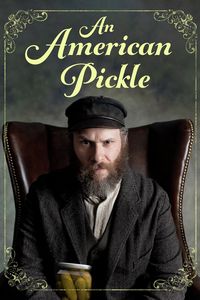
  • An American Pickle (2020)

    An American Pickle (2020)

    (On Cable TV, August 2020) I defy anyone to be able to tell where the next twenty minutes of An American Pickle are going to go at any given time, so quickly does this comedy go from one comic riff to another. The overall structure of the film is solid enough (Revived after a hundred years, a Jewish-American immigrant from Eastern Europe must learn to live with his great-grandson) and so is the central conflict, but then the film hops from one episode to another in ten-minute segments, touching up fish-out-of-water tropes, Brooklyn hipsterism, immigrant narratives, outrage culture, some political satire and then on to a less funny, more heartfelt but not undeserved ending. Seth Rogen plays the two principal roles, a conceit that works generally well. The jokes are amusing enough, and much of the humour is a blend between absurdist ideas clashing with the intrusion of reality when it makes the most comic sense. Director Brandon Trost keeps things hopping at a pace that keeps up with the episodes. While An American Pickle was released direct-to-TV in North America, it was meant as a theatrical feature and clearly feels as such. It’s not a bad milestone in Rogen’s career—double starring in a comedy that manages a good transition from laughter to sentiment. (There’s even a welcome absence of weed jokes here.) It’s not the first such film he’s headed, but it does help evolve his screen persona into something that can sustain him well beyond his initial slacker persona.

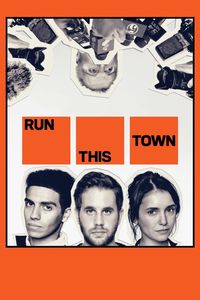
  • Run This Town (2019)

    Run This Town (2019)

    (On Cable TV, August 2020) The strange fever dream of Rob Ford’s tenure as Toronto’s mayor was bound to make the leap to the movies at one point or another, and if Run this Town is the first, it’s probably not going to be the last nor the best. Set in a particularly depressing version of our reality where journalism is fighting for survival through top-ten lists, the film tells us how a plucky young journalist ends up uncovering proof of Ford’s drug abuse while mayor—alongside worse improprieties such as being drunk and abusive toward his staff. It’s a nice underdog story… except that even cursory observers of the Ford story know that’s not how it happened, and how the real story was certainly not quite as clear-cut and easily translatable to a three-act screenplay format. Run this Town does have its moments—The actions and ideals of the journalists are opposed to the spinning tricks of the mayor’s equally young staff, and how they manage to keep Ford’s issues out of the news through cheap appeals to populism. The cynical take on modern journalism is enough to make anyone despair for the future of the country, and writer-director Ricky Tollman’s approach to the material, often using split screen, does have a modern, quasi-anarchistic approach. The film wears a dispiriting colour palette like an attitude, and its cynicism can be overbearing at times, especially when the film goes on an extended rant boldly taking on the kind of anti-Millennial prejudice that only idiots really believe. But the worst sin here is blatantly inventing a character rather than being able to tell us the real story with the real people involved—including, problematically enough, replacing a female journalist with a male intern. It’s highly possible that we’re still not distant enough from the story to be able to tell it properly—Ford may be dead (explaining why he’s the only named real character here, played with caricatural villainy by Damian Lewis) but many of the other people involved aren’t, and the rights to journalist Robyn Doolittle’s book have been sold for a competing project. Ultimately, it’s also true that the real story of Rob Ford may be unstoryable—involving too many people with a small part of the story, and not featuring any movie-worthy dramatic moments. Run this Town can be interesting in dramatizing the real events, but it’s also annoying in that it takes far too many liberties along the way.

  • The Festival (2018)

    The Festival (2018)

    (On Cable TV, August 2020) Movies can be about vicarious living, and I’ve known for a while that while I may enjoy music played at festivals, I would hate the experience of the festivals themselves. (By now, I’m also decades too old for sleeping in tents, getting drunk and traipsing in mud all day long.) As evidence that I should leave music festivals to those who will enjoy them, I offer raunchy comedy The Festival. Our story begins with a new college graduate being dumped right before the graduation ceremony… but still heading over to a Leeds-like music festival even knowing that his ex-girlfriend is going to be there. Much mayhem ensues from that point on, with weird people, drunken stupors, stripteases and car sex being almost-mandatory checkpoints along the way. It’s raunchy, foul-mouthed and wince-inducing (mild physical mutilation is included) and still funny enough to be a good-enough time. Much of it depends on the actors—Joe Thomas takes centre stage as the nebbish protagonist (he gets better), with Hammed Animashaun and Claudia O’Doherty in supporting roles. The Leeds music festival itself provides the amazing sight of fields full of tents and debauchery. The comedic arc is intensely predictable, but that’s part of the point: People buy tickets to The Festival knowing what they will hear and how they’re going to feel, with a bit of adventure along the way. I could have skipped some of the film’s less wholesome moments, but it’s not a bad time. Furthermore, The Festival has further reinforced my conviction to avoid music festivals, so that’s an extra.

  • The Long Dumb Road (2018)

    The Long Dumb Road (2018)

    (On Cable TV, August 2020) Jason Mantzoukas has been a comedy MVP for a few years now, always brightening and spicing movies even in small roles. Now here’s The Long Dumb Road to give him a leading role. As befit Mantzoukas’ screen persona, it’s a bigger-than-life role as an explosive, impulsive live-in-the-moment drifter who ends up changing the course of a young earnest sheltered young man on his way to his first year of college in Los Angeles. The Long Dumb Road, as it becomes apparent early on, is the kind of comedy film where the characters get in deeper and deeper trouble until they learn a valuable life lesson along the way. But the point here isn’t the greater story as much as the comic sketches encountered along the way, with character actors playing the obstacles in the leads’ way. There isn’t anything startlingly new here, nor is it all that hilarious—but, of course, that will depend on your tolerance for humiliation comedy. Still, The Long Dumb Road is a short, effective comedy even if the ending doesn’t quite bring everything together.

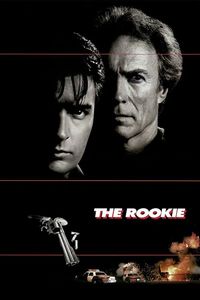
  • The Rookie (1990)

    The Rookie (1990)

    (In French, On Cable TV, August 2020) In retrospect, The Rookie feels stuck between the rogue-cops-thrillers of the 1980s and the overblown action movies of the 1990s. Clint Eastwood directs and stars as a veteran cop alongside a younger Charlie Sheen as his new partner investigating car thefts. While their characters are supposed to be different, there isn’t a lot separating Eastwood’s interpretation of his character here from Dirty Harry Callahan. But the buddy-cop conventions of the 1980s are complemented by a handful of spectacular stunt sequences that herald the arrival of another kind of cop movie. The car-carrier flip-over that punctuates the end of the first act could be seen as a precursor to the similar Bad Boys II sequences, while the airplane crash and explosions seem taken from the Die Hard series. The result may be an interesting mess, but it’s a mess nonetheless, and aspects of the whole have not aged well at all. The psychopathic behaviour of the so-called heroes is troubling enough (especially given that it is rewarded), and then there is the incomprehensible ethnic miscasting: Raul Julia is fantastic no matter the role, but he’s a bit difficult to accept as a German crime lord. On a similar note, Sônia Braga makes for a captivating villain, but she doesn’t quite click in an action context. (She’s also given, in an obvious ploy for controversy, a scene in which her character rapes Clint Eastwood’s character.) More interesting than your usual 1980s buddy-cop movie but still nowhere near a good movie, The Rookie is justifiably known for being a curio in Eastwood’s directorial filmography: A semi-crazy action cop movie with roughly twice as many stunt set-pieces as the rest of his movies combined.

  • Robot Overlords (2014)

    Robot Overlords (2014)

    (In French, On TV, August 2020) “Not good, but better than expected” is a perfectly valid accolade in discussing science fiction films, especially those low-budget foreign productions involving a mostly teenage cast. In this case, Robot Overlords hails from small-town England, where the global tyranny of alien robot invaders means that people are confined at home and subject to occasional deep scans that suck the life out of them. Our heroes are a bunch of teenagers who somehow figure out how to turn off their tracking implants, leading to inevitable revolt. Coming in the middle of the Young-Adult dystopian craze of 2012–2016, and featuring an initial lack of polish reminiscent of Syfy specials, Robot Overlords initially looks as if it could have been much, much worse. Its science-fictional elements are both ordinary and thrown together without much refinement, and the dramatic beats can be seen coming well in advance. The film also features two veteran actors known for slumming: Gillian Anderson turns up as the sympathetic mom of one of the teenaged characters, while Ben Kingsley plays a human enforcer of the alien rule. But, happily, Robot Overlords eventually works its way back to competency—the action moves steadily forward, and the missteps are somehow tolerable. The small-town British setting is different enough to be interesting, and the special effects can keep things lively. By the time the action climax comes around, the film works well enough and leads to a wrap-up that doesn’t overstay its welcome. There are still plenty of conventional moments requiring quite a bit of indulgence from viewers, but the overall package is, again, better than expected.

  • Hua li shang ban zu [Johnnie To’s Office] (2015)

    Hua li shang ban zu [Johnnie To’s Office] (2015)

    (On TV, August 2020) It had to be done: a musical comedy set in a high-rise rented by a financial firm… in 2008 Hong Kong, as stocks were plunging without an end in sight. Directed by Johnnie To but written by co-star Sylvia Chang (from her own theatrical play), Office is a cool but not completely satisfying high-style movie musical. The corporate environment offers a nice thematic excuse to confront the cold steel-and-glass sets with the passion of the characters engaging in romance or revenge. The striking geometrical sets are gigantic, and perhaps overused. Not understanding Chinese means that it’s difficult to assess the songs: they’re not as immediately bouncy nor memorable as (say) many Bollywood movies, but I did like the techno-rock beats thrown in the mix. Still, Office remains a musical in the very classical sense, with characters singing their thoughts in ensemble songs. It may be a touch too dramatic to earn the moniker of a musical comedy, but it would hardly by the first musical to fail that check. Narratively, the ending does leave a few things hanging but not enough to disappoint. I clearly found Office to be interesting, but it’s just disappointing enough to fall short of satisfying.

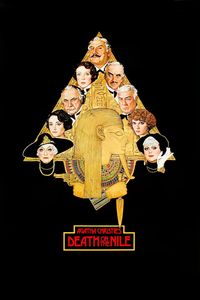
  • Death on the Nile (1978)

    Death on the Nile (1978)

    (In French, On Cable TV, August 2020) While I’m anticipating watching the 2020 version of Agatha Christie’s Hercule Poirot adventure Death on the Nile, I thought I’d have a look at the 1978 version first. As the first of the Poirot films starring Peter Ustinov as the Belgian detective, this film has layers of old-school charm. It’s obviously dominated by 1970s filmmaking techniques and stars; the image is mushy, the staging a bit stiff, and a wonderful star-studded cast includes Bette Davis, Mia Farrow, George Kennedy, Angela Lansbury (not in detective mode), David Niven and Maggie Smith—whew! The other layer is the 1937 setting of both the narrative and Christie’s novel: we are comfortably sitting with the upper-class characters as they board an old-school paddle steamer and float down the Nile, with murder in an enclosed location as their main shipboard entertainment. While not on the boat, the film indulges into some great location shooting in Egypt. The narrative is incredibly comfortable, running down the tropes of detective fiction all the way to a round-up of “the usual suspects” in time for the finale. Murder mysteries usually age pretty well, especially in a period setting and Death on the Nile is no exception. It’s not quite as compelling as its prequel Murder on the Orient Express, but it’s still a solid hit of murder mystery pleasures.

  • Sin-gwa ham-kke: In-gwa yeon [Along with the Gods: The Last 49 Days] (2018)

    Sin-gwa ham-kke: In-gwa yeon [Along with the Gods: The Last 49 Days] (2018)

    (On TV, August 2020) While The Last 49 Days was written and shot at the same time as its prequel The Two Worlds to form the Along with the Gods diptych, neither film is equal in impact. All of the unanswered questions from the first film are addressed here, but despite being a second half that multiplies the large-scale special effects sequence, the impact is somehow less grandiose than the first film. While the protagonist of the tale remains the impossibly perfect deceased hero passing seven trials on his way to becoming a paragon of virtue, the narrative does shift further to the three guardians as they have a story and stakes of their own. While The Last 49 Days does keep some interest, it’s a sequel of diminishing returns: it loses some of the focus of the first film, and has a tendency to lose itself in historical or domestic sequences. It does remain fun enough, though: dinosaurs attacking our heroes is not necessarily something we could anticipate. More successful as a conclusion to the first film than by itself, The Last 49 Days is a downgrade, but not a failure.

  • Sin-gwa ham-kke: Jwi-wa beol [Along with the Gods: The Two Worlds] (2017)

    Sin-gwa ham-kke: Jwi-wa beol [Along with the Gods: The Two Worlds] (2017)

    (On TV, August 2020) All right, this is interesting. Flawed, but interesting. Along with the Gods: The Two Worlds begins as a modern-day firefighter dies and finds himself in the afterlife, escorted by three guardians who insist that he’s a paragon of virtue. Tested through a series of trials meant to examine his life, our protagonist openly questions whether he’s the promised paragon, and his guardians have a lot riding on whether he is. The film’s opening is quite good, with a bit of suspense, mystery and humour—plus special effects. A lot of special effects, from the opening to the end of the film. They’re sometimes rough, but the imagination is there. Narratively, The Two Worlds isn’t as successful: the schematic trial structure is broken up by a (less successful) narrative mystery, but there’s a risk that the film is overcomplicating things as it advances. The film’s concept is stronger than the mid-level moment-to-moment scripting: the protagonist is a wet noodle without much personality throughout the film, and there’s a good argument to be made that the lead characters aren’t the dead person going through the afterlife, but his three guardians—they seem better developed, have clear goals, and their interaction gives them more lines than the nonentity lead. The ending is deliberately inconclusive, as tortured family dynamics come to light and the film finds no clear conclusion—but that’s fine, since Along with the Gods is meant to be a two-parter with The Last 49 Days following up The Two Worlds. We’ll see in the next film if it all comes to a satisfying conclusion.

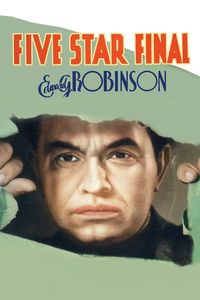
  • Five Star Final (1931)

    Five Star Final (1931)

    (On Cable TV, August 2020) Considering today’s issues with social media, it’s either comforting or dispiriting to realize that every era has had its problems with then-new communication mediums… and that cinema has been there to chronicle the issues since the 1920s. Five Star Final takes us in the heated tabloid newspaper scene of the big city 1930s, when newspapers published multiple editions per day, and raced hard to outdo the competition in circulation. If sleaziness was the way to boost readership, then the answer was obvious. Here we have Edward G. Robinson as a two-fisted newspaper editor, not comfortable with the sensationalistic direction that his publisher requires, but reluctantly dragged into a sordid tale of public shaming with real consequences. Boris Karloff also appears in a few scenes as a menacing reporter. The film, being from the everything-goes pre-Code era, is markedly more interesting than many newspaper movies of later decades (and I say this as someone with an inordinate fondness for newspaper movies)—not to spoil anything, but characters don’t necessarily make it out alive of this story, and the attitude toward tabloid journalism is decidedly critical. Mervyn Leroy’s direction is relatively fast-paced, and there are a few flourishes here and there—most notably the use of split screen and fancy special effects at the time. It does make for a compelling movie, more for its time-capsule experience than a story that has been done in more recent years (albeit not from the Code years from 1935 to 1955) but still interesting, and not simply because it was nominated for a Best Picture Oscar.

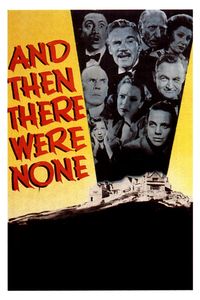
  • And then there Were None (1945)

    And then there Were None (1945)

    (On TV, August 2020) As someone for whom Agatha Christie’s And Then There Were None was one of the Big Reading Experiences of High School, I’m always a bit weirded out by the movie adaptations that spare the characters at the end—wasn’t it the point of the book that, well, then there were none? Still, that’s the tack that Christie herself preferred, and it does make the ending surprisingly happy for fans of the book. Both the 1971 and the 1945 versions use more or less the same blueprint, although the 1945 version of And then there Were None is understandably in black-and-white. What’s perhaps more surprising is that this earlier version is a bit funnier than its later example—in typical stiff-lipped British humour, the film has touches of dark humour and characterization. I’m perhaps a bit too familiar with the plot to comment on anything but its deviations from the novel, but the premise does remain timeless and of interest to modern audiences. It’s not directed too badly; there are a few exteriors chosen to open up the film from studio interiors, and it’s short enough not to overlay its welcome—which isn’t bad considering the number of characters to kill before the end.

  • The Sunshine Boys (1975)

    The Sunshine Boys (1975)

    (On Cable TV, August 2020) In movie history, The Sunshine Boys is famous for reviving the career of George Allen, a vaudeville veteran whose first film career ended in 1939 before making a comeback decades later as (what else?) an elderly vaudeville veteran. He’s paired with Walter Matthau as the other half of a legendary duo now unable to even stand the sight of each other. After eleven years, a TV special appearance orchestrated by a well-meaning agent/nephew brings them together again, but it’s not a given that they’ll make it out of rehearsals. As with most movies directed by Neil Simon, there’s a powerful sense of place and time in The Sunshine Boys: Here we are in mid-1970s Manhattan in the universe of Jewish comedians (named deli sandwiches included), but always harkening back to the glory days of vaudeville. I’m fascinated by the history of American comedy, and The Sunshine Boys certainly delivers when it comes to showing how a declining elderly comedian lives his last years. Matthau has played some curmudgeonly characters during his career, but few are as spectacularly ornery as here—he effortlessly plays a character twenty years older than him, and oozes the kind of unrestrained crankiness that some old men develop. The beginning of the film can be trying if you’re not in-tune to the atmosphere—both elderly characters seem borderline senile, unable to deal with any normal social situation any more. It’s only when they come together that their minds sharpen up, even if it’s to trade insults. Allen is remarkable as the other half of the duo, with good comic timing and canny instincts: the sketch sequence does have its share of honest laughs, and the Oscar he won for the role wasn’t merely a reflection of a comeback story for the ages. (Allen would then go on to outlast several other actors by maintaining an active movie career until 1994, and keeping up appearances until shortly before his death as a centenarian in 2001—I’m old enough to remember when his name was synonymous with any joke having to do with elderly celebrities who would never die.) In the hands of a veteran playwright like Simon, The Sunshine Boys also slowly trade off jokes and insults for honest affection for the characters. There’s a point in the third act where the film seems to derail and get locked in a single room, but it eventually claws its way back to comedy and, happily, a bit of heart.

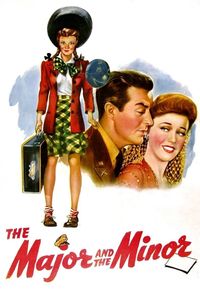
  • The Major and the Minor (1942)

    The Major and the Minor (1942)

    (On Cable TV, August 2020) I’m on a long road to see most of writer-director Billy Wilder’s movies, so it was inevitable that I’d eventually make my way to his English-language debut feature sooner rather than later. After all, The Major and the Minor is a perfectly entertaining romantic comedy, featuring none other than Ginger Rogers and Ray Milland. The fun gets started when the twentysomething protagonist, out of cash for a ticket home, dresses up as a little girl and doesn’t convince the ticket takers. Chased through the train, she finds refuge in the cabin of an officer and, from there, follows him to the military academy where romance blooms. While this was the first American film directed by Wilder, it was far from his first script, and his comfort in writing good, zesty yet comfortable material shines through: Despite a premise that doesn’t really hold up (there’s a limit to how much two tresses can make Rogers pass as a twelve-year-old), the dialogue is great and even the familiar engine of romantic comedies feels rejuvenated. The Major and the Minor is quite funny, and it does wait its own sweet time to deliver the romance promised throughout the picture—the mark of a great filmmaker.