Reviews

  • Witchboard (1986)

    Witchboard (1986)

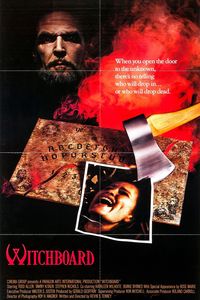
    (On Cable TV, August 2020) The 1980s were a weird time for movies, as the science of taking fads and making weird movies out of them was still being perfected. In Witchboard’s case, the fun begins when our characters grab a Ouija board and start messing around with messages from beyond. The heroine gradually gets possessed by an evil spirit, and it all naturally leads to more murders and a climactic confrontation with her boyfriend. Tawny Kitaen looks great in the lead role (she’s not much of an actress, though), while writer-director Kevin Tenney does manage to avoid a few typical flaws of low-budget films—notably by sticking to a straightforward execution plan and avoiding gore. This doesn’t necessarily make Witchboard a better film—but it’s not terribly irritating even as it slashes away at its characters and trods familiar ground. Saying that I didn’t hate it may strike many as damning praise, but it’s not—have you even watched other low-budget 1980s horror films?

  • Two-Faced Woman (1941)

    Two-Faced Woman (1941)

    (On Cable TV, August 2020) What a strange, strange idea—to put famous can’t-laugh Greta Garbo as the lead of an ordinary romantic comedy. Sure, the film has a pedigree—with George Cukor directing, Two-Faced Woman at least has some baseline quality. But Garbo? She’s miscast so badly—in the role of a woman who pretends to play her own (fictional) twin sister in order to get her husband back—that she retired after this film. (Her retirement wasn’t completely due to Two-Faced Woman’s commercial flop—but it did not help.) This being said—ah, how can I say—I liked the film anyway. For one thing, the classic oh-so-serious Garbo isn’t my favourite; and for another thing, I’ve always had a soft spot for silly over-the-top comedy. Combine those things, and Two-Faced Woman isn’t so bad after all. Sure, the film is a bit mishandled (some of it due to hasty reshoots to placate censors) a bit broad, a bit inconsistent. But it’s still a high-concept romantic comedy, and this is one of the rare films where being unfamiliar (or unsympathetic) with the filmography of its star may be a benefit. I do think that another comedienne would have been better (as in: looser, funnier) than Garbo, but the film itself is worth a look and a few chuckles.

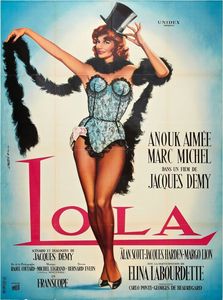
  • Lola (1961)

    Lola (1961)

    (On Cable TV, August 2020) I’m not a big fan of writer-director Jacques Demy, and going back to have a look at his first feature Lola doesn’t endear me any further to him. A characteristically unfulfilling romance with a twisted cast of characters, it’s about a young man falling in love with his ex-girlfriend, except that she pines for her own ex, and another man also pines for her. At least, with Anouk Aimée in the lead, we can understand how that character can have three lovelorn men revolving around her. The rest of the film is considerably fuzzier, which should not be a surprise to anyone with a good knowledge of Demy’s filmography. It’s quite French Nouvelle Vague, except without much of the playfulness found in other comparable films. Romantic, for sure, but not comforting at all.

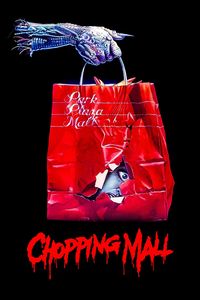
  • Chopping Mall (1986)

    Chopping Mall (1986)

    (On Cable TV, August 2020) In retrospect, it was inevitable that someone would seek to combine the 1980s robot movie craze with the slasher horror of the beginning of the decade. Of course it had to be from Roger Corman’s production company. In Chopping Mall (retitled from Killbots), we head back to the very recognizable Sherman Oaks Galleria for a night of terror as three couples of teenagers sneak into the mall for a night of horizontal mattress bouncing. Alas for them, the mall has just introduced robot sentries and a freak thunderbolt has just switched the robot’s main directive switch from “apprehend” to “KILL, KILL, KILL.” The rest of the film plays out like your typical horror movie, as the number of remaining characters dictates how close we are to the ending—and how sexual activity will doom some characters sooner than others. The low-budget nature of the film is most clearly seen in the inconsistent staging of the action, the wobbly robots or the slap-dash way the script doesn’t even stick to the specifications it posits for its killbots. There are some unintentional moments of mirth, but a few very deliberate laughs as well. One of the highlights of the film comes early during a demonstration of the robot (anticipating Robocop’s ED-209 sequence by a year) in which we’re treated to a short cameo from Paul Bartel and the ever-cute Mary Woronov as their own Eating Raoul characters, cracking wise at the product demonstration in front of them. Otherwise, there isn’t much to Chopping Mall than a memorable but not exceptional techno-horror movie: ridiculous, cheap, short but with just enough distinction for it to be easily remembered. “Oh, yeah, that movie where robots kill teenagers in a mall…” Yeah, that’s it. Cinematic immortality of a sort. Also, a really catchy main theme.

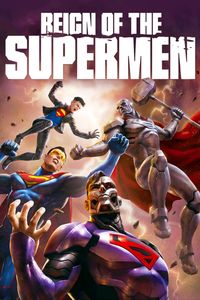
  • Reign of the Supermen (2019)

    Reign of the Supermen (2019)

    (On TV, August 2020) Superman’s death can’t be left alone no matter the medium, and so the animated Reign of the Supermen follows the animated Death of Superman as if it had been planned all along. In the aftermath, four different supermen rise up, each claiming to be the successor to the Man of Steel (who, meanwhile, is regenerating in his Fortress of Solitude). But that’s not enough—we also need a new threat that the four supermen can fight, and for the real one to come back and prove that he’s the real thing. Considering that Reign of the Supermen is only 87 minutes long, that’s a lot of stuff to cover in a film and the pacing has this crazy go-go-go speed not helped in the slightest by contrivances and trite dialogue. As is often the case in those episodic DCAMU, the biggest fun is to be found in the details—such as, in this case, Lois Lane and Wonder Woman bonding over the disappeared Superman. It’s probably a mistake to see this as a distinct film— it’s really the conclusion to Death of Superman and watching it in any other context just feels unsatisfying. It’s not quite as good as its predecessor, but at least it concludes the narrative arc.

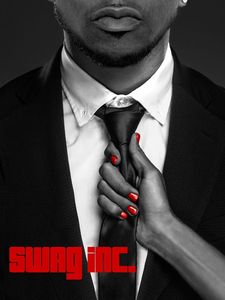
  • Swag Inc. (2019)

    Swag Inc. (2019)

    (On TV, August 2020) In keeping with many BET+ original movies, Swag Inc. is a mixture of low-low-low-budget filmmaking, apprentice actors, threadbare production means, quirky screenplay (due to lack of experience, not deliberate subversion), humdrum directing, beautiful actresses, amateur narrative structure and some undefinable but real charm. The threadbare plot has young men founding a dating service, then getting embroiled in professional and romantic complications, but since the film constantly zigs and zags uncontrollably from one tone to another, it can be hard to follow along. It’s not particularly good—the screenplay can be torn to shreds, the cinematography is utilitarian, the dialogue trite and the actors think a bit too much about what they’re doing. But, and that too is a part of the BET+ original movie experience, I kind of liked it. It’s not terribly ambitious cinema, but it delivers eye candy, smirks, romance and success for the characters. My expectations were low for Swag, Inc. and they were met. I can’t guarantee the same, however, if you go into this one as your first BET+ original movie.

  • Burke and Hare (2010)

    Burke and Hare (2010)

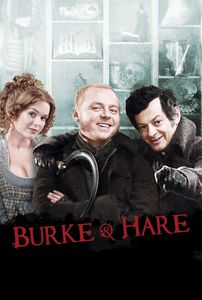
    (In French, On Cable TV, August 2020) As of this writing, a decade later, it looks as if Burke and Hare is going to remain John Landis’ last film—and it doesn’t inspire regret as much as good riddance. That’s quite a statement considering that Landis’ early filmography contains such classics as An American Werewolf in London, The Blues Brothers and Trading Places. But he peaked early: A fatal accident on the set of The Twilight Zone got him tried but acquitted of manslaughter, an ordeal from which his career never really recovered. After a major hit with 1988’s Coming to America (a film whose true paternity is very much attributable to Eddie Murphy), Landis gradually retreated throughout the 1990s, directing flop after flop after flop until the movies got much smaller and less distinguishable. Landis’s filmography then focused on TV directing to such an extent that Burke and Hare was itself Landis’ first theatrical film in over a decade. It’s not a flop, but it’s not much of a success either: Taking on the real-life facts of 18th-century serial murderers for a fanciful spin, it’s a film that tries to make dark comedy out of morbid themes (cadavers-for-cash turning into a lucrative serial killing business), and it doesn’t succeed all that well. This is despite a good cast that includes Simon Pegg, Andy Serkis, Isla Fisher and others. But what can a cast do when the script isn’t up to the task? Despite the natural fit of the source material for dark comedy, Burke and Hare ends up feeling as if it’s one single joke stretched over the entire film, without much to keep things interesting. Maybe a straight thriller would have been better if a comic approach can’t get laughs. Maybe a zanier romp would have made this funnier. Or maybe this was just an ill-begotten project in the first place. While Landis gets to play with a credible historical recreation and some talented actors, Burke and Hare rarely shines. On the flip side, Landis now seems to accept what he should have done in 1990—retirement’s not too bad, and far preferable to undermining a filmography with a long tail end of flops and misses.

  • The Gate (1987)

    The Gate (1987)

    (In French, On Cable TV, August 2020) There is a fascinating core to kiddy-horror film The Gate that disappoints more than it satisfies. It does have a lot of the same elements that made such a success out of Poltergeist: the numerous special effects imaginatively rendered, (including plenty of stop-motion) the sense of dull suburban reality collapsing against supernatural assault, the down-to-earth characters and the increasing dreamlike weirdness of the thrills… this should have been much, much better than it is. But the script and director Tibor Takács end up focusing so much on the young protagonists that, in doing so, they handicap the film to a milquetoast result that pleases no one. The kids will find it too spooky, the adults will find it too tame, and we end up far away from Poltergeist with similar material. I mean, sure, you can always show it to 12-year-olds to hook them up on horror, but such younger-audience fare should also be watchable by the entire family and there’s something in The Gate that simply doesn’t click as well as it should.

  • Pootie Tang (2001)

    Pootie Tang (2001)

    (On TV, July 2020) I’m about a generation too late at the Pootie Tang party, and a lot of it has to do with its reputation as a terrible movie. It’s not wholly undeserved, but the film itself is a great deal funnier than expected. Stemming from sketches from The Chris Rock Show and directed by then lesser-known Louis C.K., Pootie Tang is the kind of absurd satirical comedy that either falls flat or strikes a chord. It’s ingeniously dumb, as it revolves around a character (Pootie Tang!) meant as a parody of multi-hyphenates artists in the wake of the blaxploitation era. Pootie Tang (and please decline any drinking game in which the mention of the name is a trigger for alcohol consumption) is a rapper, actor and positive role model whose appeal is largely inexplicable to viewers but deeply felt by the characters in the film’s reality. Lance Crouther is pretty good in the lead role, while Robert Vaughn deliciously shows up at the antagonist, Jennifer Coolidge and Wanda Sykes provide some decent sex appeal, and Chris Rock goofs around in a variety of roles—plus many cameos big and small. Pootie Tang is almost aggressively stupid at times, but darn if I didn’t giggle during a good chunk of it: I liked the anti-corporate message, the semantic tour de force presented by the title character’s dialogue and the unapologetic weirdness of its humour. Don’t go in Pootie Tang expecting an ordinary, let alone good movie: you will know within moments if the absurdity of it all will grab you.

  • The Setup (1949)

    The Setup (1949)

    (On Cable TV, July 2020) Somehow, boxing and film noir often go hand in hand, or maybe fist-to-fist: The subgenre is filled with sweaty gymnasiums, high-stakes bouts, boxers attempting to go straight and shady promoters eager to fix matches. What works really well in boxing thriller The Setup is its attempt to tell, in real time, a story of sports manipulation and personal redemption, as a boxer trying to retire ends up fighting against the orders of his manager to lose. There’s a strong sense of verisimilitude and intensity coming from the work of director Robert Wise here—not only the cranked-up tension of a real time 70 minutes, but the atmosphere of a boxing ring, the struggles of the boxer and the way the camera moves through the environment. It’s quite admirable even for those who don’t really have an interest for boxing. The simple plot is not a disadvantage, as it allows the filmmakers to focus on the way to tell the story. The Setup is quite admirable, but it also anticipates a slew of other later boxing films (notably Raging Bull) that would move away from realistic aesthetics in telling ringside stories.

  • Maniac Cop 2 (1990)

    Maniac Cop 2 (1990)

    (In French, On Cable TV, August 2020) Considering my low opinion of slashers, it’s a bit surprising that I ended up moderately enjoying Maniac Cop 2. Interestingly enough, it’s a sequel that assumes the best parts of its predecessor, and strategically maximizes a few elements in order to get even larger audiences. For one thing, it takes as granted the supernatural nature of its titular Maniac Cop brought back from the dead. For another, it frequently trades gore for action with more stunts than the previous film. The iconography of the killer cop is also maximized, which is nearly always a good thing in creating great visuals. (There is one great fire-stunt shot that’s so good I’m wondering why it hasn’t been stolen by later generations of filmmakers.) Best of all, though, is how writer Larry Cohen and director William Lustig stick to their B-movie guns: Maniac Cop 2 is wall-to-wall entertainment, clearly dedicated to being a pure thrill machine. Claudia Christian has a starring role, and Bruce Campbell is back for a brief encore. This being said, this does remain a B-movie bordering on slasher exploitation—keep your expectations in check.

  • Happy Birthday to Me (1980)

    Happy Birthday to Me (1980)

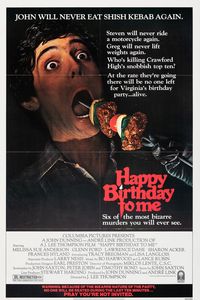
    (In French, On Cable TV, August 2020) You’ve seen simple Tuesday slashers, Friday the 13th slashers, Halloween slashers, Christmas slashers, April’s fool slashers, probably Easter slashers and Independence Day slashers—but what about a birthday slasher? That’s the gimmick adopted by Happy Birthday to Me, in which the friends of a girl about to celebrate her 18th birthday all start mysteriously dying. You may guess where this is going, but the filmmakers have a wild climactic plot twist in store. Never mind that it makes most of the plot impossible and meaningless—the original ending having been (correctly) judged too predictable, it was (incorrectly) reworked to make it less obvious no matter whether it still made sense. Production values are equal to what low-budget Canadian horror movies were capable of doing at the time: gritty, dark, fuzzy, slightly charming in their lack of polish. But since this is a slasher, the place of honour (and most obvious craft) is left for the kills, many of them cruel and unusual. It’s all fairly rote for a slasher, although the car stunts and whodunit mystery aspects are slightly better than other comparable films. Still, that doesn’t give it much of an excuse for being worth a look. Sure, Happy Birthday to Me is probably better than other films of the subgenre at the time but that doesn’t make ti a must-see. If you’re writing an encyclopedia on slashers, sure, have a look—otherwise, there are much better movies to see without wasting one’s life on an early-1980s slasher.

  • Lo chiamavano Trinità… [They call me Trinity] (1970)

    Lo chiamavano Trinità… [They call me Trinity] (1970)

    (YouTube Streaming, August 2020) Ah-ha! If you’re looking for the film that really ignited the career of the Bud Spencer/Terence Hill duo, look further than They Call Me Trinity. The success of God Forgives… I Don’t immediately led to a bigger-budgeted follow-up, more closely tailored to their specific skills than anything else. Accordingly, it made money, got good reviews and left a lasting legacy: Not only a (worse) sequel, but an affirmation that the Spencer/Hill duo was good for box office success—indeed, I can find a few reviews simply calling the duo, “The Trinity Brothers.” It’s easy to see why the film was a success: taking the spaghetti western formula but ensuring that it was accessible to all ages, this is a film that plays to packed houses with a blend of action and comedy. Spencer is easy to like—the teddy-bear act is a lot of fun, while Hill has the Cary Grantesque quality of being uncommonly good-looking while also being willing to plunge into whatever’s needed to get a laugh. Combined with writer-director Enzo Barboni’s intention to tone down the violence of the spaghetti western in order to make it even more broadly accessible, well, this is a film that the whole family will enjoy. Call Me Trinity is also, perhaps, the best of their collaboration—the one to highlight when introducing the duo to new audiences.

  • Rooster Cogburn (1975)

    Rooster Cogburn (1975)

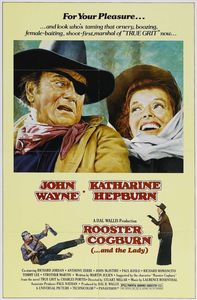
    (On Cable TV, August 2020) It took a few decades, but in Rooster Cogburn we finally get to see Katharine Hepburn fire a gatling gun. Of course, the price to pay for this treat is having to endure John Wayne’s smarmy arrogance for an entire film. A sequel to True Grit, this film sees Wayne and Hepburn (born the same year; at last, an age-appropriate romance in a Hollywood movie! ) undertake a dangerous journey in the Far West to avenge the death of her friends and family. While both actors are interesting in their own way and the script is tailored to give them plenty of Significant Moments (and riff existing personas; same character for Wayne, same kind of character as The African Queen for Hepburn), Rooster Cogburn at a whole is a disappointment the moment you focus on anything but the stars and the gatling gun. The dialogue is not good, the directing is pedestrian, the narrative is humdrum and while some landscapes are spectacular, that’s really on the location scout more than anyone else. But here’s the thing: When you’ve got WAYNE and HEPBURN together at last (in the only time of their careers), it’s just not possible to pretend to ignore them in the result. Considering this, Rooster Cogburn becomes far more than just its components—it’s nearly a must-watch for classic Hollywood fans, if only for the lone reunion of two screen legends. That’s objective. If you want subjective, consider that Hepburn is at the top of my classic Hollywood list of actors, and Wayne is at the bottom.

  • The Merry Widow (1934)

    The Merry Widow (1934)

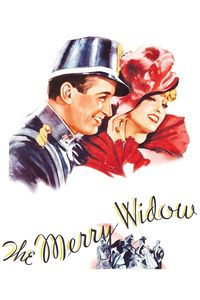
    (On Cable TV, August 2020) According to some contemporary accounts, Maurice Chevalier was one of Hollywood’s highest-paid actors of the 1930s, and his cultural influence essentially defined the French stereotype in American movies. He reportedly spoke English quite fluently in real-life, only to revert to a distinctive French accent in his movies. As much as I dislike the artifice, I must say that it helped create a strong screen persona: That of a bon vivant, gentle womanizer, easygoing hedonist… or, in other words, close to the stereotype that Americans still carry about French people, one that French people don’t do much to try to dispel. You can see that persona and attitude at play in The Merry Widow, a romantic fantasy in which imaginary European kingdoms are used as reasons for a soldier to court a rich widow. From the get-go, the film seeks an amiable, generally harmless tone: one early scene has soldiers chanting as they go to war, but with lyrics clearly stating that their only reason to go there is to impress the girls at home. Against this backdrop, Chevalier takes on the role of a playboy tasked with the serious business of national union through romantic courtship, and the rest of the film goes from there. There are plenty of reasons why this premise wouldn’t fly today, but the result is quite likable as a historical capsule. Ernest Lubitsch directs with his usual touch, and the music is surprisingly catchy. It’s clear that the film celebrates women, romance and courtship in a harmless fashion without any predatory overtones. Chevalier is truly likable, and Jeanette MacDonald is also quite good as the wooed widow. Top-notch production values in terms of sets and costumes mean that there’s always something lavish to look at. Still, the comedy is the draw and The Merry Widow is funny enough to entertain. Chevalier at his peak was not to be underestimated.