Reviews

  • The Clearing (2004)

    The Clearing (2004)

    (In French, On Cable TV, September 2020) In between the dark scary forest of genre crime thrillers and the featureless plains of straightforward drama, there is a zone that is neither—a place where crime stories can be used to illustrate human concerns without necessarily becoming genre stories nor completely fall in the vast expanses of straight drama. The Clearing is in such a zone, as the kidnapping of a rich person becomes more of a dramatic vehicle for a good cast than a conventionally satisfying story. In this case, the cast is a trio of legends: Robert Redford plays the kidnapped, Willem Defoe the kidnapper and Helen Mirren the wife who must deliver the ransom. But writer-director-producer Pieter Jan Brugge (directing his first film after a long producing career) isn’t really aiming for a visceral thrill-a-minute kind of film. Instead, he spends his time ambling along with the characters, and even misdirects the audience’s attention to stretch the story for even longer than it is. The result of such shenanigans is not what he had hoped for: The Clearing, in the end, feels like a trick more than a movie. The misdirection hides an unsatisfying ending, and distances audiences from the characters. Neither ends up being a winning move considering the coldness of the film. Despite good work from the actors, The Clearing is not only a disappointment, but something that’s likely to fade away from memory far quicker than a conventionally entertaining genre piece would have.
  • Waxwork (1988)

    Waxwork (1988)

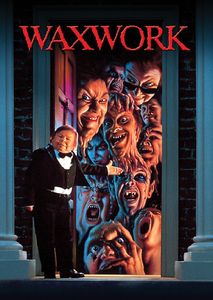
    (In French, On Cable TV, September 2020) If there’s such a thing as an “exact median” 1980s horror film, I would nominate Waxwork for the title: it’s a bit too good to be dismissed, but not good enough to be praised. It’s certainly attuned with the 1980s horror movie atmosphere, as it pays homage to everything that’s come before it, mixes all of those influences together, and even nods toward some of the decade’s other films. Plotting-wise, it feels like a blender full of homages, as teenagers exploring a creepy wax museum are… sucked into parallel dimensions to meet the real versions of the wax monsters, then have to… fight off an evil prophecy that would deliver the world to eighteen evil forces? What? Unable to keep an idea in head longer than it’s still interesting, writer-director Anthony Hickox flits from one horror trope to another, delivers his House of Wax homage, then (obviously, because that’s what happens in war museum horror films) burns everything up in time for the climax. Waxwork is, again, not terrible and not great but somewhere in the intermittently interesting middle. It will be far more interesting to fans of the genre more than neophytes.

  • Class Action Park (2020)

    Class Action Park (2020)

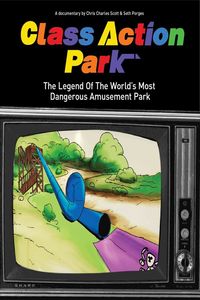
    (On Cable TV, September 2020) One of the most interesting kinds of laughter is what I call the disbelief laughter—whatever comes out when you’re just astounded, in denial, or still trying to process new information that just simply shouldn’t be part of reality. Since that information can be violent or macabre in nature, it’s the kind of laughter that makes you feel a little bit like a psychopath. All of this to say that you may find yourself laughing quite a bit throughout the documentary feature Class Action Park, and at things that are resolutely not funny. Don’t worry—that laughter is your brain trying to catch up. The film is all about New Jersey’s infamous Action Park, an amusement park so dangerous and badly supervised that no less than six deaths have been linked to the park rides—and that’s not mentioning the countless injuries (“several ambulances per day”), the high-risk culture of the place, and the rampant inebriation of visitors and staff. (Yes, they sold alcohol on-site.) Much of the lively film is spent in interviews with past attendees and supervisors—most of whom cheerfully recall the park’s dangers (in a “wow, I can’t believe we survived” kind of way) while soberly acknowledging that it wasn’t a place that should have kept going. Why it kept going is an interesting question in itself, as allegations of corruption and evidence of insurance fraud legal action are mentioned. But it’s in the crazy-stupid anecdotes that the film is at its most…er… hilarious. Don’t be surprised to laugh and laugh at recollections of the “Cannonball Loop” water slide also include that due to the design of the ride, users would frequently be stuck at the top of the enclosed loop, unable to slide further… and with further users coming down the pipe cutting themselves on previous riders’ stuck teeth. There are many more such incidents mentioned in the film, from a pool nicknamed “The Grave Pool” to altercations between visitors and staff. While Action Park is a memory by now, it’s not an uncommon memory to New Jersey residents—as it was the closest and cheapest water park, it attracted crowds that the park was ill-equipped to handle. But what’s just a fond (if sometimes painful) memory for the film’s interviewees can see like an unbelievable tall tale to anyone who wasn’t there and will have trouble believing that such a thing could ever exist in today’s litigious context. Indeed—documentarians Seth Porges and Chris Charles Scott III can’t quite reconcile the allure of the park’s danger with the consequences of its failings: the ending hits both themes in such rapid succession that you can’t help but… laugh.  And if you’re laughing throughout the entire film, that’s you struggling to make sense of it all. Ironically, if you think that Class Action Park is the stuff of fiction, rest assured that a movie partially inspired by Action Park does exist as Action Point, starring (who else?) Johnny Knoxville. Alas, it’s not nearly as funny as the documentary, even if it’s a very different kind of laughter.

  • Shine a Light (2008)

    Shine a Light (2008)

    (On Cable TV, September 2020) Look, if you’re going to shoot a concert film for **The Rolling Stones**, obviously you’re going to get **Martin Scorsese** for it. Legends to present legends, right? It makes more sense than most picks—Scorsese, after all, has directed concert films before (most notably The Last Waltz) and considers the Stones a formative influence. It certainly helps that The Stones, as of 2008, were still incredible performers: Mick Jagger can’t just stand still and sing when there’s dancing and crowd-hyping to do. Combined with behind-the-scenes footage, celebrity testimonies (the recorded concert at New York’s Beacon Theater was a benefit for the Clinton Foundation, so you’ll never guess who shows up), archival footage and swooping moving cameras, Shine a Light is at once majestic and intimate. Inevitably, the music is iconic, the energy is infectious and Scorsese clearly knows how to package everything into one great package.

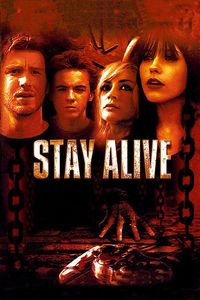
  • Stay Alive (2006)

    Stay Alive (2006)

    (In French, On Cable TV, September 2020) I could go on to live a long and fulfill life without ever hearing the cliché “If you die in the game, you die for real” ever again. But thanks to Hollywood, that’s not likely to happen—it’s the defining trope of the gaming-horror movie subgenre, and Stay Alive embraces it with a passion. Well, except that the death doesn’t immediately happen upon dying in the game—instead, the game is a way for Elizabeth Bathory is, I guess, be inspired as to how she will kill the gamer a few moments later in real life. Or something: Stay Alive is clear on the fact that if you die in the game, then you die in real-life, but the specifics are always hazy and subject to change according to the requirements of the screenwriters. This sloppy lack of rigour is one of many failings that condemns this mid-2000s teen horror film: To that, you could add uninspired characters, by-the-number horror sequences, William Brent Bell’s dull direction and a ridiculous portrayal of “gaming.” I’m going to be nicer than you’d expect about the obviously dated portrayal of mid-2000s computer graphics because that’s the most obvious target and we’re almost at the point where Stay Alive can be given the nice patina of retrogaming. In fact, I suspect that Stay Alive itself may appreciate a bit more over the next few years: As bad as it is, it can still be fun to watch as an endearing attempt at that era’s idea of teen horror and create the distance required for any mocking take. According to the usual nostalgia cycle, I give it about ten years before it’s fondly remembered by those born in 1990.

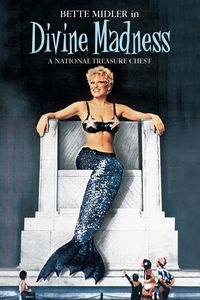
  • Divine Madness (1980)

    Divine Madness (1980)

    (On Cable TV, September 2020) I’m coming at Bette Midler’s concert film Divine Madness from a very different perspective than the paying audience did back in 1980—she was then known as a singer, with only one film under her belt. People saw the film as one way for the chart-topping entertainer to extend her reach to the movie screen. I, on the other hand (and like many cinephiles), now see Midler first as a comic actress—that’s what’s been captured and keeps her profile alive even as her earlier musical success has been eclipsed. From that perspective, Divine Madness is an enduring film capture of her singing abilities. It should not surprise any of her fans, no matter how they know her. Here, a thirtysomething Midler demonstrates the three pillars that ensured her success no matter the medium: beauty, charisma and talent. Blending bawdy comic patter with stirring performances and a grander-than-life persona, Midler tears through multiple outrageous costume changes, touches upon half a dozen musical styles, and keeps up the comedy from beginning to end. Director Michael Ritchie innovated at the time by keeping the energy high and the numerous cameras rolling: While this approach has become familiar over the years, it was a revelation at the time and helped distinguish the film from many more conventional concert films. While the time to see Divine Madness and rush out to buy tickets to Midler’s next concert is gone (although she is still performing on Broadway), we can at least keep the film as a capture of that specific moment.

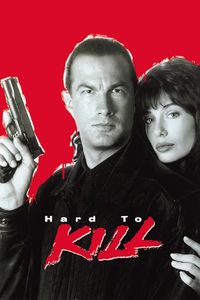
  • Hard to Kill (1990)

    Hard to Kill (1990)

    (In French, On Cable TV, September 2020) As much as it’s easy to laugh about Steven Seagal these days now that he’s an obese shadow of his former self, his first few films weren’t that bad. An example of this is Hard to Kill, a straightforward revenge action movie in which Seagal is surrounded by competent filmmakers, is in fairly good shape, and has an acceptable script. (Well, one that doesn’t dwell for a long time on physical rehabilitation after seven years of coma—Seagal is always ready to go!) It’s still not that good a movie, but at least it’s competent. Seagal, on the other hand, is still as stiff and downright strange here at the top of his screen persona—playing an action hero more than a character, and not doing it with any style or grace. Kelly Lebrock is a welcome addition to the package, but let’s be clear—as orchestrated by Bruce Malmuth, it’s an efficient action movie first, and then all sorts of Seagal-infused weirdness second. Anyone wondering what the fuss was about Seagal in his glory days could always watch Hard to Kill: they’ll at least get an accurate idea that Seagal could be better but, even at his best, wasn’t that much of a superstar.

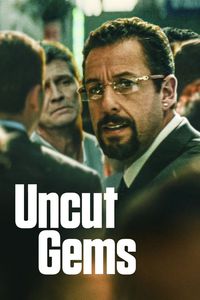
  • Uncut Gems (2019)

    Uncut Gems (2019)

    (Netflix Streaming, September 2020) Every few years, Adam Sandler comes out of his rote torpor and delivers a dramatic performance for good directors that impresses even those who aren’t big fans of his. Uncut Gems is the latest of those too-rare performances, a quasi-hallucinatory, anxiety-inducing trip within the dangerous life of a Manhattan jeweller/gambler at a time when all sorts of crises are reaching a dramatic point. Written and directed by the Safdie Brothers, Uncut Gems is not a pretty film in any way—it’s not slick or glossy or comforting. Every nervous edit, every discordant musical cue, every trashy backdrop seems calculated to make the film even more unsettling. This is absolutely not safe or classically entertaining. But while I wouldn’t normally cheer on such movies (let alone one that seems to think that basketball is one of the most important things ever), even I have to admit that Uncut Gems work rather well, and that Sandler is surprisingly good in this very dramatic -some will even say tragic—role.

  • Radio Days (1987)

    Radio Days (1987)

    (On Cable TV, September 2020) As much as I have a lot of unflattering things to say about Woody Allen, I’ll take a break from it in discussing Radio Days, as the film almost deserves to live on its own. The irony is that it’s clearly a semi-autobiographical tale, telling us about the late-1930s and early 1940s, when radio reigned over the lives of ordinary people, before TV took over everything. Our protagonist is a boy (an incredibly young Seth Green) who obsesses about the shows he hears—but from him the narrative sprawls to cover his family, his friends and the actors playing the characters he idolizes. It’s 85 minutes of thick nostalgia, and it’s so effective that it works even for those who weren’t there by a few generations. The historical recreation of New York City (Manhattan for the radio personalities, Queens for the protagonist) is convincing for a mid-1980s film. The soundtrack is really good and the episodic structure does come together more readily than most films of this type. It all culminates in a poignant send-off that also nods at an entire era. Radio Days may not be my favourite Woody Allen film, but it’s certainly in the top tier.

  • 52 Hz, I Love You (2017)

    52 Hz, I Love You (2017)

    (On TV, September 2020) If Hollywood can’t be bothered to do romantic musical comedies, let’s go overseas! Taiwanese entry 52 Hz, I Love You focuses on Valentine’s Day in Taipei, following a main trio plus an ensemble of supporting characters as they meet, break up, make up and get married during the course of the day. Taking its cues from classic Hollywood musicals, the film blends singing and a bit of dancing, zipping from one character to the other and having everything seem lost right until the heartwarming ending. It’s nothing wild or upsetting, but the Taiwanese atmosphere is unusual and the characters can be endearing after a while. 52 Hz, I Love You doesn’t reinvent anything (although the inclusion of a same-sex couple is unexpected and charming in its own way) but it does it rather well.

  • Waterloo Bridge (1940)

    Waterloo Bridge (1940)

    (On Cable TV, September 2020) I can’t say that I was all that impressed by Waterloo Bridge—playing from grand riffs on old-school themes such as a tragic wartime romance, it’s clearly meant to move audiences, give the filmmakers some space to stretch their “serious movie” muscles and (incidentally) court after the same audience that went flocking to the earlier 1931 film. By a stroke of good luck, the project attracted talent such as director Mervyn LeRoy, Viven Leigh and Robert Taylor, and the darkening news from the United Kingdom in the early days of the war added heft to the result. For modern audience, Waterloo Bridge plays as an old-fashioned weeper, perhaps a bit more daring than most considering that prostitution is a plot element of the heroine’s downfall and that the ending is a downer of significant proportions.

  • Destry (1954)

    Destry (1954)

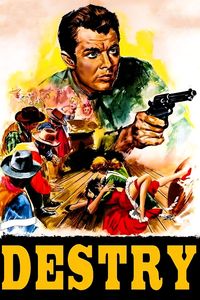
    (On TV, September 2020) Considering that I had Destry lying there on my DVR, even as I was watching the original 1939 Destry Rides Again, I had to take a look at the 1954 remake as soon as possible. Curiously, I’m not really disappointed. Sure, the original had none other than James Steward and Greta Garbo, whereas the remake has Audie Murphy and Mari Blanchard. Don’t look for additional plot twists, because this remake is almost shot-for-shot identical to the first film. But the story is fine enough that even another redo is a fun time. Blanchard is surprisingly good—to my eyes more animated than Garbo, which fits the character better. While Murphy isn’t Stewart, this very fact makes it easier to see Destry-the-character rather than the Stewart persona being called Destry. Plus, Destry is in colour—that’s not supposed to matter, but it does. The staging and cinematography are a bit less artificial, as per the evolving technical qualifies of filmmaking over two decades. While the original film remains quite good, there’s nothing specifically wrong with the remake either—as a portrait of a lawmaker out to pacify a town without resorting to excessive violence, it’s even inspiring.

  • Hollywood: The Dream Factory (1972)

    Hollywood: The Dream Factory (1972)

    (On Cable TV, September 2020) The more I dig into MGM’s history, the more it becomes even more fascinating. It’s hard to articulate how much of a movie factory the studio was in its heyday, although Hollywood: The Dream Factory does come close. Put together at the time of the infamous 1970 auction where MGM sold a very large chunk of its inventory, the film was also a chronicle of a studio that was a mere shadow of its former glory—As the footage shows, the back lots (also seen in the near-contemporary That’s Entertainment!) are run-down, grown to seed and not far away from its final 1974 sale. (Condos now occupy the space.) Hollywood: The Dream Factory is a mixture of shoddy video showing the 1972 auction and back lots, archival footage showing the studio’s heydays, and many clips from MGM films. Narrated with a wistful flair by Dick Cavett, it’s an excuse to dive in MGM’s back catalogue and explain why it was once an entertainment powerhouse. There’s some truly fascinating archival footage to go along with the narration—at its heights, MGM employed craftsmen in over 250 professions: everything required to create the illusion on movie sets. It was a star factory, betting on hopeful unknowns out of hundreds of applicants, signing them up in exclusive contracts and developing them through training and B-movies in the hope of capturing the next superstars—such as Clark Gable, as described here. Interestingly enough, some of the footage in the film looks comparatively terrible compared to what’s available there days (Singin’ in the Rain, for instance, or the deliberate downgrading of The Band Wagon excerpts in black-and-white to better fit in between other B&W films)—the art of movie restoration has advanced quite a bit since 1972, and we now see films in better shape than ever. Despite the obvious potential for hagiography, the film is not entirely self-congratulatory—probably an artifact of the cynical 1970s and not yet detached enough from the heydays to be nostalgic about it. It’s an incredible documentary for film buffs, although in retrospect, I would have liked to see more footage from the 1970 auction and studio backlot rather than the movies themselves—as The Dream Factory itself points out, the films are immortal and still available, whereas the documentary had a chance to document something very specific in history and I’m not sure it completely did to its fullest extent. Fans of classic films will further note that chunks of Cavett’s quasi-lyrical narration have been used as voiceover for one of TCM’s best promos: Let’s Movie 2017. “Once upon a time, in the place called California, there was an enchanted kingdom…”

  • Deathbed (2002)

    Deathbed (2002)

    (In French, On Cable TV, September 2020) Once upon a time, in the wild carefree days of 2018, I was very amused to find out that there was one horror film, Bed of the Dead, that focused upon a killer… bed. Now, in this accursed year of 2020, I am far less amused to find out that in between Bed of the Dead, Death Bed: The Bed That Eats and Deathbed, there are three movies with similar premises. I haven’t yet seen The Bed that Eats, but this Deathbed is a contender for the title of the worst film of the trio. Made for TV (usually, but not always a bad sign for a horror film), this is a low-budget, low-imagination effort in which a young couple moving into a haunted apartment discover a locked room that opens up just for them, revealing a bed that, we already know, has been the scene for a gruesome kinky murder a few decades earlier. Considering its pedigree, Deathbed’s gore is slight, the nudity is tasteful and the plot is strictly by the numbers, although the finale does amp up the sex, the gore and the plot twists—not enough to compensate, but enough to be slightly out-of-touch with the rest of the film. Tanya Dempsey looks nice as the heroine, but that’s about it wherever acting talent is concerned. Danny Draven’s direction is barely adequate and sabotaged by its muddy cinematography but the rest of the film is simply not very good no matter what. While not out-and-out terrible, this Deathbed isn’t much either. I suppose that the only left to do now is to watch The Bed that Eats.

  • Contratiempo [The Invisible Guest] (2016)

    Contratiempo [The Invisible Guest] (2016)

    (Netflix Streaming, September 2020) With thrillers, there’s always a danger in over-complicating things. Contratiempo squarely falls into that trap with a premise so convoluted that it only takes a second place to an even more delirious finale. Ironically, one of the ways to improve the experience of watching such movies is to spoil yourself rotten beforehand, so that the far-fetched developments don’t feel so implausible, and you can watch the craft through which the film puts its pieces together. I was generally aware that Contratiempo was a twisty thriller, and that did help—Suspiciously questioning everything in sight, I had anticipated nearly three-quarter of the finale, even though some other things had escaped me. The premise has to do with a couple having an affair causing the death of a young man. A few deceptive manoeuvres later, the woman coincidentally finds herself at the young man’s parents’ house, while the man is dumping a car in a lake. But the framing device, months later, has the man building a defence strategy with a high-powered lawyer who insists on knowing everything… and I’ve already told you enough to get you guessing accurately at elements of the conclusion. Despite Contratiempo’s very sober direction and cold cinematography, this is a wild script that throws in a locked-room mystery, impersonations, twisted relationships with a universe populated by only twenty people, and some subtext about rich people getting away with murder. The Spanish setting can be good for a change of pace from American productions, even though much of the story could be relocated anywhere else with little change. I hesitate to call Contratiempo a good movie—it’s slickly directed by Oriol Paulo with good acting and technical qualities and it will keep you entertained if you engage in narrative combat with the plot, but the script is perilously getting us closer to pure nonsense where anything and everything can happen regardless of whether it makes sense or has ever happened in the history of humanity.