Reviews

  • Show Girl in Hollywood (1930)

    Show Girl in Hollywood (1930)

    (On Cable TV, August 2020) There are two reasons to watch Show Girl in Hollywood, and both of them are historical. The first is a demonstration of how some classic stories have deeper roots than we can imagine. Even in 1930, here was a story about a young girl trying to make it in the movies, beating the first version of A Star is Born by a good seven years. Considering that it was such an early example, it’s no surprise if the plot beats are rough and obvious – saying that it’s cliché from beginning to end is evaluating the film against its countless imitators. (Digging into the film’s history, I see that it was preceded by an even earlier example of the form – 1928’s Show Girl.) Still, and this brings us to the second reason to watch Show Girl in Hollywood, there’s some charm in looking at how 1930s Hollywood looked, or portrayed itself as looking – The film being from Warner Brothers, it now travels ninety years in the future to reach us and show us a “vitaphone” premiere at the dawn of the sound era. Still, there isn’t much more than historical interest for modern viewers of this almost-forgotten film: there isn’t much humour or wit, the characters are featureless and the story has been done several times since then. But at least this is a ninety-year-old film that still talks about the evergreen pursuit of fame.

  • Mysterious Island (1961)

    Mysterious Island (1961)

    (On Cable TV, August 2020) I first read Jules Verne’s L’Ile Mysterieuse as a kid and was thrilled at the result. It was, I think, the first real robinsonade that I encountered, and I kept marvelling at the way our desperate characters could manage to recreate civilization while stuck on an island in the middle of the Pacific. It was also the first novel that drove the point home of an imagined universe, as it eventually featured Captain Nemo of another Jules Verne novel. I’m much older and jaded now, but I was still disappointed at the 1961 adaptation of Mysterious Island. If I hadn’t read the novel, I probably would have been satisfied with the big-screen result. But having such vivid memories of the original worked against the movie – where were the details of their survival against all odds? What are giant stop-motion creatures doing in that story? Why is there a woman in the cast of characters? The answer to all of these questions, obviously, as found in Hollywood’s need to make movies thrilling, exciting and have at least one female role. In doing so, it transformed Mysterious Island from a novel of survival to a Ray Harryhausen special effects spectacle, simplifying as much of the plot in order to squeeze in more special effects sequences. I’m complaining on behalf of my younger self, but I can understand the impulse – and I note that nearly every single Classic Hollywoodian Verne novel adaptation has committed the same sins, sometimes ending with gold (20,000 Leagues Under the Seas) and sometimes with dreck (From the Earth to the Moon) and sometimes with something in-between (Journey to the Center of the Earth). Mysterious Island is somewhere in the middle – the addition of Harryhausen’s stop-motion special effects is almost always something wonderful to watch, and it does compensate for many of the shortcuts taken in order to fit a leisurely detail-packed novel into a film’s running time. I still think that the third act could have been improved, and the character of Nemo given a better send-off. But it’s been seventy years since the film’s release and it’s not healthy to obsess over the choices three generations removed. As mentioned, this ranks somewhere near the theoretical middle of Verne adaptations – generally faithful at first, then increasingly Hollywoodized. Audiences went to see it, and that’s what mattered then.

    (On Cable TV, August 2022) My first glance at Mysterious Island focused on the deviations from the classic Jules Verne novel: the addition of gigantic monsters animated in stop-motion by the legendary Harry Harryhausen, or two female characters. All of this is fun, but really not in the spirit of the film’s Robinsonade. A second glance at the film, however, is tempered by having seen many other old-Hollywood Verne adaptations far less faithful to the source material. So, yes, it goes down more easily a second time around: It’s essentially faithful to the original text if it wasn’t for the monsters and the women, and those monsters do add a spectacle to the bones of the story, while the female character stop the film from feeling too much like a boys’ club. Much of the first half-hour, in fact, is a too-leisurely adaptation of the original material that eventually gets to the island action. But after that, it’s got a steady series of thrills all the way to the linkage with Captain Nemo and the other Verne stories. (Alas, this being from Columbia rather than Disney, the opportunity to have James Mason reprise his 20,000 Leagues Under the Sea role as Nemo was sadly left unused.)  Director Cy Endfield does just fine with what was that era’s big-budget special-effects blockbuster, and the charm of the production ends up being very similar to the impression left by reading Verne’s adventures, updated to the big screen. I have seen much, much worse even if I’m limiting myself just to other Verne adaptations.


  • All That Heaven Allows (1955)

    All That Heaven Allows (1955)

    (On Cable TV, August 2020) The Douglas Sirk formula that felt so daring back in the 1950s has been completely absorbed by today’s movie mainstream – to the point of seeing even more daring movies on daytime TV. I’m sure that All That Heaven Allows must have felt slightly scandalous back in 1955 – after all, it’s about a wealthy widow who gets romantically involved with a blue-collar landscaper working at her house, with a full coop of hen tut-tutting the relationship as hard as they could in the confines of a small northeastern town. There are complications and a break-up, but since there’s at least half an hour left in the movie, we know it’s not going to remain that way. Tonally, All That Heaven Allows is very much a melodrama: musical cues and near-parodic acting clearly highlight what you were supposed to feel, which actually acts as a handy guide for modern audiences. Jane Wyman stars as the widow, but Rock Hudson earns most of the attention as the landscaper, an essentially perfect man solely held back by her peers’ opinion of people like him. Much of the film has aged ridiculously – this stuff would be the premise of a Hallmark channel romantic comedy these days, not an overwrought drama. (It doesn’t help that I still have vivid memories of Far from Heaven, obviously inspired by this.) But one thing has aged truly well, and that’s the super-saturated colour cinematography of the film. From the first moment of the movie, as the camera pans over a bright, colourful, lovely autumn landscape, this is a film that makes a strong and deliberate use of colour as emotional highlighting. It’s quite impressive even if you don’t care much about the plot, and that may actually be one of the best ways to see All That Haven Allows even today.

  • Le notti del terrore [Burial Ground] (1981)

    Le notti del terrore [Burial Ground] (1981)

    (In French, On Cable TV, August 2020) I’m seeing far too many early-1980s Italian grindhouse horror movies in too little time and they’re all blending together in my mind. It doesn’t help that they’re remarkably similar to one another in theme, tone, budget and plot. Burial Ground doesn’t strike too far away from its contemporaries: a haunted mansion, decaying undead, over-the-top gore effects and a narrative structure regrettably focused on “the kills” is pretty much what you need to know about the film and whether you want to see it or not. The plot goes all over the place, not particularly concerned with choosing between being a haunted house story or a zombie film. Perhaps the film’s most distinctive aspect is also its most stomach-churning, what with a boy with incestuous feelings with his mother soon turning to cannibalism. What can I say – Burial Ground is that kind of movie. It’s not quite as bleakly sadistic as some entries in the genre, and the emphasis on the zombies means that it’s a bit easier to take than some of the other movies focused on cannibalism, but we’re really slicing thin in terms of distinctions and degrees here: it takes a jaded audience indeed to start arguing about which kind of cannibalism is most unpleasant, and I fear that with every horror movie I watch I stray further and further away from the light. Well, all right, then.

  • Nazis at the Center of the Earth (2012)

    Nazis at the Center of the Earth (2012)

    (In French, On Cable TV, August 2020) The only amazing feat ever pulled off by movies produced by The Asylum is how they manage to suck all possible enjoyment out of loopy premises. Their modus operandi of producing mockbuster in support of a business model predicated on audience confusion wasn’t enough – they also went for wacky premises as well, except with their usual abysmal standards. In Nazis at the Center of the Earth, well, you have the premise in the title itself. It leads all the way to a robot Hitler. But don’t get your hopes up: a mixture of incompetent horror schlock and incomprehensible low-budget trash, this is a film made to hook viewers with a premise or a trailer, but it doesn’t manage to fulfill those expectations by anything feeling like an acceptable movie. The plot is unimportant, but if you really insist, Nazis at the Center of the Earth has something to do with students discovering a portal to the centre of the Earth and, well, Nazis. There’s some serious gruesome and dark material in the minutes that follow, but little of it is effective: detached from reality and clearly made over-the-top to earn attention, even the worst stuff falls flat. The excessive violence and gore make the bad movie even worse (especially when they kill the cutest characters first) and the exceptional lack of imagination of a script seemingly accumulated from cheap jokes doesn’t help things. By the time robot Hitler shows up, it’s too little too late – the film doesn’t even have a perceptible sense of humour about itself, and whatever bad-movie self-awareness it may have is drowned in far too dark material to be enjoyable. If tortured, I may allow that as far as The Asylum movies go, Nazis at the Center of the Earth is probably one of the least awful ones. But we’re grading on a scale of zero-to-one stars here, so this doesn’t mean much. Just avoid, as I should have the moment I saw “Produced by The Asylum” on-screen.

  • Once Upon a Honeymoon (1942)

    Once Upon a Honeymoon (1942)

    (On Cable TV, August 2020) You really can’t go wrong with a combination of Cary Grant and Ginger Rogers, especially not in Once Upon a Honeymoon, a propaganda romantic comedy film (!) in which Grant (as a journalist) helps Rogers (playing a burlesque performer passing as a high-society woman) unmask her fiancé as a Nazi. Travelling through Germany, her fiancé seems curiously involved in every country that falls to the invading German forces, eventually forcing her to work for the American government in unmasking him. Once Upon a Honeymoon was clearly meant as propaganda considering how, despite its jolly tone, Rogers’ character ends up murdering her Nazi fiancé at the climax for the picture (he had it coming – it was self-defence) and everyone laughs it up as the only good Nazi being a dead Nazi. (They’re right, but it’s still a bit jarring considering how Grant makes funny faces in the middle of it all.) That ending sequence is the cap on what is indeed a bit of an uneven film, shifting between serious thriller and fluffy romantic comedy at the drop of a hat and then over again. It’s a certainly a curio in that Grant tries to play his character both as a romantic lead and a thriller hero. I’m not sure there were that many romantic comedies taking aim at Nazis, and I’ll always welcome one more. I’ll probably have another look at Once Upon a Honeymoon eventually, knowing what to expect.

  • Shakes the Clown (1991)

    Shakes the Clown (1991)

    (On Cable TV, August 2020) Perhaps the best thing anyone has even said about Shakes the Clown is how Martin Scorsese defended the film, saying that it’s “the Citizen Kane of Alcoholic Clown Movies.” That should give you an idea of the themes, plot and very specific atmosphere that writer-director-star Bobcat Goldthwait was going for in this intentional cult movie. Clearly aiming to dismantle any kind of romantic illusions about the lifestyle of a professional clown while at the same time creating a bizarre portrayal of secret entertainer sub-societies, Shakes the Clown fully indulges in its own reality. The comedy here is more conceptual than gag-based, especially as the film builds its universe in which performers spend their entire lives in clown outfits and makeup, where there are vicious rivalries between types of street entertainers, and where a murder naturally leads to a clown going undercover in another gang to find the truth. A surprising cast anchors the picture, from one of Adam Sandler’s earliest turns to Robin Williams (as “Marty Fromage”) in a very funny role as a mime instructor. Shakes the Clown’s most reliable asset is that it never tries to be all things to everyone: it plays in a very specific vein of humour and lets its public self-select out. As a result, it’s a bit obscure these days, and often brought up for laughs than any sincere admiration. But it goes to the end of its specific preoccupations, and it’s almost admirable for that. This being said, it’s still not for everyone.

  • Anacondas: The Hunt for the Blood Orchid (2004)

    Anacondas: The Hunt for the Blood Orchid (2004)

    (In French, On Cable TV, August 2020) The only question anyone can have about Anacondas: The Hunt for the Blood Orchid is not “Is it as good as Anaconda?” (Because, clearly, that’s impossible) as much as it’s “Well, is it fun to watch?” Clearly, we’re not in arthouse territory when a film reassembles all of the elements of the 1997 snakesploitation film (young attractive people; a jungle; gigantic snakes) and gives it another bigger go. The special effects are more digital than they were in the first film; there are more snakes, the “prize” hunted by the protagonist is a longevity elixir, and the cast is clearly pulled from the minor leagues. But, if you’re in the mood for a bog-standard monster feature, Anacondas should do the trick. KaDee Strickland is no J-Lo, Morris Chestnut isn’t Ice Cube and the almost-accidental cheesiness of the first film isn’t quite duplicated here, but the film delivers the kills, the snake, the adventures and the sweaty jungle that we could expect from a follow-up. That still doesn’t make it good compared to the countless other movies you could be watching instead, but if you’re dead set on “snake thriller,” then I guess no one can stop you from watching Anacondas.

  • Richard Jewell (2019)

    Richard Jewell (2019)

    (On Cable TV, August 2020) I find it fascinating that Clint Eastwood, once an unwitting icon of police vigilantism through his role in Dirty Harry, and later a conservative blowhard invited to the RNC, would choose as a late-career project something like Richard Jewell, which ends up being a scathing criticism of shoddy policing. Going back to the 1996 Atlanta Olympics, it dredges up the real-life story of the security guard who, after finding an explosive device and initiating an evacuation that saved many lives, was then accused by the FBI and media of placing the bomb in the first place. A years-long investigation eventually established his innocence (the real bomber was eventually arrested in 2003), but the media circus and popular portrayal of Jewell never quite got rehabilitated. Which is reason enough for Richard Jewell to exist, even with fanciful adaptations (such as portraying a journalist offering to exchange sex for story tips from the FBI) and shortcuts. A relatively unknown Paul Walter Hauser does very well in the title role, with such known actors as Jon Hamm, Sam Rockwell, Kathy Bates and Olivia Wilde to play supporting roles. Shot in Eastwood’s typically straightforward style, the film presents its case without too many stylistic flourishes, although taking some delight in vilifying the press along with the FBI officers convinced of Jewell’s guilt. It’s surprisingly cynical about the idea of cooperating with law enforcement when law enforcement is dead-set on completing the investigation quickly and calling it another case closed. Politically, you can see this film as all over the place: Critical of police, sure, but also critical of the media to an almost vituperative degree. Hardly perfect, but still interesting, Richard Jewell is going to make many film scholars very happy in how it either confirms and/or invalidates their entire thesis son Eastwood’s late-career filmography. For everyone else, it’s just an interesting film.

  • Marriage Story (2019)

    Marriage Story (2019)

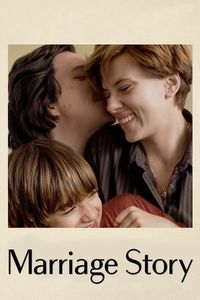
    (Netflix Streaming, August 2020) Oof. As a recent divorcee, let’s just say that Marriage Story (which chronicles the dissolution of a marriage) hits harder than it should — even if my own divorce was an uneventful walk in the park compared to the gratuitous cruelty that the film’s ex-spouses display toward each other. I haven’t always appreciated writer-director Noah Baumbach’s work before (When we Were Young: Yes; The Squid and the Whale: No), but he keeps getting better and in Marriage Story does manage a very uncomfortable success of sorts. Scarlett Johansson and Adam Driver play the estranged couple, incarnating characters that really aren’t meant to be admirable. A surprising supporting cast rounds the acting talent. The divorce steadily gets more complex, as one spouse moves across the country and both hire lawyers that spur them to take dirtier tactics. It packs a lot of drama in its final third, albeit with a conclusion that steps away from the cynicism that almost threatened to overwhelm the film’s late dramatic moments. Marriage Story isn’t my kind of cinema for various reasons – too intimate, not high-concept enough, a bit scattered in its dramedy and covering very familiar ground – but I can’t deny its overall effectiveness, nor the strengths of many individual scenes. Divorce is never easy, but Marriage Story certainly show how bad things can get.

  • Little Shop of Horrors (1986)

    Little Shop of Horrors (1986)

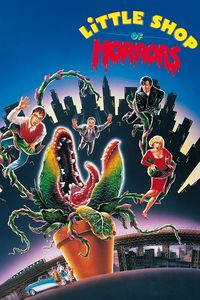
    (YouTube Streaming, August 2020) Considering how Little Shop of Horrors is a dark musical comedy featuring quite a bit of affection for a human-eating plant called Audrey, there are many, many ways the film could have gone wrong. Its first achievement is that it didn’t – the second is how good it ends up being. Deftly directed by Frank Oz, the film can at least depend on good performers – some veterans, some lesser-known, but all able to bring their best to their characters. This starts with Rick Moranis as the Nebbish at put-upon Seymour, continues with Ellen Greene’s squeaky-voiced performance as the adorable love interest, goes to a bad-boy supporting role for dark-haired 50s style Steve Martin, and finally to near-cameos by Bill Murray, John Candy and James Belushi. Then add in the bouncy do-wop musical numbers, the sweet romance, the crazy comedy of Martin’s subplot, the constant interruptions by the bloodthirsty talking plant and it all combines for a film that’s ridiculously hard to resist, even knowing it features a human-killing plant. The ending finds a way to culminate the craziness while still delivering a satisfying ending, but it was a close thing: Little Shop of Horror is famous for scrapping a very expensive large-scale original ending (following the off-Broadway play) in which Audrey kills the protagonists and goes on to conquer the world. It’s entertaining in a you-lost-the-game bad-ending kind of way, but it’s not the one most appropriate to the film, and hurrah to whatever studio interference that led to a revised climax. Get the physical version of the film that has both, and you’ll decide by yourself.

  • Bombshell (2019)

    Bombshell (2019)

    (On Cable TV, August 2020) It only took two years (and I’m not sure we can imply causation), but the first major #MeToo movie has arrived and by its nature it’s problematic. By “major,” I obviously mean “big budget, big stars, big topic” – in this case, Bombshell is about no less than sexism and sexual harassment within Fox News, as played by Charlize Theron, Nicole Kidman, Margot Robbie, John Lithgow and Kate McKinnon among others. Written by Charles Randolph and directed by Jay Roach, the film takes on the style of a dark, fast-paced comedy very much like their previous The Big Short, albeit less successful: there’s a hard limit to how much comedy you can wring out of volatile issues like sexual harassment. What’s more, anything about Fox News in today’s hyper-charged political temperature is going to get it wrong, either by being timid about it or feeling overblown. Bombshell, at a surface level, works rather well: the technical execution is more than adequate, the pacing is steady, the superficial look at how Fox News sells its brand of noxious fearmongering through blandly attractive blonde white women is on-target, and one can’t say enough good things about the central Theron-Kidman-Robbie trio. Hilariously enough for a film about packaging politics through near-identical broadcast blondes, Bombshell won an Academy Award for Makeup and Hairstyling. The film doesn’t go soft on the repulsive Roger Ailes and his actions, and at first seems to be aligning itself with the blowing winds of #MeToo retribution. Start digging just a bit deeper into the film, however, and things get murkier, confusing and irreconcilable. It’s hard to avoid thinking that, for all of their proven skills in making The Big Short so great, the Randolph/Roach duo may not be ideally suited to helm a film about women’s issues: Assuming (as one should) parity in filmmaking skills available to Hollywood producers, a female-driven creative team would have benefited from better optics, and delivered a more authentic result. (I’m not that certain that it would have been different or better, but I do believe in “what looks good” and male creative heads on a women’s issue film is not something that looks good – and retribution for #MeToo should at least begin with giving voices. We’ll talk again in a decade or so about the creative equality of cross-gender takes once we’re closer to true equality.) There are some fine arguments to be made as well about how Bombshell doesn’t quite go to the bottom of the issue of what Fox News sells – fear through sex appeal, through female newscasters who are harmed by the falsehoods they’re selling. But perhaps most vexingly ironic of all is the growing realization that, of all the news networks where this is taking place, Fox was first forced to confront and pay for its structural sexism. You can read op-eds and hot takes and blog posts and academic commentary on Bombshell all day long and end up even more mixed on the film than you could have thought possible. So, can Bombshell be both a fun watch and a film without a strong point to make? Maybe. For once, I won’t even try to wrap it all up with a definite conclusion.

  • The Egg and I (1947)

    The Egg and I (1947)

    (On Cable TV, August 2020) The dream of moving from the city to the bucolic countryside “to raise chicken or something” has long been a horrifying illusion, and there are decades of Hollywood movies to make the point. One of the funniest remains The Egg and I, featuring Fred MacMurray and Claudette Colbert as two city mice grappling with the not-so-much-fun reality of becoming chicken-and-egg farmers on a dilapidated property. It is, from a certain perspective, a horror movie – the newlywed bride (Colbert) barely has a say as she’s whisked off to rural depths, forced to slave away to support her husband’s crazy scheme, rebuffed in her basic desires and suffers the further indignity of thinking that her husband is being seduced by a local poultry queen. But it’s also very, very funny (plus, she gets what she wants in the end) – Colbert’s near-hysterical reactions are the perfect complement to MacMurray’s infuriatingly goofy charm and the film is further bolstered by strong performances from Marjorie Main and Percy Kilbride as “Ma and Pa Kettle” (a spinoff series would lead to nine more films for their characters). The episodic comedy-of-error can be repetitive at times (and there’s definitely a limit to the amount of humour you can wring out of poor Colbert being ignored and humiliated) but The Egg and I eventually succeeds by going back to the basics. After all, it is a “city mouse gets humbled by the country” kind of thing – the dated humour may be more visible now, but the underpinning of the subgenre always leads to an improvement by the end.

  • The Howling (1981)

    The Howling (1981)

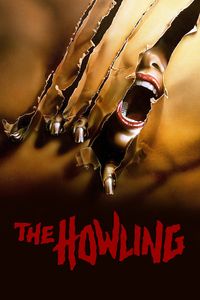
    (Youtube Streaming, August 2020) There is a lot of interesting stuff in werewolf dark comedy horror film The Howling – but I’m not too sure it all adds up to a better-than-interesting movie. There is a lot to like, for instance, in the blend of influences that end up in the script as a TV reporter, traumatized by an experience with a serial killer, is sent to a rehabilitation “colony” where she encounters werewolves. It’s not your average plot premise, and the blend of TV journalism with somewhat dubious new age therapy both feels very specific to the early 1980s and still provocative today. Add to that a typically clever directing job by Joe Dante, working from a script rewrite by John Sayles to add dark humour to the proceedings, and The Howling is a lot more than your average horror film. Then, perhaps most of all, there are the practical special effects all culminating into a lengthy werewolf transformation scene that’s both impressive (for its time) and a bit of a showing-off. The opening sequence is gripping, the closing scene is a nice attempt at collapsing the masquerade, and in-between we’ve got unpredictable moments all over the place. All of this should make The Howling much better than it is – but in the end it still feels like a disappointment. Much of this has to do with a scattershot approach that’s not as disciplined as it should be. The links between the serial killer that dominates the film’s first few minutes and the werewolf film that it becomes are preposterous. The pacing of the film is all over the place, and arguably shoots itself in the foot by having a mid-film transformation sequence far more impressive than the climax. Dramatic tension varies widely with great moments stranded in the middle of long stretches of nothing. While The Howling has a frank post-New Hollywood approach to the links between werewolves and animalistic erotic desire, it ultimately doesn’t do much with that (compare/contrast with The Hunger if you will). The actors do well without doing exceptionally well (maybe they were cowed by the special effects) and the direction is flashy without being sustained. In other words, The Howling does not amount to more than the sum of its parts, and, in fact, suffers when some parts subtract from the total. I still think it’s worth a look for fans of 1980s horror as one of the most daring takes on familiar material, but it doesn’t wrap it all up satisfyingly.

  • Premier juillet, le film [Moving] (2004)

    Premier juillet, le film [Moving] (2004)

    (On Cable TV, August 2020) It’s good, from time to time, to take a step away from your own culture and realize how some accepted aspects of it are, in fact, completely insane when seen from farther away. Such as the moving frenzy that culminates around July 1st in Québec – for historical reasons, the traditional end date for Québec rents is July 1st, meaning that roughly 150,000 people will move on that day. As a Franco-Ontarian suburban home owner, I was never directly involved in the madness (which mostly afflicts Québec-based urban renters) until fairly late in life when –despite my best efforts! — I ended up moving twice in Québec in mid-to-late June, with the July 1st deadline looming large in both cases. In any case, I’m glad that there’s at least one movie to take this bit of Québec culture and memorialize it, even if the result doesn’t quite make the most of the opportunities at its disposal. An ensemble comedy, Premier juillet follows a chain of three moving groups on July 1st – a young couple moving into an apartment vacated by a small family that’s moving from Montréal to a small village house where the son is moving away to Montréal to be with his sister, who has just been evicted by a landlord fed up with her behaviour and non-payment. It’s not an overly comic comedy, if you’ll pardon the expression: it ends well for everyone, but there are sombre moments and less-than-admirable characters along the way. The interlinked nature of the three specific stories sometimes takes away as much as it gives, in that I didn’t quite get a sense of climax to the stories, nor a really representative depiction of the moving madness of July 1st. Oh, some bits and pieces are likable and universal enough – the time-lapses of rooms being emptied or decorated hit hard for some reason. The very cute Sabine Karsenti plays perhaps the most level-headed character in the film, as she and her boyfriend start navigating the difficult give-and-take of living together. Featuring some Montréal-based actors who feel familiar but not overexposed, director Philippe Gagnon’s first full-length feature is watchable enough… but somehow not quite up to the comic mayhem that it could have been.