Reviews

  • All that Jazz (1979)

    All that Jazz (1979)

    (On Cable TV, September 2020) OK, all right, I was wrong. I was wrong to think of Bob Fosse as the single worst thing to happen to musicals in the 1970s. I was wrong to think, after Sweet Charity and Cabaret, that he singlehandedly killed the fun bouncy old-school Hollywood musical. Well, actually, the jury may be out on that last one—but my point is that All that Jazz isn’t just a depressing musical about death; it’s also a masterpiece. It sums up Fosse’s own life, roars with energy from one number to the next, boasts some terrific editing and actually has something fairly profound to say through the form of a musical. Semi-autobiographical, it’s a film about a chain-smoking, womanizing, cardiac writer-director who falls apart as he oversees editing on his last film and puts together a big ambitious Broadway show. The parallels with Fosse’s life during Lenny/Chicago are obvious, but All that Jazz also portends how Fosse would die of a heart attack not even a decade later. It’s not worth dancing around the spoilers here, especially given how the death of the main character is the point around which the entire film revolves—nothing makes sense thematically without it. For a movie about death, All that Jazz is surprisingly lively: the musical numbers are often upbeat, the rapid-fire editing gives life to the result and Roy Schneider is nothing short of astonishing as Fosse’s alter ego. It features some of Fosse’s best screen cinematography: “All That Jazz” is terrific, “Airotica” hilariously transgressive and “Bye Bye Life” caps it all off with an audience-slapping final shot. Let’s not discount the look at Broadway as well: the opening audition sequence is merciless, and the discussion about how to make money off a dying director is ultra-dark comedy. All that Jazz isn’t perfect (the third act drags, in classic Broadway fashion), but in retrospect it puts Fosse’s entire life and work in focus. It’s also a rare example of a downbeat modernistic 1970s musical that actually works for me—I truly expected to hate the film when I started watching it, and was a true fan by the end of it.
  • Lenny (1974)

    Lenny (1974)

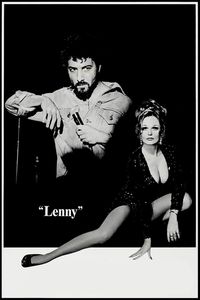
    (In French, On TV, September 2020) Presenting shock comedian Lenny Bruce as a folk hero, a free-speech martyr, a drug addict, an impulsive contrarian and a troubled soul, Bob Fosse’s Lenny is a showcase for a young Dustin Hoffman, an artistic statement and, sometimes, a mess. Deliberately shot in black-and-white, it’s a biography executed as a three-ring circus: Biographical recreation of high moments in Bruce’s life, mock-documentary shots of his stand-up routines, and contemporary recollections of people who knew him. Some aspects work better than others: the testimonials don’t add much, the stand-up moments intentionally vary in effectiveness, while the biographical sketches can be scattered. Nonetheless, we get a good idea of Bruce’s self-destructiveness, his comic genius and his troubled conception of relationships. Hoffman stars, which is both good and bad—on the one hand, he’s able to deliver the grander-than-life performance expected of Bruce. On the other, he never disappears into the role: except for sequences with a bearded Hoffman, we never lose track that it’s clearly Dustin Hoffman rather than Bruce. But as good as he is, Valerie Perrine (as his wife) is even better. Best of all is Fosse, who juggles all sorts of elements and only drops a few of them along the way. Like him or not, Lenny Bruce did bring out the hypocrisy of an era, and Lenny clearly highlights it.

  • Viva Knievel! (1977)

    Viva Knievel! (1977)

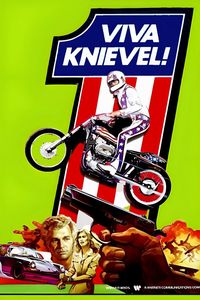
    (On Cable TV, September 2020) The curse of star vehicles is that you have to like the stars, and while Evel Knievel was still a shorthand for “daredevil stuntman” when I was a young kid, 1977 was a year of highs and lows for him. On the low side, a failed jump injured him in January, and later during the year he was arrested for assaulting his promoter, leading to the end of his sponsorship deals. On the plus side (although that would be debatable), there was the release of Viva Knievel!, a film featuring Knievel as himself, acting in an ultimate star vehicle. Mere words can barely sum up the inanity of the result, which starts (non-ironically) with Knievel comforting kids at an orphanage by handing them action figures of himself and ends with Knievel freeing a woman and kid from the clutches of an evil drug dealer played by Leslie Nielsen. In between, we get Gene Kelly acting as his mechanic, a preachy anti-drug speech interrupting the action (It even interrupts the film’s plot summary on Wikipedia), a few daredevil jumps and an anti-feminist rant that’s supposed to charm the film’s romantic interest—and does because it’s a star vehicle. If that wasn’t enough, the 1970s fashions are showcased in eye-injuring colour.  Viva Knievel must be seen to be believed, but that’s overhyping it—much of the film is deathly boring, with only a few “that’s stupid!’ moments to enliven things along the way. It does serve as a warning signal of sort to anyone hubristic enough to play themselves in a hagiography—Sic transit gloria mundi and all. One thinks a death-defying stuntman should know better.

  • Looney Tunes: Back in Action (2003)

    Looney Tunes: Back in Action (2003)

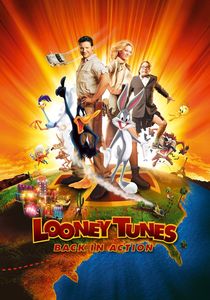
    (On TV, September 2020) I somehow missed Looney Tunes: Back in Action when it was first released in theatres (it had the misfortune of coming out in November, a month where I wrote rather than watched: looking at the release schedule, I probably saw Master and Commander: The Far Side of the World that week), and I still can’t believe I waited so long before catching up. I’ve always had a fond spot for Bugs Bunny and his friends, so seeing them in a feature film was like unearthing a time capsule prepared just for me. The one thing that distinguishes Looney Tunes: Back in Action from most of the movies is the sheer pedal-to-the-metal pacing of the jokes—barely five seconds go by without some kind of gag, and the anarchic humour comes with an added dimension of metatextual movie humour. Highlights include a reference-crammed visit to ‘Area 52,’ closely followed by the technical marvel of a painting-hopping sequence set inside Le Louvre. Brendan Fraser does well in the lead role, with some decent assistance from Timothy Dalton (playing off the Bond archetype) and an ensemble cast of supporting players. I’m not so happy with Jenna Elfman (wow, remember her?), who’s used more like a clothes rack for a suspiciously high number of outfit changes rather than an actress with comic timing (although that Paris outfit—whew). The animated characters do better, but then again, they could be redrawn until perfection. Yet, for all the nice things I can say about its pinwheel of gags, Back in Action isn’t quite what it could have been. Director Joe Dante has spoken cryptically about being heavily constrained during production, which is probably inevitable considering the special effects requirements and the characters being one of Warner Bros’ crown jewels. Still, there’s a stiffness, rarely technical but nonetheless perceptible, that stops the action from being as involving as it should be—some annoying characters are given too much time (yes you, Steve Martin) and some sequences don’t play as well as they should. Still, I liked much the result, and would have liked to see it upon release… even there’s some value into discovering something so long after.

  • Bus Riley’s Back in Town (1965)

    Bus Riley’s Back in Town (1965)

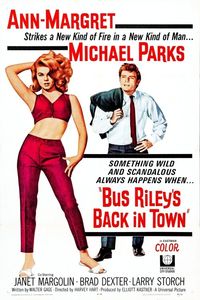
    (On Cable TV, September 2020) Even if 1967 is generally regarded as the year that movies changed forever (finally moving past the Hays Code and embracing a more naturalistic style), you can see a steady evolution of American movies throughout the 1960s, from black-and-white to colour, and slowly tackling modern issues in increasingly frank fashion. While Bus Riley’s Back in Town is not an exceptional movie in any regard, you can use it as evidence of how things were changing. Here we have a young man (Michael Parks) coming back to his hometown after three years in the Navy, trying to reconnect but feeling more alienated than ever. As a small-town domestic drama, the stakes are low but the plot is character-driven, what with him being seduced by an ex-girlfriend (Ann-Margret, playing a bad girl) now married and bored, his unwillingness to settle for a good but boring job as a mechanic, and his lack of acknowledgement that things keep changing. I was drawn into the film by Ann-Margret’s name, but her mid-1960s screen persona is here used for clearly dramatic effect, as she incarnates the temptation and regression that the main character must move past. Bus Riley’s Back in Town is not spectacular, but it’s considerably more intriguing than I expected, and as a slice of small-town America in the mid-1960s, it’s far more credible than many wilder and better-known movies.

  • Sweet and Low-Down (1944)

    Sweet and Low-Down (1944)

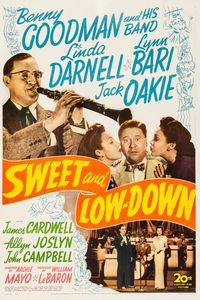
    (On Cable TV, September 2020) Few things get me thinking about the changing nature of pop-culture as much as seeing Classic Hollywood movies presenting band leaders as celebrities. Glenn Miller, Tommy Dorsey and Kay Kyser have each played or been played in major Hollywood productions of the time, and if Sweet and Low-Down has any claim to enduring worth, it’s in presenting Benny Goodman playing Benny Goodman in a fictionalized story about a band leader (Goodman, naturally) taking a young musician under his wing. There’s more conflict than you’d expect, especially at the end, but the story of the film is almost inconsequential when compared to having captured Goodman and his band doing what they did best. The music is particularly good if you’re a fan of jazz and swing (or even swing revival genres such as swing-house, which samples a lot of this material)—there’s a really good jam session in there that’s worth a listen. Goodman himself plays a mean flute in one of the film’s highlights. The film’s lack of narrative makes a bit more sense when you realize that it was made as counterprogramming for heavier military propaganda films on the home front, and as entertainment for the troops abroad. While Sweet and Low-Down is practically obscure these days (most people are more likely to associate the title with the 1999 Woody Allen movie—I know I did!), I really enjoyed the look at pop culture as it existed then. Benny Goodman is an immortal, though, and we’re insanely lucky to have preserved on film some of his charm and musical talent.

  • The Yellow Rolls-Royce (1964)

    The Yellow Rolls-Royce (1964)

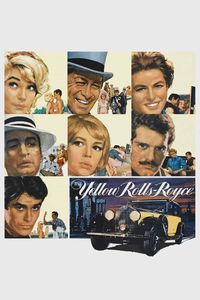
    (On Cable TV, September 2020) There are two ways of making a movie about an inanimate object, and The Yellow Rolls-Royce has picked the worst one. The best way is to depict the object as a character that has a beginning and an end, with several related trials along the way—it gets purchased, used, damaged, repaired, liked, lost, etc. The second way is far looser and consists in loosely stringing a few unconnected stories that all happen to feature the object. The Yellow Rolls-Royce would have been a lovely excuse for a multi-decade story about a car. Unfortunately, it ends up being the common thread between unconnected stories, taking us from the English aristocracy to a vacationing mobster and his moll, to revolutionaries in Nazi-occupied Yugoslavia. There is very little connective tissue nor progression between the three stories, which appears to be excuses to get as many stars in the film. To be fair, the cast is quite good: Rex Harrison and Jeanne Moreau get the ball rolling, as the Yellow Rolls-Royce is purchased by a pompous English aristocrat as a birthday gift for his wife. George C. Scott, Shirley MacLaine and Alain Delon push the ball even further in Venice, as romantic shenanigans complicate a summer holiday. Finally, the film hits its stride alongside Ingrid Bergman and Omar Sharif as she, a rich American widow, helps him, a resistance fighter, cross a national border and fight the Nazis. The Yellow Rolls-Royce can be worth a look if you’re a fan of these actors, or if you choose to focus on the third story and the very beginning of the first. Otherwise, it does feel like a disappointing mishandling of a potent premise. Too bad—I’m sure there’s still a heck of a movie to be told about the life of a car.

  • Bud Abbott and Lou Costello Meet the Invisible Man (1951)

    Bud Abbott and Lou Costello Meet the Invisible Man (1951)

    (On TV, September 2020) I’m slowly warming up to the Abbott and Costello comedy team—every successive film, I get a better sense of their approach to comedy, and Bud Abbott and Lou Costello Meet the Invisible Man is no exception. Made at a time when Universal was trying to extend the life of two of their most popular franchises by merging them together (if my count is correct, it’s the third of five ‘Abbott and Costello meet Universal Monsters’ movies), this ends up being a very loose take on the Invisible Man mythos, with our comic pair encountering a boxer who is injected by a formula developed by the original Invisible Man. The plot soon turns to a rigged boxing match, which obviously makes good use of Costello’s physique and the possibilities of a third invisible fighter in the ring. The special effects are surprisingly good even today and there are a few good laughs. I won’t ask much more. It’s not quite as good as Abbott and Costello meet Frankenstein, but it’s decently amusing on its own.

  • Kill ’Em All (2017)

    Kill ’Em All (2017)

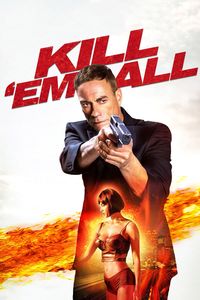
    (In French, On TV, September 2020) There is something halfway interesting in Kill’em All’s structure: As a nurse is interrogated by the FBI regarding a mass shootout at her hospital, we see, in flashback, the way the day unfolded. As a way to add interest to a bog-standard revenge story starring Jean-Claude van Damme, it’s not a bad idea. Alas, this promising opening quickly gets bogged down in other more serious issues. The lack of directorial prowess from Pjetër Malota is regrettable, but really unexpected from the film’s low-budget pedigree: as long as people are getting beaten up or shot, it’s not the staging or the cinematography that’s going to wow us. What’s far more damaging is that, as Kill ’em All advances, it feels to grow more serious than it should be. There’s a time for sombre reflections on the cycle of violence to emerge from the Balkan states’ wars, but there’s also tonal consistency issues—and while Kill ’em All tries to be a pulse-pounding action movie, it also stomps on the brakes as it moodily explains its revenge-fuelled backstory in a way that’s really no fun at all. But it gets worse, and you can actually sense it coming—By spending so much time on the nurse protagonist, the film clearly telegraphs that there’s more to her than meets the eye, and much of the film’s last twenty minutes are spent preparing, announcing, making, then reinforcing a perfectly obvious plot point that is clearly supposed to be a twist. It really doesn’t work—in fact, it makes the film much worse considering how much of its last minutes are spent going over perfectly obvious material. (Suzzzaaaaane with a Zed!) Once all is done, we’re not left happy, and the film’s lesser flaws are magnified. There’s bad casting, for instance: While it’s cool to see Maria Conchita Alonso again and Autumn Reeser is very cute in hospital scrubs and brunette bangs, Peter Stormare is all wrong in greasy hair and thick beard as a back-office CIA analyst. Worse yet is Jean-Claude van Damme, about twenty years too old to even fit in the chronology of his character—a casting mistake made even worse by the way his character reacts like an old man rather than what a younger character should have been able to accomplish. Those may have been forgivable with a stronger, more sustained script—but the multiple points of failure in Kill ’em All multiply to make the film feel even worse than it is.

  • Return of the Living Dead: Necropolis (2005)

    Return of the Living Dead: Necropolis (2005)

    (On TV, August 2020) I really wasn’t expecting much from Return of the Living Dead: Necropolis, but I was at least hoping for some continuity from the Return of the Living Dead series, which was (at least at first) markedly funnier than the Romero films. Alas… well, I clearly hadn’t been paying attention at the evolution of the series — which didn’t keep the comic tone starting with the third entry, and kept getting smaller and smaller production budgets. Necropolis ends up being about as good as a made-for TV film, with bland characters, formula-based plotting and muddy cinematography. There aren’t many bright moments to it all, and once you start counting, “The heroine looks cute in pigtails and glasses” as one of the highlights, you know there isn’t much left to discuss. (Although, it’s true: Aimee-Lynn Chadwick does look cute in pigtails and glasses.) Simplifying the series formula down to teenage antics (with an inexplicable side order of motorcycle racing) is not a good way to go anything worth praising, and Necropolis ends up being that most pitiable of creations: a dull zombie movie like so many others, not even worth a look unless you’re some kind of crazy completist with a strong tolerance to boredom.

  • The Big Country (1958)

    The Big Country (1958)

    (On TV, August 2020) In theory, there’s a lot that I should like about The Big Country – big expansive colour vistas of the American wild west, an undercurrent of how civilization tames the excesses at the frontier, a legendary feud between two grander-than-life characters, the unusual sight of Charlton Heston reduced to a supporting role, and a wealth of subplots to choose from. Alas, in practice The Big Country is often excruciatingly dull – the wealth of subplots turns out to be an issue when the film can’t effectively pick which one to develop, and still ends up at an excessive 166 minutes in length. I’m not saying it’s bad – The film noticeably perks up whenever Burl Ives makes an appearance, the last half-hour finally gets going with some action, leading to a few scenes that I really don’t mind. But it’s a lot of work to get there, and a better filmmaker would have found a better way. Certainly, a more economical one… although considering the mood of the time (during which Hollywood wanted to bring audiences back from the TV screen through widescreen colour epics worth the trip to the theatre), I’m not sure that this twenty-first century criticism of The Big Country would even have been a possibility during the film’s production.

  • Gun Crazy (1950)

    Gun Crazy (1950)

    (On Cable TV, August 2020) The history of a crazy couple on the run is longer than I first thought – never mind Natural Born Killers or Bonnie and Clyde when you can go all the way back to Gun Crazy to see more of the same (and I’m sure there are earlier examples). The first few minutes set an unpredictable tone, as an unusually gun-obsessed young man comes back from military service to find kinship in a carnival performer who is as good a sharpshooter as he is, but significantly crazier. As such couples are wont to do, they go on a criminal rampage, first robbing stores only to graduate to killing people when the heat closes in on them. The ending isn’t for those hoping for a happy ending, although it’s strikingly appropriate to the noir era. Peggy Cummins and John Dall are quite good in their roles, but in many ways it’s Dalton Trumbo’s script that hooks us in early with clever touches and never lets go until the end of their rampage. Director Joseph H. Lewis does justice to his narrative blueprint by keeping things moving at a quick pace, and adding just enough visual details to reinforce the rapid pace. Gun Crazy is, in short, a great example of a short and snappy classic crime film – not even 90 minutes, and over before you even get tired of its fast pace.

  • High Sierra (1941)

    High Sierra (1941)

    (On Cable TV, August 2020) According to many film historians, High Sierra is the film that put Humphrey Bogart on the map: He was already a steadily working, well-regarded actor for Warner Brothers, and his fame would be consecrated within the next year with The Maltese Falcon and Casablanca, but High Sierra is the film that made people stand up and take notice of him as a star. Watching it, it also strikes me as a strong early noir film, what with the dark forces of fatality stopping even a well-meaning character from a happy ending. Bogart here plays a character recently released from prison, but already planning a big heist. The film describes his own dramatic arc along the way from prison to recidivism, made more interesting by the character being tempted by the righteous path. This being an early noir, you can expect that it’s not going to end well… but it’s the journey that counts, and seeing Bogart ruminate on the choices his character is making. This may be the transition point between Warner’s 1930s gangster films and true honest noir as we’d know it later on – you can point to The Public Enemy one way, and Detour the other. It’s also quite entertaining to watch – Bogart looks terrific with a very severe haircut, torn between Ida Lupino as a fantastic bad girl, and Joan Leslie as the flip side of his morality. The result is impressive even today, and not merely as a precursor to Casablanca-era Bogart.

  • The Scarlet Empress (1934)

    The Scarlet Empress (1934)

    (On Cable TV, August 2020) It may be a few decades in the past, but the working relationship between director Joseph von Sternberg and actress Marlene Dietrich remains a model of successful artistic collaboration. He knew how to build a film around her persona; she knew how to give him exactly what he wanted. They both launched their own careers in Germany with 1929’s The Blue Angel, then went on to make six great Hollywood films at the dawn of the sound age, of which The Scarlett Empress was the fifth. Compared to many other films of the time, this is a film worth digging into, as Garbo portrays the transformation of Russian Catherine the Great from innocent debutante to hedonistic empress. Taking advantage of the rapidly closing Pre-Code era, the film suggests plenty of salacious material with barely repressed glee. Visually, it’s absolutely sumptuous, with a high density of delicately crafted sets, lavish costumes and elaborate camera movements. You can see allegories for early-sound filmmaking, Sternberg’s career, female empowerment and social critique –the demonstration of which has already been completed by scholars far smarter than I am. It does make The Scarlet Empress quite a viewing experience, although the trade-off may be that the film is more interesting than enjoyable – that it’s more fun to discuss than to watch. That’s already not too bad – many films of that time can’t even pretend being worth a look today.

  • Destry Rides Again (1939)

    Destry Rides Again (1939)

    (On Cable TV, August 2020) It can take a lot for a western film to grab me these days –it doesn’t help that there’s a seemingly infinite number of them in the Classic Hollywood catalogue. Also, perhaps more importantly, I don’t have any basic affection for the genre as I do for musicals or film noir – as a result, I tend to watch westerns and forget them almost immediately. But Destry Rides Again is slightly different. For one thing, it features none other than screen legends James Stewart and Marlene Dietrich in the lead roles – for another, it’s a somewhat less trigger-happy take on cleaning up a rowdy frontier town, with a baby-faced Stewart playing a deputy sheriff with an aversion to carrying or using a gun. (This being said, the film makes it crystal-clear that he’s an expert marksman when he wants to, which is a trope that frequently turns up in American “pacifist” fiction.) Meanwhile, Dietrich plays the femme fatale of the local drinking establishment, a powerful influence who could make or break the deputy sheriff’s efforts to get rid of the local lead hoodlum. The absolute highlight of the film comes when the two get involved in a saloon fight – or more specifically when she starts throwing objects at him and he’s bound not to answer in kind. Otherwise, Destry Rides Again does follow a generally satisfying narrative that promotes non-violence in the service of a taming-the-wild-west story. Or rather up to a certain point: true to form for American cinema, there’s a point where guns have to be used and bad people have to die. Still, the result is more memorable than many other westerns from the era.