Reviews

  • Firestarter (1984)

    Firestarter (1984)

    (In French, On TV, April 2020) 1980s Stephen King adaptations span the scale from terrible to terrific, and Firestarter lands right in the middle of it, meaning that it’s both mediocre and bland. Anyone who has read the novel will be disappointed at how much of the humanistic material has been stripped away, leaving in its place a blunt blend of paranoid thriller, paranormal powers, secret government experiments and endangered children. Some of it does work, mind you: the father-daughter relationship is effectively sketched, and Firestarter remains more interesting than it could have been because it doesn’t settle for a simple chase narrative. Special effects are not bad for a lower-budget mid-1980s film, with some spontaneous combustion out of thin air. A very young Drew Barrymore stars, and much scenery is chewed by George C. Scott. Still, while much of what works here is taken straight from the novel, the film itself simply refuses to go anywhere beyond a mediocre middle-of-the-road adaptation. There’s little life to Mark L. Lester’s direction, and aside from a climax that appropriately burns everything up, the film has trouble sustaining the pacing that a thriller should have. I suppose that King fans weren’t too disappointed in Firestarter back in 1984—after all, no less than seven King adaptations were released in 1983–1985. Not all of them could be complete successes.
  • Tumbledown (2015)

    Tumbledown (2015)

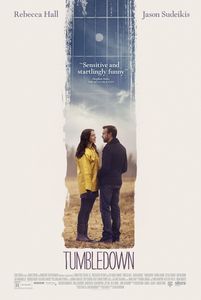
    (In French, On TV, April 2020) Rebecca Hall and Jason Sudeikis make for an interesting pairing in romantic comedy Tumbledown, although the “comedy” here may be a bit more muted than you’d think considering that the story happens during the female lead’s final stages of grieving for her dead husband. The plot has to do with a writer (Sudeikis, in an unusually toned-down role) travelling from New York City to Maine in order to complete his biography of a dead singer. Alas, the singer’s widow (Hall, as beautiful as ever) is not a willing participant and the complex relationship they have eventually moves toward romance. It’s all a bit predictable in a good way, with Hall’s character moving on from her grief into something else. It’s perhaps a bit sweeter than usual for those kinds of films, considering the more dramatic aspect of a dead husband hanging over the romantic component of the film. The late-winter small-town setting echoes the larger thematic aspects of the script and the darker undertones of the backstory. There are a few issues with the script—Sudeikis’ character, who has elements of wish-fulfillment for the female audience, isn’t always written in the most believable ways. Elsewhere in the cast, I did enjoy seeing another late-career role for Blythe Danner –and Griffin Dunne too! While uneven and arguably a bit too wrapped in the conventions of romance (although, you know, those are likable characters and we want them to be happy), Tumbledown isn’t bad considering its slow pace.

  • Hard Target 2 (2016)

    Hard Target 2 (2016)

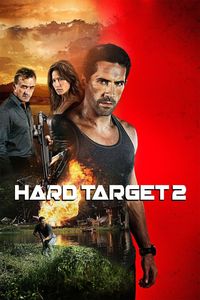
    (In French, On TV, April 2020) It had been a while since I had taken a look at a Roel Reiné film. Reiné, for those unaware, is a reliably competent vulgarian author specializing in B-grade action movies. He does a lot with little, usually shoots in poorer countries with lower production costs and in doing so gets amazing visuals and quality action scenes. This generally holds true for Hard Target 2 as well. A sequel-in-name only to the first 1990s film, this one takes place in Myanmar, with our protagonist being hunted for sport. Decent screen fighter Scott Adkins stars and Rhona Mitra plays a bad girl, but the star here remains Reiné as he uses audacious camera moves, aerial photography and all sorts of other stylistic tricks to give a very high level of polish to this low-budget film and, incidentally, pay homage to John Woo, who directed the first film. Of note: the movie’s introduction sequence/credit sequence is moved to the end of the film—weird. Despite Reine’s efforts at making things interesting on a low budget, Hard Target 2 is not a great movie… but it’s a well-executed one in its genre. Approach it as its own thing rather than a sequel and it will feel more interesting.

  • La belle et la bête [The Beauty and the Beast] (2014)

    La belle et la bête [The Beauty and the Beast] (2014)

    (On TV, April 2020) Considering the innate French-ness of most interpretations of The Beauty and the Beast story, from Gabrielle-Suzanne de Villeneuve to Cocteau’s first film version to both of Disney’s takes, it’s somewhat rightful that it should get another French-produced version. Fortunately, the Christophe Gans version of La belle et la bête is a sumptuous, even lavish adaptation that does offer a very nice counterpoint to other takes on the tale. Propelled by the legacy of Cocteau, it offers an unabashedly romantic take on the tale, boosted by sumptuous set design, great cinematography, magnificent visuals, as well as decent (if sometimes uneven) special effects used in interesting ways. The flip side to such a production is that it can feel insubstantial at times, especially if the romantic aspect doesn’t quite hit like it should. Also troublesome is the 19-year age difference between leads Léa Seydoux and Vincent Cassel, although considering that he starts as a monstrous man-beast isolated for decades in his castle, that’s not really as irritating as you’d think. By adding a lot of extraneous details, such as flashbacks to family affairs, the film does take a while to gel and, even then, may test the patience of some viewers not entirely taken by the poetic romanticism of the tale. Still, this take on La belle et la bête is a beautiful, remarkable film, well worth seeing even if you overdose on the Disney versions.

  • April Fool’s Day (1986)

    April Fool’s Day (1986)

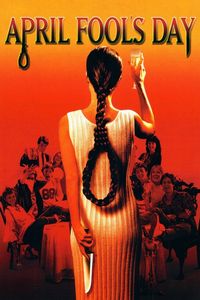
    (In French, On TV, April 2020) By the mid-1980s, the slasher genre was overexposed after its 1978–1982 boom and fast losing popularity—anyone trying to make one had to find a strong gimmick or else… maybe try a parody? To its credit, April Fool’s Day does try something different—but what may make it interesting to people (like me) who don’t like slashers may drive slasher fans away. Spoilers inbound! The film begins like so many slashers do, with a bunch of friends headed to an isolated resort for fun… except when they all start dying one by one. So far so dull, except that director Fred Walton seems to be surprisingly aware of clichés and working hard to maintain some kind of comedy even as the bodies pile up. It’s not always amusing or compelling (I don’t really consider it a comedy) but the real kicker that differentiates this film from the rest of the 1980s slasher craze is the ending, in which the “April’s Fool!” is revealed and it turns out that no one is dead. Which is the kind of ending to drive slasher fans crazy (except that they already did get what they wanted, kill after kill) while making non-slasher fans smile at the thought of a zero-kill horror film. Your perspective may vary quite a bit on this one, but one thing’s for sure: April Fool’s Day does have a memorable hook.

  • Tengoku to jigoku [High and Low] (1963)

    Tengoku to jigoku [High and Low] (1963)

    (On Cable TV, April 2020) While I keep notes on the movies I see, I don’t always finish or edit these capsule reviews until a few months later. That’s how I can tell you with some confidence that High and Low is in the running for my favourite Akira Kurosawa movie. Set in then-contemporary 1960s Japan, which has now acquired some historical patina, it’s a kidnapping thriller with plenty of procedural details, plot twists and turns, and a small but significant part for Toshiro Mifune. The child kidnapping plot is gripping enough, but where the film gets even more interesting is that paying the ransom will ruin the life of the man putting up the money, reinforcing the titular theme of class divide motivating the crime. It’s a compelling watch from beginning to end, even though the running time of 143 minutes seems too long, especially in the third act where things should be happening more quickly. There’s a sagacious use of an instrumental of the Elvis song “It’s now or never” as the soundtrack to the climax. Part of why the film is so interesting is its blend of very accessible thriller mechanics (adapted from the American Ed MacBain novel King’s Ransom) with the social environment of 1960s Japan—not a blend of high and low as much as the familiar and the unusual. High and Low is compelling to watch, and has enough substance to set it apart from mere genre exercises.

  • Akahige [Red Beard] (1965)

    Akahige [Red Beard] (1965)

    (On Cable TV, April 2020) I find writer-director Akira Kurosawa’s Red Beard interesting because it blends a streak of concerns and themes found in other films and other styles. It is a period drama but it is not centred on samurais. It is about public service, but not quite as bluntly as Ikiru. It’s almost refreshing in the way it goes for an epic recreation of a historical period… only to keep its gaze firmly focused on the quotidian struggles of semi-ordinary people. It is, on the other hand, very, very long—taking two years to shoot, requiring almost an entire town to be built, spanning a multiplicity of overlapping subplots, mini-movies, double flashbacks and plot turns. Toshirō Mifune is magnificent, possibly regal in the title role—a grizzled veteran doctor explaining how the world works (and more importantly how it should work) to a younger protégé. Red Beard did test my patience after a while, even though I do like a lot of its humanistic approach: in its current state in-between a movie and a TV show, I probably would have liked it better had it been shorter.

  • Monsieur Verdoux (1947)

    Monsieur Verdoux (1947)

    (Criterion Streaming, April 2020) Charlie Chaplin’s filmography is tempered by drama and pathos throughout, but Monsieur Verdoux is an outlier even by those standards. Completely abandoning the Tramp character and leaving much of the crowd-pleasing comedy out of sight, this late-career film turns out to be a very dark thriller about a man deliberately targeting rich women for murder. There is some comedy left, but it’s dark enough to be imperceptible: Chaplin plays the murderous protagonist as a frustrated politician, explicitly making parallels between his small-scale murders and the butchery of the then-recent WW2. Monsieur Verdoux is an atypical Chaplin, but an interesting one: He’s so associated with the Tramp character than it’s easy to tire of them both, so seeing him try something radically new is a way to reinvigorate anyone’s interest in his late career, and the remarkably dark humour for its era may explain how it has withstood the test of time. Still, don’t expect too much from the result, which suffers from authorial interference: the structure feels off, all the way to a conclusion designed to teach a harsh lesson rather than offer a climax of some sort. While Chaplin has been dark in movies other than Monsieur Verdoux, he has rarely been as bleak.

  • Angels with Dirty Faces (1938)

    Angels with Dirty Faces (1938)

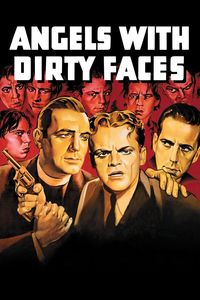
    (YouTube Streaming, April 2020) If you’re looking for a 1930s gangster movie, you could do much worse than Angels with Dirty Faces, a street-level crime thriller set in Manhattan that showcases no less than James Cagney and Humphrey Bogart in a plot that blends criminals, priests, kids, lawyers and fifteen years’ worth of resentment. Unusually enough, the film severely undermines the image of its lead gangster is the most effective way possible—by having him beg for mercy at the moment of his execution, showing just how much of a coward he truly is. Cagney has a great iconic role here, and he doesn’t let anyone forget it. Meanwhile, Bogart is in a stranger position: While the role is good and the Bogartian speech patterns are there, he here plays a white-collar scoundrel, underdeveloped when compared to his later roles. Meryn Leroy directs the film with sharpness and precision, whether it’s setting up a complex street scene, or fluently going over years of events through newspaper headlines and documents. The result is quite a good proto-noir film, especially when measured against similar movies of the time.

  • Murder! (1930)

    Murder! (1930)

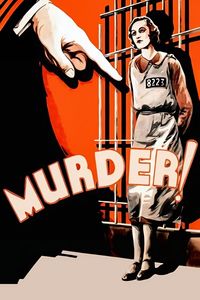
    (YouTube Streaming, April 2020) It’s amazing that Alfred Hitchcock’s career spanned six decades, from silent cinema in the 1920s to the New Hollywood of the 1970s. Of course, the farther back in time you go, the less distinctive his movies become and by the time we get to the period when cinema transitioned to sound, we’re not necessarily left with “Hitchcock Movies” as much as genre exercise in which he shows his increasing mastery of the craft. So it is that Murder! is a lower-tier Hitchcock, but still a serviceable film by the standards of the time. It does play with some favourite Hitchcock themes, including an innocent man investigating a crime, a look in specialized spheres (here, the circus and the theatre, as the protagonist is an actor) and a few playful winks to the audience, such as a final scene revealed to be within a play. It’s a clear step up from Hitchcock’s silent movies of only a few years earlier, although it only hints at what the writer-director would eventually be able to accomplish. Hitchcock fans will get the most out of Murder!, although early-thriller fans will probably enjoy it as well.

  • I’m Gonna Git You Sucka (1988)

    I’m Gonna Git You Sucka (1988)

    (On TV, March 2020) I’m not sure that I’m Gonna Git You Sucka is as distinctive today as it was when it came out. Black voices in cinema are significantly more numerous now, and you can now program at least a day’s worth of a blaxploitation spoof film festival. But there’s a semi-pioneering aspect to writer-director-star Keenen Ivory Wayans’s big-screen debut that should be highlighted along the film’s innate qualities. Not that I’m Gonna Git You Sucka is any less silly not knowing the context—although knowing more about Blaxploitation certainly helps, as the film finds roles (big and small) for stars of the earlier era of black-starring thrillers and rarely wastes an occasion to make specific references. It’s generally funny, although there’s some awkwardness to the way the film tries to be absurd and yet sustain a strong narrative—there are plenty of times where twenty-first-century viewers (perhaps trained on more modern takes on similar material) will wonder when the next joke is coming. To be fair, I’m Gonna Git You Sucka does find a surer footing in its later half as the gags become more visual, more self-assured and more focused. It even weaves in some stinging social commentary without overdoing it in the way that more modern takes have often done, so there’s plenty to dig into beyond just jokes. There’s a surprisingly good cast here, including Chris Rock’s debut in a small but showy role. The spoof comedy subgenre has certainly seen far worse—indeed, tracking the Wayan’s downward trajectory in matters of crudeness, it’s regrettable that the family didn’t follow in the tradition of I’m Gonna Git You Sucka rather than end up with White Chicks and digging downward.

  • Sgt. Bilko (1996)

    Sgt. Bilko (1996)

    (On TV, March 2020) One of the endearing things about the United States is their ability to be self-critical… at least once in a while. In-between the militarism of the national culture, you can find a surprisingly robust subculture of acid military comedy (Catch-22, Stripes, Buffalo Soldiers, Jarhead, etc.) taking potshots at the institution, its profligate waste and meaningless traditions. This is a lot of weight to place on a silly comedy like Sgt. Bilko (although, as the credits say, “The filmmakers gratefully acknowledge the total lack of cooperation from the United States Army.”), but I have a feeling that it wouldn’t have been a viable commercial project if it wasn’t for the veteran masses, who understand all too well what goes on within the US armed forces. Still, Sgt. Bilko wouldn’t be nearly as funny as it is without the match between Steve Martin and the titular character, a fast-talking smart-aleck trickster figure who happens to make US Army money flow in his direction. It’s quite a character, and it allows Martin to play up a good chunk of his physical comedy powers—in many ways, this plays closer to 1980s-era Martin than the syrupy family-friendly films he did increasingly often during the 1990s. (Not that Sgt. Bilko isn’t family-friendly—the film is rated PG despite its institutional anarchism.) In addition to the great cast (Dan Aykroyd, Phil Hartman, Glenne Headly and others), it’s a real pleasure to see Martin tear into the material—pratfalls, wisecracks, sure-footed self-confidence rampaging through anyone trying to trap him. But there we succumb once again to social analysis: Bilko is a symbol of what happens when unshackled self-interested capitalism makes its way inside the socialist enclave of military administration meant to provide benefits for all. Yes, Sgt. Bilko is a silly, fun, slightly dumb family comedy. But it also works as something more, and there’s where lies the interest of the film.

  • Sabrina (1995)

    Sabrina (1995)

    (On TV, March 2020) Remaking a Bogart/Hepburn movie is a losing proposition, especially if the original film was written and directed by Billy Wilder. Having established this, this updated remake of Sabrina is not that much of an embarrassment, as long as you’re in an indulgent mood. At the top of the ticket, Harrison Ford is good (but not Bogart and uncomfortable in the part), while Julia Ormond is all right, but can’t come closer to Aubrey Hepburn than anyone else. Plot-wise, the filmmakers do what they can to update the 1950s material to the 1980s, even if the most notable difference between the two films is in the technical aspects—including a notable improvement to the Paris sequence, which is actually shot in Paris. Otherwise, well—the story is still about an awkward man romancing someone significantly younger than him, blending business and old-money surroundings and romance. This Sabrina works if you soft-pedal a lot of the film’s fairytale trappings, excuse Ford for not being ideally suited to the role, ignore the age and/or class difference between the two, and gloss over the pacing. Which is admittedly asking for a lot. Surprisingly, the one thing that has aged rather well is the 1990s setting, now almost as distant and exotic to viewers as the 1950s were to remake viewers. (Note: this does not mean I’m advocating for another remake.) Still, there’s still some charm to this remake—Ford in glasses and suits, Ormond’s curly hair and the soft-focus gloss of 1990s romantic comedies. It’s not quite enough to dislodge the first film as the better Sabrina, but it’s just enough to make this remake its own entity.

  • The Garbage Pail Kids Movie (1987)

    The Garbage Pail Kids Movie (1987)

    (On Cable TV, March 2020) In case you’re wondering: Yes, The Garbage Pail Kids Movie is a real thing, and it’s repulsive. In case you’re wondering what it’s about, here’s a refresher: it’s a movie adaptation of a set of crudely humorous trading cards that satirized the syrupy-sweet Cabbage Patch Kids. I’m old enough to remember the furor around the cards when they were released in the mid-1980s, and while the negative reaction to the cards was overblown (there’s nothing in the cards that wasn’t done earlier by MAD Magazine, Edward Gorey or EC Comics), the aghast reaction to the movie adaptation is entirely justified. Literalizing the grotesque drawings and studied weirdness of the cards into live action leads us straight into the uncanny valley—using short-stature actors under plastic makeup to play the Kids is immediately heave-inducing, and the film doubles down repeatedly on its original sin through crude dumb jokes, amateurish filmmaking, perplexing staging, atrocious dialogue and whatever else can go wrong in a movie. As if that wasn’t enough, the film even has the audacity to push a message about beauty… that’s thoroughly muddled by everything the film does. The only question you’ll be asking is “whyyyyyy?“ While The Garbage Pail Kids Movie has acquired some notoriety as a cult movie in the past few decades, anyone even remotely tempted to watch it should be warned that it’s going to play as an endurance contest.

  • Bai she chuan shuo [The Sorcerer and the White Snake] (2011)

    Bai she chuan shuo [The Sorcerer and the White Snake] (2011)

    (On TV, March 2020) Jet Li stars in action fantasy film The Sorcerer and the White Snake and that has become a bit of a strong selling point now that Li has almost retired from acting. (He was ill for much of the mid-2010s and noticeably older when he recovered, which is a notable factor for an action star persona.) The film itself is… fine. The story has something to do with forbidden love between humans and snake demons, meaning that there’s a lot (and I mean a lot) of CGI being used to execute the near-incessant fight scenes within this film’s 93 minutes. The CGI, alas, is very, very rough—about 10–15 years behind Western movies at that point. (Chinese films greatly improved their CGI throughout the 2010s, but it remains a bit of a dodgy area.) The romantic aspect adds a bit of heart, but most of The Sorcerer and the White Snake is one fight after another while CGI stuff is thrown on-screen, meaning that it overstays its welcome despite its short duration. I found it entertaining but nothing more: somewhat different from western fantasy epics, but not necessarily worth the watch considering that there’s much-better similar material being done at a steady pace. Although, admittedly, without Jet Li.