Reviews

  • The Roaring Twenties (1939)

    The Roaring Twenties (1939)

    (On Cable TV, March 2020) Two things help The Roaring Twenties distinguish itself from other late-1930s crime dramas. The most superficial one is having both Humphrey Bogart and James Cagney in the same film, something that only happened three times — all within 1938–1939, as Warner Brothers was still establishing the limits of the ascendant Bogart’s screen persona. The more interesting aspect is contextual—this was Warner’s attempt to recapture some of their glory days of early-1930s gangster movies. To this end, the script takes a look back at the 1920s through a very sensationalistic lens: it posits a decade made of WWI veterans turning to crime in an attempt to climb up the economic ladder, something made easier than usual by Prohibition and its illicit opportunities. (There’s a contrast to be made here with The Best Years of Our Lives, or perhaps even the original Ocean’s Eleven.) This historical material is reshaped in somewhat classic late-1930s gangster film material, an instant homage from that era’s perspective that is lost on twenty-first century viewers. Fittingly for a Production Code film (one handicap that early-1930s gangster film didn’t have to contend with), crime doesn’t pay all the way to the melodramatic end. The Roaring Twenties is a pretty good film, no matter whether you care all that much about the Bogart/Cagney reunion—veteran director Raoul Walsh delivers what audiences then or now expect, and is easy to watch from beginning to end. Meanwhile, as I sit at home in COVID lockdown, I wonder how they’ll eventually nickname these just-beginning twenty-twenties.
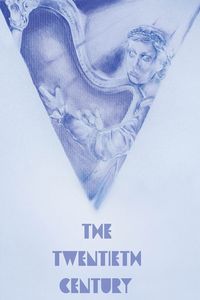
  • The Twentieth Century (2019)

    The Twentieth Century (2019)

    (On Cable TV, March 2020) Oh wow. Oh wooow, what a movie. A “biography” of Canadian Prime Minister William Lyon Mackenzie King, The Twentieth Century is an acid trip through Canadian history unlike anything anyone could imagine. Writer-director Matthew Rankin uses historical fact as a springboard to a demented reimagining of turn-of-the-twentieth-century events. The more you know about the period, the funnier it becomes—characters are perverted, exaggerated and made to fit into a nightmarish vision of Canada as part German expressionism and part wartime propaganda. Sexual perversion abounds, as is very Canadian repression and Big-Brother-style visuals. This all has to be seen to be believed, whether it’s all French-Canadians portrayed as cultish pacifists, three major roles played by crossdressing actors, an accurate depiction of Winnipeg, or Canadian politics portrayed as boarding school tests of character. (In lieu of a plot summary, the film’s Wikipedia page has a hilariously thoughtful “Historical Divergence” section.) The Twentieth Century’s limited budget is bested by extreme stylization, completely off-the-wall characterization and a profoundly ironic stance. If the film sends viewers rushing back to their history books, fine—a lot more of the film is based on fact than one would think, including some seemingly overdone elements of the climax. [September 2024: While King is widely known as one of Canada’s best Prime Minister, he was quite eccentric in ways that aren’t shown by this film—his fascination for Spiritism is well known, but a visit to his former domain near Ottawa will show that he was like a crazy cat lady, except for ruins—he even pocketed part of Hitler’s bunker during a visit to Berlin!] Still, even as I audibly cackled throughout the film, I am worried that someone will take the film as stone-cold fact. Hey Canadians, let’s keep this awesome inside joke within our borders, eh?

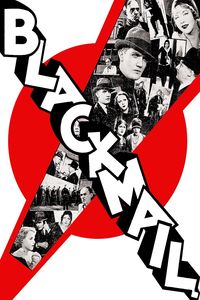
  • Blackmail (1929)

    Blackmail (1929)

    (On DVD, March 2020) Considering that Alfred Hitchcock’s career started so early in the history of film that some cinema basics hadn’t even been figured out, it’s tougher than you’d expect to identify his “first” film. Is it The Pleasure Garden? Is it his first thriller The Lodger? Or maybe it’s Blackmail, not only his first sound film but the first one ever made in Great Britain. As one could expect from a film at the dawn of the sound age, it’s a bit of an odd duck—the film was reportedly retooled midway through to take into account that new crowd-pleasing sound technology, so it’s not a surprise to see a few title cards show up and the pacing drags in an attempt to show what that fancy new talking thing was. Even then, however, Blackmail has its share of clever touches: the central murder is shown tastefully, and the story is not bad considering what Hitchcock (who co-wrote the script) had to work with. A few of what would become Hitchcock’s trademarks also make their way into the film. This being said, let’s be clear: Blackmail is not worth picking up as a light evening’s entertainment: it remains a bit laborious to get through, and should be of more interest to Hitchcock fans and scholars of early sound cinema.

  • L’âge d’or [The Golden Age] (1930)

    L’âge d’or [The Golden Age] (1930)

    (YouTube Streaming, March 2020) Hark, dear viewer, and abandon all hope of making sense of L’âge d’or. Notable for it being a collaboration between famed surrealists Luis Buñuel and Salvador Dali, it’s absolutely not designed to make sense. (Dali wasn’t a filmmaker, and neither was Buñuel at the time—legend has it that the finished film includes nearly everything ever shot during the sequential production.) Interestingly, it was one of the first sound movies made in France and yet it’s not designed to take advantage of that either: while there’s some narrative sound, much of the so-called plot is “given” through wall-of-text title cards. Not that you should pay attention to plotting: Since there’s no narrative consistency, either shrug or try to watch L’âge d’or on another level. At least it’s short. This being said, the plot isn’t everything and in the finest surrealist tradition, the film is occasionally very funny—and also very violent. (For added laughs, try to read the Wikipedia plot summary after watching the film, as it seems intent on imposing some rational order on a film that rejects any.) I made my peace with L’âge d’or not by trying to understand it, and by seeing it as a cruel playground to explore the relationship between humour and the unexpected—there’s plenty of the unexpected, although maybe not as much of the funny as I’d like.

  • Shall We Dance (1937)

    Shall We Dance (1937)

    (On Cable TV, March 2020) As much as all Astaire/Rogers romantic comedies are to be treasured forever, not all of them are created equal, and Shall We Dance is definitely in the lower tier. The plot is just as typically irrelevant as in their other films, except that it’s convoluted and uninteresting. Worse, the musical numbers tend to be underwhelming and forgettable. Only a few—like the roller-skate sequence—stick in mind and few of them are anthology pieces. One interesting exception is the “Slap that Bass” sequence (never has a ship’s engine room has been so clean, nor so art deco!), which showcases Astaire’s ideal of racial integration in a way that’s more easily digestible than other attempts involving blackface.  The relationship between both lead characters also seems healthier than the norm for Astaire films—something probably motivated by the growing rapport between the two. Still, there are plenty of missed opportunities and underwhelming execution here: the pacing is slow, it takes a long time to see the two leads dancing, there isn’t much of a romantic duet, and the comedy is lacking. Shall We Dance is still worth a watch (1930s Astaire on an off day is still superhuman), but it does fall short compared to their other movies of the time.

  • The Beverly Hillbillies (1993)

    The Beverly Hillbillies (1993)

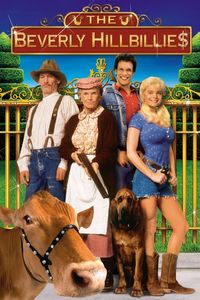
    (On TV, March 2020) I was frankly expecting the worst from The Beverly Hillbillies and ended up pleasantly surprised—the TV series that served as inspiration is known as a paragon of low-brow humour, and the very premise of Arkansas hillbillies striking oil and becoming rich enough to move to Beverly Hills seems custom-made for dumb humour. The good news isn’t that the film isn’t stupid, because it is—it’s that there’s some cleverness underlying the intentional stupidity. Of course, keep in mind that the film is directed by Penelope Spheeris, whose other films show a considerable amount of wit. The Beverly Hillbillies is clearly not as smart as in Wayne’s World here, but at least there’s the feeling that someone is paying attention to shore up what could have been worse. There’s constant self-awareness of the silliness of the script and plenty of winks at the audience even as the slapstick is going down. Making the most out of the limitations of the premise they’ve been handed, nearly every actor in the cast brings their A-game to the material. Special mention goes to Dietrich Bader, Erika Eleniak, Cloris Leachman, Lily Tomlin and Lea Thompson in various ways, some of them exceeding expectations (Eleniak), meeting them (Bader), looking cute (Thompson) or just being rocks of dependable humour (Leachman, Tomlin). Not everything works (there’s some crossdressing material that clearly reads as transphobic today) but if your tolerance for broad dumb comedy in which predictability is comforting, then The Beverly Hillbillies is a better film than you think. It works even better if your expectations are down on the floor.

  • Young Sherlock Holmes (1985)

    Young Sherlock Holmes (1985)

    (Criterion Streaming, March 2020) The main claim to fame for Young Sherlock Holmes is that it features the first-ever blend of live action and CGI character in a movie, in a short sequence that holds up surprisingly well even thirty-five years later. There’s more to that film—but not that much more, due to a few miscalculations. A fannish homage to Sherlock Holmes imagining him as a schoolboy, it goes the Spielbergian way of cramming as much stuff as the film can hold without exploding—and it’s debatable as to whether it didn’t. Not content with Holmes as a young man attending a boarding school, the film builds a less-than-credible Egyptian cult conspiracy (with a pyramid going undetected in the middle of London), adds almost-supernatural elements (hallucinogenic, but you get the gist of it), crams steampunk machinery and romance and while some of this works, the sum of it feels overstuffed. Neither director Barry Levinson nor screenwriter Chris Columbus are experienced enough to control the material, and the spillage is noticeable. Still, it’s not that bad—I liked the opening moments better than the increasingly ludicrous Egyptian material, and I suppose that reflects the focus on the film as well. Sure, Young Sherlock Holmes is reasonably entertaining—but you can’t help but think about the ways it could have been better.

  • A Woman of Paris: A Drama of Fate (1923)

    A Woman of Paris: A Drama of Fate (1923)

    (Criterion Streaming, March 2020) Interestingly enough, the first-even film written, directed and produced by Charlie Chaplin was a straight drama that did not feature him as an actor. A Woman of Paris: A Drama of Fate has a ponderous title, and a just-as-melodramatic plot with multiple missed connections for our lead romantic couple, tragedy often striking, and a conclusion meant to be moving more than anything else. Far more serious than even Monsieur Verdoux and Limelight, A Woman in Paris is a charming and definitely unknown oddball in his filmography—and you can’t even say that, “well, Chaplin wasn’t as well known as a comedian back then” because his short comedy films were quite popular by 1920: The Tramp itself dates from 1915. As for the film itself, well—A Woman in Paris is often a mean-spirited narrative, making heavy use of ironic coincidences and roughing up most of its characters. Whether you like this or not will be based partially on your tolerance for melodrama, and partly on your fortitude in tackling silent drama movies from the technically very rough early 1920s. It’s revelatory of Chaplin’s artistic intentions, but not particularly fun or entertaining.

  • Night of the Demons (1988)

    Night of the Demons (1988)

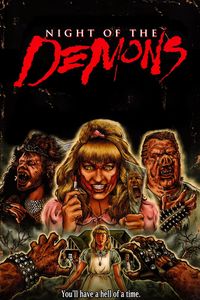
    (In French, On Cable TV, March 2020) While not the best horror movie of the 1980s, Night of the Demons is in the running for the most representative of the 1980s horror films. A rather charming blend of teenage characters, demonic possession, creepy setting, amusing dark humour, synth soundtrack, violence and nudity, it exemplifies a spirit of fun that’s been hard to recapture since the early 1990s. The story is dirt-simple enough to allow for multiple tangents—a group of teenagers decides to celebrate Halloween in an abandoned mortuary, and you simply won’t believe that there’s a demon just waiting there to possess and kill them all. Having ten teenagers around to have sex and summon the spirits ensures that there’s not only enough cannon fodder to go around, but enough variety to please a variety of favourites, further highlighted by the costumes they choose to wear. (Sure, Cathy Podewell is the designated all-American final girl—but I’m more of a Jill Terashita fan.) Don’t look for deep social themes or personal character growth or any of the niceties of the latest “elevated horror” here—it’s all about gratuitous nudity, gory (but not that gory) deaths, grotesque makeup (whew, that lipstick scene), teenagers foolishly getting into trouble and viewers having a good time. Toning down the gore is a wise choice; the over-the-top demonic possession of Night of the Demons is more fun than the realistic-ish threat of slasher psychos, and the knowing dark comedy from the filmmakers will find a ready audience among horror fans. You know who you are, you wonderful fellow degenerates.

  • The Actress (1953)

    The Actress (1953)

    (On Cable TV, March 2020) While adapted from the life of actress-playwright Ruth Gordon, The Actress (despite being scripted by Gordon herself) aims for amiable family comedy more than biographical sketch. By using Spencer Tracy as the sometimes-goofy family patriarch, it’s likely that director George Cukor meant to evoke fresh good of his then-fresh turns in Father of the Bride and Father’s Little Dividend. The theatrical origins of the story aren’t readily apparent in the film’s eagerness to vary locations, but the quality of the dialogue is there. Still, the film does feel (especially seventy years later) like a small-scale domestic comedy. The biggest conflict is whether the family will accept the daughter’s dream of becoming an actress, and this being a Classical Hollywood movie, you can guess how that ends. There’s an affectionate component to the film’s look back to 1913 Massachusetts, and an amiable tone to the family’s small-scale troubles. Anthony Perkins shows up (in his debut) as a would-be suitor. The Actress, in many ways, is charming in its mediocrity—something to watch if you haven’t got enough of Tracy’s patrician roles.

  • Super Fly (1972)

    Super Fly (1972)

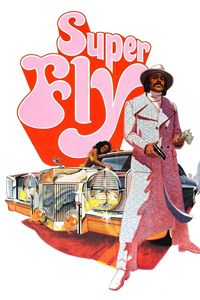
    (On Cable TV, March 2020) From the peak of blaxploitation comes Super Fly, a stylish crime story that’s arguably more interesting in-context than by itself. The story of an anti-hero drug dealer trying to go straight but being discouraged from doing so by nearly everyone he meets, Super Fly emerged in the blaxploitation wave launched by Shaft and others, and represented in many ways a near-repudiation of the Production Code’s crime-never-pays credo. At a time when black economic disadvantages were increasingly noted by scholars and pundits, Super Fly offered an alternative portrait of a self-made man, flouting conventions and morals by selling drugs… and becoming rich and powerful along the way. While audiences flocked to this portrayal of sticking it to The Man, not everyone reacted as favourably—blaxploitation was getting popular enough to bother some white audiences and to infuriate black community leaders trying to promote more traditional values. It’s also essential to point out just how much of the film was borne out of black filmmakers—written by Phillip Fenty, directed by Gordon Parks Jr. (not Shaft’s director: his son) and originally financed by black investors before being sold to Warner Brothers. At the same time, Super Fly made headlines thanks to Curtis Mayfield’s top-notch soundtrack—one which still exemplifies much of the sound of blaxploitation. Compared to those contextual elements, Super Fly-the-film seems primitive. It’s useless to belabour the point that criminal anti-heroes have become cinematic staples (especially in the black cinema of the 1990s that was, in many ways, the inheritor to the blaxploitation movement) and that the shock value of its murderous protagonist is no longer what it was. Still, the period atmosphere is exceptional (showcasing the urban malaise that gripped New York at the beginning of the 1970s, now thankfully a thing of the past) and the film has flourishes of style, such as a striking heist sequence told in still pictures. Super Fly may not be as purely entertaining as late-period blaxploitation, but it’s watchable enough, and culturally important as well.

  • Whip It (2009)

    Whip It (2009)

    (On TV, March 2020) The familiarity of Whip It, which blends a girl’s coming-of-age struggle with an underdog sports comedy, isn’t really a handicap. It offers reassuring guide rails in which to set this story of a young woman from rural Texas discovering her true character thanks to… competitive roller-derbies. Okay. Directed by Drew Barrymore and featuring a heavily female cast, Whip It can be seen as a charming girl-empowerment film (and one that’s more honest about it than today’s films, but I digress) with good performances and a very good soundtrack. It features a thick Austin atmosphere, some punk girl fun and plenty of small details. Ellen Page is quite cute in the lead role, but the entire cast is remarkable in-between Alia Shawkat, Kristen Wiig, Zoë Bell, Juliette Lewis, Barrymore herself and others. (Plus, Jimmy Fallon as an announcer.) In the end, Whip It is a celebration of oddball affirmation, and I’m completely on-board with it.

  • The Glenn Miller Story (1954)

    The Glenn Miller Story (1954)

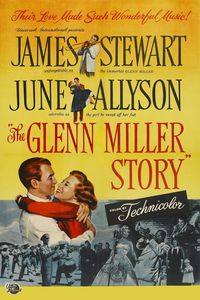
    (On TV, March 2020) The good news when a Classic Hollywood studio hires James Stewart to play a historical figure in a biography is that, hey, you’re getting James Stewart and his likable quirks. But the double-edge sword is that you’re also getting James Stewart, far more than the character he’s supposed to play. That problem certainly affects The Glenn Miller Story—we’re seeing Stewart’s tics and affable mannerism more than the band leader who had an outside influence on American pop music prior to WW2. (Miller would die in a plane crash during the war, as he was hopping from one place to another to entertain the troops.) Not that Stewart is most major deviation from reality here—true to form for biopics of the era (perhaps any era), The Glenn Miller Story makes substantial changes to the real events in order to make a movie. Plus, Stewart gets more credible after the first few minutes, once he puts on the glasses and we get used to the role. Considering this, you have to appreciate what’s on screen—numerous cameos by real musicians, a nice 1950s Technicolor glossy sheen (albeit with showy colour effects with an obvious colour gel wheel), and screenwriting that clearly understands the nature of the assignment: The film is easy to watch and enjoyable in how it uses a big budget to deliver the goods to the viewers. (Not that it’s always perfect—it features some of the worst snow I can recall in a movie.) It all ends abruptly, especially considering Miller’s fate. Sure, you can nitpick and poke fun at the thorough Hollywoodization of Glenn Miller’s life into a very typical 1950s biopic. But as far as those go? There’s much worse than The Glenn Miller Story.

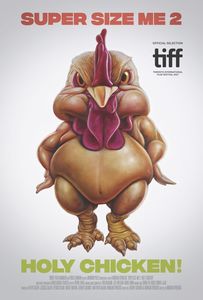
  • Super Size Me 2: Holy Chicken! (2017)

    Super Size Me 2: Holy Chicken! (2017)

    (On Cable TV, March 2020) It took three years, but Super Size Me 2: Holy Chicken! finally made it to cable channels. Why so long? Well, it turns out that writer-director Morgan Spurlock was one of the people exposed by the #MeToo movement, and distributors got cold feet when his history of sexual misconduct and harassment was publicized. Not that this is the only piece of negative Spurlock news over the past few years, as acknowledgements of alcoholism undermined many of his “Only McDonalds for 30 days” claims in the first Super Size Me. I know, I know: Shock documentary makes incredible claims, is later found to have been mischaracterized? This time around, Spurlock goes for showboating of a different sort, as he creates a pop-up fast-food restaurant and takes us behind the scenes of how fast food is marketed, made, told, jazzed-up and ultimately claims health benefits that don’t hold up to scrutiny. (In one trivial but telling example, the “burn marks” on the chicken breasts are painted rather than charred—otherwise the meat would be too dry.) This gives Spurlock an opportunity to explore the weirder edges of food regulation (“free-range chicken” technically qualifying if they’re offered a tiny open-air area outside their hatcheries), the deliberate misstatements of marketing and the ways the industry has tried to health-wash itself. Part of the intention behind Holy Chicken is an atonement of sorts—Spurlock examining the ways the industry has changed in the dozen years since his own Super Size Me has led to increased scrutiny from fast food consumers. His conclusion is hardly reassuring, but it’s all wrapped in ironic humour as his restaurant indulges into the practices he uncovers. Is it entertaining? Sure, as long as you can get over how Spurlock is front-and-centre of the entire film. Is it honest? Maybe! It does feel as if it’s more transparent about its documentary project than the first film, but then again, it’s also a film of talking heads explaining the new-restaurant marketing process we’re seeing on-screen. It’s probably worth a look if fast-food interests you, but don’t be surprised to budget more for groceries and less for fast-food once the credits roll. [September 2024: Thoroughly disgraced by his 2018 acknowledgements of sexual misconduct, Spurlock retreated from the public eye and died in May 2024. Holy Chicken ended up being his last film.]

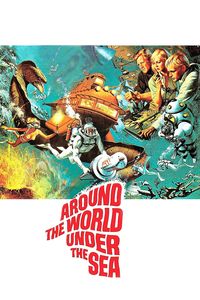
  • Around the World Under the Sea (1966)

    Around the World Under the Sea (1966)

    (On Cable TV, March 2020) If you ever wanted to see what a space-age underwater exploration movie would feel like, search no further than Around the World Under the Sea, which brings the can-do spirit of the American space program to the business of deep-sea exploration. Clearly a science-fictional thriller, it supposes a near-future world in which deadly waves require the installation of five warning sensors. This becomes an excuse for a didactic presentation of underwater attractions, with the scientists of the single submarine able to complete the work bickering among themselves to add a bit of drama—and there’s one single female character for exactly the expected reasons. Lloyd Bridges stars, probably on the strength of his turn in the earlier Sea Hunt TV show. (Both share the same producer.) Shot in colourful tones, the film is at its best during the underwater sequences. Combined with the rather charming mid-1960s fashion out of water, it all makes Around the World Under the Sea interesting enough—although still not that good.