Reviews

  • Alligator (1980)

    Alligator (1980)

    (On Cable TV, February 2020) As B-grade monster movies go, Alligator is remarkably good—and while this may not translate into a good movie on most scales, it does make for pretty good entertainment. Taking the urban legend to heart, this film follows the adventure of a police officer and a herpetologist as they fight a gigantic alligator turned loose in the sewers of “Chicago,” and turned to gigantic size by some pharmaceutical research shenanigans. Alligator does take a while to rev up, but by midpoint the film is able to show (in relatively low-budget fashion) a city gripped with terror and marshalling a grand police response. The highlight of the film is clearly the upscale party sequence in which the alligator eats municipal oligarchs, guests, servants, and cars alike. What’s interesting throughout the film is that the script by John Sayles (then a budding filmmaker, not the indie darling and script doctor he’d later become) constantly messes around with assumptions of the genre in utterly deadpan fashion, throwing various tangents (a nasty journalist, a big-game hunter, corrupt executives, etc.) and reining them in with a reasonably good sense of story structure. On the execution side, Robert Foster is quite likable as a jaded policeman fighting against the monster. Alligator is not particularly great even as a monster film (there’s a significant distance between it and Tremors, for instance), but it’s watchable enough and clever enough to significantly eclipse much of the genre. It’s particularly good for late-night B-movie fans.

  • Pride and Prejudice (1940)

    Pride and Prejudice (1940)

    (On Cable TV, February 2020) One of the appealing characteristics of Jane Austen’s Pride and Prejudice is how it charmed readers and filmmakers throughout generations, meaning that we can compare and contrast adaptions dating back to early Hollywood history. Now, there are Austen devotees that can give you lengthy explanations about the merits and issues of the 1940 version of Pride and Prejudice with far more detail and passion than I can. I’ll do my own best by underlining the cast (the lovely Greer Garson and Laurence Olivier in the lead role, with notables such as Edna May Olvier and Marsha Hunt in supporting roles), the lavish nature of the MGM production and the fact that none other than Brave New World’s Aldous Huxley contributed to the screenplay. It’s not necessarily a problem if the costumes here are all about the 1940s conception of a historical drama than actually being exact to the period—it’s the kind of thing that adds to the charm of a particular take on the material. Most importantly, Austen’s bon mots and comedy of manners have been adapted rather well to the screen, creating not only a hit back then, but also a nice little classic adaptation that still holds its own against more modern takes on the same source material.

  • Destination Tokyo (1943)

    Destination Tokyo (1943)

    (On Cable TV, February 2020) Not even Cary Grant in the leading role can raise Destination Tokyo’s profile above being a straight-up propaganda picture. Assembled in efficient wartime hurry, the narrative invents a dangerous submarine mission to plant spies near Tokyo in preparation for the Doolittle Raid. As one of the first big wartime submarine movies, it boldly invents what would become clichés of the form and indulges into blunt anti-enemy rhetoric –most notably by claiming that the Japanese devalue their women. If you can put aside Destination Tokyo’s straight-up propaganda value and methods, it’s not badly done: the portrait of life aboard a submarine is credibly portrayed in the buildup to the straightforward action sequences (even if the quarters are somewhat more spacious than in real life) and the Oscar-nominated script does fine with characterization. Destination Tokyo is also notable for decent-for-the-time special effects using a scale model in a water tank: they’re not all that credible today, but they certainly make their point. Grant is remarkable not simply for lending his usual charm to the production, but playing an out-of-persona dramatic role as a military man far removed from his usual romantic leads. But any prospective viewers should be reminded once more that Destination Tokyo was made to boost patriotism and recruitment at a time when the United States was at war against the Japanese with no idea about how it would end.

  • Night and Day (1946)

    Night and Day (1946)

    (On Cable TV, February 2020) As far as Hollywood biopics of famous composers go, Night and Day has three things going for it, even if the third is a double-edged sword. It’s in colour, it has good songs recognized as classics, and it features Cary Grant in the lead role as Cole Porter. But while Grant raises the profile of the film, no one ever mentions this film as one of his great roles: he’s not much of a singer, his screen persona is so distinct as to be unable to disappear in a specific role, and it’s not clear what he brings to the role that another actor couldn’t. Once past the songs, the colour and Grant, there’s not a whole lot left. Even Night and Day’s official TCM logline recognizes that it’s “fanciful”—which is code for saying that the openly gay Porter is here portrayed as straight, that nearly every biographical fact of his life has been altered and that the film doesn’t really care about accuracy—just reading his Wikipedia article is enough to make you realize just how “fanciful” the film is. Otherwise, Night and Day also sticks close to its Broadway-friendly topic by remaining resolutely theatre-bound, in subject matter and in staging. It’s all very old-fashioned even by 1940s standards, and that may not work for many newer viewers. Some forced comedy can’t quite shake the cobwebs out of this rather dull film, and its strengths can’t dispel its well-earned reputation as one of the least accurate Classic Hollywood biopics ever made.

  • Deadly Blessing (1981)

    Deadly Blessing (1981)

    (In French, On Cable TV, February 2020) Writer-Director Wes Craven has had a very strange career. His filmography includes everything between horror-defining classics and some of the ordinary derivative filmmaking imaginable. Deadly Blessing is closer to the bottom of the barrel, although not quite the worst. The story is pure farmhouse horror, as a widow and two visiting friends have to fend off the aggressive behaviour of a local sect of totally-not-Amish farmers. It’s all quite unusual in terms of what passed for slasher horror back in the early 1980s (the rural setting is distinctive enough) and while Craven’s execution still had some young-filmmaker energy, the sum of it all doesn’t quite make up something worth remembering. Weird ending, too; when is a slasher not a slasher, it perhaps should foreshadow that it’s not a slasher. Amusingly, Sharon Stone stars (not very well) in a very early role, while Ernest Borgnine doesn’t cover himself with honours with a histrionic performance as a sect elder. Some individual moments are interesting (the bathtub-snake sequence strongly suggests another bathtub scene in Craven’s later Nightmare on Elm Street) but Deadly Blessing as a whole is more dud than success—although, as any Craven fan knows, there are far worse movies in his filmography.

  • Four Horsemen of the Apocalypse (1921)

    Four Horsemen of the Apocalypse (1921)

    (On Cable TV, February 2020) I had three reasons to watch the 1921 version of Four Horsemen of the Apocalypse and none of them can be considered good ones. First, I wanted to measure this film against its far more popular 1962 remake; second, it was as good a reason as any to experience a Rudolph Valentino role away from his popular image as a seducer; and third, it was right there at the top of my list of the most popular films of 1921 that I hadn’t yet seen. Perhaps the most interesting point of comparison between this story of a family divided by war and its remake is that this one is about World War I; the remake would update it to include Nazis. As a nearly hundred-year-old film, Four Horsemen of the Apocalypse is unsurprisingly rough, and not just around the edges: while it was among the best that Hollywood could offer at the time, it’s not always an easy watch. As usual for films of the time, the camera never moves. As is specific to this film, the copious dialogue (adapted from a novel) regularly interrupts the flow of the film through title cards. But it’s still interesting: the production clearly had money to spend in large-scale sequences, and the resolutely anti-war message of the film remains effective. Meanwhile, Rudolph Valentino is both the Latin lover of legends and not too bad in a dramatic role. As a dive into 1921 cinema, this is probably as good as any film not from Chaplin, Keaton or Lloyd ever gets: it’s a serious drama that toys with ideas that would be once again very relevant less than twenty years later, and it does show the beginning of cinema as a feature-length narrative form. Four Horsemen of the Apocalypse didn’t go beyond my expectations, but it wasn’t a disappointment either. (I still like the flawed remake better, though.)

  • Fury (1936)

    Fury (1936)

    (On Cable TV, February 2020) Some social issues movies still resonate through the ages, and there’s something still very unnerving about Fury’s depiction of mob justice in a small community—the collective unconscious of the group demanding sacrifice and stopping at nothing—certainly not proof—to get it. There’s certainly something eerie in seeing director Fritz Lang, freshly escaped from Nazi Germany, taking on the project as his first American film. Spencer Tracy brings his everyman quality to the protagonist, accused of kidnapping and left for dead by a mob seeking vengeance. Fury still strikes a nerve despite constraints imposed by the Production Code and limited technical means—even in politically charged 2020, where performative political discourse quickly descends to personal accusations, it’s far too close to plausibility to be comfortable. Lang brings an outsider’s perspective to something—lynching—that was still very much part of American culture at the time, and does so in just a way to make the matter feel atemporal—maybe it’s still quiet, but the impulse toward mob justice is still very much there.

  • The Hustle (2019)

    The Hustle (2019)

    (On Cable TV, February 2020) In theory, the idea of a gender-flipped remake of Dirty Rotten Scoundrel (or Bedtime Story even earlier) doesn’t seem like a terrible idea: The French Riviera as a backdrop, rich idiots getting conned out of their money by quick-witted protagonists, with twists and turns until the credits. But that’s presuming a competent version of such a remake, and one that doesn’t sabotage itself. For instance, the biggest problem with The Hustle is Rebel Wilson—but she’s not the only thing dragging it down. Her usual trashy persona is a strong repellent to creating any sense of affection for the protagonists, and it’s telling that her brand of humour aims much, much lower than her equivalents in the previous films. Meanwhile, Anne Hathaway could have been an interesting foil as a con artist with far better manners, but the problem is that she can’t sell a laugh, and that the script doesn’t write her character wittily enough to compensate. This hints at the overall poor state of the screenplay, which seems to be so satisfied with the idea of female retribution against men that it doesn’t develop any additional reason to be on the protagonists’ side (and then pits both women against each other, undermining whatever it was going for). Several dumb set-pieces further erode any attachment we should have with the heroines—indulging into the worst and basest comedy instincts of filmmakers who obviously can’t handle any kind of sophistication. The Hustle is just one continuous misfire, but one that repeatedly back-pats itself without having deserved any of its self-congratulation. Both Wilson and Hathaway can be effective in other contexts (Wilson being best used as a supporting character, for one thing), but that’s not the case here. At best, The Hustle is a fluffy comedy that you’ll forget the next day, but that presupposes a lot of indulgence along the way.

  • Scarlett Street (1945)

    Scarlett Street (1945)

    (On Cable TV, February 2020) I do like Scarlett Street quite a bit, but I have a feeling I would have liked it even more if I had seen it not so shortly after 1944’s The Woman in the Window, of which it’s practically a remake with the same director, stars and themes. Here too, Edward G. Robinson plays a middle-aged man whose artistic impulses lead him to meet a dangerous woman (again; Joan Bennett) who asks him for a murderous favour that eventually takes everything from him. But if you’re not aware of The Woman in the Window, then Scarlett Street does play a bit better. It’s a steady slide from one slightly greedy action to a worse one, and things just keep escalating for our poor protagonist, who thought he could just indulge himself without anyone knowing. The hand of fate weighs heavily, and director Fritz Lang films it all in shadowy style. One thing that Scarlett Street does better than its predecessor, however, is not blink at the last moment—in true noir fashion, there’s no waking up from the nightmare that comes from corruption. You’d be hard-pressed to find many better early noirs, and both Robinson and Bennett are used to great effect here. I’m nearly sure that seeing this again in a few years, without first watching its predecessor, will make it even more effective.

  • Lili (1953)

    Lili (1953)

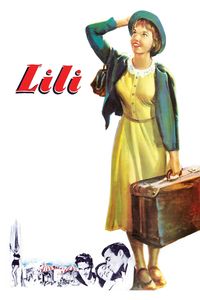
    (On Cable TV, February 2020) The comparison points between Lili and other hit movies of previous years underline that this was a follow-up film trying to capitalize on many of the same crowd-pleasing elements without quite having what it takes to pull it off. Itemizing the obvious similarities: MGM musical, picturesque French setting, Leslie Caron in the lead, and a big fantasy ballet number in the last third of the film. Yup; some studio executives saw Gigi or An American in Paris and thought they could do more of the same. It’s hard to fault their thinking—Lili did good business and was nominated for a surprising number of Academy Awards. Let’s remember that this was at a time when MGM could not do wrong. Unfortunately, it hasn’t aged so well: Mel Ferrer is good, but no substitute as a singer/dancer for someone like Gene Kelly, and Caron can’t quite sustain the entire weight of the film on her shoulders. Worse yet is the feeling that this is a rethread, a very deliberate attempt to capture past glory. The puppet motif seems a bit too self-satisfied, and the musical aspect of the film is underwhelming—there aren’t many songs, and they’re not particularly catchy. From a twenty-first century perspective, the idea of a thirtysomething man puppeteering a suicidal sixteen-year-old character into a relationship is far creepier than the puppets themselves. Even if Lili is not bad per se (it even features Zsa Zsa Gabor, if that’s your thing), it’s only worth a shrug when placed alongside the other musicals that inspired it.

  • Flying Down to Rio (1933)

    Flying Down to Rio (1933)

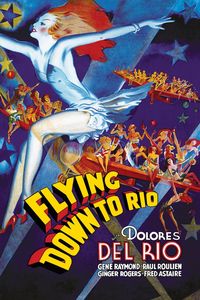
    (On Cable TV, February 2020) Everyone’s got to start somewhere, but for any viewer since 1934 it’s still a bit strange to see Fred Astaire in a supporting role in his first feature film Flying Down to Rio. It wasn’t his first feature film, but only by a technicality: A month earlier, Astaire showed up on screens for a single scene (playing himself) in Dancing Lady. Considering that there wasn’t anything to play in the earlier film, you can consider his supporting character role in Flying Down to Rio to be his first movie role as an actor—and more significantly, the first of his legendary pairings with Ginger Rogers. Any Astaire fan can clearly see that Hollywood didn’t know what to do with him yet—being relegated to a romantic subplot is something, but the way the camera captures his dancing (full frame but not full body, often obscured by others and relegated to the background, clearly not commanding the screen like he would in later films) is somewhat atypical for him. Still, Flying Down to Rio’s breezy fun still makes up for the less-than-reverent place given to Astaire: as a slightly naughty Pre-Code musical comedy that can escape to the exotic atmosphere of Rio de Janeiro, the film often feels significantly more risqué than the rest of Astaire’s career—the “Just a Gigolo” number is amusing, and his later films would most definitely not feature a dark-haired beauty lead actress in a two-piece bikini. One more thing distinguishes this early effort from Astaire’s later romantic-cad persona—his character shows up as a fiancé rather than going through the persistent-suitor routine… and I count this as an improvement of sorts. Aside from Astaire, Flying Down to Rio has a few other assets: the lead couple’s romantic adventures are entertaining, lead actress Dolores Del Rio is underused, Etta Moren is lovely as “the colored singer” (this is a direct quote from the credits) and the film ends on a very high note with an early special-effects showcase featuring a line of dancers on planes flying high above Rio. Still, the film’s most convincing asset here remains Astaire, who makes the most out of a secondary role and clearly shows his chemistry with Rogers. No wonder that by the following year, The Gay Divorcee would launch a long series of classic Astaire films, with or without Rogers at his side.

  • Car Wash (1976)

    Car Wash (1976)

    (On TV, February 2020) Instantly dated yet curiously timeless, Car Wash is the kind of comedy that takes you back to a day in mid-1970s Los Angeles to hang out with a bunch of eccentric characters clustered around a… car wash. It’s very literally a day-in-the-life film, as it follows an ensemble cast from morning to evening as they wash cars, play out their own dramas, meet interesting clients, and josh each other like employees in the trenches do. The soundtrack is really good (having an earworm of a theme song certainly helps), and while much of the cast is made of now-unknowns, the exceptions are certainly remarkable: seeing George Carlin, Richard Pryor and the Pointer Sisters in the same film is certainly worth it—and fortunately, this is exactly the kind of film that deserves the video credits it has at the end. Car Wash is not a film of big ideas (although there’s a recurring theme of class solidarity that punctuates it all) but of small moments, and that’s quite meaningful by itself. The sense of ersatz community is very strong here. Part of the reason why the film has aged very well, despite taking up things like a largely black cast and a flamboyant homosexual character, is that it’s written in such a way that everyone comes across in a sympathetic fashion, even if they’re marginalized. (And for all of us Joel Shumacher skeptics, he’s the one responsible for the script.) The sympathy-for-the-underdog thing supports a great atmosphere, good comic gags and moments that are occasionally silly but still meaningful and heartfelt. Car Wash is both a film that could only have come from 1970s Hollywood, and a film that has aged far better than many of its contemporaries. Comedy, respect, meaning—you can always go far with those three elements.

  • Skippy (1931)

    Skippy (1931)

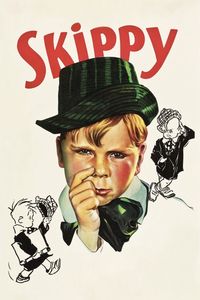
    (On Cable TV, February 2020) In the early days of the Academy Awards, being “Oscar nominated” didn’t quite mean the same thing as today. Being in its infancy as an art form, a popular entertainment medium and an awards show, the Oscars merrily nominated comedies for Best Picture, nine-year-olds for Best Actor (Jackie Cooper) and handed Best Director statuettes to someone who would go on to direct silly Martin/Lewis and Elvis Presley comedies. Yup, that’s Skippy for you—a broad crown-pleaser waiting at the bottom of the “Oscar nominees” list. Considering that it focuses on street urchins and dogs, it’s as old-fashioned as it is blatant in its intention to appeal to the popcorn crowds. (Wait, was popcorn a movie theatre staple back in 1931?) It’s pleasant enough as such—adapted from a then-popular comic strip, it’s relatively innocuous and today’s marketing geniuses would squarely market it as a family film. But if you’re looking for substance… there isn’t much of it. Director Norman Taurog got notice for wrangling a big cast of kids and dogs, which would be admirable if it wasn’t for the most noteworthy anecdote about Skippy’s production being about the director pretending to shoot the lead kid’s dog in order to get him crying on camera. Harrumph. I guess that’s why people go to great lengths to watch Oscar-nominated films—expand your horizons, and try to understand what they were thinking back then.

  • Here Comes the Waves (1944)

    Here Comes the Waves (1944)

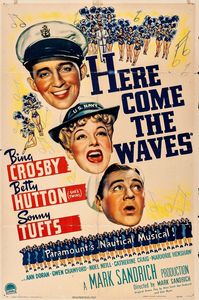
    (On TV, February 2020) I’m not sure you could build a more representative film of 1944 than Here Comes the Waves if you tried. Let’s see—World War II propaganda film exploring a small branch of the US armed forces and delivering a morale boost? Check. Workmanlike plot being used as scaffolding to the musical numbers the film is really concerned about? Check. Featuring no less than the uber-crooner of the era Bing Crosby? Definitely check. Launched a song that became a minor standard of American culture to this day? Also check, with “Ac-Cent-Tchu-Ate the Positive.” I’m not saying there weren’t better movies in 1944 (there were!), but that as a blend of propaganda boost and musical comedies, Here Comes the Waves is a slick, professional example of what Hollywood was up to at the time. It also works a bit harder at it than some of its contemporaries—sure, having Bing Crosby play a singer isn’t exactly asking much, but having Bettie Hutton play the roles of twin sisters is a bit of showmanship—and she does rather well at it. It’s all kind of cute whenever no one is singing (although the sexism is… there), and it’s usually better when it gets into the musical number. Why isn’t it better known, then? Well, there’s the vexing blackface bit right in the middle of the movie. Also, the fact that the third act loses steam—but mostly the blackface. (And what musical number comes with the blackface? You guessed it—“Ac-Cent-Tchu-Ate the Positive.”) In that too, I suppose, Here Comes the Waves is also an exemplar of 1944 Hollywood.

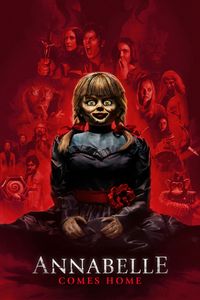
  • Annabelle Comes Home (2019)

    Annabelle Comes Home (2019)

    (On Cable TV, February 2020) From its featureless opening scenes onward, Annabelle Comes Home is a dull stretch of a watch. I’d mutter something about this being a fall from grace for The Conjuring series, except for the obviousness that great movies leading to increasingly uninteresting sequels and spinoffs is what counts as normal in the horror genre. Amazingly enough, this remains a sequel-to-a-prequel-to-a-spinoff-to-a-sequel-to-an-adaptation-of-a-so-called-real-story. (Considering its callbacks to The Conjuring, Anabelle Comes Home is a derivative project that really wants you to remember the first film.) Vera Farmiga and Patrick Wilson have extended supporting roles as bookends here, but much of the spotlight goes to the babysitter who’s stuck with the Warrens’ daughter and an evil doll trying to possess the both of them (along with a crew of nasties just to make this even more chaotic). To be fair, there’s a decent degree of polish to the 1970s recreation, Gary Dauberman’s workmanlike direction and the rather good cinematography—for all of its faults, Annabelle Comes Home isn’t a cheap straight-to-DVD sequel. But fair execution doesn’t really mitigate the derivative nature of the script, the uninspired jump scares or the feeling that we’re really trampling down whatever that was interesting about The Conjuring in the first place. Annabelle Comes Home strikes me as the kind of film meant to be seen three or four years after you’ve seen the original—long enough to want some of the same things, but distanced enough to not be compared with its predecessor too closely.