Reviews

  • Ski Party (1965)

    Ski Party (1965)

    (On Cable TV, November 2019) The Beach Party series takes an odd but not entirely unpredictable turn in Ski Party, as part of the gang heads for the mountains for snow partying. Our two lead lads, played by Frankie Avalon and Dwayne Hickman, have the bright idea to disguise themselves as women to learn all about what they need to know in order to seduce. Many wacky hijinks then follow, in the somewhat anarchic type of comedy of the series. The film frequently breaks the fourth wall, with even terrible special effects being part of the fun. It’s reasonably entertaining as a comedy, but the real discovery of the film is its soundtrack, featuring on-screen appearance by Lesley Gore (“Sunshine, Lollipops, and Rainbows”) and James Brown (“I Got You [I Feel Good]”) as themselves. The charming silliness is infectious, and Ski Party itself feels fun even if it’s an insubstantial add-on to an already frivolous series.

  • Astérix aux jeux olympiques [Asterix at the Olympic Games] (2008)

    Astérix aux jeux olympiques [Asterix at the Olympic Games] (2008)

    (On TV, November 2019) There were four live-action movies based on the Asterix comic books between 1999 and 2012, and there’s a fair case to be made that Astérix aux jeux olympiques is the worst of them. Sure, the first film had some issues in terms of how to integrate comic book exaggeration in a live-action setting. But the script was generally serviceable, and that’s more than we can say about this third instalment. The most fundamental of its mistakes is to make an Astérix and Obélix story in which both main characters are supporting players in another plot having to do with fairly minor characters. The detour to Greece for the titular Olympic Games is (in keeping with the original comic book) an excuse to parody the modern Games, but they keep adding more subplots that have little to do with the putative heroes of the film. Much of the film is spent wondering when we’ll ditch the useless characters and go back to the lead duo. The chariot race that composes much of the third act does bring some much-needed energy back into the film, although that’s not a constant—whenever you puzzle over some lame joke, scene or one-off character interrupting the flow of the action, head over to the film’s Wikipedia page and you will realize that you’ve just seen a celebrity cameo from someone you’ve never heard of as a future viewer hailing from a future distant enough from 2008, which is already starting to happen in 2019. But Astérix aux jeux olympiques keeps the worst for last, as rather than wrap things up neatly with a quick banquet scene, it drags on for another 5–10 minutes for the sole purpose of bringing back an annoying character from the previous film (played by infamous showboater Jamel Debbouze) as well as other celebrity cameos. Enough. By that time, we just want it to be over. The special effects are better than the previous film, but not used judiciously or even tastefully. The direction isn’t particularly strong, and while it’s fun to see French-Canadian Stéphane Rousseau in a leading role, the amount of screen time he gets is an issue when the main characters of the series are sidelined. At least Clovis Cornillac and Gérard Depardieu are not bad as Astérix and Obelix, with no less than Alain Delon as Julius Caesar. Still, there’s not enough to offset the tremendous waste that is the misguided script and the overindulgent execution.

  • The Hitcher (1986)

    The Hitcher (1986)

    (On Cable TV, November 2019) Narrative plausibility is usually a good thing when it comes to movies, but there are exceptions, and The Hitcher sure knows how to play with it. Starting out when a young man picks up an unusually intense hitchhiker in the middle of the desert, the film quickly dives into a nightmare once the hitcher promises violent death to the protagonist, and starts toying with him in broad day light—framing him for terrible murders, blowing up gas stations and helicopters, breaking in and out of prison and doing so with a determination that would exhaust even the Terminator. Halfway in the film, it’s fully justifiable to think that our protagonist has escaped rational thought and that the Hitcher (an icy performance from Rutger Hauer) is a figment of his imagination. But no—quickly enough, The Hitcher firmly establishes that the hitcher can be seen by the other characters and that may make him even scarier, because the film imperceptibly shifts from a psychological thriller to something akin to supernatural horror. The impossible events of the film can only be explained by non-natural means even if there are no overt fantasy elements. I’m not so fond of the film’s grand-guignolesque level of violence (killing the most sympathetic of the characters along the way), but it does help the film’s nightmarish atmosphere. Disappointingly enough, the version of The Hitcher that HBO broadcast on the eve of Halloween had a low-resolution muddy matted visual presentation—surely there’s a high-definition version lurking somewhere in their archives?

  • On the Basis of Sex (2018)

    On the Basis of Sex (2018)

    (On Cable TV, November 2019) The rise of US Supreme Court Justice Ruth Bader Ginsburg as a modern folk heroine is as unlikely as it is heartening in these times where lawlessness seems to be the norm for the highest office in the land. The Notorious RBG was a documentary account of her entire career, and it’s perfectly complemented by On the Basis of Sex, which chooses to focus on a very specific period of her life in order to illustrate her character … and provide a bit of an origins story as well. It begins with an extended prologue in which she goes to law school in the early 1960s (experiencing a predictable amount of sexism along the way), supports her husband throughout serious illness, has trouble getting a job as a practising lawyer and eventually joins faculty at a New York University. But the story really begins when she becomes aware of a sexual discrimination case involving a man being denied benefits on the sole basis of being male. Sensing an opportunity for establishing gender equality, she takes up the case and the film ends up chronicling her progress through a legal victory. On the Basis of Sex offers a stirring demonstration of rising to the challenge (her never having pleaded in court before taking on the case), benefiting from the support of her husband and using the law to break discrimination. It’s certainly an inspiring plea for the power of the judicial process—in addition to all of the usual arguments regarding the courts as instruments of social progress, there’s a really clever scene in which taxation is demonstrated to embody the values of its society (something that later feeds into her own victory). The historical accuracy of the film is reportedly quite high, what with the script having been written by Ginsburg’s nephew. There’s certainly something heartening in seeing her in a loving relationship with her husband, who provides a lot of support (emotional and otherwise) to her during the case. Felicity Jones is quite likable as Ginsburg, with Armie Hammer getting a good role as her husband; Kathy Bates also has a short but very visible role. It’s also a welcome return to the big screen for director Mimi Leder, who had been sent in exile far too long after the underwhelming Pay it Forward—it’s good to have her back, and her work here is as good as these historical dramas can hope for. While On the Basis of Sex does not reach outside the confines of its biopic form, it’s not a bad watch for audiences interested in the law, in equality and in one Supreme Court Justice who ended up capturing the popular imagination.

  • Mr. Magorium’s Wonder Emporium (2007)

    Mr. Magorium’s Wonder Emporium (2007)

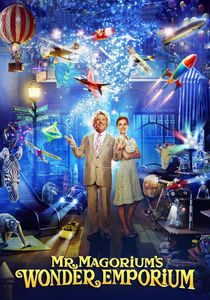
    (On TV, November 2019) I have a soft spot for movies celebrating (however cynically) the wonders of imagination and featuring off-beat characters, and I suppose that this is what Mr. Magorium’s Wonder Emporium has in spades, what with Dustin Hoffman playing the titular Mr. Magorium, who built a fantastic toy shop and is now planning on leaving the Earth. His plan is to pass the mantle over to a young assistant flatly played by Natalie Portman, cute but otherwise unremarkable in a somewhat thankless role. Jason Bateman looks like he’s having slightly more fun as an accountant who loosens up throughout the film. Still, the point of Mr. Magorium’s Wonder Emporium (what a title!) isn’t the plot or the characters as much as it’s the sight gags, magical devices and fantasy wrinkles (such as a building growing sullen) that are perfectly at ease in the universe created for the purposes of the film. Surprisingly enough, this isn’t adapted from a YA book—writer-director Zach Helm thought up the entire thing, and it’s the kind of colourful magical fantasy that can’t really exist just on the page. It’s all a bit childish, of course, but that’s part of the point of Mr. Magorium’s Wonder Emporium —imagination, creativity and fantasy don’t have to belong to kids exclusively. In fact, when adults take them up, it’s renamed as eccentricity … and that’s a message I can support wholeheartedly.

  • F for Fake (1973)

    F for Fake (1973)

    (On Cable TV, November 2019) We could easily rename F for Fake to F for Fascinating and it wouldn’t change much. Abandon any preconception of a standard narrative or documentary film, because from the first few minutes (which feature a suspiciously specific disclaimer that “everything we will tell you in the next hour is factual”), Orson Welles is clearly having fun playing with cinematic grammar, placing himself front-and-centre and messing with expectations. The subject matter, as we gradually discover (Welles doesn’t make it easy) is to talk about four fascinating personalities: Elmyr de Hory (celebrated art faker), Clifford Irving (journalist and de Hory biographer, discovered during filming to have faked an autobiography of Howard Hughes), Howard Hughes (mogul turned mysterious hermit, then far more mysterious than now) and finally Orson Welles himself (no stranger to fakery as a filmmaker and radio broadcaster). F for Fake a feature-length series of impressionistic digressions on fakery leading to a final fifteen minutes that goes somewhere unexpected. This is a film best seen with Wikipedia on hand, though, as it assumes quite a bit about what an early 1970s viewer would know and find interesting. My favourite part of the film is easily Welles’s larger-than-life presence himself, as the film allows him to charm the viewer and even witness as he holds court in a restaurant—if anyone ever wondered how much fun it would be to hang out with later-day Welles at his storytelling best, then wonder no more. Otherwise, there’s quite a bit of fun to see Welles subvert expectation and mislead his audience (as he tells us he’s going to do in the first few minutes). Welles buffs will also come away from the film far better informed about Oja Kodar, something that’s probably essential to understand Welles’s last few years and the tortuous path that The Other Side of the Wind took to its final release. There’s an entire film’s worth of supplementary material to be read about F for Fake, so keep that Wikipedia link close by.

  • The Rocker (2008)

    The Rocker (2008)

    (On TV, November 2019) I wasn’t expecting much from The Rocker — It didn’t exactly make a mark in the decade since its disappointing theatrical release, and Rainn Wilson is (at best!) a very specific comedian. But I wasn’t counting on the power of rock, or specifically a movie taking place in the rock band touring realm, taking on the comfortable tropes of the subgenre and playing with them. A journey to fame that we think may take the entire film ends up being resolved in the first act (thanks to some social media shenanigans that still ring true eleven years later), leaving the film the luxury of heading out on the road to live out the Rockstar lifestyle. (The Rocker does itself no favour by leaning too much on vomit humour.) Rainn Wilson is occasionally annoying but not as much as anticipated, and he’s clearly the wildcard that brings a straighter cast of character together. Otherwise, the film features early roles for Josh Gad and Emma Stone as teenage rock musicians, along with Christina Applegate playing hen mother/love interest. The soundtrack is about as great as what we could have expected from a movie with such a title. I suspect that anyone’s liking for The Rocker will hinge on how susceptible they are to rock band tour comedies and/or Wilson as a comic performer. But I was pleasantly surprised, without going to the extent of claiming it’s a good movie.

  • Mexican Spitfire at Sea (1942)

    Mexican Spitfire at Sea (1942)

    (On Cable TV, November 2019) It’s one thing to have star vehicles, and it’s another to have a series of films tailored to your screen persona. Anyone unfamiliar with Lupe Velez’s brand of comedy as an attractive but stereotypically tempestuous Latina will know everything they need to know from Mexican Spitfire at Sea, the fourth in a seven-film series all featuring Velez and her “Mexican Spitfire” moniker. Here, we’re aboard an ocean liner as our heroine thinks she’s finally getting her honeymoon but instead gets tangled in a mix of social climbing, husband shaming, impersonations and rapid-fire dialogue often punctuated by comic rages from the protagonist. At 72 minutes, Mexican Spitfire at Sea has no time for niceties, and no appetite for subtlety: this is classic community theatre farce material with mistaken identities and misunderstandings powering much of the plot, with the actors mugging for the camera so that we don’t miss a single double take, confusion or lustful thought. The ending is a bit weak, but it actually works quite well if you’re in the mood for that kind of sitcom-level comedy … and it works even better if you like the “Mexican Spitfire” archetype that Velez plays so well. Added attraction may come from the easy-to-digest pace of life aboard an ocean liner (you can cut production costs by going through the same five sets), funny dialogue and a performance from veteran actress Zasu Pitts that’s far funnier than anything she did in Greed. What may limit the appeal of the film is that the series is focused so extensively of a specific screen persona.  I was curious about Velez and sympathetic to that kind of role, but I’m not so sure that I’d watch all seven movies back-to-back. As a small discovery, though, Mexican Spitfire at Sea is just good enough to make me happy.

  • The Naked City (1948)

    The Naked City (1948)

    (On Cable TV, October 2019) This probably won’t make any sense, but The Naked City is not noir and yet not quite not-noir. A police procedural presented from the get-go as almost a documentary, this is a film that goes filming on the street of New York City, complete with an intrusive narrator to telescope events into expositionary montages. The narration is the first thing that grabs viewers in the film—the second is the authentic depiction of New York at the end of the 1940s. A murder has been committed, and the film details the arduous process through which the detectives investigate the crime. It’s not noir because it’s usually filmed during the day, and it features law-enforcement characters as the heroes. And yet it is not quite not-noir in that it abandons the romanticism of the city to take us to the venal humans that populate it, acting out of lust or greed in order to break the law and hurt others. Director Jules Dassin’s execution more than complements a decent plot in order to give us seven days in the life of New York City, following a murder that will soon be swept away like the previous day’s newspapers. Some good moments by likable actors do help in making the film interesting throughout—including a heartbreaking line about mourning a murdered daughter and terrific last lines that inspired many. (“There are eight million stories in the naked city. That was one of them.”) The Naked City has been imitated and surpassed by scores of other movies, but it has kept it patina of period detail admirably well. At this point, it’s as good a time-travel gets.

  • The Divorcee (1930)

    The Divorcee (1930)

    (On Cable TV, October 2019) Compared to 2019 romantic drama, there isn’t much to distinguish The Divorcee from countless other similar movies in which a married couple fight and we follow the woman as she deals with the aftermath. Good execution and a dash of style (including a rather good montage of her holding hands with suitors to show the passing of weeks) help a bit, but the story certainly isn’t exceptional now. But historical context is important, and The Divorcee becomes far more interesting once you focus on the fact that it comes straight from 1930. It’s a product of the early sound films era (so much so that the poster boasts “all talking!”), so don’t be surprised by the omnipresent hum of the audio nor the somewhat theatrical acting of the cast. But more significantly, it’s a novel adaptation from the pre-Code era, meaning that its sympathy and treatment of its protagonist (a quite good Norma Shearer), as she leaves her husband and navigates the shoals of her newfound freedom through multiple liaisons (without a moral consequence!), is considerably more sympathetic than anything we’d see until at least the 1960s. Consequence-free divorce was A Problem during the Hays era, and the film doesn’t consider it much of a moral stain as much as what you do when you can’t stay married. The ending gets unrealistically romantic, but there’s a happy ending for you. What’s more impressive is, well, the accessibility of the film for such an early talkie: it can be seen today as “just another story” set in the 1930s, which is considerably more than we can say from other films of the time. One curio: There’s a bit of French dialogue in the film, and it sounded to me like a cleaned up but authentic French-Canadian accent rather than the far more common European French accent. Alas, we may never correctly attribute it to anyone, as the credits for the film are typically short and the person speaking the dialogue is not fully seen.

  • The Silencers (1966)

    The Silencers (1966)

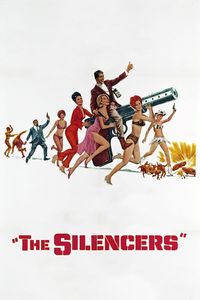
    (On Cable TV, October 2019) No doubt about it: The Silencers is a trip through time. First in the Matt Helm series of films made to lampoon the Bond series and featuring no less than Dean Martin, it’s like an authentic 1960s version of what Austin Powers was going for. Not as farcical, but certainly playing up the most ridiculous elements of the Bond formula: the women, the gadgets, the women, the lavish lifestyle, the women, the ridiculous villains and, of course, the women. (“NOT FOR CHILDREN,” shouts the poster after stating, “Girls, Gags and Gadgets: The Best Spy Thriller of Nineteen Sexty-Sex.”  But don’t worry—it’s tame by today’s standards.)  Rat-packer Martin is near-perfect as the suave womanizing agent Helm, whose conquests multiply throughout the movie. The women all look great, although classic Hollywood fans will be overjoyed to see the great Cyd Charisse strut her stuff in two dance sequences—her legs still go up to there, and she looks fantastic with longer hair. Don’t pay any attention to the plot, though: It’s all familiar plot devices meant to string the gags in the correct order, including a car fully equipped with a driver-accessible minibar and switch-activated privacy drapes for, well, whatever spies do in this kind of movie. Alas, the villain is pointlessly stereotyped along Fu-Manchu lines. Still, The Silencers is a big broad caricature, fully capturing a kind of spoof that would later be re-imitated. I watched it on a whim, attracted by the casting of Charisse, but ended up liking it quite a bit.

    (Second Viewing, On Cable TV, June 2021) I thought I’d have another look at The Silencers after only a few months… if only to verify that my wild memory of the film wasn’t an invention. It wasn’t. Revisiting suave Bond-like secret agents in a hyperbolic fashion, this film stars Dean Martin as (what else?) a top-notch special operative who serially romances a succession of beautiful women (for late-1960s definitions of “beautiful” – despite Stella Stevens doing her best as a redhead, contemporary viewers may be more intrigued by Daliah Lavi as the bad girl with the black-and-white hairdo). If you see nothing else, simply watch the first fifteen minutes, which begins with three successive dance/stripping routines by sultry performers (the third being none other than Cyd Charisse), followed by an introduction to the protagonist at home, surrounded by fancy gadgets and bedroom partners. It’s wild enough that Austin Powers fans will feel at home. The weirdness doesn’t stop after that, what with Martin singing some of his standards at the drop of a hat (even tuning in the car radio away from Sinatra to his own song), and the villain being a rotund white guy made up to look Chinese. It all leads (as it should) to a villain’s lair confrontation. Clearly, The Silencers doesn’t take anything seriously and neither should you: it’s intended as a spoof of 1960s Bond movies and if it works despite the obvious sexism and racism, it’s largely because of Martin’s charm and the excessive nature of the gags. When the protagonist (who became a fashion photographer in retirement) daydreams about the girls of his photoshoots and the film briefly pauses to allow them to prance a little on screen, its unabashedly retrograde nature almost becomes cute. Much of the middle section of the film can’t quite measure up to the wild introduction or the cranked-up final act, but the result is not without distinction. Keep watching until the end of the credits, if only to see what’s been identified as the first post-credit comic sequence in the history of movies. (Although be aware – weirdly enough, the version of The Silencers shown on TCM apparently does not include that post-credit sequence, even if it’s well-documented online.)

  • Pat and Mike (1952)

    Pat and Mike (1952)

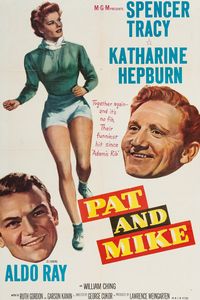
    (On Cable TV, October 2019) I’m on a mission to watch all of the nine Hepburn/Tracy movies, and Pat and Mike is not only the eighth… it’s one of the better ones. It’s certainly one of the nine in which the distinction between actors and roles is most blurred. Written specifically for the pair, Pat and Mike has Katharine Hepburn as a naturally gifted athlete who pairs up with a gruff sports promoter. Sparks fly, a fiancé is ditched and you already know how it’s going to end … but the fun of the film is seeing Hepburn playing Hepburn, relying on her usual clipped dialogue patter and not using stunt doubles for the sport sequences. She actually looks younger here than in some of her late-1940s films, probably helped along by a looser haircut and an active role. Meanwhile, Spencer Tracy is up to his gruff self in trying to keep up with her.  Occasional special effects add to the subjective impact of the comedy. Pat and Mike is not meant to be a deep or surprising film, but rather an occasion to spend some time with two likable stars doing what they do best, and it’s quite successful as such.

  • Joe Kidd (1972)

    Joe Kidd (1972)

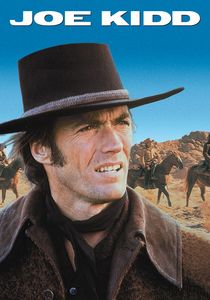
    (On Cable TV, October 2019) I do not envy anyone who takes on the challenge of watching all of Clint Eastwood’s westerns back-to-back. Sure, Eastwood’s westerns feature some all-time classics and the man himself has an exceptional charisma. But at some point, they all start to blend into each other without much to distinguish them. I’ve been able to avoid that ennui by spacing these movies at a few months’ interval, but I’d be shaky about any pointed quiz to differentiate them, and I think I’ve finally reached by saturation point with Joe Kidd. Eastwood once again stars as a quiet but capable protagonist, this time going after a landowner for a variety of reasons. While a reasonably revisionist western, Joe Kidd nonetheless fails to impress—it feels like rote repetition of familiar tropes, with only a few quirks to perk things up throughout the film. The best flourish comes near the end, as a train is used to smash through a saloon and instigate a brief shootout. Otherwise, I’m going to have problems even remembering Joe Kidd in a few days, let alone identify what makes it different.

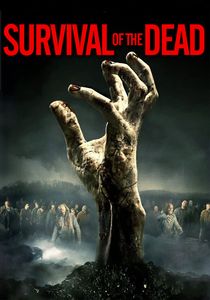
  • Survival of the Dead (2009)

    Survival of the Dead (2009)

    (In French, On Cable TV, October 2019) For horror completists, there are a few good reasons to watch Survival of the Dead, the biggest reason being that this isn’t just George Romero’s sixth zombie movie, it’s also the last one he directed before his death. As such, you can expect the film to go beyond just the usual post-apocalyptic premise: Romero has done all of that already, and he’s free to explore a different kind of world, farther along the timeline than the zombie uprising and its immediate aftermath. At times, we do get a glimpse at this restlessness to go beyond the obvious. Our characters are growing comfortable in the zombie-dominated world, the Internet somehow remains operative, and there are a few settlements advertising for new inhabitants. CGI means that zombies are grosser than ever and dispatched in evermore creative ways. Survival of the Dead being shot in and near Toronto, there are a few likable Canadian actors in the mix despite their lack of name recognition: I particularly liked seeing Athena Karkanis as a tomboy soldier (her introduction is remarkable), and Alan van Sprang does have screen presence. Alas, none of this is enough to outweigh the script’s bad ideas and bland development. Recreating a Hatfield-vs.-McCoy family feud on an island off New England’s coast really isn’t as interesting as Romero must have supposed, and neither is the progressive domestication of zombies into something that doesn’t have to eat human flesh. Let zombies remain targets, I say. It doesn’t help that Survival of the Dead, like almost all of Romero’s zombie movies, ends up going over the same fatalistic territory: the centre cannot hold, humans will kill each other if the zombies don’t, and the human population past the apocalypse will just keep getting smaller and smaller. After six instalments, this is tiresome and should have been the first assumptions to be revisited if Romero truly wanted to explore new territory. In the meantime, Survival of the Dead ranks low in his filmography—dull, meandering and meaningless, it would have been utterly unremarkable in anyone else’s hands.

  • I Spit on Your Grave (2010)

    I Spit on Your Grave (2010)

    (In French, On Cable TV, October 2019) I’m not going to excuse 1970s trash horror thrillers, but they did have a rawness that excused some of their excesses. If nothing else, you can rationalize the gore and nastiness by the thought that not that many people worked on the result. There’s something slightly more disturbing, however, in seeing the same trash plotting being executed as a slick nicely shot higher-budgeted contemporary remake. The exploitation intent remains the same, but clearly far many more people have worked to bring the distasteful result on-screen, and that’s somehow worse. Taking its cues from the paper-thin plot of the 1978 original, I Spit on Your Grave goes for the basics: Men rape woman, woman kills men. Despite a comparatively low budget compared to other horror movies, this remake is far slicker. It adds a lot more “stuff” around the bones of the plot (including an on-the-nose moment in which a character takes a few moments away from a gang rape to take a phone call from his teenage daughter talking about church), but little of it actually makes the film better: While it does fix some of the original film’s most dumbfounding moments, it’s still an exploitation film through-and-through. The heroine is far more sadistic in her revenge (at least she takes fewer chances with her plans), but the film doesn’t make a whole lot of mileage out of perhaps portraying her as a mass murderer setting up intricate traps and torture devices for her victims—it’s almost (but not quite!) enough to shift our sympathies. Still, the overall impression left by this version of I Spit on Your Grave is perhaps even dirtier than the original: There’s a deliberate attempt here to outdo the original and be as unpleasant as possible, and that’s unpleasant enough in itself.