Reviews

  • Car Wash (1976)

    Car Wash (1976)

    (On TV, February 2020) Instantly dated yet curiously timeless, Car Wash is the kind of comedy that takes you back to a day in mid-1970s Los Angeles to hang out with a bunch of eccentric characters clustered around a… car wash. It’s very literally a day-in-the-life film, as it follows an ensemble cast from morning to evening as they wash cars, play out their own dramas, meet interesting clients, and josh each other like employees in the trenches do. The soundtrack is really good (having an earworm of a theme song certainly helps), and while much of the cast is made of now-unknowns, the exceptions are certainly remarkable: seeing George Carlin, Richard Pryor and the Pointer Sisters in the same film is certainly worth it—and fortunately, this is exactly the kind of film that deserves the video credits it has at the end. Car Wash is not a film of big ideas (although there’s a recurring theme of class solidarity that punctuates it all) but of small moments, and that’s quite meaningful by itself. The sense of ersatz community is very strong here. Part of the reason why the film has aged very well, despite taking up things like a largely black cast and a flamboyant homosexual character, is that it’s written in such a way that everyone comes across in a sympathetic fashion, even if they’re marginalized. (And for all of us Joel Shumacher skeptics, he’s the one responsible for the script.) The sympathy-for-the-underdog thing supports a great atmosphere, good comic gags and moments that are occasionally silly but still meaningful and heartfelt. Car Wash is both a film that could only have come from 1970s Hollywood, and a film that has aged far better than many of its contemporaries. Comedy, respect, meaning—you can always go far with those three elements.

  • Skippy (1931)

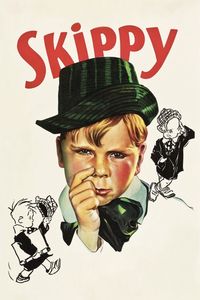
    Skippy (1931)

    (On Cable TV, February 2020) In the early days of the Academy Awards, being “Oscar nominated” didn’t quite mean the same thing as today. Being in its infancy as an art form, a popular entertainment medium and an awards show, the Oscars merrily nominated comedies for Best Picture, nine-year-olds for Best Actor (Jackie Cooper) and handed Best Director statuettes to someone who would go on to direct silly Martin/Lewis and Elvis Presley comedies. Yup, that’s Skippy for you—a broad crown-pleaser waiting at the bottom of the “Oscar nominees” list. Considering that it focuses on street urchins and dogs, it’s as old-fashioned as it is blatant in its intention to appeal to the popcorn crowds. (Wait, was popcorn a movie theatre staple back in 1931?) It’s pleasant enough as such—adapted from a then-popular comic strip, it’s relatively innocuous and today’s marketing geniuses would squarely market it as a family film. But if you’re looking for substance… there isn’t much of it. Director Norman Taurog got notice for wrangling a big cast of kids and dogs, which would be admirable if it wasn’t for the most noteworthy anecdote about Skippy’s production being about the director pretending to shoot the lead kid’s dog in order to get him crying on camera. Harrumph. I guess that’s why people go to great lengths to watch Oscar-nominated films—expand your horizons, and try to understand what they were thinking back then.

  • Here Comes the Waves (1944)

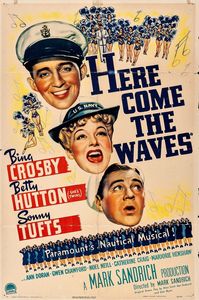
    Here Comes the Waves (1944)

    (On TV, February 2020) I’m not sure you could build a more representative film of 1944 than Here Comes the Waves if you tried. Let’s see—World War II propaganda film exploring a small branch of the US armed forces and delivering a morale boost? Check. Workmanlike plot being used as scaffolding to the musical numbers the film is really concerned about? Check. Featuring no less than the uber-crooner of the era Bing Crosby? Definitely check. Launched a song that became a minor standard of American culture to this day? Also check, with “Ac-Cent-Tchu-Ate the Positive.” I’m not saying there weren’t better movies in 1944 (there were!), but that as a blend of propaganda boost and musical comedies, Here Comes the Waves is a slick, professional example of what Hollywood was up to at the time. It also works a bit harder at it than some of its contemporaries—sure, having Bing Crosby play a singer isn’t exactly asking much, but having Bettie Hutton play the roles of twin sisters is a bit of showmanship—and she does rather well at it. It’s all kind of cute whenever no one is singing (although the sexism is… there), and it’s usually better when it gets into the musical number. Why isn’t it better known, then? Well, there’s the vexing blackface bit right in the middle of the movie. Also, the fact that the third act loses steam—but mostly the blackface. (And what musical number comes with the blackface? You guessed it—“Ac-Cent-Tchu-Ate the Positive.”) In that too, I suppose, Here Comes the Waves is also an exemplar of 1944 Hollywood.

  • Annabelle Comes Home (2019)

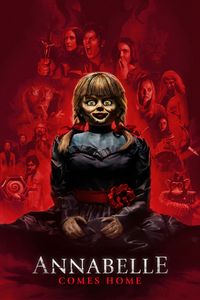
    Annabelle Comes Home (2019)

    (On Cable TV, February 2020) From its featureless opening scenes onward, Annabelle Comes Home is a dull stretch of a watch. I’d mutter something about this being a fall from grace for The Conjuring series, except for the obviousness that great movies leading to increasingly uninteresting sequels and spinoffs is what counts as normal in the horror genre. Amazingly enough, this remains a sequel-to-a-prequel-to-a-spinoff-to-a-sequel-to-an-adaptation-of-a-so-called-real-story. (Considering its callbacks to The Conjuring, Anabelle Comes Home is a derivative project that really wants you to remember the first film.) Vera Farmiga and Patrick Wilson have extended supporting roles as bookends here, but much of the spotlight goes to the babysitter who’s stuck with the Warrens’ daughter and an evil doll trying to possess the both of them (along with a crew of nasties just to make this even more chaotic). To be fair, there’s a decent degree of polish to the 1970s recreation, Gary Dauberman’s workmanlike direction and the rather good cinematography—for all of its faults, Annabelle Comes Home isn’t a cheap straight-to-DVD sequel. But fair execution doesn’t really mitigate the derivative nature of the script, the uninspired jump scares or the feeling that we’re really trampling down whatever that was interesting about The Conjuring in the first place. Annabelle Comes Home strikes me as the kind of film meant to be seen three or four years after you’ve seen the original—long enough to want some of the same things, but distanced enough to not be compared with its predecessor too closely.

  • The Talk of the Town (1942)

    The Talk of the Town (1942)

    (On Cable TV, February 2020) Heavier on the romance and lighter on the comedy, The Talk of the Town nonetheless remains a Cary Grant all-spectacular. The premise is archetypical enough, with an escape criminal finding refuge in the same cottage as a lawyer and the woman they both lust over. With Grant, Jean Arthur and Ronald Colman as the three points of the triangle, things quickly heat up. Grant remains utterly charming in the film’s mixture of laughs, suspense and romance—you would think that Colman would have trouble keeping up, but he does quite well in his inglorious role as the romantic rival. Worth noting: the jazzy opening sequence that crams a first act’s worth of exposition in a few minutes’ worth of spinning newspaper montages. Amazingly enough, the ending wasn’t decided until test screenings picked one romantic winner over the other. There are a few pacing issues, as well as some rough transitions from one tone to another, but The Talk of the Town remains a very satisfying blend of different things, with Grand, Colman and Arthur being equally enjoyable throughout it all.

  • Batman: Return of the Caped Crusaders (2016)

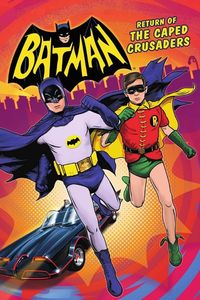
    Batman: Return of the Caped Crusaders (2016)

    (On TV, February 2020) One amusing quirk of Batman’s decades-long history is not only the variety of interpretations of the characters according to the obsessions of their era, but the relationship the franchise has had with those earlier portrayals. The grimdark Batman of the 1980s and 1990s would barely acknowledge the wildly different interpretations of the 1960s, whereas corporate overseers of the 2010s seemed positively eager to showcase the Adam West Batman alongside the others. (But not in the same movies—that would be weird.) That, I guess, is how we end up with the Batman ’66 comic books and the animated Batman: Return of the Caped Crusaders. Produced just in time to celebrate the fiftieth anniversary of that Batman era and record West’s voice alongside Burt Ward (as Robin) and Julie Newmar (as Catwoman), it’s a conscious homage that generally succeeds. Being able to rely on animation and original voices is a clever way to revive that Batman era, and being able to self-consciously write in a campy tone is just purr-fect. There’s a fun blend of upbeat earnestness, conscious homage and competent filmmaking here that works really well. It’s a welcome counterpoint to many more downbeat takes on the Batman mythos, and that’s why I wouldn’t count on Return of the Caped Crusaders remaining an only-once revival of that specific era.

  • The Russians Are Coming the Russians Are Coming (1966)

    The Russians Are Coming the Russians Are Coming (1966)

    (On TV, February 2020) I’m always baffled when acclaimed films fail to meet their own hype, and I really would not have expected a broad humanist comedy to be so… dull? But the case of The Russians Are Coming the Russians Are Coming may be unique as well—a comedy directed by Norman Jewison, it was an attempt to find common humanity with the then-fearsome Soviets. Half a century and the end of the Cold War later, it’s not quite as striking or relevant. What played like gangbusters and won critics over in 1966 feels either obvious or hopelessly dated by 2020. Oh, it’s still amusing (the premise of a Soviet sub running aground in New England and its crew “invading” a small village remains high-concept), but I’m not sure I cracked a single laugh during the entire film. Since a lot of the jokes revolve around the same idea, the film quickly becomes repetitive. Some elements still work just right: Alan Arkin (in his big-screen debut) has plenty of his youthful energy as a Russian, while notables such as Carl Reiner, Eva Marie Saint and Brian Keith are featured ensemble players. I don’t usually have trouble putting myself into the mindset of a specific era, but that proved more difficult than usual in The Russians Are Coming the Russians Are Coming—absent the era’s specific quirks, it feels hollow and underwhelming.

  • The Private Lives of Elizabeth & Essex (1939)

    The Private Lives of Elizabeth & Essex (1939)

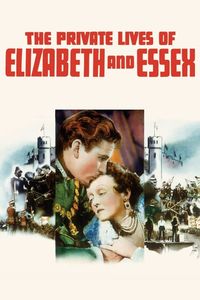
    (On Cable TV, February 2020) Historical costume dramas aren’t to everyone’s taste, but there’s something to be said in the case of The Private Lives of Elizabeth & Essex for an engaging cast. Bette Davis as Elizabeth I? Solid. Having her surrounded by Errol Flynn, Olivia de Havilland, and Vincent Price? Now that’s interesting. Directed by Michael Curtiz, the film becomes more compelling than most equivalents in large part due to Davis’s steely performance and some deliberate choices to make the story more dramatic and accessible. Technical credentials are quite good, considering that this was a Technicolor production and Warner Brothers was willing to go all-out on the spectacle. It’s not so much about Elizabethan England than about 1930s Hollywood studio conventions, and that’s perhaps for the best. The Private Lives of Elizabeth & Essex remains a costume drama, but a click one, and more interesting than most.

  • This Gun for Hire (1942)

    This Gun for Hire (1942)

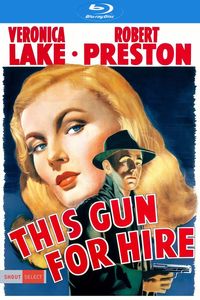
    (On Cable TV, February 2020) There are many things to learn about This Gun for Hire: Veronica Lake is a timeless beauty, film noir was in good shape as early as 1942, war profiteering is evil, hitmen could be developed characters even in the 1940s, and it’s never a good idea to pay a hired killer with fake money. Put all of those things in a bag with Alan Ladd and you’ve got a pretty good suspense thriller. Ladd and Lake would go on to make several more movies together (alas, her time in the sun was far too brief) and the film would become part of the film noir subgenre increasingly popular after World War II. As a narrative, This Gun for Hire is a mixture of unlikely character decisions, surprisingly sophisticated character moments and several thrilling scenes strung together. It all works rather well, although one can see that the combined appeal of Ladd and Lake (with her famously alluring peekaboo hairstyle) clearly raises the result above its script weight. Being early noir, This Gun for Hire is also not quite yet burdened by the tropes of the subgenre, so that’s also quite interesting by itself. Have a look, have fun and then go see the other Ladd/Lake movies.

  • The Little Foxes (1941)

    The Little Foxes (1941)

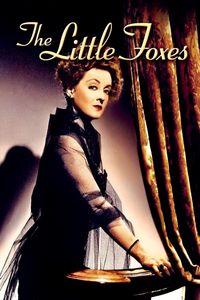
    (On Cable TV, February 2020) If you want to understand why Bette Davis is still acclaimed even decades after her heyday, you can take a look at, well, nearly her entire body of work — but The Litte Foxes serves as an exemplar. Going far past ingenue roles, she here plays a deliciously evil schemer intent on riches without ethical concerns. It’s a remarkable and yet typical kind of role for her, and it hints at the force of character she displayed throughout her career and in the famously troubled making of this specific movie, to tell studio heads and directors that she would not compromise on playing a despicable character. She is by far the best thing about The Little Foxes, an overwrought drama with a solid core that nonetheless drags on quite awhile before finding its footing well into the third act. The various shenanigans played by Davis’s character eventually become deadly, as her intentions are clear and so are the lengths to which she will go to in order to get what she wants. In many ways, The Little Foxes is also an exemplar of a specific kind of circa-1941 cinema—the rich literary/theatrical adaptation, brought to the big screen by a small salaried army of talented craftsmen and taking a poke (within the confines of the Production Code) at a dark odd corner of American society filled with well-mannered psychopaths and greedy arrivistes. But it took someone with Bette Davis to make audiences believe in it.

  • The Lion in Winter (1968)

    The Lion in Winter (1968)

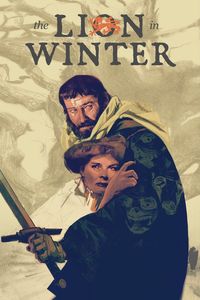
    (On Cable TV, February 2020) Film historians and Katharine Hepburn fans can agree on one thing: She became a much better actress as she aged—from a cute funny ingenue in the 1930s, she switched to a matronly appearance throughout the 1940s and became increasingly adept at dramatic roles throughout the 1950s. The Lion in Winter is, in many ways, the apogee of her acting talents. (Significantly, she won her third Best Actress Academy Award for this film.) The film itself seems designed to let actors display how capable they could be—it’s a complex story of court politics and family intrigue set against the Henry II era (1183) and the kind of film that actors and the Academy both love. Casting-wise, there are highlights from several generations here—Hepburn, obviously, but also Peter O’Toole as Henry II, and much more modern notables as Anthony Hopkins (in his first big movie role) and Timothy Dalton. (This is one handy movie in any Six Degrees of Kevin Bacon game, as you can use it to skip from the 2020s to the 1930s quite easily.) As for its impact, well, it’s all quite more interesting than its Dark Ages setting would suggest—I suspect that anyone who was fascinated by Game of Thrones’ exploration of the perils of hereditary succession will also enjoy this one. It has aged, though: in filmmaking techniques, the 1960s feel increasingly artificial, and some of the values of the time have been imposed on the 1183 setting in not-so-elegant fashion. But that does add a layer of interest that wasn’t in the film when it was first released. At least Hepburn is timeless.

  • Soy Cuba [I Am Cuba] (1964)

    Soy Cuba [I Am Cuba] (1964)

    (On Cable TV, February 2020) There’s a reason why I am Cuba shows up on lists of movies with great cinematography—even today, it’s hard not to be impressed by some of the camera work on display here, even if the film itself is a blunt piece of Soviet-produced anti-American propaganda. A co-production between the USSR and Cuba, it’s a set of four connected stories showing the factors leading to and through the Cuban revolution of 1959. The script can be arbitrary, blunt and grotesque at times—the Batista-era American-run casino is portrayed as a malevolent force perverting the locals, and the “Americans” in the film all speak with exaggerated bombastic accents that feel like a parody. But it does have the merit of presenting the Cuban side of the events. As with all movies designed to whip up revolutionary fervour, it’s not subtle about sacrificing its characters to the cause—and keep in mind that this film was released merely five years after the events. But I Am Cuba is not a film to take in narratively—it’s far more interesting to watch it for the moment-to-moment decisions taken by director Mikhail Kalatozov as he comes up with insane camera movements, unusual ways to portray familiar material and emerging from the water, passing through buildings or going down several storeys as part of continuous long shots. It’s all quite amazing enough to make anyone wonder, “how did they do that?”—my favourite shot has the camera dropping down several metres to follow someone going from a casino rooftop to a pool on a lower plane. There’s an additional interest in considering that this piece of pure cinema essentially disappeared for thirty years: Never shown in the United States for obvious reasons and quickly forgotten in the USSR for being insufficiently supportive of the two regimes. It took until the 1990s, after the fall of the Soviet Union, until it was rediscovered, restored (thank you Martin Scorsese) and broadcast to a wider audience. Today, film buffs can feast on I Am Cuba as a fascinating historical artifact, and as a virtuoso display of film technique.

  • The Palm Beach Story (1942)

    The Palm Beach Story (1942)

    (On Cable TV, February 2020) It’s not often that a classic Hollywood movie has me blinking in confusion, rewinding and starting again to make sure that I hadn’t missed anything, but then again very few Hollywood movies have as fast-paced an opening as writer-director Preston Sturges’ The Palm Beach Story, which crams a film’s worth of romantic comedy hijinks into a three-minute-long summary (if that), then proceeds to tell the sequel to that non-existing first film. (Pay attention, though, because there are a lot of clues in that opening flash to foreshadow the otherwise confounding last minute of the film.) Not that things get any sedate after that, considering that our happily married couple at the end of that film summary find themselves out of cash to develop an invention. In the finest screwball tradition, they have a flash of inspiration—why not divorce, let her find a rich husband, and allow that new guy to finance the development of the invention? If you think that’s insane, you haven’t met the other characters of the tale—including a shooting-obsessed hunting club eager to transform a train car into a shooting gallery. Part of Sturges’ miraculous first years, The Palm Beach Story is very, very funny from beginning to end. It’s filled with characters acting in ways we’d consider crazy, good lines of dialogue and plenty of screwball sequences—and it doesn’t skimp on a very romantic and satisfying ending. This is all enlivened by a charming throwback view of the 1930s as seen from the upper-class, from nighttime trains to fancy yachts and elaborate aristocratic entanglements. Claudette Colbert is utterly adorable in the lead role here, with Joel McRae providing good support as a nominally less-crazy husband. I know a lot of viewers have their favourites in Sturges’ filmography—either The Lady Eve or Sullivan’s Travels or maybe even The Big McGuinty. I’ll have to re-watch all of them to make up my mind, but for now I’m putting up The Palm Beach Story as my favourite by a nose—perhaps, unlike the better-known others, because it came out of nowhere and hooked me so quickly.

  • Dead End Drive-In (1986)

    Dead End Drive-In (1986)

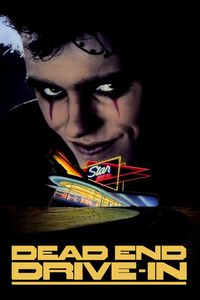
    (In French, On Cable TV, February 2020) There’s a memorable 1988 Joe Lansdale novel called “The Drive-In” that features teenagers trapped in an eternal night at the drive-in, with the only source of food being the concession stand. It’s gruesome and weird and terrifying and you’ve got to wonder if there’s any filiation between that and director Brian Trenchard-Smith’s earlier film Dead End Drive-In, in which teenagers are trapped in a drive-in repurposed to be a concentration camp in future dystopian Australia. As a proud ozploitation film, it seems to blend a bit of Mad Max and another bit of The Cars that Ate Paris into something not quite like its inspirations. There’s a lot of social commentary here, the social microcosm inside the drive-reflecting the world at large. It’s stylishly executed too—1980s new wave punk fashion for the characters, and audacious low-budget filmmaking elsewhere. It’s got very much the strengths and weaknesses of its subgenre: Quirky, in-your-face and willing to say things not mentioned in polite company, but also unpolished, difficult to take seriously and more allegorical than credible. Still, Dead End Drive-In is not a bad watch, especially if your expectations are low.

  • Annie Get Your Gun (1950)

    Annie Get Your Gun (1950)

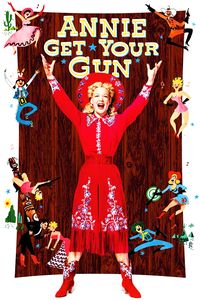
    (On Cable TV, February 2020) As a white male superficially undistinguishable from previous generations of film buffs, I have a significant privilege in watching Classical Hollywood movies—these were movies made by people like me, often for people like me and I can usually manage to overlook the less admirable elements of sexism, racism and other characteristics often found in older movies. But that privilege is not absolute immunity, and some movies still manage to raise my hackles even when considering the historical context. Which leads me to this: I love a third of Annie Get Your Gun, I like another third of it, and I loathe the remaining third. The part I love is that it’s an exuberant, expensive musical in the grand MGM tradition: expansively staged, with a higher-than-average number of great songs and a brassy lead performance by Betty Hutton. Inspired by the life of real-life Annie Oakley, it’s about a sharpshooting rural girl who gets swept away in Buffalo Bill’s Wild West Show, and then into a romance. If that was all there was to it, I could still count it as a really good musical: Terrific musical numbers (“Anything You Can Do I Can Do Better” and the classic “There’s No Business Like Show Business”), fair filler, and one great lead performance. Sadly, though, the film goes the extra mile to offend with outdated sexism and even worse racism. Even by the coarse sensibilities of the 1950s, Annie Get Your Gun is embarrassingly dismissive of its Native American characters, portraying them with a mortifying succession of simple-minded clichés and reinforcement of their otherness. As a consequence, sequences of the film are actively difficult to watch, such as the disturbing “I’m an Indian too.” That’s bad enough to overshadow the dodgy way Oakley’s character is treated as someone who can only be completed by submitting to a romantic partner, somewhat undermining (by twenty-first century standards) the portrait of a strong self-reliant protagonist. Annie Get Your Gun is tough enough to recommend on the surface, but the more you know about its production history (with Judy Garland replaced during the shoot after developing severe mental health issues, and being replaced by Hutton) the more you get to the conclusion that this film might have been best unmade. If you do watch it, consider fast-forwarding past the worst moments—except that there are many of them, and they’re not all separate from the musical numbers. Maybe line up the three or four best songs and call it a day.

    (Second Viewing, On Cable TV, May 2021) After a disappointed first viewing, I decided to give another chance to Annie Get Your Gun for two reasons. For one thing, it’s freshly restored from a 4K-grade effort, meaning that it’s never looked better. For another, I was curious to see if I’d feel as strongly about the film’s mortifying depiction of Native Americans the second time around. The basics of the film remain the same: This is Betty Hutton’s best-in-career show as the legendarily brassy sharpshooter Anne Oakley. This highly fanciful musical comedy, adapted from a Broadway stage play, doesn’t really care about historical accuracy when there are musical numbers, some romance, cheap gags and pure Americana to play with. The film may best be remembered for two memorable tunes: “There’s No Business Like Show Business” and “Anything You Can Do” still work really well. I still quite like Louis Calhern’s mellifluous performance as William F. “Buffalo Bill” Cody. But results from this second viewing turn out to be… mixed. While Annie Get Your Gun has indeed never looked better with sharp images and rich vivid colours (and this is a film with plenty of vivid colours!), it also underscores the studio-set artificiality of many sequences in the film, especially the faker-than-ever backdrop to “Doin’ What Comes Natur’lly.”  Then there’s the whole depiction of Native Americans, which goes deep into iconography and stereotypes. It’s a vexing blight on the film, but the only reason why it’s not more than an annoyance is that it’s done in a warm comedic tone fit for a musical – unlike other low points of Native Indian representativeness in Hollywood (ugh, that Peter Pan scene), the character of Sitting Bull is allowed a few good comic lines and more depth than simply portraying an icon. Still, I would hope that no modern production of the film would include anything as tone-deaf as “I’m an Indian Too,” especially considering that the number is practically an explicit paean to cultural appropriation. While I’m warmer to some moments of Annie Get Your Gun (and considering the tumultuous production history of the film, with Hutton replacing Judy Garland at the beginning of the shoot, it’s nearly a miracle that the film ended up reasonably good), I’m just as annoyed at other moments of it.