Reviews

  • Belle de jour (1967)

    Belle de jour (1967)

    (Criterion Streaming, August 2019) There’s quite a bit of (tasteful) perversity at play in Belle de jour, and it’s consistent with what I know of writer-director Luis Bunuel’s work. It does begin with a sequence that seems to go quickly from plausibility to complete deliriousness, only for the truth to emerge and make the sequence even more perverse as a fantasy. This lands us in the head of our protagonist, a married woman unable to be intimate with her husband, but increasingly tempted to become a high-end prostitute by day. Much of the remainder of Belle de jour is taken up with her experiences at the house where she practises her trade, various clients rotating through the film. Two more off-putting fantasies spice things up. It’s possible to see quite a few themes at play here, but the one I’ll highlight has to do with prostitution not as a sexual act, but as one of willing compliance—the protagonist learns from the other girls that the trade isn’t as much about pleasing clients sexually as presenting to them the façade of what they expect from a partner compliant to their desires. The switch between their two faces is fascinating and handled with a decent dark humour that prevents the film from being unbearable. Catherine Deneuve makes the most out of her 1960s doll-like features as the titular Lady of the Day—she’s fascinating and the film doesn’t have any trouble making us interested in what will happen to her next. I should also be noted that there is almost no nudity in Belle de jour besides a few exposed backs—the film takes place on another register, far more pernicious. It’s more interesting than I would have expected.

  • Watch the Birdie (1950)

    Watch the Birdie (1950)

    (On Cable TV, August 2019) Comedy is a weird genre: what’s funny today may not feel as amusing decades later, or even with an entirely different audience. So it is that comparing Watch the Birdie soon after its silent-movie inspiration The Cameraman shows the difference between the dumb loquaciousness of Red Skelton’s humour in stark contrast with the smart physicality of Buster Keaton. The correspondence is very, very loose, of course: We’re talking about Watch the Birdie riffing from a bare-bones plot summary of The Cameraman, as a sympathetic gaffe-prone protagonist grabs a camera in an attempt to impress a love interest. But whereas Keaton could only count on gesticulation and title cards, Skelton starts talking over the beginning credits (the film’s funniest sequence, actually) and never stops. He plays three characters (the protagonist, his father and his grandfather), which is one too much—the father character never makes much of an impression, let alone becomes funny in his own right. His humour is hit or miss—he likes making funny faces and looking confused a lot, whereas I think that’s reaching for the dumbest, least subtle comedy there is. As a result, much of Watch the Birdie feels forced—I won’t deny that it has a few laughs (the ending sequence, featuring a car chase with a tall Hyster lumber loader, feels very Keatonesque which may be explained by Keaton being an uncredited advisor for the film), but much of it labours mightily through pratfalls and grimaces. The film feels too long even at 72 minutes, especially considering its structure of gags strung along a loose plot. On the other hand, my first reason for watching the film is justifiable: Ann Miller is not only gorgeous but quite funny as well as she plays an intentionally dumb beauty queen who gets knocked around by male and female characters alike. I take it that Red Skelton did a lot of similar movies in the post-WW2 years, but that none of them are particularly well regarded today—indeed, I probably would have overlooked Watch the Birdie if it hadn’t been of its link to Keaton and Miller.

  • Watership Down (1978)

    Watership Down (1978)

    (On Cable TV, August 2019) If you believe some of the chatter about Watership Down, you may expect an unbearable for-adult bloody drama featuring rabbits living in a dark and pitiless world. That’s true, but it may be misleading: Watership Down is shocking if you’re expecting a fluffy Disney wildlife fantasy featuring cute little bunnies, but if you go in the film expecting the worst, the result simply feels … appropriate for what it’s trying to do. Adapted from Richard Adams’s well-regarded book aimed at older children, this is an attempt to tell a more sombre story that acknowledges the merciless nature of wild animals in their natural environment. When a rabbit understands that their meadow is going to be razed over by residential development, he flees to greener pastures and encounters hardened opponents. The tone is resolutely not funny nor easy: Watership Down is tooth-and-claw nature, with protagonists either dying or coming close to it on a regular schedule, blood flowing from their wounds. It’s not gratuitous, though—despite the jerky, disappointing animation and the sombre tone, I found quite a bit to respect in the final result. The opening segment is wonderfully animated (far better than the rest of the film), and it sets up a very effective reprise of “First … they have to catch you” late in the film. I wasn’t horrified by the result (well, not as much as the generations of eight-year-old kids who legendarily sit down to watch another Disney movie and bawl their eyes out for 90 minutes) but neither did I like it very much. On the other hand, Watership Down is a respectable film, and one that should have had more imitators.

  • Come and Get It (1936)

    Come and Get It (1936)

    (On Cable TV, August 2019) I’m on a mission to watch the entire Howard Hawks filmography, and at this point in the process, having covered most of his classics, I’m starting to get to his lesser-known films. Come and Get It is one of those, and a bit of an oddball title as he was reportedly fired about two thirds of the way through. Adapted from a novel, it’s a complex and occasionally off-putting story of multi-generational infatuation, as a married lumber baron falls for the daughter of the woman he left behind decades previously. There are multiple complications, to the point of resulting in a messy plot that leaves few people happy when it reaches its ending, spurned would-be adulterous protagonist and all. (Note to modern viewers: The Hays Code was slightly more permissive when filmmakers worked from existing novels, but not that much—which helps explain the film’s jerky and unconvincing morals.)  Considering that Hawks didn’t direct all of Come and Get It, it’s hard to pinpoint his exact contribution, but the spectacular footage of old-school logging operations early in the film was enough to warm my French-Canadian heart and certainly resonates with other Hawks movies. Much of the film’s best moments come early on, what with barroom brawling and sharp scenes to establish the characters. It’s afterwards that Come and Get It seems to lose its way, never quite sure whether to commit to tragedy or romance. (Or to say something about environmental matters, which had been one of Hawks’ initial concerns.)  Three good actors manage to make the film better than its confused screenplay: Edward Arnold as the morally ambiguous protagonist, Joel McCrea as the romantic lead, but especially Frances Farmer in a well-controlled dual role. Walter Brennan is a bit annoying, but that’s his character more than the actor. Despite a fair start, Come and Get It ultimately feels aimless and maybe even a bit cut short—it doesn’t completely capitalize on its strengths, and knowing about its troubled production explains some of the issues.

  • The Man Who Fell to Earth (1976)

    The Man Who Fell to Earth (1976)

    (Criterion Streaming, August 2019) To seasoned Science Fiction fans, there’s a big difference between genre SF and SF that merely uses the tropes of the genre without knowledge of the various techniques developed through generations of SF writers to maximize their impact. Nicholas Roeg’s The Man Who Fell to Earth is certainly an example of the second type of SF: It features David Bowie as an alien (great casting!) but doesn’t really commit to anything startlingly original in SF terms. Our alien is a smart fish out of water (literally so, as the film somehow has him coming to Earth to save his world from drought), but the script treats him as a punching bag throughout—his romantic relationship predictably fails once he reveals his true form, the government experiments on him for what suggested to be decades, and he spectacularly fails at what he came here to do. Expect no triumphalism, no victory, not much humour either: it’s a typically mid-1970s dour piece of work, predating Star Wars’ SF renaissance by a year and what feels like irreconcilable differences. I certainly get why The Man Who Fell to Earth earned a spot in the coveted Criterion collection: it’s meditative, self-consciously artistic, “not like those other childish sci-fi movies” and dull. It spends most of its time in strikingly unspectacular sets: a living room of a small rural house, most notably. Even today, it feels like an oddball entry in the SF genre, not particularly as interested in what SF fans want than in what the director wants to convey. As such, it has amassed a considerable audience over the years. But I’ll count myself out of it: I think that it’s possible to make movies that are both great coherent Science Fiction, playing by the rules of the genre and yet also profound explorations of the human condition. The Man Who Fell to Earth insists on the artistic effect and completely fumbles the SF side, feeling rather silly in its depiction. There’s been much better movies in that vein.

  • Don’t Look Now (1973)

    Don’t Look Now (1973)

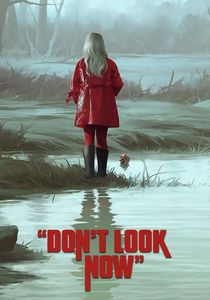
    (Criterion Streaming, August 2019) I got a bit more out of Don’t Look Now than I expected. I was anticipating a weird early-1970s horror movie and I got that for sure, but I also got a haunting portrait of a couple grieving their dead daughter. I don’t deal well with that kind of topic matter, and so the first few minutes of the movie were difficult to watch. It does get into a more comfortable groove later on, as our two protagonists go around Venice renovating a church, being terrorized by a serial killer and escaping narrow death. The thematic concern of grief is never too far away, though, and it’s this heft that does make Don’t Look Now a bit more substantial than many other horror movies of its time, especially when its supernatural components remain ambiguous. Interestingly enough, while I’m usually a convinced backer of the most fantastic interpretation of any given borderline film (to the point of denying non-fantastical interpretations when available), I think that Don’t Look Now works better when considered as a weird psychological thriller with few or no occult elements. What does blur the line effectively between twisted realism and the fantastic is the film’s then-innovative and still-effective editing style, using associating editing techniques to take us effectively inside the protagonist’s mind as he flashes back to previous events and how they relate to his current situation. There’s a long death sequence, for instance, made more effective through the use of flashes of past events as we imagine the character’s mind grasping onto what just happened. It’s that kind of sequence that makes writer-director Nicholas Roeg’s work feel more daring and effective than more traditional approaches. The cinematography helps, as Venice is depicted as a sordid, humid, grainy hotspot of violent death at every turn. As protagonists, Donald Sutherland and his moustache are impressive, while Julie Christie is an able partner. Given the film’s success in terms of atmosphere, tone and cinematographic impact, it’s a shame that the story itself feels so thin and pointlessly cruel. It’s a weak spot in an otherwise better-than-average film with some curious emotional impact.

  • Scrooge (1935)

    Scrooge (1935)

    (On Cable TV, August 2019) According to Wikipedia, there’s been almost 20 straight film adaptations of Charles Dickens’ A Christmas Carol (a number that swells well into the hundreds when you throw in the TV adaptations, parodies and derivative works à la Scrooged), and the 1935 version of Scrooge is certainly one of them. I kid, but the truth is that I overdosed in December 2018 on roughly five different versions of the story (including one whose production date I was never able to formally identify for sure) and even waiting eight months before clearing my DVR of Christmas leftovers wasn’t long enough to get me interested in any other straight take on the story. This being said, there is something intriguing about a mid-1930s version of the story. The images may be muddy, the sound may be fuzzy, the special effects underwhelming (some of the ghosts, intriguingly, are never quite shown) and the performances a bit overdone, but the nature of Dicken’s story makes it unusually timeless, even enhanced by those now-historical takes on the story. The language is theatrical, the black-and-white cinematography old-fashioned and production values deliciously old-school … far closer to the original intent than, say, the 2009 full-CGI version. At barely 78 minutes, it’s also admirably efficient in the way it rushes through the expected plot points and removes a few less-important ones. That the film feels like cinematic muzak, to be left on while doing other things around the house, does have its charm.

  • Das Testament des Dr. Mabuse [The Testament of Dr. Mabuse] (1933)

    Das Testament des Dr. Mabuse [The Testament of Dr. Mabuse] (1933)

    (On Cable TV, August 2019) I’m not going to dismiss The Testament of Dr. Mabuse entirely, because there’s quite a bit of interesting material here from writer-director Fritz Lang. Unfortunately, you do have to wade through more than two hours of deadly pacing issues and silliness in order to get there. The pacing is, alas, an artifact of its time—By 1933, the German film industry hadn’t universally let go of silent movie conventions, including the concision allowed by spoken dialogue. There’s a lot of repetitiveness to this second Mabuse story, going over the same plot points in excruciating detail. It leads to a somewhat underwhelming ending, blowing its biggest explosions about fifteen minutes before the end and leaving us with an underwhelming climax. There’s also an intrusive use of the supernatural (even as a suggestion) in a story whose point is to remain grounded in some kind of reality. The film does anticipate a slew of schlocky horror sequels in giving Mabuse an enthusiastic adept fit to power a sequel, but otherwise keeps with the spirit of the original. Perhaps the most interesting thing about the film is the way it portrays 1930s Germany struggling to keep up with a super-criminal dedicated to chaos. There are also some interesting visuals along the way, as befit a filmmaker of Lang’s stature. Still, it’s a bit of a slog to get through The Testament of Dr. Mabuse and I’m not sure I’d recommend it to anyone but 1930s completists.

  • The Wicker Man (1973)

    The Wicker Man (1973)

    (Criterion streaming, August 2019) When I set out to watch the original version of The Wicker Man, I was expecting a sombre backwoods horror thriller far more serious than the bonkers 2006 Nicolas Cage remake.  But this original quickly proved itself just as mad once the lame musical numbers began. Not only musical numbers, but early 1970s folk musical numbers, which is enough to make anyone retch in disgust. Much of the film remains silliness piled upon silliness, as the dumbest policeman in the world meets the most obviously sinister village in the world and can’t help but make himself a target of their underhanded tricks. I’d pay some money for an alternate version in which a SWAT team takes down the village … but until then we’re stuck with a self-righteous cop with little sense of self-preservation. Much of The Wicker Man has aged exceptionally poorly, and I’m not talking about the infamous ending that everybody can see coming thanks to the rise of the folk-horror genre. No, the film is locked in its early 1970s origins (there’s quite a bit more nudity than I expected) and in no small measure to the wave of Hammer horror films that ran on promise more than execution. But for all of my reluctance to say anything nice about film, it does have a few things going for it: The scenery is nice, the tone is slightly more serious than the even-dumber remake, Christopher Lee does have a memorable role, and the film’s last five minutes do have a few good lines and moments (specifically the “you’re the next sacrifice” curse and then the “you get to be a martyr!” response) that suddenly elevate the film above the smothering silliness. I have a thoroughly mixed reaction to The Wicker Man, but remove the last ten minutes and my reaction is far more definitive … and significantly lower.

  • Gunga Din (1939)

    Gunga Din (1939)

    (On Cable TV, August 2019) As a straight white male, I’ve grown increasingly conscious of my own privilege in exploring Hollywood movie history—which was overwhelmingly built by and for straight white men, with the result that they are now best appreciated by straight white men (but maybe not the kind of straight white men who enjoy watching older movies). These issues are impossible to ignore while watching films like Gunga Din, deliberately set in an environment where colonialism is celebrated. Adapted by Rudyard Kipling stories, it’s an adventure film featuring three British soldiers somewhere around the edges of the British Raj, sent to repair communications but soon embroiled in the revival of a murderous cult intent on causing harm to the empire. (The histrionics of the antagonist get so shrill by the end of his speech to the heroes that I half-expected him to conclude with “ … and then I will molest your moms and kick your dogs.”)  Cary Grant, Victor McLaglen and Douglas Fairbanks Jr. are the three likable male leads, with Sam Jaffe playing the titular Gunga Din as a native water carrier who would like nothing more than to fight for the empire. (He gets his wishes, suffers for it and it sent off with the ultimate colonial compliment—”he was a good soldier.”)  Joan Fontaine pops up as one of the soldiers’ fiancée, leading to some curious hijinks in which the two other soldiers do everything they can to sabotage his impending marriage. It all leads to some really good action scenes, suspense sequences and a grand spirit of adventure against overwhelming odds. And that’s the kind of film that Gunga Din is: at once a terrific adventure story in the old-fashioned mould, and yet a disquieting grab-bag of very outdated ideas focusing on the straight white male as the centre of the universe: Boys will be boys (yucky girls had better not disrupt anything), and non-whites are to be killed unless they’re willing to help whites kill other non-whites. Modern viewers will find the end result to be a steady whiplash of contradictions, any enjoyment of the film’s high points constantly being undercut by heave-inducing Victorian values. Even my own privilege failed me throughout Gunga Din: Despite my best intentions and proven capacity at ignoring the bad stuff to focus on the good wasn’t enough to get me to like the result. If I end up recommending Gunga Din in any circumstance, it will be to show how terrible these movies could be.

  • Le salaire de la peur [The Wages of Fear] (1953)

    Le salaire de la peur [The Wages of Fear] (1953)

    (Criterion streaming, August 2019) Despite Le salaire de la peur being on several lists of essential movies, I approached the film with caution—as any modern viewer would in tackling a 1950s black-and-white thriller lasting slightly over two hours and a half. The first hour seemingly gives credence to the caution, as it leisurely introduces a small South American town filled with desperate people. Slowly, we piece together the plot: The town is dominated by an oil company that, for reasons, needs four suicidal men to quickly drive gallons of nitroglycerin over a long dangerous distance. There are a few fake-outs and multilingual subplots on our way to the real movie, but we eventually get there. By the time our four main characters have been identified and take the wheel of two explosive-laden trucks, Le salaire de la peur really begins, and it becomes a true white-knuckle thrill-ride until the end. The road to the destination is a carnival of outlandish obstacles designed to test the ingenuity of the screenwriter: a bumpy dirt road that can either be taken fast or slow (leading to a deliciously original suspense sequence based on physics); a dangerous hairpin turn; obstacles to be cleared explosively; and an oil-filled crater filled with surprises. The latter half of Le salaire de la peur is pure mechanically-driven analog suspense—even modern viewers will smell the engines, taste the dirt and feel the physical elements that drive its action scenes. It’s as good as suspense gets, and it still works magnificently sixty years later. Yves Montand makes for a capable hero, and director Henri-Georges Clouzot manages his production with devilish precision once we’re past the prologue. I can take that dull first half once you throw in that remarkably effective second half. Alas, there’s a false note at the very end, once we think that the sacrifices had led to something. But then again, that may have been the only way to conclude such a story. Modern viewers should flock to Le salaire de la peur, make their way through the dull setup and relish the impact of the rest of the film. It’s that good.

  • Brewster’s Millions (1945)

    Brewster’s Millions (1945)

    (On Cable TV, August 2019) As someone who grew up on repeated viewings of the 1985 Richard Pryor version of Brewster’s Millions, I was very curious to go back to an earlier version of the story to see where it came from. I was certainly not disappointed, given that this version often feels funnier (in different ways) than the version I was most used to. Of course, 1945 is a different universe than 1985. Our hero here is an ex-soldier, with a capable team of veteran friends and a fiancé ready to sabotage his efforts when he must spend one million dollars (without telling anyone) in order to inherit seven million dollars. Much of the fun of this comedy is in seeing natural instincts being turned upside-down, with a protagonist being happy at wasting money while his entourage is aghast at his financial failures and sabotages his efforts through good will. The script has plenty of good one-liners, decent characterization and elicits a capable performance by star Dennis O’Keefe. It does remain a 1945 film, though, meaning that female and black roles remain limited and stereotyped—although the historical record tells us that at least one city in the American South banned the film for providing too good of a role to a black actor. Sociological considerations aside, this version of Brewster’s Millions feels substantially wittier than the Richard Pryor version—the machinations are more intricate, the ending more satisfying and the one-liners more amusing. It’s a good example of 1940s comedy (not a decade known for its comedy, especially once WW2 extinguished the screwball genre), and it’s still worth a few chuckles today.

  • Le locataire [The Tenant] (1976)

    Le locataire [The Tenant] (1976)

    (In French, On TV, August 2019) Ooh, spooky. No, not necessarily Le locataire as a movie, but how just yesterday I was thinking that in my acerbic critic’s dictionary, I should include two definitions for “psychological thriller”: First, “It’s all in their heads,” and second “while not strictly impossible, nothing like this has ever happened to anyone in the history of humankind.”  After coincidentally watching Roman Polanski’s Le locataire, I have even more fuel for my lapidary assessment: this is one exemplary psychological thriller, so much so that it boldly vaults into nonsense. To be fair, the setup is intriguing, as a young man apparently devoid of personality moves into an apartment recently vacated by a suicidal tenant. Things get much, much weirder after that, once the protagonist becomes convinced that his neighbours are plotting against him, that he starts cross-dressing, that he becomes so convinced that he is the suicidal tenant that he becomes the suicidal tenant. Or something like that. Polanski’s ingrate appearance serves him well here, as the film almost requires a strange-looking protagonist to sink into madness. I am not fond of the expressed link between mental illness and gender transition, but it’s such a weird movie anyway that I doubt that there’s a hate-driven agenda behind it. The protagonist’s sanity slips so thoroughly by the third act that anything can happen and everything may or may not be real. That kind of stuff may have been more interesting in the 1970s, but seem s so cheap and commonplace these days that it makes it rather easy to dismiss Le locataire as a bunch of nonsense.

  • Lilies of the Field (1963)

    Lilies of the Field (1963)

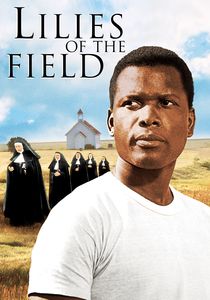
    (On Cable TV, August 2019) Sidney Poitier won his Oscar thanks to his performance in this film and it’s easy to see why—playing an itinerant handyman who comes across an eccentric group of nuns during his travels, he is the glue that holds the film together. The nuns are not only recent immigrants unable to talk much English: they need help building a chapel, and their leader is unusually skillful at persuasion. Before understanding what he’s getting into, our protagonist finds himself spearheading the construction of the chapel, helping the nuns despite their inability to pay him. There’s clearly a construction narrative at work here as we see the chapel take form, but Lilies of the Field wouldn’t half as interesting without the off-beat nuns and how they somehow convince the protagonist in doing their bidding. Meanwhile, Poitier plays the cool, bemused outsider (the nun’s antics wouldn’t be half as funny without his reactions), immensely relatable to the audience. The black-and-white cinematography makes good use of outdoor locations, with the desert helping to create a white backdrop useful for composition. In some ways, I’m amused that script can be seen as a constructive take on the “stranger comes to town” western premise. Still, the draw of Lilies of the Field is Poitier, charismatic and relatable at once. It’s thanks to him if it’s still so entertaining today.

  • The Bad and the Beautiful (1952)

    The Bad and the Beautiful (1952)

    (On Cable TV, August 2019) In the pantheon of Hollywood movies about Hollywood, The Bad and the Beautiful still stands tall as being emblematic of its era, right before the weight of studio producers crumbled before television, antitrust legislation, and the end of exclusive studio contracts. Kirk Douglas is in fine form as a movie mogul with numerous enemies, bringing three of them together so that he can convince them to work on his next project. But it’s a framing device, as the producer recalls his history with each one of his three listeners, leading to three shorter related stories about a director, a star and a writer. In each case, the protagonist plays the spoiler, pushing them to further heights even as he (as they put it) ruins their lives. As a way to take a multifaceted look at the way Hollywood worked up to that point, The Bad and the Beautiful is ingenious—it takes us in three different sub-worlds of Hollywood, loosely linked together. The tone is strictly melodramatic, which does add to the period charm. Douglas plays a magnificent bastard here, willing to sacrifice relationships in order to make movies … and then get the band back together. As befit a framing device holding together three shorter films, the ending is a bit weak, but that’s fine: this is very much a journey-is-the-destination film where the climax is less important than the scenes leading to it. At this point in time, it almost feels like comfort viewing—a paean to a lost Hollywood, but whose echoes can still be felt today.

    (Second viewing, Streaming, May 2025) Every year, I learn a little bit more about Classic Hollywood, and that in turn changes the experience of re-watching the films of that era.  A second looks at The Bad and the Beautiful is not quite the same.  Sure, Kirk Douglas is just as impressive as a life-altering studio mogul — but this time around, I get to appreciate Dick Powell in a later-career role unlike his earlier turns.  I get to take in Gloria Grahame’s short but striking role a Southern belle that the script heartlessly dispatches as being a distraction from creativity.  (Lana Turner is top-billed, but Graham, and to a lesser extent, Elaine Stewart, make more of an impression in a shorter time.)  I get to chuckle at the nod to Val Lewton’s Cat People, and revel in the glimpses of classic-era film-making.  There are quite a few touches of wit in director Vincente Minnelli’s direction, working with the script to punch-up some fake-outs (“It stinks!”) and amusing reveals (such as the pool dip).  Sure, The Bad and the Beautiful is melodramatic, uncomfortably dissonant with modern values, and perhaps too much in love with Classic Hollywood to deliver an honest conclusion.  But it’s fun, witty, an utterly splendid illustration of a specific era in film history, and a pretty good acting showcase.  It stands on its own as a story, but it becomes greater when measured against its era.