Reviews

  • The Cameraman (1928)

    The Cameraman (1928)

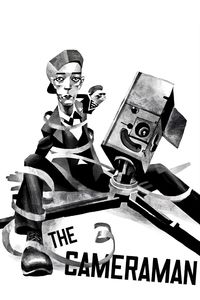
    (On Cable TV, August 2019) At his peak, Buster Keaton was a timeless talent, and if The Cameraman is not exactly his finest or funniest film (that would be The General or Sherlock, Jr.), it’s still Keaton in top form, stringing physical gags along a decent-enough plot. Here, we have Keaton playing the kind of earnest but slightly clueless young man out to make a fortune and secure a wife by trying his luck at being a cameraman for MGM newsreels. Switching between courtship in 1920s Manhattan and the comic perils of being a cameraman in the middle of a gangster war, The Cameraman has a stream of physical gags, charming period details, and Keaton keeping a stone-face expression. The premise of the film was later reused for Red Skelton’s Watch the Birdie, but the original film remains the funniest version—no one could (or still can) outdo Keaton. For his fans, The Cameraman is also a bit of a sad junction in his career—his penultimate silent film, and the one where he started losing his independence as a filmmaker, never to return to the heights of his 1923–1928 zenith. Still, never mind that: The Cameraman is a reliably funny film, and one of the few 1920s productions that can still be enjoyed today without compromises.

  • Parlor, Bedroom and Bath (1931)

    Parlor, Bedroom and Bath (1931)

    (On Cable TV, August 2019) If you’re used to the classic Buster Keaton silent comedy films, Parlor, Bedroom and Bath will seem a bit odd, because it features … sound. Keaton’s career took a dive after the introduction of sound, but the declining factor was Keaton’s contract with MGM, not sound itself. Proof of Keaton’s ability to amuse with sound can occasionally be found in this bedroom farce that unusually features quite a bit of dialogue from Keaton, and a few brief moments of physical comedy. Even out of his comfort zone, Keaton proves up to the task of being a romantic comedy lead, but it does take a while for the film to get going: after a fairly dull start, Parlor, Bedroom and Bath does get funnier when Keaton gets back to his physical comedy roots. The train crossing shot, for instance, is pure classic Keaton. He even finds an able comic partner with the very tall Charlotte Greenwood—some of the hotel room sequences later in the film are an inspiring mixture of farce and Keaton pratfalls. Alas, it does lead to an abrupt and unsatisfying ending that takes away some of the fun that Parlor, Bedroom and Bath had been building up to that point. The pre-Code origin of the film is obvious from some bedroom farce material that, while tame by today’s standard, wouldn’t have passed muster throughout much of the Hays Code years. It’s not a Keaton classic, but it can be a lot of fun at times, and hearing Keaton talk is a thrill on its own.

  • The Dresser (1983)

    The Dresser (1983)

    (On Cable TV, August 2019) It’s often interesting when the movies take a look at a different realm and presents us characters wholly invested in it. With The Dresser, we get to spend some time with a WW2-era theatrical actor and his personal assistant. It’s an unequal but surprisingly codependent relationship: The actor is a wreck when he’s not onstage and obviously needs to have his hand held throughout a nervous breakdown. Meanwhile, our meek assistant is someone who finds his purpose in like in being the manager of an incredible yet incredibly flawed stage legend. As the story begins, we understand the predicament: In trying to deliver Shakespeare to the British countryside even as bombs are falling, our travelling troupe has to contend with destroyed theatres, substandard supporting actors (given that the best are at war) and the personal failings of its star. The theatrical origin of the story is most apparent in its middle section, almost entirely spent in the dressing room as the assistant cajoles a barely functional veteran actor into delivering a performance. There are plenty of theatrical lore details here, enough to create the magic of the theatre and to show the madness that can come with it. The Dresser is a clever film, perhaps a bit too long, certainly excellent in the quality of its dialogues and directed competently by Peter Yates. The ending is as tragic yet appropriate as they come. Albert Finney is impressive as the temperamental, almost crackpot veteran actor, while Tom Courtenay is less flashy but far more interesting as the assistant. It’s not an exceptionally memorable film, but it does offer a fascinating glimpse backstage of a theatrical production held together by mere threads, and as such is likely to fascinate anyone who’s ever been interested or involved in theatre. As a mandatory stop on the Oscar-nominee tour, The Dresser is not a bad experience.

  • Creed II (2018)

    Creed II (2018)

    (On Cable TV, August 2019) There isn’t much in Creed II that’s new or surprising. After mining Rocky II in the first Creed, this sequel heads back to Rocky IV for inspiration, bringing back the Russian menace for an encore. The novelty of seeing a competent contemporary take on the Rocky mythos not being as strong in this second instalment, we’re left with another run through the usual rebirth narrative of those films. Director Steven Caple Jr. steps in Ryan Coogler’s shoes and acquits himself decently: even though the bravura filmmaking of the first isn’t as pronounced here, there are a few nice moments along the way, including a reprise of the infamous Rocky IV training montage that doesn’t quite match the original but provide a high point of the film. Otherwise, though, Creed II outmatches Rocky IV in nearly all aspects: The story isn’t as silly, the pacing is better and there aren’t any wacky robotic digressions. Michael B. Jordan turns in another impressive physical performance in the lead role, while Tessa Thompson (now far better-known that she was at the time the original was filmed) once again does well as a character meant to be clearly more than the usual girlfriend character. (She sings!)  Still, and it’s weird to write this, it’s Sylvester Stallone who impresses most in a strictly dramatic age-appropriate performance, providing gravel-voiced gravitas to the protagonist and having a short dramatic arc of his own along the way. Dolph Lundgren also turns in one last great performance, humanizing a stock series villain and offering a number of parallels with Rocky’s own experience. Creed II isn’t innovative in any way, but it is well handled enough to provide an entertaining moviegoing experience. It’s also good enough to somewhat redeem Rocky IV, and that’s another unlikely comeback story.

  • The Survivors (1983)

    The Survivors (1983)

    (In French, On Cable TV, August 2019) You would think that a Robin Williams/Walter Matthau pairing would be comedy heaven, but the truth as proven by The Survivors (for this is the only such pairing) is that it just ends up being a mess. The roots of the problem go back to a meandering script with poor tonal control and what seems like few ideas about where it’s going. Williams doesn’t get a chance to work in his best comic range, although Matthau does a bit better in a role suited to his persona—some of the film’s best and funniest sequences are those in which his characters use his experience and hidden skills to try to control the excesses of his younger co-star. Still, there are plenty of missteps along the way, including a wholly unsatisfying redemption arc for the film’s villain that undercuts most of the (thin) emotional involvement of the audience in the film. There’s some material here about survivalists and a jaundiced perception of New York City that still plays well, but it’s really not enough. The lunacy of the script seems scattershot (sometimes featuring an employee-firing parrot, sometimes mired in urban grittiness). Now little known outside being a part of its two co-stars’ filmography, The Survivors isn’t a particularly shining example of early-1980s comedy.

  • Limelight (1952)

    Limelight (1952)

    (Criterion Streaming, August 2019) On one hand, Limelight is a self-indulgent, overlong, with wild tonal shifts; on the other, it’s a capstone in Charlie Chaplin’s career, a clever late-career metafictional commentary on himself and a return to the kind of filmmaking that made him famous. It doesn’t start on the most comedic of notes, as an alcoholic has-been comedian (with a tramp persona!) returns home and saves a young dancer from a suicide attempt. But this opening sequence lays the groundwork for the film’s later acts, as he helps her back on her feet, and she helps him regain the confidence necessary for one last great performance. The ending is tragic, as can be seen well in advance. Plot-wise, there isn’t much here to require more than 90 minutes … alas, Limelight is only too happy to interrupt the action to flash back to the protagonist’s stage heydays, to interrupt the action by bon mots summarizing Chaplin’s life philosophy, or to take detours not strictly necessary for the film to keep its effectiveness. It’s very self-indulgent and yet it feels as if it should be: by featuring himself as a visibly older comedian past his prime, Chaplin struck close to his own place in early-1950s Hollywood, and the film does act both as homage (not least by pairing Chaplin with Buster Keaton for a comic number) and a conclusion. Chaplin wouldn’t contribute to many other movies later on, making Limelight his swan song. As such, it’s worth a look and some indulgence from viewers in indulging an old master for one last victory lap.

  • Supergirl (1984)

    Supergirl (1984)

    (In French, On Cable TV, August 2019) For the very first minutes, it’s obvious that Supergirl comes from an earlier, dumber period of superhero comics. The stupid stuff accumulates faster than we can object: Everyone is the galaxy is related to each other, plot devices quickly go from Krypton to a megalomaniac witch (!), and the film plays the fish-out-of-water card without much sophistication. The comedy is ham-fisted, and the plot drivers are meaningless to the point of being absurd. And yet, Supergirl isn’t a complete waste of time, and does actually improve after a weak first half-hour. Much of the credit goes to Helen Slater, whose turn as the titular Supergirl makes the most out of a bad script. Then there’s the blockbuster effect: Clearly a lot of money went into the film’s production, and while it’s easy to focus on the aged special effects and sometimes slap-dash staging typical of the time, there are a few interesting set-pieces along the way: the mid-film action sequence with a magically (eh) controlled crane does have a few effective shots of mayhem along the way. Unfortunately, the film never quite recaptures the energy of this middle sequence, sinking deeper and deeper in silliness until the conclusion. Supergirl was not a good movie even by 1984’s standards, but it’s a look at such 1980s productions that shows how much things have evolved in popular entertainment—there are script issues in here that wouldn’t pass muster today, and even bigger execution flaws that would get the film laughed even harder out of theatres.

  • Green Card (1990)

    Green Card (1990)

    (In French, On Cable TV, August 2019) Part of the point of casting known actors is to transfer some of the emotional impact of earlier films into a new one, and I certainly experienced some of that going into Green Card. The film, a romantic comedy about two strangers technically marrying for personal gain (a green card for him, a coveted apartment for her) features Andie MacDowell and Gerard Depardieu as romantic lead. While I like McDowell a lot (and not necessarily for her average acting skills), I’m not so fond of Depardieu—although some of this may be tainted from his rapidly declining twenty-first century personal image and reputation. As of 1990, however, forty-something Depardieu could still pass an acceptable romantic lead … but it’s up to the film to convince us of that. And while there’s nothing particularly surprising in Green Card, writer-director Peter Weir does know how to handle a movie. As we move through the expected set-pieces (sometimes with cleverly handled expectations—I defy anyone sitting midway through the piano sequence not to expect his character to be a fraud), the film does play the attraction game savvily. The actors also do their best. MacDowell remains limited in her range (although her character here is written as more restrained), but Depardieu does earn audience sympathies, and having Bebe Neuwirth show up for a few scenes certainly helps. It all leads to a conclusion that does manage to reassure Americans about their immigration system (a few lines have unique relevance in 2019), while providing a sufficiently distinctive romantic climax to keep audiences happy. This is not a particularly good movie, but it plays better than I thought it would, and Depardieu does make it work.

  • What Price Hollywood? (1932)

    What Price Hollywood? (1932)

    (On Cable TV, August 2019) This is it: the granddaddy of the A Star is Born series, and reportedly one of the first successful movies that Hollywood made about Hollywood, warts and all. The story follows a young girl determined to make it big in Hollywood, as she gains fame and must deal with the consequences. If you’ve seen the later remakes, this will initially feel familiar, although the film does play with its plot elements in a different way than the later movies. This being said, we’re still working from the same playbook here: rising female star, declining male star, the corrosive impact of media attention that makes people into fictions, alcoholism, handlers, and so on. It still works nearly ninety years later—it’s a tale old and yet always true, melodramatic but still understandable despite old-school gender roles and dated technology. This was, after all, made barely five years into the sound movie era, and the film does make the most out of the “fan magazines” that existed at the time. The Pre-Code status of the film can be most clearly seen with a dressing scene with nylons that wouldn’t have passed muster even five years later. George Cukor directs with occasional flair, effectively demonstrating the skills that would see him direct movies for the next forty years. Perhaps the best recommendation one can make about What Price Hollywood? is that it’s an early take on A Star is Born, except sufficiently different to keep it interesting, and with a very distinctive early-thirties view on the early thirties Hollywood—which, to be clear, was barely twenty years old at that point.

  • Multiplicity (1996)

    Multiplicity (1996)

    (In French, On TV, August 2019) The premise of Multiplicity sounds like a joke gone wrong: Let’s put two of my favourite actors in a single movie, and then add more of the same. That is: Let’s see Michael Keaton married with Andie MacDowell, and then let’s clone more Keatons. (Alas, there’s no cloning of MacDowell, which seems like a wasted opportunity.)  This being a Harold Ramis comedy, things are bound to get funnier, so as our overworked protagonist clones himself first to handle his job and then to handle family duties, things get complicated—especially when he inexplicably doesn’t tell his wife about it, leading to further complications. The added comic touch comes when the clones clone themselves, resulting in a dangerously stupid copy-of-a-copy that provides a lot of comic relief. This being Keaton’s show, he gets to play off four characters often interacting in the same frame (the chest-bump shot is particularly effective), playing off a base character, an exaggerated-macho version, an exaggerated-sensitive one, and a terminally stupid alter ego. The plot frequently doesn’t make sense (with clones seemingly losing knowledge of what they knew prior to their cloning), but this is a comedy meant to play with a familiar SF device, not a rigorous extrapolation. Multiplicity is amiable enough, with enough thematic depths about the multiple roles that we’re all asked to play being literalized in a silly comedy.

  • Bad Taste (1987)

    Bad Taste (1987)

    (In French, On Cable TV, August 2019) The mid-1980s were a golden age for movie-obsessed geeks picking up a camera and deciding to make a movie of their own with friends and family. Peter Jackson was one of those, and from the depths of New Zealand came a most unusual film in Bad Taste, an incredibly over-the-top gory horror comedy featuring four operatives taking on a murderous alien invasion in a small town. The production values are threadbare, the acting is terrible, the camerawork is frantic and the whole thing doesn’t make a lot of sense … but it’s still a striking movie. The buckets of gore and blood (and alien vomit) are easier to take when they’re wrapped up in a gloriously absurd comedy. This is, after all, a film in which a protagonist stuffs part of his brain back in after falling off a cliff. (And if that’s not disgusting enough, he later uses alien brain fragments to do the same.)  It’s not that funny, but it’s not that disgusting either. (I have a much harder time with gore effects in deadly serious horror.) Certainly not for the faint of heart, Bad Taste nonetheless earns some sustained viewing attention thanks to some in-your-face stylistic camera moves, showing Jackson’s aggressive moviemaking techniques even with a near-zero budget. If you can, try to watch the contemporary making-of documentary “Good Taste made Bad Taste” (it’s on YouTube), which features a very young Jackson talking about the four-year shooting schedule of the film, his impressive garage-made special effects and his overall enthusiasm for making movies. The documentary adds quite a bit to the film itself. Our knowledge that Jackson would pick up an armful of Oscars not even two decades later also adds tremendously to the film.

  • Stage Fright (1950)

    Stage Fright (1950)

    (On Cable TV, August 2019) If there was one wholly mediocre Hitchcock film, then Stage Fright would be it. It’s not necessarily notable for being so ordinary, but for being ordinary in 1950, before and after some far more successful efforts from the legendary director. The film is notorious among Hitchcock fans for being among the first to outright present footage later revealed to be a lie, something that didn’t go over well then but doesn’t necessarily do any better today. But there are a number of other issues with the film, ranging from severe tonal shifts (“lucky duckies”) to not quite knowing what to do with Marlene Dietrich as she overpowers the rest of the cast but doesn’t have much on her plate. The Hitchcock wit is still present, but seem diluted compared to movies made before and after. It does wrap up in a perfunctory manner, good enough to offer closure, but not well enough to satisfy. No surprise if Stage Fright is consistently ranked in the middle-to-lower tier of Hitchcock movies, considerably lower than you’d expect from his chronology.

  • Lost Horizon (1973)

    Lost Horizon (1973)

    (On Cable TV, August 2019) Good lord, that was terrible. I had heard that the 1973 remake of Lost Horizon was awful but I still watched it anyway, out of curiosity as to how it would compare to the 1930s original. I should have known better—While the first few minutes of the film aren’t completely terrible, the film soon takes a straight dive off the ridiculousness board by peppering the action with … musical numbers. Bad, forgettable, uninspired, disjointed musical numbers that couldn’t be more useless if they tried. I’m normally a fan of musicals, but not of 1970s musicals for exactly how Lost Horizon is so incredibly misguided. I’m not sure who thought adding musical numbers to the story would help, but it brings me some comfort to think that they’re probably dead now and unlikely to ever strike again. The 1970s were a low point for musicals (even the next two decades without musicals were better than the ones made during the 1970s) and this film couldn’t demonstrate it more clearly. I would say that removing the musical numbers would dramatically improve the film, but that’s not entirely true: Even simply aping the 1930s film is a bad idea given how it doesn’t revisit the horrifying orientalism clichés of the original—you could find the original racist and yet kind of old-school charming, whereas this one definitely should have known better. But Lost Horizon gets worse the closer you look at it. By the end, I was openly laughing at the ineptness of the staging in which a character (played by Michael York in a career-low point) causing a deadly avalanche, suddenly discovering a cavern three metres ahead of him (with wobbly icicles!), and then thankfully jumping to his death. It’s that kind of film with that kind of effect, where the characters are so painfully dumb and detestable that you openly cheer for their demises. Lost Horizon is almost forgotten today, and a rare recipient of a Wikipedia page that acknowledges that it was a critical and commercial bomb back then and that its current reputation hasn’t gotten any better. Even the decades of jokes about Lost Horizon (including a great one from Woody Allen himself) are better remembered than the film itself. As it should be.

  • Back to School (1986)

    Back to School (1986)

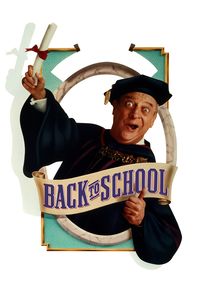
    (Second Viewing, In French, On TV, August 2019) “Rodney Dangerfield goofing off” seems to be the plot summary of most of Dangerfield’s movies, and the same holds true for Back to School. As the title suggests, this is Dangerfield heading back to academia to deliver his usual takedown of authority, pompousness, and higher education. As a (very) rich entrepreneur who goes back to college in order to foster his bonds with his son, Dangerfield gets the chance to oppose his brand of rough common good sense against the stuffy professors. Slobs versus snobs again, with expected results … including romancing a younger professor (only 16 years’ difference between Dangerfield and Sally Kellerman—could have been worse), getting in fights with pompous enemies and partying with the coeds. I saw the film a long time ago and only remembered two scenes (the protagonist bringing some real-world knowledge in an economics class, and the final diving sequence), so much of it was relatively fresh to me. Adrienne Barbeau has a small but appreciated role as a philandering trophy wife. Still, much of the film actually works well. Dangerfield, playing a rich guy, doesn’t get to overindulge in his “I get no respect” shtick, and his motivations approach nobility at times. As a result, his character feels more sympathetic and so does Back to School given how closely it depends on him.

  • Ziegfeld Follies (1945)

    Ziegfeld Follies (1945)

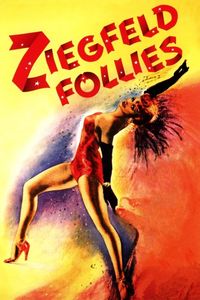
    (On Cable TV, August 2019) For fans of golden-age Hollywood musicals, it’s easy to get excited about Ziegfeld Follies from the get-go, as the names pile up the opening credits: Fred Astaire, Gene Kelly, Judy Garland, Cyd Charisse, Lena Horne, Lucille Ball in the same movie? Well, yes, but don’t expect a full narrative: As the opening number makes clear (featuring William Powell reprising his titular role in the Oscar-winning The Great Ziegfeld, looking down from paradise and wishing he could assemble another revue), this is a series of unconnected musical numbers and comic sketches featuring some of the era’s biggest stars. First number “Here’s to the Girls/Bring on the Wonderful Men” gets going with a bang, with Fred Astaire introducing Cyd Charisse leading to Lucille Ball in full grandiose Ziegfeld choreography, with a cute and very funny spoof from the deadpan Virginia O’Brien to wrap it up. The comedy numbers that follow have nearly all aged poorly—the comic style is broad, repetitive and laid on far too thick. The exception is the half-comedy, half-musical number “The Great Lady Has an Interview” in which a great-looking Judy Garland sings and charms her way through a satire of interviews—the number concludes with an extended comedy/dance/song tour de force from Garland. Still, there’s a lot more: Astaire features in three other numbers in the film, all of them quite different. “This Heart of Mine” starts on a conventional note with Astaire as a gentleman thief sneaking his way in a jewelry-heavy ball, where he dances with Lucille Bremer—but then the floor under them becomes a pair of treadmills and then a giant turntable and we see Astaire’s gift for innovative dance choreography take flight, leading to a cute conclusion. “Limehouse Blues” is something different, billed as a “dramatic pantomime” with a tragic storyline that takes Astaire (in yellowface, alas) through a vividly imagined Asian-inspired dance. But the kicker is “The Babbitt and The Bromide,” the sole golden-era joint performance by Astaire and Gene Kelly: the number plays up both the sincere admiration and the playful audience-imposed rivalry between the two screen legends. It’s everything such a joint performance between the two should be. For fans of more classical dancing/singing numbers, Esther Williams, Lena Horne and Kathryn Grayson all get standard numbers showing both their beauty and talent. A few other numbers and sketches round the film, perhaps the only other highlight being a half-funny comic sketch featuring Fanny Brice (one of Ziegfeld’s original 1910s girls) with Hume Cronyn (an actor still remembered in the 2010s for roles in 1980s films)—an astonishing duo. Disconnected, uneven but very impressive at times, Ziegfeld Follies is a real treat for golden Hollywood musical fans.