Reviews

  • Dear John (2010)

    Dear John (2010)

    (On TV, February 2017) Channing Tatum, Amanda Seyfried, Lasse Hallström and Nicholas Sparks in Dear John. With those four names together, you almost don’t have to do anything else to describe the result. Of course, it’s going to be an overlong (Hallström) weepy romantic drama (Nicholas Sparks) featuring a sympathetic hunk (Tatum) and a likable petite blonde (Seyfried). Any other questions? Oh, sure, the point of those films is in the details and side characters such as Richard Jenkins’ autistic father, likable in a difficult role. It’s about the homespun wisdom that kind of works even as it’s melodramatic (“Now I have two small holes in me. I’m no longer in perfect condition.”) It’s about familiar dialogue and situations that allow viewers to immerse themselves in characters that could be just like them. It’s about knowing where the journey takes us and being comforted by it. It’s not about wit or originality or being challenged or reflecting on the anxious years following 9/11. It’s not about anything else but what you see on the tin. Dear John works at what it tries to be, but it doesn’t try to be very ambitious.

  • Revolver (2005)

    Revolver (2005)

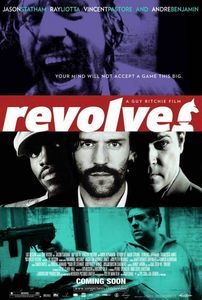
    (On DVD, February 2017) So; what happens when you start watching a crime thriller and an existentialist drama breaks out? Watch Revolver to find out. The weight of expectations clearly runs against the film: This is a Guy Richie movie! Starring Jason Statham and Ray Liotta! Featuring high-powered criminals! How can it not be another Lock, Stock and Two Smoking Barrel, Snatch or Rock-and-rolla? Well, it turns out that under the trappings of a crime thriller, Revolver wants to be something else. It messes with Kabbalistic symbols, deconstructs the inner psyche of a criminal, plays with components of the self, and, quite visibly, loses track of what it meant to do. Seeing Luc Besson’s name on the script is a warning more than a feature. Richie’s typically dynamic direction here feels disjointed if not actively unbalanced—the unreality of the heavily processed opening sequences eventually lead to the depiction of a mental breakdown as seen from the inside. It’s not pretty, and Revolver is equally remarkable for the way it’s willing to deglamorize strong actors. Statham has unflattering hair and an even worse dramatic arc, while Mark Strong has to contend with equally terrible hair and a surprisingly wimpy character. Self-important and pretentious to a fault, Revolver is an experience more than a film, and the right response at the end is something along the lines of a wary “okay…” Even the “reworked” American version barely works on the surface level of a crime thriller—and it’s exhausting enough that it discourages any attempt to go beyond the surface. I used to think that Swept Away was the worst thing that Madonna ever did to Richie (well, except for the pain of divorce, etc.) but Revolver has to be a close second.

  • Get the Gringo (2012)

    Get the Gringo (2012)

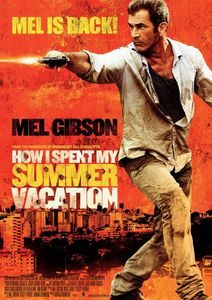
    (Netflix Streaming, February 2017) Featuring Mel Gibson in top-bruiser mode, Get the Gringo shows what can happen when an American career criminal gets caught in a Mexican jail. The place looks like a ghetto more than a prison, and much of the film’s fun is seeing the protagonist learn the system in order to exploit it. From the first smashing action sequence to the last comforting moment of the happy epilogue, Get the Gringo is a modest triumph of execution and sheer fun film-watching. As far as wry criminal thrillers go, it’s a success. Gibson is clearly the film’s anchor: he co-produced the film, his role is clearly heroic, his narration works well at making the film even more fun and the way he uses his persona here is quietly fascinating. This is the sarcastic self-assured Gibson: tough, funny, smart, threatening, knowledgeable and charming at once. It’s a kind of character that Gibson’s off-screen tabloid fodder actually enhances. As a comeback vehicle, it feels far better than 2010’s Edge of Darkness even if it’s less respectable. As a criminal action film with streaks of comedy, Get the Gringo gets full marks: it’s fun, fast and neatly wrapped up, feeling like a semi-sequel to 1999’s Payback. It’s a shame that its direct-to-video profile lowered its profile so much, but I see that’s gotten quite a bit of attention lately. It’s well worth its 90 minutes, especially for those who want to see Gibson at the top of his game, or are looking for a light-hearted crime thriller.

  • Hereafter (2010)

    Hereafter (2010)

    (Netflix Streaming, February 2017) Clint Eastwood isn’t a director associated with the supernatural, but with Hereafter he takes on a multi-strand story about communicating with the dead. Featuring an ensemble cast, this is a movie that goes around the world, asking questions and them wrapping up abruptly. There are quite a few things to like about it—the performances from actors such as Matt Damon as a blue-collar worker with an unwanted gift; Cecile de France as a woman whose life changes after a near-death experience; and the McLaren brothers as kids surviving a terrible childhood. Bryce Dallas Howard also shows up in a short but striking role. The way those stories, in four different countries, come to climax is satisfying, but the small-scale ending of the film is almost surprising, leaving plenty of questions unanswered. The opening sequence, depicting a tsunami in graphic detail, is unusually far more intense than the ending. It’s intriguing, satisfying in small moments, but not exceptionally fulfilling in total. The sum of the good moments doesn’t quite add up to a grand film and the result feels curiously muted. Too bad; at least it delivers small doses of interest.

  • Carlito’s Way (1993)

    Carlito’s Way (1993)

    (On DVD, February 2017) While I gather than Carlito’s Way was only a middling financial and critical success back in 1993, it’s one of those films that grow even better with time. I have a few theories as to why the decades have been kind to the movie. For one thing, I think it’s the kind of top-class crime thriller that were omnipresent for a while, and then not so much. So what if it’s similar to Scarface and The Untouchables? Those movies were awesome! In 2017, Carlito’s Way is a quasi-refreshing throwback to muscular crime cinema back when it was synonymous with A-class budgets rather than straight-to-video releases. It features Al Pacino in terrific younger form (sporting a glorious beard), which is best appreciated now rather than at a time when he was almost over-exposed. It benefits immensely from director Brian de Palma’ kinetic camera work, swooping and gliding into scenes, cackling as it prepares straight-up suspense sequences and delivers all of the cheap thrills that we can expect from a crime thriller. Carlito’s Way may not measure up to Scorcese, but it has strong thrills to deliver in an endearing exploitative way. David Koepp’s script cleverly packs a lot in a decent time, taking a look at a killer trying to get out of the business but predictably failing to do so. Sean Penn is almost unrecognizable (yet iconic, as per GTA: Vice City) as a completely crooked lawyer, while Penelope Ann Miller, John Leguizamo and Luis Guzman turn in good supporting performances. (Pre-stardom Viggo Mortensen even shows up in a non-glamorous role as a disabled ex-gangster) It all adds up to a slick, enjoyable crime drama the likes of which we don’t see enough these days. Carlito’s Way has grown in stature over the past quarter-decade and a fresh look at it today only confirms that it’s a strong film.

  • Letters to Juliet (2010)

    Letters to Juliet (2010)

    (On Cable TV, February 2017) I’m not sure why I’ve been slowly warming up to Amanda Seyfried lately, after years of comparing her to a Muppet. It may be that she’s paid her dues, got a few good roles, isn’t going anywhere, is aging gracefully in her unusual looks and even seems eager to poke fun at herself (such as in the otherwise woeful Ted 2) All of this makes her more sympathetic, even in movies from a while ago. So it is that, perhaps surprisingly, Seyfried becomes one of Letters to Juliet’s most noteworthy assets, a bright presence in an otherwise dull film. Despite the time-crossed lovers premise (i.e.: a young American writer helping an elderly British woman find a long-lost love in Italy) and the luminous cinematography, Letters to Juliet is immediately familiar in the rom-com mold—there’s little doubt where things are going even early on, and much of the movie becomes a demonstrative film rather than a suspenseful one. That’s largely why the last fifteen minutes are an exercise in frustration, as the film needlessly stretches out what should be over already. Still, the portrayal of the Italian countryside is good for a bit of vicarious sight-seeing, and the film’s pairs of romantic leads are good at what they’re supposed to do. It doesn’t amount to much more than a standard rom-com, but there are days when even an average rom-com is just what’s needed.

  • The Color Purple (1985)

    The Color Purple (1985)

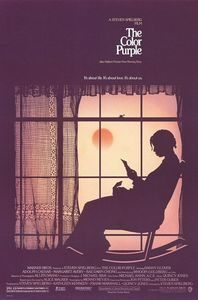
    (On Cable TV, February 2017) I gather that, at the time, seeing Steven Spielberg tackle a serious socially-conscious non-genre period drama such as The Color Purple project was a bit of a novelty. Of course, in retrospect it clearly shows the beginning of an important facet of Spielberg’s filmography all the way to Schindler’s List, Amistad and Lincoln. Has it held up in light of those latter examples? Yes and no. As hard as it can be to criticize a film denouncing injustice, there are times where The Color Purple gets, well, a bit too purple. Repeated scenes of abuse get tiresome, the film moves at languid pace (the victory lap epilogue alone feels as if it takes fifteen minutes) and as similar pictures has never gone out of fashion, I’m not sure the film feels as fresh today as it might have been back then. On the other hand, it is skillfully shot, expansively detailed and it features two terrific debut performances by none other than Oprah Whitney (in a non-too-complimentary role) and Whoopi Goldberg as the main much-abused protagonist. Danny Glover is also remarkable as a repellent antagonist. As for the rest, The Color Purple is about as far from Spielberg’s earlier work as it could be, even though it is thematically consistent with some of his later films—as an attempt to shatter perceptions about what we could do, it seems to have worked splendidly. As for the rest, the film does have a timeless nature—the depiction of the early twentieth century still looks credible, and had the film come out today, chances are that it would have done just as well in the Oscars sweepstake. Obviously best seen by people with an interest in period drama, The Color Purple may not be an easy watch, but it eventually proves its worth.

  • A Hologram for the King (2016)

    A Hologram for the King (2016)

    (On Cable TV, February 2017) It’s a good thing that Tom Hanks stars in A Hologram for the King, because I’m not sure that the film would have been as interesting with another actor. Bringing his everyday-man charm to a damaged character (a down-on-his-luck salesman with substantial familial, psychological and health issues) thrown in the weirdness of modern Saudi Arabia as he chases an important contract, Hanks shines even without meaning to do so. There are multiple obstacles in his way, from an unfamiliar culture to unhelpful receptionists to a big ball of guilt permeating his every action. Writer/director Tom Tykwer brings some welcome energy and visual polish to some sequences but otherwise delivers a far more conventional film than some of his best-known work. Other actors distinguish themselves in smaller roles: Alexander Black is frequently hilarious as the protagonist’s accidental companion, while Sidse Babett Knudsen is very likable as the first helpful person encountered by the hero, and Sarita Choudhury gets a great age-appropriate romantic role. A Hologram for the King plays well, especially during its early scenes, largely due to the attachment that viewers already have to Hanks’ screen persona. The accumulation of details about life in Saudi Arabia gives the film a manageable amount of strangeness, and by the time we understand that this will be a character study with a strong internal component, we’re already under the film’s unassuming charm. A Hologram for the King is certainly not without faults (some plotlines get resolved very quickly, some subplots feel easy, some moments feel implausible or too easy contrived) but it works well enough.

  • The Legend of Tarzan (2016)

    The Legend of Tarzan (2016)

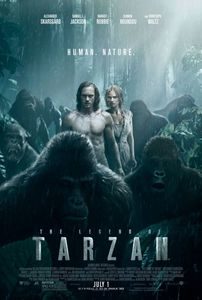
    (On Cable TV, February 2017) Count me as slightly surprised by this two-fisted adventure film. Most reviewers haven’t been kind to The Legend of Tarzan, and their lowering of my expectations surely played into the film’s favour. Once past the prologue and some tiresome rehashing of the classic Tarzan myth, The Legend of Tarzan gets its own identity as an anti-colonialist sequel to the original Burrough. As Tarzan returns to Africa to fight against slavers, the film becomes the straight-up adventure that it should be. Alexander Skarsgård (and his CGI double) is pretty good as the titular hero, Margot Robbie is fine (but no more) as a damsel able to fight her way out of distress, Samuel L. Jackson is dependably enjoyable as an action sidekick and Christoph Waltz is also up to his usual standards as a slimy antagonist. Director David Yates uses his experience helming visual-effects-heavy projects to deliver a swooping, dynamic series of action sequences grounded in the real world: the film reaches its apex by the time Tarzan flies through the jungle. The script isn’t too bad—despite some uninspiring lines, the anti-colonial themes are ambitious and nicely serve the character despite some white-saviour qualms. The Legend of Tarzan doesn’t amount to a remarkable movie, but it does make up most of a decent blockbuster entertainment film. It’s quite a bit better than some of the harshest reviews may suggest, and works just fine at what it wants to be.

  • Arrival (2016)

    Arrival (2016)

    (Video on Demand, February 2017) The last few years have been a boon for fans of cerebral big-budget Science Fiction, and here comes Arrival to continue the streak. As someone who’s quite familiar with Ted Chiang’s Story of Your Life short story from which Arrival is based, I can’t say that the film had a lot of conceptual surprises in store. Still, that makes it easier to appreciate what was a difficult writing exercise: adapting a non-linear story of understanding and loss into a film that is, at times, thrilling, majestic, mind-expanding and deeply felt. Adding quite a bit to the short story without betraying its core, Arrival manages to take a borderline-ridiculous concept and boil it down to an intimate story for a woman who couldn’t be farther away from the action-hero ideal. Amy Adams is terrific in the lead role, sympathetically incarnating a brainy scientist abruptly thrust in the middle of a tense first-contact scenario. Arrival does nearly everything very well, but it’s notable in the way it presents an initially-familiar scenario (aliens land!) in a way that feels grounded in reality. By the time we’re in non-linear gravity-shifting mode, the film has earned the right to wow its audience. Most assuredly the best Hollywood Science Fiction film of 2016, Arrival gives a bit of hope back that Hollywood can still make great movies when it wants to. Best of all, it’s another celebrated entry in French-Canadian filmmaker Denis Villeneuve’s filmography—and now he’s taking aim at Blade Runner and Dune.

  • Garfield (2004)

    Garfield (2004)

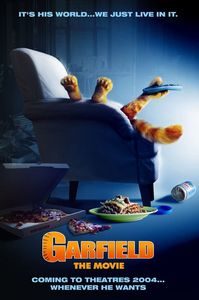
    (On Cable TV, February 2017) Some will say that Garfield is terrible or misguided. I just think it’s dull. A bog-standard kid’s movie with animal characters, Garfield is noteworthy simply for its association with the comic strip, for the CGI lead character and for hearing Bill Murray’s disinterested dulcet tones as the lead cat. While Breckin Meyer is likable as Jon and it’s always nice to see Jennifer Love Hewitt, at some point in your life you have to make choices and consider whether what’s worth your time. Garfield certainly raises questions, most notably why-oh-why did they not use CGI for all the animal characters? Blending CGI Garfield with live-action Nermal and Odie completely misses the point of a movie adaptation of a comic strip, and even if the answer is likely to be” money”, then no-Garfield would have been preferable to a botched Garfield. Otherwise, there’s almost nothing here to interest adults—the script is painfully aimed at younger kids (simple plot, stock characters, dull dialogue), and there isn’t much in terms of cinematic sophistication. To be fair, nearly everybody (including Bill Murray) has had negative things to say about Garfield. The only grown-up suckers who see the film now are either parents or people who didn’t listen.

  • Vegas Vacation (1997)

    Vegas Vacation (1997)

    (On DVD, February 2017) As the fourth entry in an uneven series, Vegas Vacation is no more and no less than average. The chuckles are there as the Griswold family takes a trip to Las Vegas, but the film struggles to have anything akin to the memorable sequences of the previous films. While better than European Vacation, it doesn’t reach the comedy heights of Christmas Vacation, nor attains the archetypical Americana of the first film. Chevy Chase’s doofus-dad character is very familiar by now, and if Beverly d’Angelo only seems to become more attractive with age, her character doesn’t have much to do except flirt with Wayne Newton. Some sequences are terrible (such as the Hoover Dam segment) while others are mildly amusing (such as the boy being an incredibly lucky gambler). The ending, appropriately enough for a final movie in a series, triumphantly sends off the Griswold family in the sunset with a drive home that could have been a movie in its own right. By far the most average and featureless film in the series, Vegas Vacation is worth a look if it’s in the same DVD case as the other movies of the series—otherwise, well, there are funnier film out there.

  • Batman: The Killing Joke (2016)

    Batman: The Killing Joke (2016)

    (On Cable TV, February 2017) Hmm. I’m a moderate Batman fan at best, but I do own the Killing Joke graphic novel from which this animated film is adapted, and I’m not happy to report that Batman: The Killing Joke has taken the worst aspects of the source material and amplified them. In an effort to expand the rather short story into a feature film, the screenwriter somehow thought it would be a good idea to spend the first half of the film focusing on Batgirl, giving her temper tantrums and a sex scene with Batman (!) before cynically using her as a revenge motivator though mutilation and an implied side order of sexual assault. Geez … for a movie consciously aiming for an R rating (with blood, language and disturbing themes), The Killing Joke often feels like an adolescent discovering swearwords and adult topics … and then overusing them to the point of self-parody. By the time the central conflict between Batman and the Joker finally unfolds, viewers with the slightest moral scruples will have checked out of the film and withheld their suspension of disbelief. The result isn’t fun. It doesn’t even feel meaningful, important or even respectable: It feels trashy, exploitative and misguided. The low quality of the animation doesn’t help. I don’t mind gritty takes on superhero stories, but The Killing Joke goes too far and makes me feel dirty. Not recommended. Hilariously enough, trying to watch this film on Canada’s The Movie Network proved to be an adventure, as the film was announced early, but then showed up weeks later in listings as “Batman: Bad Blood”. As a result, I wasn’t too sure for a long time what I was watching—the pieces started clicking once the Joker was introduced midway through. In retrospect, this may have been a way from the universe to dissuade me from seeing the results.

  • Nine to Five (1980)

    Nine to Five (1980)

    (On Cable TV, February 2017) I recall seeing Nine to Five as a kid, but given that I only remembered the iconic theme song, I will pretend that this was like watching a new film. It certainly feels like a time capsule from the late seventies, with its broad statements about feminism, contemporary fashions and work culture at a pre-computer, barely-photocopier era. Jane Fonda is a bit dull as the intentionally blank heroine, but Lily Tomlin is very good as a cynical office manager, and it’s a treat to see Dolly Parton in her prime as a smarter-than-she-looks secretary. Their story of female empowerment and revenge against a no-good boss (sorry, “sexist, egotistical, lying, hypocritical bigot”) is good for a few chuckles, especially when the film goes off the reality rails and features three outlandish dream sequences. As for the rest, the film has aged depressingly well: it’s discouraging to realize that much of the feminist content remains effective thirty-five-years later—there’s been progress, but not that much of it, especially in the United States. The theme song hasn’t gone out of style either: “Working nine-to-five/What a way to make a living…”

  • Lego: A Love Story, Jonathan Bender

    Wiley, 2010, 296 pages, C$34.00 hc, ISBN 978–0470407028

    As an adult who has rediscovered the joys of Lego bricks over the past six months, I’m better placed than most in appreciating Jonathan Bender’s journey as described in Lego: A Love Story. Not that rediscovering Lego as an adult is an unusual phenomenon. Adult Fans of Lego (AFOLs) even have a term, “The Dark Ages”, to describe the period between the time we stop playing with Lego as children/teenagers, and the time we pick them up again as an adult.

    In my case, I abandoned Lego bricks as an early teenager after being a big Space set fan (partially motivated, if I recall correctly, by my younger brother taking up my bricks) and then kind of … didn’t care for more than two decades even though my feelings toward Lego were never less than entirely positive. It took my daughter reaching her brick-playing years for me to rediscover Lego, first through Disney Princess sets (for her), then Creator sets (for me). We’re now pleasantly expanding our respective collections via the Friends (for her) and City (for me) lines, and we’re both trying our hands at original creations. Reading about Lego is an associated side effect of this rekindled passion.

    So when Bender describes the end of his own Dark Ages in Lego: A Love Story, I’m right there along with him. As he picks up the bricks, we get to see him think about his childhood Lego passion, discover the world of adult fans, gradually join the world of Lego conventions and collectors, and wrap it all up with his feelings as he becomes an expectant father.

    There are other, more strictly informational books about Lego out there. If you want the official history, grab The Lego Book, a lavish Dorling Kindersley production that can be supplemented by separate tomes on sets and minifigurines. If you want a more detailed history of Lego and a factually exhausting description of nearly every line ever launched by Lego, Sarah Herman’s A Million Little Bricks will be enough. But if you want to get into the head of an AFOL, then Lego: A Love Story is for you. It’s informative, fascinating, partially heartfelt and truly says more about Lego than a dry history of the toy could ever do.

    It’s not perfect, mind you. At times, it feels very deliberate—the kind of artificial experience that is motivated by a book contract along the lines of “I will spend a year immersing myself in the world of Lego, make heartwarming parallels with my own life and deliver an emotional conclusion.”  The book even has a Chekhov’s Lego set ready to be assembled at a thematically appropriate moment that we can see coming far in advance. This is a documentary with an archetypical plot and at times we can see the bare planks of the structure. (It doesn’t help that, looking at Bender’s online presence, he focused a lot on Lego from 2009 to 2010, and then went very quiet on the topic—I can certainly understand that raising a young child as a writer requires focus, but it doesn’t help the feeling that part of the book is hobby-for-hire.)  Many smaller flaws do stem from this framework. Some of Bender’s early experiences in getting back to Lego feel faux-naïve (wow, they invented a brick separator!), as would befit someone wrapping a too-neat structure over a chaotic process. Later on, some promising plot threads are also abandoned midway through (such as the author wondering if he fell in with the bad boys of adult Lego fandom), which is perhaps inevitable for a book focusing on such a short duration. There’s a delicate balance between being new enough to the hobby to talk about it as a discovery, and being seasoned enough to talk about it with the authority of experience—but Bender does get most of it right despite a few slips along the way.

    On the other hand, there is a lot to simply love about Lego: A Love Story. Bender’s thought processes as he gets in deeper Lego fandom are near-universal, and his ability to clearly describe some of the more subtle pleasures of Lego fandom (assembling an original creation that matches the initial vision, for instance) is eloquent. As a journalist working on a book, he gets to go places that other AFOLs would envy: Legoland in Denmark; behind the scenes at Legoland San Diego; a visit at Lego’s corporate U.S. headquarters in Connecticut; peering inside a Bricklink store, helping organize a Lego festival with other AFOLs; and so on. He packs a lot of stuff in the year covered by this book (see above for: writing to fulfill a contract) and we readers get to read along voraciously. Bender’s background as an improv comedian makes for good prose and amusing moments, enlivening a decent journalistic overview of Lego (the company, the toy, the phenomenon) with enough personal moments that he almost comes across as an old friend by the end of the book. Bender is not a Lego employee, so a few darker passages do hint at the less wholesome side of Lego (like all hobbies, it requires time and money that can always be spent on other things) even though they are not explored in depth—like most AFOLs, Bender see Lego building as a wholesome pursuit, and isn’t particularly interested in presenting another side to the Lego story. (Seriously; who hates Lego?)

    What I can’t tell you is whether someone without any interest in Lego will enjoy the book. I suspect that it may help illuminate what goes on in an AFOL’s mind (hence a marginal recommendation for spouses, family and friends of committed AFOLs). I’m certainly convinced that AFOLs will like it, but I’m not entirely sure that this is the kind of book to make Dark-Agers rush to the store to pick up new sets again. On the other hand, I did enjoy quite a bit of it … so why worry about others’ reactions? Much of the same can be said about Lego enthusiasts.