Reviews

  • Unfriended aka Cybernatural  (2014)

    Unfriended aka Cybernatural (2014)

    (On Cable TV, January 2016) As noted elsewhere, I am a sucker for clever—if a movie is willing to try something different, then I’m willing to be interested. In Unfriended, a good old vengeful-ghost-takes-revenge-on-teenagers story is made almost uncomfortably of-the-moment by being presented on a laptop screen, as a few high-schoolers collectively freak out over video chat as supernatural events occur. It may sound terrible, but it’s actually handled relatively well: the transformation of dread into outright horror is precisely gradated, and if the characters’ back-story end up being reprehensible, they are distinctive and occasionally sympathetic. Props to writer Nelson Greaves and director Levan Gabriadze for daring something that feels new. I doubt that Unfriended will age very well, as instantly dated it is by its used of current technology: This is a film that could only have been made circa 2014, as the tools weren’t there in (say) 2009 and will mutate beyond recognition by 2019. Its structure is hilariously close to the ideal of the teenage horror slasher (with its initial tragedy, followed by a sequence of deaths until the final girl), but it’s made far less conventional by sheer power of novelty. The last jolt is nice, and viewers are encouraged to watch the film on a high-resolution display (i.e.; 1080 minimum and no smartphone!), for fear of missing pixel-precise screenshot details. I liked Unfriended for execution despite not caring all that much for its substance—make of that what you will in taking my opinion in consideration.

  • Madagascar 3: Europe’s Most Wanted (2012)

    Madagascar 3: Europe’s Most Wanted (2012)

    (In French, On TV, January 2016) Keeping expectations low is one of the best ways to approach the Madagascar series. Given that the second film wasn’t particularly remarkable, most should be properly primed not to ask too much from Madagascar 3: Europe’s Most Wanted. Yet viewed with this background in mind, the movie becomes almost curiously enjoyable: it helps that it leaves the jungles of Africa for the urban and mountainous vistas of Europe, joining a circus for a welcome change of pace. I’ll note, out of homegrown pride, that I really did not expect a Cirque du Soleil joke in the middle of the film (“until those French Canadians came along, drunk off of their maple syrup and cheap pharmaceuticals…”) and that it was one of a few quick laughs that the movie earned. The penguins, once again, are a welcome addition to the film. King Julian, less so. Madagascar 3 also has the decency of wrapping up the trilogy in a way that could satisfyingly end there if they wished, which isn’t bad at all. Seeing this third instalment in French sadly takes away the comfort of some familiar voices—as usual, I most miss Chris Rock’s distinctive intonations. Otherwise, this is a fairly by-the-numbers animated movie, best appreciated by fans of the series so far, but more energetic than could have been expected.

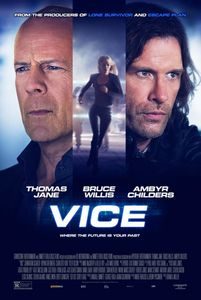
  • Vice (2015)

    Vice (2015)

    (On Cable TV, January 2016) Bad ideas never die, and that’s how Westworld’s basic concepts can be filed off and reborn decades later in a tepid low-budget thriller like Vice. Nominally about a theme park where clients can indulge in their wildest fantasies at the expense of the androids animated for their enjoyment, Vice clearly doesn’t know what to do with its own premise and quickly veers off in a dull stunted ennui. Bruce Willis briefly appears as the evil CEO, but (as in many of his low-budget efforts lately) seems bored by all aspects of the production. Thomas Jane and Ambyr Childers don’t really pick up the slack as, respectively, a dogged police officer and a robot who experiences flashes of her previous lives after being violently deactivated. For Science Fiction fans, Vice fails because it’s almost unbearably timid in the way it approaches its subject. Limited by budget and imagination, it barely scratches the surface of its possibilities—and the idea to transform its robots into likable victims quickly bogs down in clichés piled upon mawkishness. For action junkies, Vice doesn’t do much better: despite occasionally clever directing by Brian A. Miller, it seems uninteresting and then unendurable: it leaves no lasting impression and become undistinguishable from so many other cheap SF movies released straight-to-VOD. Let’s hope that Miller’s next film will be more ambitious and striking than Vice.

  • Chappie (2015)

    Chappie (2015)

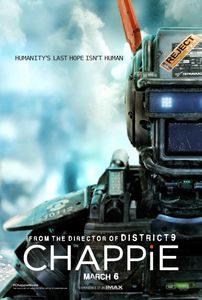
    (On Cable TV, January 2016) I’m … not sure where to begin with Chappie, given how many problems it has. I want to applaud it as a third consecutive original science-fiction film by writer/director Neill Blomkamp, even if it’s nowhere near as good as the quasi-classic District 9, nor close to the ambitious disappointment that was Elysium. I’d like to rave about the special effects almost perfectly integrated with its gritty cinematography, but I found much of the film’s focus on the zef subculture to be actively irritating to the point of distraction. Despite being open to different experiences and worldviews, slumming with Die Antwoord actors in decaying Johannesburg tested the limits of my tolerance. For every good concept in Chappie (not the least being the corruption of an artificial intelligence by selfish human parenting), there seems to be two or three truly bad ideas taking up far too much space, or sending the film in frustrating directions. While Chappie certainly is part of 2014–2015’s cinematic anno roboticis, it also works without rigour, throwing in personality uploading as a third-act bonus without exploring a significant fraction of such a breakthrough’s implications. It would rather retreat in robot-criminal jokes and give far too much screen time to aggravating characters. Blomkamp is a skilled director, but he can’t do it all. He needs a competent writing partner who can point out the absurdity of his stories. He needs someone to highlight that irritation on-screen often become exasperation off-screen. He needs to make more judicious use of his actors, because Hugh Jackman, Dev Patel and Sigourney Weaver are almost entirely wasted here. I’m trying to be nice and not say anything bad about the Die Antwoord performers, but the best I can do is mention that Watkin Tudor Jones (as “Ninja”) can be surprisingly charismatic at times—I make no such claims regarding Yolandi Visser. Few other big-budget productions I can recall have moments as annoying as Chappie does with its criminals teaching a newly sentient robot about their lives. At the end of the film, we’re left cheated of a better movie using most of the same elements.

  • Perfume: The Story of a Murderer (2006)

    Perfume: The Story of a Murderer (2006)

    (Video on Demand, December 2015) Adapting Patrick Süskind’s extraordinary novel Perfume is not impossible (as this film proves), but it’s daunting enough.  Part of it, of course, has to do with the central conceit of a story in which smell (with its associated vocabulary and emotional impact) plays such a strong role – how to portray that on-screen?  But if there was a filmmaker for the job, then Tom Tykwer (of Run Lola Run and Cloud Atlas fame) would be it.  In his hands, a potentially silly film becomes curiously accessible, despite an oft-unbearable beginning (complete with baby endangerment) and a final mass-orgy sequence (you read that correctly) that could have gone terribly wrong in the wrong hands.  This Perfume, though, ends up being reasonably good; certainly beautiful and thought-provoking at times.  Ben Whishaw makes an impression as the lead character, a young man gifted with superhuman olfactory senses who resorts to murder in order to perfect the ultimate perfume.  Dustin Hoffman shows up for a few pivotal scenes, but this is really Whishaw’s film.  Perfume’s most noteworthy characteristic, aside from a daring screenplay, is its splendid cinematography, honed to quasi-perfection as it goes from the dirty markets of Paris to the beautiful countryside of southern Europe.  The emphasis on scent jargon and trade secrets is fascinating, and the gradual discoveries of the lead character are narrated effectively (by John Hurt, no less).  Warm and harsh at the same time, Perfume is a singular film experience, the kind fit to make jaded moviegoers say “wow, that was pretty good!”  It may not, however, be everything to everyone.

  • Hachi: A Dog’s Tale (2009)

    Hachi: A Dog’s Tale (2009)

    (Video on Demand, December 2015) I’m not a big dog person, but Hachi still managed to reach me twice as often as I thought.  The story of a dog who comes to wait eternally for his dead master, Hachi hits high notes at the beginning of the story (when a preposterously cute puppy dog gets a lot of screen time) and at the end, as the years go on and the dog stands for permanence in a forever-changing world.  It is, very obviously, a film made with obviously mawkish intent: it pulls no punches in trying to get tears out of its audience, and milks every single dramatic detail (such as the squeezable ball) to its fullest.  But, especially after a slow first half, it picks up and gets far more interesting than expected later on.  Richard Gere isn’t bad as the lead human character, an academic who ends up with a lot more than he expected when a dog randomly pops into his path.  Still, this is the dog’s film and everyone knows it.  For a movie that was apparently never widely shown in North-American theaters, Hachi has since acquired a minor but entirely well-deserved notoriety.  Dog people should truly brace themselves for sobs, though.

  • The Devil’s Own (1997)

    The Devil’s Own (1997)

    (On Cable TV, December 2015) I tried getting into this film.  I really did.  But as it turns out, there’s no real way to get me to care about an IRA terrorist presented semi-sympathetically as he lands in New York to procure missiles and lodges at a NYPD cop’s place.  I mean: what’s up with that?  While The Devil’s Own does at least offer the chance to see (younger) Harrison Ford up against (much younger) Brad Pitt, the film itself is dullness stretched into infinity.  It doesn’t help that the climax is weak, and the two or three interesting action scenes (a household shootout; a police car escape) seem disconnected from the rest of the film.  Now, I will admit that I more or less stopped paying attention midway through, so when I say that the last half seems more and more incoherent, I may not exactly be speaking from a position of absolute knowledge.  Still, the damage has been done by then (the beginning isn’t necessarily more cohesive either) and the rest of the film didn’t manage to bring me back in.  I’ve been binging so many good-to-great late-nineties thrillers lately that I was getting worried that I had only missed the better ones.  The Devil’s Own reassures me that, no, I had managed to miss a few of the worse ones as well.

  • Boyz n the Hood (1991)

    Boyz n the Hood (1991)

    (On Blu-Ray, December 2015) There have been so many imitators and spiritual successors to Boyz n the Hood (all the way to 2015’s Dope) that it can be hard today to see the film as it must have appeared in 1991, abruptly bringing South Central L.A. to the suburban multiplex.  But revisiting the film is more than worth it even twenty-five years later, because John Singleton’s debut feature has the kind of depth and subtlety that most of its imitators forgot about.  It’s a film dominated by crime, for instance, but it is not primarily a criminal film: The drama is strong, multifaceted and the film never loses sight that its authority figure (Lawrence Fishburne, in a terrific role) is right in counseling his son to stay away from even the slightest disregard for the law.  The rest of the cast is fantastic, from Angela Basset to Ice Cube to Cuba Gooding Jr. to Nia Long.  The film stock grain is obvious on the Blu-Ray disc, but the film is shot cleanly and features a number of sly visual jokes, from the first STOP sign to Reagan references.  No doubt about it: Boyz n the Hood remains an impressive piece of work despite time and imitators.

  • The Edge (1997)

    The Edge (1997)

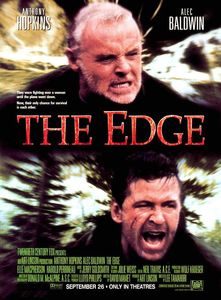
    (Netflix Streaming, December 2015) There’s some logic in seeing David Mamet tackling a wilderness-survival story.  Given Mamet’s career-long obsessions with masculinity and how men deal with each other, it’s ready to see the attraction in pitting a few men against nature in far-away Alaska, especially when two of the men are competing for the same woman.  Still, there’s a bit of a gulf between concept and execution, and if The Edge does well most of the time (especially in presenting a terrifying bear attack), there are a few issues with the result that keep it from being as good as it could be.  While Anthony Hopkins is interesting as a billionaire-bookworm-turning-super-survivalist (including a few choice macho one-liners), the very nature of his character seems a bit too close to wish-fulfillment.  (For that matter, the bear seems a bit too wilfully evil as well.)  Alec Balwdwin’s up to his usual borderline-slimy level, though.  Still, the scenery isn’t bad, and there are enough little twists and turns here and there to keep things interesting.  The Edge has stood up the test of time decently as well.

  • Kiss the Girls (1997)

    Kiss the Girls (1997)

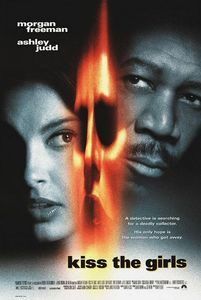
    (Netflix Streaming, December 2015) Being slightly better than the average may be a compliment, but it isn’t much of one.  It’s a wonder than anyone even remembers Kiss the Girls nearly twenty years later given how generic it can be at times: I may have reached my limit of how many psycho-killer-targets-young-women films I can stand, and Kiss the Girls is definitely an entirely average example of the sub-genre.  At least the film can depend on Morgan Freeman (with darker hair and a bit more energy than today) and Ashley Judd to give the film a bit of interest, as well as a second-act escape that makes the film more interesting than most similar ones.  Otherwise, the story meanders a bit, goes on for too long, manages to end in the most predictable fashion and doesn’t make itself memorable in any way.  There’s a bit of competence in the cinematography, but much of Kiss the Girls is dull in the ways movies about quasi-magical serial killers can be, going over familiar ground in the most exasperating fashion.  While Kiss the Girls gets a few extra points here and there, they’re not enough to make the film worth visiting.

  • Good Burger (1997)

    Good Burger (1997)

    (Netflix Streaming, December 2015) The stupidity of Good Burger is overpowering enough to make even the smartest viewers gradually lose their higher mental functions during the course of the film.  There’s a good chance that you’ll end laughing at Good Burger with moronic glee toward the end of the film, because by that time you will be a certifiable moron.  To be fair, the first five minutes of the film set the tone, as a burger-obsessed teenager (Kel Mitchel, progressively likable) lives in a reality where his fast-food job is the most interesting thing in the world.  The rest of the story follows, as the local burger joint is threatened by a corporate chain, as secret sauces and illegal additives are involved, and as one dumb moment follows another.  Good Burger isn’t refined, but it does have an increasing amount of comic energy going for it.  The dim-witted protagonist earns our sympathy, and the absurdity of it all eventually becomes its own selling point.  While I wouldn’t want to see a film like Good Burger more than once or twice a year, I suppose that a bit of variety doesn’t hurt from time to time.

  • 3 Idiots (2009)

    3 Idiots (2009)

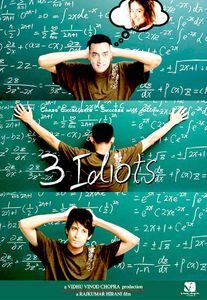
    (On DVD, December 2015) I’ve been meaning to take a closer look at Indian cinema for a while, and 3 Idiots seemed like an inviting entry door: I’m sympathetic to stories about engineers, the film was a massive box-office success and the reviews didn’t look bad either.  Fortunately, the resulting film doesn’t disappoint too much: It’s got a strong structure going back and forth in time, decent actors (Aamir Khan is particularly likable as an eccentric engineering student, while Boman Irani makes for a ferocious antagonist and Kareena Kapoor is just about everything to like in a romantic heroine), some suspense, a good conclusion… and so on.  I can’t speak about the particular cultural resonances of the film or whether it’s an accurate portrait of what it’s like in Indian engineering schools, but it does have a decent amount of cross-cultural appeal.  What’s not so appealing, unfortunately, is the film’s length.  While I gather than three hours is unremarkable by Indian cinema standards, it definitely feels too long for a comedy like 3 Idiots.  (The repetition of simple plot points doesn’t help.)  The tonal shifts in the film are also strange from a western perspective and they have something to do with the length: In trying to cram everything masala-style in a single film, the result feels long and unfocused.  Still, some of my favourite moments are the film are when it goes full-Bollywood: The two musical numbers are insanely catchy, and the choreography can be spectacular at times.  While I’d like 3 Idiots to be 30 to 45 minutes shorter, I’m pretty happy with the result and look forward to more Indian cinema in the near future.

  • Chariot (2013)

    Chariot (2013)

    (On Cable TV, December 2015) As regular readers ought to know by now, I’m a sucker for clever: I can forgive a lot of flaws in service of an intriguing high concept or a clever way to stretch a premise.  So keep that in mind in considering whether my reaction to Chariot may not be like yours.  A thriller with an ultra-low-budget reportedly in the five figures, Chariot takes place entirely aboard an airplane cabin, with very few glimpses outside.  It brings together less than a dozen strangers, who wake up on the plane wondering how they got there.  The various pieces of information they put together only raise more questions: has there been a massive nuclear strike on the United States?  Why have they been picked to survive aboard a plane flying so high above the ground?  The various mysteries, conflicts and commonalities between the characters take center-stage, making the most of a quasi-theatrical setting.  For a while, as the mysteries remain intact, Chariot remains gripping, far above other films of its budgetary class.  It’s when the answers start to be forthcoming that the film loses steam, inevitably creating more basic plausibility questions than can be reasonably satisfied.  Viewers should be warned that the ending is non-existent: By the time the film ends without having the budget to go farther, we’re left disappointed, perhaps more by the answer to its mysteries than in trying to provide an ending to a situation that can’t end satisfactorily.  Still, there is a lot to admire in what Chariot actually does manage to achieve with its budget and limitations.  Writer Eric Vale milks the most out of a limited premise; director Brad Osborne keeps things interesting despite an enclosed location, and there’s some good work by Anthony Montgomery and Michelle Sherrill in two very different roles.  Chariot falls short of earning an unqualified recommendation, but it fares better than most similar movies.  It is, at the very least, worth a look as a lesson on how to wring techno-thriller thrills out of an indie drama budget.

  • Ted 2 (2015)

    Ted 2 (2015)

    (Video on Demand, December 2015) The first Ted managed to overcome an annoying tendency toward vulgarity, pop-culture hermeticity and scattershot comedy by offering a bit of thematic depth in portraying a metaphor for prolonged adolescence.  The sequel, unfortunately, seems to have forgotten all about meaning while playing up the worst aspects of the first film.  The laughs are far fewer in this film as it tries to combine low-brow humor with a lame bid at human rights (or rather teddy-bear rights) activism.  Sexist, racist and hopelessly obsessed with bad language, Ted 2 often feels like a sketch comedy loosely structured around a half-hearted attempt at plotting.  Mark Wahlberg is unremarkable in a returning engagement as the protagonist, although Amanda Seyfried manages one of her most likable performance as a young lawyer tasked to defend Ted’s legal status.  (The film even indulges into two gags about her physical appearance.)  Whatever comedy works (Liam Neeson’ cameo appearance, for instance) feel more accidental than deliberate, and the jokes that don’t work make the film feel cheaper and more repellent.  It feels like a low-effort affair, happy to coast on low-grade dumb jokes rather than try to make a statement as in the first film.  Unfortunately, it doesn’t say much about writer/director Seth MacFarlaine: After the debacle that was A Million Ways to Die in the West and now Ted 2, I’m not exactly anticipating his next film.

  • Confessions of a Shopaholic (2009)

    Confessions of a Shopaholic (2009)

    (Netflix Streaming, December 2015) I’m sure there’s a good movie to be made about the horrors of shopping addiction, its cruel toll on finances and families, the spiralling self-destructiveness of its insidiousness… but Confessions of a Shopaholic certainly isn’t it.  Casting shopping addiction as a character quirk in a light-hearted and inconsequential romantic comedy, this tone-deaf 2009 film ended up being a paean to consumerism at a time when the United States suffered its worst economic crisis in years.  (The solution to the protagonist’s financial problems?  Hold a sale so that other people can help finance her debt!)  It didn’t do well, either commercially or critically.  A few years later, the pro-shopping message doesn’t feel so horrible anymore, but this does little to improve what will always remain an example of the worst tendencies of the romantic comedy sub-genre.  As far as bubbly heroines go, it’s hard to do better than Isla Fisher.  But where the film clearly takes on the worst characteristics of romantic comedies is in explaining (or rather, not explaining) how or why she would catch the eye of a Prince-Charming business mogul, rich heir and all-around considerate person.  For a protagonist with significant personal problems, the film chooses to ignore a whole lot of potential issues on its way to a happy ending.  Such is the nature of romantic comedies, though, which may help to explain why we’ve seen far fewer of them recently.  But is this being too hard on a film that doesn’t really mean to be mean?  Probably.  On a surface level, Confessions of a Shopaholic is a breezy comedy anchored by the performances of talent actors.  It works as it intends to work, and we can’t necessarily fault it for executing competently the somewhat dubious pillars of its chosen sub-genre.  At the very least, it’s watchable enough.  As a surprise side-note: the film was actually produced by action-movie-maven Jerry Bruckheimer… who would have thought?