Reviews

  • The Martian (2015)

    The Martian (2015)

    (Video on Demand, January 2016) It’s a good time to be a hard-Science Fiction fan. After decades of repeating that there were no hard-SF movies (save for maybe parts of 2001 and Contact), here are Gravity, Interstellar and now The Martian in successive years to prove us wrong. The Martian has the added benefit of being perhaps the warmest and the purest hard-SF of the three, blending a likable character with reams of effortless exposition about the technical details of being stuck alone on Mars, years away from any potential rescue. Much of the story plays like an endless series of problem-solving mini-dramas, which is closely aligned with the basic ethos of hard-SF. Matt Damon is very, very good in the title role, alone on-screen for a chunk of the story, separated from the rest of the cast. But director Ridley Scott is the one who excels here, delivering his most purely enjoyable film in a long while, making the most out of a terrific script by Drew Goddard that faithfully adapts Andy Weir’s page-turning novel. Chiwetel Ejiofor, Jessica Chastain and Manuel Pena make great impressions in smaller roles, while the special effects work is dazzling. A note should be made of the film’s use of pop music, from cheap shots at disco (leading to an apt spot for “Staying Alive” during the end credits), to a spellbinding montage set to David Bowie’s Starman. Such touches help humanize a script that easily could have been far too dry (in the manner of so many hard-SF novels written by scientists) to attract popular acclaim. Fortunately, The Martian seems to have hit the right chords: It was a massive commercial and critical success, paving the way for similar movies. The drought of hard-SF on-screen may have lasted decades, but chances are that it’s down for good.

  • Straight Outta Compton (2015)

    Straight Outta Compton (2015)

    (On Blu-ray, January 2016) After watching Straight Outta Compton, I wish my knowledge of Hip-Hop history was just better enough to let me enjoy the film as more than a detached biography. While the very broad strokes of N.W.A.’s story are familiar, I’m sure I would have gotten a lot more out of Straight Outta Compton had I actively enjoyed the music at the time. Moments such as when N.W.A. first hear Ice Cube’s diss-track “No Vaseline” play well on-screen as dramatic sequences, but they work even better as validations of what viewers already knew. Oh well; at least I can testify about the film’s effectiveness at presenting N.W.A.’s rise, success and tragic end, along with tendrils of sub-stories into other West Coast Rap characters, not the least being Suge Knight’s demonic presence. Competently directed by F. Gary Gray (who finally seems back on track after a few disappointing films), Straight Outta Compton can depend on two fantastic performances: Jason Mitchell as the doomed Easy E, and O’Shea Jackson Jr. channelling his own father as Ice Cube. (There’s something both awesome and endearing about Ice Cube’s character watching his kids play in the yard when we know that one of them is now Ice Cube himself.) Some sequences are terrific (not the least being the band defying the police’s specific orders not to feature a controversial song, then being arrested for it) and the film feels richer the more you’re familiar with the source material. Given Straight Outta Compton’s unexpected commercial success, a series of related pictures about Hip-Hop history is nearly assured and I’m fine with that. Just let me catch up on a few years’ worth of rap music and I’ll be good to go.

  • Alvin and the Chipmunks: Chipwrecked (2011)

    Alvin and the Chipmunks: Chipwrecked (2011)

    (Video on Demand, July 2016) As a parent, you get to see the weirdest things, and I’m being completely honest when I say that Alvin and the Chipmunks: Chipwrecked was nowhere my radar of things to watch. But daddy proposes and kitty decides, so that explains what I’m doing watching animated chipmunks sing to popular songs while landing on a deserted island. What’s even less probable is that I ended up enjoying myself. Oh, this isn’t particularly sophisticated filmmaking or even particularly refined comedy. The film is for kids, the jokes are obvious, the actors taken pleasure in hamming it up (with particular props to David Cross as a Chipmunks-hating antagonist and Jenny Slate as a castaway steadily getting crazier as the film advances. I knew practically nothing of the series beyond gagging at the trailers for the first two movies, but it’s not hard to quickly pick up on the basics. The rest is too cute to be angry, as the CGI animals blend with the otherwise live-action movie. (As noted elsewhere, this is practically a subgenre by now.) There are enough chuckles here to make the experience enjoyable by adults, and the bouncy musical numbers (including a predictable final rendition of “Survivor”) will keep the kids hopping. Alvin and the Chipmunks: Chipwrecked is a cartoon, it’s fun and it’s not entirely insulting. My standards for kids’ movies are age-appropriate.

  • G.I. Joe: Retaliation (2013)

    G.I. Joe: Retaliation (2013)

    (On TV, January 2016) I wasn’t expecting this second G.I. Joe movie to be any good after the entirely dumb 2005 film, but it turns out that G.I. Joe: Retaliation definitely has its share of strong moments. A number of action scenes hold our attention, although the result ends up being limited by the silliness of its original material. Continuing where the first instalment stopped, Retaliation has the halfway-gutsy charm of starting with an impostor playing the role of US president and killing off the lead character of the previous movie within minutes, leaving Dwayne Johnson to lead the rest of the film. A few good sequences, such as the prison visit/breakout (anchored by the instantly compelling Walter Goggins) and a demented cliff-side battle, do much to remind us that we are watching a grander-than-logic action film ready to go all-out on big stunts. Unfortunately, Retaliation suffers from a much duller conclusion, blunting what could have been much more enjoyable throughout. It doesn’t help that for every time we’re shown actual combat equipment or quasi-believable refinements, the film shoots itself again in the foot by reminding us of how silly it is, with juvenile code names (Can anyone call someone else “Snake Eyes” in real life and not break out laughing?) and ridiculous plot developments. G.I. Joe: Retaliation almost tries to be more than an adaptation of a beloved but silly kid’s toy mythology. Alas, it is limited by its origins material, its willingness to please fans and its maddening lack of ambition when comes the time to commit to being more than a dumb action film.

  • Into the Blue (2005)

    Into the Blue (2005)

    (Netflix Streaming, January 2016) While Into the Blue wasn’t favourably reviewed upon release, it’s the fast-paced thrills-and-romance tropical adventure that it wants to be. Who doesn’t love sympathetic protagonists being stuck between two criminal groups as they hunt a lost Spanish treasure and discover a downed plane filled with drugs? With Paul Walker in the kind of charming-action-hero role he did best, Jessica Alba looking remarkably good, director John Stockwell capturing immersive underwater sequences and clean cinematography, this is an unassuming and enjoyable B-grade thriller. (It’s quite a bit more memorable than the similar Fool’s Gold, for instance.) The Caribbean scenery is used judiciously, the underwater set pieces successfully navigate a line between excitement and ridiculousness, everyone is ludicrously good-looking and there isn’t much time to get bored as the plot goes from one thing to another. This is not a great movie, but it’s an enjoyable one for what it tries to do. Keep your expectations in check and the result will leave you smiling and possibly booking a flight to the Bahamas.

  • Cheaper by the Dozen (2003)

    Cheaper by the Dozen (2003)

    (On TV, January 2016) Much has been made of Steve Martin’s migration from the world of stand-up performances to that of a movie actor, and nearly twenty-five years after The Jerk, mainstream comedy Cheaper by the Dozen does seem to be the end-point of that transition. As safe, predictable and family-friendly as it’s possible to be, Cheaper by the Dozen goes for the big populist laughs, the easy traditional values, the broad mugging for the camera and the most formulaic path from premise to conclusion. It’s (generally speaking) about a couple with a dozen kids, but it’s also (more specifically) about a man trying to hold a household together after accepting a new job and seeing his wife go away on an extended business trip. Its main selling point is watching Martin making exasperated faces as chaos reigns around him, then smiling the grin of the content family man once those little issues have been resolved. It does work reasonably well at what it intends to be: the kind of movie that no-one really hates, that can fit into just any cable channel’s line-up and which attracts practically no ill-will nor any lasting memory minutes after the closing credits. Fortunately, Martin is (or was, at the time of the film’s production) one of the best at portraying good dads, and presumably made quite a bit of money doing something far more reliable than stand-up comedy. The result may not be the fullest use of his talents, but who are we to second-guess such a successful decision? There’s a fair case to be made that Cheaper by the Dozen (and plenty of other movies in his filmography) would have been much worse without him.

  • L’écume des jours [Mood Indigo] (2013)

    L’écume des jours [Mood Indigo] (2013)

    (On Cable TV, January 2016) I have seldom seen a film commit so thoroughly to a deliberate continuous change of tone as L’écume des jours does. Adapted from a Boris Vian novel, this film charts the sad story of an inventor who goes from love to the loss of everything. It starts with a blizzard of whimsical imagination, realized through stop-motion, bright colours, delirious details and peppy protagonists. But when a major character falls ill and dies, the entire movie gradually withers with it: the sets get smaller, the tone gets bleaker, the cinematography turns dark and monochrome and then the film … ends. As a reviewer, I was confronted with a twice-deliberate (given its literary source) downer in which the conclusion is not meant to be better than its beginning. L’écume des jours seeks to be an unpleasant experience as it goes along, as it wipes off silly smiles with the grim inevitability of death by a frozen heart. It’s a meticulously calculated downfall as well, with casual violence weaved into the fabric of the film’s imagined world well before our main characters are threatened. The star of the movie remains director Michel Gondry, bringing his highly idiosyncratic vision on-screen in a way that no other could hope to achieve. A number of memorable scenes in the film feel unique. He gets great performances by Romain Duris, Audrey Tautou (in a role fitfully reminiscent of Amélie), Omar Sy and Aïssa Maïga as a secondary character who ends up taking striking actions. L’écume des jours is a beautiful but sad, hilarious and then tragic film—I won’t blame anyone if they decide to turn it off soon after the honeymoon, secure in the knowledge that it won’t get any better.

  • Velvet Goldmine (1998)

    Velvet Goldmine (1998)

    (Netflix Streaming, January 2016) I would have gotten a lot more out of Velvet Goldmine had I had more than a cursory knowledge of the glam-rock scene. As it is, I’m left to wonder how deep the parallels run to David Bowie and his contemporaries, and how to appreciate writer/director Todd Haynes’s somewhat free-form approach to the film. There’s a lot of stuff packed in Velvet Goldmine, almost too much so: The story takes place in an alternate reality where the United States have quickly turned fascistic, for instance, but very little is actually made of this framing device. The highlight is placed on a period ten years earlier, in tracing the rise and fall of a rock icon and his troubled relationships. I’m not sure how much of it is a film-a-clef, but it plays reasonably well to ignorant audiences such as myself. The music isn’t bad (and I say this as someone who doesn’t particularly like progressive rock), the cinematography is often spectacular, and actors such as Evan McGregor and Toni Collette get to show their wild sides as uninhibited rock stars. (Christian Bale, not so much—but it’s a different kind of role.) Almost twenty years later, Velvet Goldmine has aged pretty well as a twice-removed period piece. Watching it days after Bowie’s death is enough to give the film a sentimental value than I wasn’t expecting when I placed it on my Netflix queue.

  • Stepmom (1998)

    Stepmom (1998)

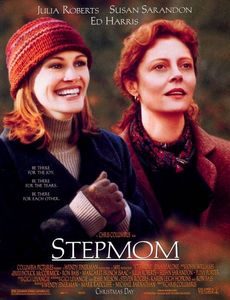
    (On Cable TV, January 2016) Prepare your hankies, because Stepmom is determined to make you cry as hard as you can. The narrative threads are set up early, as the younger second wife of a sympathetic but featureless man (Ed Harris) can’t quite get the respect she wants from her stepchildren. Real mom is best mom, and so Susan Sarandon puts Julia Roberts in her place a few times to establish the narrative tension right before her cancer diagnosis is revealed. The rest is by-the-number sentimental filmmaking by director Chris Columbus, made fitfully interesting by a few hilariously unrealistic looks at fashion photography and adequate performances. Harris, Sarandon and Roberts can’t disguise that this is a very specific kind of movie. Everything plays exactly like we expect, and the result defies any attempts at deeper analysis or even sustained interest. Stepmom will appeal to its target audience and leave large groups indifferent. It is well made, but it is not worth more than a moment’s attention.

  • Wild Card (2015)

    Wild Card (2015)

    (On Cable TV, January 2016) Jason Statham starring in a William Goldman script? Well, yes: Apparently, veteran director Simon West dug up an old Goldman screenplay and polished it to Statham’s persona, although the result remains more Goldmanesque than playing to Statham’s usual action thrillers. Taking place in the seedier corners of Las Vegas, Wild Card revolves around a British-accented hard-boiled bodyguard with a gambling problem. As the movie begins, an old acquaintance asks for help in exerting her vengeance, a new client wants pointers on how to be tougher, and our protagonist starts thinking about the amount of money it would take to get out of the business. Add some mobsters, a cinematography that practically lives in the seventies, a restrained number of action scenes and you have a movie that actually provides Statham enough substance to show that he’s a better actor than most people are willing to consider. The compromise has a cost, though: The few fights may not make his fans happy, and it’s certainly nowhere near thoughtful enough to aspire to art-house respectability. So it is that Wild Card often feels as if it’s sitting halfway between an action thriller and a gambling drama. There are a few good moments: In West’s capable hands, the fights are fine, Stanley Tucci has a very likable quasi-cameo as a mobster and Michal Angarano isn’t too bad as a nebbish millionaire trying to toughen up. Wild Card almost harkens back to an older era of filmmaking, not quite as rigidly bound by formulas and willing to punctuate drama with action rather than the other way around. But while the result may be fitfully interesting, it’s not enough to be memorable: it plays like far too many Statham films, as merely serviceable filler.

  • Dan in Real Life (2007)

    Dan in Real Life (2007)

    (Netflix Streaming, January 2016) There’s something almost unapologetically sweet in Dan in Real Life’s blend of large-family dynamics, romantic entanglements, good-natured characters and picturesque setting. (That house!) That doesn’t mean that the film lacks conflicts, just that they’re held at a controlled boil and are all happily resolved by the end no matter how unlikely they may seem. Steve Carell is a solid anchor for the movie as the titular Dan, a widower trying to keep three daughters under some semblance of control while finding himself attracted beyond reason to a lovely stranger who is eventually revealed as his brother’s latest girlfriend. Don’t worry: it work out. Much of the time in-between is spent witnessing a very large family gathering, with all of the associated quirks that suggests. It’s charming and undemanding, which should hit the spot for audiences. Juliette Binoche is fine as the object of Dan’s attraction, with a number of good actors in smaller roles. Dan in Real Life unspools without too much trouble, the virtues of its lead characters easily winning over viewers and justifying even the happiest of endings. There’s a bit of sentimental sap, as you’d expect, but it’s not unwelcome in its own way.

  • Sicario (2015)

    Sicario (2015)

    (Video on Demand, January 2016) As far as hard unflinching thrillers go, Sicario is a cut above the average. Featuring a merciless look at the increasingly uncivilized war between governments and drug dealers on both sides of the US-Mexico border, this film takes viewers into darkness and doesn’t allow for much light at the end. Our gateway character is a competent police officer drawn into a murky universe in which answers aren’t forthcoming and may be harmful to the soul. Director Denis Villeneuve once again manages a spectacular-looking film: with the help of legendary cinematographer Roger Deakins, Sicario revels in the bleak gorgeousness of the desert and its menacing twilight. The “bridge sequence” is a terrific thrill ride, while the almost-cryptic lines of dialogue do much to suggest an entire universe beyond the words. Emily Blunt is good in the lead role, but Benicio Del Toro and Josh Brolin end up stealing the show at times. Heavy in macho rhetoric against which crashes our protagonist, Sicario has the heft of a big thriller, the likes of which aren’t seen too often in today’s studio environment. Still, it’s not quite a perfect film: The morbid reality of its vision can weigh heavily at times, but the script appears half-polished in the way it switches protagonists during its third act, doesn’t quite maximize its own strengths and occasionally seems unfinished. I wanted to like it a bit more than I did by the end. Still, Sicario stand tall as one of the big thrillers of 2015, and should be good enough to make adult-minded viewers happy with their evening choice.

  • The Man from U.N.C.L.E. (2015)

    The Man from U.N.C.L.E. (2015)

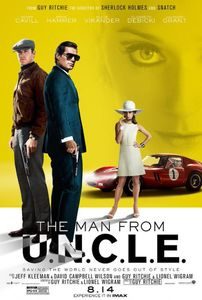
    (Video on Demand, January 2016) I probably asked too much from The Man from U.N.C.L.E., or wanted something different from what director Guy Richie had in mind. High expectations weren’t unreasonable, though, considering the good memories that I have of Richie’s oeuvre so far, from Lock Stock and Two Smoking Barrels all the way to Sherlock Holmes 2. But I wasn’t quite convinced by Richie’s intentions in designing this homage to sixties spy comedies. The directing seems inspired by period style, to say nothing of the visual atmosphere of the film or its plot. Those expecting a modern take may be surprised by a slow pacing, off-kilter humour, strange action sequences choices and relatively small stakes. Oh, The Man from U.N.C.L.E. does have its share of pleasures: Armie Hammer, Henry Cavill and Alicia Viklander are all very photogenic and capable (for Hammer and Cavill, their performances are confirmation that they can do more than their best-known roles), Hugh Grant is unexpectedly fun as a minor character and there are a few very good moments. While the charm of the film may be overstated, it’s nonetheless present. Still, it feels overly restrained, a bit dull on the side and not as triumphant as it ought to have been. It’s meant to set up a series, but even a sequel looks doubtful at this point, given the film’s understandably tepid reception.

  • Vacation (2015)

    Vacation (2015)

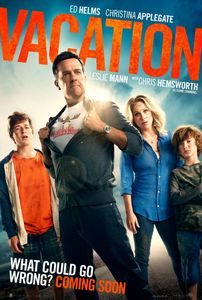
    (Video on Demand, January 2016) Are Hollywood studios so desperate that we’re now down to comedy franchise reboots? Oh, you can make a good case for the Chevy-Chase “Vacation” quartet as some sort of classic (especially the Christmas one), but rehashing vacation-themed films through the son’s character in the original series seems more crassly desperate than most other attempts to exploit moviegoers. The result isn’t fit to make anyone think more highly of the process: It’s not that Vacation is terrible, but that it’s scattered everywhere, without much control over its own tone or jokes as it seemingly leaps off in all directions (sometimes literally straddling four states at once). There’s heartwarming family reconciliation, some gross-out material, several quick appearances by known comedians, undercooked subplots and an overall lack of cohesion. Ed Helms is pretty good as the stereotypically harried husband/father and some of the cameos are fine (this does not include Chevy Chase, who looks as if he should have retired a long time ago) and yet Vacation is as ordinary as it comes. It’s funny enough, but it could have been better given slightly more effort.

  • Seventh Son (2014)

    Seventh Son (2014)

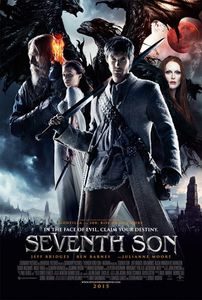
    (On Cable TV, January 2016) As much as I like being surprised by good low-budget films, bad expensive box-office failures have an attraction of their own as well. When it comes to movie-watching, big money is compelling, especially if you can see it on the screen: even when the story is hum-drum and the actors are sleepwalking through the plot, it can be moderately amusing (for schadenfreude-heavy values of “amusing”) to be swept along by what’s made possible by a big-enough budget. So it is that in Seventh Son, we get Jeff Bridges reprising his persona from True Grit and R.I.P.D. (speaking of expensive disappointments…), a curiously alluring Julianne Moore vamping it up as an evil witch, sweeping camera shots, an epic fantasy setting and slick CGI creatures. Unfortunately, we also have to suffer through a dull-as-dirt story, clichés by the barrel, barely repressed misogyny and grotesque secondary characters. Seventh Son is not fun, not thrilling, not even interesting to contemplate on a plot level: it’s far better to watch it for the visuals, the unintended laughter or the way it somehow manages to make its male protagonists exterminate the female antagonists without quite realizing how awfully misogynistic it is. Director Sergei Bodrov does put together a few interesting moments with the means to his disposal—too bad it’s in service of such an easily forgotten result. The decade-long glut of fantasy films lazily adapted from rote source material in an attempt to replicate the success of The Lord of the Rings is not helping the genre gain any ground. In the meantime, we can only watch in amusement and marvel at the colossal waste of money it is.