Reviews

  • On, Adam Roberts

    Gollancz, 2001, 388 pages, C$24.95 tpb, ISBN 0-575-07177-X

    What little that I’ve read of Adam Robert’s fiction so far has been heavy with two distinguishing characteristics. First; some gentle stylistic exploration (the implicit ur-narrator in Stone and Salt, for instance) and second; a thirst for world-building. While On doesn’t do much in terms of stylistic experimentation, it’s certainly side-heavy with one strange environment.

    In young protagonist Tighe’s life, everything revolves around the Wall. The Wall on whose ledges he and his village live, seeing the sun ascend all day long, not knowing much about what’s above, below or to the side of them. Gravity is paramount, especially when cattle (or people) fall off the ledges. This is not a prosperous life: humanity, in this novel, has been reduced to subsistence living, clustered in theocratic tribes. Tighe is supposed to be quasi-royalty in this village, but the first few chapter only show us a teenager unable to fit in a group that can’t afford secrets or dissent. Perhaps inevitably, he comes to fall off the edge of the Wall.

    And so his picaresque adventure begins. Miraculously saved from a hard landing lower down the Wall, he heals and is then sent off to war, soldier in an army bigger than he could ever imagine. Through his adventures, we come to understand the world, discover its secrets and go through a number of most excellent adventures. Precariousness, Adams tells us in an accompanying note, is the keyword of this novel: Tighe’s position is never secure, never stable, never comfortable. He is thrown from an adventure to the other: few of his companions stick around for more than a few pages. Many die horribly.

    I wouldn’t so far as to say that world-building is one of Science Fiction’s unique pleasures (Fantasy does it too, in addition to countless historical novels, or even stories set in unfamiliar societies), but On certainly plays the game with a lot of energy: You get used, eventually, to a vertical world and what it implies. This being said, I was never particularly convinced by elements of the basic premise, despite a laborious technical appendix detailing the how and why of On‘s particular situation. (In particular, I kept wondering where water would come from: On horizontal worlds like ours, aquifers are replenished by gravity, which just isn’t possible in On.) Vertical worlds aren’t completely new (K.W. Jeter’s Farewell Horizontal comes to mind, for instance, though that was set on an artificial environment where verticality definitely wasn’t normality), but they have rarely been as all-encompassing as this one. Despite my resistance to stories set in primitive settings, I actually went along with the ride, oohing and aahing whenever Adams wished.

    It helps that Adams is a slick professional whose prose clicks effortlessly. There is good forward momentum, and a number of very good scenes: I’m still quite creeped out by a sequence in which one of Tighe’s friend is eaten alive by a Very Large Bug. Sure, On often has the disconnected feel of a novel made out of various vignettes, but it’s reasonably fun to read and seems to be heading somewhere. The prose is uncluttered and it’s almost short enough to avoid overstaying its welcome.

    Almost, I said. It may be just a bit too short and leading a bit too far, in fact: the last fifty pages turn into a very different story, one that starts, then stops, then starts again. The last chapter has a curiously unfinished feel to it, almost as if we’d reached the end of the book but not the story. It’s a arguable choice given how the rest of Tighe’s adventures also carry this unfinished feel, but it still feels incomplete. Maybe even silly, if you look at it the wrong way.

    This ambivalence may serve to explain how I’m left neither disappointed nor impressed by the novel. Original premise aside, it’s a competent story that is well-handled without any pyrotechnics. Pure mid-list SF, which isn’t necessarily a bad thing. But the lack of stylistic flourishes makes me yearn for Adams’ other efforts. Maybe Polystom, the next one on my list, will be more ambitious.

  • Walk The Line (2005)

    Walk The Line (2005)

    (In theaters, February 2006) Oh yawn, you may say at first glance: Another musical biography in which the hero abuses substances and sleeps with too many women. Cue the childhood flashbacks, the musical number, the early touring recreation, the celebrity cameos, the rise to glory, the detox. What usually gets left by the wayside is the whole musician angle: why do these people choose to be musicians? What makes them tick? In the case of Johnny Cash, the question is more than academic, given how he portrayed himself as an outlaw despite a tepid personal background. This aspect of the man, unfortunately, takes a back seat to the drugs and adultery. But the usual caveats aside, when Walk The Line clicks, it does so enjoyably: The musical numbers are fit to leave you humming Cash tunes for a few days (with a particular nod toward “Walk the Line” and “Ring of Fire”), and there’s a fabulous fifteen minutes sequence in which Cash shares a tour with other budding superstars such as Roy Orbison, Jerry Lee Lewis and (if I caught that moment correctly), Elvis Presley. (Can you imagine seeing such a show?) The early rockabilly stuff is pure toe-tapping enjoyment, and Joaquin Phoenix’s performance is fabulous. Then the film slides into a more conventional self-destructive spiral interrupted in time for a graceful climactic salvation. Eh; I’d rather learn more about Johnny Cash than just the usual dramatic arc.

  • Transamerica (2005)

    Transamerica (2005)

    (In theaters, February 2006) My rather silly quest to see every single Oscar-nominated film of the year can lead to some unusual situations, and so that’s how I found myself, five minutes into Transamerica, wondering if I’d ever make it to the end of the film. Felicia Huffman may turn in a fabulous performance as a transitioning woman, but her character starts out as one of the most pitiful and unlikable character of the year. Things don’t really start getting any better as we meet her son, a small-time junkie teen prostitute whom she takes on a road trip from New York to California. Uncomfortable situations follow one another in picaresque fashion mixed with a strong blend of low-budget griminess. Fortunately, the movie started to work just as I was contemplating the EXIT sign with some interest. The protagonist finally exhibits a few likable qualities and the humour emerges to the forefront. By the end of the film, starting from its dysfunctional-family third act, it’s easy to feel a rough sympathy for all characters. The film redeems itself right before the credits, leaving us with a positive impression despite the early rough going. Transamerica is not a transcendentally moving film, but it eventually comes together: I’m glad I stayed for the entire thing.

    (Second viewing, On DVD, August 2007) I almost hated Transamerica in theatres, but I must say that it plays a lot better on DVD. Knowing where the story is going frees up the comedic elements of the film, and the director’s commentary is truly interesting to hear as it details the ways a low-budget film is made, and what elements went into the conception of the film. Transamerica hasn’t suddenly sprung up to the top of any of my lists, but I now carry a much fonder impression of it than before.

  • Running Scared (2006)

    Running Scared (2006)

    (In theaters, February 2006) This film is trash from beginning to end and I loved it. Seemingly written by an European screenwriter whose only understanding of America comes from true-crime stories and Tarantino films, Running Scared drops us in a pocket universe of roughly twenty awful people who never, ever sleep as their destinies clash on a night where a stolen gun is the object of all desires –and the root of all evil. Nice description, but even I don’t believe it: it’s easier to see this as an exercise in style, loosely hung together with some of the most outrageous writing in recent memory. Gun-runners, killer couples, child abusers, sadistic hockey players and two kinds of mafias abound in this dark fairy tale: even a chance slip into a van to avoid danger bring a character to horrors scarcely imaginable. It works only because the execution is as wild as the script, with plenty of delicious shots to keep things hopping. The film is as manipulative as it’s exhilarating, reaching for Domino-style excess well after it has pummelled its viewers in insensibility. There is a particularly affecting scene involving snuff-making pedo-serial killers (no less) that is unbelievably preposterous, yet gripping even as you realize you’re being played. It’s easy to dismiss this film as nothing more than a self-indulgent mess, but it’s a lot more fun to go along with the ride and whoop it up as the atrocious coincidences and the impossible twists just keep piling on. Throw a challenge at the film: dare it to lose you. I may be a minority of one on this, but I would rather be prodded by a bad film than bored by a good one. Running Scared certainly won’t be for everyone; I can only hope you’ll be one of the lucky few who get the joke.

  • The Producers (2005)

    The Producers (2005)

    (In theaters, February 2006) A triumphant return to the old-style movie musical comedy without any of the trappings that made Moulin Rouge! or Chicago so distinctive, The Producers‘ post-modernism is derived solely from its tortuous history as a movie adaptation of a musical from a film lampooning musicals. Everything about this film is practised, with even Matthew Broderick and Nathan Lane reprising their Broadway roles. Though the pratfalls and asides must have been considerably more effective in a live setting, this film does carry over an effective sense of fun and spectacle. The jokes are all well-worn, but they still work even despite, or because, their broad delivery. Uma Thurman makes a surprisingly funny Ulla (“Now, watch Ulla dance!”) and the songs are finger-snapping good. There’s no depth here, nor anything approaching subtlety, but it’s a fine time at the movies and that’s not so bad.

  • The Shark Mutiny, Patrick Robinson

    Harper Torch, 2001, 493 pages, C$10.99 mmpb, ISBN 0-06-103066-X

    Faithful readers of these reviews already know how little I think of Patrick Robinson’s so-called military thrillers. Bad plotting, lousy characters, awful prose: Frankly, I just keep reading them because they make me laugh and point. And so it struck me, a third into The Shark Mutiny, how much better the whole series would be as a sitcom. One thing led to another, and pretty soon I was writing an episode for…

    CRAZY NAVY!

    Episode 4: The Guppy Mutiny

    We open on ADMIRAL MORGAN, the lovable old coot who’s the hero of this series. MORGAN is snappily dressed in a red, white and blue suit made out of American Flag fabric, an outfit that blends seamlessly with the decoration of his office. His white beard is cut in a fashion halfway between Uncle Sam’s and Colonel Sanders. Reading the newspaper, he sees something that makes him look up abruptly.

    Morgan: Kaaathy!

    From the cheers and clapping from the audience, we know it’s already a series catchphrase.

    Kathy enters the office. She is a “spectacular redhead who, for three years, have refused to marry him.” [P.58]

    Kathy: Oh Admiral! Have you called me to ask me in marriage?

    Morgan: Yes, damnit!

    Kathy: I told you before, darling; not before you’re retired!

    Morgan: Grrr! This flirting is making me want to nuke someone!

    Kathy: And how is that different from your usual sunny disposition, darling?

    Morgan: Good point, but I still want to nuke someone. Who’s our enemy today?

    Jimmy Ramshawe enters the room. He is a young earnest intelligence Lieutenant with a slight Australian accent.

    Jimmy: Sir! I have uncovered evidence that the Iranians and Chinese are planning to mine the strait of Hormuz and block the worldwide transport of oil!

    Morgan: Hot diggity dawg! What’s your evidence, lieutenant?

    Jimmy shows a stack of invoices.

    Jimmy: Receipts for Russian underwater mines, sir! It stands to reason that if they bought it, they’ll use ’em!

    Morgan: What an enlightening insight in contemporary tactics! But wait- you speak like a foreigner!

    Jimmy: I’m from Australia, sir! But I’m good enough to be privy to American secrets! My father is a kick-ass Admiral! I’m dating the ambassador’s daughter!

    Morgan: Do you want to nuke someone too?

    Jimmy: Er… what normal boy wouldn’t, sir?

    Morgan: Good stuff! You’re all right! Kaaathy! Get me a secret camera in the Chinese navy briefing room!

    Behind him, the wall reveals a video screen. It lights up to a meeting of Iranian and Chinese officials.

    Chine Official: Death to America! Bwa-hah-ha!

    Iranian Official: Whee! Death to America!

    The screen is replaced by a view of the globe between China and Iran.

    Morgan: Damn! I’m “always completely mistrustful of the men from the Orient!” [P.138] What fiendish plot are they planning? Where will they strike next?

    A courier brings a message to Jimmy, who reads it before shouting out.

    Jimmy: Sir! A tanker just exploded in the strait of Hormuz!

    Morgan: (shrugging) Eh, that happens.

    Another courier.

    Jimmy: Sir! Another tanker just exploded in the strait of Hormuz!

    Morgan: (shrugging) Well, what can you do?

    A third courier.

    Jimmy: Sir! Another tanker blew up!

    Morgan: It’s war! Yay! Send the entire American fleet to the Persian Gulf! We’ll teach them to mess with our imperialistic stranglehold on the world supply of oil! Kaaathy!

    Kathy: All done, darling. Anyone can now walk from the UAE to Iran on top of our carriers!

    Morgan: But I still haven’t nuked anyone today. Why can’t I get any satisfaction? We’ve gone too long without nuking someone! Let’s hit that oil refinery! Get me the bestest of the best SEALs!

    Kathy: How about just a good one?

    Morgan: No! The bestest of the best!

    Kathy: How about any one of the US Navy’s superbly trained SEALs?

    Morgan: NO! I SAID I WANT THE BESTEST OF THE BEST!

    Kathy: All right.

    A tall blond Aryan man is delivered in the room with a forklift. He remains ramrod-straight throughout.

    SEAL #1: US NAVY SEAL! SIR YES SIR!

    Morgan: Soldier, “these guys are not just stepping lightly on our toes! They’re running us over with a fleet of [flippin’] rickshaws, and I’m not having it!” [P.158] So go ahead and nuke’em.

    SEAL #1: SIR YES SIR!

    The forklift retreats along with Navy Seal #1.

    Morgan: Good thing done.

    A moment passes, and then: Another courier.

    Jimmy: Sir! The raid is a complete success! Parts of the refinery are headed for orbit, and the other parts are going straight to the center of the earth! We’ve created a new volcano and killed thousands of civilians!

    Mrogan: “Consider the sound made by a cupful of gasoline on a bonfire just before you toss a lighted match into it –and then multiply that sound by around 40 million. That’s loud.” [P.54]

    Jimmy: But two of our SEALs died! Including the bestest of the best!

    Tears fill Admiral Morgan’s eyes.

    Morgan: That devastates me. I loved that man like no others, at the possible exception of Ted Kennedy. In a strictly heterosexual way, of course.

    Jimmy: Of course, sir.

    Morgan: This makes me so angry, I just WANT TO NUKE SOMEONE!

    Another courier.

    Jimmy: Sir! China has invaded Taiwan!

    Morgan: Yes! Nuke’em!

    Kathy: But darling! All of our forc
    es are near the Persian Gulf!

    Morgan: Curses! The mines were a trap! Foiled again by these devious foreigners!

    Jimmy: Um, sir? What about our forces in Japan, the Philipines, Diego Garcia-

    Morgan: Shut up, Jimmy! I’m trying to figure out why China would invade Taiwan.

    Jimmy: Because this ends what they see as forty years of internal rebellion from a rebellious splinter group they never formally acknowledged because it also claimed to be China’s official government?

    Morgan: That’s poppycock, son! It’s obvious to everyone that they invaded Taiwan for the precious treasures in their national museum

    Jimmy: What- what? Treasures? Where did that come from?

    Morgan: Hush, little boy! Look at the screen!

    Another view of the Chinese and Iranian officials.

    Chinese admiral: “WANT TREASURE BACK! WANT TREASURE BACK!” [P.278]

    Morgan: See?

    Jimmy: I humbly stand corrected.

    Morgan: You better be. Kathy, anyone else to nuke?

    Kathy: Well, the Chinese are still in Taiwan.

    Morgan: Right! Let’s nuke Taiwan! Kathy, get me the red button!

    Jimmy: Sir? Wouldn’t it be better to sent a SEAL team?

    Morgan: You’re right son! I loves them SEALs! Get me the bestest of the best SEALs!

    Kathy: Dead, darling. Don’t you mean the second-best of the-

    Morgan: BESTEST OF THE BESTEST MEANS STILL ALIVE, KATHY!

    Kathy: Working on it.

    Another SEAL is hauled in the office.

    SEAL #2: SIR YES SIR!

    Morgan: Go destroy stuff. Try not to get killed.

    SEAL #2: SIR YES SIR!

    He exits.

    Morgan whistles, waiting for a big boom. Finally, a communication comes onto his screen.

    SEAL #2: Admiral Morgan! We’ve got a problem, sir!

    Morgan: Have you destroyed stuff?

    SEAL #2: SIR YES SIR!

    Morgan: Then what’s the problem?

    SEAL #2: The commander of our submarine had gone nuts! He thinks he’s the reincarnation of some French loser!

    Morgan: Wow, that’s crazy.

    SEAL #2: What should we do, sir?

    Morgan: Ask him if he can nuke part of China for me.

    A pause.

    SEAL #2: He says no.

    Morgan: Crazy! Shoot him!

    A gunshot is heard.

    Morgan: Outstanding work, sailor! You just saved us eighty pages of a stupid last act that has nothing to do with the rest of this story.

    He closes the screen and wipes his hand.

    Morgan: And that’s another triumphant day for American hegemony.

    He puts his hands on his hips and strikes a triumphant pose.

    Jimmy: But Admiral! Taiwan is still held by the Chinese!

    Morgan: Who cares? It’ll all be forgotten in time for the next episode.

    A final courier.

    Jimmy: But sir! 9/11! Afghanistan! Iraq! Terrorists are the new enemy! Our imagined world of 2008 as seen from early 2001 doesn’t even make sense any more!

    A pause as Morgan thinks it through.

    Morgan: Yay, a new enemy to nuke! Come on, Jimmy and Kathy, let’s bellow our favourite song!

    They lock arms and begin high-stepping, singing the series’ signature FUN-DAMENTALIST ANTAGONISTS! musical number.

    Curtains descend.

  • Pride & Prejudice (2005)

    Pride & Prejudice (2005)

    (In theaters, February 2006) No one really asked for another interpretation of Jane Austen’s classic novel so soon (relatively speaking) after either the now-definitive BBC miniseries or the Bollywood take-off Bride & Prejudice. But there is now another version, and it’s not bad at all. Kiera Knightly can’t fill a dress, but she does looks cute as a bookish brunette. Fortunately, she manages to tie the whole film together. Given that most viewers are likely to be familiar with the story, it all boils down to how well the interpretation is handled. Here we see that the director has fun with a few fancy camera moves and occasional flights of fancy. (The ballroom scenes are particularly good in this regard.) Less pretty but just as distinctive is the often-unromantic view of life during that period, with omnipresent dirt, soiled dress hems and a definitive lack of modern medical facilities. Clocking in at a relatively springy 127 minutes, this story is focused on the romantic comedy, with a side-helping of wonderful dialogues. Otherwise, well, you already know what you’re going to get from this film, don’t you?

  • Murderball (2005)

    Murderball (2005)

    (On DVD, February 2006) You have thirty seconds, tops, at the start of Murderball to feel sorry for the wheelchair-bound stars of the movie. After that, it’s a macho sports fest until the end. A documentary about the sport of Quad Rugby, Murderball features trash talk, intense competitiveness and unbelievable action. There’s plenty of conflict to go around (Canadians even get the bonus of seeing “their” team beat the Americans) and the film is snappy from start to finish. The sport sequences themselves have a good energy to them and the rest of the documentary is as slick as you want it to be. The film definitely doesn’t allow you to “forget” that its protagonists are in wheelchairs, but it certainly goes past that simple evidence to something far more interesting, and definitely enjoyable. Yet another solid documentary in a very strong field, Murderball is worth a good look.

  • Mrs Henderson Presents (2005)

    Mrs Henderson Presents (2005)

    (In theaters, February 2006) It’s a musical with naked ladies: what else can I say? Judi Dench has a fine turn as a matriarch with a flair for controversy, presenting a nude musical revue in WW2 London. (Nervous viewers can relax: she does not disrobe in this film.) It’s a slight comedy that would go well with Calendar Girls in tone and subject matter, which is to say so innocuously naughty that it could very well pass for family entertainment. The nudity certainly isn’t anything to be concerned about, given how unremarkable it quickly becomes. Otherwise, the script is fine (despite an ill-advised tragic subplot and a last-minute speech that overlays higher motivation over a crass business decision) and the film is nicely wrapped up. A minor film, but a good show.

  • Memoirs Of A Geisha (2005)

    Memoirs Of A Geisha (2005)

    (In theaters, February 2006) Saying “I wasn’t bored!” is the very definition of faint praise, but expectations ran low for this historical drama seemingly more concerned with cinematography and costumes than intrigue or suspense. The trailer itself just looked like a bunch of fancy images. And yet director Rob Marshall should be given more credit: He doesn’t lose any time in making this story of female servitude become interesting: Power plays, historical re-creations and a good sense of plotting all make this a far more interesting tale than it first appears. Ziyi Zhang is fine as the lead character, but it’s Michelle Yeoh who steals the show as her mentor. The film is hardly perfect, of course: The third act feels superfluous (though the sense of dread in seeing all of those American faces suddenly invading the screen is very effective) and the film often gets caught up in its own aesthetics. Then there’s the very real and uncomfortable idea that this film is all about a form of female exploitation, and that’s difficult to forgive even with the historical context. But even though the film may not arouse more than minor admiration for its lush set design and costumes, it’s not a bitter pill to swallow. There are certainly worse films on the Oscar-nominated list.

  • Match Point (2005)

    Match Point (2005)

    (In theaters, February 2006) Few people expected Woody Allen to tackle a crime/romance thriller as his next project, but he did so, and Match Point is the honourable result of the experiment. Far from the kind of whiny self-referential comedies that have become a staple of Allen’s oeuvre for the past decade, Match Point tackles luck and rotten characters underneath sociable exteriors. The romance gradually cedes way to drama, and then to suspense as Chekhov’s rule comes into play. It’s not bad at all, especially given the lack of such drama on big screens these days. Acting credentials are all good, as would befit a character study. The directing could use some tightening-up, but there are a few good suspense sequences, and some awfully confident camera shots throughout. Devotees of funnyman Allen won’t be surprised to note the wry humour running through the entire film, or the superbly ironic final twist. Despite a few lengths, this isn’t a bad time at the movies at all.

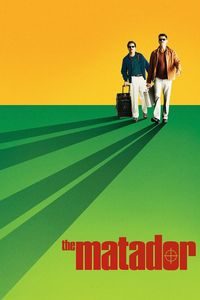
  • The Matador (2005)

    The Matador (2005)

    (In theaters, February 2006) On paper, this has all of the characteristics of a quirky black comedy: An ordinary man accidentally meeting a neurotic assassin, joining forces in order to solve each other’s problem. It’s not difficult to imagine the kind of riotous material that could come out of this premise. Alas, The Matador falls flat more quickly that you can imagine, neither stretching nor embracing the limits of its own tunnel vision. While Pierce Brosnan turns in a fabulous lead performance as an amoral assassin on the precipice of self-destruction, his character transcends the film around it, making the rest look hollow and faded. Hope Davis makes the most out of a thin character, but she and Greg Kinnear are pretty much the average couple they’re supposed to portray, and that’s part of the problem: For all the uncouth world-weariness of Brosnan’s anti-hero, The Matador grinds to a halt whenever Kinnear is involved. More sarcasm, more self-awareness might have helped, but instead we’re stuck in low-budget, low-imagination limbo. The film chuckles over its last bit of edginess, not realizing that it had created higher expectations for itself.

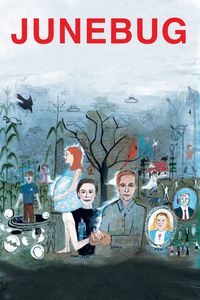
  • Junebug (2005)

    Junebug (2005)

    (On DVD, February 2006) I’m sure that some people, somewhere, like this film. They call it “a touching portrait of family values”, “a small-scale American tragedy”, “a heartfelt meeting between city and country” or even “a complex drama in shades of complexity”. Fine. They had a good time; I can only envy them, because as far as I’m concerned Junebug vaults at the top of the pile of the dullest movie experiences of the year. More boring than even Aeon Flux, if that’s possible. Granted, I really don’t go for small-scale family drama films: It took the film’s lone Oscar nomination to convince me to seek it out. Still, you would at least expect a plot of some sort, or even a way to stay awake. Instead, the film drips heavily like molasses, featuring scene after scene of uncomfortable bonding experiences and small-scale miseries. No wonder one character spends the entire movie sleeping on the couch: it doesn’t take much time for us to identify with him. By the time Something Horrible happens, we’re way past caring. It ends without a conclusion, with people driving away from the havoc behind them, saying something like “I’m glad this is over.” Seconded.

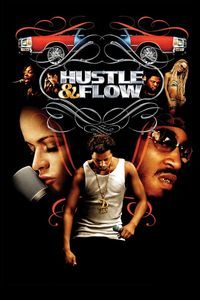
  • Hustle & Flow (2005)

    Hustle & Flow (2005)

    (On DVD, February 2006) Don’t be surprised to see the MTV film logo at the beginning of the film, seeing how it’s all about the power of music in getting someone out of the ghetto. It’s a bit more complicated than that, of course, but not by much. The protagonist may be a middle-aged pimp seeking a last chance at past dreams (in an exceptional performance by Terrence Howard) and the ending may be a touch unconventional, but the underdog story remains intact. What’s different are the details, from the characters’ squalid lives to the way they put together their shot at glory. A long but enjoyable sequence depicts the making of a demo tape while later, talent has to be complemented by a bit of hustling in order to triumph. MTV movie indeed. The film itself isn’t particularly pleasant (it’s hard to be a pimp without some misanthropy) and some sequence run for too long, but the strength of Howard’s performance and some of the background details make it all worthwhile.

  • The Singularity is Near, Ray Kurzweil

    Viking, 2005, 652 pages, C$42.00 hc, ISBN 0-670-03384-7

    Let’s get something out of the way: I’m a singularitarian. I believe in technological acceleration and its effect on society. The historical evidence seems clear enough: I hop in anticipation of the upcoming impact of what Joel Garreau calls the GRIN technologies (Genetics, Robotics, Informatics and Nanotechnology) I may not believe in the strong version of the Singularity (the so-called “Rapture of the Nerds” after which everything is supposed to be sweet and perfect), but I’ve read too much SF not to anticipate fundamental changes in my forecast lifetime. Even before cracking page one, I approached Ray Kurzweil’s The Singularity is Near as confirmation, not persuasion.

    But that book is not written for me. It’s written for well-educated people who may understand how technological progress is accelerating, but don’t read Science Fiction and aren’t familiar with Vernor Vinge’s concept of the ever-accelerating technological singularity. It’s written to convince politicians, entrepreneurs and other decision-makers that there’s a new future knocking at our doors, a new future that has nothing to do with the weak beer of STAR TREK or, for that matter, most of the conventional visions of things to come.

    It’s no accident if almost half of The Singularity is Near is spent looking at the historical evidence of technological acceleration. Kurzweil’s background is in computer science, and arguments derived from progress in transistor size, density and cost make up a backbone of his thesis. See Moore’s Law, for instance, which lives on despite ever-dire predictions of its obsolescence. See the rapid adoption of cell phones, the Internet, DVD and MP3 players in far less than a decade, compared to dozens of years for television and automobiles. Everyone knows that technological progress is increasing. The only question is; what’s the destination?

    Kurzweil then continues his exploration of What We Know in biological science, establishing to his satisfaction that there is nothing special about consciousness, hence the inevitability of its recreation in an artificial medium. My lack of familiarity with neurobiology made this chapter significantly less accessible than the others, but its intent remains crystal-clear: it clearly establishes the background for Kurzweil’s vision of the Humans 2.0: Re-written DNA, redesigned bodies, enhanced intelligence, transferable consciousness, artificial intelligence and so on. Whew.

    This is old stuff for SF fans, but what’s important about Kurzweil’s book is how it’s developed from the ground up, from real-world headlines onward. The Singularity is Near bridges the gap between SF fantasies and real trends, grounding speculations in palpable trends. (iPods as drivers for the Singularity. Discuss.) This is a book that can dropped in boardrooms, one that plants stakes in the consensus vision of the world.

    And an optimistic vision it is. At a time when the space age is historical, when the coming energy crunch is so worrisome, when ecological collapse seems all too likely, the idea of ever-increasing progress seems quaintly anachronistic. It won’t be an easy road, warns Kurzweil (amongst many other chills, The Singularity is Near posits a positively alarming solution to the gray goo problem), but it’s an inspiring one.

    Richly argued and accessibly written, The Singularity is Near takes its place alongside (and building upon) previous futurology books such as Future Shock, and The Engines of Creation —along with a dash of The Physics of Immortality. It has already sold widely and created its own talkstorm of argument for or against the Singularity, recoming a standard reference text on the subject.

    As previously stated, I’m already convinced. Belief in the Singularity often boils down to, well, faith: Do you believe in progress, or not? There are certainly enough hints and trends pointing away from the Singularity, not the least of them being the Fermi Paradox: If intelligence is so common, if the Singulariy is so inevitable, why haven’t we seen any evidence of alien Singularities? Kurzweil’s pat answer (“We’re obviously the first! Ta-da!”) is one of the most unsatisfying aspects of the book.

    But the Singularity can also be a self-fulfilling prophecy. Books like this one, by suggesting what can happen, are an important part of how we collectively define where to go next. Have a look.