Reviews

  • Phantoms (1998)

    Phantoms (1998)

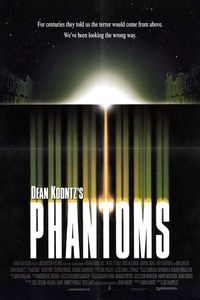
    (On VHS, August 2000) This films fails on its own merit. But as if to illustrate who bad, and how cheap it is, consider this: I always watch TV with the captioning turned on. In Phantoms, it quickly became obvious that the poor captioner was working from the film itself, not the screenplay; whenever things got confused, the captioning included notes such as [inaudible]. Cheap, much like the rest of the film, which relies at first on big music (faithfully captioned as [music] regardless of importance) and then on increasing mumbo-jumbo backed by the National Enquirer to deliver what is after all the hype a completely standard monster movie. Not much fun, its only saving grace being that Joanna Guest is easy on the eyes.

  • The Opposite Of Sex (1998)

    The Opposite Of Sex (1998)

    (On VHS, August 2000) An unconventional tone is set early on as the film begins with a sassy, irreverent first-person narration. Unfortunately, there is such a thing as being too sarcastic, and The Opposite Of Sex, in whole, is a lot like that when it tries to hard to be twisted, mean, hip and darkly funny at the same time. Granted, some of the jokes are quite funny (there’s a great fake-death gag near the end), and Lisa Kudrow is simply adorable as the brainy spinster, but overall the film is simply too gratuitously self-aware to be enjoyable.

  • Office Killer (1997)

    Office Killer (1997)

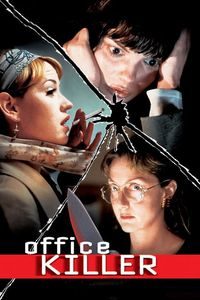
    (On VHS, August 2000) This thriller shows some promise at first, with its visually interesting credits sequence and a growing sense of impending doom. Unfortunately, the murders stop making sense by the third one (the first two are respectively accidental and self-preservation, but the girl scouts were no threat. It gets sillier after that. There’s even one “surprise” victim whose body just turns up at the end without even a mention of the murder.) and the concept of the mousy copygirl being a serial killer doesn’t have much charm after a few minutes. With no sense of enjoyment, the low-budget production values and the claustrophobic directing (far too many character shots are framed “inside” other objects) really start to grate. After that, things degenerate quickly (it is a fairly short film) in this type of “evil goes unpunished” film that really gets tiresome once you’ve celebrated your fifteenth birthday and seen dozens of these films. There’s usually an excellent reason why these films go straight to video; they’re just not very good!

  • The Mating Habits Of The Earthbound Human (1999)

    The Mating Habits Of The Earthbound Human (1999)

    (On VHS, August 2000) Good concept, great first half, lousy third act. The film is presented as a mock-wildlife documentary about humans for extraterrestrials. Narrated impeccably by Frasier‘s David Hyde Pierce, the story follows the courtship of two relatively average humans. (One of them being the definitely not-so-average Carmen Electra—and yes, she shows some skin) When their story clicks, so does the film, and for nearly an hour, that’s what happens; a good film about sympathetic people. It’s when an unplanned pregnancy shows up that the protagonists start acting like idiots, thing suddenly become far less funny and the film starts getting tiresome. (Note to scriptwriters: Not a good idea to put a romantic comedy’s climax inside an abortion clinic. Not a good idea at all.) Still, the first hour works well, and there’s a hilarious “running” gag at a racetrack.

  • The Maltese Falcon (1941)

    The Maltese Falcon (1941)

    (In theaters, August 2000) Modern moviegoers will be shocked at the initial narrative drive of this film, where scenes steamroll across the screen one after another, setting up the plot with a raging, almost comical efficiency. Don’t be surprised to find multiple clichés in The Maltese Falcon, but don’t blame the film; blame the innumerable screenwriters who ripped off this film (and, reasonably, the original novel) for countless imitation, and the entire genre of noir film. There are a few rough spots, easy glossing over complex events (oh, so my partner’s been shot… wanna make out?) but the film eventually develops such an inherent fascination that most viewers won’t mind if the last twenty minutes of the film are little more than a theatrical play on film. Somewhat unpolished, maybe even a bit naive, but a lot of fun.

    (Second Viewing, On Cable TV, June 2021) Even on a second viewing informed by decades of accumulated knowledge about classic Hollywood, film noir, Humphrey Bogart, writer/director John Huston and nearly everything else about the film, there isn’t all that much to say about The Maltese Falcon. It’s a classic for a reason, and a great example of how the studio system could end up creating a great movie through an accumulation of craftsmanship. Its influence of the following two decades of film noir is undeniable, and it launched Bogart to the superstardom he would solidify over the following two years. Peter Lorre and Sydney Greenstreet (in his screen debut) have the first of several collaborations here (they’d next show up again with Bogart in 1942’s Casablanca). It’s fun to compare it to 1936’s Satan Met a Lady, the very different adaptation of the same original Hammett short story. But taken by itself, whether you’re seeing hot or cold, The Maltese Falcon is still quite a bit of fun.

  • Jane Austen’s Mafia! (1998)

    Jane Austen’s Mafia! (1998)

    (On VHS, August 2000) Mob-film parody that’s better than some of its contemporaries, but not by much. Succeeds mostly on the strengths of the Casino rip-off scenes. (“Fifty-Four Pickup”, “Guess a Number”, “Give us your money” games…) There are occasional laughs here and there. Christina Applegate makes a great president. At least we’re spared the toilet humor, but the rest is hit-and-miss.

  • Hollow Man (2000)

    Hollow Man (2000)

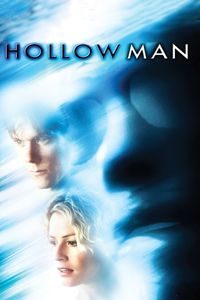
    (In theaters, August 2000) Let’s get something out of the way first: The special effects in Hollow Man are some of the best seen so far. A variety of techniques keep the effects from getting stale, some of the shots cannot be improved upon and, yes, we really believe there’s an invisible man in the room. This being said, let’s put something else out of the way: Paul Verhoeven isn’t as smart as he thinks he is. No amount of satire-claiming is going to save the exploitative trash that was Starship Troopers, for instance. Similarly, if he here manages about an hour of creepy SF (Verhoeven should stick to straight horror; it’s what he does best), Hollow Man becomes increasingly moronic as it transforms itself into full slasher film mode. Probably the most technologically advanced slasher ever, but a slasher nevertheless. You know the drill; monster kills off everyone in a remote area one by one until protagonist and lover triumph over it. No change here, even through the special effects are cool. Hollow Man approaches offensiveness not by its shock killings, but by the contempt it treats its audience, as invisibility is confused with invincibility and stupid plot mechanics take over plausibility. You ask me, and the invisible man should’ve stuck with peeping on naked models; I would’ve rather seen that than what may have been the 664th slasher/monster film of my life.

  • High Fidelity (2000)

    High Fidelity (2000)

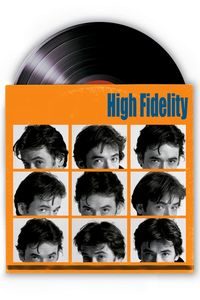
    (In theaters, August 2000) Nominally a romantic comedy about a record-store owner at sentimental crossroads in his life, High Fidelity is much more than that: It’s a thought-piece for everyone -yours included- that would rather criticize than create, imitate than build or analyze rather than take chances and do something new. A light-hearted, nearly pitch-perfect comedy, High Fidelity blends music with romance and comes up with a winner. John Cusack proves why he’s one of the best young actors in the business today (he also produced the film) and Jack Black finally gets a starring credit after stealing scenes in so many films (I Still Know What You Did Last Summer, The Jackal, Enemy Of The State) as a character actor. Often hilarious, often touching, the only quibble I’ve got about High Fidelity is that the female love interest seems too average to warrant such interest… but isn’t that the lesson of the film?

  • Gone In Sixty Seconds (2000)

    Gone In Sixty Seconds (2000)

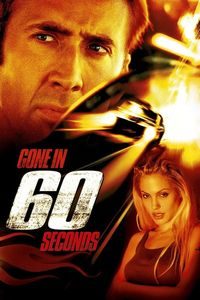
    (In theaters, August 2000) Not as bad as some critics may have thought initially; it’s first of all a car-lover’s film, and should prove to be a lot of fun for those people. Granted, the lack of car chases is puzzling in a film that’s designed around the concept of stealing cars, but the remainder of the film is interesting enough in a beer-can-entertainment type of fashion. Nicolas Cage is believable in a role close to his latest action-hero characters. Unfortunately, Giovanni Ribisi continues (after Boiler Room) to suck charisma out of all scenes in which he’s present. The soundtrack has its moment. There aren’t enough stunts. Director Dominic Sena mishandles a few opportunities.  A typical Jerry Bruckheimer film, with all the good and bad that this entails.

  • Oceanspace, Allen Steele

    Ace, 2000, 375 pages, C$30.99 hc, ISBN 0-441-00685-X

    All throughout his SF career (now spanning 11 books in little more than a decade) Allen Steele has shown a remarkable writing talent somehow not fully exploited.

    From the orbital space station of Orbital Decay to the watery depths of Oceanspace, Steele has made some progress, but it’s hard to say if he’s a better writer now than before. His books always seem to struggle at the “good read” level (eg; Clarke County, Space), never somehow going further than that (Labyrinth of Night), or when they do, they contain a crucial flaw that destroys the book (A King of Infinite Space, his best but also his most frustrating work). Fortunately, his short stories are usually more satisfying than his novels, proving once again that some people are simply more suited to shorter-length stories.

    Part of it has to do with his point of view. Steele is one of the few staunchly liberal SF writers in a genre traditionally dominated by conservative ideology. He has written stories praising drug usage (Orbital Decay), blasting eeevil governments (The Jericho Equation) and his stint as a journalist on an alternative weekly paper has left indelible marks on his fiction (again, see The Jericho Equation and, to a lesser extent, All-American Alien Boy). In The Tranquillity Alternative, one of the characters is revealed early on to be a lesbian, virtually ensuring her of a “get out of jail free” card: No way is Steele going to pin the bad-guy role on such a target.

    That’s not the biggest problem with The Tranquillity Alternative, but it’s emblematic of Steele’s lack of sophisticated plotting. Set in an alternate world where the Americans had a space program much, much earlier and then stopped after establishing a moon base, The Tranquillity Alternative is a travelogue in which a last mission to the moon base is perturbed by a terrorist plan. Most of the book is spent travelling to the moon, waiting for something to happen. Then the terrorists do something, the heroes fight back, win and go home. The end.

    The alternate space program is well thought-out (inscribing itself in the steps of Stephen Baxter, another writer who’s spent a lot of time in parallel space expeditions) but the rest of the world isn’t as well put-together. The synchronicity of events between the two universes (going as far as having identical dates to similar events) is either eerie or sign of a hasty world-building, depending on charitable you feel at this moment.

    The result is interesting, and readable as always, but given Steele’s talents, may we not expect more? That’s also pretty much the tagline to any review of Oceanspace, the latest of Steele’s novels.

    Here, Steele leaves space and goes undersea, again mimicking a minor SF trend (what with the undersea novels of Arthur C. Clarke—to whom the book is dedicated- and Peter Watts’ recent Starfish), which is fine as long as he’s got something new to bring to the genre. Unfortunately, Steele hangs a few standard plots and characters to the ocean setting for a result that’s quite entertaining, but at the same time very familiar. Nipick: The presence of CD players in 2011 is unexpectedly jarring; what about MP3?

    But give Steele some credit; here, the journalist isn’t a good person, marital harmony is praised and the traitors are punished. Oceanspace has the characteristics of a good paperback read, though it is definitely overpriced as a hardcover; the idea density simply isn’t there. There’s a sea monster, true, but don’t get too excited as it only make incidental appearances.

    Briefly put, Steele remains at the threshold between good entertainment and good SF, hovering between the two as if he’s unable to find the really good idea and build the really exciting plot to take his books to the next level. You can’t really go wrong by buying a Steele paperback (except, perhaps, for King of Infinite Space) because they’re always exact, fun and readable, but don’t bother springing for the hardcover.
  • Gojira ni-sen mireniamu [Godzilla Millennium aka Godzilla 2000] (1999)

    Gojira ni-sen mireniamu [Godzilla Millennium aka Godzilla 2000] (1999)

    (In theaters, August 2000) This has pretty much everything you need in a Japanese monster movie: A lot of monster for one thing, plus the required iffy dubbing, haughty tone, silly lines and tons of Tokyo stomping. Just make sure that you’re with an audience that understands that proper respect for these type of movie means laughing all the way through. Granted, Godzilla 2000 isn’t uninterrupted delight (there’s a boring stretch maybe halfway through), but the fantastically appropriate ending more than redeems the film, along with the tagline “Maybe there’s a little bit of Godzilla in all of us”, as the big G trashes Tokyo once again. For added intellectual stimulation, compare and contrast the chutzpah of this film’s wide-angle shots (along, yes, with the inconsistent special effects) with the constrained feel of the American Godzilla (with its almost perfect effects) for a study in how being audacious and exciting is often better than being perfect.

  • Gei ba ba de xin [My Father Is A Hero aka Jet Li’s The Enforcer] (1995)

    Gei ba ba de xin [My Father Is A Hero aka Jet Li’s The Enforcer] (1995)

    (On VHS, August 2000) Much like Jackie Chan, Jet Li alone can make an average film seem worthwhile, and that’s what happens here. More serious, dramatic, emotional and family-oriented than Mister Chan, Li here plays a policeman forced to live undercover as his wife is dying and his son yearns to find out what his dad does for a living. Plenty of rather brutal scenes (the kid gets beaten up a lot) illustrate the difference between North-American action fare and Hong Kong. Action-wise, the film stays tepid for most of its duration, only to kick up by the end (watch for the yoyo-kid fighting technique) and deliver a product that it far inferior to the excellent Fist Of Legend, but still worth a look for fans.

  • Don’t Be A Menace To South Central While Drinking Your Juice In The Hood (1996)

    Don’t Be A Menace To South Central While Drinking Your Juice In The Hood (1996)

    (On VHS, August 2000) This isn’t completely successful as a sustained parody, but it would be a shame to use this as an excuse to miss out on a fairly funny send-up of those oh-so-important black gangster/’hood films. There are several hilarious moments, though they are scattered here and there between long stretches that, at best, only elicit a grin or two. Keep your eyes open for tons of background jokes. The best concept of the film, of course, is to set the ‘hood in a completely average suburban community. Uneven, but definitely better than some of its parody contemporaries such as the execrable Spy Hard, Dracula: Dead And Loving It, etc…

  • Chung fung dui liu feng gaai tau [EU Strike Force aka Big Bullet]  (1996)

    Chung fung dui liu feng gaai tau [EU Strike Force aka Big Bullet] (1996)

    (On TV, August 2000) Good action, sharp characters, funny scenes and a well-defined (if minimalist) plot make up the strengths of this action film. The hero is strong without being too tragic for the light-hearted framework of the film, not too many characters die, everyone gets to shine in the ensemble cast and the directing is non-obtrusive. Definitely worth a look for fans of Hong Kong action cinema.

  • The Cell (2000)

    The Cell (2000)

    (In theaters, August 2000) I can usually forgive a lot of silly stuff if the offending film is willing to push the envelope of cinematic audacity. Certainly, the trailers to The Cell will try to tell you that you’re about to see An Event, a film which will show you things you’ve never seen before. While it is not deceptive advertising, it is at least far too enthusiastic; one of the mixed reactions I had at the end of the film has that despite the pretty pictures, The Cell wasn’t nearly as innovative, nor as strange as it wanted to become. But that’s not the most offensive thing about the film: That would be the simplistic script used to string along these pictures. Consider: Serial killer is apprehended but fails to reveal location of latest victim, police investigator interrogates killer and gets crucial clue, policeman frees victim before she dies, the end. Nowhere in this plot summary is any mention of the character played by the nominal “star” of the film, Jennifer Lopez. That’s because she may be incredibly hot, but her character does absolutely nothing to solve the case, save get captured and require rescue by the policeman. Ouch! Fortunately, there are still a few pretty pictures to look at thanks to director Tarsem Singh’s passion for visuals. But they’re not enough.