Reviews

  • Spy Kids 2: Island of Lost Dreams (2002)

    Spy Kids 2: Island of Lost Dreams (2002)

    (In theaters, August 2002) I liked the first movie well enough, but I must say that I like this one even better. Everyone seems more comfortable in their roles (with particular props to Antonio Banderas for poking fun at his tough-guy image.) and it mostly shows behind the camera as the sequel is grander than the original. More gadgets, more special effects, more fantasy-based sequences and a sense of fun that doesn’t let go until the very last second of the credits. Sure, Spy Kids is for the younger crowd, but it’s got enough action, adventure and comedy to hold everyone’s interest. Kudos to writer/producer/director Robert Rodriguez for doing a big-scale film on a relatively low budget. This is big fun for all families. Get the DVD!

  • Signs (2002)

    Signs (2002)

    (In theaters, August 2002) On one hand, I really do hate the “science-fiction” elements of Signs. Bargain-basement aliens with inconsistent powers, shoddy “what the kid reads from the book is always right” rationalization and oh-so-profound spiritual conclusion don’t sit well for me and if that was the only thing worth talking about in this movie, I’d be the first one to recommend burning down all copies of the negative. But that not what Signs is about, which leads me to what I did like about the film: the sense of looking at a huge story through a very small hole, the fantastic cinematography (that overhead driving-into-town shot; whoah!), the awesome (mis)direction, the suspense, the symbolism? Replace “aliens” with “demons” and maybe you’ll start to appreciate the film as a parable more than any actual attempt at hard-core SF. Mel Gibson is entirely believable as the lead, with most of the other actors (including the kids) also doing a good job. M. Night Shyamalan is a commercially overrated director, but if he’d be doing niche genre movies, everyone would be claiming him as their best thing ever. In the meantime, he’s proving adept at telling clichéd genre stories through very unusual methods, using masterful camera techniques and coaxing impressive performances out of his actors. There’s a lot to hate and a lot to love in Signs, but even more to be impressed about. Swing away!

  • S1m0ne (2002)

    S1m0ne (2002)

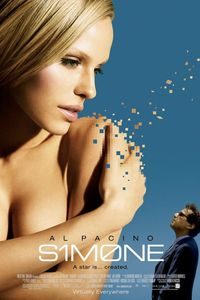
    (In theaters, August 2002) As with writer/director Andrew Niccol’s previous movies (he wrote Gattaca and The Truman Show), S1m0ne is best considered as a fable than hard-edged realistic science-fiction. The technical details are ridiculous, and deservedly so; Niccol is more fascinated by more abstract subjects like the relationship between truth and fiction, our fascination for celebrity, our craving for comfort through self-deception and the rapport between creator and creation. It’s a lot of stuff to pack in a single film (with a few other bits here and there), but as a result, S1m0ne feels like a heady trip in fantasyland. Not everyone will “get” the film, nor even care for it, but like Gattaca and The Truman Show, I suspect that the cult following of S1m0ne will only grow with time. There’s certainly a lot of material for cinema geeks, from the throwaway gags (you saw the “eye” poster passing behind Elia Koteas, I hope?) to color composition (such as the computer-green S1m0ne poster in the otherwise organic environment of the protagonist’s office during the audition scene) and the overall overly stylized shot composition. Al Pacino is great -as usual- in the lead role, but everyone else does quite well in the supporting slots. Don’t forget to stay during the credits for Simone’s real identity (Rachel Roberts) and a funny little scene.

    (Second viewing, On DVD, June 2003) I quite liked the film in theatres, but I find my reaction to the DVD a bit more tepid. Oh, I still think it’s a good film: The dazzling mixture of themes still makes me giddy with goodness and my appreciation of Al Pacino’s work is once against confirmed by his amusing performance. But what seems more obvious than before is the forced nature of the laughs in this comedy. Oh, it’s not meant to be a serious film, but the merely light-hearted nature of the film doesn’t naturally lead to frank laughter and this very particular tone, I suspect, tends to be difficult to appreciate when you’re not in a proper frame of mind. Suffice to say that a script revision could have heightened the laughs without too much effort. But I still quite like the film as it is, and I can only wait to see what else writer/director Andrew Niccol is brewing up. The DVD offers an interesting array of deleted scenes (usually cut for a good reason) and two very brief featurettes. The lack of a commentary track is almost criminal given the film’s thematic depth.

  • My Cousin Vinny (1992)

    My Cousin Vinny (1992)

    (On DVD, August 2002) Slight but charming little low-budget comedy driven by performances far more than pacing. Joe Pesci is rather good, as are most of the supporting actors. But of course, the real star of the film is Marisa Tomei, who lights up the screen whenever she appears. Her Academy Award-winning turn may mark one of the few times an Oscar’s been given for sheer kittenish sex-appeal, but I’m not about to complain given all my drooling. The rest of the film elicits a constant grin rather than outright laughter, but My Cousin Vinny is satisfying in a comfortable way. That the “stakes” of the film are non-existent (an appeal would have settled everything anyway) but that’s part of the charm, and charm is something that this film has in spades. The DVD contains few extras, one of them being a dull director’s commentary that will make you wonder how such an unfunny man can direct such a charming film.

  • Blood of Others, Rick Mofina

    Pinnacle, 2002, 466 pages, C$9.99 mmpb, ISBN 0-7860-1267-6

    (Obligatory disclaimer; adjust the following review according to my acknowledged favorable bias for A> local authors and B> authors I’ve met.)

    Fans of Rick Mofina, rejoice; the Ottawa-area thriller writer shows no sign of slowing down, turning in his third novel in three years. After the unconventional Cold Fear this novel is somewhat of a return to the settings, characters and conventional structure of his first book, If Angels Fall.

    For one thing, Blood of Others is mostly located back in San Francisco, where the events of the first novel took place. For another, Blood of Others features the protagonists of Mofina’s first novel in a rather more active role than in Cold Fear.

    As the story begins, a few months have gone by since the events of the previous novel, but things look a lit like they did two novels ago; Walt Skydowski is still the same irascible super-cop, though he’s making progress on the dating front. Tom Reed is still an overworked, underappreciated journalist, hated by his bad boss, hounded by his wife and once again on the prowl for a good story. He’s about to get a big one; the spectacularly ghoulish display of a murder victim leads him to an informant who claims to have seen the victim enter a police car on the day of the murder. Clearly, something is up and neither Tom nor Walt have any idea what they’re up against. Fortunately, another character looks as if he does, and by the end of the book, we can only wonder if the next novel won’t feature a third major recurring character…

    It’s risky to talk about “an author’s favorite themes” after only three books, but risk has never stopped this particular reviewer in the past. Truth is, anyway, that several familiar elements do re-occur. The antagonism between the media and the police is still very present and personified by Tom and Walt’s antagonistic relationship. On the other hand, Tom’s complicated work/life balance is getting overused as a dramatic device. It would be about time for him to have a good boss and be able to write his articles without antagonizing his whole family. Maybe in time for the next novel!

    Still, there’s no denying that Mofina is becoming better and better. The overall pacing of Blood of Others is generally more sustained than that of its predecessor, and the hair-raising finale is appropriately located at a San Francisco landmark. I wasn’t overly impressed by the antagonist in this volume, but then again I’m liable to unfavorably prejudiced whenever a character like that turns out to be a raving psychopath. (There’s also the whole bad-internet-bad! angle, but I need to lighten up about such things) Still, I wonder if the little time-bomb buried at the end of the epilogue will be used in Mofina’s next novels in the Reed/Skydowski cycle. Tick-tick-tick-tick…

    In the meantime, have fun with Mofina’s first three novels. I’m impressed enough to put him on my short to-buy list, though I’ll be the first to admit that his stuff fits squarely in the crime-fiction mid-list, there isn’t anything wrong with that. At least you can rest assured of a good read; Mofina writes clearly and concisely and with more than enough suspense to keep you intrigued. A promising initial trilogy from a writer to watch.

  • My Big Fat Greek Wedding (2002)

    My Big Fat Greek Wedding (2002)

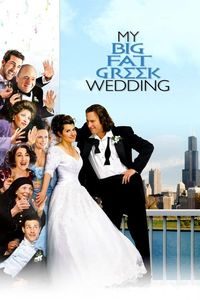
    (In theaters, August 2002) The surprise hit of summer 2002 is nothing more (or less) than a deliberate attempt at giving a certain audience exactly what it wants. As such, it works really well: Writer/star Nia Vardalos delivers a romance, a family reconciliation tale as well as a duckling-to-swan transformation. The romance might be the film’s least impressive element, especially when compared to the impressive evolution of the protagonist. This isn’t simply a Rachel-Leigh-Cook-with-glasses metamorphosis, mostly because no one pulls any punches in representing the “before” state; baggy clothes, thick glasses, stringy hair, blank stare and makeup-enhanced face lines, Vardalos throws herself in the pre-transformation role with abandon and emerges as an even more adorable woman at the end of the process. That’s when the romance kicks in, but it’s not nearly as interesting as a process by which we discover the eccentricities of this particular Greek family. It’s a welcome glimpse in an ethnic group that’s long been neglected by Hollywood. (Expect a surge of imitators in the next few years.) It ends exactly as we think it will; no surprises, but good warm fuzzy feelings. It’s not a raucous comedy; the pacing is only a-joke-a-minute and the film wouldn’t have felt out of place as a television movie-of-the-week. But it’s worth seeing, especially if you’re stuck in a situation where you have to see a movie with a wide audience; this will do for the whole family.

  • Made (2001)

    Made (2001)

    (On DVD, August 2002) Though Made is billed as a mob comedy, this low-budget film written and directed by Jon Favreau is too often irritating to be consistently amusing. Vince Vaughn’s character is one of the most obnoxious protagonists in recent memory, and a large portion of the film’s suspense is in wondering when someone will finally shut up the loud self-centered idiot. The making-of featurette on the DVD, however, is gracious enough to let us know that this effect is fully intentional, as the filmmakers were self-consciously trying to mix an uncomfortable blend of comedy and tension. They recommend a second viewing. I’m not sure I’m willing to undergo that particular punishment. In any case, there are few bad things to say about the film’s technical polish; despite the low budget and the tight shooting schedule, the film looks great, makes good use of its LA/NYC location shooting and manages to build complete characters, despite how one may feel about them. (Though if someone can explain the sudden appearance of someone near the end…) If you liked Swingers (about which I have similar reservations), please feel free to enjoy Made.

  • The Importance Of Being Earnest (2002)

    The Importance Of Being Earnest (2002)

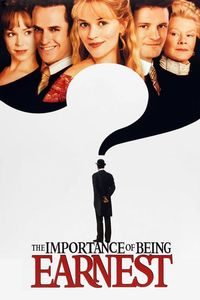
    (In theaters, August 2002) I like adaptations of Oscar Wilde’s plays. I just do. Trying to explain why or how I loved The Importance Of Being Earnest would be useless if you don’t share my overall love of such stories. Wilde can be cynical without being dour, romantic without being sappy and this is one of this film’s biggest strengths. Did you like An Ideal Husband? Rush to see The Importance of Being Earnest, then. Good acting, warm finale and ultra-sharp dialogue. Plus great performances from Rupert Everett, Colin Firth, Reese Witherspoon and Frances O’Connor, who should stick to period pieces if we’re to compare this to Mansfield Park and/or Bedazzled or Windtalkers. Wonderful date movie. I guess.

  • Callahan’s Key, Spider Robinson

    Bantam Spectra, 2000, 335 pages, C$8.99 mmpb, ISBN 0-553-58060-4

    I have detailed, in previous reviews, my various annoyances with Spider Robinson’s unique brand of fiction. With Callahan’s Key, Robinson has come up with a novel that is almost indistinguishable from the previous two or three books in the “Callahan’s” series. So why have I liked it so much?

    This latest installment begins on one of the darkest winter days of early 1989, as narrator/protagonist Jake Stonebender suffers through the indignities of yet another Long island snowstorm. Things look grim, but before long, the usual gang of very exceptional friends shows up and convinces Jake to A> move to Key West, Florida and B> save the universe. Not merely the world, mind you, but the universe. The gang reacts in their usual blasé fashion. (“God damn it. AGAIN?” [P.7] Also see P. 181 and 201 of the paperback edition.)

    There remains the slight matter of moving some hundred-odd (very odd) people from upstate New York to Key West. Doing so will require some ingenuity, work and more than a dozen yellow school buses. Most of the novel’s first half is spent following Jake and the gang as they first plan and then go on the road trip to end all road trips. Several cool not-so-tourist attractions are visited. A few puns are slung. Authority is defied. A shuttle is launched. A good time is had by all. This first half is by far the most enjoyable; the process of mass-moving from New York State to Florida is far more relevant to us than the process of saving the universe.

    Then we’re due for the gang’s arrival in the Keys, where even their full-blown exceptional nature is unremarkable. There remains the slight matter of saving the universe, but as we all know, that part proves to be a cinch. No matter; you know you’ll devour it at once.

    No, there isn’t much that’s new or even original at Callahan’s. Robinson has found himself a comfortable niche, and as long as he continues to deliver the goods, he’s not tinkering with the formula. Regulars will appreciate the tall stories, the anti-establishment tone, the puns and of course the feeling that every one is welcome at Callahan’s.

    Callahan’s Key is still one of the best entries in the series, though, what with its unusual travelogue that takes the bar away from the characters, somewhat. Robinson doesn’t waste as much time setting up elaborate puns and his description of a shuttle launch seems as moving as the event itself. The book isn’t nearly as weepy as its immediate prequel. There’s also a good role for Nicola Tesla, one of my own favorite historical character, with a wonderful explanation of the man’s latter-year slide in crackpot-hood. (Think Siberia, 1908 and slap yourself for not thinking of it earlier. [Chapter 13])

    I still hold on to most of my reservations about Robinson’s shtick, mind you. His cast of characters is, by now, ridiculously powerful (and bulletproof). Group telepathy seems to be the ultimate answer to a remarkable number of things. He still displays a remarkable intolerance for “bureaucrats and Pentagon dolt-heads” (someone should sit with him and explain the nobility of public service, as well as how We Are Not A Monolith, Damnit.) Robinson also overplays to his crowd (we’re go smart, so advanced, so civilized, etc.), but whoever is still reading the Callahan’s series after nearly ten volumes shouldn’t be surprised at most of this stuff.

    So why do I keep counting myself as one of them? Well, one of the surprises of Callahan’s Key was finding out that I actually enjoyed reading about Robinson’s merry band of iconoclasts. While Robinson and I obviously come from different backgrounds and would probably start arguing the minute we met (not that this would be a bad thing, mind you), the truth is that coming back to Callahan’s universe almost felt like going someplace familiar. I suspect that a large part of Callahan’s appeal is in offering an idealized representation of a place where all are welcome regardless of prejudice, as long as you enjoy good company, good ale and good songs. I think we’re all looking for something like that. Hurrah to Robinson for providing it, even in a diluted fictional form!

  • Faa yeung nin wa [In The Mood For Love] (2000)

    Faa yeung nin wa [In The Mood For Love] (2000)

    (In theaters, August 2002) Would you willingly see a subtitled period Chinese film describing how a man and a woman decide not to have an affair? Seriously; how much money would it take to make you see this? How about I throw in a fifteen-minutes-long epilogue that doesn’t lead anywhere? What if you have to see two great actors (Maggie Cheung and Tony Leung) do nothing during all that time? Would you mind a bunch of moody shots without whom this would become a short film? Can you feel my pain, now? Good.

  • Greenfingers (2000)

    Greenfingers (2000)

    (On DVD, August 2002) Innocuous, rather inoffensive gardening comedy starring convicts. Clive Owen is good as the lead protagonist (he’ll be James Bond one day, I swear!) and the rest of the actors hold their own. It’s a low-budget film, but an enjoyable one in The Full Monty tradition of British underdog comedies. There isn’t much here that is memorable or profound, but it’s a good time at the movies. The DVD is a bare-bones edition.

  • Full Frontal (2002)

    Full Frontal (2002)

    (In theaters, August 2002) There are times when I worry about seeing too many movies. The usual casual moviegoer sees maybe five to ten movies a year and likes most of them because, hey, he doesn’t know better. Big-time cinephiles such as myself easily see five times as many movies and feel their critical judgment consequently affected. Years ago, I would have hated Full Frontal, with its deliberately-muddy cinematography, non-linear structure, very loose narrative coherency and frustrating improvised dialogue. But I was surprised by how willingly I went with Full Frontal. In many ways, it’s another entry in what others have called the “Hollywood Home Movie” genre. But unlike The Anniversary Party, Full Frontal is funny. And unlike Time Code, it’s not quite as much in love with its own cleverness. We can almost feel writer/director Stephen Soderbergh nudging us in the ribs throughout; “Get it? Get it? It’s all a joke!” (Indeed, Soderbergh himself appears in a quirky movie-within-a-movie-within-a-movie moment, his face hidden behind a “censored” black box.) Full Frontal is a bunch of very loosely-connected vignettes. Some work; some don’t. I still ended up laughing more here than at Austin Powers 3: Goldmember. But don’t try to link everything together too much; many scenes simply don’t fit together anyway. See Full Frontal for the industry jokes, the tons of cameos or the edgy feel of a film made without studio supervision. Just don’t expect ordinary, safe material.

  • Ed Wood (1994)

    Ed Wood (1994)

    (On TV, August 2002) Interesting film that transcends its geeky origins to become a triumphant document on a pathetic filmmaker. Though the historical accuracy of the film can be taken apart with some elementary research (the screenplay mostly telescopes longer periods in shorter amounts of time and conveniently forgets a few intervening events.), it’s hard to dislike the sympathetic portrait of an anti-genius like Wood. What separates the film from a simple funny biography is the haunting (Oscar-winning) performance of Martin Landau as the dying Bela Lugosi. Acting credits are excellent throughout the picture, with a bunch of known names here and there. (Particular props to Johnny Depp as Wood, though I was oddly reminded of Steve Buscemi at times) Don’t miss the delightful opening credit sequence. This is an essential film for cheap-SF geeks, and a worthwhile one for everyone else.

  • Double Take (2001)

    Double Take (2001)

    (On DVD, August 2002) It doesn’t take much to deliver a fun buddy crime comedy, and that’s exactly what Robert Gallo does, after a laborious start, with Double Take. Granted, the film sank at the box-office, but once you get past the irritating opening, the film settles down as one of the twistiest fun thrillers since Wild Things. (It never attains the earlier film’s trash-thriller brilliance, of course. The lack of sex scenes alone is enough to take it down one notch.) While Eddie Griffin can often grate, you get used to him. Orlando Jones is a star throughout, though, as he switches comfortably from a chic Wall Street businessman to a loudmouth from the projects who just wants some Malt-Liquor. This whole theme of appearance versus reality is Double Take‘s motif, given all the twists and counter-twists in the film. The film’s internal logic eventually comes to make sense after many exasperated gasps from the audience, but the external plausibility (ie; why go through all the trouble?) remains highly doubtful. In any case, the filmmakers on the DVD commentary track take as much time self-congratulating themselves than discussing the film itself. But that’s fine, because the film is a little surprise, a solid buddy comedy that holds up rather well to a commentary-enhanced second viewing. It grows on you. Naturally, it helps that the film stars three luscious black women, with particular nods to Garcelle Beauvais, who appears in full lingerie in one of the film’s most regrettably cut scene, now included on the DVD for your viewing pleasure. Also worth viewing on the DVD: A surprisingly interesting “filmmaker’s diary” making-of feature that gives a real feeling of being on a movie set.

  • Fresh Styles for Web Designers, Curt Cloninger

    New Riders, 2002, 211 pages, C$52.95 tpb, ISBN 0-7357-1074-0

    I’m not sure why or how, but I have long been fascinated by design. Whether graphical design, web design or pure design (ie; the thousand ways to make a chair), I can be endlessly entertained by the intricacies of putting a detail here rather than there and the effect this can have on an overall piece. (Actually, I lied about not have any idea about the source of my design fascination: I suspect that it stems from my problem-solving fetish, which is a large part of what design is all about.)

    Alas, as a quick look at my web site will reveal, I’m not a very good designer myself. I don’t have much imagination, and what I do best is either do a lot with nothing or slavishly copy whatever’s been done before. “Efficient” is one way of characterizing my work. “Boring” is another.

    Still, I approached Curt Cloninger’s Fresh Styles for Web Designers with something approximating glee. I looked forward to reading it with the same feeling I have whenever I’m about to read a crunchy good SF novel from a reliable author. Simply paging through the book was difficult, as I wanted to just dive in and read everything at once.

    Fresh Styles is a book-length expansion on an article available at http://www.lab404.com/dan/, a list of twelve new “cutting edge” styles to help designers break out of the curiously similar web sites you can find just about everywhere on the web. Cloninger doesn’t pay much heed to usability concerns here, usually justifying his position by the idea that personal sites can afford to be slightly user-unfriendly, and some commercial sites do, in fact, demand a slightly edgier look. In any case, anyone looking for usability design tips should read another book.

    So Fresh Styles details ten new and unusual styles one could conceivably adopt and modify for one’s own purposes. The styles range from soft and cuddly to harsh and industrial, with everything from simple and minimal to complex and dirty in between. Though there is some technical advice here and there, this is more of an inspirational book than an instructional one. Indeed, it helped me come to grip with my own style, which I’ve come to recognize as an inept take on HTMinimaLism (“Say it! Say it loud! I’m an HTMinimaList and I’m proud!”)

    Overall, this is a fun and inspiring tour: The design styles covered by Cloninger are indeed fresh (on or off the web) and he does explain a few of the techniques used in creating these styles, in addition to the philosophy (or desired effect) behind them. The book offers proof that everything old can be new again, and a simple exploration of past design trends can be applied in a fresh way to a new medium. The book is abundantly illustrated, so there are quite a few examples for the reader to enjoy.

    Maybe not enough of them, though. In fact, my single biggest criticism of the book is flattering; I would have appreciated more stuff. For wannabee designers such as myself who excel in replicating styles, it’s also a bit of a bother that Cloninger doesn’t spend more time qualifying and explaining why and how to realize a design. One (or two) site does not a movement make! But that’s unlikely to bother more seasoned designers who will use the book as a springboard toward something wholly different.

    Considering the book from a wider perspective, it can also stand in as a quick tour of the web circa late 2001, at a point where the medium began to acquire an artistic maturity of its own. It’s easy to be respectable when there’s VC money around, but once the big bucks and the glamour’s been stockbrokered away, that’s when the medium’s resilience shows through. The design philosophies in Fresh Styles are demonstrations that, yes, the web is a bold and new medium that just won’t go away, and might actually thrive best once the dot-com hype has died down.

    But more prosaically, Fresh Styles is an all-too-rare glimpse in the mind of working design professionals, beyond the dirt-common “design” manuals that are really HTML coding primers. I’m glad this book exists, and I’m even happier that I’ve read it. Now I want a sequel with more styles, more details and more design considerations. As soon as possible!