Reviews

  • Chao ji ji hua [Supercop 2] (1993)

    Chao ji ji hua [Supercop 2] (1993)

    (On VHS, September 2000) Standard action film saved by two Hong Kong tricks. The first is a good car chase filmed as if the stunts were actually dangerous. The second is an impressive martial arts sequence between the petite Michelle Yeoh and a bulked-up American stereotype, filmed with an appreciable lack of quick cuts, which allows the actors to shine in their acrobatics. The rest of the film is fine, but ultimately forgettable. The Jackie-Chan-as-a-matron shtick cameo not only isn’t very funny, but feels totally out of place in this somewhat humorless film.

  • Am zin [Running Out Of Time] (1999)

    Am zin [Running Out Of Time] (1999)

    (On TV, September 2000) As cat-and-mouse movies about cops and robbers go, this one’s pretty good. A great script (loses steam in the last hour, though) filled with clever details, neat tricks and fun repartee provides the solid foundation for the film, and the good acting does the rest. It’s interesting to see how the villain plays upon the ultra-competent protagonist’s biggest strengths in order to get his way. On the downside, there are at least two major plot holes (the locked emergency exit, and the final car’s origin.) as well as a few incoherently staged scenes (the middle shootout is particularly confusing). Still, the film is slickly produced, and the result is engrossing. A Hong Kong film that would hold its own against Hollywood fare.

  • Fahrenheit 451, Ray Bradbury

    Del Rey, 1953, 179 pages, C$5.50 mmpb, ISBN 0-345-34296-8

    The true measure of a classic is how well it withstands the test of time. Whether or not it’s firmly grounded in a contemporary setting, a classic will carry through universal themes that will resonate decades, even centuries after the work is done. You can watch CASABLANCA today and still marvel at how good the dialogues are, and how well the film is constructed. Even if some details are lost or seem antiquated, the main message still comes through. So it is with Fahrenheit 451.

    Everyone’s got their blind spots. In my case, even though I’m a card-carrying SF geek, I had never read one of the most important works of the genre, Ray Bradbury’s 1954 classic Fahrenheit 451. Nor seen the Francois Truffault film. Of course I knew the story, from multiple comments about the work, family members who vividly remembered the film and other various sources. But as for the original work itself; no I hadn’t read it.

    Fortunately, cultural deficiencies are easy to correct, and it took barely a day to breeze through Bradbury’s book. Fahrenheit 451 is, like most SF novels of that time, a short novel that doesn’t stray far from its central idea, nor burden the narrative with useless subplots. The story here stays firmly with the character of Guy Montague, a fireman in a future state where firemen are not public guardians, but instruments of state-controlled censorship; they burn books. (“Houses have always been fireproof!” states a character, as if this fantasy needed rationalizing.)

    Montague, as is the norm in novels of this type, discovers the forbidden knowledge, rebels, is discovered and tries to escape. Put this book alongside 1984, Brave New World and The Handmaid’s Tale and not only do you have four variations on the same plot, but you also have an unimaginative High School English course.

    But that would be belittling Fahrenheit 451‘s impact, which is even more important today than ever before. No, you’ll say, the first amendment (or local equivalent) has always withstood all attempts at censorship, but the truth is that censorship is now far more devious than ever before… and is now practiced not exclusively by the government, but by seemingly righteous groups and -most ominously- giant corporations trying their damnedest to co-opt the government in doing the dirty work.

    Don’t believe me? As of this writing (September 2000),

    • A fundamentalist conservative “liberal” vice-presidential candidate is trying to impose anti-violent standards to film and television “to protect the children” and uphold ill-defined “standards of morality”.
    • The Recording Industry Association of America is trying to shut down Napster, a file-exchange method that could become an alternate delivery channel, by blaming “piracy”, again with ill-defined arguments.
    • The Motion Picture Association of America is suing a magazine for republishing a decryption algorithm to defeat a copy-protection scheme.
    • Lobby groups from entertainment corporation (ie; Disney) have modified copyrights laws to extend them to 100 years after the death of an author, effectively preventing all works made after WWI from becoming public domain.
    • At the same time, individual American states are passing laws that essentially state that all software is now effectively rented from their manufacturer, who then acquires the rights to tell you how to use it.

    All of which corral the consumer/citizen in a world when everything is owned by someone, and that someone can dictate what you can say about it. No book-burning, no, but do you seriously think that, if the concept of libraries would be invented today, it wouldn’t be sued in oblivion?

    Thank you, Ray Bradbury, for writing something like this, with the power of making me hyperventilate nearly fifty years after. Thank you for such a great book. Thank you for the chief fireman’s speech, which encapsulate all censorship nightmares in one chapter. Thank you for that manhunt which is ever-closer to reality TV. Thank you for a book where the tune is more important than the words, but where no one would dare change any of your words. Thank you for Fahrenheit 451; if you’re remembered only for that, it’ll be a life well-spent.

  • Ye shou xing jing [Beast Cops] (1998)

    Ye shou xing jing [Beast Cops] (1998)

    (On TV, August 2000) A rarity: a Hong Kong police drama that doesn’t turn into a full-blown action film. (Until the end, that is, but once it happens, it’s more of an intrusion than anything else.) The portrait of corruption presented here is done with great care, reaching an apex in a discussion in a pool that neatly encapsulate most of Hong Kong cinema’s relation with cops and criminals. Not a whole lot of fun as a film (it gets long with time) but a rather good film on its own. Think of it as the Chinese Serpico.

  • Two’s A Mob (1998)

    Two’s A Mob (1998)

    (On TV, August 2000) The Ottawa-area movie scene is almost a joke in itself, which makes this film doubly surprising. Made around the city (which here doubles for New York!) for a low, low, low budget, Two’s a Mob aims to be a parody to such crime movies like Goodfellas, The Usual Suspects, The Godfather and other assorted films of the genre. While not every joke works and the pacing isn’t always sustained, Two’s a Mob remains a pretty good low-budget film. Writer/Actor Dan Lalande is a master of deadpan humor, and some of the gags are truly inspired (such as the movie-within-a-movie Three’s a Triad, the Corel product placement, and a neat library/rifle gag.) Better than “oh, it’s local so it’s good”; holds up fairly well against similar Hollywood film such as Jane Austen’s Mafia! So allow me to do my part for local cinema: Track down and rent Two’s a Mob! It’s worth it!

  • Dak ging san yan lui [Gen-X Cops] (1999)

    Dak ging san yan lui [Gen-X Cops] (1999)

    (On VHS, August 2000) This, in many ways, seems like a Hong Kong version of an teenxploitation Hollywood film. You know the genre: Hot new “teen” star is featured in a project that does nothing but make him/her look good. Acting talent optional. Gen-X Cops is a lot like that, as a flimsy excuse is used in order to use three young rebel cops on a dangerous assignment. No reason is ever given to us as to why we should cheer for these three; the simple fact that they are there and that they’re rebellious seems to be enough for us to like them. Things don’t get moving until nearly the end. There’s a cool Jackie Chan cameo.

  • Bordello Of Blood (1996)

    Bordello Of Blood (1996)

    (On VHS, August 2000) With a title like that, you can expect plenty of gore and plenty of nudity. To Bordello Of Blood‘s credit, it does deliver that, though even more nudity would have been appropriate. Not execrable, but not particularly good; you get an adequate B-movie. For fans of the TV series.

  • Boy Wonder, James Robert Baker

    Signet, 1988, 560 pages, C$5.99 mmpb, ISBN 0-451-16506-3

    Long-winded reviewer

    It has become common to say that Hollywood is insane beyond imagination. But Boy Wonder one-ups every true story you’re heard so far, and that’s no mean feat.

    Jacket Blurb

    Cross CITIZEN KANE with BLUE VELVET and you’ll get some idea of this wide-screen send-up of the movie business as it follows the career of Shark Trager -rebel filmmaker and mega-successful producer- from his birth in 1950 at a drive-in movie theater and his meteoric rise to the pinnacle of Hollywood power, to his equally spectacular descent, crash, and burn.

    Snotty critic, gesticulating

    The real post-modern narrative breakthrough of this so-called comedy -for it is rather truly a savage attack on American values- is in its deconstruction of a traditional narrative flow into pseudo-interview excepts of fictional characters said to have known Shark Trager, but really; is the concept of cognizance truly meaningful, ask the author-

    Eighth-grade student, struggling with book review

    Mister Trager is not a good man at all. He does not like his father, does evil drugs and make bad movies.

    Film geek

    Both the best and most disappointing elements of Boy Wonder come from James Robert Baker’s handling of Hollywood excess through Shark Trager’s films. One of them, WHITE HEAT, takes the concept of the “killing couple” to its logical extreme, foreshadowing films such as NATURAL BORN KILLERS. The production of another, Red Surf, ends up with one of the most outrageously spectacular scene of a novel that already contains several moments of pure insane delight. It perfectly exemplifies the bigger-explosions-are-better mentality that pervades the atmosphere of certain blockbusters like, oh, ARMAGEDDON. BLUE LIGHT is the culmination of all those nonsense feel-good epics than mix half realism with half new-age pseudo-mysticism and end up attracting crowds for nothing more but simplistic philosophy and great production values. FORREST GUMP, anyone? Is it an accident if all of these movies came after Boy Wonder was written, or another depressing reminder that the real Hollywood often imitates fiction?

    Long-winded reviewer

    Beyond the simple satire, however, one could go crazy trying to plot the complex character interrelationships gradually interweaved during the narrative. Fittingly enough for a pseudo-biography, Baker has succeeded in creating a full fictional life, as unlikely as this life is.

    Teenage guy

    Hot damn! Fast cars, hot sex, hard drugs, big explosions, tons of deaths and one screwed-up hero! I didn’t read about any Nazis in there, but that’s pretty much the only thing missing. Wouldn’t it be sweet if there was one?

    Ecstatic Bible-thumper

    This reprehensible book has been sent from the flaming pits of hell itself! It has to be the raunchiest, most offensive novel in the past ten years! I will not subject you, dear readers, to the ignominy of a description of the perversions contained between these covers, but only take my word for it and avoid! Boy Wonder isn’t only disgraceful in itself, but it is an affront to society, family values and God itself.

    Long-winded critic

    Obviously, this very outrageousness is the core of one’s enjoyment of Boy Wonder. Part of the pleasure is reading the completely demented scenes of Shark Trager’s life and taking delight in how fantastically over-the-top this all is.

    Film geek

    Unfortunately, outrageousness takes its toll, and I started wondering why there wasn’t even more good stuff in the book. By the climax -which obviously takes place at the Oscars-, even public nudity, homosexual sex, heavy drug usage, constant bickering and a sudden death seem all a bit under-whelming. But that’s a minor quibble, much as at the end, I would have liked to seen even more films made by Trager. It would have been nice, also, to depart even more from the sort of alternate Hollywood created by Baker to accommodate Shark Trager.

    Teen guy

    More, more, more!

    Long-winded critic

    Ultimately, Baker has realized a tour-de-force, given as he can sustain, at the same time, his concept, his protagonist, his gallery of characters, his satire and his sweep of thirty years of history while presenting everything in a crystal-clear prose.

    Teen guy

    You know, I don’t like reading, but that book, I just couldn’t stop.

    Long-winded critic

    And so we come to the type of recommendation that every critic loves to make: A revelation. Boy Wonder isn’t a very popular book, nor is James Robert Baker a best-selling author. But Boy Wonder is worth tracking down in libraries, in used bookstores and in flea markets; it’s that good. Few novels approach its satiric edge or its extreme outrageousness. It is a memorable book and a great read. Do not miss it.

    [September 2000: Good news, very bad news: While an official site exists at http://jamesrobertbaker.com/ (along with a present-day update on Kathy Pedro), it states that Robert James Baker unfortunately committed suicide in 1997. Grab Boy Wonder while you can.]

  • Space Cowboys (2000)

    Space Cowboys (2000)

    (In theaters, August 2000) Two very different films in one. The first 90 minutes are a one-note comedy about old guys going into space. How droll. How implausible. Then, in the last thirty minutes the protagonists finally make it into space and the film switches gears to full-blown humourless technothriller with a pure-SF ending shot. Both movie are good; it’s the transition between the two that may annoy a few viewers. Otherwise, the film is quite enjoyable, with great performances by four veteran actors (Eastwood, Gardner, Sutherland and Lee Jones, though Tommy positively looks like a young man compared to the other three). The romance feels hammered into place, and doesn’t bring all that much to the film. Otherwise, the film is directed with a quiet self-assurance that is a welcome change of pace from the last few space techno-epics. Point for further discussion: The rise of the action films for the elderly?

  • Romy And Michele’s High School Reunion (1997)

    Romy And Michele’s High School Reunion (1997)

    (On TV, August 2000) Breezy, fun, unpretentious comedy about two adorable bubbleheads (the lovely Mira Sorvino and Lisa Kudrow) blustering through their high-school reunion. Janeanne Garofalo, as usual, steals the show. Many clichés of this type of film are addressed. Great eighties soundtrack. The conclusion is amusing by its adherence to expectations. Maybe not as clever as expected, but still a rather good time.

  • Road Trip (2000)

    Road Trip (2000)

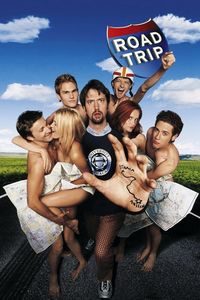
    (In theaters, August 2000) One wouldn’t expect a teen sex comedy to stimulate much intellectual discourse, but it’s hard to go through Road Trip without noticing that if it is emblematic of today’s culture, then there has been some progress. Notice how many plot mechanics are driven by confident females. See the -unsubtle, but hey- black fraternity sequence as a message of racial harmony. Ignore the oft-gross humor -seems to be the current rage after all- and see how it’s, at the core, a relatively decent comedy with a few good laughs. At least Tom Green isn’t as annoying as predicted. And that’ll be Road Trip‘s epitaph; better than expected. Just don’t overanalyse it.

  • Repo Man (1984)

    Repo Man (1984)

    (On VHS, August 2000) If I had to pick and choose films ready for a remake, I wouldn’t go for bad films that inexplicably became popular (Planet Of The Apes) nor classic films that really don’t need to be redone (Psycho). I’d select films that had a lot of potential, but for some reason failed to completely exploit this potential. Repo Man is pretty much the prototypical example of this: A good script that already contains classic lines (“The life of a Repo Man is Always intense!”) but could be polished, roles that are good showcases for actors (in this case, a very young Emilio Estevez), special effects used carefully but that don’t really survive today’s practiced eyes and an overall sense of fun that would really be appropriate to try to re-create. Until then, however, you can always go back and rent this version, which is definitely bizarre but always a blast.

  • The Replacements (2000)

    The Replacements (2000)

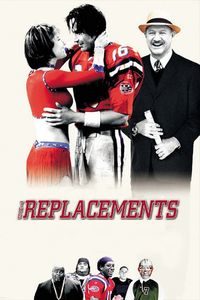
    (In theaters, August 2000) A surprise: As an underdog sports comedy, it offers nearly nothing we haven’t seen before, from the oh-so-wacky characters to the last-game photofinish ending. The film grinds to a halt as soon as it tries to build some romance between (cliché alert!) the quarterback and the head cheerleader, but fortunately, the rest is so enjoyable that it doesn’t really matter. The heart of the film is in the gonzo football stunts, which are very enjoyable even to a neophyte of the sport. All is wrapped in a competently-edited (take note, Hollywood sports directors!) package, and if it’s not as good a film as its contemporary Any Given Sunday, it’s certainly far more accessible. Despite everything, it works, and the result is pretty good.

  • The Martian Race, Gregory Benford

    Warner Aspect, 1999, 340 pages, C$32.00 hc, ISBN 0-446-52633-9

    The nineties have been an excellent decade as far as Mars and Science-Fiction have been concerned. SF writers returned to the Red Planet en masse, virtually re-inventing our SFictional view of the planet in light of NASA’s latest discoveries about it.

    The crowning Mars work of the decade, of course, goes to Kim Stanley Robinson’s masterful Mars trilogy, which set the tone for a series of scientifically accurate novels perhaps more concerned with writing future history than overblown SF. A refreshing chance after Burroughs’ fantasy Mars.

    Interestingly enough, even though there was a first Mars boom in the early nineties, (Bova’s Mars, Williamson’s Beachhead, Anderson’s Climbing Olympus, etc…) the Pathfinder expedition of 1997 (as well as the flap about Martian “fossils” in 1996) rekindled interest in the fourth rock from the sun. As Hollywood re-discovered Mars on its own (with MISSION TO MARS, RED PLANET, at least one TV movie and persistent rumors of a James Cameron film project), written SF went back to Mars another time: Bova’s Return to Mars, Baxter’s Voyage, Hartman’s Mars Underground, Robinson’s The Martians all went back, sometime literally, to the red planet for one more adventure.

    Now Gregory Benford packs up his rockets and also blasts off to Mars, in an adventure that suffers from a few problem but manages to provide a satisfying read.

    The setup innovates somewhat: Instead of the government directly financing a martian expedition, a series of mishaps convince the government to do business differently: They offer a prize of thirty billion dollars to whoever can get to Mars, perform some exploration and return safely. The novel opens as one expedition financed by a billionaire comes to a close. Of course, disaster strikes, a second expedition pops up, a pair of significant discoveries is made and money threatens to run out.

    The novel begins with a chronologically fractured narrative, which isn’t as successful as a straight timeline would have been. (An approach more similar to Robert J. Sawyer’s usual middle-of-novel-scene-as-prologue might have been more successful than the attempt to pass of the flashback exposition interleaved in the main story.) But as the context is straightened out and the stakes rise, the novel gets steadily more interesting.

    Of course, it helps that Benford has learned how to write clearly. His first novels (even the much-lauded Timescape) were embarrassments of pretentious prose masquerading as depth. Though he always had the capacity to do it (His mainstream thriller, Artifact, dates from 1985) it is only in the last few books (Cosm, most notably) that he’s shown a willingness to stick with an uncluttered, transparent, elegant prose.

    The Martian Race is ultimately a pretty good -though not exceptional- novel of hard-SF. Though the idea-density is low for experienced readers of the genre, they are well-developed and the novel can survive quite easily on its increasingly engrossing narrative. Before long, the title begins to acquire a double meaning that is eventually proven right. Not much suspense, but it doesn’t really matter.

    Though I doubt that Benford’s predictions will be realized -all his wishful anti-government thinking aside-, The Martian Race is another brick in the pro-Mars SF wall. It holds up well to Kim Stanley Robinson’s standard-setting trilogy and represents a good choice for almost any SF enthusiast. Now, if only Mars movies could be as good as Mars books…

  • Raising Arizona (1987)

    Raising Arizona (1987)

    (In theaters, August 2000) There are no easy ways to describe this film. Hilarious in an oddball kind of way, this is a film that goes places you really wouldn’t expect and does so in style. Sharing an unexpected kinship with such unlikely counterparts as The Evil Dead, Raising Arizona defies expectations and produces an ultimately endearing result. Nicolas Cage is superb, the Coen Brothers’ direction is maniacal, the script is filled with great moments and the cinematography is occasionally breathtaking. Don’t miss this one.