Reviews

  • Storming Heaven, Kyle Mills

    Harper, 1998, 499 pages, C$9.99 mmpb, ISBN 0-06-101251-3

    Looking at genres, from time to time, I despair: Is it possible to do something new or innovative any more? A standard thriller features a lone protagonist who loses everything by fighting a vast conspiracy. Betrayals, unlikely allies and multiple murders usually complete the picture. In this familiar context, is it possible to create something interesting?

    Well, yes. Any sufficiently-capable author can still work wonders with even the most overused plot. It all depends on good characters, interesting twists and good writing. Kyle Mills’ Storming Heaven doesn’t deviate a lot from the usual thriller plot, but the execution of the premise makes it all seem fresh, somehow.

    It starts with a murder, obviously. This time, a suburban millionaire couple is found dead in their home. Their teenage daughter is missing. FBI agent Mark Beamon (suitably renegade enough to serve as our protagonist) suspects something is up. His investigation eventually uncovers disturbing links between the young girl and a vast new religion with links to a telecommunication empire and a few paramilitary operatives.

    Scientology, anyone? Not quite. Clearly, some parallels exist: The Kneissians do pillory their opponent through lawsuits, have an ongoing feud with the German government and operate according to a series of “levels” similar to the real-world sect, but Mills take the concept much farther. The Church of Kneiss is actually closer to Scientology++, if you want: Mills imagines a new religion that consciously uses the latest techniques in marketing and social manipulation to set up a brand-new system of belief. Without the “limiting factor” [P.236] of outdated dogma that holds back established religions.

    Every jaded reader should be paying attention at this moment; while real-world governments are too ponderous to engage in conspiracies and businesses are too subject to market fluctuation to be menacing, religion is something else. When its influence comes crashing down on our protagonist, there isn’t much he can do to stop them. It’s a formidable opponent, and our hero has to use his wits to extricate himself from an impossible situation.

    Fortunately, this is yet another area where Kyle Mills distinguishes himself. We’ve seen countless smart renegade cops before, but few of them are as believable as Mark Beamon. He repeatedly demonstrates his intelligence without inexplicable leaps of logic or hand-waving. Storming Heaven‘s good characterization doesn’t stop there; the novel is filled with memorable supporting characters that resonate even weeks after finishing the novel. The young heroine herself is one of the most sympathetic kid-in-distress in recent memory, as she even gets a chance to shine her wits later in the novel.

    Somehow, everything else seems sweeter when good characters are at the core. Even though the plot mechanics may seem familiar, they work much better when we care about the humans they affect. Beamon’s descent in obscurity is stronger, and so is his inevitable triumph.

    A strong, unconventional, too neat conclusion ties everything together with an effective resolution that doesn’t dredge up the mano-a-mano cliché, and takes the time to deliver a few scenes of pure payback pleasure.

    Well-written and well-executed, Storming Heaven is a shining thriller that can restore your faith in the tired old conspiracy genre. Strong characters remain at the core of the narrative, making this novel more than your run-of-the-mill escapist entertainment. The religious sub-themes are deftly handled and may make you think hard for a moment or two. Mills vaults in the ranks of promising thriller writers. More, please!

  • Friday The 13th (1980)

    Friday The 13th (1980)

    (On VHS, May 2002) Dull, repetitive piece of trash. Hard to see why this has spawned nine sequels (and counting) except for the low production values and the simplistic storyline that can be understood even by gibbering morons. Simple stuff: Teenager separates itself from the group, gets killed. Repeat until only one’s left. I wish I could say that the handheld shots and the amateurishness of the script are a refreshing change after the slick twenty years of insipid rip-offs, but I’d be lying, really. The insipid drawn-out finale is just annoying. It can be watched while reading a book. Heck, there isn’t even much nudity. Blah.

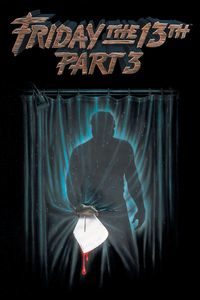
  • Friday the 13th Part III (1982)

    Friday the 13th Part III (1982)

    (On VHS, May 2002) The shocking -shocking!- thing about this series is not how every damn film in the series is a carbon-copy of itself as much as how it wouldn’t take all that much wit or talent to make something special or interesting out of it. (Hey, that explains Kevin Williamson’s Scream after all…) How many time do we have to suffer through the same stupid screaming, running, tripping? Gaak. Not much new to report in installment #3: The composition of some shots is peculiar… until you realize that the film was meant to be shown in 3-D. The disco-biker gang is rather amusing, perhaps signaling the series’ descent in auto-derision. (The hockey mask also makes its first appearance) The frickin’ three-hour-long climax is once again ridiculously drawn-out. Does this series ever improve? It’s not looking like it.

  • Friday The 13th Part 2 (1981)

    Friday The 13th Part 2 (1981)

    (On VHS, May 2002) Don’t worry if you haven’t seen the first film; it’s recapped (at length) in the first few minutes. To be entirely truthful, this is a better film than the original, if only for the enhanced production values and the better-looking girls. (Still not much nudity, alas) Nevertheless, there isn’t much there in term of cinematic enjoyment. The directing is flat, the actors rather less than convincing and the repetitive structure of the plot starts to grate early on. Naturally, I could also argue that the perfect F13 film would be all porn and no violence. But then again I’m just bored watching that stuff, so what do I know?

  • Enough (2002)

    Enough (2002)

    (In theaters, May 2002) Pure exploitative trash! Take a beautiful female protagonist, give her the worst psycho husband ever imagined and then give her a rationale for killing him. It doesn’t take much more to make such an obviously manipulative film. The surprise here isn’t how unsubtle is the film as much as it’s how it all works so well: The husband is enough of a crazy maniac that killing him doesn’t seem an act of female aggression as much as a righteous purge for all humankind. (You just have to see how he behaves with other men to figure out how much of an eeevil antagonist he is.) Jennifer Lopez is wonderful (as usual) as the protagonist, going from innocent to victim to fighter in one satisfying arc. (I don’t like her short hair nearly as much as her usual hairstyle, but that’s pretty shallow, isn’t it?) Let’s not fool ourselves: Enough is pure thriller trash without social signification, but executed well enough that is becomes somewhat of a guilty pleasure. Your mileage may vary.

  • Edward Scissorhands (1990)

    Edward Scissorhands (1990)

    (On DVD, May 2002) Goodness bless Tim Burton, he of the wacky visual sense and teenage sensibilities. It’s easy to see a little too much symbolism in Edward Scissorhands, considering the characters as a metaphor for troubled teenagers (whose actions often seem to destroy everything they touch), a retelling of Frankenstein and a general fable on ostracism, but the ending of the film doesn’t drive any particular point home (except, maybe that some people just can’t fit in, which seems a curiously reactionary counterpoint to classic movie values.) Still, whatever unease the film may eventually cause, there’s no denying that the film is a visual treat and a joy to watch. On one level, Edward Scissorhands succeeds on pure originality, because it’s only all too rare to see such imagination on display. At the very least, it’s a change from the usual fare. The DVD features a bunch of interesting extras, including a dry but informative commentary track by Burton.

  • The Ultimate Rush, Joe Quirk

    St. Martin’s, 1998, 374 pages, C$8.99 mmpb, ISBN 0-312-96902-3

    If I’m forced to mention only one element that can transform an average thriller into a good one, it would be speed. Pacing, rhythm; call it how you want, but a novel that moves can be forgiven many things that would otherwise sour a book that just doesn’t go anywhere.

    The Ultimate Rush begins with a solid, exhilarating demonstration of speed, as our protagonist battles the treacherous streets of San Francisco to make a delivery… on rollerblades. Heroic maneuvers, near-death experiences, fast hip lingo and limpid writing make this intro one of the best since, ironically enough, the similar opening of Neal Stephenson’s Snow Crash.

    The rest of the novel eventually slows down, but in a few subsequent pages, we’re introduced to a protagonist who seems to embody coolness. Pierced narrator Chet Griffin isn’t only a blader, but he’s also an ex-hacker and a punk rock groupie with an unwholesome fascination for a lesbian friend of his. His new job as an elite courier, however, soon -very soon!- sends him rolling straight to various underworld elements, who quickly become highly unpleasant when they suspect him of peeking in the packages…

    As a novel, The Ultimate Rush initially lives up to its title. The novel alternates between terrific chase sequences and hilarious slice-of-life scenes; it’s very difficult not to like Chet and his merry band of friends. When, in mid-book, love strikes and we’re treated to a gratuitous sex scene (“Do me like a straight girl!”, etc. [P.206]), well, it’s like seeing two old deserving friends finally getting together. Quirk has a knack for describing memorable characters, and our attachment to them goes a long way to make us like the book.

    Quirk can’t resist being cooler than thou, though, and sometimes bites off more than he can chew. Yes, his taste in music is cool and impeccable (bands and album names are casually dropped to show off) but while I’m no authority on rollerblading, his hacking sequences are a bit off. They reprise, albeit with some skill, the usual cliché that gifted people can break in anywhere with only a few hours’ worth of work. Fortunately, there’s some hand-waving and not a little help from various virtual friends, but still… At least this gives form to one of the coolest deep-hacking scenes since Stephenson’s Cryptonomicon. (On the other hand, well, everyone will easily guess the real identity of the cyber-antagonist chapters before it’s finally breathlessly revealed to us.) Realistic, accurate and carefully researched? Er, no.

    Technical quibbles aside, though, what really harms the book is a steady lessening of tension in the last hundred pages. The ending, which packages a shootout between various groups, should be thrilling but comes across as perfunctory and routine. The book also gets grimmer as it concludes, which somewhat contradicts the novel’s earlier carefree attitude.

    Fortunately, it ends up on a high note. Or nearly does; I’d recommend stopping at the penultimate chapter rather than the last unless, as the chapter title indicates, “you want a sequel”. It’s a huge downer, pointless and depressing, the kind of thing that’s best left as the first chapter of the sequel.

    But again, if you can ignore that pesky problem, The Ultimate Rush is a wild ride, a breakneck thriller with great sympathetic characters, crackling narration and a devastating sense of cool. If every other suspense novel you read seems flat and plodding, try this one. Zzzoom!

  • The Bogus Witch Project (2000)

    The Bogus Witch Project (2000)

    (On VHS, May 2002) Imagine a flyer inviting amateur Los Angeles-area filmmakers to send in their short Blair Witch Project parodies. Imagine screening all of these g’damn shorts. Scary? Repulsive? Dreadful? Well, you can get a taste for it, because they’ve selected the “best” five of them for your viewing pleasure. I normally have a very high tolerance for silly parodies, but that threshold’s was reached early on with The Bogus Witch Project. There are a few clever jokes here and there, but if there was a case for plagiarism, it would have been to steal all the best ideas and do one single parody. After all, there’s a limit to the number of times a lens-cap joke can be effective. Heck; the Pauly Shore segment is the best thing about the film. What else can I say?

  • Big Trouble (2002)

    Big Trouble (2002)

    (In theaters, May 2002) Anyone in the mood for a silly crime comedy could do much worse than to take a look at this film. Roughly a dozen familiar actors pop up in a narrative that deftly manipulates a large character cast without too much confusion. The story might be uncomfortable for some, as it features a nuclear warhead being smuggled past airport security, but don’t let that distract you from a darn good film that is roughly in the same vein than Snatch and Lock, Stock and Two Smoking Barrels. Dave Barry’s novel is decently adapted, preserving some of his dry wit (mostly though Tim Allen’s narration) and most of the insanity that seems so prevalent in South Floridian crime thrillers. It’s simply a lot of fun.

  • 40 Days and 40 Nights (2002)

    40 Days and 40 Nights (2002)

    (On VHS, May 2002) Josh Hartnett has never been a truly dynamic performer, and his turn in this sex Comedy comes close to sinking the picture. His puppy-dog charm manages to save it from utter collapse, but what we’re left with is a completely average film that will quickly fade from memory. The premise (abstinence for Lent) itself isn’t completely compelling. Without providing too much information on your reviewer’s sex life, going 40 days without sex doesn’t seem like too much of a sacrifice. (The nature of a protagonist for whom this would be a Big Deal is enough to make one go—ew!) To the screenwriter’s credit, he manages to sustain the premise until the end—though frankly, only a few scenes stand out as being particularly funny. The last 30 minutes of the film get mired into standard romantic plot shticks. (Your reviewer is a bit of a thicke in these matters, but not jumping right into bed with a potential paramour wouldn’t seem to be that much of a problem. Maybe it’s a San Francisco thing.) Then again, everyone in this film seems to be working in offices where sexual harassment laws seem to be unknown. For the rest of us, though, 40 Days & 40 Nights is a tepid fantasy that will quickly evaporate without a trace. Well, maybe aside from being an early film in the Shannyn Sossamon oeuvre; her Goth-girl personae is thin, but compelling.

  • 8.4, Peter Hernon

    Jove, 1999, 460 pages, C$8.99 mmpb, ISBN 0-515-12713-2

    Devastating earthquakes in North America. Only in California, you say? Not necessarily: The New Madrid Seismic Zone has fascinated geologists for years, especially given the documented evidence of a massive series of quakes in that area in 1811 and 1812. According to some, the new Madrid fault will shake again soon. If it does, it’s going to move along most of the American Midwest from Ohio to Mississippi, with catastrophic results…

    The New Madrid fault is starting to interest disaster novelists too, as demonstrate thrillers like Walter Jon Williams’s The Rift, Michael Reisig’s The New Madrid Run and Peter Hernon’s 8.4. I’ll cover Williams’ mammoth novel eventually, but if you have to pick and choose between one of the three, Hernon’s thriller is a perfectly serviceable illustration of the devastating potential of an earthquake in America’s heartland.

    As you might expect from countless disaster stories, 8.4 follows a familiar template of ever-increasing danger, up to the worst disaster —narrowly averted by an audacious last-minute operation. The protagonists are, of course, maverick earthquake specialists whose alarm cries are not taken seriously until the very last moment. It also helps that one of the heroes has been seriously traumatized by an earthquake before: This time… it’s personal!

    I barely jest. 8.4 has many fine qualities, but plotting originality isn’t one of them. In many ways, it doesn’t really matter. Despite its newfound attraction for novelists, the New Madrid Fault is new enough that simply showing the effects of a massive series of quakes in the American Midwest can be satisfying enough without resorting to sophisticated narrative techniques. In short, when the special effects are sufficiently spectacular, the characters and story can take a back seat.

    It’s a good thing, then, that 8.4 features some awe-inspiring scenes. Early quakes send the content of a graveyard bubbling to the surface. Major cities are trashed. Civil unrest requires the intervention of the army. A dam bursts open. A nuclear device is used. It’s all deliriously thrilling in the best tradition of disaster stories. (No relation with actual plausibility is implied or required.)

    Even so, 8.4‘s level of suggested realism is impressively convincing. Not only do the characters talk the talk (often ridiculously so!), but Hernon thoughtfully integrates a few technical diagrams to help the lectures along and provide some graphical conceptualization. Exposition? Heck, we’re talking about a World Fair’s worth of exposition. Geology buffs will lap it up, as will techno-thriller fans used to multiple paragraphs of technical details. (That is, unless they find major mistakes I couldn’t guess at)

    Given the above, it’s no surprise if so few characters actually come to life during the course of the novel. Some subplots are superfluous, especially when they don’t involve spectacular sights. We’re supposed to care about a major betrayal late in the book, but at most, the only effect is a nod of acknowledgement from the reader at the expected kink in the plot.

    It takes a special kind of reader to appreciate 8.4, mostly the same type of reader which worships hard science-fiction and authentic military thrillers. The indifferent characters definitely hurt the novel, but not as much as you might expect given the awe-inspiring disasters and the interesting details. Peter Hernon delivers a credible description of an upcoming New Madrid earthquake, but if you want a fully satisfying piece of fiction, well, that remains to be read.

  • The Deadly Frost, Terrence Moan

    Ballantine, 1979, 342 pages, C$4.00 mmpb, ISBN 0-345-28947-1

    At first, I didn’t intend to review this book.

    Understand that I do not write full-length reviews for every single book I read. Not only would this be prodigiously time-consuming (I’m having enough trouble as it is keeping up with my reviews backlog), but I have convinced myself a long time ago that not every book contains enough material to warrant critical discussion. I’d rather read fifty pages of a good book than to waste my time writing about how dull was another one. Average books are usually those who fall on the wayside: neither good enough to recommend nor bad enough to tear apart, those mid-list works are almost instantly forgettable.

    The Deadly Frost would be one of those average novels. The premise is intriguing enough, at least for catastrophe fetishists like myself; in an alternate future not-too-far-removed from 1979, a gigantic Liquefied Natural Gas (LNG) tanker suffers a catastrophic accident right in the middle of New York Harbour, unleashing a cloud of cryogenized methane. As soon as the winds pick up, the gas cloud will make its was to Brooklyn and Manhattan, where it will instantly freeze solid everything it encounters. Oh, and any spark will detonate the entire cloud. Eight million lives are at stake. The Brooklyn beaches are packed. Rush hour is about to begin. Welcome to frozen toxic catastrophe.

    I have great admiration for writers who can pull off this type of disaster-building tension, where every option is gradually made impossible, and disaster seems inevitable whatever happens next. In this case, Moan efficiently sets up his situation and gradually shrinks the box in which his protagonists are placed. Structure-wise, it reads a lot like a Hollywood blockbuster, with just enough death and destruction before the invariably triumphant finish. There is a ghoulishly enjoyable death-and-destruction vignette in chapter 20 involving the World Trade Center “Windows on the World” restaurant.

    This being said, it’s not a classic novel. For some reason, I was completely uninterested in the fate of any of the “average” characters caught in the disaster. I always wanted to go back to the president, the mayor, the engineer working at actually doing something about the problem. For this reason, the novel suffers a considerable lull in its second half before picking up again near the end. Even those active characters aren’t much more developed than their usual disaster-novel counterparts. In short, The Deadly Frost isn’t a particularly noteworthy novel once you’ve discarded the rather original premise.

    It’s one thing for me, as a lowly book reviewer, to say such a thing. It’s quite another to find out that the rest of the English-speaking world seems to have collectively forgotten the novel.

    I often do web searches on novels and authors, especially when they date a bit. I was stunned to find out that doing an Amazon search for “deadly frost” turned up one result, an out-of-print mention of the book as being written by “terence moan” [sic]. Even a Google search for “Terrence Moan” “deadly frost” turned up a measly two results. Moan himself seems to have become a real-estate developer in the Harlem area of New York City.

    So I set out to write this review, as a more substantial notice that yes, Terrence Moan’s The Deadly Frost did indeed exist and that despite its faults, it wasn’t a bad novel.

    As a reader, book-lover, collector and occasional librarian-groupie, I find the thought of a forgotten book to be infinitely disturbing; an affront to the natural order of human thought. New York City being fictionally transformed in a ball of toxic fire doesn’t creep me out nearly as much as the thought that a book once released by a major publisher might simply disappear from our collective memory, not even twenty-five years later.

    Now that would be a catastrophe.

  • T2: Infiltrator, S.M.Stirling

    Harper Collins, 2001, 389 pages, C$37.95 hc, ISBN 0-380-97791-5

    I was in a bookstore, looking at the pile of remaindered books and felt torn between two futures, determined by me buying the book or not.

    On one hand, I loathe media-derived SF. It’s hard enough to find good original SF that authors who slum at playing by another person’s rules probably don’t fully deserve the title of “science-fiction author”. If you’re going to be restrained by a defined universe, why don’t you simply write contemporary fiction? The very intent of SF is to make us play with interesting new possibilities, not to dive once again in a tired old conventions.

    On the other hand, I really do hold the TERMINATOR film franchise in high regard. James Cameron’s time-travel thrillers might not be overly original, but they were certainly a great pair of filmed SF tales, not to mention a pair of excellent action movies. Any “officially approved” novel, especially when written by a “real” SF author like S.M. Stirling, would be a welcome thing.

    So I picked up T2: Infiltrator. Maybe, in some alternate universe, this space is occupied by the review of a soul-stirring modern classic, a masterpiece of deep personal resonance and disquieting social implications. Maybe, in that parallel universe, not picking up a book has led me to a fateful encounter with a stunning red-headed physicist/supermodel…

    But in this universe, you’re stuck with my bitter review of S.M. Stirling’s cash-grabbing T2: Infiltrator. And, oh boy, are you going to regret it.

    Nah, I’m kidding.

    Truth is, T2: Infiltrator isn’t that bad a novel. Stirling is too professional a writer to let a bad book slip under his watch, and if I’m not particularly impressed by Infiltrator, I’m not completely dismissing it either.

    On the other hand, well, I’m not particularly enthusiastic about it.

    T2: Infiltrator picks up nearly ten years after the events of JUDGEMENT DAY: Sarah Connor and her son John are living in South America, having successfully established new identities. They think they’re safe, both from Skynet and from the US government, who have branded them both as terrorists for their attack on Cyberdyne.

    But they’re wrong on both counts. Not only does the US government pick up their trail (a hideous coincidence makes it so that the “original human model” for the T-8000 is their new neighbor; he just happens to be an ex-special forces operative), but Skynet, after much mumbo-jumbo, sends another agent to track down and destroy John Connor. This time, Skynet has sent back a specially-trained human agent who, it hopes, will blend in a little bit better and be able to perform her mission. As if it wasn’t enough, Cyberdyne is back on-line (thanks to off-site backups and the remnants of an arm found in the foundry at the end of the second film) and Miles Dyson’s brother is an FBI agent who has sworn to track down his sibling’s killers.

    It’s not a particularly promising premise. Not only does it retread the first two films (once again, Sarah and John must elude killers, yadda-yadda), but it does so with far too much of a wink; inserting the “human” T-8000 is almost a wee bit too contrived, probably to help readers imagine Arnold S. in the story.

    But the execution does little to improve on the premise. The book is very wordy; a fatal flaw when taking off from a visual source. Re-reading William Wisher’s novelisation of T2, I was struck at the breakneck pace at which it flowed; in comparison, Infiltrator is like molasses, even during its action scenes.

    Even worse; by the end of the book, it’s obvious that this is a first volume of a series that might be very, very long. A considerable number of loose ends are left untied and ripe for sequels. Oh joy. The worst is that I probably won’t be able to help myself, and will read them anyway. Unless a future version of myself can somehow come back and warn me against them, naturally.

  • The Confederation Handbook, Peter F. Hamilton

    Warner Aspect, 2000, 282 pages, C$9.99 mmpb, ISBN 0-446-61027-5

    As a big fan of Peter F. Hamilton’s Night’s Dawn Trilogy, I was naturally curious about the “companion guide” to the series, a handbook bringing together in one handy volume all the considerable background information that served as source material for his 3000+ pages opus.

    My first impression was that this would be a fan-gouging rip-off, an impression scarcely dispelled by the cheap trichrome cover recycling graphic elements from previous book covers. The slim volume should have warned me, but no, nooo, I had to buy the darn thing.

    After reading it all, I won’t ask for a refund… but I’m still not totally happy about the end result.

    It’s not as if it’s not exactly what it purports to be; a handbook describing the universe in which the Night’s Dawn trilogy takes place. Successive sections examine the political environment (Adamist and Edenist cultures), hardware (starship and weapons), players (confederation members; Sol, Ombey, Tranquility, New California and the other planets/asteroids/habitats on which the series takes place) and alien races. There is also a dramatis personae (with a few details) and a timeline of event from here to then, though the last two can also be found in the trilogy books themselves.

    The first, and most discouraging conclusion formed after reading the Confederation Handbook is that there isn’t much in here that isn’t mentioned somewhere in the books. It’s presented in an organized fashion, of course, but there aren’t any startling revelations here for those who have read the series. (The story of Edenism is already well-described in the short story collection A Second Chance at Eden)

    I was also disappointed by the patchy organization of the book. Oh, it’s not as if everything isn’t at its place, but I would have preferred numbered headers (eg; 3.1.1.1: Earth Government), especially in Section 3 where the multiple levels of information are occasionally confusing. There are also patches where information provided for one entity isn’t provided for another (or is simple glossed over quickly), reflecting the amount of information available in the novels themselves.

    Faced with this, we can justifiably ask who is the audience for that book. Role-Playing Games enthusiasts will certainly enjoy having all that world-building information coherently organized, as would universe-building writers looking for inspiration.

    To Hamilton’s credit, the Handbook doesn’t contain many spoilers, making it a useful reference book for anyone reading the series. (Whatever spoilers there are are concentrated in the latter xenoc and characters section, and seemed clearly identified; avoid reading the detailed dramatic personae and the post-2611 information!)

    One thing in which the Confederation Handbook excels, though, is in evoking comfy memories of the original trilogy. Seeing all the background information squeezed in one coherent whole clearly illustrates the richness of Hamilton’s universe, as well as the dramatic possibilities so entertainingly exploited throughout the trilogy. If I hadn’t already read the trilogy, I’d be sold on doing so by now.

    Ultimately, though, the Confederation Handbook is a strange object, halfway between curio, resource and cash-grab. If you think this is a type of book that would appeal to you, by all means go make your local SF bookstore owner happy. If you have the slightest doubt that you’d be better off borrowing it from the bookstore, though, steer clear and follow your instinct. It’s not bad or disappointing, but it’s quite redundant.

  • Manifold: Space, Stephen Baxter

    Del Rey, 2001, 452 pages, C$36.00 hc, ISBN 0-345-43077-8

    The possibility of extra-terrestrial intelligence has fascinated science-fiction writers even since H.G. Wells’ novels, and probably even before then. Certainly, when considering current scientific knowledge, there is nothing particularly surprising in that what happened once on Earth may certainly happen elsewhere. Combine that to the multiplicity of planets in the Milky Way alone, and the probability of extra-terrestrial intelligence becomes not merely conjecture, but quasi-certitude.

    There is one problem, though; even though we have looked hard for any trace of extra-terrestrial life, the vexing reality is that we have been unable to see, from our limited perspective, any trace of ET intelligence. No unambiguous visual sign. No radio signals. No markers on Earth or on the moon. Nothing. Given the galaxy’s numerous planets and lengthy life-span, any civilization breaking through should be able to conquer the galaxy in a matter of millennia. Why aren’t we seeing anything of the sort?

    This question (the Fermi paradox, from Enrico Fermi’s famous axiom “Where are they? If they existed, they would be here.”) has fascinated many, but Stephen Baxter has devoted an entire trilogy at trying to figure out plausible reasons why we might not be seeing anyone else at the moment. We should use the word “trilogy” loosely, though, as the Manifold series re-uses the same protagonist (Reid Malenfant) and some recurring characters in wholly different universes where even the nature of reality might be different.

    In Manifold: Time, Baxter showed a universe where humanity was alone, and the steps they took in order to correct in situation. In Manifold: Space, there are aliens everywhere. And they’re not really friendly.

    To some degree, Baxter’s logical train of thought brings him to the same conclusions than Greg Bear (The Forge of God) and Charles Pellegrino (The Killing Star, etc.): Natural competition for resources, the awesome powers of extra-solar civilizations and plain simple fear all lead to a winner-takes-all mentality. To put it bluntly, whoever wipes out everyone else will win.

    Manifold: Space comes from the British tradition of SF, and it’s far from being a cheery book. Speaking as a colonial, the Brits know a thing or two about losing an empire, and this melancholy permeates Space like a stain. As Malenfant’s travels take him further and further is the far-future, we get a long-scope view of human evolution, with all its foibles Humanity either destroys itself or is wiped out by external forces a few times in this novel, and the effect isn’t a lot of fun. Interestingly enough, we get a better appreciation for the awesome power of time in this novel rather than in Manifold: Time.

    If you want to continue comparing this novel to its predecessor, the resemblances are interesting: Both novels are obvious work of ideas, not characters: Malenfant is borderline-unlikable, and the other characters are cyphers more than anything else. Both books also share a curious structure in which the biggest punches are to be found at the middle, and not the end of the narrative, which gradually loses power as it advances and diverts itself in meaningless side-shows.

    But the novel’s impact stands out, mostly as a boffo twelve-pack of hard-SF Big Ideas. Anyone with an interest in the Fermi Paradox will love Baxter’s speculations, even though it’s hard to get away from other SF authors’ thinking on the subject. Manifold: Space could have used some extra trimming (the whole natural-nuclear-reactor subplot plot branch struck me as a let-down), but I don’t think that any hard-SF fan will seriously regret reading the whole book. It’s decent high-powered idea-driven speculative fiction and a decent companion volume to Manifold: Time. Good stuff for hard-SF enthusiasts.