Reviews

  • Three Days Of The Condor (1975)

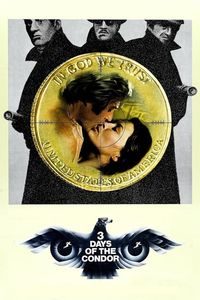
    Three Days Of The Condor (1975)

    (On TV, April 2002) There have been, um, a lot of conspiracy films released over the past twenty-five years, but even today, the granddaddy of them all, Three Days Of The Condor, still manages to packs some punch. For one thing, it plays everything very straight, as if no one up to that point had ever seen a conspiracy thriller (which they often hadn’t, to think of it). For another, it features Robert Redford as a bookish, but fiercely smart protagonist, who reacts in a way that viewers can only cheer for. Good plot twists follow, mixed with clever manoeuvres from both sides. Though unshakably set in the mid-seventies, this film survives admirably well as a period piece. It concludes on a meanly effective monologue that still resonates a quarter of a century later.

    (Second viewing, On Cable TV, July 2020) A second, belated look at Three Days Of The Condor shows that I still like it quite a bit.  I like the basic premise of a hapless analyst managing to stay alive despite a conspiracy gunning for him, and I can’t help but detect a certain self-awareness about its own paranoia.  On the heroes’ side, 1970s-vintage Robert Redford is easily charismatic, and Tina Chen disappears far too soon from the film.  But on the heavy side – wow: Cliff Robertson, Max von Sydow and John Houseman?  Not bad.  And yet, it’s not perfect: The romantic subplot is definitely odd and unconvincing.  Still, this is pretty good – and while the film is paranoid, it’s not entire bleak.  This being said, be careful not to confuse this with comic adventure Condorman.

  • The Scorpion King (2002)

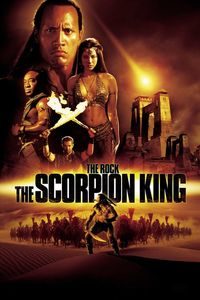
    The Scorpion King (2002)

    (In theaters, April 2002) Sword-and-sorcery films are usually terrible beyond words, and The Scorpion King is no exception. Where it manages to be good, though, is in the fun department; despite the awful dialogues and the linear plotting, this film never takes itself too seriously. It’s no Conan, naturally, but it’s much better than trash like Kull The Conqueror. (Some of you may remember that The Scorpion King is supposed to be a “prequel” to The Mummy Returns. If so, forget it, because there isn’t any strong link between the Mummy series and this film. At all.) “The Rock” isn’t much of an actor, and the film wisely avoid asking too much of him, with two shudder-inducing exceptions. Otherwise, well, the battles scenes are well-choreographed, and skilfully edited in a coherent whole that Gladiator didn’t even attain. Even the logical flaws are deftly handled; one particularly glaring mistake is covered by the spectacular entrance of Asian co-star Kelly Hu, wet and naked save for her strategically-placed long hair. The enjoyably multicultural female extras do wonders to distract from the rest of the incoherencies. Beautiful ladies, good battles scenes, swordfights and a smirking tone; what else could you possibly want from a B-movie? It’s exactly the type of movies you will like if you like that type of movies.

  • Panic Room (2002)

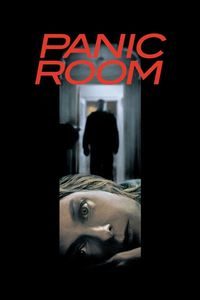
    Panic Room (2002)

    (In theaters, April 2002) David Fincher is one of the few dependable directors out there, and Panic Room is another good example of why he’s always worth a look. In this case, like in The Game, he takes a script with a few serious problems and transforms it in a technically polished piece of suspense moviemaking that elevates the material to a mesmerizing level. From a film-geek’s point of view, Panic Room is a lovable demonstration of skill, from an effective simple-but-ominous credit sequence to a boffo “camera-flying-around-the-house” CGI/composite shot to a wonderful mute slow-motion sequence maybe halfway through the film. His camera angles are always effective, the editing is top notch, the spatial location of everything is clearly established and the overall atmosphere of the film is as claustrophobic as it should be. But, ah-ha, what about the humans in the film? Acting-wise, everything works; Jodie Foster is rather bland, but she -as with everyone else- turns in a good performance. The biggest problem with Panic Room, though, is illustrated by the fact that the film’s most sympathetic characters is one of the nominal “villains”. There isn’t much reason to care for the protagonist besides the obvious (they’re female, weak, without weapons and afflicted by an illness) and some promising character traits (like the heroine’s claustrophobia and/or myopia) are forgotten in mid-film. The late appearance of a rather useless character raises far more questions than it settles. Ultimately, though, the intellectual cat-and-mouse game between characters and Fincher’s technical prowess are more than enough to make Panic Room a commendable choice. But it’s too bad that with only a little more script work, this could have been a classic rather than merely a good thriller.

  • Atlas Shrugged (35th anniversary edition), Ayn Rand

    Signet, 1957 (1992 reprint), 1057 pages, C$9.99 mmpb, ISBN 0-451-17192-6

    I know that, no matter what, I won’t be satisfied with this review.

    Ayn Rand’s Atlas Shrugged is bigger than most of the books I usually review. Not merely in a purely physical sense, but also in terms of ideas, reputation and social significance. It champions unusual ideas in a vigorous fashion. It has been credited with the creation of a cult/philosophy. It’s been hailed by various commentators either as a masterpiece or pure trash. Some call it their favorite book. Others think it’s simply obnoxious. You can find endless debates (some of theme quite ridiculously profound) everywhere on the world wide web. (noblesoul.com/orc/ is a great place to start. That they link to this review only adds to my own good opinion of the site.)

    Trying to fit my own feelings about the book in 650 words, when considering the rich decade-old debate already surrounding the book, is somewhat intimidating. But I’ll give it a good try.

    Atlas Shrugged starts as hard-core industrial fiction detailing the tribulations of a railroad company. All is not well in that world, though, as lassitude and plain apathy seems to corrupt society from within. Our heroine Dagny Taggart does her best to succeed, but she ultimately comes to realize that someone, behind the scenes, is doing his best to stop the motor of the world. “Who is John Galt?” indeed.

    It doesn’t take a long time to figure out that Atlas Shrugged is not only science-fiction (it is!), but that it takes place in an alternate pocket universe with scant relation to ours. The curiously Soviet industrial feel of the book, with its pronounced brushed-steel aesthetics, is a dead giveaway. So are the ridiculously convoluted relationships between the thirty or so characters populating the book. Yes, Atlas Shrugged is one of those imagined worlds where everyone knows each other. (This becomes very handy whenever Rand gets around to postulating her main conceit, which depends on a few dozen people around the country.) The psychology of any of the characters is also incompatible with our reality, from the impossibly virtuous protagonists to the cackling villains. The antagonists of Atlas Shrugged are so impossibly evil and idiotic that you can only wonder at how they’re supposed to form an effective force. Rand stacks the deck a wee bit too much in her favor to make an impact. It just ends up being laughable.

    And frankly, once I started giggling at Atlas Shrugged, it proved very difficult to stop. Strip the empress of her clothes, and Rand becomes a humorist. Brain-damaged characters spouting contrived slogans in a made-up universe; funny! Chapter VII “This is John Galt Speaking”, a fifty-page monologue clumsily stuck in the narrative; hilarious! The conviction by which Rand’s protagonists are so certain of what they’re doing; riotous!

    As you may gather, I wasn’t completely convinced by Rand’s philosophy, or even her narrative. It surprised me somewhat; as someone routinely accused of having too much faith in other people’s rationality, I should be a prime candidate for Rand’s “Objectivist” philosophy.

    Instead, it strikes me as a dubious “rational” justification for acting like a selfish child. Calling other people “leeches” isn’t much of an argument. Superficially, Objectivism looks like an excuse for doing whatever you want without regard to other people. And that’s just, well, irrational. Some college students might love it, though…

    Still, I don’t regret reading Atlas Shrugged. It is sort of an imposed event for serious readers, a good philosophy primer (if only on why you don’t agree) and an interesting book any way you look at it. Even despite the infamous monologue and the insufferable lengths, it was rather pleasant to read, and certainly managed to hold my attention. But then again, I did giggle a lot: “‘Who are you?’ screamed some terror-blinded voice. / ‘Ragnar Danneskjöld!’ “

    • Price of the paperback: .50c at a garage sale.
    • Time to read the book: Two weeks.
    • Being amused by Objectivism: Priceless!
  • Murder By Numbers (2002)

    Murder By Numbers (2002)

    (In theaters, April 2002) It doesn’t take much to make me happy in a theater; just deliver a movie that’s better than I expected. In the case of Murder By Numbers, I expected a so-so thriller, and I got that, plus a solid performance by Sandra Bullock, a complex set of character interactions, hissable villains and a few interesting details of police work. Bullock (who co-produced the film) should get points for playing a darker version of her Miss Congeniality policewoman character, a damaged cop using work as a shield—no, it plays much better than you’d expect. The two antagonists are thoroughly despicable teens who decide to kill for kicks, probably working from a stoned reading of Nietzche’s greatest hits. Other matters, large and small, come to complicate everything, and the result is a nicely entertaining film that’s much better than the conventional trailers would lead you to believe—that is, until the ending, which is every bit as conventional as the trailers suggested. It’s unspectacular but satisfying entertainment.

  • The Mummy (1999)

    The Mummy (1999)

    (Second viewing, On DVD, April 2002) Good, fast, action-packed fun. A wonderful lead-couple in the pure pulp/serials tradition. Bliss! Subsequent viewings tend to lessen the silliness and leave a greater place to the pure enjoyment of the piece. The “ultimate edition” DVD is a keeper, with the usual special-effects clips, a self-deprecating commentary track (discussing difficult extras and how tight editing leads to stupid plot-holes) and oodles of other features.

    (In theaters, May 1999) What can I say? You either enter the theatre with adequate expectations or you gnash your teeth during two hours. In the right frame of mind, this can be a wonderful, swashbuckling adventure. Fun for the whole family as most of the death and horror takes place off-screen in a very un-gory way. Don’t expect a horror movie! Brendan Fraser is a good two-fisted action hero, though his characters loses a lot of its initial edge by the end of the movie. It’s not that The Mummy is without flaws (gawd, that script leaves plot-holes all over the place!), but it’s that with most people, they simply won’t matter. Even the uneasy mixture of low-grade horror, adventure and comedy has its charm. The Mummy is just a lot of fun, and the epitome of a good, stupid summer movie.

  • Marathon Man (1976)

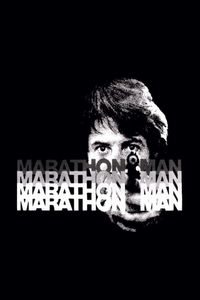
    Marathon Man (1976)

    (On TV, April 2002) Long, but good, but looong thriller that is far simpler than you might expect if you strip away all the convoluted mechanics to set up the end situation. There are some memorable moments. (Can you still go to the dentist without thinking of this film?) Good usage of New York scenery. Effective villains. Maybe a bit too manipulative. Still, a good piece. Hasn’t aged very well, though.

  • High Crimes (2002)

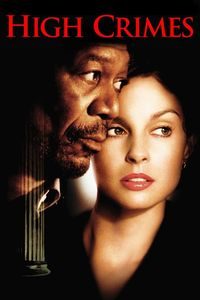
    High Crimes (2002)

    (In theaters, April 2002) I wasn’t a big fan of the original Joseph Finder novel, and as far as movies go, High Crimes is roughly of the same level of quality; strictly middle-of-the-pack, and maybe even a bit lower than that. The biggest problem, of course, is that the “big twist” of the film can be seen hours in advance. It doesn’t help that the central casting (Ashley Judd and Morgan Freeman, both rather good) is instantly reminiscent of other featureless thrillers. Multiple changes to the book’s storyline help to simplify the action, and to speed up the narrative. Whatever can be said about the hum-drum nature of High Crimes, at least it usually moves quickly, and is over almost before you start asking yourself good questions about what’s happening. The final twist isn’t as gloriously insane as in the book, but the film’s coda is far more satisfying than the way the novel ends. For audiences unfamiliar with the source novel, though, High Crimes remains an average stock thriller, nothing worth getting excited about. For times where you positively have to watch a thriller and you haven’t seen that one…

  • 1632, Eric Flynn

    Baen, 2000, 597 pages, C$10.99 mmpb, ISBN 0-671-31972-8

    (read as an e-book, freely available from www.baen.com)

    I have always been, still am and will forever remain a paper-book geek.

    Still, there’s always some room for experimentation. When I got to test a Palm Pilot for the office, I decided to take advantage of the opportunity to do a reality-check on the whole e-book concept. What can I say; I was skeptical. In order to ensure validity between this experiment and my usual reading regimen, I went to a well-known publisher (Baen) and downloaded the freely-available electronic version of one of their books. No sir, no vanity-press e-book amateur drivel for me!

    Thus equipped, I started reading on the tiny 150×150 screen of my Palm Pilot… and it proved to be a reading experience more or less undistinguishable from the paper page thing. Sometimes even better; the Palm Mobipocket Reader software has its faults, but the instant-bookmark setup is a boon, and so is the backlit screen. Not to mention that a Palm Pilot can be, with some slight contortions, be read with only one hand, which is difficult to do with a paperback without breaking the spine of it. Works for me.

    What about the novel itself, then?

    It appears that I was lucky with my selection: Eric Flint’s 1632 is a terrific adventure book, an SF update of those Robinsonade stories I gleefully read throughout my teenage years.

    Flint barely tries to justify his setup: thanks to an alien “time shard”, the West Virginia town of Grantville (mostly populated with hardy coal miners) is transported back to 17th-century Germany, smack in the middle of belligerent empires during the Thirty Years’ War. After a few moments of astonishment, the local chapter of the United Mine Workers of America chooses the side of good old-fashioned American freedom and justice. A machine-gun-powered Second American Revolution gets underway… in the heart of Europe.

    As a non-American, it’s a bit difficult not to smile at such “America Über Alles” stories, but if my American readers can forgive the smirk, the truth is that 1632 remains one of the most enjoyable books I’ve read lately. (Naturally, the fact that I read it “on a break” from the middle of Ayn Rand’s Atlas Shrugged may have helped.) Flint is a gifted novelist, and the cast of characters he assembles for 1632 is well-worth cheering for. Mine workers, teachers, teenagers and farmers unite to show barbarians a lesson, and frankly, our time couldn’t send better representatives to the renaissance than a bunch of blue-collar workers. Once the initial confusion evaporates, Grantville has to figure out how to survive gracefully in a world without modern conveniences. Meanwhile, forces amass to attack the town, romance buds and a government is formed. It’s all quite fascinating, and a lot of fun whenever contemporary gadgets are unleashed on woefully ill-equipped armies. Flint isn’t a stupid writer, and the aura of realism that emanates from the accumulation of details goes a long way towards forgiving the rather easy premise.

    The writing style is brisk and limpid: Flint has an eye for good scenes and sympathetic characters. The only limp passages take place whenever we get away from the Americans for some insipid court intrigue. The rest is all gravy. I found myself reading passages of the book away from my daily bus commute, which is where I had told myself I’d read 1632.

    …and that brings us back to the e-book experience. After 1632, I have no doubt that the concept is viable from the reader’s point of view. I would have enjoyed the novel on paper or on-screen, and so reading it on the Palm Pilot made no difference. I’m not so convinced, however, that the e-book is a viable business model. A few days after finishing 1632, I eventually made my way to the local SF bookstore and bought a copy for my library, an act which may be seen as both damning and praising the whole e-book concept. In the end, I may remain firmly committed to dead-tree bricks but I won’t give out that skeptical frown anymore whenever I hear someone rant about electronic books.

  • Frailty (2001)

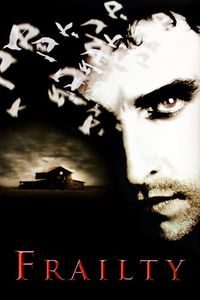
    Frailty (2001)

    (In theaters, April 2002) Sometimes, the problem with cinema is that you have to pad a film in order to make it marketable. There is not much of a commercial outlet for 45-minutes-long films outside of anthology TV shows, and even then it’s a gamble. The sad result is all too often a thinly-plotted film stretched over at least 80 minutes, dressed-up with a lot of “atmosphere”. Frailty is a lot like that; not exactly bad, but so long and deliberate that you’ll have ample opportunity to ask yourself what happens next, which logically leads to the “twist” conclusion well before the end of the movie. Technically, at least, it’s rather good. The acting is fine, especially from the two young boys, and the direction -by co-star Bill Paxton- is serviceable. However thin the story is, it’s neither silly nor stupid which already gives it an advantage over most of the other horror films out there. Interesting, and maybe even more so when played in 2x fast-forward.

  • Death To Smoochy (2002)

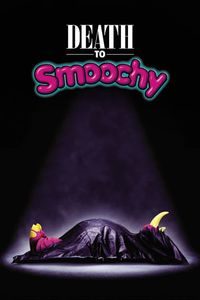
    Death To Smoochy (2002)

    (In theaters, April 2002) There’s a really good reason why dark comedies don’t enjoy much success at the box-office: For every successful Get Shorty or Pulp Fiction, there are dozen of film that don’t understand that violent death with winks don’t necessarily equal big laughs. In Death To Smoochy‘s case, someone forgot that it makes more than a sappy plot with murders and swear words to be funny, and ultimately, there are maybe three laughs in the whole film. Oh, the narrative foundation is promising; corrupt kid shows, the Irish mob, dwarves, a huge purple rhino, ice-skating and a kid’s show host groupie. What makes everything fall apart is the dry and dour tone in which everything is handled: It’s as if an accountant got hold of a Simpsons episode and tailored it to cut all the laughs. What doesn’t help is the sheer irritating nature of nearly everyone in the film, from a pestilent Robin Williams (even though he should get accolades for moving away from his amiable screen presence of late) to a grating brain-damaged ex-boxer. True, Edward Norton, Catherine Keener and New York are as good as ever. But the whole film surrounding them is tedious and annoying. The finale is especially vexing, as it forgets its own nature in favour of an all-sweet finish. A lot of wasted potential for this one…

  • Clockstoppers (2002)

    Clockstoppers (2002)

    (In theaters, April 2002) A line of dialogue in this film essentially states that “it’s a terrible thing to let children play with such wondrous technology”, and that pretty much sums up my own feelings about Clockstoppers. When such cool effects as virtual cameras are used to prop up an average teen science-fiction film, well, there is a tangible impression of waste. It’s not as if it’s a bad film, mind you: Jesse Bradford does a good job as the lead (though he’s not nearly as cool as in Bring It On) and Paula Garcés is fine to look at (though older than her character by nearly a decade, to the delight of post-teen males in the audience). It’s just that the script makes no attempt at being anything more than simply a science-fiction film for teens. Some of the antics are juvenile, the romance feels contrived and artificial, the enemies are too caricatured to be believable and, well, everything seems so intentionally aimed for teens that it loses the rest of the audience. The “logic” of hypertime is shakily established, and then carelessly broken time and time again. (The DJing sequence is particularly painful to watch) Naturally, the special effects are a lot of fun (though you can see most of them in the trailer) and done with a certain amount of skill. Too bad that they serve such a forgettable script.

  • Changing Lanes (2002)

    Changing Lanes (2002)

    (In theaters, April 2002) The trailers will try to sell you a black-versus-white story of a poor family man being unjustly tormented by a rich young lawyer. But that’s not quite the story of Changing Lanes, which proves to be more complex than that. Our young rich lawyer (Ben Affleck, in a rather good role) proves to be the protagonist with the most to learn. Our middle-aged family man (Samuel L. Jackson, also quite good) turns to be a walking ball of barely-repressed anger. Neither is particularly sympathetic, and that proves to be one of the film’s weaknesses. Changing Lanes proves to be curiously tepid, as the quasi-juvenile war of dirty tricks between both rages on for a full day. The awful coincidences propelling the plot forward, the contrived situations manipulated by the screen writer and the all-too-sugary conclusion are also sore points. On the plus side, though, there’s a great confrontation between Affleck and Sidney Poitier, an unconventional battle of characters and an attempt at social reflection on the meaning of civilized behaviour. Unfortunately, the film stumbles as many times as it advances, and the end result is merely so-so.

  • Don’t Make Me Think!: A Common Sense Approach to Web Usability, Steve Krug

    New Riders, 2000, 195 pages, C$52.95 tpb, ISBN 0-7897-2310-7

    Good web design is a blend of science, art and experience that isn’t properly appreciated by most people, including many web designers themselves. Not only do web sites have to look good and use technology effectively, they also have to serve some of the most bug-ridden hardware ever conceived: humans.

    Web design is merely the latest offshoot of usability, a field with a long and illustrious history. Ever since someone has mass-marketed something for others, human/machine interaction, ergonomics, interface conception and pleasant design have found an essential place in industry. The challenge of the web is that now everyone with a text editor and an image-manipulation program has to care about usability. But whereas car manufacturer wouldn’t dream of releasing a car without expensive input from ergonomics specialists, companies often unaccountably entrust their financial future to HTML weenies without an inkling of interest in human factors.

    Web-usability guru Jakob Nielsen has made a name for himself by becoming an expert at pointing out other people’s web boo-boos. His best-known book, Designing Web Usability is well-worth its cover price for any serious webmaster. But he’s not the only guru in cybertown, and that’s why Steve Krug’s Don’t Make Me Think! is definitely worth a look.

    From the deliberately provocative title onward, Krug’s book is refreshingly breezy. Light, funny and to the point, Don’t Make Me Think! is, as the sub-title indicates, a non-nonsense primer. Written by a professional for a wide audience, Think! is neither too technical nor too abstract, striking a balance between all the different parties -and requirements- involved in building a good web site. The top-level view of web design is also a refreshing change after once too many nuts-and-bolts HTML reference guides.

    It’s a short book (under 200 pages!), but don’t be fooled by the size: Every page counts and Krug practices his own precepts (“Happy talk must die”, “Omit -needless- words”, etc.) with ruthless efficiency. Don’t Make me Think! is cleverly illustrated and the book’s layout is exemplary in a technical field where embarrassing mistakes have been committed in the past. (Again, refer to Nielsen’s book) This is a book written and designed in such a way that you’ll rush through an initial read, but re-read again and again in order to refresh your memory.

    Krug’s main bugaboos are worth repeating; Don’t make users think (guide their eyes, guide their minds and eventually they will discover the rest for themselves), be succinct (cut every word that doesn’t deserve to be there), include good navigation (often simply offering multiple ways of getting to what they want) and test-test-test! (Even cheap user testing -explained here- is better than no testing at all)

    There is a lot for everyone in Don’t Make me Think!, from the technician to the CEO. Usability testing won’t be of interest to the techy-in-a-cubicle, but the how-users-think should be sufficient to avoid the worst mistakes. As if to assuage guilt, Krug gently uses real-world examples in how good designs can be improved even further.

    Combining great advice with a compulsively-readable writing style, Don’t Make Me Think! ranks up there with Nielsen’s Designing Web Usability as one of the few dead-paper resources worth owning by pro web designers. Read it once, and then keep it close.

  • The Art & Science of Web Design, Jeffrey Veen

    New Riders, 2001, 259 pages, C$67.95 tpb, ISBN 0-7897-2370-0

    As a technical professional with a deep interest in web design, I was pleased, over the last year, to see the emergence of a new type of how-to books. More focused on the theory and bigger issues of web publishing than hands-on coding concerns, these books exemplify the emerging maturity of the web. Whereas before the field was moving too quickly and hapzardly to allow for any formal (written) literature, the recent stabilization of standards and depth of past case studies is having an impact.

    Jeffrey Veen is one of those old-timers with a lot of experience to share. He’s been working for Wired Digital, involved in web standards work and is generally recognized as pretty hot stuff in web design communities. Now he’s ready to spill the beans and share his experience in The Art & Science of Web Design.

    It’s a heterogeneous book divided in eight sections that can be read more or less independently. Rather than to generalize excessively, I’ll cover the book section by section, and so…

    [1]: Foundations starts the book with a conceptual bang. In less than thirty pages, Veen provides a historical context for the web, as well as a solid theory on why and how to develop the web. This is easily the book’s highlight, with its emphasis on bigger issues rather than nitty-gritty.

    [2]: Interface Consistency is a case study of other sites, and a powerful theoretical argument in favor of navigational standards. This section is complementary to the work of Jakob Nielsen. Again, it’s wonderful stuff if you like to think on a higher plane of design.

    [3]: Structure is another good theoretical primer on how to organize information, how to differentiate between various organizational schemes and why some are more appropriate than others.

    [4]: Behavior starts promisingly enough with a good argument in favor of rule-based design, but slowly peters out with an interesting but incongruous technical demo of a headline-resizing piece of code.

    [5]: Browsers helps to understand the awesome responsibility of web designers in accomodating users through their browsers. A good technical overview, maybe a bit too short.

    [6]: Speed is an argument for clever simplicity, well-needed at a time where designers tend to assume high bandwidth for everyone.

    [7]: Advertising is a short but interesting primer on how to advertise -and to accomodate advertising- on the web.

    [8]: Object-oriented Publishing is somewhat of a let-down as a final chapter, being mostly a case study of one sample web site presumably done by Veen. It lacks the oomph required to send off such a book and also piles up a lot of technicalities at once.

    Overall, though, I was impressed by Veen’s chatty style and overall grasp of the bigger picture of web design. There was a lot in there that I already knew, but reminders always help, and they’re not overly annoying when they’re backed-up by good arguments.

    I wasn’t so fond of the book’s latter half, which seemed out-of-place in a paper-media reference work. If I want Javascript code that will resize my headlines based on their length, I’ll head out to a web site. It doesn’t belong with the theoretical information that should be contained in a book destined to remain on my professional reference shelf. It’s almost as if past the first few chapters, Veen had to use filler in order to satisfy a publishing contract…

    In the same vein, it’s hard to say who’s the target audience for the book. Its scattershot approach make it more efficient as a periodical refresher than a reference source. It’s mixture of theory and coding puts in in reach of both managers and tech weenie; maybe it’ll help both realms understand each other, or maybe it’ll confuse them forever. It’s a worthwhile read, sure, but unfortunately it’s also unsatisfying. A lot of good stuff, improperly tied in together. Maybe it’ll all be fixed in the upgrade…