Reviews

  • Collateral Damage (2002)

    Collateral Damage (2002)

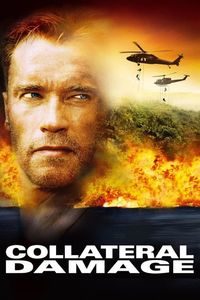
    (In theaters, February 2002) There was a time, during the eighties, when Arnold Schwarzenegger could star in any action feature and draw crowds. Now, either the quality of his films has declined, or the audience has tired of the formula, because since 1995 (Eraser, End Of Days and now Collateral Damage), it doesn’t work quite as well. In fact, given the film’s simplistic pre-11/9/2001 approach to terrorism, it’s hard to see past the stupidity of the ending, the dullness of the setup and the ridiculous nature of the narrative. In another decade it might have been an enjoyable shoot-em-up, but not it border on the offensive. No wonder (North)Americans are so hated elsewhere in the world; if this passes for popular entertainment, we’re due for a serious re-evaluation of our priorities. Now, granted, Schwarzenegger is fine as a protagonist, even though he -as a “fireman”- sets up explosive devices with the skill of a Navy SEAL. (There are also a great pair of supporting performances by John “No one gives a damn about us Canadians” Turturro and John Leguizamo.) The problem lies elsewhere; the film attempts to be complex, but that intention is constantly undermined by silliness, awful coincidences and a pitiful climax. (Doesn’t it strike anyone that it might be a bad idea to cut metal natural-gas pipes with an axe, sparks and all?) In short, it’s too sombre to be fun, and too stupid to be clever. There isn’t much left.

  • The Breakfast Club (1985)

    The Breakfast Club (1985)

    (On TV, February 2002) This renowned teen-anthem movie isn’t terribly compelling when watched a decade too late, but it’s still an intriguing portrait, and a much better teen-film than some of its late-nineties contemporaries. This surprisingly theatrical narrative -limited spatial location, successive soliloquies- follows a group of obvious genre clichés (the princess, the nerd, the jock, the rebel and the antisocial) as they’re stuck together in weekend detention. The featured adult also represents a full blown cliché, that of the ridiculously bitter principal. Don’t be so quick to dismiss this as paint-by-number screenwriting, though; while the film is quick to feature the staple sex, drugs and rock-and-roll, it manages to extract a surprising level of truth and emotion out of stock elements. Oh, when John Hughes was good…

  • The Frank Collection, Jane and Howard Frank

    Paper Tiger, 1999, 112 pages, C$36.95 tpb, ISBN 1-85585-732-4

    I firmly believe that everyone should allow themselves one good expensive obsession. While you’re welcome to pick up heroin addiction if that strikes your fancy, my own Expensive Obsession is SF/Fantasy art books. At my own modest level of income, the decision to drop $35 or (much) more on art books is not inconsequent, hence my own measure of “Expensive”. The important part, though, is that these books please me. They’re gorgeous to look at, they make interesting conversation pieces, they don’t devalue much… in short they’re close to the ideal art investment for someone in my income bracket. In the past ten years, I’ve acquired nearly twenty-five of these books (Whelan, Burns, Eggleton, etc…), and I’m not planning on stopping any time soon.

    My own efforts are very modest, though, compared to Jane and Howard Frank. They collect the artwork itself! As explained in the introduction to The Frank Collection art-book, this husband-and-wife team was able to transform a common fascination for SF&F artwork in an impressive collection, currently exhibited in their gigantic multi-level house. This art-book is a sampler of the wonders of SF&F art, a personal testimony on the joys of art collecting and a tour through one house whose decor belongs in glossy magazines.

    It’s obvious, page after page, how much the Howards love SF&F art. They speak with reverence about famous genre artists and how lucky they were to be able to buy one of their pieces for their collection. They offer anecdotes on how they acquired some paintings, and some all-too-rare commentary on specific artworks. The after-word even discusses their conception of “stewardship” for artwork, in that they don’t own a painting as much as they have custody of it for a while. You can easily see the Franks as modern art patrons, an impression confirmed by learning in the second half of the book that they are now privately commissioning artwork! It’s a fascinating progression, from simple fans to active contributor to the state of the art.

    An average chump like me can only gawk at some of the incredible art that the Franks have assembled together. Covers of books that I own, covers I have seen re-printed in other art-books, classic covers from Golden-Era magazines… the Franks have it all. The only proper response is to be amazed. (You might ask where the money comes from, but there are a few mentions of Frank being an electronics business owner.)

    With this richness of content, it’s only normal to complain that the book is a bit on the thin side. A more serious complaint, however, is that we get only six pictures of the inside of their house. I suppose that security concerns might have deterred them from including more, but really, given that they spend a suitable fraction of their narrative speaking about how good this or that picture looks when place a certain way, well, it would be decent for them to give us a glimpse of the arrangement. After all, we can see more of their artwork reprinted elsewhere… but this is the book about their house and their collection.

    Still, I’m most grateful for The Frank Collection. Not only at the chance for a glimpse at this “showcase of the world’s finest fantastic art”, but also at the mind of two people who are undoubtedly the world’s best collectors of SF&F art. Their enthusiasm is palpable. On some level, they sort of validate by own fixation for the field, even in a diluted form.

    And that’s not even considering the perverse value of being able to point to other people with a far more expensive Expensive Obsession.

  • The Price of Power, James W. Huston

    Avon, 1999, 503 pages, C$9.99 mmpb, ISBN 0-380-73160-6

    I suppose that it was just a matter of time until someone thought about producing a hybrid thriller including elements of both military fiction and courtroom drama. You may pick James W. Huston’s The Price of Power expecting a political thriller (it’s certainly marketed as such), but it proves to be something a bit more diverse than that.

    The story picks up in media res, as terrorists take a family hostage and an admiral is put in handcuffs. I hadn’t read Huston’s previous Balance of Power, so the initial setup seems awfully busy. “Hey, there’s another book’s worth of stuff in there” I thought, before figuring out that there was indeed another book out there. Ironically, some of the previous novel’s material seems a bit forced when you don’t have the context, such as the physical wounds suffered by the protagonist.

    The plot that gradually emerges is a power contest between Congress and the President, one that will be fought through two separate court battles. The President is impeached, a court martial takes place, marines are asked to stand by and terrorists attack.

    It wouldn’t be nearly as enjoyable if it wasn’t for Jim Dillon, our endearingly clever protagonist. He’s the type of smart-alecky hero who would be insufferable in real-life, but infuses this novel with enough interest to see us through. Dillon is a legal hacker of sorts; he manages to find hidden tricks in the U.S. Constitution and exploits them to maximum effect. The Price of Power is a journey of sort for him; he’ll quit his job and go out on a limb to do what he thinks is right, possibly losing everything in the process. Though happenstance, he will find himself prosecuting one of the biggest constitutional cases in the history of the United States. Not only does he come out of his with his honour intact, but he even manages to get the girl in the process!

    Dillon is one of the reasons why, in the end, the legal manoeuvrings in The Price of Power end up being much more interesting than the actual military firefights. All the SEALs fighting for America in this novel are as professional as we’d like them to be, but that doesn’t leave a lot of place for drama. Dillon, on the other hand, is a young man clearly out of his element. While the SEALs are pretty much going to win no matter what when faced with disorganized terrorist forces, Dillon can only depend on his cleverness and legal skills to find the quick trick to save his case. His adversaries are far more dangerous… and then there’s something about courtrooms that just compels dramatic interest. Whatever the reason, The Price of Power finds its groove in the legal suspense, not the military action. Some of the latter could have been cut without undue harm to the novel.

    It helps considerably that Huston’s writing is clear and to the point. What doesn’t work as well is part of his overall premise. Sure, the President of the United States has the responsibility to protect the citizens of his country against all dangers, but does that mean he can be impeached if he refuses to use military force? It sounds a lot like right-wing rhetoric and probably is, but Huston does only a fair job at exploring these issues. Some of it simply sounds silly: “Are you a pacifist, Mr. President?”

    No matter; I found myself unexpectedly captivated by Jim Dillon and The Price of Power, reading a bit too late in the night just to see what would happen next. While it would be a bit much to claim that The Price of Power is anything more than simply a good thriller, it does deliver the goods splendidly. It wouldn’t do to ask much more than that.

    [November 2002: Balance of Power is indeed the setup. Though it’s not mandatory reading, it does add a lot to the story and proves to be a quick enjoyable read, even to those who have read the second volume. Ironically enough, the flaws and strength of the first volume are almost identical to its sequel: Great protagonist, excellent legal hacking, but boy do things get boring whenever we’re dealing with the military side of things.]

  • Gideon, Russell Andrews (Peter Gethers & David Handler)

    Ballantine, 1999, 466 pages, C$9.99 mmpb, ISBN 0-345-43478-1

    By now, the beginning of the 21st century, the formula of the typical thriller is well-known and highly unlikely to change: One lone man gradually discovers a terrible secret for which unknown forces are prepared to kill. The hero is cut off from his usual sources of support, often framed for crimes he didn’t commit, sent in hiding where he will discover unlikely allies and eventually manages to blow open the lid of a grandiose conspiracy. It’s a formula that has been proved over and oven again. When it’s well-done, it can hold the attention of even the most jaded writers.

    Such is the case with Gideon, a standard thriller that succeeds on the strength of a pair of sympathetic characters, some unexpected twists, a semi-realistic conclusion and solid writing.

    The narrative begins with pure wish-fulfillment for many struggling authors: Protagonist Carl Granville, a novice novelist, is secretively commissioned by a high-powered editor to write a romanced political biography. What he finds is shocking, a tale of infanticide that seems to implicate a high-ranking member of the American government. For Carl, it’s a good job. But it soon turns ugly as his editor and his girlfriend are both killed. His attempts to track down the publisher of his phantom book are unsuccessful. Pretty soon, he’s framed for both murders and sent on the run in an effort to find out the truth.

    There isn’t much there that’ new or innovative, but the devil is in the details, and most of Gideon’s appeal rests on the actual nuts-and-bolts of the novel. Carl is fully realized as a completely sympathetic character. Unlike so many thriller heroes who “just happen” to have SEAL training, Carl has believable strength and endearing weaknesses. He doesn’t act too much like an idiot (a typical flaw in thriller protagonists) and is adequately bewildered whenever strange things happen to him. In short, he’s a perfect stand-in for most readers.

    There are a few interesting twists, of course, such as the early death of a few supporting characters we might have expected to stick around longer. For some reason, the authors manage to inject some energy in well-known stock situations. The protagonist’s quest for truth often looks like a series of audacious long-shots, but he manages to overcome all obstacles with cleverness and luck. One particularly tense scene in a Mississippi-area forest had me wondering “How is he ever going to get out of that one?”

    Alas, the villains aren’t nearly as good: Oh, they’re menacing all right—they kill with relish and expertise. But in the end, they’re just the usual evil rich businessmen, sadistic henchmen and power-hungry politicians. In fact, the most memorable thing about any of the villains is the ridiculously contrived identity of one of them, the type of thing that makes one sigh in exasperation at the unnecessary twist.

    One thing that “Andrews” does manage to handle quite well is the resolution of the intrigue. Most conspiracy thrillers would like you believe that going to the media with irrefutable proof, killing the leader or exacting a taped confession would stop everything right then and there. Gideon is a bit more realistic, with a carefully orchestrated campaign to stop everything, counter-offers and stoic villains. That part of the book rang truer than most thrillers.

    In the end, Gideon doesn’t aspire at being much more than good beach reading but it does so with an impressive mastery of stock elements. Aspiring readers should take note of how careful execution and a sympathetic protagonist can satisfy despite a conventional dramatic arc. As for the rest of us readers, well, there are tons of worse books out there… standard thriller formula or not.

  • Timeline, Michael Crichton

    Knopf, 1999, 450 pages, C$37.95 hc, ISBN 0-679-44481-5

    After a few years as an amateur book reviewer, I have come to approach any new Crichton book with something approaching masochistic glee. He’s a complex author with complex recurring faults. His novels have rich strengths, rich weaknesses and equally rich thematic characteristics. That makes him endearing to any critical reader usually stuck with bland material. Show me a book reviewer who doesn’t want to discuss Crichton’s hypocritical love/hate relationship with technology, and I’ll show you a book reviewer who’s lost all joy in his job.

    His latest opus, Timeline, is somewhat of a slight departure for him. In some ways, it’s a return to more explicit science-fiction after his usual thriller / technothriller mode. After a lengthy hundred-page prologue, (in which far too many useless characters are introduced) our protagonists step in a time machine and go back to the fourteenth century in quest of their disappeared mentor. Things go badly with a ridiculous speed and soon, it looks as if our bunch of intrepid explorers is stuck in the late dark ages.

    Anyone thinking “gee, that sounds like an excuse for a medieval thriller” is right. By throwing our wholesome American characters in a strange environment, Crichton is not only using one of SF’s standard devices, but also giving more meaning than an environment used without comparative markers. The protagonists stand in for the readers in pointing out the most remarkable differences between the two time periods. And it is a very dangerous time, with enough opportunities for senseless disembowelment to scare off even the most bloodthirsty among us.

    It works, like most Crichton novels usually do. The writing style is clean and uncluttered, with enough meaningless techno-babble to convince the majority of readers. The narrative has occasional lengthy moments, but Crichton packs most of the book with armoured battles, nick-of-time escapes, hidden passageways, surprising betrayals and all that good stuff. It’s a good read. Crichton, as usual, loves to show us how smart he is: the book can easily stand-in as a primer on current medieval research.

    The problem is that as soon as you start thinking about the scientific wrapper of the book, things stop making sense. Crichton spends a lot of time throwing up sand in the air explaining why it’s not possible to change the past, but most of his arguments essentially go back to wishful thinking. It makes even less sense, of course when the characters actually do end up changing history, even despite the “parallel universe” yadda-yadda.

    Experienced SF fans will go nuts pointing out the areas where Crichton clearly means much more than he realizes. He will, for instance, “scan” everyone in a Really Big Computer, but fail to recognize that this way, a backup of the person is created. He will mumble something about relying on other universes to do tricks they can’t comprehend, but fail to recognize that there’s an every bigger story there. He doesn’t follow through his most interesting speculations, that’s simply frustrating. (Take the opening chapter, for instance; the way in which the scientist ends up in the desert is never explained.) That’s when he doesn’t simply set up blindingly obvious setups, during which any halfway attentive reader can feel ahead of the curve.

    One thing he does do well is to create a certain atmosphere of dread. His techno-thriller background makes him unusually adept at considering technology like a big box of dangers. This attitude makes his setup all the more interesting, as it’s a virtual certainty that something awful will certainly go wrong. Compare and contrast with the usual happy-go-lucky scientific endeavours in hard-SF for an interesting subject of discussion.

    It’s details like this that still compel me to read Crichton’s work. Notwithstanding the occasional stinker (The Lost World), most of his books are undeniably compelling page-turners. But when he screws up, he usually does so in an interesting fashion. He might be one of the most mechanical and hypocritical writer in the best-selling business today (witness his anti-technological, anti-corporate discourse, which feels more and more carefully calculated for popular success than in any way heartfelt), but he’s rarely dull. And that, let me tell you, has a quality of its own when you slog through a dozen novels a month.

  • Lifeline, Kevin J. Anderson & Doug Beason

    Bantam Spectra, 1990, 460 pages, C$5.95 mmpb, ISBN 0-553-28787-7

    Popular fiction often depends on a common, unspoken set of assumptions. Most readers never notice them until they’re stripped away. While Anderson and Beason’s Lifeline is far from being an atypical piece of hard-SF, prepare to be surprised at some of the early plot twists. This is a novel that doesn’t start by playing nice.

    One of those expectations is that heroes should behave, well, heroically. A second should be that “our side” (ie; usually Americans) should also be virtuous. Yet another would be that everything means something; audacious stunts should pay off.

    In the opening pages of Lifeline, the hammer falls repeatedly.

    The narrative starts with a global thermonuclear war. But don’t worry; this will be the least of our problems. Indeed, the novel merely uses the death of a few hundred million people as an excuse to set up a survival story in Earth orbit; cut off from the home planet for the foreseeable future, the four human settlements in space have to co-operate in order to survive. Each has something that the others need. Are they going to be able to settle their differences in time?

    It won’t be a simple endeavour. Aboard the Corporate American station Orbitech, one manager panics, grabs his sick daughter and hijacks a space shuttle. His destination? The Moonbase—which is incidentally headed by a weak director more interested in science than administration. The manager’s attempt fails; the shuttle crashes, destroying it and killing the pilot. Oh, and if that wasn’t enough of a guilt trip, his daughter is also killed in the crash.

    The unpleasantness doesn’t stop there, as the Soviet Station Kibalchich sets in motion a doomsday weapon plan. Aboard the Philippine Aguinaldo station, there’s enough biotechnology to feed the two other stations, if only some politicians didn’t feel it was pay-back time for decades of superpower oppression. (Oh, and a technician is killed when one of the protagonist makes a stupid mistake. Lifeline is an equal-opportunity narrative guilt machine.)

    Naturally, it gets better. Faced with starvation, Orbitech’s deputy director spaces a hundred of the most inefficient people. Later, a mob of survivors knifes the director of the station in the cafeteria. Don’t worry; there’s a public execution later on.

    All of this happens in the first hundred pages of the book, which sets up quite a tone for the rest of the book. It lets up somewhat (another accidental death seemingly caused by one protagonist is explained to be no fault of his own) but the uneasy feeling remains through the whole book.

    Which is a good thing, because otherwise there wouldn’t be much that’s memorable in Lifeline. It’s competent Hard-SF, with sophisticated technical details, adequate characters and average plotting. True to the ethos of Hard-SF, it basically puts the protagonist against a huge problem, then makes it worse until they find the mixture of technological gadgetry and audacious recklessness that will make everything all right.

    On a geopolitical level -never the strength of Hard-SF writers, but I digress-, the presence of the Philippines in space isn’t particularly convincing, even as a token of bribery from the Americans to a vacillating ally. You’d think that space would be at such a premium, and at such value, that America would rather give up a few of the Marshall Islands before handing over a space station.

    Bah, never mind that; Lifeline is a good fast read, but it’s nothing special nor particularly original. That is, if you discount the general nastiness of the first third of the book, where a nuclear war seems to be the least disturbing element of the story.

    First published in 1990, chances are good that Lifeline is now comfortably out of print. It’s not particularly worth hunting down, but it can hit the spot if ever you crave hard-SF with a slightly bitter edge.
  • Waking Life (2001)

    Waking Life (2001)

    (In theaters, January 2002) In words, it sounds like an interesting concept; a film shot in digital video is then re-worked (painted-over, essentially) by artists so that it becomes an animated film. It works even better when considering the subject matter of the film, a series of loosely-connected (or totally-disconnected) vignettes/musings on the nature of reality, dreams and life. It could have been good. But the way it’s presented on-screen, it’s just a pretentious mess. Everything I needed to know about Waking Life, I learned from reading cheap science-fiction. (Including Philip K. Dick, who’s explicitly referenced at the end of the film.) While I could tolerate a lot of mid-brow philosophy, what I can’t stand is oodles of cheap nauseating animation. Here, the backgrounds float in all directions, the perspectives don’t make any sense and what’s worse, precious little is made of the possibilities of animation; most of the film is a series of talking-heads. And not very pretty talking-heads. I’ve seen better rotoscoping in cheap Japanese animation. The animation is Waking Life is fast, cheap and out of reasonable control. Combine this to the bla-bla-blah nature of the subject, and the combination isn’t pretty. I briefly dozed off during the film and scarcely noticed any difference, which is pretty ironic.

  • The Straight Story (1999)

    The Straight Story (1999)

    (In theaters, January 2002) There are hundreds of jokes to make about an old guy driving a lawnmower across the country, but don’t worry; you will have time to tell them all during the interminable length of The Straight Story, the most conventional -and most lifeless- film ever directed by weirdmaster David Lynch. Here, however, the tepid pace of the film is announced in the very first scene and rarely lets up. You’ll be screaming “No! It can’t be this dull!” in pure futility, given that it is this dull. There’s a pretty good 80-minute film in these 130 minutes, but you’ll have to be severely narcoleptic to find any enjoyment in The Straight Story as it is. To be fair, Richard Farnsworth makes a sympathetic protagonist and the sheer odd nature of his endeavour is admirable. But you can only see so many unrelated scenes before screaming “enough!” and this film reaches that limit only thirty minutes in. I can’t wait to see a non-director’s cut in which the fat is trimmed away. In the meantime, I’ll stay home.

  • Mulholland Dr. (2001)

    Mulholland Dr. (2001)

    (In theaters, January 2002) Repeat after me; the emperor has no clothes. It’s not because it’s hard to understand that it’s smart. Heck, it’s not because it’s smart that it’s necessarily hard to understand; in this case, it’s because it’s incoherent that it’s difficult to understand. Art is partly about presenting complex emotions to a wide audience, and that’s a test that Mulholland Dr. fails miserably. The first half of the film promises an oddly eerie thriller with at least three different threads. But the second half essentially gives up on trying to piece any of this together and instead giggles madly as it throws nonsense on the screen. Too bad; for all his substantial faults, director David Lynch is adept at presenting strong individual scenes and coaxing good performances out of his actors. It’s too bad that all of it resolves to nonsense or at the very least a disjointed semblance of an oniric “explanation”. It doesn’t help that the film has considerable lengths. By the end, maybe you’ll be like me and my sister, whispering at the screen “We don’t care, David Lynch.” “You can’t make us care, David Lynch.” “Not even your gratuitous naked lesbian sex scene can make us care, David Lynch.”

  • Her Name, Titanic, Charles Pellegrino

    Avon, 1988 (1990 reprint), 283 pages, C$8.50 mmpb, ISBN 0-380-70892-2

    Regular readers of these reviews will certainly remember my overall affection for the work of Charles Pellegrino. Here’s one author who, in my humble opinion, has rarely done wrong. (Notwithstanding his curiously inept Star Trek novel) Over the past few years, I have read one Pellegrino book after another, always managing to avoid his best-known work, Her Name, Titanic.

    After reading the “sequel”, Ghosts of the Titanic, this seemed like an increasingly ridiculous situation. Fortunately, I was able to secure a copy of his 1988 bestseller and dug in, knowing that I’d get my time’s worth of pure enjoyment.

    Once again, I wasn’t disappointed. Her Name, Titanic is fully the equal of Pellegrino’s other non-fiction books. Ghosts of the Titanic had a scattershot approach to the subject, leading me to speculate a more strictly chronological run-through of the voyage for the first volume. Fortunately, this isn’t so.

    In fact, if you want an overview of the events surrounding the Titanic, you’d be better off watching the film. (Though the graphic inset between pages 92-93 will do just fine) Her Name, Titanic is as much about the 1985 re-discovery of the sunken relic as it is about the 1912 catastrophe. We’ll spend as much time with Robert Ballard and the Argo as with the ill-fated passengers of the ocean liner.

    Perhaps more interestingly, we’ll spend all of this time with Charles Pellegrino himself. Her Name, Titanic is the centerpiece of his literary output; all of his other books refer to it in one way or another. (This is unfair actually; all of Pellegrino’s books refer to each other in what are often very, very twisted ways.) His books are unlike any others in that they present a glimpse in the scientific strangeness that’s just lurking beneath the surface of our humdrum lives. History isn’t something that happens in the past for Pellegrino; he’ll uncover jaw-dropping links between seemingly disparate events and present them with a passion that will leave you breathless. His writing style is very deliberately dramatic, though never without a deeply respectful quality. You might not be moved to tears by Her Name, Titanic, but don’t be surprised to find a few lumps in your throat.

    The tangents explored by Pellegrino as almost as fascinating as the events themselves. Pellegrino is a man of eclectic interests, and he effortlessly links the Titanic to World War One, to the Challenger Shuttle disaster, to the life of Bob Ballard, to Apollo 11, to obsession. He admits in the introduction that he’s become obsessed with the ship, and this is, perhaps most of all, a book about this obsession. (Indeed, one of the most memorable passages of the book is a conversation with members of the Alvin crew who don’t share this obsession; “It was a job and we did it the best we could.” [P.221]

    But don’t worry; by the end of the book, you’ll share Pellegrino’s fascination; I certainly did. His effective writing style, love for oddball details, ability to effectively present important information and keenness of mind will have you reading well after the point when you should reasonably stop. Heavens help you if you have the sequel nearby after you’re done with Her Name, Titanic, because you won’t be able to stop. Any Titanic buff pretty much has to read this one, and even casual reader will want to grab this book. It’s powerful writing, and memorable reading.

  • Gosford Park (2001)

    Gosford Park (2001)

    (In theaters, January 2002) From the plot description (In 1932 England, a rich industrialist is killed during a weekend-long hunting party), you might come to expect a comfortable murder mystery à la Agatha Christie. Robert Altman films are rarely about plot, however, and this one is quick to redirect our attention toward the real underpinning of these murder mysteries and in doing so illuminates some of the hidden engines of the genre. Gosford Park shows us, in detail, the divisions between servants and masters, and the small-army logistics of maintaining a small manor. Well before any crime is committed, we suddenly realise that the hoariest cliché of the genre, “the butler did it!”, is nothing short of a panicked cry of social despair from the aristocracy; not only are the commoners getting uppity, but they’re also killing the rich! Altman piles detail upon detail, with a Hollywood film producer, a bumbling police inspector, a clever servant girl, an impostor in both worlds, hints of scandals and lots more. It adds up to a long and quiet film, but a curiously entertaining one, with good performances all around. (Watch Clive Owen, and try not to imagine him as James Bond.) It’s much more than a murder mystery, especially given that the mystery isn’t that hard to solve.

  • Girl, Interrupted (1999)

    Girl, Interrupted (1999)

    (On DVD, January 2002) My initial sustained reaction to this film was to cackle “Calling Nurse Ratchet!” a lot and generally make sarcastic comments at the screen as memories of just about every asylum movie of the past thirty years came flooding back. That’s unfortunate, because Girl, Interrupted actually does end up being slightly interesting two-third of the way through, as the characters end up transcending their archetypes and come on their own. The ending is actually quite effective, as all the dull setup ends up truly paying off. Winona Rider is lifeless in the narrative role, but Brittany Murphy and Angelina Jolie both have flashier roles. It’s not a transcendent film (the caricature of the said medical establishment is a bit too rough, for starters), but chances are that it will eventually win your interest. The DVD includes no special features to speak of.

  • Gandhi (1982)

    Gandhi (1982)

    (On DVD, January 2002) Now this is an epic film. There’s a crowd shot early in the movie that reminds us of a time where every dot on the screen was an actual person, and not merely a few bits on a computer. Not only are the pictures spectacular, but the scope of the story is impressive as well; Gandhi follows the life of the Indian revolutionary through several decades, a campaign of independence, the creation of two countries and a near-war. (Not to mention World War 2) And yet, through it all, it never loses track of the very individual man at the middle of it all. It’s an “approved” biography, which means that there is preciously little that’s not saintly about Gandhi. (But then again, maybe he was saintly). It’s a long film, but not overly so; it moves along at a decent clip, and features -after all- a lot of material. The DVD features a mind-boggling three language tracks and subtitles in seven (!) languages, in addition to a fascinating interview with Ben Kingsley and some revealing period footage of the real Gandhi.

  • Le Fabuleux destin d’Amélie Poulain [Amélie From Montmartre] (2001)

    Le Fabuleux destin d’Amélie Poulain [Amélie From Montmartre] (2001)

    (In theaters, January 2002) Who can believe that the director of Alien Resurrection would follow it up with a whimsical romantic comedy? You pretty much have to see it to believe it, and that’s doubly true for Amelie, a film whose appeal can hardly be stated in mere words. The first fifteen minutes are, sylistically, a blend of Fight Club and Run Lola Run—high praise indeed! It’s a story about nothing and everything, or more specifically about the gradual awakening of a very special girl to the world at large; how she relates to it and how she decides to act on it. Alas, the film then becomes yet another sappy romantic comedy, a good one but a sappy romantic comedy nonetheless, complete with a happy-ever-after shot that seems somewhat of a let-down in the context of the overall piece. The confused theme of the film is also slightly annoying, as if the film flits from one idea to another without central resolution or meaning. But that’s being overly harsh on a completely delightful film whose nature is perfectly represented by the astonishing direction of Jean-Pierre Jeunet. You may see it a modern urban fantasy if you wish, especially with the variety of slightly-fantastical effects used to tell the story. A good date movie, especially if yours happen to love dissecting a film’s thematic core.

    (Second viewing, On DVD, June 2002) I think that I like this film even more the second time around. Now that’s I’m not expecting an ending more original than the abrupt (and unusually sappy) and-they-lived-happily-ever-after, now that I see the fable quality of the whole tale, now that I’m not too bothered by the inconsistent character traits, well… Amelie flows better. The two-disks French R1 DVD release is filled with goodies, the best being a wonderful French-language commentary with director Jean-Pierre Jeunet. Equally concerned by technical details, story points, actors’ performances and filmmaking anecdotes, the commentary is a joy to watch, especially once you realize that Jeunet is as big a DVD geek as the most obsessive of us; he knows what viewers want to hear about, and he delivers. It helps that the DVD is being released long enough after the film theater run that there is some perspective on the critical reaction to the movie. Other DVD highlights include a funny making-of segment and some oddball features.