Reviews

  • Spy Game (2001)

    Spy Game (2001)

    (In theaters, December 2001) With the end of the Cold War, it had been a while since the last espionage film, and so Spy Game arrives onscreen with perhaps a touch of nostalgia. Taking place over a period of twenty-odd years (from 1973 to 1991, which is when the movie is set), Spy Game tries to focus on the nitty-gritty of “real” spycraft while adding a touch of excitement. The film works best when grounded in realism; by the time the expected spy romance pops up and the resident spymaster can bankroll a special operation deep behind enemy lines, well, the real world is forgotten. It’s directed in a somewhat inconsistent fashion, with color schemes clearly branding each of the story’s four eras. The recruitment section is the most interesting, but it doesn’t last long. At least Brad Pitt and Robert Redford get the chance to exhibit why there’s more to them than just being pretty-boy types. Spy Game manages to be a good spy thriller without being much more than that. There are a few trade tricks and sequences, but the episodic structure of the film conspires a bit against the pacing and the end impression isn’t as dynamic as one could wish. Still, a solid film.

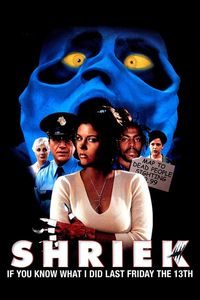
  • Shriek If You Know What I Did Last Friday the Thirteenth (2000)

    Shriek If You Know What I Did Last Friday the Thirteenth (2000)

    (On VHS, December 2001) I have a soft spot for silly satiric comedies, and Shriek… definitely hits the right notes by lampooning the Scream-derivatives. Sure, it’s not that funny, nor is it very clever. A lot of the jokes are just duds, such as the “rules of a parody”. And yet, it’s just silly enough that I hopped up on the ride and enjoyed myself. It’s also somewhat good-natured, which works very well: Even if it’s not as hysterically funny or inspired as parts of the similar-themed Scary Movie, it’s more solid overall, and would definitely get my recommendation over the theatrically-released Wayans film. Favorite moments include incidental background murders in school, a pop-up video chase and five flashbacks over “what they did last summer”. No nudity, alas, which is sorely needed in these films. (The lead actress isn’t particularly attractive either, but never mind…) It’s naturally not in the same league as the classic Airplane! or Top Secret!, but if you saw -and liked- stuff like The Silence Of The Hams, rest assured that Shriek… is going to make you laugh for a while. Plus, hey, it’s better than most of the awful Leslie Neilsen spoofs.

  • Rogue Trader (1999)

    Rogue Trader (1999)

    (On VHS, December 2001) Ewan McGregor is quite good playing the life story of Nick Leeson, an ambitious trader who eventually managed to accumulate a billion’s worth of debt and bankrupt a venerable financial institution. The film does wonders to explain the complexities of financial trading in an entertaining fashion. There is a notable lull in the pacing about midway through, as the first crisis is past and the second one is building. Naturally, this is a biographical portrait based on Leeson’s book, so expect a certain degree of bias for poor honest Nick. Directing, photography and dialogue are strictly serviceable. Not a bad movie at all, especially given the arcane subject matter.

  • Harry Potter and the Philosopher’s Stone, J.K. Rowling

    Raincoast, 1997 (2001 reprint), 223 pages, C$9.95 tpb, ISBN 1-55192-398-X

    “Well, I’m surprised to see that you’ve condescended to read Harry Potter” said my uncle’s girlfriend when she saw me with the first volume in hand.

    The only really surprising thing is how long it’s taken me to actually read the darn thing.

    I’ve always been deeply suspicious of the popular intellectual snobbery that states that “if it’s popular, it can’t be good”. Without citing too many examples, there are times where something is famous because it’s good. It might not be better than your favorite obscure painting/movie/author, but that in itself isn’t a reason to criticize anything wildly fashionable.

    I first wanted to read Harry Potter a long time ago. I downloaded the pirated electronic versions of the whole series late in 2000, only to realize that I just don’t read novels on screen; my reader’s reflexes are still hard-wired to paper, ink and glue. My sister bought and read the first two volumes. Ages passed. A movie got made. I borrowed the first volume from my sister, then consciously put it away and enjoyed the movie on its own terms. A few more weeks passed and then I decided to celebrate the end of 2001 with a good fluffy read.

    I enjoyed almost every page of it.

    Before gushing, though, allow me to say that there are two criticisms I can heap upon J.K. Rowling and the first Harry Potter novel.

    First, how deliberate it all seems. Let’s see: to ensnare kids, what better than a misunderstood, under-appreciated hero who really has exceptional magical powers and whose parents are really powerful magicians? You couldn’t design a better hook on purpose, much like Orson Scott Card’s Ender’s Game seemed mathematically designed to hook young teenagers with pretty much the same levers.

    Second; how conventional it all is. Tales of magical academies and of young magicians have been written before. Some of them quite good. Almost every gadget used in The Philosopher’s Stone has been invented elsewhere, used elsewhere and seen elsewhere. There isn’t a lot of new, inventive fantasy material in Harry Potter. (So far.)

    But guess what? None of these two objections matter very much to the base reader that I am. What is far more important is how clearly Rowling writes, how well she builds her characters and how many little flourishes she manages to pack on every page of her novel.

    I attended the World Fantasy Convention in early November 2001, and the slightly dismissive tone in which Harry Potter was discussed struck me as unfair. While elements of the Pottermania leave me nonplussed (the fourth volume shouldn’t have won the Hugo, for instance), a lot of it struck me as simple sour grapes at someone outside the genre reaping all the attention and the money.

    The first volume of the series, whatever the objections of the fantasy litterati are, is a wonderful little book that didn’t feel at all like a kid’s novel. I’ve always been a sucker for the “academy” type of novel, from Starship Troopers to, say, Gravity Dreams, and The Philosopher’s Stone ranks among the best of them. It takes conventional elements of magical training and cleverly stuffs them in the British educational system. Simple and obvious, but not so obvious that it’s cliché. And, like it or not, Rowling’s produced a fantasy novel that is immeasurably more enjoyable than at least 90% of what’s published in “adult” fantasy today.

    While I’m not completely bowled over, I still feel that Harry Potter and the Philosopher’s Stone is a great little book that will make you -even you!- fall in love with reading all over again. Embrace Pottermania. In this case, what’s popular is what’s good.

    (A few words about the movie vs the book: Amazing fidelity, though the book “feels” more adequately paced. The novel also provides more details on Harry’s family life, Hagrid’s past and one or two extra challenges before the end, not to mention a second Quiddich game.)

  • Riding In Cars With Boys (2001)

    Riding In Cars With Boys (2001)

    (In theaters, December 2001) This simply isn’t my type of film. I have no interest whatsoever in an oh-so-courageous biography of a woman who screwed up her life by having a baby during her teenage years. I don’t usually see these movies and normally wouldn’t have seen this one. Should I feel comfortable giving bad marks to this film if it’s not what I’d watch? Well, when it’s as boring as Riding In Cars With Boys (which cars? which boys?), it’s hard to feel guilty doing so. The characters aren’t sympathetic, James Woods is wasted, the structure lacks dramatic intensity and everyone is miserable throughout the film, including me. In fact, the best attribute of Riding In Cars With Boys is to act as a strong warning; Most Americans aren’t smart. Most Americans aren’t interesting. Most Americans don’t deserve our attention. This is how most people live, and it sucks, and I see enough of it in my own life to desperately avoid it in the theater.

  • Philadelphia Experiment II (1993)

    Philadelphia Experiment II (1993)

    (On VHS, December 2001) I borrowed this video by mistake as I thought I was actually renting the original The Philadelphia Experiment. My mistake, in more ways than one; this straight-to-video sequel is just boring. Not much happens, and whatever happens doesn’t make much sense. It’s not an awful concept (Nazis win WW2 when a nuclear-armed Stealth fighter is sent back in time and falls in their hands), and fans of alternate histories will be pleased at some of the details, but the rest is of such illogic (yeah, let’s experiment on a nuclear-armed plane!) that it’s hard to take seriously. Marjean Holden is cute, but she hasn’t done much since. Not bad as much as it’s featureless, The Philadelphia Experiment will do nothing to change your mind about straight-to-video releases.

  • Permanent Midnight (1998)

    Permanent Midnight (1998)

    (On VHS, December 2001) It’s not a very nice to say that someone hasn’t suffered enough to impress us. After watching this fictionalized biography of writer Jerry Stahl’s drug addiction, though, it’s not as if we feel too sorry for the guy. He was a Hollywood writer, he had a beautiful wife, he was good at his job, he had a lot of fun… but, oh, he did drugs. Oooh. The film mostly plays as a dark comedy, not as a heart-wrenching portrait of an addict. (Let’s throw ourselves at the windows! Whee!) Ben Stiller is fine in the lead role, as usual. (Though when Maria Bello announces that she’s leaving for Alaska to manage a bar, I couldn’t resist shouting at the screen “…and I’ll call it Coyote Ugly!”) Not a bad movie -it will hold your interest-, but not a spectacular one either. The epilogue (in which the narrator criticizes those who trivialize his plight) is probably apt for this review.

  • Osmosis Jones (2001)

    Osmosis Jones (2001)

    (On DVD, December 2001) A failed fusion between two very different films. The first one is a relatively clever animated comedy take-off on the buddy-cop concept… in the human body. A young impulsive white cell cop is teamed up with a straight by-the-book cough medicine colleague and, well, we’ve seen the rest, except not as antibodies hunting for a dangerous virus. The fast pacing features plenty of sight-gags to keep up our interest even though it’s all familiar stuff. The second film of Osmosis Jones, however, is an awful gross-out live-action comedy that is not only audience-hostile, but also astonishingly dull. Bill Murray turns in what may very well be his worst performance ever and to put it simply, it doesn’t work. Whenever the live-action segments pop up, we just wish to go back inside Frank’s body. Unfortunately, Osmosis Jones sinks under the weight of its problems, drowning its good animated segments. Too bad. The DVD spends way too much time, money and attention on a poor movie, though it’s nice of them to show us as much Brandy Norwood as they can.

  • Ocean’s Eleven (2001)

    Ocean’s Eleven (2001)

    (In theaters, December 2001) It should have been the coolest film of the year. Stephen Soderbergh, George Clooney, Julia Roberts, Brad Pitt, Las Vegas… All the elements were there for extra-pure fun. Alas, the end movie ends up “just” being fun, and not much more. Oh, it’s entertaining enough: Soderbergh can’t make a bad film, and Ocean’s Eleven is one of the most slickly entertaining adult films of the year. George Clooney is ferociously in command, outshining everyone else. Technically, this is obviously a Soderbergh film: The colors are vivid, there is a touch too much grain and the editing is very, very competent. (Almost everyone who’s seen the original also agrees that the remake is better.) But somehow, it never reaches an extra level, almost as if despite everyone’s intentions, something failed to gel. I could point out various mistakes (such as the EMP effect only “temporarily” disabling the power grid.), lengths (such as the poker game) or weaknesses (the bland bit players, for instance), but that would send an overly harsh message. Suffice to say that Ocean’s Eleven will play well, once, but it’s doubtful that people will want to watch this one over and over again.

  • One Point Safe, Andrew & Leslie Cockburn

    Anchor, 1997, 288 pages, C$32.95 hc, ISBN 0-385-48560-3

    In 1997, then brand-new studio Dreamworks released its first film, a techno-thriller called THE PEACEMAKER. It starred Nicole Kidman and George Clooney and dealt with their efforts to retrieve a few nuclear bombs stolen by a terrorist. Unfortunately, the film received a mixed critical reception and quickly sank at the box-office, pulling in only $41 million US and quickly fading in memories.

    Too bad; I enjoyed the film a lot, finding it to be one of the only good techno-thriller of the late nineties. It seemed reasonably authentic and adequately detailed; the film is still the only one I recall in which the protagonists realistically disarmed a nuclear weapon. Small surprise to learn -later- that it was based on Andrew and Leslie Cockburn’s One Point Safe, a non-fiction book about the nuclear dangers to come out of the ex-USSR. Both writers were even credited as the co-producers of the movie and penned the original story.

    What you can’t know until you read the source book is how the reality is presented as being far more chilling that the fiction.

    One Point Safe begins with a bang, as it describes how a team of German terrorists tried to steal a tactical nuclear weapon from an American base in 1977. Their assault was thwarted by the failure of their diversion, but as the authors write, “No longer was it a question ‘if’ terrorists wanted to steal a nuclear weapon.” [P.6]

    It gets worse. Much worse, as the Cockburns delve deeper in the wreckage of the ex-Soviet Union. In a few chapters, they describe the awful conditions to which the once-proud Soviet military has been reduced to. Officers in charge of nuclear weapons now starving, multi-megaton storage facilities rusting out of neglect. Plutonium depots left un-garded. The problem with the collapse of an empire is that after the collapse, all the nasty stuff is still there even if the people aren’t.

    The crux of One Point Safe is to show the various nuclear dangers in this post-cold-war era. The guards are gone, corrupt or criminal, but their deadly possessions remain. So the Cockburns describe actual cases of radioactive material theft, the lax security measures in Russian weapons depots, the new ultra-capitalistic Russians trying to make money off the Soviet arsenal and how nuclear non-proliferation agreements aren’t worth much when transgressions mean eating again.

    Things aren’t necessarily better in the United States. The Cockburns take an almost sadistic delight in describing a botched anti-terrorism exercise gone hilariously wrong. “Mirage Gold” becomes a parade of mistakes, and latter exercises designed to intercept nuclear smuggling aren’t any more successful. Those mistakes are compensated, somewhat, by a few intelligence coups, such as the American purchase of important quantities of plutonium from Russia. Once such operation, codenamed Sapphire, is a marvel of logistics meticulously described by the Cockburns.

    Still, as the book advances, you can’t help but feel increasingly spooked by the missing “backpack nukes”, the widespread corruption, the “accidentally discovered” smuggling rings, the open borders, the broken Russian chain-of-command and, oh, the narrowly-avoided nuclear war of 1995.

    All of which raises the question, of course, of the veracity of One Point Safe. Certainly, the tone is cheerfully sentionalistic. Online ( www.bullatomsci.org/issues/1998/jf98/jf98arkin.html ), you can find a letter from an atomic scientist protesting the alarmist tone of the Cockburns. Indeed, they probably overstate their case. But even if half of what they say is true… In any case, it makes for exciting reading.

    Beyond the compulsive narrative drive of this book, you can also look at One Point Safe for one of the clearest description of how executive policy is formed, as a team of analysts tries to convince the Clinton administration to do something about the Russian situation.

    In short, One Point Safe is a meanly effective read. Sensationalist but always effective, this non-fiction account will make you cringe and hope that the intelligence community is doing its work. Because otherwise…

  • Not Another Teen Movie (2001)

    Not Another Teen Movie (2001)

    (In theaters, December 2001) Make me laugh and I will forgive you anything. While the teen-movie spoof Not Another Teen Movie didn’t inspire gales of hysterical laughter from me, it kept me giggling continuously from start to finish, and for that I’m reluctant to actually condemn it. Its good-natured fun won me over despite raunchy material that would otherwise make me roll my eyes and some seriously lame gags (everything related to Bring It On, for instance, fails miserably, as are the gags about teen movies or the eighties). There is some welcome nudity (with the appropriate subtitles) and a lot of suggestive material, though nowhere near as offensive as with, say, Scary Movie. Favourite moments include the American Beauty gags and almost anything with Mia Kirshner (the “too much information!” exchange would have had me roaring if I didn’t have to worry about scaring the rest of the theater). No, Not Another Teen Movie is not a respectable film or even a good one. But it made me laugh, and for that I can forgive it almost everything.

  • The Majestic (2001)

    The Majestic (2001)

    (In theaters, December 2001) After such films as The Truman Show and Man On The Moon, Jim Carrey doesn’t have to prove himself as a dramatic actor. Still, he’s fine in The Majestic, competently portraying the young professional protagonist. The film itself isn’t bad at all, mixing a strong love of cinema with classic themes of love, community and redemption. But the filmmakers are a bit too deliberate, and the sugar-pumped result looks a bit too fake to be entirely pleasant. It doesn’t help that the film is overly long, almost as if it really wanted to make sure that we got the message and correctly filled out the Academy Awards ballot. Cinephiles will like the film a touch more than casual viewers, given The Majestic‘s obvious love of the medium. (On the other hand, how can it be a true cinephile’s film if Bruce Campbell doesn’t get nearly enough screen time?) In many ways, The Majestic looks like a derivative of director Darabont’s previous The Green Mile, another good, but long-and-preachy film engineered to move audiences. Maybe I’m too sophisticated/jaded to bite at that stuff anymore, but if I liked The Majestic, I’m not totally ready to back it up enthusiastically. It’ll deservedly do great business on video.

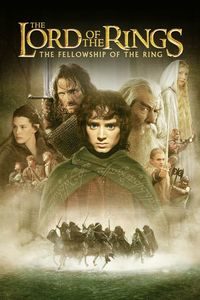
  • The Lord Of The Rings: The Fellowship Of The Ring (2001)

    The Lord Of The Rings: The Fellowship Of The Ring (2001)

    (In theaters, December 2001) As someone whose opinion of J.R.R. Tolkien’s original novel is closer to “dull, dull, dull” than “masterpiece!”, I didn’t expect much of the film. So it pleases me immensely to see the film improve sharply on the faults of the written work, up to a level where I saw The Lords of the Rings that I really wanted to see, and not the interminable brick I had read. Peter Jackson’s work on the film version is nothing short of remarkable, adeptly condensing hundreds of pages in less than three exciting hours. Unquestionably, the film is still very long, but it’s almost all good. Good acting, fantastic direction and spectacular visuals easily make this one of the best films of the year. It’s amazing (and reassuring) to see how faithful the film is to the novel and yet how much more entertaining it is. After the awful series of cheap fantasy movies of the past decades, it’s heartening to see someone do it right. That such an eagerly-awaited film would end up being equal to the anticipation is simply miraculous.

  • Jimmy Neutron: Boy Genius (2001)

    Jimmy Neutron: Boy Genius (2001)

    (In theaters, December 2001) Kid’s movie, kid’s shmoovie: Jimmy Neutron packs more cool ideas in barely 90 minutes than all other SF films of 2001 together. Not only that, but it’s half the length of A.I. and considerably more fun. Granted, it’s a silly comedy, but don’t let that fool you into thinking that it’s not clever: Watch for the hilarious Blair Witch Project reference, and the seamless Star Trek joke. Jimmy is an enormously sympathetic character, and so are the supporting characters. (Even “the bad kid” gets a few endearing moments or two; watch the end reunion with the parents.) Best of all, Jimmy Neutron is good clean fun, with only one or two innocuous toilet-humor jokes through it all. Even though the garish colors and the simplistic models aren’t as detailed as the Pixar films, they create a lovely style that greatly benefit the film. Kudos to the artists -animators and screenwriters alike-, because the result is a wonderful little film that kept me grinning throughout. Splendid!

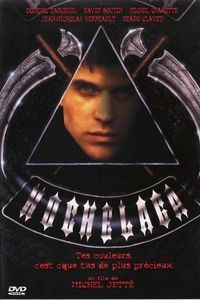
  • Hochelaga (2000)

    Hochelaga (2000)

    (In French, On DVD, December 2001) The biker-gang problem has made quite a few headlines in Quebec during the past few years, and so it’s not a surprise to see an original home-grown thriller that deals with the issue. Here, a young man is gradually brought in a gang, where he’ll eventually discover a deadly secret… It’s really a portrait of how someone from a disadvantaged environment can see crime as an alternative option, and as such is far more honest than dozens of similar films. The raw, naturalistic technique of the film thus works to its advantage. It’s a bit dull at first, but it sharply improves in the second half. Ironically enough, when I tried to find parallels in foreign cinema with Hochelaga, I could only think of Hong Kong Triad films in which similar protagonists are gradually seduced in the power of criminal gangs. In any case, the result is a powerful film, maybe the best French-Canadian film I can recall recently. Definitely worth a look if you can find it. The DVD contains a few serviceable extras such as interviews and an English-language track.