Reviews

  • Dazed And Confused (1993)

    Dazed And Confused (1993)

    (In theaters, January 2002) The problem I have with most teen movies is that my own (boring, studious, small-town) teenage years were fundamentally lacking in drugs, sex and/or rock-n-roll. So a film like Dazed And Confused does nothing to reach me with its 24-hours-in-the-life of a bunch of wild-n-wacky teenagers. That the story is pretty much about nothing doesn’t help, though it can serve to illustrate why this is a film in the same logical vein as American Graffiti and Go. A bunch of relatively well-known actors make their first (or nearly-first) appearance here, which adds a bit to the film’s lacking interest. Filmed in a naturalistic style, there isn’t much in term of visual impact here. Some will love it; I myself just couldn’t care.

  • Ventus, Karl Schroeder

    Tor, 2000, 662 pages, C$9.99 mmpb, ISBN 0-812-57635-7

    Some human endeavours are harder than others. While no one will ever confuse writing a novel with performing brain surgery, writing a mathematic Ph.D. thesis or even raising a child, no one will ever say that writing a good professional novel is easy. You have to balance narrative exposition with careful character development, dramatic tension and basic writing abilities. Analyse any random 600-pages novel and you’ll quickly find a bunch of interlocking factors in a framework so large that it’s almost a wonder to realize that people actually pull this off.

    Science-fiction writers must be even more masochistic than most other novelist. To the already mind-boggling demands of novel-writing, they add the necessity to construct a wholly fictional world and present it to the reader in a seamless fashion. Oh, and explain new complex concepts to the average readers. Why would anyone willingly choose that job?

    Karl Schroeder did. Ventus isn’t his first novel (he co-wrote The Claus Effect with David Nickle), but it’s certainly the one which will make the SF world stand up and take notice of his potential. It’s a massive, epic story about a planet with many secrets, spanning dozen of very different characters and a conflict with galactic repercussions.

    Yet we begin this hard-SF story in a fashion that is almost identical to most fantasy trilogies. Young Jordan Mason is an apprentice on a vast estate. While the first chapter hints strongly at a SFictional tone -what with an attack by a silver mechal life form-, you’d be hard-pressed to find anything radically different between him and some medieval squire. Gunpowder has been invented, but what’s this about flying creatures attacking any higher technology?

    As the story unfolds, both Mason and the reader discover that the ground beneath their feet isn’t nearly as stable -nor natural- as it may first seems. Jordan is almost kidnapped by strangers, thrust in complex political games and eventually made to realize an awesome untapped power. Before the book is through, we’ll visit a fantastically advanced Earth, be privy to scenes of devastating scope and -maybe more importantly- witness the emotional evolution of a cast of characters.

    Ventus is a big, satisfying book, the kind that’s made for you, a comfy chair, plenty of hot chocolate and a long Sunday in front of a fireplace. It takes a while, more than a long while, to get going, but once it ignites, it’s a highly enjoyable read. Most notable is the changing nature of the characters; those who seems initially reliable end up as raving psychopaths and those who seems singularly inept ends up controlling everything. Then there’s the impressive feat of managing more than a dozen major characters without fumbling too much. Ventus doesn’t feel like a first novel; you’d be hard-pressed to consider it as being anything less than a great work by a professional author at the height of his powers. You’ll love the SF elements and the characters.

    The science-fantasy aspect of the tale is annoying at first, but makes increasing sense as the underpinning of Ventus is explained. After that realisation, one can only be impressed at how well the tale unfolds, how the technological/scientific themes are well-exploited in order to give meaning to the story. The narrative even introduces interesting philosophical elements late in the story without undue effort. It’s also one of the smoothest blend of science and characterization to come along in recent memories.

    After the impressive Ventus, it’s hard to wait until Schroeder’s next novel. Canada has produced several impressive SF writers in the past few years, but few seem to be audacious enough to turn out stories with the epic scope of Ventus. Schroeder seems, with his first solo novel, to aim for a spot aside Vernor Vinge and L.E. Modesitt Jr. If everything goes right, get ready for a memorable career.

  • Cats & Dogs (2001)

    Cats & Dogs (2001)

    (On DVD, January 2002) It should have been more fun than it was: A secret war between cats and dogs featuring a feline megalomaniac, pet-fu, high-tech gadgets and Jeff Goldblum as (yet again) an absent-minded scientist. Alas, the film is made for kids, and what would have been a jolly good blast ends up sugar-coated and de-fanged by the desire to offend no one. Another director might have done something remarkable with the same premise, but Lawrence Guterman simply delivers a strangely average film reminiscent of Small Soldiers in how such a boffo premise can be battered in submission. Oh, and I’m a cat-person, which probably doesn’t help. The DVD includes the “bare special edition minimum” (commentary, HBO making-of, a few goodies), features a clever dual menu system but is (aaargh!) pan-and-scan.

  • Black Hawk Down (2001)

    Black Hawk Down (2001)

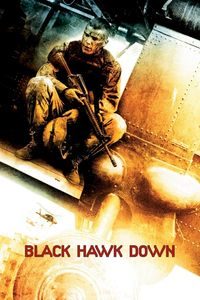
    (In theaters, January 2002) Hollywood has the unfortunate tendency to glorify or demonize soldiers, depending on whether they’re needed as heroes or villains. It’s far less common to see a realistic depiction of their work and that makes Black Hawk Down even more worthwhile. There have been few rewarding post-Vietnam military movies, but this one is able to present the chaos of combat, combine it with high-adrenalin action sequences, get fancy with the artistry and go wild with the special effects. The result is a deeply impressive war film and a satisfying action flick. It does resemble a western from time to time, what with the hordes of “little brown people” attacking numerically disadvantaged Aryan heroes, but it does work quite well (and, according to the Pentagon, ranks highly on the realism). Prepare to be overwhelmed by the non-stop action, the constantly-moving camera and the aggressive sound effects. The film is not without flaws, though; the first half-hour is generally trite and conventional, the ending is a touch too pretentious and director Ridley Scott still hasn’t learned how to build perfectly coherent action scenes. (Though he’s learned a lot since the half-mess that was Gladiator) Still, Black Hawk Down is a darn good film, and the best recent representation of modern infantry combat.

  • A Beautiful Mind (2001)

    A Beautiful Mind (2001)

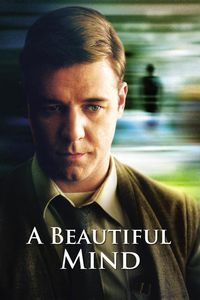
    (In theaters, January 2002) The first few minutes of this biography of mathematician John Nash are simultaneously painful and interesting, as a reasonably exciting portrait of a top-notch scientific mind is hampered by the “asocial scientist” clichés so beloved by Hollywood. Then the movie takes a turn for the bizarre as Nash becomes subject to increasingly complex schizophrenic disillusions. Alas, as the film started focusing on Nash’s mental illness, I realized we were headed toward TV-movie-of-the-week territory. It’s irrelevant that Russell Crowe turns in another award-caliber performance, or that Jennifer Connelly has never looked so good (and that’s saying something!); once again, Hollywood goes for the easy target, the touching story of someone who has to overcome his handicap with love and determination. The last half-hour of the film becomes more and more difficult, as there is a palpable sense of distorted narration, half-truths and easy answers. Indeed, reading about Nash’s “real life” (his bisexuality, his repeated hospitalizations, his attempted escape to Europe) quickly reveals how much the movie sugar-coated the truth. It’s a bit of a shame, again, how the most visible cinematic portrait of a scientist once again drips of anti-intellectualism; it wouldn’t be so bad if the film didn’t try to generalize from it (“two helpings of brain, and half a helping of heart”, etc…) Still, it’s not a bad film; though long, it’s not without interest, and even funny at times. (Though my funniest moment happens as an imaginary character pouts at being called a “disillusion”.) If you’re the type of viewer who goes nuts for nuts…

  • Amadeus (1984)

    Amadeus (1984)

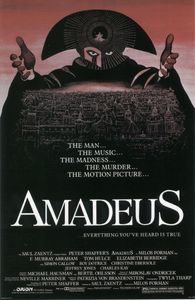
    (On DVD, January 2002) When trying to present historical events on film in a fictional narrative, it’s almost always best to present an explicitly subjective view rather than attempt an objective viewpoint. After all, there isn’t enough place on the frame to put in all the details offered in, say, a book. All of which is why Amadeus proves to be such a richly enjoyable film, told from the viewpoint of the “evil” Salieri, who has to deal with his complex hatred of the prodigy Mozart. The music -obviously- is nothing short of fantastic, and the mixture of comedy, drama and intrigue gives considerable interest to a lengthy film. Some choice quotes and gorgeous visuals will remain with you some time after the end credits roll. The DVD features interesting “real-world” information on Salieri/Mozart, but not much else.

  • I. Asimov, Isaac Asimov

    Doubleday, 1994, 562 pages, C$32.50 hc, ISBN 0-385-41701-2

    Any discussion of Isaac Asimov, the writer, must inevitably dwell on how prolific he was. In roughly fifty years, he wrote more than 470 books (yes, more books than most people will ever read in their lifetime!), and that’s not counting the various articles, speeches and assorted miscellanea he also penned during his career.

    Asimov died in 1992, but it took a few more years to publish everything he was working on at the time. One of those projects was an autobiography, I. Asimov, in which he more or less summed up his life. Incredibly enough, this wasn’t even a first autobiography for him: In 1979 and 1980, he wrote In Memory Yet Green and In Joy Still Felt. While I. Asimov acknowledges these previous autobiographies, it’s also a stand-alone work. (As Asimov explains in the introduction, the first two volumes have long been out of print) Anyone interested in the writer’s life should pick up this work; it’s pretty much “the ultimate Asimov.”

    Hefting in at more than 550 pages, this book is divided in 166 short thematic chapters arranged in rough chronological order; while he’ll occasionally break his narrative to describe his relationship with other persons or to give a general opinion about a given subject, most of the book proceeds from childhood to education to early adult life to late adult life to semi-retirement. Each chapter clearly announces the subject, and even though there’s no index (argh), the table of content should be sufficient for most casual reference use. A 1994 bibliography completes I. Asimov.

    As far as autobiographies go, this one is quite satisfying. The scope of it is ideal, of course. There isn’t much to Asimov that’s left unexamined by the time we read Janet Asimov’s epilogue. The writing style is compulsively readable, with a good mix of humour and information, of dry self-depreciation and proper acknowledgement of his strengths. You can easily get through this tome in a few days.

    Asimov is also surprisingly candid, maybe a bit more than some fans might have expected. He makes no excuses, for instance, of his rather libertine attitude towards affairs during his first marriage. He can be quite cutting regarding whom he considers idiots. The failure of his first marriage is described quickly, as is his disappointment in his son (who he describes as a “gentleman of leisure.” [P.176]) (At least Asimov didn’t live to see him implicated in a child-pr0n scandal in 1998. Oh, the things we learn while fact-checking on Google…)

    But don’t assume that these few issues are emblematic of the rest of the book. When Asimov loves, he loves a lot. It’s impossible to close the book and remain un-moved by his pure love of writing. (See his notes on his divorce, P.336) His own pleasure in public speaking is also obvious, and even quite charming; he was good at it and took considerable pleasure in delivering the goods as needed, even without notes or time-pieces. His devotion to his daughter Robin is touching, and his love for his second wife Janet is the source of considerable emotion late in the book.

    Isaac Asimov has not in good health for the last decade of his life, and the last fourth of I. Asimov reflects the tragic dignity in which he left. The whole book itself was written with the mindset that it would be Asimov’s final word on himself, and by the end, it’s hard to escape impending death. The last few pages are especially poignant, as we’re left to contemplate what such a first-rate mind could have done had it been allowed five, fifty, five hundred more years. Alas, Asimov is gone, and there won’t be anyone else like him. Ever.

    While Asimov may take delight in presenting himself as the humble son of an immigrant shop-keeper and in assuring us that nothing spectacular ever happened in his life, he misses the point: Asimov himself is the highlight of I. Asimov, not his life history. For any fan of the author, casual or obsessive, this is the definitive book so far.

  • Wong Fei Hung [Once Upon a Time in China] (1991)

    Wong Fei Hung [Once Upon a Time in China] (1991)

    (On VHS, December 2001) I guess it had to happen: a martial arts film where I was more interested in the story than the martial arts themselves. For some reason, there isn’t much in terms of spectacular fighting in Once Upon A Time In China (save for the end ladder sequence, which is good fun) and so the interest of the film becomes the theme of guns-versus-fists, and the encroachment of the new Occidental values over the traditional Chinese ways of doing things. Western audiences may feel uncomfortable with the subject matter, but it made me curious to see a non-dubbed subtitled version to see if they have indeed softened some anti-American rhetoric. In any case, Once Upon A Time In China almost serves as a link between the Asian kung-fu films and the more modern Hong Kong bullet-ballets. As far as Jet Li films go, I still prefer Fist Of Legend, but if you’ve seen the rest…

    (Second viewing, On DVD, January 2004) On second thoughts, the action portions of this film appreciates and the historical content depreciates. Oh, there’s still a lot of interest in seeing a different perspective, with the French, English and Americans as the bad guys, but the lack of subtlety peeks through once the surprise of seeing actual historical content in a kung-fu film fades away. The rain fight is still a delight, and so is the end ladder fight, but the film as a whole is just adequate. The all-in-one trilogy DVD contains the subbed movie, and that’s pretty much it.

  • Woman On Top (2000)

    Woman On Top (2000)

    (On VHS, December 2001) Charming little romantic comedy with a strong touch of magical realism. If you usually like Penélope Cruz, you will love her in this film as she plays an endearingly flawed Brazilian chef trying to succeed in San Francisco. (Her affliction? Nausea whenever she can’t control her motion. It’s a problem in transports and in bed, hence the title. Naughty!) It’s a slight little film, but it works well throughout. It will make you hungry, very hungry. Not sure if it’s an ideal date movie, but you could do much, much worse.

  • The Watcher (2000)

    The Watcher (2000)

    (On VHS, December 2001) Dull, unimaginative thriller that will make you angry at it rather than angry at the villain. Keanu Reeves and James Spader do the best they can with the material they’re given, but ultimately there isn’t much to single out in this unremarkable attempt at a psychological drama. It’s always a pleasure to see Marisa Tomei again, but there are limits to the lengths at which I will go in order to gawk at her again. If ever there’s a Watcher 2, for instance, I’m staying home.

  • Vanilla Sky (2001)

    Vanilla Sky (2001)

    (In theaters, December 2001) As a fan of the original Spanish film Abre Los Ojos, I must say that I like Vanilla Sky even more: The story hits closer by simple virtue of being American, and director Cameron Crowe has polished many of the most annoying rough edges of the first film. The New York setting is used to spectacular effect (oh, an empty Times Square!), and the personality of the lead character is more defined here than in Abre Los Ojos. The best change, however, is in the role played by Cameron Diaz, whose Natalie is far more human, and sympathetic, than in the original. Of course, the best thing about Crowe’s adaptation is that he doesn’t fiddle with the concept of the film, and allows the twisty, shocking revelations to occur at roughly the same pace. Well, very roughly the same pace: One thing to dislike about this new version is that it’s quite longer, and consequently not as meanly efficient. Still, I felt pretty much the same growing respect for Vanilla Sky than Abre Los Ojos as the film progressed. As usual with Crowe’s films, the soundtrack is well-chosen, though definitely intrusive at times. (The worst being the use of the Beach Boy’s “Good Vibrations”… though it’s a safe bet that no one will forget that scene, which manages to milk real emotion out of someone shouting “Tech Support!”) It’s a film that might very well take more than one viewing to fully appreciate. Oh, and another thing: I absolutely love how much all the advertising for the film made it look like yet another Tom Cruise film… when it’s so much more devious than that!

  • Urban Legend (1998)

    Urban Legend (1998)

    (On TV, December 2001) The worst thing about being a cinephile is how, from time to time, you’ll watch a terrible film playing on TV just for the sake of having seen it. The second-worst thing is to rationalize it by thinking that you’re filling in an important blank in the historical context of a given sub-genre. Because that’s the only way to consider Urban Legend important; as a historical representative of the late-nineties post-Scream teen-slasher genre. As such, it’s not half bad: A few of the lead actresses are striking, and the death scenes are ingenious in a Rube-Goldberg fashion. The identity of the killer is complete nonsense, but at least it doesn’t feel pulled-out-of-a-hat like in other movies. There is a strong degree of self-reference (from Robert Englund as a teacher to a reference to “the Noxema girl”), but don’t let that fool you in thinking the film is clever. If, on the other hand, you’ve overdosed on the violent pornographic structure of these movies, well, Urban Legend will only disgust you even more. Destined to cultural oblivion, hurrah!

  • Timecode (2000)

    Timecode (2000)

    (On VHS, December 2001) New technology leads to new artistic possibilities, and you can’t illustrate this any better than by watching Timecode, an audacious concept-film which works well at challenging our perceptions of movies. The gimmick is conceptually simple: Now that digital video cameras can film nearly 90 minutes’ worth of continuous material, it becomes possible to have a one-take film. But that’s not very practical if you follow multiple characters, hence director Mike Figgis’ use of four continuously-running cameras, dividing the screen in four quadrants. It sounds complex, but pretty soon you’ll be wondering at how well it works. There’s a lot to keep you interested here, from a lesbian couple to an on-screen sex scene to infidelity to murder. The acting is quite good. It boggles the mind to imagine the behind-the-scenes work involved in doing this film. There are flaws, of course; some stuff isn’t so well-paced, and the soundtrack is definitely obtrusive. However, this is a film to watch: Not only as a discussion piece, but also as a reflective piece on the conventions of cinema and the new possibilities of the medium. If you miss the artistic significance of Timecode, don’t worry: a mouthpiece character neatly delivers them to us near the end of the film. Ultimately, though, it’s original, and sometimes, that’s all it takes to watch a film.

  • The Third Man (1949)

    The Third Man (1949)

    (On VHS, December 2001) Time hasn’t been kind to this film. Even though it holds up better than most contemporary films, the lack of camera movement eventually manages to annoy severely. Vienna is made flat and dull, much like the film itself. Other annoyances abound: The cursed zither music grates, Orson Welles looks more like a naughty fat kid than a world-class smuggler and the middle half-hour does little to advance the plot. Hey, I liked a lot of the dialogue, and the entire Ferris wheel sequence, but it doesn’t alleviate the faults of the film. The dialogue is reasonably good, with at least a classic line or two. (Harry Lime: “In Italy for 30 years under the Borgias they had warfare, terror, murder, and bloodshed, but they produced Michelangelo, Leonardo da Vinci, and the Renaissance. In Switzerland they had brotherly love – they had 500 years of democracy and peace, and what did that produce? The cuckoo clock.”)

  • The Texas Chain Saw Massacre (1974)

    The Texas Chain Saw Massacre (1974)

    (On VHS, December 2001) Is this supposed to be a classic? Never since The Blair Witch Project did a bunch of whiny annoying kids deserve a good cruel and brutal dismemberment. The awful seventies are fully visible on film, and what was intended as pure terror now simply feels like simple stupidity or outright hilarity. Whenever you start cheering for the villains, it’s sign that the protagonists aren’t working. Avoid. Gaah.