Reviews

  • Light Raid, Cynthia Felice & Connie Willis

    Ace, 1989, 263 pages, C$6.50 mmpb, ISBN 0-441-48312-7

    The line between reality and fiction, despite a few odd incidents, is very clear. In SF and other high-action genres designed for escapist entertainment, it is essential to suspend our disbelief; to accept without discussion some of the concepts at the basis of the fictional construct. With the best stories and authors, this is easy since there’s usually some kind of coherent link with What’s Already Known by Us. Lesser fiction assumes things out of thin air and bases the whole story on impossible concepts. The sagacious reader loses respect for the story, can’t believe in it, and usually closes the book in disgust. While a boring book is just a boring book, a bad book can be infuriating.

    This is all to say that Light Raid is a truly wretched novel. I would normally give average marks to this average story, but the problem is that the authors made a huge, fatal mistake: They used Quebec as the antagonist.

    The plot, so we might get past it as soon a possible: North America is torn apart by war. Quebec is fighting against an alliance of states, in this case the Western States. In this, somewhere, a teenage girl (Adriadne) is desperately trying to prove that her mother isn’t a spy for Quebec. Hijinks, laser raids by Quebec satellites and pathetic adolescent romance ensues.

    The problems with this already-stupid plot are numerous: The first being, of course, that it’s impossible. There are seven million people in Quebec, half of them in Montreal and most of them in jobs that aren’t exactly in highly-scientific or technological sectors. And we’re supposed to believe that these evil Quebeckers can terrorize three hundred million people with laser satellites? To take a comparable simile, can you imagine North America at war with Evil Ontarians? Uh-huh.

    Militarily speaking, the protracted war described in Light Raid is absurd. War buffs will tell you that high-tech conflict can’t last long; it’s even worse to consider that Quebec, a province in a country without an inkling of a decent space program, could maintain an orbital fleet of laser satellites without… ahem… American intervention.

    But that’s small potatoes to Felice and Willis, who had to have an antagonist, and who better to use that the Quebeckers since they don’t speak English, (*gasp,* the infamy!) and probably won’t even read the novel anyway. Would the novel would have worked better starring, say, a California-Texas Union? Absolutely. Would it have pissed off Texans and Californians? You bet. Would that have affected the book’s sales figures? Rhetorical question, my dear Watson.

    The idiocy doesn’t stop there, though: Speaking of Watson, one of the characters is an agent for Scotland Yard. Never mind if Scotland Yard has jurisdiction in western North America, or why there’s a Saskatchewan Prince: His main purpose is to get Adriadne out of trouble and make sure she have sex with the right guy (i.e.: himself. Never mind she’s 17 and he’s 22. Must be typical adolescent romance stuff.)

    Even more shocking, the Peter Harris cover illustration actually represents a scene from the book. (“Where will it stop?” he cried.)

    This book is insulting, and what’s worse, not even remotely engaging. Call it a unfavorable prejudice, but I just couldn’t get into it considering the blatant disregard for reality that the authors display in their world-building. I always say that If you can’t muster the intelligence, rigor and will to play by the physical rules of the universe, you shouldn’t even try. In this case, I hope never to see anything this horrible again: Connie Willis has demonstrated she’s able to do better (Bellwether), but it’s going to be difficult for her to do much worse.

  • The Heechee Saga, Frederik Pohl

    Del Rey, 1977-1990, ??? pages, C$??.?? mmpb, ISBN Various

    Gateway,1977, 278 pages
    Beyond the Blue Event Horizon, 1982, 279 pages
    Heechee Rendez-vous, 1984, 311 pages
    The Annals of the Heechee, 1987, 278 pages
    The Gateway Trip, 1990, 244

    Frederik Pohl is a workmanlike SF writer, turning out novel after novel of decent -if not overly exciting- works. As a founding elder of modern SF, he’s been around a while and so there’s a large fan base for his works. Pohl’s writing career can be divided in two sections: The first took place before 1961, when he revolutionized the SF field by writing social satires (often in collaboration with C. M. Kornbluth; see the beloved classic The Space Merchants). After a lull in which he edited genre magazines, the second half of his writing career truly ignited in 1977 with Gateway.

    Gateway (Best Novel Nebula and Hugo) was the story of one Robinette Broadhead, who spent most of the novel telling his hang-ups to a psychological computer program. The Gateway of the title is a vast asteroid, filled with alien ships who can travel across the galaxy. Problem is, they don’t always come back… and Humans can’t control the ship in any way. Gateway is a fun read, presenting intriguing idea and a suitably complex protagonist in a clean, compelling prose. Some call it one of the best SF novels ever, others just like it very much.

    Beyond the Blue Event Horizon takes place a few years later, when Robinette is even richer, and feeling far more guilty. Another alien Heechee artifact is discovered in this solar system, and Robinette must (as in “must advance the plot”) explore it. This sequel is a bit of a letdown, and isn’t resolved at the end.

    Heechee Rendez-vous picks up another few years after the events in the sequel, and introduces even more plot threads only tied up at the end of the fourth volume. Said fourth volume offers less surprises than the previous three, and the ultimate conclusion is easily guessable by the sufficiently attentive reader.

    The four-book cycle could have easily been compressed in a trilogy, mostly by forgoing extrataneous elements in the second and fourth volume. The inclusion of a few misunderstood kids in the fourth tome is especially grating.

    But it’s an interesting series. Concepts are deftly introduced (not always, though: Lumps of ugly exposition are scattered here and there) and used in efficient ways. Pohl’s style is readable even at its worst. A sense of accomplishment is gained.

    The Gateway Trip ends up the series on a high note. More of a collection of ideas about Gateway, it reprints the fascinating novella The Merchants of Venus (prequel to the whole series) and a bunch of short fictional-expositionnary texts about Gateway, the expeditions from Gateway, the Heechees and other stuff. It can be safely read by anyone who’s read the first two volumes, and could even be used as a substitute for the last three books. Lavishly illustrated by Frank Kelly Freas (the illustrations lose their potency in the paperback edition, though) it’s a lovely little book, well worth the effort and money for Gateway fans.

  • The Best of the Nebula, Ed. Ben Bova

    Tor, 1989, 593 pages, C$17.00 tpb, ISBN 0-312-93175-1

    A 600-pages book full of the “best Nebula-winning stories”.

    To me, that sounds dreadful. I prefer Hugos to Nebulas: My liking for storytelling over literary prowess is well-known, and so is (despite a few exceptions) the preference of the SFWA for literary prowess over storytelling.

    And yet, I’ve made a point to read all the Nebula-winning novels, and most of the Nebula-winning stories. The Best of the Nebula offered a chance to complete my collection.

    The books is edited by Ben Bova, who not only serves us a lousy introduction, but also a few paternalistic introductions. As for the actual content, most of the stories are “classics”… this despite actual quality or entertainment value.

    For instance, I’ve never been able to read McCafferey’s “Dragonrider” to the end, and this anthology only serves to up the number of tentative to five. Most of Zelazny, Tiptree, Delany, Leiber, Russ or LeGuin’s material doesn’t impress me, and this didn’t change with The Best of the Nebula either. On the other hand, I’m glad I finally read Martin’s “Sandkings”, Ellison’s “A Boy and his Dog”, Silverberg’s “Passengers” and Moorcock’s “Behold the Man”.

    This anthology offers a fairly good overview of slightly higher-grade SF for the literate neophyte, but fans of the genre will want to take a look at the table of content before buying it.

    I’ve played the game, and selected my favourite Nebulas since 1965. Here’s the list:

    Novels

    • Dune, Frank Herbert (1965)
    • Rendezvous with Rama, Arthur C. Clarke (1973)
    • The Forever War, Joe Haldeman (1975)
    • Man Plus, Frederik Pohl (1976)
    • Gateway, Frederik Pohl (1977)
    • Startide Rising, David Brin (1983)
    • Neuromancer, William Gibson (1984)
    • Ender’s Game, Orson Scott Card (1985)
    • Moving Mars, Greg Bear (1994)
    • The Terminal Experiment, Robert J. Sawyer (1995)

    Short Stories

    • “Repent Harlequin!, Said the Ticktockman”, Harlan Ellison (1965)
    • “Behold the Man”, Michael Moorcock (1967)
    • “The Screwfly Solution”, Alice Sheldon (1977)
    • “GiANTS”, Edward Bryant (1979)
    • “Tangents”, Greg Bear (1986)

    Novelettes and Novellas

    • “A Meeting with Medusa”, Arthur C. Clarke (1972)
    • “The Bicentennial Man”, Isaac Asimov (1976)
    • “Sandkings”, George R. R. Martin (1979)
    • “The Ugly Chicken”, Howard Waldrop (1980)
    • “Blood Music”, Greg Bear (1983)
    • “The Night We Buried Road Dog”, Jack Cady (1993)

    …and a few others, mostly in the Novel and Longer Short Stories category, but that’ll do for now. Of course, my list of favorite Hugo-winners is far, far more interesting…

  • Samurai from Outer Space, Antonia Levi

    Open Court, 1996, 169 pages, C$30.00 tpb, ISBN 0-8126-9332-9

    You can find the strangest thing at your nearest college’s library.

    For instance, there I was in the University of Ottawa main library, checking out the New Arrival section, when a title bounced at me from the bottom row: Samurai from Outer Space. Who could resist taking a look at a book with such a title? I picked it up. The subtitle clinched it for me: “Understanding Japanese Animation.”

    Now, understand that I am not an otaku (anime (Japanese animation) fan). I’ve watched countless hours of dubbed Japanese animation in my youth (French-Canadian TV was/is full of dubbed Japanese children’s series) and the “big” anime movies (AKIRA, GHOST IN THE SHELL) but I don’t go to the local Anime club, or track down the latest anime release as soon as it’s imported. I don’t even know more than a handful of Japanese words.

    But I’ve got friends who are otaku. One of them’s the audiovisual tech for the anime club, the other knows enough Japanese to get by… With this kind of friend, I’d have to be an idiot not to get at least a passing appreciation for the genre by passive osmosis. So, it was only natural that I had to borrow Samurai from Outer Space.

    (To give an idea of the mindset of UfO computer science students, everyone I showed the book to either said “Oooh!” or “Cool!”)

    Reading this book is time well-spent. Samurai from Outer Space is a fascinating journey into not only Japanese animation, but into the very collective mind of Japan’s society. As Levi points out in her introduction, you can’t understand art without understanding the cultural context in which this art was produced. Most of the time, anime is produced by Japanese for Japanese. The attitudes of anime are thus the attitudes of Japan itself. Anyone with even a basic knowledge of history already knows about the divergent paths Japan and Western culture undertook, only to be reunited in the last few decennia.

    This difference is reflected everywhere: Anime is built on a paradigm that is completely different from the Western tradition of storytelling. Mood is important; virtue isn’t necessarily rewarded; the eyes have it; women can be powerful and sexy without being a sidekick; characters can be multifaceted; animation isn’t for kids; you don’t have to have a happy ending… And that’s barely scratching the surface. The chapter on the role of women in anime and Japanese society is revealing; far from being powerless, the typical Japanese housewife wields an unsuspected power in Japan. (A power often reminiscent of the role of the rural French-Canadian housewife between 1850-1950, but I digress once again…)

    But what about the otaku who doesn’t care about sociology? (Levi is quick to point out that a true otaku is bound to be interested in Japanese society, note!) Samurai from Outer Space is a splendid text for both novices and experts. Some of the analysis is invaluable and a few conclusions are surprising.

    The book isn’t always interesting, especially for the casual reader: The chapter on religion is loaded with references to traditional Japanese myths, and while they’re well-explained, they’re not always easy to grasp. Sometimes, Levi overdoes the sociological analysis on this side of the Pacific ocean (“Gen-Xers […] were born in an overcrowded world filled with crime”, [P.108] etc…) but everything holds up pretty well. For an academic publication, the style is downright breezy: I found myself smiling through most of the book, and laughing quite heartily at a few places. Also notable are the “side-notes”, literally placed on the side of the page rather that at the bottom, or the end. Samurai from Outer Space could have used a few more illustrations and put them alongside the text rather in a separate section, but publishers can’t always do it all, I guess.

    In short: Grab it, read it, you’ll like it. Recommended.

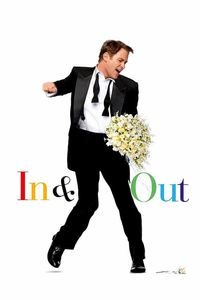
  • In & Out (1997)

    In & Out (1997)

    (In theaters, September 1997) Audience reaction to this movie will probably hinge on their level of tolerance for… um… gay issues. A very smart, very funny script is backed-up by fantastic acting and unobtrusive direction. Loses steam and gains “meaningful intent” in the second half, but a good time is had by mostly everyone except the most closed-minded. (Be forewarned, however, that the writer Has An Agenda) Not really a good date movie! Random thought: It’s probably a good sign of our evolving society that this movie is rated PG only a few years after the separate matrimonial beds of the puritan TV shows of the fifties…

  • Hexed (1993)

    Hexed (1993)

    (On TV, September 1997) Any self-respecting Babylon-5 fan had to watch this movie, only for the nearly-naked scenes of “Captain Ivanova” (Claudia Christian). Alas, Shelley Michelle body-doubles for Christian, but Hexed is still a pretty enjoyable comedy, at times oddly reminiscent of the hilarious, senseless violence of Pulp Fiction. Characters are okay, the comedy oscillates between the slapstick (the Rodney King send-up) and the lame-but-lively repartee (“I forgot to tell you; I’m pregnant” “What?” “Just kidding.”) but while this is far from being a work of art, it’s not a big waste of time either.

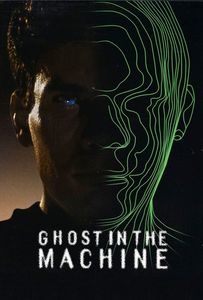
  • Ghost In The Machine (1993)

    Ghost In The Machine (1993)

    (On TV, September 1997) Very stupid, utterly hilarious “horror” movie. The premise (serial killer gets transformed in computer form, kills people using microwaves, heat dryers and dishwashers.) is about as ridiculous as it can get, and the details are about as ludicrous as anything else. Anyone can have several sadistic laughs at the ineptness of this grade-A Z-level shlocko flick: One of the funniest worst movies I’ve seen. Not to be confused with SF-anime masterpiece Ghost In The Shell (1995).

  • Holy Fire, Bruce Sterling

    Bantam Spectra, 1996, 326 pages, C$31.95 hc, ISBN 0-553-09958-2

    In Look at the Evidence, master SF critic John Clute has written a fascinating essay on what he calls the “true age” of a SF work. Ineptly put, this mean that despite the stated year in which a Science-Fiction work takes place, it is almost always about another year. Most of the time, a book written in, say, 1995 will be about 1990 rather than 2361. Most of the SF written in the seventies is thus about the seventies: Overpopulation, environmental collapse and feminism all figure prominently in these works. (Clute then goes on to state that a lot of recent genre SF is about 1940-1960, which is a fascinating idea that deserves exploration… but not here.)

    Clute’s theory isn’t universally applicable, but works quite well in the case of Bruce Sterling’s latest novel; Holy Fire.

    Before venturing further in critical theory, though, a bit of plot:  Holy Fire takes place a century from now, in a future where life-extension treatments are getting increasingly commonplace and efficient. Not surprisingly, the power is now in the hand of those who live the longest, who can invest their money in decade-long financial enterprises and can afford to wait to reap the results. There’s now “real money” and the young don’t have any. Gerontocracy is a common word in this novel.

    Mia Ziemann is a medical economist nearing ninety years of age, and it’s her job to know about these things. The novel opens as she visits an old lover but a few fortuitous encounters later, Mia decides that it’s time to cash in her life savings and to be rejuvenated. Once that is done, she escapes from her medical supervision and makes her way to Europe, where she spends the remainder of the novel hanging out with anarchists, calling herself Maya, sleeping with unattractive men and finding her true self, not necessarily in this order.

    It doesn’t take a diploma in literary engineering or medical sociology to guess why Holy Fire is a novel of the nineties: In an age where the baby-boomers are hitting their fifties in greater numbers (and retiring younger and younger; this critic’s father being a case in point) it’s evident that Sterling is taking a unsettling tendency and pushing it in a farther, more “Comfortable” future. Mia’s world is becoming more friendly, less violent, but also more boring with less place for innovation and initiative. Parallels…?

    A better, but less exciting work than Sterling’s previous Heavy Weather, Holy Fire uses the word “postmodernist” a lot. It shouldn’t be too surprising then that most of the novel consists of aimless wandering through the anarchist cliques of Europe. Sometimes it’s interesting, other time it’s filler until something happens. The Maya/Mia dichotomy isn’t very well defined, or at least could have been used better. This novel consciously turn the traditionally SF “coming of age” novel on its head by starring a 90-year old woman rediscovering herself using a young body. (Is it a “going of age” or “re-coming of age” novel?)

    Still, Holy Fire is very likely one of the best SF book you’re likely to read this year. Sterling, a leading proponent of the now-passé (really?) cyberpunk movement, has kept intact his love of gadgets so evident in all his works. Holy Fire features talking dogs (including a likable talk-show host), translating devices (sometime reminiscent of Douglas Adam’s Babel Fish), a believable rejuvenating process (probably the most mesmerizing sequence of the book) and some impressive home pages… er… palaces.

    A mature, sometime meandering work, Holy Fire strengthens Sterling’s position as one of the surest talent of contemporary SF. Perhaps too consciously post-something to achieve wide success and recognition, but smart and speculative enough to be read anyway.

  • Unfriendly Skies, Captain "X" and Reynolds Dodson

    Doubleday, 1989, 236 pages, C$24.95 hc, ISBN 0-385-24824-5

    There are some books adequate to read on a long airplane flight, and then there’s Unfriendly Skies.

    This book is an informal exposé of the then-current (1989) state of the civil aviation industry in North America. Written by an anonymous airplane captain with journalist Reynolds Dodson, it is at times frightening, hilarious, hair-raising and fascinating.

    Captain “X” began his flying career in the military, and then came aboard “a major airline”, where he climbed the steps toward full captainship of an airliner. His experiences span more than twenty years, and he’s got a lot of stories to tell. Somewhere between anecdotal autobiography and diatribe against deregulation, Unfriendly Skies is an immensely readable, thoughtful, witty work.

    Captain “X” -through the services of Dodson- tells his stories with a tough, no-nonsense voice. The style is often gripping, and switches with ease between horror and humor. While the aim of the book is to expose the dangers of deregulation, Unfriendly Skies goes beyond that to become the memoirs of a pilot: Readers of Airport will like this one.

    This isn’t the shocking “revelations of a deregulated airline pilot” we’re promised on the cover. While the inside jacket copy will try to sell this book as a denunciation of current policies, you will most probably come away from this book as more appreciative of airline pilots than anything else. The fault, Captain “X” says, resides more with the politicians who passed the deregulation legislations than with anyone else.

    The material covered by Unfriendly Skies is diverse: Training, Death, Passenger oddities, Hijackers, Airports, Microbursts… Truly a round-up of the pilot’s experiences, this is one of the best books on the subject.

    And it is brutally honest. Several airplane accidents are discussed and dissected. Perhaps the most frightening revelation of all are the microbursts, atmospheric phenomenons that can make an airplane fall several hundred meters without warning. What can be done about it? Nothing.

    Similarly, Captain “X” tells about the life of the average pilot. How divorces are common, how they always catch colds from the incessant traveling, how their family life is a mixture of absence and presence. It’s not an easy job, and this book shows why.

    To take only one chapter as an example:

    For a French Canadian, it’s a shock to learn that Montreal is one of the worst city in North America (“Excedrin Capitals”) when it comes to passengers: Captain “X” tells of an instance where a drunk French Canadian woman punched a captain who was trying to tell her not to smoke in the non-smoker section. (And they say that cigarettes don’t make you more aggressive…) Believe it or not, that’s one of the more pleasant stories. From the TV star which poured a cup of coffee on a stewardess to the drugged New Yorker who fondled a sixteen year old and bit another passenger’s nose, we’re quick to realize that the most dangerous components in an airplane might not be in the cockpit…

    Unfriendly Skies fulfils most of the qualities of a good general nonfiction book: It’s got style, readability, content and facts. Unfortunately, the book lacks an index and falters when it tries to preach, but redeems itself by an optimistic view of future commercial air travel and a good organization of the material. Recommended… but not as airplane reading.

  • The Stars are Also Fire, Poul Anderson

    Tor, 1994, 412 pages, C$29.95 hc, ISBN 0-312-85534-6

    I really don’t know why I bought this book.

    Granted, I was celebrating my last day on the job, and okay, so it was a Fat First Edition Tor Hardcover at 3.99$(Can.) but still… The Stars are Also Fire is the sequel to Harvest of Stars, another Fat Tor Hardcover bought for 3.99$(Can.) in the throes of a spending delirium. Harvest of Star ended up long and boring. The Star are also Fire is even worse.

    The problem, I think, is all in the writing. Even if I gathered that the book was about evolution, AIs, independence and complex family matters (not to mention colonizable planetoids) the writing is so stupefyingly dull that all the excitement of the plot is smothered. Beautiful prose, but complete lack of action. To make matter worse, the book is looooooooong. Even simple actions take three, four pages.

    So, no stars for The Stars are also Fire In fact, the remainder of this review would be my appreciation of the book if I had to say it stand-up comedian style. (Sorry, Mr. Anderson.)

    So I bought this book last week. [Applause] Yeah, I know. Anyway, it’s from Poul Anderson and the cover’s pretty spiffy. [Shows book to audience] Yeah, the Vincent DiFate picture has absolutely no relation to what’s inside the book, but hey: We’re used to that from DiFate. In fact, if I ever see a DiFate cover faithfully representing what’s in the book; watch out, ’cause I’m gonna sue!

    So I begin to read the book and fall asleep. I wake up, start to read again, fall asleep again! What’s the matter here? This some kind of US Army experiment? Or maybe they’re gearing up so if the FDA bans sleeping pills, they’re gonna get out literary substitutes?

    I tell you, it’s been a slice since I’ve read a something that boring. I fact, I think it was last year’s tax papers. And those were only a few pages while this sucker’s more than 400 pages long! At least with this book, you get your money’s worth of sedatives. And some still say that length doesn’t matter!

    Speaking of which, I’m pretty sure your sex life will improve with this book. Soon, you’ll be thinking: Oh, sex with the wife, or a few more pages of this? “Hmm… Oh, Honey?” Afterward, just make sure to make conversation before attempting a chapter or two.

    Still, the book has its uses around the house: I was hanging a few paintings lately, and this book helped enormously: It’s so boring, I could use it to drill holes through the walls! Brother-in-law dropping by when you’ve got other plan? No Problem! “Come here, bro: Let me read you a few pages of this. What? Leaving already?”

    I should feel lucky, I guess. At least, this isn’t as bad as Michael Crichton’s Sphere. Read that book? Yeah, nay? Well, that Crichton thing ends up by, I’m not making this up, “and it was all a dream.” Yeah, and you’re dreaming if you think I’m going to buy another one of your books, Mickey! That was so bad that I throw my copy on the wall every month. Both covers are now gone, as are a few pages. Once, I was with a friend, threw the book on the wall, at there’s a page that flies away from everything else, okay? So I take the page, rip it up, and eat the darn pieces! Dung it was, and dung it will become again!!

    Thank you, thank you, see you next time! [Applause]

    (All events are fictional, except for everything in the Sphere paragraph, which is all scrupulously true, including the dung line.)

  • Rogue Warrior, Richard Marcinko & John Wiseman

    Pocket, 1992, 397 pages, C$8.99 mmpb, ISBN 0-671-79593-7

    On the surface, Richard Marcinko’s Rogue Warrior appears to be one of the most entertaining autobiographies you’re ever likely to read. Told in the language of warriors, with the tough-guy style and the mucho-macho attitude, it’s the life of Richard Marcinko, SEAL. Marcinko, among other things, fought in Vietnam and Cambodia, founded SEAL Team Six (the Navy’s counter-terrorist unit), founded Red Cell (the Navy’s simuli-terrorist unit) and then was kicked out of the Navy.

    Marcinko is a real-life action hero. His training exercises had more bite that the average Stallone movie. Some of his actual operations are sometimes too good to be easily believed. His rise through the rank, even despite his gung-ho attitude, is impressive.

    As it’s an assisted autobiography, you can bet that Marcinko plays his tough-guy role to the hilt. He swears, he talks back to superiors, he sleeps around with every female not seriously overweight, he kills enemies, he hates wimpy paper-pushers, he always have impeccable justifications -moral, if not legal- for what he does.

    For Marcinko, the ends justifies the means. If he has to disobey orders; fine. Overrule the chain of command; sure. Disregard protocol; no problem. Use excessive force; we’re in a war, man!

    And this is where Rogue Warrior becomes fascinating. While such blatant disregard for authority might be excellent fodder for action movies and military thrillers, Richard Marcinko is a real-life figure. He fits the profile of an out-of-control operative perfectly, in acts if not in spirit. He might have been too successful; we (helpless, wimpy, naive civilians) can’t help but being uneasy at the casualness of the swearing, the macho ideal of sleeping with as many women as possible, the quasi-“boys-with-toys” attitude.

    Rogue Warrior is likely to be one of the best military-related book you’ll read this year, or any year if you’re a fan of the genre. (Having a predilection for action movies and right-wings political tendencies certainly helps, by the way.) More sophisticated readers will find here a provocative testimony to the difference between fact and fiction.

    It seems that even Marcinko realizes this; four novels by the co-authors of Rogue Warrior have appeared since 1993 (Red Cell, Green Team, Task Force Blue, Designation Gold) each with the distinctive tough-guy approach that made this autobiography so readable, but without the “Hey! This happened!” feeling. (Amusingly (?), at least one page on the Internet mixes up the novels with the “real-life adventures” of Richard Marcinko. Doom on us.) I’ve been told the guy’s a regular hero in some of the most extremist right-wing groups. Strangely, I can see why…

    February 1998: Marcinko’s forays in fiction aren’t particularly worth remembering, but if you want something really off-the-wall, grab a copy of the non-fiction Leadership Secrets of the Rogue Warrior. It’s worth the quick read. In Leadership Secrets, Marcinko applies his style, vocabulary, anecdotes and attitude to the fine art of… management. No kidding. Corporate America better start shaking in their boots. For the most part, his advice makes sense. (“Lead from the front, keep asking subordinate to prove themselves, do the unexpected, etc…”) But the style is just light-years away from any management book you’re ever likely to read. And the swearwords are the least of it. It’s hilarious and ten times more fun than Lee Iacocca’s biography, it’s the kind of book you keep just to show to friends. A real curio. Just don’t start shooting business rivals, okay?

  • Ancient Shores, Jack McDevitt

    Harper Prism, 1996, 372 pages, C$7.99 mmpb, ISBN 0-06-105426-7

    In High School, we once had a question on a geography exam which went a bit like this: “Why are we sure that there weren’t any other advanced civilizations on Earth centuries ago?” The correct answer being, of course, that we would have found artifacts and other signs of their presences. Given modern scientific methods, it’s a fair bet to say that—despite more than a few new-age fantasies—no other civilizations roamed the earth before ours.

    I often thought back to that exam question when reading Jack McDevitt’s Ancient Shores. The novel begin when one farmer hits a “rock” in a field in North Dakota. As any good farmer knows, rocks must be taken out of fields before they can break machinery (I’m speaking from personal experience, here) So they dig, dig, dig… and find a full-sized yacht. A few pages later, we discover that the boat is made of “impossible” element 161…

    Ever since seeing that gorgeous Bob Eggleton illustration on the cover of The Engines of God, I’ve been having these weird urges to try some McDevitt. I finally broke down in the Ottawa Public Library “New Arrivals” section, borrowing McDevitt’s latest paperback release, Ancient Shores.

    For the most part, it’s an acceptable book. The existence of alien artifacts on Earth produces some very believable reactions, but also more than a few doubtful thought processes. Most of the news snippets about economic collapse due to indestructible materials are, to me, unlikely. Business has too much inertia to experience the rapid downturn exhibited in the novel.

    This quibble aside, the book moves quickly enough to satisfy anyone. Only the last part drags, mostly because we know where the novel is going. The ultimate conclusion hovers between the over-dramatic and the just right.

    Characters are handled the right way, but there are far too many secondary characters introduced once in great detail, and then never to be seen again. There are times where I miss Brunner’s approach in Stand On Zanzibar, with chapters being explicitly designated as being background material, subplots or integral to the main story.

    But by far the biggest problem with Ancient Shores is the impression that we’ve only read the first novel in a series. By the end of the book, many possibilities have been opened, and the effect is more one of dissatisfaction than of mind-expansion. Have I mentioned the possible presence of an alien life-form that’s not even solved by the end of the story?

    It occurred to me that Ancient Shores shares interesting similarities with Stephen Gould’s Wildside: A doorway to other worlds, the combat of a smallish band of explorers against government orders to take over the artifact, etc… Unfortunately, Wildside is a better book: In the end, reader reaction to Ancient Shores is likely to be one of vague satisfaction rather than definite liking. Too many loose ends (and possibly too many knots) are left to give a sentiment of satisfaction. Too bad, because McDevitt sure knows how to write in a way to hook the reader.

    Now, if you’ll excuse me, I’ll go take some rocks out of nearby fields…

    [September 1998A Talent For War (Jack McDevitt), despite its name, is not a military SF novel. Instead, expect -if possible- a far-future story where an initially shallow pseudo-historian tries to uncover a historical enigma more than two centuries old. Of course, there are various action sequences sprinkled here and there. Pretty good stuff, but just don’t make the mistake of reading the first hundred pages, letting it lie for a few days and then go back to it; you’ll be hopelessly confused with the dozen of important character names. As ever, McDevitt writes clearly and the result is an unusual novel that can be read easily. Not as good as it could have been (tightening up the action could have been useful) but a good choice.]

    [October 1998Eternity Road, by Jack McDevitt, is a disappointment. Despite his knack fro creating engaging plots around far-future archaeological/historical investigations (no less than four of his novels have this motif), here he fumbles and the result is overlong and short on satisfaction. Eternity Road takes place roughly a thousand years in the future, most of these years after the catastrophic fall of our civilization. The plot, roughly, is a quest toward a legendary place through post-apocalyptic countryland. Yes, we’ve seen this elsewhere. Though there are several odd quirky details to keep up our interest (the bank and the A.I. scenes are fun), the novel feels too episodic, to quickly wrapped up, too ordinary to be remembered fondly. It takes almost forever to start, and then cuts off almost in mid-story. Not up to McDevitt’s usual standards, and not really worth your time unless you’re a post-apocalyptic buff or a McDevitt completist.]

  • Hyperspace, Michio Kaku

    Oxford, 1994, 359 pages, C$30.00 hc, ISBN 0-19-508514-0

    Long-time readers of these reviews have undoubtedly noticed that I don’t give formal ratings to books. No stars, no percentiles, no “X out of Y”, nothing. The reason is simple; in my mind, formal ratings are a shortcut, and shortcuts are damnably simple. Sure, so you can glance at the rating a decide in half a second if I liked the book or not. On the other hand, you can glance at the rating and not read the review. Or e-mail me endlessly because I gave the same rating to both THE DISPOSSESSED and SEX-HUNGRY MATHEMATICIANS and you feel that’s a personal insult to you, LeGuin and non-sex-hungry mathematicians around the world.

    (What’s the link with Hyperspace? Stay with me.)

    In brief; I don’t do perfect ratings in these reviews. Privately, I do keep some sort of rating for trivial purposes (It facilitates sorting for “the best/worst SF/mystery book written in 19XX?”) but rarely do I give anything over a 90%: The perfect 100 should be reserved for something like The Bible (If I believed in it, or if it stopped a bullet fired at me), or a book so mind-blowing that it would do nothing less that completely change my outlook on life and (preferably) make me a measurably better person.

    Hyperspace doesn’t get the 100, but for the first hundred pages, it looked like it might get a 95. Written by a honest-to-goodness scientist, Hyperspace has the ambitious goal of bringing the reader up to date on the state of theoretical physics. Michio Kaku has the distinction of having made some important advances in this domain in addition of being an exceptional science vulgariser. With Hyperspace he has produced something as good as James Gliek’s Chaos, my scientific-nonfiction-yardstick.

    Briefly put, Kaku takes the reader through the entire history of theoretical physics, from the Greeks to today. The point he makes repeatedly is that the laws of physics are far simpler that we think, if we can conceive of them as being manifestations, “echoes” of higher-dimensions phenomenons. Much like shadows on a plan, the laws of the universe could be shadows of hyperspace. It sound crazy, almost SF, but Kaku makes it utterly convincing. And that’s one of the lesser revelations.

    You will have to possess some solid physics to understand some of what Kaku says. I’ve got three semesters of college-level physics, and I was lost on a few of the most technical pages. But the level of vulgarization is still impressive: Even a relatively smart high-school student could grasp what’s being said without being too overwhelmed too long. A large dose of the hardest-SF out these also helps, perhaps too much: The last chapters of the book are extrapolations on known facts, but they’re going to appear commonplace to SF readers used to Ringworlds, Time-corps and galactic wars.

    But the first half of the book is definitely not pedestrian. Michio shows why Einstein’s work was so important. He talks about string theory, a piece of twenty-first century physics “nobody’s smart enough to understand now.” He chronicles the fascinating lives of some of the smartest people ever. He explains the link between maths and science.

    But most of all, he makes a testament to the importance, the excitement and the achievements of Science. That alone makes it a must-read.

    Hyperspace is one of the best books I’ve read. Period. My view of the world was reformatted every five pages or so. It’s exalting, unbelievable, breathlessly exciting and deeply moving at the same time. For a self-avowed atheist, it’s the closest thing to religious epiphany. Recommended!

  • City on Fire, Walter Jon Williams

    Harper Prism, 1997, 498 pages, C$32.00 hc, ISBN 0-06-105213-2

    Walter Jon Williams is undoubtedly one of the best SF writers today. The fascinating thing is that he has become such by producing an array of remarkably different novels: From cyberpunk (Hardwired) to near-future police procedural (Days of Atonement) to all-out Big SF (Aristoi) to humorous comedy of manners (The Drake Maijstral trilogy), Williams manages to entertain with considerable wit and style.

    His latest book, City on Fire is the first “straight” sequel he has written. Strangely, it’s a book that manages to be sufficiently different from the original to be interesting, all the while being a logical successor to the previous work: Metropolitan was probably the truest example of urban fantasy ever. Starting from the basic premise that certain arrangements of metal and concrete produce a quasi-magical force called plasm, Williams crafted a novel of ambition, revolution and multifaceted power. Aiah, a lowly plasm inspector, accidentally discovers a hidden plasm reserve, which she then offers it to one of the aristocrat (Constantine, a Metropolitan) of her city. Romance and revolution ensued, with the result that Metropolitan ended with a newly-conquered city, and tons of loose ends.

    City on Fire begins as Aiah returns to the newly conquered city, ostensibly to take up a new job as head of a plasm enforcement unit, but also to be closer to Constantine. Most of the book is political in nature: The crosses and double-crosses necessary to maintain a fragile new alliance over the recently liberated city are numerous, and not uninteresting.

    The sequel is a bigger book than the original, and also possibly a better work. After the first few pages, the reader is completely integrated in Williams’ latest world. Political fiction always run the danger of becoming a meaningless jumble of names and parties but fortunately, Williams’ storytelling skills avoid this.

    The style has a certain flourish, but most readers won’t notice this, as they’ll be caught up in Aiah’s rise through the city’s hierarchy. The main protagonists are exceptionally well handled, and even minor characters are distinct and easily remembered. Every scene in the book is intercut with headlines and ads from the city’s media, an effective trick that was under-used in Metropolitan.

    Since this series seems to be headed toward being a trilogy, it is interesting to note that in Metropolitan, Aiah is Constantine’s subordinate. By the End of City on Fire, however, she is beginning to be his equal. This will be interesting to watch in the third volume.

    Metropolitan had the distinction of being a fantasy with most of hard science-fiction’s concern for consistency and world-building. Indeed, some reviewers called Metropolitan SF, rationalizing the shield and plasm as sufficiently advanced technology. The debate isn’t likely to be resolved in City on Fire, but the indicators seem to point toward an interesting sequel…

    While City on Fire isn’t exciting at the level of Williams’ best novels, it is a sufficiently attractive read for any reader with an interest in the author, Metropolitan, or complex political stories. Perhaps not flamboyant enough to warrant being bought in hardcover, but probably worth the paperback price.

  • The New Alchemists, Robert M. Hazen

    Times Books, 1993, 286 pages, C$30.00 hc, ISBN 0-8129-2275-1

    Before reading this book, I thought I knew about pressure. A veteran of several college exam weeks, I just know that these times are some of the most pressurized situations anyone can expect to meet. Seemingly ordinary elements will begin to experience radical changes at high pressures, exhibiting strange new properties and even cracking up under the pressure. My family can testify that even middle-mannered me can develop troubling characteristics while under pressure.

    Which means absolutely anything, except to introduce the subject of an impulse buy and this review: The New Alchemists, by Robert M. Hazen.

    This nonfiction book is divided in two parts: Section one is titled “The Diamond Makers”, and details the various theories, experiments and failures that led to the synthesis of the first diamonds. The account begin at the beginning of chemistry, and spends quite a lot of time discussing the various failures met on the road of diamond making. As Hazen reminds us in the introduction, failures can be as enlightening as successes.

    And a fascinating history it is: From the early 19th century, many scientists and charlatans have tried to make diamonds. (In an excellent first chapter, Hazen oversees the history, properties and beauty of diamonds, thus setting the stage for the desirability of its synthesis) It does take a few attempts, but scientists finally find out that diamond is the product of intense pressure and heat applied to ordinary carbon.

    From then, attempts are more focused, but not necessarily more successful. A Swedish team finally obtains something in 1953, using one of the weirdest process I’ve ever read about. However, it will take until late 1955 and a General Electric team of researcher to devise a working, less cumbersome method and broadcast the results to the world. (The story or the breakthrough itself is immensely fascinating reading, offering a glimpse into scientific feuds and unresolved recriminations.)

    From then on, it becomes an engineering problem to produce the most synthetic diamonds for the less money. Now, GE has a virtual diamond mine in Ohio, where they produce more than 33 tons of diamond a year.

    But the story isn’t over; the diamonds made by high-pressure physics are now helping high-pressure physics itself: Using “diamond anvils”, researchers are pushing back the barriers of pressure, attaining higher and higher levels each year… The second part of this book is titled “The Diamond Breakers”, and tells of some of these researches. Perhaps less focused (and hence, less gripping) than the first part, it nevertheless makes engrossing reading.

    Robert Hazen knows how to write, and this book shows it. This isn’t some dry exposé of unfathomable researchers: The community of high-pressure scientists has a gallery of colorful personalities and events, and The New Alchemists takes delight in telling them. Tales of frauds, explosions, smuggling and “bags of diamonds” abound. This is better reading than most of the novels I’ve read this year.

    I highly recommend The New Alchemists: For everyone who wishes to have an insight into what scientists do, to the fans of fascinating stories. This is one book not to be missed: I place it near the top of my shelf for scientific literature.

    (Post note: While talking to a ex-physics teacher of mine (Serges Desgrenier, University of Ottawa), I discovered that he has his name in The New Alchemists… something I hadn’t caught when I read the book. My amazement at this fact was only compounded by my annoyance at this failure of my pattern-recognition software.)