Reviews

  • Scream 3 (2000)

    Scream 3 (2000)

    (In theaters, February 2000) This film ends the Scream trilogy on the worst possible note, being exactly the type of film that the first one parodied. Surprisingly tepid for a horror film, mostly because there’s never any tension (idiot characters do stupid thing, and the oh-so-infallible Ghostface kills them.) nor any unsettling elements. Formula? Hell, yes! Not much laughs either, and those feel more forced than anything else. Catch it on video if you must, but there’s not much to be found here.

  • Ransom (1996)

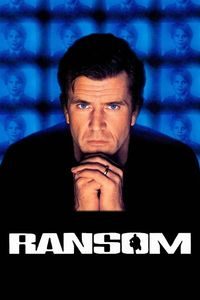
    Ransom (1996)

    (On TV, February 2000) It takes some effort to put together a good thriller, but no one ever accused Ron Howard of not being a professional filmmaker. Here, he draws upon Mel Gibson, Renee Russo and Gary Sinise to set up a sombre kidnapping affair that quickly goes awry. Solid leading-man Gibson is perfect for the role, and Sinise makes the most of his name’s resemblance with sinister as the bad guy. Even though the film feels slightly too long at more than two hours, it moves quickly and the viewer is never bored. The conventional finale disappoints somewhat, as if the scriptwriters didn’t know what to do with their last-minute twists. But Ransom mostly delivers what it sets out to do; a good, fun, crunchy thriller.

    (Second Viewing, On Cable TV, May 2022) So, TCM just had a double-bill with both the 1956 version of Ransom! and the exclamation-less 1996 Ransom remake – I just couldn’t let the occasion go by to compare and contrast.  I had dim but favourable memories of the 1996 film, so I was curious to find out if my disappointment in the 1956 film was a nostalgic artefact or a real appreciation.  Well, the verdict is in and the remake is the best film for two or three reasons.  The first, obviously, is that director Ron Howard had many more tools in his mid-1990s toolbox – decades’ worth of thriller-film formula elements, better equipment, use of colour, slicker sets (including many exteriors) and arguably better actors in Mel Gibson and Gary Sinise.  Which brings us to a second, crucial improvement: showing hero (Gibson) and antagonist (Sinise) trying to outwit each other throughout the film.  Finally, let’s acknowledge that there’s simply more plot to this remake: While the 1956 film essentially concluded on the central idea of both films (offering the ransom as bounty-hunting prize), the remake adds at least an act’s worth of increasingly frantic action as the consequences of this turn play out.  The result being executed with the big budget that standalone thrillers could still command back in the mid-1990s, Ransom still feels like a terrific, clever thriller.  It’s got some style, great anchor performances and a twisty script that throws in one curveball after another, often as the two lead characters change their plans in reaction to one another.  (That tit-for-tat plot leadership may feel like an elementary thriller asset, but you’d be surprised at the number of suspense films where the protagonist is constantly on the defensive from the villain’s plans.)  I had no trouble liking Ransom all over again a few decades after first watching it, and even –especially- when measured against its inspiration.  It makes the 1956 film look like a prototype, which is about the best thing one can say about a remake.

  • Pitch Black (2000)

    Pitch Black (2000)

    (In theaters, February 2000) This film must be considered as an SF B-movie in order to be properly assessed. It doesn’t set out to re-invent the alien-creatures-eat-humans type of story, but is plays effectively within the limits of the sub-genre. No one in the audience can be blamed for wanting to leave after the first five minutes (the direction of the opening crash is a blur of flashes, jerky camera work and incoherent editing), but the movie settles down after that for a rather good second act, with plenty of chills, thrills and fun visuals. Vin Diesel makes a strong impression as bad-boy Riddick. The script falters by the time the last act come through, with no clear big finale, and a muddled last five minutes. The intentionally grainy cinematography might not be to everyone’s liking, but fits perfectly with the idea of a B-movie. One thing to like is the film’s reliance on purely visual cues in order to provide a sense of strangeness. (Even though the film severely fumbles with its “darkness” motif, as most of the latter half takes place in a full-moonlit environment.) Not great SF -the ecosystem is patently impossible- but great fun, and sometimes that’s all you need.

  • Patch Adams (1998)

    Patch Adams (1998)

    (On VHS, February 2000) This film approaches unbearability by its callous usage of mental patients, cancerous children and personal grief in order to build a “heartwarming tale of life”. The treatment of the girlfriend character, killed by some random psychotic in order for the main character to have his own crisis of faith, is particularity repulsive. Robin Williams is insufferable when he dons his false saccharine personality. The script compounds bad taste with dumb one-sidedness, painting Hero Patch’s enemies with a Pure Evil brush. The central thesis of the film (“medicine is cold and uncaring”) is actually correct, but the scriptwriters completely missed that this is order for physicians to protect themselves against burnout. Gee, why isn’t that covered in the film? Oh right; all doctors are evil! The film quickly becomes an intellectual tug-of-war between its loathsome manipulative intentions and our own innate intelligence. The viewer can win, but the battle leaves unhealthy mental scars.

  • Day of Wrath, Larry Bond

    Warner Books, 1998, 481 pages, C$30.00 hc, ISBN 0-446-51677-5

    Almost every avid reader has a “buy-on-sight” list of especially meritorious authors whose books are of such invariable good quality that they warrant the 35$ gamble of a brand-new hardcover. Mine is composed of people like Tom Clancy, Greg Egan, Bruce Sterling, John Varley, Neal Stephenson… all of which can be depended upon for conceptually solid, physically thick pieces of entertainment.

    Larry Bond holds the distinction of having been taken off my “buy-on-sight” author list after his 1996 book The Enemy Within. His first three books -four if you include his WW3 super-thriller collaboration with Tom Clancy, Red Storm Rising– were grand spectacles of future war, hugely complex tales of nations run amok and superb set-pieces played upon technical, political and military battlefields. Red Phoenix, Vortex and Cauldron were deeply impressive techno-thrillers, brimming with unexpected rewards at more than 500 pages each. Cauldron was bought-on-sight.

    So was The Enemy Within. But upon reading this limp thriller devoid of the sweeping scope of his earlier books, I was not tempted by the sequel, Day of Wrath. Two years later, Day of Wrath is available at dirt-cheap prices in used bookstores, and that’s where Larry Bond and I meet again.

    After reading his latest effort, Larry Bond stays off my A-list.

    The problem is the same than with The Enemy Within: Is that it? Bond had proven his ability to send thousands of men in mega-battles, moving pieces off gigantic chessboards, meticulously describing capacities and weaknesses of high-tech hardware and in seamlessly integrating multiple protagonists.

    Nothing of that sort in his “thriller” phase. Both The Enemy Within and Day of Wrath concentrate on a couple of protagonists: Colonel Peter Thorn and Agents Helen Gray. And despite the focus, these two characters combined can’t equal the interest of any of the bit-players in Bond’s previous novels.

    Day of Wrath is bland. Predictable. Implausible. Déjà-vu. Limp. Nothing special. Once again, a gna-ha-ha grandmaster of evil hates the Americans for some trivial childhood trauma and badly wants to attack the United States. Once again, his diabolic plans are foiled by Thorn and Grey. Nothing we haven’t seen before, even in the details.

    To be fair, Day of Wrath isn’t all that badly written in the confines of the thriller genre. The novel is obviously padded -did we have to frolic across most of Europe?- but I guess that intentionally done in an effort to satisfy beach readers. At least there is a heightening of tension by the end of the book -cruise missiles aimed at Washington are good at that-, though you’ll have to wade through a lot of Commando-type silliness (Two humans! Against a compound filled with world-class terrorists!) in order to get to this point.

    But even an okay thriller doesn’t begin to match the level of Bond’s earlier super-thrillers. Reading the cover blurbs for the paperback edition of Day of Wrath -and assorted comments from Amazon.com customers-, I’m amazed at how some readers seem to think that Bond has “matured out of the technothriller” genre, as if he did better stuff now than before.

    Let me set those fools straight: Bond has declined. He isn’t as much fun to read as he was before. It’s not only the stories themselves, but also the details, the plotting, the characters that are worse than before. It’s not as if we could blame a lack of time; he’s still publishing at two-years intervals. It’s not as if we could blame publishing pressures: Stephen Coonts and James H. Cobb are still publishing decent future-war novels.

    It’s almost as if we have to blame Larry Bond. (“Your name is Bond, *Larry* Bond”.) Well so be it; he stays off my buy-on-sight list.

  • Lung hing foo dai [Operation Condor 2: Armour Of God] (1986)

    Lung hing foo dai [Operation Condor 2: Armour Of God] (1986)

    (On VHS, February 2000) Standards disclaimers apply where reviewing Jackie Chan films: Thin plot, forced humor, mysogynism, choppy pacing, etc… Armour Of God is a bit more indulgent in these flaws than usual, and commits the added sin of boring the viewer for its first hour, but nevertheless maintains the usual Jackie Chan strengths: Amazing action set-pieces, genuinely funny physical comedy and an overall sense of fun that can’t be denied. For fans.

  • High Anxiety (1977)

    High Anxiety (1977)

    (On VHS, February 2000) Mel Brooks spoofs Alfred Hitchcock. Yawn. Problem being that the spoofs aren’t funny, and that the best bits (the orchestra in a passing bus, the camera crashing in a window) were used in latter, better films.

  • Heathers (1988)

    Heathers (1988)

    (On VHS, February 2000) Rather less effective than what I had heard, but still stands as one of the finest teen comedies of the eighties. I’m not sure that such a film would have been commercially viable a decade later, what with its subject matter of students “suiciding” other students, but it’s certainly as interesting now than before. It hasn’t really aged all that much unless you start focusing on how *young* Christian Slater, Winona Ryder and the luscious Shannon Doherty all look. Filled with many subtle sight gags and blink-you’ll-miss-it laugh-aloud quotes (“People may like you, but I *know* you”) that highlight its smart writing. Said writing flags noticeably in the second half, as if neither writer nor director knew what to do with their premise after the initial hour. Would make a great companion to Ferris Bueller’s Day Off and Election.

  • Die xue jie tou [Bullet In The Head] (1990)

    Die xue jie tou [Bullet In The Head] (1990)

    (On VHS, February 2000) This certainly feels like John Woo’s most personal film, but it’s certainly not a *fun* movie like Hard-Boiled or Face/Off. What it is, instead, is a wrenching, often unbearable Hong Kong view of the Vietnam war, with four protagonists who will be forever changed by the experience. Starts out slowly (it takes nearly an hour before we see the usual Woo shootouts) but then quickly becomes involving at a visceral level. No humour, no relief. Features a POW camp scene that will sear itself in your mind. The film is somewhat of a let-down after that, feeling overlong and forced in its pyrotechnic conclusion. Not a fun pop-corn rental, but nevertheless an essential part of the John Woo collection.

  • The Devil’s Advocate (1997)

    The Devil’s Advocate (1997)

    (On VHS, February 2000) Now that’s a pretty good film. I was struck, halfway through, by how well all the subplots seemed to come together, like a good novel. (It *is* an adaptation…) There’s a lot of symbolism too, both of the smack-on-the-head-obvious to the ooh-subtle variety. But beyond that, you get good direction, great performances by Keanu Reeves and Al Pacino (who tears through his role with relish, especially during the last fifteen minutes), a snappy pacing despite the almost-three-hours runtime and a memorable finale. It’s kind of a shame that said finale doesn’t make too much sense in retrospect, or that nothing *more* is done with the central premise, but when it’s so well-done, who can complain? Plus, it would be unfair not to mention the ex-appeal factor of the film, which shows nearly all the female stars in more-or-less complete nudity at one point or another. Not a great film by any means, but quite an enjoyable video treat.

  • Renegades of the Empire, Michael Drummond

    Crown Publishers, 1999, 297 pages, C$38.00 hc, ISBN 0-609-60416-3

    Microsoft has grown, in little more than twenty years, from a small unknown company working in a promising but modest field to a symbol of American Business. Through a lot of luck, at least one good decision, questionable market practices and some high-powered brainpower, Microsoft has not only made a lot of money, but had a significant impact on the evolution of contemporary computing. Computer experts curse Microsoft, but that’s irrelevant, because the general public *knows* Microsoft.

    As such, it’s almost a given that several books a year are published about Microsoft. Despite ironclad nondisclosure clauses inserted in almost all Microsoft contracts, one can get a pretty good picture of the company’s internal practices through the mass of information published about it.

    In this context, Renegades of the Empire is both an interesting read and a disappointment. It stated purpose, at least on its jacket blurb, is to provide an insider’s view of how three lone coders defied the rules of the company, developed a new ground-breaking technology and got it accepted by high management. Fine and well, except that this story, the “DirectX” episode, ends barely a hundred pages in the book. Then it’s on to the “Chromeffects” follow-up, some coverage of Microsoft in court, and such.

    The true value of the book is in describing the way projects grow or wither inside Microsoft. A company made of largely genius-level employees cannot work in the same fashion as the rest of American businesses, and so we get an insider’s view of a company where going on vacation might mean finding your best colleagues gone by the time you come back. A company where big-boss BillG might argue with underlings just to see if they can hold under the pressure. A company where throwing books and walking around in Viking regalia might prove your point.

    Renegades of the Empire is filled with anecdotes, from wild staff parties (to the tune of a few hundred thousand dollars) to renegade demos to outside developers (“I know what you think of Microsoft” says the presenter, as an on-screen graphic behind him shows the Windows 3.1 logo being shot-gunned.) to how one of the book’s protagonist fired off a raucous memo that did exactly what he wanted —get him fired.

    But ultimately, the book loses a lot of steam at it goes along. The rebellious streak of the three heroes worked well on DirectX, but even as of this writing, Chromeffects seems moribund at best. Not exactly an happy ending here. This lack of resolution looms over the last half of the book, and might account for the diminishing interest of the book.

    Fortunately, Drummond is an able vulgarizer; not only does the technical part make sense to a layperson, but they also make sense to technical people, which is essential to the text’s credibility.

    In a domain almost exclusively ruled by instant dispatches on the Internet, a book allows the luxury of lengthy exploration and analysis, as well as a more coherent version of events that is muted when reporting immediate events. Renegades of the Empire contextualizes various events (like the Department of Justice investigation, unfortunately still ongoing as this review is written) in a coherent whole. On the other hand, this synthesis is less than successful given the unfinished state of what’s described in the account. Was Renegades of the Empire published too soon? Maybe.

    And how does Microsoft fare in all this, a so-called insider’s account from a third-party publisher? Quite well, actually. The Darwinian business practices at Microsoft are described as kind of a symbol of American innovation. There’s a telling quote where Bill Gates complain that Americans can’t stand help but be suspicious of absolute business success. Microsoft does makes mistakes -after all, that’s why the book title contains the word “renegades”-, but is able to learn from its mistakes.

    And that, industry veterans will tell you, is Microsoft’s most valuable asset.

  • Braindead aka Dead Alive (1992)

    Braindead aka Dead Alive (1992)

    (On VHS, February 2000) This covers a lot of the same gonzo gory-horror/comedy than the first two Evil Dead films, though not with the same sustained level of interest. The first hour is more funny-peculiar than funny-ha-ha, (Your reviewer was heard muttering “What’s this? A Romantic Comedy?”) but things pick up shortly afterward. The sense of humour is definitely warped, and some set-pieces rather more puzzling than enjoyable (what *was* that thing in the attic?) but it’s certainly worth a look for pure off-the-wall weirdness. Not for sensitive stomach, of course; seeing dismembered zombie body parts being used as… well… anything other than dismembered zombie parts isn’t for everyone.

    (Second viewing, On DVD, February 2020) I suppose there’s something to be said for becoming a jaded horror viewer—watching Braindead again, twenty-plus years later, has me approaching the film as a comedy first and bloody horror a distant second. Of course, it’s difficult to take it seriously when it joyfully mixes exaggerated camera angles, improbable gore, cartoonish acting and madcap plot developments. Knowing what’s in store (horror-wise) makes the early romantic-comedy material far funnier than at first glance. The film, when you’re a seasoned horror watcher, is far more fun than disgusting, and the low-budget special effects only help in making it more likable. (Someday, someone is going to use CGI to redo analogue-era gore classics and the result will be more vomit-inducing than good: the unconvincing nature of those effects is part of their point.) I do like Diana Peñalver’s performance a lot—she’s cute enough for a role meant to evoke old-school movie star looks… before being doused in gallons of blood. There’s an added meta-humour element to Braindead in thinking that, not even a decade later, writer-director Peter Jackson would go on to direct the massively expensive (and profitable, and acclaimed, and respectable) Lord of the Rings trilogy. But let my first review of the film stand as proof that I liked Jackson well before he hit the mainstream…

  • Boiler Room (2000)

    Boiler Room (2000)

    (In theaters, February 2000) It’s not every day that you can be engrossed by a financial thriller mixed with a family drama, but that’s what you get here. Of course, the plot is enough to be interesting: A young ex-illegal-casino-owner gets hired in a stock trading firm where he’s guaranteed to become a millionaire in three years. Of course, it’s a scam, and as far as scams goes, this one is pretty clever yet explained in an understandable fashion. The acting is decent, with standouts being Ben Affleck in a scene-stealing quasi-cameo and Vin Diesel as a near-decent trader. Protagonist Giovanni Ribisi is less impressive, however; this reviewer couldn’t help but imagine Edward Norton in the role and bemoan Ribisi’s casting. The script is sharp, with funny interludes and not-so-funny insightful vignettes. The family drama drags a bit, and the protagonist’s “redemption” isn’t effective, but that shouldn’t keep you from Boiler Room, a darn good film.

  • B gai waak [Extreme Crisis aka Project B] (1998)

    B gai waak [Extreme Crisis aka Project B] (1998)

    (On TV, February 2000) This film from what I’ve heard, a typical Hong Kong action film. Terrorists threaten Hong Kong with nerve gas release unless authorities free an imprisoned cult leader. Two rebel cops are left to deal with the terrorists. Many explosions, one great opening car chase and crunchy gunfights make this film worthwhile. Cleanly shot and competently edited too. What makes more interesting than your usual Hollywood thriller, however, is the typical Hong Kong sense of unpredictability: Children and protagonists die, civilians are mowed down and even though the usual action conventions are preserved, they’re done so is such a slightly different format that things remain interesting.

  • 12:01 (1993)

    12:01 (1993)

    (On VHS, February 2000) A man is trapped in an infinite time loop; every day is the same day, but he remembers. Groundhog Day? Nope! 12:01 came out a year previously, and unlike the Bill Murray comedy, actually wears its SF elements like a badge of honor. Not only does everything makes sense and is played for keeps -this is a thriller rather than a romantic fantasy-, but the character evolution of the protagonists feels real. In fact, the script is an admirable masterpiece of good B-film scripting, what with great dialogue, actions and motivations that make sense, smart characters, plenty of payoffs for all the little setups and some darn good individual moments. Jonathan Silverman makes a great protagonist, and Helen Slater is simply wonderful as the scientist female lead. Video stores are made for this type of wonderful discoveries you wouldn’t see anywhere else.