Reviews

  • Saucer Wisdom, Rudy Rucker

    Tor, 1999, 287 pages, C$34.95 hc, ISBN 0-312-86884-7

    Frederik Pohl likes to say that “the future isn’t what it used to be,” but that’s only partially true. The imagined futures of Science-Fiction and Futurism have remained constant (if different) upon the years. We all expect a world more or less like our own, with a few extra-terrestrial outposts, better cars and happiness for all.

    Radically different concepts sometime intrude in the collective imagination (like nanotechnology), but these are usually co-opted into the mainstream future. Reading futurology journals is a singularly boring experience, as there’s nothing radically new. Even SF’s wildest futures are usually constructed by the author to bring home a philosophical point, or simply to tell a good story.

    Rudy Rucker’s Saucer Wisdom is many things, but it’s certainly not conventional. For one thing, it posits a future radically different from your usual run-of-the-mill projection. For another, it’s a non-fiction essay presented in fictional format. A “firmly controlled, intelligent hallucination” says Bruce Sterling in his introduction to the book.

    Judge for yourself: The book purports to be the result of Rudy Rucker’s encounters with a man named Frank Shook. Shook has reportedly found a way to contract extraterrestrials, who take him away on trip to humanity’s future. Shook takes notes, makes drawings (included) and gives them to Rucker in order to flesh them out in a narrative.

    The result is some far-out speculation wrapped in an entertaining UFO-nut wrapping, as Rucker has to deal with the temperamental Frank Shook and his acquaintances. Notes on the future of communication, bio-technology, femtotechnology and transhumanity make up the bones of the book, while the meat is Rucker’s rocky relations with his “witness.”

    The result isn’t perfect, but it works more often that it doesn’t. Rucker’s envisioned future -full of genetically-engineered things, invasive biotechnology and discorporal humanity- is a great deal more edgy that futurism’s most usual predictions, and his approach here is pitch-perfect for the type of barely-serious extrapolation he’s doing. Similarly, a science-fiction novel loaded with these gadgets wouldn’t be credible, and by couching his speculations in simili-reality, Rucker knows how to present them.

    This being said, the mock-confession narrative has its moments of annoyance. Your reviewer has never been a UFO-nut, and so exploiting this trend -even by saying that it’s complete nonsense- wasn’t as effective as Rucker intended. Most of the time, the obviously-amateurish drawings are also superfluous, though they bring to mind Stanislaw Lem’s Star Diaries… a perfect match to Saucer Wisdom in more than the illustrations.

    Despite the unpleasant nature of the speculation (come on; how many of you could envision a future of wet, crawling, semi-intelligent animals scattered around your house without thinking at least a small “eeew”?), Rucker presents a radically different future, and that’s enough to keep up fascinated. He also understands the dynamics of innovation, and so his future is constantly changing: One individual makes an innovation, which is perfected by business rivals, distributed as shareware, popularised in derivative products which then spawn further innovations…

    As far as predictive books go, this one isn’t the most pleasant or the easiest to digest, but it’s certainly one of the most original. Cheers to Rucker for wrapping up his ideas is such a package. The future isn’t what it used to be, but you can get an idea of what it might become with Saucer Wisdom.

  • Darwinia, Robert Charles Wilson

    Tor, 1998 (1999 reprint), 372 pages, C$8.99 mmpb, ISBN 0-812-56662-9

    This is a weird book, and this will be a weird review.

    For the biggest element of Darwinia -its biggest surprise, its biggest flaw, its biggest virtue- is structural. Just mentioning its existence is in itself a spoiler. For Darwinia is book that start out being one story, and then ends up being a totally different story.

    As the book begins, something dreadful happens to Europe. The old continent is… replaced by something straight out of an Edgar Rice Burroughs novel; a strange land roughly similar from a geological point of view, but with a completely different ecology. Of course, all previous traces of humanity have disappeared.

    Eight years later, a young photographer named Guiford Law embarks for the old/new continent of Darwinia. After leaving his wife and child in the brand-new settlement of New London, the expedition of which he is part go deep in the mainland, where they’ll find—

    Well, they don’t find anything as much as something find them, but that distinction is moot given that this is the moment where the book changes gears on the reader and a whole new paradigm is imposed on us.

    It’s not exactly that the new paradigm does not work, because it does (and it does work better than the promise shown by the first half of the book), but rather because it is insufficiently integrated with the rest of the book. Darwinia‘s first 140 pages is a drawn-out narrative detailing Guilford’s expedition. The rest of the book is much more free-ranging, skipping across years and events in a blink and presenting a fragmented view of the story that doesn’t mesh with the slow-paced beginning.

    Then, of course, the story moves in a direction that is both interesting, yet ill-suited to Wilson’s writing style. He is too pondered, too atmospheric to deal with a The Stand type of story. He can’t build a good-versus-evil epic with vignettes. While the latter part of the novel shows promise and delivers satisfaction, the mind boggles at what another author would have been able to do with Wilson’s premise.

    (A few readers will recognize that Darwinia’s latter part seems to have been inspired by Frank Tippler’s The Physics of Immortality, though much better handled that some other recent similarly-themed SF like Pohl’s Eschcaton trilogy. It’s also no small wonder if Darwinia also shares significant similarities with his own Hugo-nominated story “Divided by Infinity”, recently published in Starlight 2.)

    The result, as the introduction to this review makes clear, is very weird; the kind of novel critics like to give A- for effort and C for execution. Darwinia is an interesting half-success, for it shows how difficult it is to build a successful novel. It’s not enough to have a good ideas (or, in this case, two good ideas), and a few good characters. It’s not enough to be able to write well. It’s not enough to be able to put your characters though difficult times. You also have to do it consistently for a whole 300-pages book, and that takes some work. That’s something that few people will notice when it’s done well, but that everyone will criticize if it’s not entirely successful.

  • Alpha Centauri, William Barton and Michael Capobianco

    Avon/EOS, 1997 (1998 reprint), 438 pages, C$8.99 mmpb, ISBN 0-380-78205-7

    Science-Fiction used to be devoid of sex. Aimed at a teen market and conscious that any risqué content could provoke a backlash from parental authorities, magazine SF was kept suggestive, but mostly clean. While often ludicrous, this wholesome spirit helped the genre mature intellectually, a lot like the teens who were reading the magazines.

    Things changed in the sixties, with new authors and new markets. For the first time, SF was a genre that could be sold in books, and with this new readership (well, often the same readership, but now older) came the freedom to experiment with new things. Including sex.

    The so-called “New Wave” not only brought a new writing style to SF, but also added a sexual dimension to characters, who could now consume their lust after triumphing from impossible odds. A few writers never caught on; some succeeded brilliantly.

    And so SF evolved.

    Or devolved, according to some. The plain good old wholesome field of SF was now awash in sexual perversions and evil thoughts. The old stuff was clean, PG-rated and completely safe for children. The new stuff was decidedly different.

    Today, things are more balanced: While the newness of perversion has worn off, characters haven’t gone back to their eunuch selves. SF is now comparable to mainstream literature (and considerably tamer than romance!) in terms of sexual content. But there are occasionally a few novels that bring back all the excesses of the sixties, making readers and reviewers question the appropriateness of SF’s sexual revolution.

    Alpha Centauri manages to ruin a potent Science-Fiction novel with incessant sex… and that takes some (misguided) talent. What could have initially been a reasonably good and original novel about humans exploring Alpha Centauri is now peppered with thoroughly unpleasant sexual issues.

    Now, your reviewer isn’t a stranger to porn, but only the sickest wacko could find arousing material in Alpha Centauri. One character is of both sexes, and he’s the healthiest psyche aboard. Another has been ritually abused by her own family as a child. Another is psychologically programmed to have sex with every crewmember in order to infect them with a sterility-inducing virus. Another is insanely jealous. Another has affective disorders. Quite a bunch of dysfunctional astronauts for a single mission.

    All of which, still, could have been handled in a mature fashion. But not with Barton and Capobianco: At almost every single page, the sexual dimension of the story is brought up. Again. Again. Again, until the frustrated reader can’t do anything but scream out “Enough, already!” Every single character in Alpha Centauri is obsessed with sex, and most of this obsession is definitely not healthy, enjoyable or even necessary. Sex is pain. Sex is anguish. Sex is death. Sex is everywhere.

    Yes, there’s another story in Alpha Centauri, about a bunch of human discovering a fallen extraterrestrial civilization on Alpha Centauri, and them using hyper-advanced technology to reconstruct images of them, but you have to wade though pages of unpleasantness to discover it. And when you do, it’s only to find out that the aliens are at least as seriously screwed up -in, yes, a sexual sense- as the humans of the story.

    In the end, Alpha Centauri isn’t completely worthless, for it teaches an interesting insight in the workings of SF. If sex remained taboo for so long, and isn’t that important even today, it’s not because SF-fans were immature, because sex is immoral or because editors were prudes: It’s because sex bogs down a story and teaches nothing new. It hinders SF’s natural strengths and annoys the reader.

    Got that, author-boys?

  • Biohazard: The Largest Covert Biological Weapons Program in the World, Ken Alibek with Stephen Handelman

    Random House, 1999, 319 pages, C$37.95 hc, ISBN 0-375-50231-9

    It’s one thing to read a thriller about a mad bio-terrorist planning an attack on a major American city. It’s entirely another to read an autobiography by someone whose job was to do such things.

    Ken Alibek -born Kanatjan Alibekov- was born in Kazakhstan in 1950 and joined Biopreparat (a pseudo-pharmaceutical soviet company that was really the USSR’s biological weapon program) in 1975. He quickly ascended the echelons of the program, developing strains of smallpox, anthrax and other tasty treats. He became Biopreparat’s deputy director in 1988. His dissatisfaction with the aims of bio-weaponry and with the state of things in a post-cold-war Russia lead to his defection to the United States in 1992. Biohazard is his autobiography, and it makes for fascinating reading.

    Biological warfare is a type of weapon that no self-respecting nation should contemplate using. Indeed, a treaty banning their usage was signed in 1972. Convinced that the United States was using the Treaty as cover to hide their operations, the USSR immediately strengthened Biopreparat—thus bringing Alibek in their program. In the 1990s, however, several Russians became convinced that there was no such thing as an American bio-warfare program. Alibek even describes an inspection visit in December 1991, where his group of top-notch bio-warfare experts failed to detect any sign of American bio-weapons.

    The collapse of the USSR has been remarkable in that it has allowed a flood of hitherto top-secret information to reach civilian ears. Most of what is told in Biohazard is so unprecedented that it would have been heavily protected by intelligence agencies not even ten years ago. Alibek’s picture of Soviet bio-weapon programs is so complete that the reader doesn’t once doubt the authenticity of his subject.

    And what a subject it is: The USSR had perfected the bulk manufacturing of diseases, calmly packaging them in “delivery vectors” in a decidedly industrial fashion. Far gone were the old-style witches’ brew: what replaced it was a diabolically efficient wholesale process of disease manufacturing. KGB agents across the world were collecting strange diseases, sending them to Biopreparat, which isolated the strain and found out how to mass-replicate it. Workers infected by disease ran the risk of seeing their remains being ghoulishly exploited for a stronger strain of the disease. [P-126-133]

    Reading Alibek is an experience that goes beyond simple scientific or military relevance, for his narrative is the closest that one can approach to the mindset of the “mad scientist” of so many bad novels. Alibek, “the inventor of the world’s most powerful anthrax”, calmly describes the process in which he was an integral part. He’s inordinately proud of his accomplishment; he may not agree with the end result, but it was a job well done. He was following orders… and we know where that might have led.

    Still, despite a rather unusual subject matter and narrator, Biohazard has its flaws. The structure isn’t coherent, jumping all over Alibek’s history. The ghostwriter’s style is competent but pedestrian, contenting itself with basic journalistic prose without embellishments. Fortunately, a good index completes the book.

    Still, for fans of Douglas Preston’s The Cobra Event, for cold war buffs, for bio-warfare doomsayers, for readers interested in a bit of real-life thrills, Biohazard delivers on its promise. Just remember: It’s not fiction. Alibek’s neat little plagues still exist.

  • Heart of the Comet, Gregory Benford and David Brin

    Bantam Spectra, 1986, 468 pages, C$21.95 hc, ISBN 0-553-05125-3

    The passage of Halley Comet in 1986 was, to the layman, almost the definition of a non-event: It passed too far away from Earthy to be easily visible to the naked eye and all the media build-up was reduced to naught. (Fortunately, ten years later, the spectacular Hyakutake comet proved to be far more spectacular, satisfying all of us “once-in-a-lifetime” astronomical freaks.) Still, Halley provided a reasonably good excuse to vulgarize information about some of the solar system’s most fascinating subject.

    In 1985-1986 -probably envisioning a truckload of media-derived money- hard-SF authors David Brin and Gregory Benford collaborated on a themed novel titled Heart of the Comet. Even though the result didn’t set the world of SF on fire, it still proves to be a reasonable read even more than a decade later.

    The novel follows three characters as they embark upon a massive expedition on Halley. Far from being a joy-ride, this scientific mission aims to stay on Halley for a complete 76-years orbit. The story begins in 2061 as the hundreds of scientists, engineers and other personnel attached to the Halley mission board the comet and burrow inside in an effort to make themselves at home. Everything seems to be working for a while, until the colony faces the first of the innumerable dangers of the voyage…

    The scope of Heart of the Comet is large enough to satisfy most readers, spanning more than fifty years and the whole solar system. The novel plays with most of Science-Fiction’s usual devices, from space exploration (naturally) to artificial intelligence, body modification, longevity, etc… It’s a Big SF Book, and nearly succeeds as such.

    Given the academic pedigree of both co-authors, it’s no surprise to find out that the science of Heart of the Comet is reasonably exact, or convincingly faked. No faster-than-light gizmos, but plenty of paragraphs of we-did-our-research information on comets. A few welcome diagrams and plans punctuate the book, providing occasionally very helpful ancillary material.

    Unfortunately, the book proves to be less successful outside the realm of straight scientific knowledge: Several annoying SF clichés are used without apology, and the result diminishes the impact of the book. The most egregious is the character of Saul Bellows, who proves to be not only a scientist on the order of Newton and Einstein combined, but also the co-father of genetically-enhanced human group and an immortal. (!) Though it’s certainly handy to have someone like this around, it strains credulity to use such a character as a universal solution. The treatment of the AI is also weak, bringing little of importance to the plot besides a happy (deus-ex-machina, literally) ending. There’s yet-another-war-between-humans-and-superhuman. The oh-so-bad “irrational” religious sects also make a wholly expected appearance. You gnash your teeth in frustration at a the characters’ blockheadedness.

    But if it’s a comet SF story you want, then this is what Heart of the Comet delivers. A decently enjoyable mix of hard-SF and gritty adventure. You could do worse than pick up this book. At nearly 500 pages, chances are that it’ll last until your next peek at a comet.

  • Three Kings (1999)

    Three Kings (1999)

    (In theaters, October 1999) An uneven but mostly good-to-great film about the Gulf War and its aftermath. George Clooney is as solid as in his previous films and Mark Wahlberg continues to turn in decent performances. Director Russell makes a few disputable choices (his usage of a grainy Ecktachrome film stock wasn’t a good idea; the film will look better on TV) and can’t manage a consistent tone from one scene to another, but these are mild concerns compared to the guts of making an unflinching film about recent American failings. Some scenes are very very good, though one would almost wish for the black comedy of the film to be carried through all of it, not only the first hour.

  • Et Tu, Babe, Mark Leyner

    Harmony, 1992, 168 pages, C$21.50 hc, ISBN 0-517-58335-6

    On the reviewing slate today: Funny weird stuff from 1992.

    Captain Jack Zodiac begins as Cliff Koussevisky wakes up in the morning. His daughter is still missing, lost in the mall as a disembodied ghostly presence. His son is a space cadet. One of his neighbor battles a carnivorous lawn. Another neighbor has become an invincible superhero. Cliff wants to marry Marsha, but Marsha’s Jewish mother objects, and ever though she’s dead, her ghost can still wreak havoc on an ordinary household. The runaway hyper-inflation has everyone paying millions for engagement rings. The Russians start World War III. The traffic is literal murder. And as if that wasn’t enough, there’s a garbage strike.

    Et Tu, Babe‘s premise is most neatly stated on the book’s dust jacket: “In 1990, following the publication of his extraordinary first novel… Mark Leyner was hailed by [numerous magazines] as ‘the cult author of the 1990s.’ Tragically for Leyner, the acclaim and publicity were too much for the young author, irreparably loosening his grip on reality.” The book is a portrait of the author-as-mega-pop-star, presenting a larger-than-life portrait of Mark Leyner, über-macho-icon. He’s got tattoos on his internal organs, holds writing workshops to exterminate potential rivals, performs his own appendicectomy and gets high on a whiff of Abraham Lincoln’s morning breath.

    As I said, weird stuff. From 1992.

    Captain Jack Zodiac is the first book I’ve read from Kandel, but if it’s any indication, it certainly won’t be the last. It’s preciously rare to find something as perversely funny as a book like this, so consider this review as an exhortation to track down this book. If nothing else, you’ll meet Bob Petruzzo, whose lawn is about to take its revenge for years of torture.

    It doesn’t make a whole lot of sense at first. Multiple threads are introduced, and one begins to wonder if they’re even taking place in the same universe. But as the book advances, things cohere and the nice thing about Captain Jack Zodiac is that it is coherent without having to make sense. When the ending arrives -kind of THE MATRIX as written by Douglas Adams,- it feels as if it’s too soon, that things were just getting started! Progressing steadily from suburban satire to metaphysical trip, this novel shouldn’t be missed.

    Most of the same comments also hold true for Mark Lerner’s Et Tu, Babe, though Leyner’s humour is far more risqué than Michael Kandel. Leyner’s alter-ego thinks of himself as the epitome of maleness and his obsession tends to run into narcissistic bodybuilding quasi-erotica. Digressions in self-performed appendicectomy and visceral tattoos are also prone to annoy certain weak-stomached readers. But otherwise, Et Tu, Babe is a wonderfully megalomaniac work, just sufficiently warped enough to avoid upsetting the inferior reader with the thunder of his greatness.

    The style is crunchily macho, with Leyner killing most of the rock-star-eccentricities clichés by one-upping them once more. The variety of styles and approaches to the material (pseudo-interviews, news-segment transcriptions, fiction excerpts, etc…) keeps the humor fresh and unexpected. It’s often a laugh-aloud riot. A common failing of most humor writing is the tendency to run too long after the punchline, but here one fells almost disappointed that Et Tu, Babe doesn’t run even longer. What will it take to bring back Mark Leyner?

  • Shallow Grave (1994)

    Shallow Grave (1994)

    (On TV, October 1999) This manages to be a good film despite a couple of Stupid Screenwriting Mistakes (eg; not turning in the corpse, not disposing of the body more efficiently, not splitting up the loot, not transferring the content of the briefcase), mostly due to effective direction, good acting and adequate pacing. Ewan MacGregor has a good role. Suspicious psychology, but it works. Shallow Grave attains a level of competence that should be the norm for the genre.

  • Scream (1996)

    Scream (1996)

    (On TV, October 1999) Not quite the ultimate horror-movie post-modern deconstruction I had been led to believe, but it works relatively well as a psycho movie, and does contain a few precious lines (“It’s the millennium; motives are irrelevant.”) Unfortunately, writer Williamson falls in love with his own wit (which isn’t all that witty) and the film does have a few looong stretches and unexplainable events. (Witness the amazingly contrived reaction of the students upon learning what happened to the principal) As demonstrated in his latter The Faculty, Williamson doesn’t allow audiences to play fair, mostly because otherwise his tricks are too transparent: in the case of Scream, the fair part of the whodunit is too easy to guess, so he throws some kind of where-did-that-come-from twist. Neve Campbell contributes significantly to the film’s sex-appeal factor. Worth seeing—if only for the copycat impact it had on the subgenre.

  • Runaway Bride (1999)

    Runaway Bride (1999)

    (In theaters, October 1999) This shows how difficult it is to talk about a competent romantic comedy. Yes, Richard Gere and Julia Roberts make a beautiful couple. Yes, the script follows the boy-hates-girl, boy-likes-girl, boy-loses-girl, boy-marries-girl scenario. Yes, the romance and the laughs are there. Beyond that… not much to add. A pleasant, but otherwise empty film. Not that you’d feel cheated.

  • The Rocky Horror Picture Show (1975)

    The Rocky Horror Picture Show (1975)

    (On TV, October 1999) In retrospect, it’s easy to see why this film has become the cult classic film of all cult classic films. Despite the (intentionally?) awful dialogue and overall silliness, the film manages to be weirdly appealing. “The Time Warp” is still a great dance track. Tim Curry makes a strong impression despite running around in drag for most of his screen-time. Who would have thought that Susan Sarandon would win an Oscar twenty years after first starring in this film? No way to ignore it, The Rocky Horror Picture Show remains delightfully weird and packs in more than curio value: a must-see.

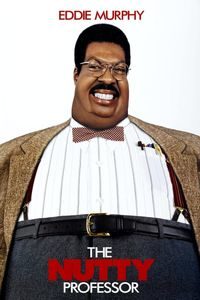
  • The Nutty Professor (1996)

    The Nutty Professor (1996)

    (On TV, October 1999) There is a bit more to this film than fat jokes and juvenile gross-out humour, but not that much more. Some of the screenwriting is so obvious that it’s painful. The romance between the two leads isn’t exactly believable. On the other hand, there are a few cute visual gags (the hamster invasion, the Fatzilla dream sequence) and the remainder of the film flows relatively well. Not worth bothering yourself, but a good past-time if ever it plays on TV while you’re washing dishes.

  • Notting Hill (1999)

    Notting Hill (1999)

    (In theaters, October 1999) The manufactured product of some people who obviously know what they’re doing. The radiant Julia Roberts is as comfortable in her screen personae as floppy-haired Hugh Grant is in his character. (Even though his infamous blinking-eye tic nearly destroys one of the film’s most dramatic scene) The script is carefully crafted to elicit the desired emotions from the viewers. The comedy is introduced, however unsubtly, at the appropriate moment. The English locale is exploited with maximum colourfulness. There’s even a nice element of fantasy as the female actress protagonist wins an Oscar for her role in a science-fiction film. (!) The result is as pleasant as the filmmakers intended.

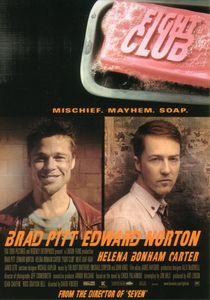
  • Fight Club (1999)

    Fight Club (1999)

    (In theaters, October 1999) So what is this film? It’s an insanely dense, non-stop cinematographic delight. It’s a mesmerizing big-budget social satire about consumerism. It’s a triumph for director David Fincher and actors Brad Pitt and Ed Norton. It’s more than the Gen-X equivalent to American Beauty; it’s a declaration of war between Gen-X and the Baby-Boomers. It’s a raucously funny, intensely cool film. It’s a multi-level script rife with quotable material. It’s aimed straight at young single males. It’s a wonderful soundtrack. It’s something that stays in your mind for a while. It’s something to be talked about. It’s easily one of the best films of 1999. It’s a must-see.