Reviews

  • Factoring Humanity, Robert J. Sawyer

    Tor, 1998, 350 pages, C$31.95 hc, ISBN 0-312-86458-2

    Robert J. Sawyer’s latest novel, Factoring Humanity, is about a estranged couple. Heather Davis is a psychology teacher at the university of Toronto: She had devoted her career to the deciphering of an ongoing alien message. Kyle Davis is a computer scientist: He’s working on artificial intelligence and quantum computing. In the first chapter, the gulf between the separated couple widens as their daughter accuses Kyle of sexual abuse. During this family crisis, the extraterrestrial message stops and strange individuals begin to have more than a passive interest in Kyle’s research…

    Good? Bad? It won’t surprise anyone to learn that Factoring Humanity confirms what most fans already know about Robert J. Sawyer’s fiction.

    One: It’s unusually readable. Sawyer’s journalistic training has taught him to write concisely, which is a change from the over-padded SF&F trilogies that we almost take for granted. The prose style is compulsively readable, a combination of effective writing and intellectual suspense.

    The pattern repeats itself with his latest novel. Don’t bother looking for a bookmark before reading Factoring Humanity: Chances are you won’t put it down before reading the last line. On one hand, it’s a wonderful reading experience to be absorbed so completely in a novel. On another hand, it’s disappointing to finish a pricey hardcover in a single afternoon.

    Two: The Big Ideas are there. After tackling death and the soul (The Terminal Experiment), cosmology and immortality (Starplex), genetic destiny (Frameshift) and the legal ramifications of accusing an alien of murder (Illegal Alien), Sawyer takes on the matter of (collective) consciousness in Factoring Humanity. Add to that the trifles of artificial intelligence, quantum computing and extraterrestrial messages and we get a busy book.

    Almost too busy. Even though the book’s already full of interesting themes, Sawyer still piles up more, with the effect that some of the subplots seem rushed. For instance, much more could have been done with Cheetah, the “Approximate Psychological Experiences” computer simulation which has a small part in Factoring Humanity: it could have been the subject of a story by itself. (Later on near the end, we almost expect Sawyer to link Cheetah’s thread with the “organic consciousness” issue… it doesn’t quite happen. And it’s difficult to be more explicit without spoilers.)

    Three: A more forgiving ability to suspend disbelief is necessary. For all its virtues, Sawyer’s fiction is always somewhat suspicious in plotting. Coincidences, unlikely character relations, half-integrated plot elements are always there to help the plot advance, whether it makes natural sense or not. There always seems to be a few contrived situations here and there. (Witness, per example, the unusually high proportion of exotic genetic problems around the protagonist of Frameshift. Or the earthquake in Far-seer. Or the diary in End of an Era. Or…) Some of the character’s psychology is also slightly suspicious.

    Factoring Humanity repeats this accumulation of unlikeliness by linking the discovery of another extraterrestrial message to Heather Davis’s ex-boyfriend, among other things. The novel also has the added disadvantage (?) of luring the reader with a hard-SF beginning, only to end with a distinctively metaphysical tone.

    Four: Sawyer’s usual themes are there. Religion and matrimonial problems once again find their way here, which isn’t a surprise since most of Sawyer’s novels so far have included something like this. Philip K. Dick once said that the greatest failing of SF was its inability to deal with marriage. It seems that Sawyer is single-handedly proving Dick wrong.

    Five: You will read it. Not only is Factoring Humanity a strong contender for next’s year’s awards, it also shows why Robert J. Sawyer is now the foremost SF writer in Canada today. Hugo, Nebula and Aurora alert!
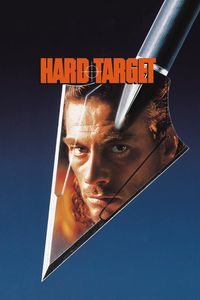
  • Hard Target (1993)

    Hard Target (1993)

    (On TV, June 1998) Take possibly the best action director on the planet at the time (John Woo). Take one of the blandest action “star” of the moment (Jean-Claude Van Damme). Take one of the most routinely average B-movie action script possible. Mix’em up together and you get Hard Target, possibly the most beautifully directed action B-movie ever. It’s far beyond ludicrous, it doesn’t have any surprises, it’s impossibly outlandish, but even then the directing is so compelling that it elevates the whole to a watchable state. Woo couldn’t make it any good, but he could make it impressive. A portentous fore-runner to Broken Arrow, and the superlative Face/Off.

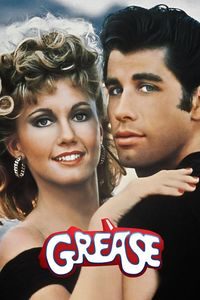
  • Grease (1978)

    Grease (1978)

    (On TV, June 1998) My sister was almost speechless when she realized that I was watching Grease for the first time. “It’s a classic!” she finally said. “It’s a movie that defined a generation!” Well, maybe not, but it has a certain naive charm. Never mind that their fifties is a complete figment of their imagination, Grease is fun to watch, especially with a young John Travolta (and an equally-young Jeff Conaway, of Babylon-5 fame) The songs aren’t that good, but there are at least two memorably snappy tunes (“Summer Nights” and “We go Together”). Mercifully, the French version I saw had the good sense to keep the musical numbers in their original English version.

  • Dip huet seung hung [The Killer] (1989)

    Dip huet seung hung [The Killer] (1989)

    (On VHS, June 1998) Before coming to America and directing Hard Target, Broken Arrow and Face/Off (each much better than the previous), John Woo was already a famous movie-maker in his native Hong Kong. There, he wrote are directed several action movies that are now coming over to North American video stores. The Killer is reportedly one of his best efforts. The film might seem a bit unpolished by Hollywood standards, but still contains a native energy that is amazing to watch. The gun battles are even more over the top than almost any other movie. The story, while not perfect, works. In its own way, The Killer is as preposterous as any Jackie Chan movie, but made dramatic rather than comedic. A quirky choice, but memorable.

  • Masque, F. Paul Wilson and Matthew J. Costello

    Warner Aspect, 1998, 342 pages, C$29.00 hc, ISBN 0-446-51977-4

    It’s funny how books can remind you of food.

    I have absolutely no idea why this is so.

    Maybe it’s a purely personal prejudice: after all, I can’t go a few days without some reading much as I can’t go more than a few hours without food.

    Maybe it’s because you eventually learn that beyond “good” and “bad” books, there are books that are perfectly adequate without being any good and there are great books that somehow fail to satisfy you. Rather like food doesn’t necessarily divide itself between “poisonous” and “healthy”.

    Masque, for instance, is the SF equivalent of a meat and potato meal with a small amount of soya sauce thrown in: completely ordinary, but with a few interesting bits.

    Since van Vogt’s Slan (and probably even before then), science-fiction has always had a soft spot for ostracised minorities with special talents. In Masque, we have Mimes, a group of genetically-tailored humanoids that can change their shape according to specially programmed templates. In this story, all Mimes are owned by warring corporations (yes, it’s a wacky wonderful cyberpunk future all over again!) to be used as spies whose identities can be re-created at each mission.

    (Scientific verisimilitude of humanoids able to change to another form in a matter of minutes is interestingly obscured by convincingly-sounding techno-babble, but the basic premise remains pretty unbelievable.)

    Our hero is Tristan, a mime who is about to accomplish the final mission of his contract. It seems simple: infiltrate an enemy base and steal plans. Of course, obstacles will turn up. Whether it’s inconvenient scruples, mutants, underground sects, fighting pits or constancy duplicity, Tristan will soon discover he’s way over his head in tactical complexity.

    Nobody will be shocked to learn that he meets a girl, kills bad guys and overthrows a regime or two before the end. No surprises here. Scant excitement too. Masque plays it very safe by using Standard Plot #32 and portraying the protagonist as a sweet, almost innocent hero-to-cheer-for. Why? Because he’s sweet, innocent and the protagonist.

    Which is to say that there’s some character development, but not that much of it. No matter: even the freshest characters this side of Shakespeare couldn’t have saved this pretty generic SF thriller from bare adequacy.

    Science-Fiction, like science itself, advances primarily through individual contributions to the whole discipline. Despite having done a competent job at cribbing together elements from umpteenth stories, Wilson and Costello’s advances to the genre are pretty equal to nil.

    Still, Masque has a legitimate place in the SF ecology. By being an adequate thriller, it might be translated to the screen and become an unusually smart SF thriller. It might introduce readers to SF. It might be something to read while waiting for the next good SF novel. It might make money for Warner Aspect. It might entertain a few readers for a few hours.

    Grossly overpriced as a hardcover (this is the prototypic paperback SF novel if I ever saw one!), Masque might still, given these caveats, be a good choice at your local library. But only if there’s nothing better available in the New Arrivals bookshelf.

    Going back to the food analogy, Masque is average fast-food, competently put together by chefs who have the capacity to do much, much better. It will fill you up until the next meal, but will also quickly evaporate from your memory when said next meal will arrive.

  • Cadillac Man (1990)

    Cadillac Man (1990)

    (On TV, June 1998) This was actually the second time I saw the movie. The first time, I saw only the latter half of the movie, during which a hostage situation happens. This time around, I saw all the development. My conclusion is that it’s a pretty good hostage comedy, but that the first hour can be safely skipped. Otherwise, you get a movie that goes awry at mid-point. Robin Williams is okay. Oh, and the girls are pretty cute.

  • Austin Powers: International Man of Mystery (1997)

    Austin Powers: International Man of Mystery (1997)

    (On VHS, June 1998) “Groovy, baby!” are the two last words in Austin Powers‘s credits, and they describe the film quite well. An outrageous mix of sixties parody and very nineties comedy, the movie gains a lot from the presence of Mike Myers. Sure, it’s not exactly well-balanced nor completely successful, but the overall tone is so original (if this can be said of a parody) that it hits more than it misses. The character of Austin Powers himself will probably remain a part of my imagination forever. Yeah, baby, yeah!

  • Evolution’s Shore, Ian McDonald

    Bantam Spectra, 1995, 401 pages, C$7.99 mmpb, ISBN 0-553-57309-8

    Once upon a time, in a country far away, a few happy people were sitting somewhere. Then, suddenly, a man came to them and said “It’s coming!”. They looked at him. “It’s coming!” he said again. “What is coming?” they asked. “IT’s coming!” the man said. Then he left.

    The people, now less happy, wondered what was coming. So they waited, and they wondered. Then they waited some more and wondered some more.

    And then IT came.

    End of story.

    Quoting from the back cover:

    “It began with strange activities on one of Saturn’s moons. Then came the meteor strike on Mount Kilimanjaro in Africa, followed by an alien infestation by a strange vegetative life-form. For Gaby McAslan and her SkyNet news team, this is the story of a lifetime. As the Dark Continent becomes a frenzied backdrop of apocalyptic anticipation, Gaby fights to be the first to get to the truth.

    It the alien infestation an invasion or a gift? Does it mean destruction or evolution? Does it spell the final chapter for humanity… or just the beginning?”

    Bad news: You will never get the answers to these questions.

    Good news: Evolution’s Shore is good enough that you might never notice.

    Evolution’s Shore follows the adventures of Gaby McAslan, (a Slan?) a video-journalist covering the ceaseless expansion of an alien life-form in Africa. It’s an enjoyable ride: McDonald writes well, and maintains an effective level of intellectual tension throughout.

    Characterisation is okay, although the members of Gaby’s news teams remain a bit out of focus, which is unfortunate when bad things begin happening to them. As for the protagonist… since this is a “serious” science-fiction novel, Gaby’s psyche is thoroughly examined and explored. Her sexual hang-ups are described in detail and her mental anguish often takes precedence over plot development.

    One shining aspect of the novel is are the vivid images written by McDonald. Evolution’s Shore contains several memorable scenes, which help make the book stick in memory some time after you’ve turned the final page. The author’s imagination shines through.

    However, it is unfortunate that this imagination stops before the ending: Evolution’s Shore teases but does not deliver. The novel breaks off at the moment of ultimate revelation and we are left wondering at the outcome of it all. Maybe McDonald is preparing a sequel, but as such, Evolution’s Shore is a disappointment as a self-contained novel.

    Nevertheless, given the well-written prose, mesmerizing scenes, overall interest and original premise, Evolution’s Shore is well worth a read. Far too few novels deal with Africa, evolution-beyond-humans or original alien concepts… It’s a shame that it brings back memories of Waiting for Godot, but then again, Waiting for Godot wasn’t entirely bad.

  • The Ringworld Throne, Larry Niven

    Del Rey, 1996, 355 pages, C$8.99 mmpb, ISBN 0-345-41296-6

    They say that there’s a difference between saying “it sucks” and “it didn’t work for me.”

    Let’s try it.

    The Ringworld Throne didn’t work for me because first of all, I was bored stiff by it. Somehow, it seems that since… oh… 1980, Larry Niven has forgotten his previous success as a straight storyteller, and has settled in a comfortable position of Science-Fiction Elder. The result is that most of his single novels (he’s still okay in collaborations, with exceptions: See The Gripping Hand) are interminable, peculiar, monotonous and lifeless. The sense of boundless fun to apparent in the early Niven work has virtually disappeared. As a result, we readers have to slog through more that half The Ringworld Throne before something interesting happens. And when something does happens, it’s still unimpressive. Even though we eventually get to something approaching a conflict about the whole Ringworld, the setup is so flat that the whole book itself becomes dull. The focus, most of the time, remains on the small problems of a few humanoids on the Ringworld.

    The Ringworld Throne didn’t work for me because it didn’t grab my interest in the characters. For a third book in a series, you would think that we would spend a lot of time with the characters of the previous novel. Not so. By the time perennial Niven favorite Louis Wu makes a substantial appearance, we’ve had almost two hundred pages of assorted travels with new, underdeveloped characters. We never care for them, Niven never cares for us. There’s a dramatis personae at the end, but it’s irrelevant since all characters seems to condense in a single nameless mass. While Wu is on stage for some time, it doesn’t seem enough. Even Wu’s usual verve seems almost extinguished this time around.

    The Ringworld Throne didn’t work for me because it didn’t use its setting to its full potential. Admittedly, this has always been a problem with the Ringworld series: While the concept of a ring around the sun large enough to accommodate the landmass of a zillion planets seems promising enough, how do you make an interesting story about that? The suspicious plotting in Ringworld and The Ringworld Engineers only highlighted this. I’ve never been too fond of the unlikely aspects of the Ringworld series (Teela Brown bred for luck? Please. Rishathra? Puh-lease!) and The Ringworld Throne takes an almost childish delight in bringing these concepts back and harping on them. The final result is the use one of the biggest object ever imagined to tell a over-padded story of warring tribes. Ugh! I’d rather read something about Ian Bank’s Orbitals.

    The Ringworld Throne didn’t work for me because, as if it wasn’t enough yet, it’s almost a fantasy novel that could have taken place anywhere else. I’m not sure we really needed “vampires” and “ghouls” on Ringworld. Perhaps Niven should have taken this little neat idea(s) of his for a third Ringworld novel and stuffed them into a little black box safely hidden away. I won’t shy away from calling this a bunch of words with only scant legitimacy to the Ringworld succession. Bad idea, bad execution, bad, bad novel.

    Oh heck, I’ve given it a shot. Now let’s call it like it is:

    The Ringworld Throne sucks.

  • Relic, Douglas Preston & Lincoln Child

    Tor, 1995, 474 pages, C$7.99 mmpb, ISBN 0-812-54326-2

    Thriller fans, rejoice.

    You want a scary concept? Imagine a creature, snatched deep from the unexplored Amazonian jungles and brought to New York City. A perfect predator, with the intelligence of a human and the robustness and reflexes of a large reptile. It kills. It eat parts of the victim’s brain. It can’t be shot, it can’t be found…

    You want a scary setting? Imagine the New York Museum of Natural History. Halls and rooms and corridors filled with bones and statue and skulls… Abandoned basements left unexplored for decades… Rooms where bugs lovingly eat the flesh of dead animals so their bones can be easily cleaned… An opening exhibition on the subject of Superstition.

    You want characters? Imagine Margo Green, young museum researcher. Imagine Dr. Frock, an old wheelchair-bound iconoclast. Imagine Lt. Pendergast, a police lieutenant with the mind of Sherlock Holmes and the street smarts of the best noir detectives. Imagine Bill Smithback, a young journalist with dreams of glory, but a book project hampered by the Museum’s management. Imagine ambitious researchers, overbearing police officers, a control-freak public relation officer, a New York City mayor and a host of other characters.

    You want an unlikely succession of events? Imagine that days before the opening of the major exhibition on Superstition, bodies of visitors are found in the museum, horribly mutilated. On the night of the glitzy opening, the killings continue… but everyone’s trapped and the classical storm is raging outside the building.

    Given all these elements, it’s no surprise to see that Relic is a pretty enjoyable thriller. The events happen in much the same way that you’d expect them to, with the gradual unveiling of a terrible threat and the impossibly complicated final setup. There are pretty neat final revelations at the end of the narrative. It’s fairly well constructed, doesn’t loses time with needless maudlin romance and lets us wander down the hall of a fascinating place. The style is also at the standard thriller level, which means that clarity takes precedence and that you’ll be able to breeze through Relic‘s fat 450+ pages in almost no time.

    It’s interesting to note, however, that this reviewer has a slightly disappointed opinion of the final result. Despite valiant efforts, Child and Preston don’t seem to make the extra step that would transform Relic from a pretty good thriller to a truly stupendous one.

    Maybe the fault lies with the characters, who for some reason come along as adequate, but not overly sympathetic. As it is often the case with this kind of book, the world is divided between villains and heroes, and the distinction is pretty clear-cut. Bad things usually happen to bad guys, and the heroes all survive to party another day.

    Part of the fault might also lies with the science, which sounds plausible but is still unconvincing. Okay, so there are polysyllabic words, but when you strip them away, you still get a Star Trek: Voyager-type situation. It’s interesting, but not very persuasive. (Not having seen the much-ridiculed movie version of Relic, this reviewer suspects -but cannot prove- that this is what happened in the paper-to-screen translation.)

    But the biggest flaw seems to be the level of improbability of the story-line, which places most of New York’s elite in the grips of the monster with glee but not with a lot of justification. And though it might be nonsense to say so, the book seems to lag a bit in the second third.

    Which isn’t to say that you shouldn’t grab Relic the next time you’re in the mood for this type of reading. It’s the classical Beach Reading book that sells copies because it more than satisfies the reader’s expectation.

  • To Say Nothing of the Dog, Connie Willis

    Bantam Spectra, 1997, 434 pages, C$32.95 hc, ISBN 0-553-09995-7

    Only Connie Willis could have pulled off this novel.

    Connie Willis: Multiple Nebula and Hugo winner, author of the celebrated 1992 time-travel tear-jerker Doomsday Book and all-around good person.

    This novel: To Say Nothing of the Dog is delightful mixture of Victorian fiction, romance, mystery, time-travel thriller and screwball comedy. It begins when historian Ned Henry, suffering severely from time-lag, is transported to 1888 so he can rest a little from a harried search for a nearly-useless artifact. Of course, he only has to accomplish a very, very easy task first… It’s not hard to guess that the task will be bungled, and will be made worse by successive “corrections.” In this case, the traditional devices of the screwball comedies are complicated by the perils and peculiarities of time-travel.

    Pulling it off: There aren’t many words in the English language that describe To Say Nothing of the Dog as well as “delightful”. I first began to read more with a sense of duty and homework. After fifty pages, I seriously wondered why I was spending my time reading this particular book when there were so many other in my reading stack. A few dozen pages later, I didn’t wonder any more: I was hooked of the characters and (mis) adventures of Ned, Verity, Cyris, Princesse Adjumante, Terence, Toodles and the remainder of the cast.

    Despite a slow start, To Say Nothing of the Dog grabs the reader and reels them in. A large part of this is due to the style, which brings back fond memories of, simultaneously, victorian-era novels, Agatha Christie mysteries, P.G. Wodehouse stories… and of course, Connie Willis at her best. (I guess Jerome K. Jerome must be there somewhere, but I lack the literary references to say for sure. Although Jerome’s characters are in To Say Nothing of the Dog, which in turn is the subtitle of Jerome’s Three Men in a Boat.) The writing is slightly enlivened (in a historical way), but gripping once the reader is immersed in it.

    There isn’t a single romance in this novel; there are three of them. And they all end happily. (As if there was any doubt!) Sympathetic characterization is one of Willis’s many talents, and this novel relies heavily on it.

    It’s an amusing misnomer to call this “a new SF book” since it’s a strongly nostalgic work that plays heavily on the reader’s memories of widely disparate works. This novel, even though it’s an unassuming comedy, plays much better among those readers with a strong background in these types of fiction.

    Needless to say, Willis’ own Doomsday Book is essential background reading: I see To Say Nothing of the Dog as the antithesis of her earlier Hugo-Winning novel, the comedic equivalent to the intense drama of the previous book. An antidote or an apology, Willis took risks in sharing the same future history for both novels. I hope that reader that were disappointed by either will like the other.

    It might just be me, but after Remake, Bellwether and now To Say Nothing of the Dog, Willis has solidified her standing position as one of the best, most humane authors that SF has to offer at the moment. Not hard-SF, no, but still an essential part of today’s scene.

  • Icon, Frederick Forsyth

    Bantam, 1996, 567 pages, C$9.99 mmpb, ISBN 0-552-13991-2

    It must be a difficult time to be a spy-thriller writer. With the Soviet Union down and out, with the climate of global harmony (more or less) reigning over the civilized countries of the world, what can they write about?

    Usually, they fall back on history, invent new enemies or write about something else altogether. Frederick Forsyth does a bit of all of this in his latest novel, Icon.

    A note to would-be authors everywhere: This is how a master begins a novel:

    “It was the summer when the price of a small loaf of bread topped a million rubles.

    It was the summer of the third consecutive year of wheat crop failures and the second of hyper-inflation.

    It was the summer when in the back alleys of the far-away provincial towns the first Russians began dying of malnutrition.

    It was the summer when the president collapsed in his limousine too far from help to be saved, and an old office cleaner stole a document.

    After that nothing would ever be the same.

    It was the summer of 1999.”

    Frederick Forsyth is not an unknown author. His first book, The Day of the Jackal, was one of the best thrillers -nay, novel- of the seventies. He has been a steady bestseller even since. Icon is his twelfth book, and he has not lost one bit of his talent.

    What to expect from a Forsyth novel? A very complex plot. Multidimensional characters. A succession of fascinating details. A solid grasp of politics. Clear, delightful prose. Surprises backed-up by solid facts. Some action. And some of the best suspense you can find in prose.

    While ex-journalist Forsyth has made his reputation writing near-past thrillers artfully blending fact and fiction, Icon goes in the other direction and becomes a near-future thriller about a mad politician in Russia just about to become prime minister. It’s also about a master spy name Jason Monk, destroyed by Aldritch Ames, the KGB mole inside CIA in the eighties. It’s about how to stop a madman from taking power. It’s about the dangers of a fallen superpower. But most of all, it’s about a couple of hours of good, solid entertainment.

    Unlike some other spy writers (Seymour, LeCarre), Forsyth has never lost his goal of a pleasant read. It’s complex, but the prose isn’t, and this rather convoluted plot thus becomes sufficiently accessible.

    Goodness is in the details, and Forsyth once again fills up his novel with a dizzying array of well-researched facts. His chronicle of Aldrich Ames is as fascinating as it is discouraging. It’s impressive that this wealth of minutia never slows down the narrative, or bore the reader. Pure storytelling is among Forsyth’s skills, and he shows off a clear example in Icon by interleaving in the first half of the book the early career of Jason Monk and the main plot of the novel. (By the time Monk joins the main story, his back story is fully introduced; a virtuoso feat of narrative structure.) Icon loses some steam in the second half, and somehow does not fully attain a superior level, but still holds the interest.

    Demanding readers are unlikely to be disappointed by Icon. It’s refreshing, in an ironic kind of way, to see that the spy thriller genre isn’t dead yet. Even better, this novel shows that Forsyth is still at the top of his game, after a few average-to-good books that disappointed some. A marvel of summer reading, Icon is big enough to mesmerize during several hours.

    Enjoy.

  • Adiamante, L.E. Modesitt, Jr.

    Tor, 1996, 312 pages, C$8.99 mmpb, ISBN 0-812-54558-3

    Thousands of years after being exiled from Earth, an evolved subset of humanity comes back seeking reparations. If the population of Earth can’t agree to give what they want, well, destruction might as well be as good as anything…

    Intrigued? There’s more.

    For instance, the returning humans are cybernetically enhanced humans. Their ships are almost indestructible. Their weapons are terrifying.

    The humans on Earth have established a decentralized society that is very near utopia. There are un-enhanced humans, but most of the elite is composed of, again, enhanced humans.

    The would-be destroyers are willing to negotiate, so Earth assigns negotiation to a reluctant man. His problem, beyond -obviously- avoiding destruction, is to deal with the threat in a manner that will not transgress the basic principles of his society. This future Earth is unwilling to become a monster to fight monsters.

    The plot is original. Fortunately, Modesitt’s writing is up to the task. Adiamante alternates between the third-person viewpoint of the invaders and the first-person narrative of the Coordinator. The result is one akin to a psychological poker game with ever-rising bets. Only rarely do novels manage to attain -and sustain- this level of intellectual tension.

    Part of this success must be attributed to Modesitt’s world-building. His future Earth may not be believable (see below) but is fairly consistent. The moral choices are explicitly defined. Some novels quickly gloss over the political structure of the future -especially when they’re not readily identifiable as “straight” democracy or dictatorship- but Modesitt takes great care in filling in the details of his society.

    This shouldn’t be a surprise to anyone aware of Modesitt’s previous works. A long-time favorite of the Libertarians, Modesitt obviously has an agenda. Still, he manages to produce an entertaining novel without (too many) political messages. This critic didn’t really believe in Modesitt’s postulated system, but it’s a fine idea anyway. Other readers with sufficiently open minds should have no problems with this.

    The heart of the novel is a clash between the incompatible cultures. The title Adiamante is well-chosen, reflecting both the adiamante motif in the book and the rigid positions of both parties. (Adiamante being in the novel a practically indestructible material, much stronger than diamond.) The science in this novel is believable and exciting: There’s a vivid description of advanced weapons for persons so inclined.

    Adiamante has the distinction of offering a vision of the future that’s fresh without being too alien. While the narrative may be predictable, at least the setup offers an original situation. The new animal species populating Earth, for instance, are logical and frightening.

    Some of the characters could have been brought out of the background a bit, but since this is more of a premise-driven novel, it makes sense to develop only two of them.

    Very enjoyable, nicely written, provocative without being (too much) pontificating, Adiamante is a good choice for SF that’s both entertaining and intellectually stimulating.

  • The Sea Hunters, Clive Cussler & Craig Dirgo

    Simon & Schuster, 1996, 364 pages, C$32.50 hc, ISBN 0-684-83027-2

    Even the most casual reader has probably heard of Clive Cussler. Author of almost fifteen novels, Cussler has enjoyed a sting of bestsellers starring an delightfully wisecracking hero named Dirk Pitt. Starting with the success of Raise the Titanic!, Cussler has become the foremost writer of adventures today.

    I’m not much of a fan of Cussler, even though I’ve read most Dirk Pitt adventures. It’s what I call fast-food novels; highly entertaining, but mostly empty. It doesn’t help that almost all Pitt novels are precisely constructed over the same framework; they do tend to be repetitive after a while. But at a rate of, oh, once a year or two, Cussler’s books are usually a good way to pass the time.

    What most Cussler fans didn’t know was that Cussler himself shares some of his literary alter ego’s adventurous traits. As Cussler himself explains, he used some of Raise the Titanic‘s royalties to fund his first small-scale expedition to find lost shipwrecks. It didn’t go well, but Cussler was hooked. Since then, he goes out at least once a year to look for lost ships. Cussler is in the shipwreck business for the excitement, not the money. He doesn’t take souvenirs of the shipwrecks, or loot his finds. When he finds the wreck, he report the positions to everyone. Local authorities then may choose to raise the wreck or not. The Sea Hunters is a collection of his most memorable adventures.

    There are approximately ten shipwrecks covered in The Sea Hunters, and each account is preceded by a fictionalized account of the last moments of each ship. (Much like the prologue of each Cussler book, in fact.) To be entirely fair, I skimmed over most of these historical dramas. While they’re useful to the context, they rarely bring something essential to the discovery stories. (Since each search account is written at the first person by Cussler, the historical docu-dramas might have been Dirgo’s contributions to the book.)

    In any case, the accounts of Cussler’s travels are the real treasures of The Sea Hunters. Cussler takes us with him through research and discovery, enabling us to taste some of the excitement of these sea hunts. Cussler explains that not only are there a lot of lost ships, but most of them can be found cheaply (if not always easily) provided a few dozen hours of careful research.

    Some of the highlights of The Sea Hunters involve a lost ship eventually found under a parking lot, another destroyed barely hours before Cussler got to it and another adventure where they search for a sunken… train. But the most rollicking and hilarious adventure is wisely kept for the finale, where Cussler and his band of merry adventurers go against nothing less that the French government, secret services and a French frigate! This part alone contains several laugh-aloud moments.

    It’s easy to see where Dirk Pitt got his talent for witty repartee: Cussler knows how to tell a story, and this book shows it. The contemporary search accounts are compulsively readable, and rarely dull.

    The Sea Hunters offer a look at an author that’s definitely not your usual novelist. I’ve become more of a Cussler fan after reading this, and that’s probably the nicest thing I can say about this already memorable book. Cussler fans might want to take a look. Other might find this a good introduction to Cussler.

  • Lightpaths, Howard V. Hendrix

    Ace, 1997, 345 pages, C$7.99 mmpb, ISBN 0-441-00470-9

    Looking at the bookstore shelves nowadays, it would be too easy to think of science-fiction as a dead genre, replaced by fat fantasy trilogies, endless media spin-offs and cheap thrillers with aliens and laser guns. But, despite the endless moaning of doom from many (this critic occasionally included), this is simply not true. There has rarely been so much good, serious hard-SF fiction published at a same time. Looking at the May 1998 SF bestseller lists, we can see books from such dignified examples of good, hard SF writers like Clarke (3001), Benford (Cosm and Foundation’s Fear), McDevitt (Moonfall and Eternity Road), Flynn (The Forest of Time), Bear (Dinosaur Summer and Foundation and Chaos) and Bova (Moonwar), with Cramer (Einstein’s Bridge) and Brin (Heaven’s Reach) waiting in the wings.

    Not only isn’t hard-SF dead yet, it’s not even sick.

    Past these powerhouses of hard-SF, many other writers are writing perfectly delightful works that deftly combine serious extrapolation, scientific knowledge and narrative savvy. Lightships (Howard V. Hendrix) is a perfectly acceptable example of them.

    Almost half a century in the future, events come to a head inside and around an orbital complex high above the Earth: A socially-engineered Utopia is threatened by factors both internal and external. A computer system might attain sentience. A male researcher with a voyeurist masochist fetish seeks to design a fool-proof population-reduction device and transform human society into a highly selective matriarchy. Meanwhile, his female co-worker is working on an immortality plague. Mysterious X-shaped objects are being manufactured in space around the complex. During that time, a highly popular musical group is giving concerts on the habitat.

    Even in nearly 350 pages, there is a lot of material in Lightpaths. It’s almost ridiculous at times (A conversation almost turns into something like “Hi! I’m working on a way to diminish Earth’s population. You?” “Oh, I’m finishing my work on immortality.”) but it does make for interesting reading. Woven with great skill throughout almost all facets of the book is the motif of Utopia.

    This book offers a lot of food for thought. Even the questions asked by Hendrix aren’t as easy as one might suppose: He is a writer with great ambitions, matched with obvious talent. Especially catchy are the invented musical lyrics, which can easily be hummed. It will be interesting to see where Hendrix goes next.

    Which is not saying that the book is flawless. The cover quote is by Robert J. Sawyer, who says “If Robert A. Heinlein had grown up reading William Gibson… Lightpaths is the novel he’d have written.” While it’s easy to see why Sawyer used this simile (Lightpaths‘s utopia has distinct Libertarian overtones, and there is a distinctively cyberpunk edge to at least one subplot… then there’s the Gibsonesque writing style) it must be said that Hendrix still doesn’t master the sheer narrative verve that Heinlein used so well.

    If Lightpaths is great food for thought, is fare substantially less well as pure entertainment. The prose style is not compulsively readable. The characters are fully realized but a bit bland, and have a certain delight for indulging in endless conversations. There isn’t a lot of action until the end of the book. After all has been said and done… it does seems like opportunities have been missed.

    Nevertheless, Lightpaths is still worth a look, especially if you’re interested in promising young authors, the theme of Utopia, cyberpunk-inspired prose or the current state of SF. It’s original, fully-conceived and a bit disappointing. But it clearly demonstrates the kind of good SF that can be found right now on library shelves, provided you’re willing to take risks and explore a bit.