Charles Coburn

  • George Washington Slept Here (1942)

    (On Cable TV, February 2022) It’s tempting to compare George Washington Slept Here with Mr. Blandings Builds His Dream House. Both films, after all, are Classic Hollywood comedies about an urbanite (played by an actor with significant comic credentials) who moves to the country and experiences numerous difficulties trying to achieve his rural dream. But the differences are obvious early on: Jack Benny is no Cary Grant, and his first scene, in which he verbally harangues his black servant, is not an endearing one at all. Spending much of the film being annoyed at the protagonist (who spends his time complaining about everything, and barely seems to like his wife) is no way to enjoy a film, and it takes just about everything—most notably a spirited turn by Charles Coburn as a secretly-destitute uncle—not to shut down the whole thing. Now, I strongly suspect that I don’t know enough about Benny’s persona to be sympathetic to it: seen cold, he just seems like a miserable, bigoted, hateful miser and that’s a very poor foundation for any comedy. George Washington Slept Here does have a few chuckles (plus a lovely Ann Sheridan), but it never quite escapes the bad first impression left by its star, nor the far better memories of the admittedly flawed Mr. Blandings Builds His Dream House.
  • The Green Years (1946)

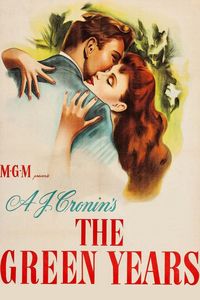
    The Green Years (1946)

    (On Cable TV, April 2021) There is, on paper, not much to distinguish The Green Years from stereotypical Dickensian sad stories, as a young orphan boy comes to stay with distant relatives after losing his mother. Despite the inevitable setbacks and villains, trials and tribulations, we can broadly guess where the story is going to go—but that doesn’t really take into account the likable Oscar-nominated performance of Charles Coburn as the patriarch who takes our plucky protagonist under his wing, often going against the indifference or outright hostility of other members of the family. Also noteworthy are long-time couple Hume Cronyn and Jessica Tandy, amusingly playing father-and-daughter. The Green Years is not that good, but it does have its fine moments and the kind of fist-pumping victory (with a side order of vengeance from the grave) that we expect from such family melodramas.

  • The More the Merrier (1943)

    The More the Merrier (1943)

    (On Cable TV, November 2019) Sure, yes, you can watch WW2 military dramas all day long, but there was plenty going on at home during that time, and The More the Merrier takes as pretext the comparatively little-known wartime housing shortage in Washington, DC, during the war, as government needs rapidly expanded past the housing supply. While, in real life, this led to tension, overcrowding and bed-sharing, this romantic comedy uses the situation as a pretext to some silly shenanigans. Jean Arthur plays a woman subletting her apartment, while Charles Coburn is all scene-stealing twinkles as an older rich man subletting his half of her apartment to a suitable soldier played by the ever-affable Joel McCrea. Sparks fly in many different directions in a plot set in a very specific situation where eligible men are scarce and privacy is in even shorter supply. Arthur and McCrea make for a fine pair, but it’s Coburn who gets the best role here as an independently rich retiree who engineers their romance. (When the film was remade in the mid-1960s as Walk, Don’t Run, that role ended up being Cary Grant’s final turn.) While The More the Merrier isn’t particularly ambitious, it’s quite successful at managing the little bit of chaos it has created for itself. The ending doesn’t quite pull all of the threads together as tightly as it should, but don’t worry: Romance triumphs and everyone finds a place of their own. You can see why the film earned a Best Picture Academy Award nomination.