James Bond series

  • You Only Live Twice (1967)

    You Only Live Twice (1967)

    (Second viewing, On Blu-ray, September 2018) Bond goes to mid-sixties Japan in this fifth instalment (after a three-year break), and the film soon becomes one extended Orientalism riff. To be fair, Japan was considerably more exotic to Western audiences fifty years ago and the film wisely avoids much of the truly regrettable stuff. (Which isn’t to say that watching Bond doing in-universe yellowface isn’t mystifying, or that there isn’t a laugh or two in seeing the film laboriously explain what is a ninja.) The sexism is worse than the racism, but again there’s some slack to be cut given that the movie is fifty years old. Once you get past those problems, You Only Live Twice remains a strong Connery-era entry by codifying two of the series’ most defining icons: showing the scarred-face cat-petting villain Blofeld (later becoming Austin Powers’ Doctor Evil) and setting the climax in an underground lair in an extinct volcano. Add some spiffy space-age plot, a travelogue through then-mysterious Japan and you’ve got the making of a classic-formula Bond. (The script is from no less than Roald Dahl—and if you think that’s weird, check out who wrote the script for Chitty Chitty Bang Bang—who famously complained about the instructions he had been given regarding the number and nature of Bond Girls.) Bond doesn’t spend a single moment in England, but M and Q and Moneypenny all show up a few times to keep him on the right track. The special effects are ambitious and flawed, but the spirit of the sequences they serve is there. All things considered, You Only Live Twice remains a slight improvement over Thunderball. I first saw this film as a boy and remained mystified for a long time about the opening sequence and How could Bond actually come back from the dead?!?. The best thing about a jaded middle-age re-watch is that it now makes perfect sense that they faked his death, even if the specifics of the scene seem elusive.

  • Thunderball (1965)

    Thunderball (1965)

    (Second viewing, On Blu Ray, September 2018) By the time its fourth instalment came around (a remarkably short four years after its debut), the James Bond series had it all: a well-honed formula, a rapt audience and a star coasting on pure charisma. This may explain why, after the early highs of Goldfinger, its follow-up Thunderball can feel just a notch less interesting. Much of the elements are firmly in place: exotic locales (although recycling some of the Dr. No scenery), memorable Bond Girl Domino, even more memorable antagonist Largo, one of the biggest Bond Gadgets in the Disco Volante yacht that sheds its rear end to become a hydrofoil, and a big nuclear-driven plot. (Oh, and an unforgettable Tom Jones song.) Alas, much of the film is messier than needed: The opening segment set in a health clinic has a confusing game between Bond and prey (and a distasteful example of coerced seduction), many of the underwater scenes feel longer than needed, and some of the ambitious special effects don’t sustain contemporary scrutiny. Still, much of the fun of the classic Bond era remains. Sean Connery may be overfamiliar with the role by this fourth outing in four years, but he does remain as cool as the character has even been. Q is back with a few gadgets, we get a glimpse inside Spectre’s boardroom, but the one great scene in the film is one where the femme fatale explains in some detail that Bond will not turn her to the light side through his seductive powers. Otherwise, after three films where the Bond formula gets formalized, this is a film that feels more on autopilot than the others, even if the execution, with its numerous underwater sequences, feels as maximalist as it was possible at the time. It’s still good fun, and it’s going to be interesting to revisit its remake Never Say Never Again so shortly after seeing Thunderball.

  • Goldfinger (1964)

    Goldfinger (1964)

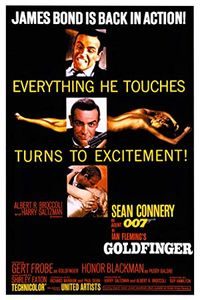
    (Second viewing, On Blu Ray, September 2018) The James Bond series really caught fire on its third outing, with Goldfinger hitting upon the mixture of overblown villainy, hot dames and cool secret agent. From the table-cutting laser to the modified Aston Martin, from the cheekily named Pussy Galore to the ludicrously exotic (and fictional) way of being killed with gold paint, from the stocky henchman to the final 007 timer count, you can finally feel the series tweak the formula that it would follow from then on. It helps that the film is above average in several aspects: Gert Fröbe makes for an oddly compelling villain, the evil plot is actually cleverer than usual, and if you pay attention, there is an interesting subversion of Bond’s role in having him being a bystander for much of the film. The already-established fundamentals of the series are there in good form: the globetrotting romp through a handful of countries, Q’s gadgets, and, of course, Sean Connery’s imitable yet unsurpassed charisma. In most technical aspects, Goldfinger has aged remarkably well: the gadgets feel contemporary, the period detail is fascinating (ah, that look at a mid-sixties American commercial strip!), the editing is more modern than contemporary standards, and the pacing holds up thanks to Bond’s early introduction compared to previous instalments. Alas, it’s not all great: the film’s sexism is often unbearable, whether you’re talking about the “man talk” slappy dismissal of a minor female character, or the plot hinging on a reluctant seduction with echoes of “Bond can turn any woman straight.” There are other annoyances (hey, Bond doesn’t like the Beatles!), but they don’t feel quite as unforgivable as the film’s clearly retrograde ideas about women. Oh well; at least we’ve got “No, Mister Bond, I expect you to DIE!” to fall back on.

  • From Russia With Love (1963)

    From Russia With Love (1963)

    (Second viewing, On Blu Ray, September 2018) I could have sworn that I had seen all the James Bond movies as a young teenager, but watching From Russia with Love has me doubting, because at the exception of the last five minutes, I remembered almost nothing of the film. Maybe I only caught the end of it when I was young. Maybe I saw it and didn’t care, because compared to other Bond movies, this one ranks much lower on the ludicrousness scale. I wouldn’t exactly call From Russia With Love realistic or subtle (there’s still SPECTRE, serial seductions and fancy gadgets to keep things interesting), but there’s a down-to-earth quality in Bond’s attempt to bring a Soviet “defector” home with a decoding machine that keeps it grounded. It feels dull compared to the excesses of other movies in the series, but it’s a rather good film from a dramatic perspective—especially considering that Bond’s enemies at least attempt to use his own weaknesses (the arrogance, the seduction) against him. Sean Connery is, once again, a delight as the debonair agent, with Daniella Bianchi being OK in a generic way as the main Bond Girl. (Eunice Gayson is a happy surprise, reprising her role from Dr. No.) With this second instalment, the James Bond formula gets a few more upgrades: Q and his gadgets show up, the credit sequence gets a naked dancing woman, Bond gets looser with the one-liners and the exploitation factor ramps up with a gratuitous catfight. While the spy plotting is much stronger in From Russia With Love than most entries in the series, the overall effect is duller than expected. (The lengthy prologue doesn’t help.) It does hint at a possible alternate reality where Bond movies would have stayed grounded in some kind of recognizable reality … but then the follow-up was Goldfinger.

  • Dr. No (1962)

    Dr. No (1962)

    (Second viewing, On Blu Ray, September 2018) I watched all Bond movies as a young teenager (Radio Canada used to play them, one after the other, each Saturday of the summer), so why not do it again as a middle-aged man? Dr. No is where it all begins, with a fully formed character from Ian Fleming’s series of novels. As a first instalment, you can see the general outline of the celebrated Bond formula although it’s not yet in focus nor as finely balanced as later instalments would be. The gadget sequence is a simple gun swap, the action isn’t as fetishized as subsequent movies (fights are over in an instant, although that speaks more to the evolution of the action genre than anything special about this first film) and the plotting is still very much within the realm of the plausible. The film is now fifty-five years old, and it shows in the technology, the cars, the billowing clouds of cigarette smoke, as well as the casual racism and sexism (including Miss Monnepenny’s harassment) built within the fabric of the story. Still, it works because the fundamentals are solid. Sean Connery is splendid as a slightly darker Bond than we’re used to (shooting a guy for no reason, etc.), establishing the character in an instant even as the film feels obliged to play his leitmotif at the slightest occasion. The location shooting is splendid, with plenty of local Bahamian atmosphere and colour. While some editing does feel leisurely, much of the film has the beat-to-beat pacing of modern movies (especially compared to some other early-sixties thrillers). Perhaps Dr. No’s biggest criticism is that, even and perhaps especially for a Bond film, it does feel perfunctory. The formula not having been perfected, the plot is a linear mad-scientist-and-his-lair thing, with a wholly optional Bond Girl (Ursula Andress, looking good in a fairly generic way) along the way. Choosing a non-aligned SPECTRE flunky as an antagonist rather than the more obvious Soviet menace is intriguing, but the film does drop minor characters and subplots like crazy, overplaying some suspense sequences (tarantulas are rather innocuous as venomous threats) while mishandling others such as the Dent face-off. Dr. No, perhaps inevitably, also suffers from uneven pacing—I found the first hour more interesting than the second, but that may have more to do with 1962 anthropology and spending time with Bond in real-world surroundings rather than the more generic infiltrating-the-lair focus of the second half. Still, truth be told, I did have a good time watching Bond’s first outing—it’s fun, the character is strong, and the period feel, almost reaching back in the fifties, is wonderful.

  • Everything or Nothing (2012)

    Everything or Nothing (2012)

    (On Cable TV, December 2013) As an officially-sanctioned history of the first fifty years of the James Bond film franchise, Everything or Nothing: The Untold Story of 007 is satisfying: Through a mixture of talking heads, narration, archival footage and clips from the movies themselves, the film cobbles together a highlight reel of the franchise’s distinct eras, behind-the-scenes upheavals, cultural impact and passing whims.  Its single best asset is in featuring all Bonds (except for Sean Connery, for reasons that quickly become obvious) reflecting upon their tenure as Bond and the reasons behind their exit from the franchise.  George Lazenby rebelling from The Establishment? Pierce Brosnan cackling over kite-surfing a tsunami?  Entertaining stuff.  But this overview of the franchise’s history only skims the surface, and no amount of good words from Bill Clinton himself can fully explore the infighting between the Broccoli family and legal challengers to the Bond franchise, or the various issues faced by the filmmakers in shooting Bond movies.  It’s also curiously quick to dispense with entire eras of the Bond franchise, some movies barely earning a mention.  (It’s also inevitably flawed in having been released alongside Skyfall, a Bond film that will stand on its own as worthy of further discussion in later retrospectives.)  The film isn’t above a bit of mythmaking (I’m not sure that the Fleming novels were as innovative as the narration makes them out to be), and for its entire often-surprising candor, it remains an authorized documentary that doesn’t dare criticize the official version of events.  While an entertaining and superbly-edited film, Everything or Nothing is most likely to make viewers do two things, neither of which are entirely bad: First up, make everyone see the Bond films over again.  Second: have them look for a more detailed and more objective history of the franchise, if only to more fully explore elements barely mentioned within the confines of a 90-minutes documentary.

  • Skyfall (2012)

    Skyfall (2012)

    (Video on Demand, February 2013) The James Bond franchise needed to celebrate its fiftieth anniversary in style, and Skyfall is just what critics ordered, especially after the disappointment that was Quantum of Solace on the heels of the invigorating Casino Royale reboot.  A surprising, intimate celebration/deconstruction of the Bond mythos, Skyfall feels like the most richly thematic Bond yet, indulging into the British machismo of the character while making him fail at nearly every turn.  It’s a film that makes a daring series of choices, by nearly killing off the character, graphically exposing his shortcomings, putting him in the service of the matriarchy, flipping the Bond structure as to put the obligatory winks at the beginning of the picture, and delving deeper into Bond’s back-story than ever before.  It also features one of the oddest and most effective villains in recent Bond history, as Javier Bardem flamboyantly (yes, that’s the code word) plays an enemy with a straightforward yearning for vengeance.  Director Sam Mendes wasn’t the most obvious choice to direct the film, but his handling of the film is immensely self-assured, delivering neat jolts of action alongside the most character-driven moments.  It helps that Daniel Craig here solidifies his take as the most credible Bond since Connery, that Judi Dench can sustain a script heavy on her character, and that Naomie Harris fits perfectly in her role.  The film’s cinematography is top-notch, and Skyfall is peppered with great moments from a climax-worthy opening action sequence to a one-shot neon-backlit fight to a masterful villain walk-in.  Thematically, the film is rich, with real-world allusions crowding symbolism and dramatic ironies.  There are too many issues with Skyfall to qualify it as an unimpeachable masterpiece: There’s a lull at the beginning of the third act, the villain’s plan is one of those convenient “everything has to be just so” house of cards, and the seriousness of the picture is the kind of reinterpretation you can only do once a generation.  But Skyfall does complete the franchise re-invention process started by Casino Royale: by the time the credits roll, all the pieces (Q, M, Monneypenny, Bond back in service “with pleasure”) have been put in place for another series of installments, preferably ones that goes back to a less serious take on the character now that it has reset expectations.

  • Quantum Of Solace (2008)

    Quantum Of Solace (2008)

    (In theaters, November 2008) This second Daniel Craig outing as James Bond may be a straight sequel to Casino Royale, but it suffers greatly from a comparison to its more robust predecessor. Here, the re-invention of James Bond goes too far in drama, presenting a damaged protagonist that isn’t nearly as appealing as the franchise should be. Worse, Quantum Of Solace is further hampered by a dull plot and nonsensical directing, with a result that will leave most viewers pining for the energy of the previous entry. While the film is too professionally made to be boring (and, by virtue of being Bond, is essentially critic-proof), it’s certainly underwhelming and will remind fans of the lackluster Pierce Brosnan years. The Bond girl isn’t particularly memorable, the climax is straight out of Dullsville, the politics are tangled and the whole thing simply doesn’t feel like fun. What should have been a surefire follow-up has turned into a middling entry: let’s hope that the next Bond installment will learn from the lessons this film.

  • Casino Royale (2006)

    Casino Royale (2006)

    (In theaters, November 2006) At a time where we thought we could simply dismiss all new James Bond entries as scarcely more than action films, here’s another reinvention of the franchise that goes back to the dark psychological roots of the character, and doesn’t forget to include two or three of the best action scenes of the year, smoothly wrapped in the classic glamour and exoticism of the series. Daniel Craig is very good in the iconic role, presenting a performance that’s closer to Connery (or Ian Fleming’s own depiction) than any of the other Bonds since. The direction is nervy enough, the script is polished and the cinematography is luscious. The only notable problems are a long lull late in the film, a torture scene that sticks a bit too closely to the original book and a whiff of the familiar “love conquers secret agent before making him even meaner” series plot. But really, what else do you need to know? Bond’s back, and his future looks bright.

  • Die Another Day (2002)

    Die Another Day (2002)

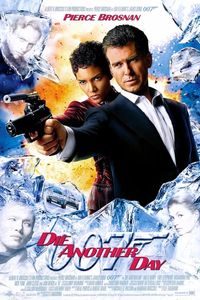
    (In theaters, November 2002) Forty years after Doctor No, James Bond is back with his twentieth movie, and Die Another Day is kind of a half-hearted renewal. In the first hour, we actually see something new: James Bond failing and being captured. Shocking! you say as the suave British spy does things never seen before. He is tortured (with a Madonna song, appropriately enough), exchanged for another prisoner and has to fight his way back in the service. Tons of winks to previous Bond adventures are there for the sharp-eyed viewer, including a further nod to “the original James Bond” for those hardcore Bond fans. The only sour notes come from Halle Berry, whose Jinx has to be one of the worst Bond Girl ever: her line delivery is flat and perfunctory, with the added disadvantage of a crass attitude that make Bond look downright humble. Yikes! The second half of the film isn’t as appealing, given that it simply delivers Yet Another Bond Adventure with the usual trappings, boring action sequences and overlong finale. Jinx is scarcely worth rescuing, the villains are flat, the directing/editing gets more and more incoherent as the film goes along and some truly hideous CGI shots (Bond surfing amongst the icebergs) contaminate the otherwise good visuals. I did like parts of the end sequence, but the rest is just dull, dull, dull… Still, it’s hard not to like Rosamund Pike and the sword-fighting sequence. Add those to the good first hour, and we’ve got a better-than average Bond. Which is all you need, really.

    (Second viewing, Jellyfin streaming, January 2025) Oof; I hadn’t seen Die Another Day in more than two decades and had forgotten almost all of it.  The good news are that it had a lot that I didn’t remember, and the bad news are that I had forgotten just how much of a sub-standard Bond it was. Oh, I don’t dislike all of it — it’s fun, after the dour and brooding Craig era, to see Bond in a good old over-the-top 1990s action movie adventure.  There are fancy gadgets, megalomaniac villains, spy films twists and turns, baby-faced Rosamund Pike looking very cute, and Pierce Brosnan being pretty good in the middle of it all.  The problem is that the rest of the film has severe problems.  Preposterous villain, irritating Bond girl (Halle Berry, wasted), slap-dash CGI sequences, too-frenetic editing, insipid writing and references to the franchise’s history that often feel hammered in.  Also, I don’t like Samantha Bond as Moneypenny.  Revisiting Die Another Day after watching a lot of the other Bond films leads me to reassess my first-viewing opinion — everything right and wrong I’ve noticed back in 2002 still stands, but the result is definitely in the lower tier of the series. Still fun to watch, though.

  • The World Is Not Enough (1999)

    The World Is Not Enough (1999)

    (In theaters, November 1999) A mixture of the excitingly new and the distressingly familiar. Things start off in a promising fashion, with an extended pre-credit snippet that features an inventive action scene and intriguing new elements (Bond making mistakes, etc…) Unfortunately, the film loses steam as it goes along, only to end on a trite conventional finale that barely elicits anything beyond vague satisfaction. The villain Renard is, again, promisingly introduced (he cannot feel any pain!) but wasted in a role that could have been filled by anyone else. At least the series’ vaunted sex-appeal is distressingly high, what with Sophie Marceau and Denise Richards. Plus, Pierce Brosnan finally proves without a doubt that he’s the best James Bond since Sean Connery. The World Is Not Enough, however, is an average Bond film at best, satisfying without being truly interesting.

    (Second viewing, On VHS, August 2001) Like most blockbusters cursed with a strong whiff of stupidity, this is one film that’s not quite as offensive the second time around. Just as forgiving the American Godzilla‘s brain-damaged script makes subsequent viewings oddly endearing, this James Bond adventure might even work better the second time around, if only because you now know when to pay attention. (It helps to have a good book handy to use during the boring parts, of which there are quite a few, all things considered. Is it ironic that the last fifteen minutes are among the most boring? I can’t decide.) This being said, Sophie Marceau turns up in looking great as an unusual Bond girl, while Denise Richard’s overall performance really starts to grate. (I think she’s attractive… but her delivery might be improved by sleep, unconsciousness or a long coma. “Unconvincing” is a gentle word to describe her work. I’ll just rent Wild Things again.) Still think that Brosnan’s the best Bond, close behind Connery. Still think that whatever the faults, James Bond films are good fun.

  • Tomorrow Never Dies (1997)

    Tomorrow Never Dies (1997)

    (In theaters, December 1997) So this is what happened to James Bond after The Rock: A lot of action, but not much of a solid plot. Still, better than Goldeneye. Pierce Brosnan is a great James Bond. As if killer gadgets, a lovely credit sequence and a few great lines weren’t enough, we get Michelle Yeoh as the very best Bond girl ever. Tomorrow Never Dies is far from being a very good Bond (Bad usage of Teri Hatcher, strange impression of deja-vu versus other Bond movies) but it’s as entertaining as anything we’ve come to expect from the franchise. Even spending the entire movie being half-sick standing against the rear wall of the movie theatre didn’t torpedo the experience for me.

    (Second viewing, On Cable TV, September 2019) Time has been kind to Tomorrow Never Dies, especially when you compare it to some of the later entries in the series. Fresh off the renewal that was Goldeneye, this second Pierce Brosnan outing gets back to the basics of the Formula without too much second-guessing. We’re back to grandiose villains, Bond girls, big stunts and ingenious gadgets, handled competently. Brosnan’s take on Bond is endearing in these second installments, blending character traits in a format acceptable to the 1990s… and later decades. Jonathan Pryce turns in a striking villain, one that still has relevance now in an era of normalized lying. Teri Hatcher doesn’t have much of a role here, but Michelle Yeoh remains one of the best bond girls in the series, combining beauty, wit and action chops to rank as Bond’s equal. (It helps that in the Brosnan era, Bond actually cares quite a bit about his partners). Action-wise, we’re in the late nineties and that means over-the-top action sequences, a bit too aggressively edited but impressive in their panache — I particularly liked watching the Hamburg parking-lot chase (with Bond chuckling in the back seat at the effectiveness of his gadgets), but the Hanoi motorcycle chase also has its strong moments. The James Bond theme gets one of its better remixes here thanks to David Arnold.  Ricky Jay shows up at the brains of the evil outfit, while Judy Dench once again takes the M role to the next level. Compared to the Goldeneyeand a surprising number of its successors, Tomorrow Never Dies is straight Bond formula competently executed, something that I’d like to see once more after the off-brand and intermittently interesting entries in the Craig era. You liking of it (especially compared to its immediate predecessor) will depend on whether you’re in the mood for a straight-up, no-flourishes Bond adventure.