Joe Wright

  • The Woman in the Window (2021)

    (Netflix Streaming, May 2022) I’m probably overdosing on domestic thrillers at the moment, because I didn’t feel much except annoyance at The Woman in the Window. If you’re familiar with the subgenre, you already know the basics: a woman, alone, possibly drunk, almost certainly dysfunctional in some way, mysterious events, paranoia, certitude that someone is in danger, eventual threat to self. Fill in the blanks yourself. On paper, The Woman in the Window is promising: Amy Adams is rarely less than compelling, and having her surrounded by such notables as Gary Oldman, Anthony Mackie, Julianne Moore and Jennifer Jason Leigh is promising enough: Adding Joe Wright as director and Tracy Letts as screenwriter seems to be merely gilding the lily. And yet, and yet… the film lands with a thud. Oh, no, Adams plays an agoraphobic drunk who grows convinced she’s just seen a murder and, zzz…. Yeah, there’s no investment here. It’s a by-the-numbers exercise, with more dumb screenwriting tricks than is tolerable for a formulaic product such as this one. Everything about the film screams contrivances, artificiality and convenience. The early moments of the film take forever to get to where the story begins, and the final “twist” is laughable. As a result, The Woman in the Window feels dull-witted, laboriously executed and far less than rewarding in its impact. It gets worse once you dig into the film’s production and find out that the best-selling novel on which it’s based was written by a serial liar, fabulist and plagiarist, that the film’s first cut got disastrous reactions from test audiences and that most reviews were still not all that impressed (how bad was that first cut?). I suspect that The Woman in the Window will nonetheless annoy other viewers less than it annoyed me – a combination of decent actors, top-notch technical credentials and pandemic-friendly premise may outweigh jaded objections. Furthermore, I also suspect that the over-familiarity of the film may play as comforting material to audiences wanting safe expected thrills. If that’s you, well, there’s The Woman in the Window to stare at.

  • Darkest Hour (2017)

    Darkest Hour (2017)

    (On Cable TV, October 2018) After decades of stellar character roles, it seems fitting that Gary Oldman would win his first Oscar for playing none other than Winston Churchill in a biographical film. Focused on the crucial months during which England found itself alone (well, alone with its globe-spanning empire) against the Nazis, Darkest Hour becomes a political thriller in which Churchill had to manoeuvre between the population and the Nazi-appeasing politicians. It’s fact-based without being entirely factual (that wonderful scene about Churchill riding the underground—never happened) yet made with such restraint that we’re led to imbue more credibility to the film than we should. There’s another word for it, of course, and that mythmaking: a deliberate attempt to further shape Churchill’s stature as the English bulldog, providing further Britannia Triumphant material. (There’s been a surprising number of those lately, from King Arthur to the newest iterations of James Bond focused on home territory—I’m thinking there’s a link with Brexit, but I’m not sure what it is yet.) Director Joe Wright seems in his element here, with a high-stakes historical drama and plenty of opportunities for respectable filmmaking. It’s not a bad movie despite the uncomfortable feeling of being manipulated through a very selective vision of history. To be fair, Oldman is very good, and Darkest Hour does manage to inject a lot of drama into historical events. It could have been worse, and if it did get Oldman a much-deserved body-of-work Oscar, then why not?

  • Anna Karenina (2012)

    Anna Karenina (2012)

    (Video On-demand, March 2013) Director Joe Wright has always shown tendencies toward stylistic show-boating, and the first half-hour of Anna Karenina is crammed with directorial flourishes as the film moves in-between interior sets and a larger theatrical stage. As a way to freshly present an oft-told story (Tolstoy’s novel has been adapted to the big screen at least 12 times until now), it’s not a bad choice –except that there seems to be little rhyme or reason to the device, and it seems to be half-abandoned as the film progresses.  While viewers who like a bit of cinematic flourish may be pleased by the way Wright plays along with conventions, it does obscure the story and turns the film into something it’s not meant to be. It also obscures the good work done by the actors, including Keira Knightley in the titular role and Jude Law as her despairing husband. (Meanwhile, Aaron Taylor-Johnson’s mustache steals the show for none-so-positive reasons.)  The costumes are sumptuous and the visuals occasionally evoke a nicely idealized view of 19th century Russian aristocracy, but the self-conscious artificiality of the film’s presentation work at undercutting the impact of those.  As a take on familiar material, this 2012 version of Anna Karenina isn’t ugly to look at… but it’s quite a bit abstract when it starts messing with the way movies are presented, and that may not necessarily work at a romantic drama’s advantage.

  • Hanna (2011)

    Hanna (2011)

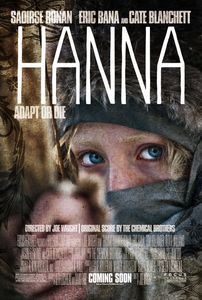
    (In theaters, April 2011) Strange things happen when dramatic directors take on genre filmmaking, not the least being unique takes on genre conventions.  Joe Wright is best known for Oscar-baiting dramas such as Atonement and Pride and Prejudice, so to see him take on the tale of a teenage assassin facing down rogue CIA operatives is a bit of a stretch.  The end result is definitely unconventional, as Wright tries to reconcile mainstream dramatic techniques with the demands of a genre thriller.  Some of the result works well: Wright wisely eschews frantic editing, and one of the film’s highlight is a continuous shot that brilliantly depicts a fight between a character and four antagonists.  The film makes effective use of a creepy abandoned park for its climax, and Saoirse Ronan is very good in the title role.  Unfortunately, viewers will have to be patient in-between the film’s rewards: Hanna’s pacing is lethargic, deadened by failed attempts at comic relief (never mind Hanna’s “fish out of water” subplot: I kept hoping for the irritating family of tourists to be terminated with extreme prejudice) and sunk by its own self-importance: The plot is slight, simple and inconsequential enough to be silly, except that Wright seems convinced that he’s telling An Important Story.  The film splats when it should zip along, and seems to call attention to its own cleverness: not bad as an experiment, but not much of a success as a stand-alone thriller.  Much like The Chemical Brother’s unusual score, Hanna is different and sometimes intriguing for what it brings to the standard thriller formula, but it never feels as compelling as straight-up genre entertainment.