Louis Malle

  • Histoires extraordinaires [Spirits of the Dead] (1968)

    (In French, on Cable TV, March 2022) There was a small anthology movie craze in the 1960s, and it’s a surprise to take a look at the credits for Histoires extraordinaires and realize that no less than Roger Vadim, Louis Malle and Federico Fellini (!!!) got together to deliver the film’s segments, all loosely based on Edgar Allen Poe short stories. The result, unfortunately, is not quite up to expectations: Vadim goes for medieval fantasy, Malle for a sombre crime story and Fellini digs into the inner life of an actor. I’m not going to pretend that it’s all dull. There’s quite a bit of fun seeing how Vadim directs then-wife Jane Fonda play an evil countess opposite Peter Fonda. Malle has a bit of fun re-creating an atmosphere of crime, religion and dissection with Brigitte Bardot and Alan Delon along the way. Still, neither of those two segments quite get up to where they should be. I’ll be kinder to Fellini’s concluding segment, as his exuberant approach to the material (Terence Stamp playing an alcoholic actor losing his grip on reality while attending an awards ceremony) feels far more exciting—in itself and in having Fellini do what he did best—than the rest. I’m disappointed by aspects of that third segment, most notably the drawn-out ending that takes far too long to deliver a foregone conclusion, but it’s easily the best of all three. In the end, though, Histoires extraordinares can’t quite transform a terrific cast and intriguing premise into better-than-average piece of entertainment. And that certainly explains why anthology films have remained such marginal propositions for the past few decades: it’s really, really difficult to get an even level of quality and enjoyment out of them.

  • Au revoir les enfants (1987)

    Au revoir les enfants (1987)

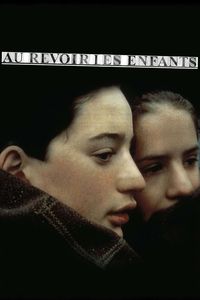
    (On Cable TV, September 2020) There’s a familiar quality to the blend of elements that Au revoir les enfants uses so intently — this isn’t the first film to confront the innocence of kids to the horrors of war, or to take less-obvious means to talk about the holocaust. But that doesn’t take away anything from the success of the result. Written and directed by Louis Malle from autobiographical experience, much of the film is set at a French boarding school during the Nazi occupation of France, as schoolboys in their early teens learn to deal with new schoolmates that are eventually revealed to be Jewish. Much of the film is about the growing friendship between the protagonist and a Jewish boy until, inevitably, the Gestapo comes knocking to take them away. For a movie in which not much happens during most of its running time (with much of it soberly directed as well), the ending is unexpectedly powerful, even more so given its restraint: We all know what’s going to happen to those Jewish kids and their older sympathizers, and the very final voiceover (by Malle himself) only drives the point home. There have been many movies revolving around the same topic, but Au revoir les enfants still packs a punch.

  • Ascenseur pour l’échafaud [Elevator to the Gallows] (1958)

    Ascenseur pour l’échafaud [Elevator to the Gallows] (1958)

    (On Cable TV, March 2020) French critics may have named the genre, but film noir is, in my mind, a clearly American art form. Still, writer-director Louis Malle’s Ascenseur pour l’échafaud shows how close French cinema ever got to the heart of noir in several decades of affectionate homages. We can see here the bridge from noir to Nouvelle Vague, strong narrative links to Godard’s À bout de souffle, and playful stylishness. The plot is roman de gare stuff, with the protagonist murdering his boss (who’s also his lover’s husband) and seeing everyone’s lives spinning out of control in the best fatalistic tradition of the genre, leading all the way to an implacable conclusion. What the plot won’t tell you, however, is Malle’s sense of cool in directing this picture (his first!), the impressive performance offered by Jeanne Moreau, Miles Davis’ score, and the great black-and-white cinematography used to depict those crucial few days of the narrative. Ascenseur pour l’échafaud is not a perfect film, and its striking elements were later perfected by similar movies by French directors (all of whom, apparently, did a noir homage at some point or another), but it’s still reasonably entertaining to watch and emblematic of where French cinema was headed by the late 1950s.

  • Atlantic City, USA (1981)

    Atlantic City, USA (1981)

    (On Cable TV, April 2019) Cultural decades never end on December 31st of their tenth year—they linger on for a while and in retrospect often begin before they chronologically do. This is even truer for “The Seventies” in cinema, often used interchangeably with “New Hollywood”—a period in which American filmmakers understood that they could say anything without being beholden to the censorship of the Production Code or the aesthetic standards of glamorous Classic Hollywood. There was plenty of innovation during that decade, but also a lot of depressing and ugly films. Atlantic City, USA feels like one of the last echoes of that period, and another one of the reasons why the 1980s placed emphasis back on entertainment and spectacle. In it, director Louis Malle delivers a decidedly unglamorous vision of Atlantic City in the early eighties, focusing on an ensemble of characters eking out a meagre living in the shadow of the casinos. He does work with a great pair of lead actors at very different stages of their careers: Burt Lancaster and Susan Sarandon. Much of the story has to do with small-time scams and criminal enterprises—and not in a flashy film-noir way but as a disreputable grimy drama. Many of the characters are deluded in their own ways, leading to a very depressing result. While there are a few moments of comedy, it’s not fun to watch and not meant to be fun to watch. Given the film’s origins as a Franco-Canadian production, there are a surprising number of Canadian and French references in the story (starting with a lead character coming from Saskatchewan!), as well as Canadian actors in supporting roles. The film certainly has its fans—It figures on a few best-of lists, earned a few Academy Awards nominations, and got added early on to the National Film Registry. Still, Atlantic City, USA is perhaps best seen as one of the last statements made by New Hollywood before it got replaced by a far more commercial crowd-pleasing aesthetic. I’ll let others mourn for it.