Madea series

  • Madea’s Big Happy Family (2011)

    (On Cable TV, February 2022) You can feel the irony of Madea’s Big Happy Family titling very early on. Not just because happy families don’t make for good movies, but because writer-director-producer-star Tyler Perry is once again being as unsubtle about it as anyone can humanly be. As a mother receives a terminal cancer diagnosis, her attempts to tell her family about her condition are all sabotaged by unruly characters, simmering resentment, long-held secrets and cheap screenwriting tricks. Madea comes in to save the day with some tough love, but she doesn’t quite get it all right, and as the film goes through Perry’s atonal storytelling, there’s a big tragic moment to make the film come into focus. How you feel about the result will depend on your familiarity with what Perry is doing and your ability to like it even in small bits and pieces. He has his moments as a writer-director—the “Byroooooon” thing is as crude a comic device as possible, but it gets a laugh nearly every time. (Props to Lauren London for committing to such a character.) Madea’s overreach this time gets her to drive through a restaurant window, which also gets a laugh even if it’s an expected one. Perry’s theatrical background serves him well in structuring the narrative, in which tension points are gradually exposed and pressured. He also gets the atmosphere of a fractious Atlanta-area family and some decent character work from a variety of actors—including Loretta Devine as the ill-fated mother. As far as Perry movies go, Madea’s Big Happy Family is somewhere in the middle of a fairly narrow band—good if you like his material despite its flaws, but not something different enough to make converts.
  • Diary of a Mad Black Woman (2005)

    (On Cable TV, January 2022) While not personally directed by Tyler Perry, Diary of a Mad Black Woman is clearly a Perry movie, and his first as well—he wrote it, and makes his big-screen debut(s) as a lawyer, an elderly man and Madea herself. The film comes straight from his prior theatrical experience and box-office receipts—Perry’s life and rise to notoriety will one day be the topic of a movie, and I expect that this film will be a major turning point. It certainly exhibits in even rawer form than usual the trademarks of Perry’s later career: the brute-force melodramatic style of his movies, the awkward blend of funny and serious scenes, the role of spirituality, the earnest romantic material, the importance he places on female characters, and—most strikingly of all—the place that his Madea character would occupy in his work. As the film begins, our narrator (a rich, pampered wife of a respected lawyer) finds herself kicked to the curb in an absurdly over-the-top sequence in which her belongings are stuffed in a moving van, her husband’s side-chick moves in her formerly palatial house (along with two mentioned-but-never-seen kids) and she finds herself abruptly homeless on their 18th wedding anniversary. Seeking refuge with Madea launches the Madeaverse in a broader sense, and leads to the film’s funniest sequence in which Madea goes for some tough-love chainsaw-powered retribution (which then, less joyously, results in the first of her many skirmishes with the law). The rest of Diary of a Mad Black Woman goes high and low in the search for self-fulfillment and forgiveness of its main character—and she’s certainly not portrayed as a saint considering that some of the third-act wild turns have her become an abuser. There’s some great material here, although it’s presented in very raw form: While Darren Grant directs efficiently, this is Perry’s show—the story often can’t focus, goes through wild mood swings, does not deal in execution subtleties even when it tackles challenging material, and does offer decent showcases for its actors. Kimberly Elise is not bad in the lead role, while Steve Harris does get some rough material to play as her near-ex-husband. Cicely Tyson appears for a few scenes as the protagonist’s mother, foreshadowing Perry’s gift for casting great actors in later films. Diary of a Mad Black Woman probably plays better now than it did in 2005—Perry is now a known quality and a certifiable success, so this works better as a piece of juvenilia than a calling card for a new talent. If you’re a fan of the Madeaverse, it’s decent-enough entertainment: at least you know what flaws to expect.

  • Madea’s Witness Protection (2012)

    Madea’s Witness Protection (2012)

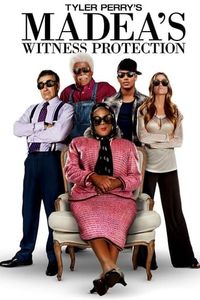
    (On Cable TV, November 2021) Perhaps slightly more overly comedic than other Tyler Perry films, Madea’s Witness Protection combines a stock comic premise with Perry’s outspoken character to produce something that doesn’t fly high, but scores a few chuckles along the way. Some of the credit goes to the casting, with Eugene Levy anchoring the plot as an incompetent CFO left holding the bag after some corporate embezzlement. Through criss-crossing plot coincidences that would be unacceptable anywhere but in a Perry comedy, he and his dysfunctional family soon find themselves relocated in Madea’s house, with the elderly woman free to set them straight. The third act eventually has the protagonists striking back against the (unseen) fraudsters, leading to an upbeat ending. This is all clearly playing into Tyler’s wheelhouse, as he plays three roles and gets to be both the serious anchor as much as the comic powerhouse, with Madea using some folksy wisdom to whip an upper-class white family into shape. I won’t get into the plotting coincidence that litter the entire script (all the way to hidden links being revealed between the characters), nor the fairly easy humour that peppers the script, especially during the fish-out-of-water third act designed to let Madea rampage through New York City. I started looking at Perry’s filmography out of curiosity but now, something like eight films in, I’m actually becoming something of a fan despite the sloppiness of the scripts and bare-bones directing — it’s a comfortable universe, Madea is a good character (albeit rarely as fully exploited as she could be) and Perry does deliver something of a very specific take. Madea’s Witness Protection does have the advantage of not taking very daring dramatic swings, making the comic result easier to accept.

  • Boo! A Madea Halloween (2016)

    Boo! A Madea Halloween (2016)

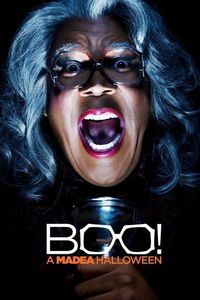
    (On Cable TV, October 2021) No one can make a case that Boo: A Madea Halloween is a particularly good movie. Even in writer-director-producer Tyler Perry’s filmography, it’s a bit clunky, far-fetched, obvious and trite. But I nonetheless found it fascinating—it manages to have a Halloween comedy for an adult audience without supernatural or overly violent elements in the end. It plays to a small-c-conservative crowd, but skirts the edges of having a comedy set-piece set in a church, and reinforces family values in its conclusion after going through a tough-love phase. Perry himself plays three roles, two of them the thesis/antithesis of what familial love means for the teenage protagonist of the film. Dismissing Perry’s films is easy, but they end up being fascinating in their own way. If Boo: A Madea Halloween feels slapdash and basic at times, it’s explained by an astonishing 6-day shooting schedule—that’s not a lot of time to finesse details, let along build some visual interest along the way or whittle down the film to its core. As Madea, Perry is not bad—and there are plenty of comedic curveballs to distract from some obvious messaging about fatherly love and protection. (It’s refreshing, in a way, to see the college-age party animals react rationally when they discover that the heroines are underage—the girls suddenly become as if radioactive to the fratboys, and that’s a clear sign that the film is not going to go there.)  It’s unfortunate that Perry’s writing can be lazy, or that the tone of the film goes everywhere without control. Of course, at this point in my exploration of Perry’s filmography, I’m essentially a convinced fan—not necessarily a member of his core audience, but someone who’s quite willing to play along.

  • Madea’s Tough Love (2015)

    Madea’s Tough Love (2015)

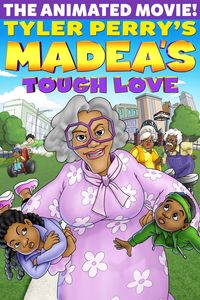
    (On Cable TV, June 2021) In my ongoing project to watch more of Tyler Perry’s filmography, I’ve been a bit too trigger-happy on the DVR recordings and that’s how I ended up with animated film Madea’s Tough Love on my to-watch list. To be clear — Madea’s Tough Love is and isn’t a Perry movie: He produced it, voices Madea and even plays her in the framing of live-action scenes, but someone else wrote and produced it. The intended audience of the film is a bit of a mess, as Madea ends up having to do community service and ends up taking over a community centre to save it from destruction. There are a lot of kid characters, but the tone (and Madea’s overall attitude as a disciplinarian) are more aimed at adults. Having the film being animated allows it to take flights of fancy in wilder sequences impossible to do well in live action, including a wild chase with hydraulic-powered cars. It’s all mildly amusing and perhaps revelatory about Madea’s character, but it’s still a blessing that the film clocks in at a slim 64 minutes: it doesn’t overstay its welcome even in its predictability. Still, I’m ready to get back to live-action Perry, even if it means enduring him in drag.