Martin Sheen

  • The Subject Was Roses (1968)

    (On Cable TV, March 2022) While I don’t necessarily think that movies cannot be filmed plays, some have a harder time shaking up their theatrical origins, and The Subject Was Roses is one of those. It sort-of-works if the intention was to lock the audience in an unescapable dramatic pressure cooker. Here, as the story begins, a young man comes back from WW2 to find his parents in open mutual contempt. His return eventually brings the tension to a boil, and in grand theatrical fashion it all explodes over the kitchen table. The most noteworthy piece of casting here is an impossibly young Martin Sheen playing the returning son. The plot summary is very thin, but the dramatic intensity of it all can be impressive if you’re in the right frame of mind. But that isn’t a sure thing, though—and that’s where the film falters as a film: in placing its entire faith on the quality of the theatrical dialogue, it gets a bit lazy on the staging and directing. There’s a place for that kind of material, of course—leaving the actors and the script to shine without complementing the moviemaking polish is going to appeal to a smaller audience, and that’s the feeling I got with this version of The Subject Was Roses: Great script handled with great Oscar-honoured performances, but not much of a memorable film to go along with it.

  • Hearts of Darkness: A Filmmaker’s Apocalypse (1991)

    (On Cable TV, January 2022) It’s funny how, with the widespread availability of movies from all eras on a variety of platforms, middle-aged cinephiles such as myself can see a title pop up and remember that, years if not decades ago, they really wanted to see it. I’ve been curious about Hearts of Darkness: A Filmmaker’s Apocalypse for a long time—While Apocalypse Now isn’t among my favourite films, its infamously troubled production has long been well-known, and many of the summaries of what happened punt readers toward this making-of movie as the definitive source. It’s also a relative curio in that it’s a standalone making-of documentary that predates the DVD era by more than half a decade—while it was relatively commonplace to see extensive documentaries included on DVD (and then Blu-ray) special editions before streaming took over, Hearts of Darkness was made in a pre-digital era, painstakingly put together with an intent that isn’t purely mercenary about its film. (Although I defy anyone to watch it and not be moved to another rewatch of the original.)  What makes it fascinating is that what happened on the set of Apocalypse Now, so candidly discussed more than a decade later by those involved, is what often happens on other sets—but cranked to spectacular extremes. Actor ill on set? How about Martin Sheen having a heart attack? Production difficulties with the sets being damaged? How about a typhoon tearing through the entire area? Difficulties working with partners? How about a director having to argue with the Marcos-era Phillipinese armed forces? Creative differences between director and star? Marlon Brando showing up overweight and undermotivated. Reshoots? How about an entire production delayed by a year? Directors pouring everything into their project? Here’s Francis Ford Coppola scrambling to find enough of his own money toward the completion of the project. Everything that can go wrong did go wrong, apparently, and Hearts of Darkness benefits from footage shot by Coppola’s wife during production to illustrate its carnival of misfortune, along with various interviews and news headlines to flesh out the material even more. While the story is well-known enough to be familiar to interested viewers, it still carries a punch as a reminder of how complicated an enterprise a big-budget film can be. It’s also good enough and even-handed enough to remind us that there are other movies out there that had an exceptionally troubled shoot, and we can’t rely on publicists to learn more about it. (I have a feeling that, in a decade or so, we’ll learn plenty more about the production of such marquee movies as The Amazing Spider-Man 2, Rogue One or Solo. But only if The Mouse allows it.)

  • Judas and the Black Messiah (2021)

    Judas and the Black Messiah (2021)

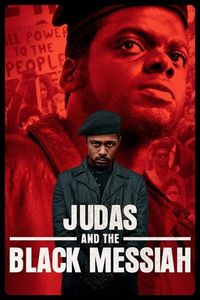
    (On Cable TV, July 2021) There’s been, in keeping with the times, quite a subgenre of 1960s-activism movies latterly — many of them Oscar-nominated. A recurrent theme of this latest crop has been a hard look at the efforts of the United States government in sabotaging civil rights activism. Judas and the Black Messiah is even more caustic in depicting systemic racism within American law enforcement, escalating to murder in a way that will feel eerily familiar to twenty-first century viewers. One of the film’s strengths, as it presents the twin stories of Black Panther activist Fred Hampton and small-time crook turned FBI informer William O’Neal, is to present a convincing picture of what it was like to be involved with the Black Panthers at the time, in-between aggressive rhetoric and the toll taken by opposing the system. The real-life story dramatized here has a quasi-operatic tragic grandeur of betrayal and guilt — the real-life death of O’Neil providing a sobering coda to the film. While the script and direction of the film are both really good (some great work by Shaka King on both counts), the film’s biggest assets remain the acting talent assembled for the occasion. Daniel Kaluuya is incandescent as Hampton — playing a revolutionary with a flair for rhetoric takes panache, and you can see how Kaluuya ended up with an Oscar. Still, there’s also quite a lot in the ensemble cast: Lakeith Stanfield has a more subtle but not less difficult role as the reluctant informant; Jesse Plemons is his usual unbearable self as an FBI agent; Dominique Fishback is compelling whenever she’s on-screen; and there’s some irony in having Martin Sheen play J. Edgar Hoover. Comparisons with other recent films, such as The Trial of the Chicago 7, The United States vs. Billie Holliday and BlacKKKlansman, are inevitable, not unwarranted but not necessarily to Judas and the Black Messiah’s detriment — it has style, theme and narrative difference enough to distinguish itself, and some striking acting to appreciate on its own.

  • The Final Countdown (1980)

    The Final Countdown (1980)

    (On DVD, February 2021) I’ve known about The Final Countdown for a long time before finally seeing it — even today, its premise (an aircraft carrier sent back in time to the eve of the Pearl Harbor attack) is striking enough to be of interest to anyone with a liking for alternate history. Alas, as so often happens, the execution doesn’t quite measure up to the hype. To be fair, there’s a really interesting techno-thriller built in The Final Countdown: Filmed with the cooperation of the US Navy, this is a film that takes us inside an aircraft carrier during operations, with plenty of naval aviation footage and scenes obviously shot on location. Military personnel are portrayed honourably, and the nuts-and-bolts details of a carrier being caught in a time portal are convincing. As a portrayal of early-1980s naval aviation, it’s quite interesting even today. Unfortunately, the problem comes when the script has to switch from military thriller to actual Science Fiction: Seasoned viewers will spot the opening of a closed loop almost from the first scene, and as the film advances, it’s clear that there will be no major deviations from history, severely limiting its impact. The rhythm of the film becomes increasingly slack, as it spins its wheels while not making any changes to history and waiting until the closed time loop can be established. The meaninglessness of one civilian consultant character who should be significant also becomes apparent, although the impact of that is somewhat diminished by the character being played by Martin Sheen, going toe-to-toe with none other than Kirk Douglas as the captain of the aircraft carrier. By the time the film concludes, the obvious time loop closes with a whimper and the film’s final revelation can be seen coming hours in advance. You can reasonably argue that doing justice to the premise would have required far more time and special effects than was available to the film’s producers, and that’s largely true: When a real Science Fiction author sat down to work out the implications of a modern carrier group being sent back in time to WW2, the result was John Birmingham’s messy “Axis of Time” trilogy. In The Final Countdown’s case, the limited imagination was built in the script from the get-go to prevent the film, largely aimed at military-friendly audiences, from getting too strange. As it went on, it struck me that it wouldn’t be the worst thing to see a modern remake, possibly executed as a miniseries. As a bonus, make sure that the captain is played by Michael Douglas and the civilian consultant is played by Emilio Estevez (or Charlie Sheen) and I think we’ve got a nice high concept going on.

  • “Screen One” Hostile Waters (1997)

    “Screen One” Hostile Waters (1997)

    (In French, On Cable TV, November 2020) It’s rare for a TV movie to take on real-life military history, especially in as rarified a field as submarines. On the other hand, it does seem like a nice fit—If you’re going to go for military intrigue, what cheapest way to do it than with limited sets and a bit of murky CGI to make up the exteriors? Accordingly, BBC production Hostile Waters offers a number of familiar actors in lead roles, starting with Rutger Hauer and Martin Sheen as duelling submarine captains, with supporting roles for Max von Sydow and Colm Feore. Much of the film professes to reflect the truth of the real-life K-219 incident — in which a Soviet submarine suffered a catastrophic malfunction near the eastern seaboard—, based on a book digging into events never formally acknowledged. The result will certainly appeal more to submarine buffs—it does look and feel a lot like other submarine movies (starting with K-19 The Widowmaker), and the limited production values are somewhat offset by good actors and a script that places some emphasis on plausibility. As a submarine film, Hostile Waters is overshadowed by more illustrious theatrically released films, but it holds its own decently enough.

  • The American President (1995)

    The American President (1995)

    (In French, On TV, April 2019) At this point in American history, the idea of a likable, virtuous, law-abiding president is the stuff of comforting fantasy, so here’s The American President to remind us of what that was like. This rather charming romantic comedy takes on the premise of having a widowed president woo a lobbyist. Written by Aaron Sorkin, the film can certainly be seen as a dry run for The West Wing—voluble, clever, and idealistic at once. (Checking the film’s original English-language quotes, it’s obvious that the film loses something in translation.)  Even though other movies and shows have mined the same terrain since 1995, The American President still provides an interesting glimpse at the heart of a presidency, and doesn’t forget to tackle the more honest aspects of the power dynamics of a relationship between the president and a citizen. A great cast anchors Rob Reiner’s straightforward direction: While Michael Douglas gets to play the president opposite Annette Bening’s fiery lobbyist, the film can also count on Martin Sheen (I told you it was a West Wing dry run), Michael J. Fox and John Mahoney. The American President is a good movie, but the current political context makes it even better, with its romance being as idealistic as its political nature—presupposing a president of good moral character and a concerned effort to curb emission gasses. It is a bit disheartening to hear a film nearly twenty-five-year-old tackling things that really should have been done back then. But when it comes to escapism, Hollywood does it best.

  • Badlands (1973)

    Badlands (1973)

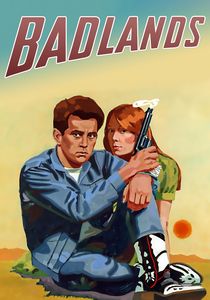
    (On Cable TV, March 2019) There were a surprising number of high-profile “romantic criminal couple on the run” movies during the New Hollywood period, with seemingly everyone (including Spielberg!) taking a shot at it. Badlands is Terrence Malick’s debut feature and it fully embraces the subgenre, while being perhaps a bit more entertaining for Malick completists than the impression left by his later features would suggest. A summary of the story sounds like genre material: a girl meets a guy who ends up killing his dad and then go on the run together, killing more people along the way. From Gun Crazy to Bonnie and Clyde to Natural Born Killer (and others!), this is an American archetype. But Malick makes everything sophisticated rather than trashy by using voiceovers and a kind of languid pacing that never abandons the small-town atmosphere even as the bodies pile up. Badlands spends a lot of time in rural America in ways rarely seen in other movies, adding credible 1950s details in ways that stick in mind, whether it’s recording physical records at coin-operated machines or filling up a car from leaking gas stations. Sissy Spacek and Martin Sheen both star, with Sheen looking uncannily like his sons would two decades later. I really expected to dislike the film, based on my reactions to later Malick films, overall lack of appreciation for New Hollywood and familiarity with the subgenre… but I didn’t. It eventually won me over slightly, thanks to the period detail and flourishes such as a climactic car chase. It certainly helps that Badlands isn’t as bleak as other films of the subgenre, most of which can’t be bothered to be more imaginative than to have their leading couple go down in a hail of bullets. Malick is definitely after something else here, and the film thrives on that intention.

  • The Dead Zone (1983)

    The Dead Zone (1983)

    (In French, On TV, November 2016) I’m writing this a few days after the close of the 2016 American presidential election, in a haze where I’m not sure what’s real and what isn’t. It’s not necessarily the best time to tackle The Dead Zone, or maybe exactly the right time. Here, an unassuming teacher gains the power to foretell the future and see the past, leading to a complicated life and terrifying visions of what would happen if a local loon became president. Best time or worst time? I’ll tell you in four years. Until then, there’s an impossibly young Christopher Walken’s strangely compelling performance to admire and Martin Sheen as an unhinged politician that contrasts with his latter President Barlett. I’ve read the Stephen King novel too long ago to be specific about the details, but The Dead Zone seems to play loose with the details of the original story, which is not necessarily a bad thing. While writer/director David Cronenberg’s film can hit a few rough patches at times, with ambitions exceeding the means at its disposal, The Dead Zone remains engrossing throughout … and suddenly seems like a newly relevant film at a time when we’re grasping at any attempt to predict the future.