Mary Astor

  • Hush… Hush, Sweet Charlotte (1964)

    (On Cable TV, April 2022) The influence of What Happened to Baby Jane? and the resulting boom in psycho-biddy thrillers is obvious in Hush Hush Sweet Charlotte – once again, Bette Davis (with support from elderly classical Hollywood stars such as Olivia de Havilland, Joseph Cotton and Mary Astor) plays in a gothic thriller, this time heading to the American South in a vast and coveted mansion for a story reaching a few decades earlier and weaving a big web of deception. Hush Hush Sweet Charlotte is interesting in the ways those kinds of films are supposed to be interesting, but there’s a feeling that it’s aping better movies, and adding a layer of hagsploitation that feels more exploitative than worthwhile. It’s not bad, but it feels redundant – maybe I’d like it more if I had let more time elapse between it and its most obvious inspirations.
  • The Lost Squadron (1932)

    (On Cable TV, April 2022) The 1920s were a wild time for movies, and you get a strong flavour of that in The Lost Squadron, a rather unusual film that takes WW1 aviators, then has them confront their return to civil society by landing them jobs as Hollywood stunt flyers — where they get to participate in the making of a war epic very much à la Hell’s Angels or Wings. There’s a meta-referential aspect to the film that’s more fun than a pure war film could have been, even if, at the end of the day, we’re there to watch the aerial stunts more than anything else. This early sound film does feature such notables as Mary Astor, Joel McCrea in an early role, and Erich von Stroheim cast rather well as a tyrannical film director. I’m not going to exaggerate the appeal of the film – it can feel repetitive at times, and perhaps a bit too glum to be fully enjoyable – but there’s something unique about The Lost Squadron and the glimpse it gives into those quasi-madmen who were inventing the discipline of stunts at the dawn of big-budget movie-making.

  • The Great Lie (1941)

    The Great Lie (1941)

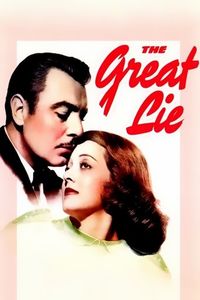
    (On Cable TV, December 2021) The melodrama flies thick and fast in The Great Lie, as the film begins with a romantic triangle that is almost immediately complicated by the abrupt death of one of the principals, his impregnation of a second, and the third’s attempts to purchase the resulting child to raise on her own. Oh yes, this is soap-opera material in classic Hollywood fashion, with pesky marriages and reappearances always ruining everything. Fortunately, good execution compensates for weak source material: With Bette Davis and Mary Astor taking up most of the scenes, they at least give it all they’ve got in the acting department. (They also reportedly rewrote much of the dialogue to suit themselves, which is enough to make anyone wonder just how bad the original script was.)  Astor won an Oscar for her troubles, and Davis escapes unscathed from the ludicrous narrative. By no means an essential film unless you’re running down Oscar-winning performances, The Great Lie can be entertaining as an example of the sort of melodramatic silliness that Classic Hollywood often attempted, but it’s a relief to see it being rescued by its lead actresses.

  • Behind Office Doors (1931)

    Behind Office Doors (1931)

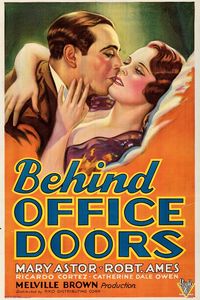
    (On Cable TV, May 2021) So, what did happen Behind Office Doors in the early 1930s? Unsurprisingly, more or less the same as ninety years later, as this Pre-Code drama follows the story of a competent woman letting a man take all the credit for her work, in-between some workplace hanky-panky, quite a bit of unreciprocated lust and succession shenanigans — the office environment of the 1930s being surprisingly understandable to 2020s denizens. Mary Astor stars as the protagonist of the tale and bears the brunt of the systemic sexism of the time — albeit not without a fight and earning considerable sympathy from audiences. There’s a fascinating dichotomy at play in Behind Office Doors (as in many of the 1930s films trying to discuss inequality between the sexes): a clear acknowledgement that this is wrong for the woman, on the one hand, while fully playing into the inevitability of it happening and very little consequence for those men who take advantage of that system (usually romantically or should I say, “romantically”). So, if you’re expecting our female lead to become the company’s girl boss in the end, temper your expectations — she gets the man who gets the company, and that’s the extent of the final triumph. Astor is good, but the other actors (including the male leads) are stuck in dull, unlikable characters. The Pre-Code nature of the film is elusive — the dialogue is slightly spicier, and while the film does get to acknowledge the loutishness of the males, it doesn’t really demonstrate it. Behind Office Doors is interesting if your expectations are in check, but it’s not really a shining beacon of Pre-Code romantic comedy.

  • The Prisoner of Zenda (1937)

    The Prisoner of Zenda (1937)

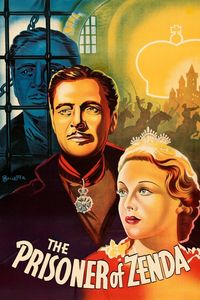
    (On Cable TV, April 2021) It’s really no accident if Anthony Hope’s Victorian adventure novel The Prisoner of Zenda was filmed two-and-a-half times: Once in 1937, a second time in a near shot-for-shot colour remake in 1952 (with James Mason) and again as one of the episodes in 1965’s The Great Race, although the pie-throwing bit in that last example was most definitely not in the original novel. It’s a very solid action-adventure romance hitting the full four-quadrant spectrum, what with an Englishmen being drawn, due to his close resemblance to the sovereign of another nation, into a web of romance, attempts to capture the throne and (crucially) impersonation of the incapacitated sovereign. It’s all quite good, and much of the fun in having several versions is in looking at the casting. Here, we do have an intriguing selection of 1930s stars, from Douglas Fairbanks Jr., Ronald Coleman, Mary Astor and a very young David Niven. The inclusion of romance and fencing ensures that the film will appeal broadly, and remains an enjoyable piece of entertainment today. It’s technically acceptable by the time’s standards, but it’s the story that carries it even today.

  • Across the Pacific (1942)

    Across the Pacific (1942)

    (On Cable TV, June 2020) What looks like one more WW2 propaganda film is given slightly more interest by featuring none other than Humphrey Bogart. Not stepping too far away from his persona in Across the Pacific, he plays a dishonourably discharged soldier who ends up on a ship going to Panama and gets involved fighting a dastardly plan by the Japanese. Far more of a thriller than an outright military film, much of it plays on-board the confines of a ship, with Bogart investigating a Japanese sympathizer on-board. There are clear echoes of The Maltese Falcon here, given that both movies share Bogart, the always-menacing Sidney Greenstreet, Mary Astor and director John Huston. A decent-enough adventure, Across the Pacific (which never even makes it to the Pacific), is nonetheless dragged down by uneven pacing and too-late narrative development. As a propaganda film, don’t expect much subtlety in its depiction of Japanese characters—in fact, expect to be very uncomfortable whenever they appear on-screen and the xenophobia gets roaring. Still, Bogart is Bogart and if you can stomach the stereotypes, the film is interesting enough.