Roger Avary

  • Mr. Stitch (1995)

    (In French, On Cable TV, April 2022) There’s an intriguing experimental aspect to the first half of Mr. Stitch that makes it feel more interesting than most other direct-to-video 1990s Science Fiction films: we’re in a white room, looking at a protagonist visibly (if implausibly) stitched together from dozens of other people, with a rather impressive make-up job to sell the patchwork effect. Wil Wheaton plays the creature as it tries to understand what it is, and rebels against its creators before they terminate the experiment. Coming from high-concept writer-director-producer Roger Avary, Mr. Stitch looks more ambitious than usual, even if some of the mid-1990s digital special effects are less than convincing. Rutger Hauer plays the mandatory mad scientist leading the project, while Nia Peeples is the just-as-mandatory kind-hearted scientist who helps the protagonist. Unfortunately, the mandatory elements soon overwhelm the unusual approach of the film’s first half, while flashbacks become more numerous, the action moves outside the white cell and we’re back to a far more conventional film. Eventually more bland than bad, Mr. Stitch struggles to have anything interesting to say once it gets going – although seeing Ron Perlman in a supporting role as an earnest, soft-spoken scientist is a fun piece of casting, considering the rest of Perlman’s filmography. Like many, many low-end movies, Mr. Stitch becomes less distinctive the longer it goes on, with contrived yet cliché plotting taking over whatever strengths it may have at first. As a Frankenstein take-off, it’s better than many – but it’s still limited by increasingly convenient screenwriting tricks. Digging into the film’s production history reveals that it was affected by creative differences between Avery and Hauer and a project inception that may or may not have been a pilot for a TV series. Whatever the source of the problems, the result lives on – and it remains disappointing.
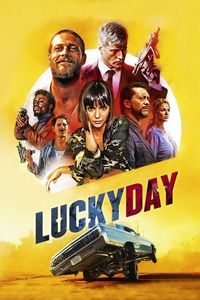
  • Lucky Day (2019)

    Lucky Day (2019)

    (On Cable TV, April 2020) While it’s far too early to call curtains on writer-director Roger Avary’s career, the first quarter-century of it has shown a filmmaker with interesting ideas that couldn’t quite get them properly expressed… and that’s in addition to a tumultuous personal life that saw him go to prison for vehicular manslaughter under the influence. Somewhat on-the-nose, his first film after his prison sentence is Lucky Day, which begins with the protagonist… getting out of prison. Said to be a belated sequel to Killing Zoe, the film quickly becomes its own thing—an action-comedy very much in the style of the 1990s wave of black criminal comedies that Avary himself pioneered by co-writing Pulp Fiction. The film is directed with some stylish glee, and Crispin Glover’s delightfully unhinged performance as a fake-French assassin can go a long way in sustaining interest in the film. But as much as my fondness for Tarantinoesque (or should that be Avaryesque?) black crime comedies grows stronger now that they’re not making nearly as many of them as they used to, even I felt that Lucky Day quickly became annoying. It certainly does itself no favour through its constant excessive violence against innocent characters, starting with a cute supporting actress shoved aside for the sake of a bad joke. But it gets worse moments later with cheap CGI gore, and again later, as what could have been a good action showcase in an art gallery becomes a repulsively violent sequence. Coupled with the film’s cartoonish humour, it demonstrates an immaturity and an inability to keep a consistent tone. If you’re looking for the ways in which Lucky Day is a clear step down from Pulp Fiction, it’s this kind of juvenile insistence than an R-rating is inherently better than more broadly accessible fare: you can be funny and rough and dark without disgusting audiences. Glover’s performance is pretty good (it had been a while since we’d seen him in this much crazy glory) but the rest of Lucky Day is dull when it’s not actively repulsive. This being a Canada-France co-production may explain the unusually high amount of French dialogue (most of it obviously not spoken by native or fluent speakers).