Year: 2010

  • Salt (2010)

    Salt (2010)

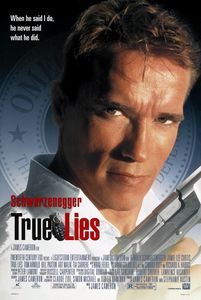
    (In theaters, July 2010) There is something both successful and not quite satisfying in this Cold War espionage thriller throwback.  The straightforward revival of Russians sleeper agents as antagonists in Salt is amusing (even more so given recent news items seemingly custom-made to market the movie), whereas the good old suspense mechanics of assassinations and chases are competently handled.  After The Recruit and Law Abiding Citizen, screenwriter Kurt Wimmer is quickly becoming a reference for thrillers with just enough twists to be interesting, whereas director Phillip Noyce is good but not great as an action director.  (Sadly, the post-Bourne editing is often too frantic to be effective: There’s one over-the-shoulder shot of the heroine jumping down from one vehicle to another that would have been gripping as a one-shot, but is stupidly cut in two by a meaningless insert.)  As for the actors, the three lead characters seem ready to play according to type: Angelina Jolie as the capable action heroine no matter the hairstyle, Chiwetel Ejiofor as the stand-up guy you can depend on, and Liev Schreiber as the one you can’t completely trust.  In terms of pacing, Salt’s forward rhythm is undermined by unexplainable lapses: What should have been a full-speed-ahead action spectacular is slowed down by moody pauses and too-lengthy flashbacks that approach parody at times.  Preposterous plot problems can be forgiven in the name of pure thrills, which is fortunate given how the cheats become bigger and bigger as the film moves in its final act.  When it works, Salt is pure summer entertainment, going back to solid stunts rather than an overuse of CGI.  It’s fun rather than ambitious, solid rather than innovative, and just insane enough to make something palatable from Cold War plot elements we thought dead and buried.  Expect a sequel.

  • The Walls of the Universe, Paul Melko

    The Walls of the Universe, Paul Melko

    Tor, 2009, 383 pages, C$28.95 hc, ISBN 978-0-7653-1997-5

    One of the charges most commonly made against the written Science Fiction genre these days is that much of it doesn’t look like the type of SF on which readers first got hooked on the genre.  This is either a good or bad thing, depending on your opinion of old-school SF: If your model of excellence was Asimov’s uncluttered prose, then the new stuff is pretentious and unreadable.  If you’re hoping for literary excellence, then the genre has never been healthier than it is right now.  Most of all, it’s an acknowledgement that Science Fiction has changed a lot since the pulp magazines, and that it can accommodate plot-driven and literary-minded readers, to say nothing of those who enjoy both.

    But from time to time, it’s worth noting that some books feel as if they have escaped from a previous decade.  So it is that Paul Melko’s second novel, The Walls of the Universe, could have been published at any point during the past forty years with very few changes.  It tackles the well-worn subject of parallel universes in a way that doesn’t rely on any recent innovations, and does so in a style that feels almost transparent once the story gets underway.

    Knowledgeable SF magazine readers will remember that the first part of the novel was published in Asimov’s in 2006, going on to be nominated for a number of awards including the Hugo and Nebula.  With this novel, Melko delivers an expansion and conclusion to his novella, taking the story further along in the same direction.  The premise is simple: A young man named John is accosted by another version of himself (“John Prime”), and receives a device that allows him to travel to parallel universes.  Unfortunately, it’s a trick: The device only works one way, and John Prime only gave away the device to get rid of the other John while he takes his place.  The novella ended with hero-John promising to investigate the mystery and return to his home universe.

    The novel eventually expands the scope of this premise, but first spends a lot of time following the parallel Johns as they learn to settle in their chosen universes.  Hero-John chooses to settle in a universe much like his/our own, intending to study enough physics to figure out the inner workings of the parallel-universe device but accidentally ending up inventing pinball.  Meanwhile, John Prime unsuccessfully tries to bring Rubik’s Cube to his new world, but ends up attracting the wrong kind of attention in addition to accidentally murdering his high-school nemesis.

    The Walls of the Universe spends a lot of time trying to keep this initial situation boiling before finally committing to expanding the canvas and sketching out the fuller implications of travel between parallel universes.  When it does, it leaves enough unanswered questions to suggest the possibility of either sequels or spinoffs; fortunately, it feels like a complete story by itself.

    But what this plot summary only suggests is the truly old-fashioned feel of the novel, which seems written from the same reservoir of wonder and imagination that characterised old-school SF.  Our hero is an engineer (of sorts) who eventually Figures it Out (in a grandly implausible display of reverse-engineering skills), tries to make things better and get along with everyone.  There’s a romance, a conflict with unsympathetic stranded world-travelers and an epilogue that corrects the book’s worst wrongs in a typical SF fashion.  The Walls of the Universe may have been marketed as an adult book, but it’s just as adequate for young adults (much like Steven Gould’s best novels) or adults who prefer a more straightforward kind of SF.

    Even with its mid-book lull and rushed ending, The Walls of the Universe remains too charming to resist.  It’s a very different novel from Melko’s debut Singularity Ring (which carried all the hallmarks, good and bad, of contemporary Science Fiction), but it’s likely to be far more accessible even to readers who are generally unfamiliar with SF.  It’s a good, traditional read that leaves readers satisfied.  If that’s what we mean by old-school SF, then we could use a lot more of it.

  • The Sorcerer’s Apprentice (2010)

    The Sorcerer’s Apprentice (2010)

    (In theaters, July 2010) There’s a lot of generic familiarity in The Sorcerer’s Apprentice, but don’t despair yet: Under Jon Turteltaub’s sure-footed direction, genre-aware script and quirky performances, this fantasy film actually manages to save itself from embarrassment.  Nicolas Cage fans won’t be disappointed by his portrayal of an eccentric sorcerer, while Jay Baruchel more than holds his own as a sympathetic science nerd turned magician.  (Plus: Monica Bellucci, even in a too-brief role.)  There is a lot of special-effects eye candy, and as many different magic tricks as the first four Harry Potter movies combined.  New York locations are effectively exploited, whereas the editing finds a good pace.  But never mind the technical credentials: The real charm of the film is to be found in the script, which correctly assumes that we’ve seen a lot of movies of this type: as a result, a significant portion of the required exposition is sarcastically telescoped.  (The best instance of this happens during the obligatory but well-handled car chase, as Cage’s character quickly deals with his apprentice’s questions without even waiting for him to ask them.)  The one sequence that really doesn’t fit tonally with the rest of The Sorcerer’s Apprentice is a too-goofy clean-up scene that pays homage to the Fantasia animated segment of the same title without bothering to rein in the CGI excesses.  Both Baruchel and Cage are oddball enough that they can do justice to their respective characters and if their delivery could occasionally be improved, the net effect is a film-long smile.  Baruchel, in particular, has an irresistible puppy-dog charm –especially when he comes to enjoy his magical talents.  Frankly, it’s hard to resist a protagonist who charges into the final battle shouting something like “I came armed with SCIENCE!”  For a film that could have been considerably dourer, there’s a refreshing competence at play in this latest Bruckheimer vehicle that is enough to make us forget about the familiarity of it all.

  • Old School (2003)

    Old School (2003)

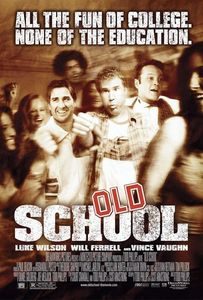
    (On TV, sometime around July 2010) If anyone wonders why I’m not much of a Will Ferrell or Vince Vaughn fan, let me point at Old School and shrug. Their chosen screen personae are that of overgrown men-child prone to temper tantrums and a shocking lack of self-reflection, and this movie allows that persona to run wild without constraints. It is, literally, about thirty-something adults regressing to an earlier stage of development, starting a fraternity to relive their college glory days. Is it fitfully entertaining? Of course. Is it a reprehensible anthem to the arrested man-childs? Somewhat. Is it designed for me? Absolutely not. In retrospect, this may be most notable as an early prototype of the kind of movie that would come to dominate American film comedy by 2009 (the link to The Hangover, with common director Todd Phillips, is certainly not accidental.) Otherwise, there isn’t much to say about Old School: It’s pretty much what you can expect from the premise or trailer, for better or for worse.

  • Medium Raw, Anthony Bourdain

    Medium Raw, Anthony Bourdain

    Ecco, 2010, 281 pages, C$28.99 hc, ISBN 978-0-06-171894-6

    Anthony Bourdain will be the first to recognize the unlikelihood of his accession to the ranks of celebrity cooks.  After two unsuccessful novels published in the late nineties while he was still working in New York restaurants, Bourdain wrote the now-classic exposé Kitchen Confidential with hopes that it would be read by other local kitchen professionals.  Much to his surprise, the book rode the wave of popular interest in all things foodie, became a perennial bestseller and (with some help from a TV show) made Bourdain a foul-mouthed star.  Unlike other celebrity chefs, his place has always been that of the hard-working professional scrapping away in ordinary restaurants.  Bourdain will acknowledge that his culinary talents were average, and that his unusually good fortune leaves him just as surprised as anyone else.

    That’s how we end up with Medium Raw, a collection of original essays about Bourdain’s life during the decade since Kitchen Confidential first appeared on the shelves.  Tackling a diversity of subjects from fatherhood to the quality of fast-food meat to the requirements for being a chef to the impact of the 2008 financial crisis over New York’s high-end gastronomy scene, Medium Raw is like spending an evening hearing Bourdain discuss a variety of subjects.  There’s so little structure that the book could have been a collection of magazine articles, but much of it either revolves around food or Bourdain himself.  It’s obviously a book for fans, and even those who have read Kitchen Confidential recently may feel left out if they haven’t experienced his other books and TV shows.

    Equally introspective and controversial, Medium Raw spends as much time meditating upon Bourdain’s selling-out than in designating heroes and villains.  (Heroes?  Working-class cooks like the one Bourdain profiles in “My Aim is True” or iconoclastic chefs like David Chang, discussed in “The Fury”.  Villains?  Alice Waters, as described in “Go Ask Alice” and Alan Richman in “Alan Richman is a Douchebag”.  For more, there’s an entire chapter called “Heroes and Villains”.)  A crucial difference between this and Kitchen Confidential is how stepped into foodie culture Medium Raw can feel: Bourdain not only name-checks other TV chefs presuming that we can recall who they are, but acknowledges the work done by Michael Pollan and Eric Schloesser in raising food quality issues in popular media.  For anyone even casually acquainted with contemporary food writing, it feels like a part of the mainstream.

    The best pieces of Medium Raw touch upon a variety of subjects and tone.  “The Sit Down” begins the book with a vaguely foreboding description of a confidential Ortolan tasting that will lead curious readers to Michael Paterniti’s incredible article “The Last Meal” (summary).  “Selling Out” describes Bourdain’s changing opinions about celebrity chefs and his own relationship to fame.  In “Meat”, Bourdain is horrified at the declining quality of hamburger meat and makes sombre predictions about the future of this all-American staple.  Bourdain’s expertise about the New York scene is obvious in “The Fear” (regarding the changing restaurant environment once the bankers lost their expense accounts in late 2008), while “Lower Education” includes a hilarious description of the psychological warfare that Bourdain is waging against McDonalds in his daughter’s social circle.

    Alternately funny, profane, touching, heartfelt, analytical and descriptive, Medium Raw is a grab bag of food-related pieces that shows how Bourdain has developed not just as a celebrity, but also as a writer.  It’s fully self-aware, and generous in how it gives us (still) a glimpse in the author’s life now that he’s moved up in the world.  It may be disconnected and scattered and unequal, but it’s also a fast and pleasant read thanks to Bourdain’s engaging style.  Even those who bought it with the intent to read it later may find themselves captivated after only a few pages.

  • Inception (2010)

    Inception (2010)

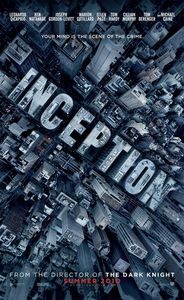
    (In theaters, July 2010) It’s tough to review Christopher Nolan’s Inception without sounding like a gushing fanboy, but here goes: One of the finest SF movies in years (even so soon after Avatar and District 9), Inception cashes Nolan’s Dark Knight chips and goes on to deliver a masterful cinematic experience that combines big-budget entertainment, thematic depth, weighty characters and splendid action sequences.  Good enough for you?  While it’s not a perfect film (lengthy snow sequence, insufficient exploitation of dream logic, some weak actors/roles), Inception wipes the floor with other big-budget action films thanks to unusually ambitious goals, pitch-perfect sequences, savvy storytelling and multiple levels of understanding.  It’s a measure of how successful it is that much of it appears simple, even obvious.  But when the film starts with “it’s a dream within a dream” and works its way to five (maybe six) levels of overlapping reality without losing its audience, it’s hard not to be impressed.  Ever since Memento (with high points at The Prestige and The Dark Knight), Nolan has proved himself to be an unusually skilled writer/director with a gift for infusing popular entertainment with weighty thematic consideration.  So it is that Inception effortlessly touches upon dream logic, moviemaking shortcuts, personal grief, human mythmaking, memetic madness and subconscious sabotage without seeming to break a sweat, all the while delivering a heist film according to the well-worn conventions of the subgenre.  Watching the film is like falling into a pleasant trance, emerging from the experience a lot like the characters coming back to reality.  Subtle and not-so-subtle touches add to the experience, such as a deliriously effective shifting-gravity fight sequence, an iconic sequence in which Paris serves as an exposition background, and a frame-perfect last shot that will please both those who want a definitive ending and those who don’t.  Brainier viewers will be pleased to watch a film that finally dares viewers to keep up.  Science Fiction fans will be particularly satisfied to see a film that uses SF devices for their emotional power while delivering some good old-fashioned sense-of-wonder at interlocking realities.  While the actors are a bit hit-and-miss (I’m still not convinced by Leonardo DiCaprio, nor by Ellen Page’s mushy-mouthed lack of affect, but Joseph Gordon-Levitt is fantastic as the picture’s lead action hero), the real star is Nolan as screenwriter and director, because Inception is beautifully controlled from beginning to end, combining the precision of The Prestige with the non-linear storytelling of Memento and the action rhythm of The Dark KnightInception is, in a carefully chosen word, amazing, and a shoo-in for year’s end top-10 lists.  Expect to see it more than once.

  • Flickan som lekte med elden [Millennium 2: The Girl Who Played With Fire] (2009)

    Flickan som lekte med elden [Millennium 2: The Girl Who Played With Fire] (2009)

    (In theaters, July 2010) Fans of Stieg Larsson’s massively successful trilogy will be reassured to find that the second film adaption from his novels is almost as good as the first one.  “Almost” because a bit of the originality of seeing two unusual characters fighting crime in modern Sweden has faded a bit.  But what The Girl Who Played with Fire has over its prequel is character familiarity, and much of the pleasure of this second entry is in seeing past plot threads being weaved into a complex thriller.  Millennium 2 is slightly more traditional in form than the first film (one character is framed for murder and must fight to find the true murderer, helped along by the other protagonist), but don’t presume that it’s all back to formula: The structure of the film is cleverly manipulated (even modified from the original novel) so that the two lead character only meet at the very end of The Girl Who Played with Fire, while the mid-film car chase and fight sequence are amusingly delegated to secondary characters.  Screenwriters should study the choices made in bringing the novel to screen, because an amazing amount of careful streamlining took place to fit the novel’s procedural excess into barely more than two hours’ worth of film: It’s no accident if much of the novel’s first half is abstracted.  Many of the pacing issues of the first film also carry over, although the lengthy coda of Millennium 1 is here truncated into an abrupt ending that leads viewers straight to the third film.  But plot aside, this is still Noomi Rapace’s show as the longer-haired but no less mesmerizing Lisbeth Salander; Michael Nyqvist is reassuring as the boy-scout journalist Mikael Blomkvist, but it’s Salander who’s the compelling core of the story and its protagonist.  It’s a solid film, maybe a bit too slow although surprisingly nimble compared to the original book.  Fortunately, viewers won’t have to wait a long time before the third film comes out.

  • Predators (2010)

    Predators (2010)

    (In theaters, July 2010) Given the indefensible mess that were the two Alien vs Predator movies, it doesn’t take much to reboot the Predator franchise with a mean and lean action follow-up to the first film.  Anyone complaining about Predators’ thin story, unimaginative extension to the franchise or routine structure may want to step back from keyboard for a moment and acknowledge that this late follow-up isn’t too bad: It certainly doesn’t waste any time dropping us in the thick of the action, with its rapid assembly of human warriors being hunted by aliens on an equally-alien planet.  SF fans will be disappointed by the lack of substance of the film’s SF elements (It takes a surprisingly long time for the characters to look up and notice that they’re not on Earth anymore, even after passing through a rocky plain), so it’s better to focus on Predators as an action film with a few fancy trappings.  But even there, the film struggles to distinguish itself: a few sequences are badly staged and rely on unbelievable spatial coincidences.  (For a film that takes place on an entire alien planet, everything seems to happen within two or three city blocks.)  It’s marginally more successful at establishing each characters and giving them even a modicum of respectability: We know they’re going to be picked-off one by one, but at least we can enjoy their presence while they last.  Adrian Brody credibly growls his way to a buff action hero, but supporting players such as Danny Trejo and Louis Ozawa Changchien (in a nearly-silent role) also get a few good moments.  Nimród Antal’s direction is slightly more ambitious than the usual stock action film, and that’s how the film allows itself a few better moments such as a swordfight seen from overhead.  Predators does last a bit too long, muddles into a mid-film lull and can’t really escape the shadow of the first Predator film, but at least it’s clearly in line with the first film, and that’s something that none of the sequels have been able to claim so far.  Not a bad result for something that falls into a generic action film slot.

  • Fever Dream, Douglas Preston & Lincoln Child

    Fever Dream, Douglas Preston & Lincoln Child

    Grand Central, 2010, 405 pages, C$32.99 hc, ISBN 978-0-446-55496-1

    The very last page of Fever Dream’s hardcover edition is an important announcement from the authors (now listed without first names on the cover) telling us that they are about to launch a new series of thrillers.  That announcement couldn’t have come at a better time, since anyone who makes it to the end of their latest novel will understand the creative fatigue plaguing the Agent Pendergast series.

    Fever Dream isn’t a bad piece of work as far as summer thrillers go… but it’s certainly generic enough to make anyone wonder what happened to the creative team that hopped so brilliantly from one set of character to another in their first few novels.  Now that they have spent seven successive novels writing about Pendergast, everything is starting to feel like routine.

    Granted, Fever Dream is a bit better than their previous Cemetary Dance: They don’t kill off a major character, they avoid much of the pseudo-supernatural hocus-pocus of their last few books and even advance one or two overarching subplots along the way.  By digging into Pendergast’s history, and in particular the events surrounding his wife’s death twelve years earlier, we also get a chance to understand what makes his character tic while he stomps around his regular haunts.  Leaving behind New York for the bayou, the normally-cool agent is also quite a bit more emotional this time around… in his own fashion: the point is not just to find who killed his wife, but to avenge her as well.

    Much of the plot, unsurprisingly enough for a Preston/Child thriller, is an investigation trying to piece together a decade-old mystery.  From smoking guns to hidden art caches, redneck confrontations and southern mansions contaminated by madness, Fever Dream even manages a few thrills along the way.  An unexpected plot development midway through the book even forces NYPD agent Laura Hayward to team up with Pendergast despite having little personal liking for the man.  There’s a touch of The Cabinet of Curiosity’s urban archaeology in seeing Pendergast deduce the existence of a hidden crypt under a Louisiana doughnut shop, while an ugly scene between Hayward and rednecks late in the book leads to a supremely satisfying revenge by the normally-imperturbable Pendergast.  While his long-dead wife was scarcely even mentioned in the previous novels in the series, she here has a faint presence that does nothing more than reinforce Pendergast’s mystique.  Elsewhere in that fictional universe, Constance Greene also gets a small part in one of the book’s subplots: Depending on its follow-up, it’s either a disappointing resolution to a promising story thread or a set-up for something even more intriguing.

    Combine those particular traits with Preston/Child’s usual clean prose, high-tech/historical plot drivers, limpid scene construction and ongoing plot threads and you have the makings of a capable thriller, if not much more: Despite improving on the previous two novels, Fever Dream is still just another minor entry in the Pendergast series, and one that can’t even be bothered to wrap up its plot threads: while the story reaches a natural stopping point, there are at least two unanswered questions leading into the next book of the series…  almost as if readers couldn’t be trusted to come back to Pendergast once Preston/Child’s new “Gideon Crew” series is launched.  Fortunately, reading the industry trades tells us that the February 2011 publication of the first Gideon Crew novel will be followed in the spring/summer by another Pendergast novel.  As a signal that the Pendergast novels aren’t anything special any more, this one is hard to miss.  Hopefully, the break will help the two authors find another creative outlet and keep Pendergast employed doing what he does best.  If that means he can take an extended break while Preston/Child go about working on other projects, then that may be for the best.

  • The Twilight Saga: Eclipse (2010)

    The Twilight Saga: Eclipse (2010)

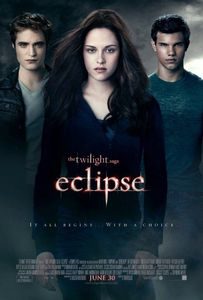
    (In theaters, July 2010) The problem with Eclipse is that while it’s just good enough to avoid much of its predecessors’ most unintentionally hilarious moments, it’s not good enough to make it a compelling film experience if you’re not already part of Twilight’s target audiences.  Much of it stems from the thinness of its plotting, especially when compared to the languid pacing of its execution: By the fifteenth minute of the film, we know that vampires are coming to attack and that poor confused Bella isn’t any more decisive than before.  And that’s where things remain stuck for the next hour, the script seemingly happy to remind us of both plotlines until it’s time to wrap it up.  To director David Slade’s credit, the short fights between teen vampires and fluffy werewolves actually feel interesting.  Alas, there’s isn’t much else to enjoy elsewhere in Eclipse: even the hilariously awful dialogue of the first two films seems a bit better-behaved here.  There is still, fortunately, a bit of romantic universality in seeing Bella struggle between two pretenders who really want to kill each other.  The acting isn’t much better, though, and the casting may be a bit worse: It’s not just for French-Canadian pride that I regret Rachelle Lefevre’s replacement by Bryce Dallas Howard as Victoria (Go, Team Victoria!): Howard doesn’t quite have the feral intensity required for the role and a number of the latter scenes feel like she’s meowing a lioness part.  Ah well.  In terms of genre-bending, Eclipse continues the series’ tradition of being romance under dark fantasy masks: Forget this film’s value to the horror crowd since there’s nothing original to see here in genre terms, even though a scene featuring a snowstorm, a freezing human, a frigid vampire and a warm werewolf is good for a cute chuckle.  (It’s one of the only chuckles in a film that’s as dour as the rest of its series so far.)  But, at the risk of repeating myself, I’m so far away from Twilight’s audience that the only thing left to do is admit that this film isn’t for me.  That it doesn’t manage to go beyond its own fans isn’t much of a problem as far as box-office receipts are concerned… but those films will age quickly once its audience grows just a bit older.  No film immortality in store, here.

  • Despicable Me (2010)

    Despicable Me (2010)

    (In theaters, July 2010) Seeing Despicable Me a bit too soon after Toy Story 3, I can’t help but notice how thin it feels compared to Pixar’s instant classic: It’s much simpler visually and even more simplistic from a story standpoint.  The backgrounds feel empty, and the scatter-shot writing seems all too ready to sacrifice tone and continuity for cheap gags.  (Seeing that much of the film was developed in France, I wonder if some of this inconsistency is a cultural artifact.)  Fortunately, Despicable Me finds its worth in earned laughter: Some of the most absurd slapstick is ridiculously funny, while the entire film is so good-natured that it’s easy to keep a smile in-between the laughs.  I’m never too fond of kid characters, but the three girls who (very) gradually come to change the mad-scientist antihero’s mind are surprisingly likable, which makes the overused “bachelor finds his inner parenting abilities” sub-plot far more bearable than you’d expect.  The same goes for the minion creatures, who hold up far better than their “let’s have an iconic toy” origins may suggest.  Much of the 3D is unobtrusive to a 2D audience, at the exception of end-credit sequences that feel tacked-on after a rush decision to re-render the film in 3D.  Despicable Me may not be much of a classic, but it holds its own as an entertaining feature for the entire family.

  • The Girl Who Played with Fire, Stieg Larsson (translated by Reg Keeland)

    The Girl Who Played with Fire, Stieg Larsson (translated by Reg Keeland)

    Viking Canada, 2009 translation of 2006 original, 503 pages, C$32.00 hc, ISBN 978-0-670-06902-6

    Second instalment in the massively popular Millennium trilogy of Swedish crime thrillers, The Girl Who Played with Fire continues the adventures of Larsson’s duo of righteous avengers by following up threads left open in the first volume in the context of a new mystery.  It’s a different type of story, and it leads straight to the final book in the trilogy.

    It picks up nearly a year after the events of The Girl with the Dragon Tattoo, as Lisbeth Salander comes back to Stockholm after some time spent travelling around the world.  This set up a chain of events that eventually send Salander on the run, suspected of three murders –including that of her sadistic guardian so memorably neutralized in the first volume of the trilogy.  Meanwhile, boy-scout journalist Mikael Blomkvist isn’t too far away from the story, as one of the victims was working for his Millennium magazine in exposing a prostitution network.  The strange collaboration between Salander and Blomkvist resumes anew as the stakes are raised ever higher for Salander.

    Much of the same strengths that made The Girl with the Dragon Tattoo such an enjoyable introduction to the series are in full display here:  The intricate procedural detail; the left-leaning look at modern Sweden society in all its flaws; the indignation at violence against women; the intensely genre-aware character-motivated plotting and (certainly not least) the two lead protagonists themselves.  Salander, newly refurbished and rich beyond belief, is still considered a crackpot by Swedish society at large, and The Girl Who Played with Fire goes much deeper in her personal history than anyone would expect.  This is her big novel in terms of back-story, and it cleanly illuminates a number of the character traits established in the first volume: why she’s so asocial, brilliant and driven.  Meanwhile, Blomkvist holds steady as a gifted editor/journalist, though he gets little more to do here than piece together the whole story and race ineffectually on Salander’s trail.

    That The Girl Who Played with Fire is Salander’s story is most directly reflected in its tone.  After a lengthy procedural first half, the novel gradually transforms itself in a revenge thriller, and the ending is nothing short of brutal for everyone involved.  While there is a mystery to solve, this second volume is more forward-moving than the first: it’s a thriller more than a mystery, and despite the Cold War flashbacks, we don’t go digging quite as deep in Swedish history.

    The price to pay for this story, unfortunately, the amount of sometimes-ridiculous procedural detail that Larsson crams into his novel.  This reaches an apex of sorts as we follow Salander during a page-long trip at IKEA: We get not only the specific models of what she buys, but a total of what it cost.  For all of the fuzzy warm feeling that readers may get in realizing that they’re reading the novel on the very same Poäng armchair that Salander has in her apartment, there’s a point where it’s possible to wonder How much of this is really necessary? The novel goes far beyond Salander and Blomkvist as viewpoint characters, involving an entire cast of protagonists, antagonists, friends, police and helpful bystanders.  The thriller plot itself barely begins before the first half of the book is over, and only starts cooking in the last quarter.  If nothing else, reading the novel will affirm how skilful the movie adaptation was in keeping the truly essential elements of the story.

    Still, seasoned thriller readers will find a number of interesting elements to savour.  The often-corrupt Swedish setting is just as interesting, whereas Larsson’s tweaks to the usual thriller plot templates can keep things interesting: Both heroes are kept physically apart until the very last moments of the novel, and two of the book’s big action moments go to secondary characters rather than the lead protagonists.  (In a note that will go unnoticed by most North-American readers, Larsson even gives a significant heroic role to real-life boxer Paolo Roberto, resulting in one of the best real-life cameo in any novel, ever.)

    Readers with sufficient patience and attention span to last through the often-lengthy but usually delicious exposition will only be pleased by this successful second volume.  But anyone with even the slightest interest in reading more about those two characters should keep the third volume close by, since the end of The Girl Who Played with Fire leads directly to The Girl Who Kicked the Hornet’s Nest.

  • Toy Story 3 (2010)

    Toy Story 3 (2010)

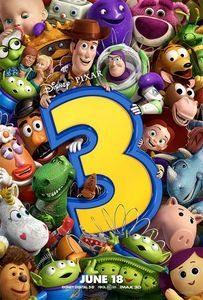
    (In Theaters, July 2010) Making a sequel to a beloved film is usually a loser’s game: We can all name follow-ups to classics that were derided, pilloried or (worse) forgotten.  But if anyone can buck the trend, it’s Pixar, a studio so sure-footed in its choices since the original Toy Story back in 1995 that even their most disappointing films have been a cut above average.  So there is no surprise and considerable cheer if Toy Story 3 once again proves to be an extraordinary achievement.  Even its status as a sequel becomes an asset as the story ages along its characters, features long-running payoffs (“The Claw!”) and hits an emotional climax that wouldn’t be nearly so effective if it didn’t mark the end of a 15-year journey: its surprising thematic depth about loss and renewal actually depends on it being a sequel.  As for the rest, it’s classic Pixar top-shelf material: Thrilling action sequences, numerous sight gags, honest character development, inventive sequences and a rhythm that makes everything go by the blink of an eye.  Any comparisons with the previous two movies will highlight the exceptional quality of the computer animation, which is particularly effective in dealing with human figures –and fortunately so given the importance that they play in the narrative.  But it’s the emotional impact of the film that will remain long after the incredible detail of its visuals have been forgotten: Unlike Up, the script wisely keeps its bawling moments for the end, and thus caps a complete film experience that delivers everything one could wish for in a mass-market entertainment blockbuster.  As usual for Pixar (not that they should be taken for granted), Toy Story 3 is a solid choice for year’s end consideration and one of the finest “Part Three” ever made so far.  The only way it could be better is if there is no “Part Four”. Ever.

  • Ware Tetralogy, The, Rudy Rucker

    Ware Tetralogy, The, Rudy Rucker

    Prime, 2010 omnibus re-edition of 1982-2000 originals, 751 pages, US$24.95 tp ISBN 978-1-60701-211-5

    Some authors’ bibliography can be described using a single word approximation, and so Rudy Rucker’s fiction can best be labelled weird.  Even by the imaginative standards of post-New Wave Science Fiction, Rucker pushes the limits of what genre readers are ready to accept as being plausible.  A mathematician/computer scientist by training and madman of the imagination by choice, Rucker has been at the periphery of SF for decades, and The Ware Tetralogy is a splendid career omnibus summing up the groovy, the bad and the wacky.  Bringing together Software (1982), Wetware (1988), Freeware (1997) and Realware (2000), it’s also a wild trip through the recent past of SF’s cutting-edge.

    Reading Software today is an intriguing trip back to the founding texts of cyberpunk, at a time where SF writers were first trying to grasp the new ideas that the personal computer revolution were making accessible.  Mind as software?  Digitizing personalities and storing them as information?  Software was there before the rush: Given how thoroughly those notions now permeate the genre, it’s probably impossible to read it today and grasp how innovative this must have felt at the time.  Significantly, Software also happens to be the most accessible of the four books bundled here. It’s weird, but approachably so: There are a few chuckles at the chronology (lunar-based robots having rebelled by 2001, and mind-digitizing being common by 2010), but the protagonist’s issues are recognizable, and much of the (ahem) hardware is familiar.

    This stops being true as Wetware and its two follow-ups unfold.  Technology growing ever-weirder in the universe of the series, humans start using drugs to merge at the cellular level, robots evolve into a kind of smelly malleable plastic compound, hyper-dimensional aliens stop for a chat and reality-bending technology (similar to the one imagined in Rucker’s own 1999 Saucer Wisdom) messes up everything.  The characters become increasingly incomprehensible (with a few exceptions, the most sympathetic being a perverted redneck with bad taste in partners) and so do their actions.  Reading The Ware Tetralogy at that point becomes a race from one comprehensible stepping-stone to another, trying to keep up with a flood of gratuitous strangeness.

    It does help that as Rucker grows older, his stories become less mean.  Software’s biggest flaw is the way it suddenly races through its third act in order to deliver a bleak resolution.  Much of the same also happens during Wetware, as the shiny new toys he plays with are abruptly discarded, outlawed or destroyed by clueless characters.  This, in fact, becomes a distinguishing point between Rucker and much of his SF cohort: Despite its fanciful extrapolations, The Ware Tetralogy frequently turns its back on progress, and never so blatantly than during the final volume.  The result, unfortunately, is never a series we can trust to deliver the expected SF thrills: All four books have a tendency to pick up their toys and go home just as we’re starting to have fun.  Fortunately, Realware provides a conclusion that’s both satisfactory and kind –if nothing else, this should be reason enough to read the story to the end.

    This being said, many of Rucker’s other writing tics are more admirable: If nothing else, he understands that humans in general are dumb, perverted and prone to taking counterproductive decisions that harm everyone.  Sexual obsession is a constant here, as are dim-witted characters struggling with future shock.  This may clash with SF’s brainy technophilic tendencies, but it does make Rucker a finer chronicler of the human experience than many of his colleagues.  (On the other hand, this advantage quickly turns to exasperation when characters doing really dumb things all lead to a small exclamation of “You idiot!”)  That’s the point of being a cyberpunk punk.

    The Ware Tetralogy is a great example of everything that characterizes Rudy Rucker’s Science Fiction, both good and bad.  My own previous experiences reading Rucker have been hit-and-miss: While his extrapolations are usually top-notch, their packaging has often been maddening.  Trying to get back to his bibliography after years of neglect, I floundered on his most recent Postsingular/Hylozoic diptych.  Most Rucker novels begin rationally, and evolve into something much stranger: If you miss the exit to Bizarroland, you can find yourself stranded in a narrative in which seemingly retarded characters spout childish nonsense to each other.  I suppose that SF needs a mad genius or two, but the price to pay may be novels that are more ambitious than successful.

    Still, I’m happy that, after years of casual book-hunting, I have finally managed to read the entire Ware series: Prime has done a fine job bringing back all four novels into print as one unified package (even though a few OCR errors made it through, the worst being the inversion of 2053 for 2035 at a crucial establishing moment), with an enlightening afterword by the author detailing the sources of inspiration and subsequent re-evaluation of each novel.  This afterword is said to be excerpted from Rucker’s upcoming (2011) autobiography Nested Scrolls, which I am now really looking forward to.

    If you’ve got even the slightest interest in experiencing The Ware Tetralogy for yourself, you can download the entire massive four-book series from either the author’s web site in PDF or in many more formats from ManyBooks.
  • True Lies (1994)

    True Lies (1994)

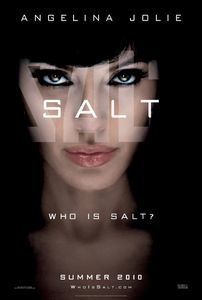
    (Second Viewing, On DVD, July 2010) I hadn’t seen True Lies since it was first released in theatres, and while it has visibly aged since then, it hasn’t lost much of its appeal.  Beginning like a competent James Bond clone featuring Arnold Schwarzenegger, the film soon takes a then-unusual turn in portraying a secret agent dealing with matrimonial issues.  While this trope isn’t so fresh now after such films as Mr and Mrs Smith (and was adapted from French film La Totale in the first place), it’s still rich in possibilities that True Lies exploits relatively well.  Unfortunately, what seems more obvious now are the pacing issues: There’s a mid-film lull that more or less coincides with increasingly unpleasant harassment of the lead female character by her husband, and even the reversal/payoff later in the film doesn’t completely excuse the bad feeling left by the sequence.  On the other hand, the action scenes are almost as good as they could be despite some dated CGI work: True Lies may be among director James Cameron’s lesser work, but it shows his understanding of how an action scene can be put together and features mini-payoffs even in the smallest details.  The last half-hour is just one thrill ride after another, culminating in a savvy Miami high-altitude ballet.  In terms of acting, it’s fun to see Eliza Dushku in a small but pivotal pre-Buffy role as the hero’s daughter or Tia Carrere as an evil terro-kitten –although it’s no less strange to see Jamie Lee Curtis get a few minutes of screen time as a sex symbol and I can’t help to think that Schwarzenegger, however great he is playing up to his own archetype, is singularly miscast as a character who should look far meeker.  Uncomfortable mid-film harassment sequences aside, True Lies nonetheless holds up fairly well more than a decade and a half later, thanks to a clever blend of action, humor and married romance.  What really doesn’t hold up, though, is the bare-bones 1999 DVD edition, which is marred by a poor grainy transfer and a quasi-complete lack of supplements.  We know about James Cameron’s reputation for excess during the making of his movies: There’s got to be an awesome documentary somewhere in this film’s production archives.