Year: 2010

  • Mic Macs à tire-larigot [Micmacs] (2009)

    Mic Macs à tire-larigot [Micmacs] (2009)

    (In-flight, August 2010) One of the advantages of watching a film by a visual stylist is that there’s always something to enjoy even if the story itself isn’t that interesting.  So it is that Jean-Pierre Jeunet’s Micmacs is at the same time a typical Jeunet production (quirky characters, ever-shifting visual presentation, elaborate Rube-Goldenesque details, intricate cinematographic polish, etc.) and yet far short of career-best Amélie.  There just isn’t enough universally-compelling material in here to keep things interesting, especially when it feels so one-sided in favour of its protagonists.  The anti-arms-trade message is heartfelt, but becomes too-obvious at its worst.  Still, it’s entertaining to watch, in no small part due to the escalating set-pieces in which events are set in motion with grandiose consequences.  It flies past smoothly and its visual audacity is terrific.  There are a few laughs, but much of the film is just a joy to watch.  A word of warning for francophones watching the film’s original sound-track, though: Micmacs is so deeply set in Parisian argot that non-Parisians may find it more useful to turn on the English sub-title track to understand some of the dialogue.

  • Playing for Pizza, John Grisham

    Playing for Pizza, John Grisham

    Doubleday, 2007, 262 pages, C$26.95hc, ISBN 978-0-385-52500-8

    Something very strange happens to best-selling authors once it becomes clear that they can write anything and still get it published.  In some cases, their editors become powerless to stop them from ranting about their wacky pet theories, and the result is a body of work that becomes crazier and more insular as it goes on.  John Grisham’s case is a bit more complicated, as he’s been taking more and more chances writing outside the type of novel that have made his reputation.  Skipping Christmas was a first attempt, and Playing for Pizza is just as complete a departure from Grisham’s legal-thriller roots.  It’s an Italian travelogue like The Broker, except without the serious thriller angle.  And while it’s one of the least consequential pieces that Grisham ever wrote, it’s still as enjoyable to read as anything else from him… even though you may not remember much of it a day later.

    The premise is a joke in itself, as a football player wakes up to find that he’s just fumbled a crucial game in the most enraging way possible.  Unable to find a job anywhere in North America after his very public humiliation, he accepts one of his agent’s most desperate suggestion and leaves for Italy, where he ends up on a quasi-amateur football team while waiting for the storm to settle back home.  Once settled in Parma, however, our protagonist comes to enjoy the scenery, make friends, settle scores with a mean American sports journalist (by punching him in the face, as football jocks are wont to do in settling their issues with impunity) and rediscover himself.  He also –spoiler- wins a few games along the way.

    If you’re looking for more plot, grab another Grisham book.  There isn’t much more here to Playing for Pizza than detailed description of la dolce vita as our protagonist plays tourist, then becomes an apprentice-citizen in Parma.  The football games are always followed by pizza among friends, and it’s this kind of relaxed atmosphere that ends up being the novel’s main preoccupation.  If you’re a North American having traveled to Europe, this kind of narrative will feel intensely familiar.  Strange customs!  Language issues!  Non-American lifestyles!  No parking anywhere!  Influent friends fixing problems with the law!  (For the dark side of this charmingly corrupt Italian lifestyle, read Douglas Preston’s more harrowing experience in The Monster of Florence.)  It’s a novel where you sit back and enjoy, and maybe make a note to head for the closest Italian restaurant in order to enjoy some of the food lusciously described every few pages.

    It often reads a lot like The Broker, a previous novel in which the author used his holidays as an excuse to set a novel in Italy.  This time, however, Grisham has dispensed entirely with the burden of suspense and just freed himself to write about food, tourism, football and romance, with a tone that’s all smiles.  It’s likely to appeal to a number of possible readers, but is it enough?

    Part of the problem with Playing for Pizza is that the protagonist isn’t much of anything.  A failed football player who finds that it’s better to be a big fish in a small bowl; who gets the girl for no other reason that he’s the hero of the novel; who punches people in the face when they displease him and gets away with it.  You can see how that kind of character appeals to a strong streak of wish-fulfillment, but the danger of such indulgences is that they can reach a narrow public and feel obnoxious to anyone who doesn’t identify with it.  This limits the novel’s appeal and contributes to its inconsequentiality: It’s not a hard novel to read, but try to remember something from it more than a few hours later and you’re liable to picture Northern Italy, food, small cars and maybe a few football scenes.

    This, obviously, is what Grisham intended, and a chunk of the novel’s charm is seeing the author indulge himself in a bit of meaningless fun.  Not everything has to be about southern lawyers tempted by corruption, or even about serious plot mechanics.  If Grisham is willing to use his bestselling credentials to write this kind of book –turning holiday memories in another crop of royalties–, then who are we to begrudge him his fun?  At least he’s not jumping on a soapbox and telling us about a shape-shifting lizard conspiracy threatening the world.

  • The Trotsky (2009)

    The Trotsky (2009)

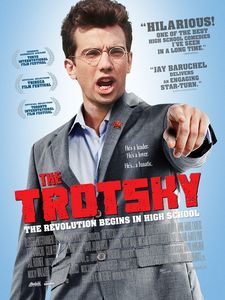
    (In-flight, August 2010) I want a lot of people to see The Trotsky. It’s pleasant enough to discover a quirky comedy with wit and brainy allusions; but it’s even better when you realize that it has been filmed less than 200km away.  So it is that the cheerfully Montréal-based The Trotsky is a comedy starring a young intellectual convinced that he’s the reincarnation of Leon Trotsky, fated to recreate his namesake’s biography.  Hailing from the privileged ranks of Montréal Anglophones, our hero tries to organize workers at his father’s factory and ends up at a public school where he eventually leads a student revolution.  The film is too long for its own good and takes a while to truly spark up, but when it’s good –it’s great.  Jay Baruchel turns in one of his best performances yet as the Trotsky-obsessed hero, but he’s surrounded by capable actors (among them Liane Balaban, Geneviève Bujold, Colm Feore and Saul Rubinek) who each get a shining moment or two.  The film is deep in historical allusions, but the script by Jacob Tierney (who also directs) is kind enough to let in most viewers on the jokes.  The rest of The Trotsky doesn’t hesitate to tackle subversive issues of popular rights and authoritarian exploitation, making it a crowd favourite for anyone looking for high-school comedies with more ambitious goals than usual.  The added bonus as far as I’m concerned is that the film is pure Montréal (down to familiar police cruisers) and highlights why it’s such a great city: The freedom to discuss social issues, the endearing mixture of French and English, the European influences in a North-American urban setting… it’s all there, and it couldn’t have been highlighted in a better showcase.

    (Second viewing, on DVD, April 2011) I like the film even more after a second viewing: It’s fresh, funny, clever and endearing at once. The director and editor’s commentary track shows that the filmmakers fully intended the film’s political content (director Tierney has an… interesting background), and their anecdotes about how the film was shot are interesting. The making-of featurette is a bit thin, but the various deleted scenes each get a chuckle or two.

  • Garage Days (2002)

    Garage Days (2002)

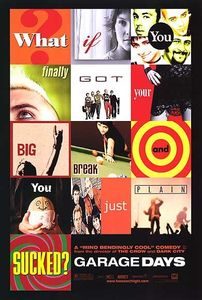
    (On DVD, August 2010) Writer/Director Alex Proyas’s filmography is filled with spectacular SF/fantasy hits, but in the middle of The Crow, Dark City, I, Robot and Knowing, his musical comedy Garage Days always gets short thrift.  That’s a shame given how it features a fun script, good performances, a cool look at Sydney, some great music and Proyas’ typical gift for fast-paced visual storytelling.  Centered on a group of friends involved in a small struggling rock band, Garage Days soon spins out to include romantic complications, quirky supporting characters and the even-popular quest for the “Big Break” so beloved by other similar films.  Things don’t all end up as expected, however, and it’s one of the film’s minor triumphs that it still ends on a great note despite honouring its tagline of “What if you finally got your big break and you just plain sucked?”  Garage Days is a charming film despite its faults (many of them the kind of things you’d expect from a generally low-budget film made outside Hollywood), and it’s a good way to spend an evening.  The occasional flashes of high-concept style are welcome, Kick Gurry is particularly enjoyable as the protagonist and so is the somewhat run-down contemporary look at Sydney’s music scene.  The music is fine, as you’d expect from a comedy about a rock band: the film even features a high-energy concert sequence to the tune of 28 Days Later and Apollo’s 440 “Say What”.  For Proyas, it’s a very different film from his usual dark downbeat visions, and it’s a welcome interlude.  The story, characters and presentation may feel familiar (expect visual parallels with British movie-makers such as Danny Boyle and Guy Richie), but Garage Days is handled with a decent amount of verve, and it may even have something to say about how we don’t need to be rock stars to be happy.

  • Alphaville, une étrange aventure de Lemmy Caution (1965)

    Alphaville, une étrange aventure de Lemmy Caution (1965)

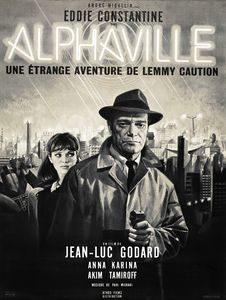
    (On DVD, August 2010) For a moment, I nearly hated this film.  Keep in mind that it’s a pure product of the French new Wave, which set out to challenge viewers’ expectations about the nature of films.  Here, writer/director Jean-Luc Godard takes the usual SF/thriller formula (ie; a secret agent sent to a foreign city to rescue/kill a scientist) and subverts every single facet of it.  Shot in black-and-white, the film makes references to SF plot points but blandly takes place in undisguised Paris, featuring sixties technology and clothing.  The pacing is glacial, the dialogues don’t quite make sense, the fight sequences are handled in a curiously lackadaisical fashion: clearly, it dares viewers to question themselves about what they’re expecting of a film –a process that remains as effective today than in 1965.  It quickly becomes obvious that Alphaville is as much a satire of lazy SF movies than an attempt to say something in a new way.  It’s not always enjoyable: I may have thrown my hands up in exasperation twenty minutes into the film, but the wonder of such experiments is that there’s always a reason to keep watching… just to see what else is in store.  Amazingly, Alphaville eventually clicks, not just as a screw-you to complacent audiences, but also as a modest piece of thematically deep SF filmmaking: Random flashes of equations, inverted nodding gestures ( “No” meaning “Yes” and vice-versa), disconnected bits of dialogue and heavy-handed dystopian clichés all pile up and fuse into a statement about humanity in the face of technological authoritarianism that works in part because it’s not presented like a genre film.  Other small pleasures abound, from some unusual camera work to Eddie Constantine’s wonderfully deadpan performance as the sort-of hero of the film, to a few eerie sequences that show how good SF doesn’t need special effects.  But Alphaville’s foremost quality is the very thing that makes it so unapproachable at times: The sense that a gifted filmmaker took a look at a genre and set out to mock it, while still using its techniques to examine his own artistic preoccupations.

  • Kaena: La prophétie [Kaena: The Prophecy] (2003)

    Kaena: La prophétie [Kaena: The Prophecy] (2003)

    (On DVD, August 2010) It’s amazing to see which films go past unnoticed, ready to be discovered by curious cinephiles years later.  So it is that even hard-core SF fans may have never seen this lush computer-animated fantasy/SF feature film.  Don’t raise your expectations prematurely: Kaena remains B-grade CGI movie-making, with sometimes-unconvincing animation, confusing visual compositions, a muddled plot and plenty of other annoyances.  But the result remains so visually intriguing that it’s hard to dislike.  The back-story involves a gigantic tree between two planets, a superstitious human colony, remnants of an alien ship and liquid antagonists, but the plot comes from the good-old SF template of a curious young female teenager going off on a quest to discover the true nature of her world.  It works even when it’s too confused to make us care: The plot gives up and falls into the tired “incomprehensible light-show contest between gods” cliché by the end, but there are better moments along the way.  The visuals are particularly intriguing, although many will raise their eyebrows at the body-revealing outfits of the surprisingly curvy teen heroine.  (French standards being what they are, we even get a surreal nude scene at the climax)  For a film often marketed at kids and young adults, Kaena features a surprising amount of visual poetry, exposed thighs and anti-religious content.  While the final result may not escape that of a curiosity, at least it’s a refreshing kind of oddball film.  The R1-Quebec DVD contains an interesting making-of featurette that explains how the film was put together using consumer-grade technology, and an entertaining “virtual interview” with the heroine that even pokes fun at the sexiness of her outfits.

  • Scott Pilgrim, Bryan Lee O’Malley

    Scott Pilgrim, Bryan Lee O’Malley

    Six-book series made of…

    • Scott Pilgrim’s Precious Little Life, 2004, Oni Press, ISBN 978-1-932664-08-9
    • Scott Pilgrim vs the World, 2005, Oni Press, ISBN 978-1-932664-12-6
    • Scott Pilgrim & the Infinite Sadness, 2006, Oni Press, ISBN 978-1-932664-22-5
    • Scott Pilgrim Gets it Together, 2007, Oni Press, ISBN 978-1-932664-49-2
    • Scott Pilgrim vs the Universe, 2009, Oni Press, ISBN 978-1-934964-10-1
    • Scott Pilgrim’s Finest Hour, 2010, Oni Press, ISBN 978-1-934964-38-5

    Publishing success doesn’t often correlate with anything resembling quality, so it’s satisfying to see that one of the biggest comic series of the past few years has been Bryan Lee O’Malley’s idiosyncratic Scott Pilgrim.  Now ending its run with a sixth volume and the near-simultaneous arrival of its movie adaptation, O’Malley’s unlikely success blends a look at post-teenage male romance, videogame-inspired personal mythmaking, a deeply Torontonian setting, sharp writing, great characters and hilarious moments.  I first climbed on board the series when the fifth volume was released, but the movie adaptation gave me a great excuse to re-read the entire story in a single gulp, and revisit what makes it click.

    I am, I’ll admit, too old and too square to truly empathize with much of the series: I’m now a good decade older than the series’ cast of characters, and my own path through life has been the university-to-cubicle professional fast-track rather than the kind of erratic McJobs-and-clubs slacker universe in which Pilgrim and friends live.  But Scott Pilgrim nails that post-teenage lifestyle in stunning detail: that slice of time not quite shackled by the demands and disillusions of full adulthood, in which people come to define themselves now that they don’t have to attend classes.  Pilgrim and friends are free to exist away from their parents, live in tiny apartments, hang out at hip venues, play in garage bands, work occasionally, and get mixed-up in complex romantic entanglements.  Their universe is one of pop-culture references inspired (unlike previous generations) by videogames, their personal mythologies defined by gaming heroism as much as anything else.

    So it is that the series begins with “Scott Pilgrim is dating a high-schooler!” and ends with “So… we try again.”  In-between, it’s pure Canadian magical realism as Pilgrim falls for a mysterious girl named Ramona and must fight her seven evil exes in order to earn her affections.  That’s the plan, at least: the actual path to romantic bliss isn’t quite as clear-cut, especially when Pilgrim realises how much of “a crummy boyfriend” he’s been.  The last volume of the series is particularly unkind to its hero –and surprising to readers not expecting Scott to grow up in a hurry.

    But as with many other graphic novels, Scott Pilgrim is more memorable for its page-per-page execution than its narrative satisfaction.  O’Malley peppers his series with a near-constant stream of small delights, whether it’s a number of Torontonian references, self-aware patter, absurdly fantastical plot devices and musical moments.  The series breaks the fourth wall frequently, but doesn’t cheapen its characters’ problems.  It’s such a compelling reading experience that every time I reached in my stack of volumes to check details, I ended up re-reading dozens of pages.

    As a hip must-read reference for the younger set, it’s something that even the older ones among us are nearly certain to enjoy.  The cutting-edge references exist alongside gaming metaphors that will be familiar to anyone who has stepped in an arcade back in the eighties, and they all serve to pump up a universally appealing male romance to sustained reading enjoyment.  Don’t miss it (especially if you live in or near Toronto) and let it comfort you that, sometimes, sale numbers do point at something worthwhile.

  • Luftslottet som sprängdes [Millennium 3: The Girl Who Kicked the Hornet’s Nest] (2009)

    Luftslottet som sprängdes [Millennium 3: The Girl Who Kicked the Hornet’s Nest] (2009)

    (On DVD, August 2010) This third and (presumably) last entry in the Millennium trilogy is best appreciated by fans of the lead characters: Picking up moments after the events of the second film, the narrative depends almost entirely on character quirks, plot follow-ups and existing tensions established during the second movie.  It’s not quite as slow to begin this time around, but it’s just as “carefully paced” (which quickly becomes “long and repetitive” if you’re not a fan) as the two previous films in the series, something which, in turn, can be traced back to Stieg Larsson’s procedural novels serving as source material.  For fans of the series, though, this marks an effective entry in the series as prickly protagonist Lisbeth Salander goes up against powerful renegade groups within the Swedish state’s security establishment while undergoing a trial that will determine her independence.  No fear, though: Sweet justice is measured onto those who deserve it, and Mikael Blomkvist even gets a chance to fight back in an action scene of his own.  The film itself in directed unspectacularly, which isn’t as disappointing as you may think given how it allows the actors, particularly Noomi Rapace as Salander and Michael Nyqvist as Blomkvist, to underplay their roles in typical Scandinavian fashion.  There’s even an interesting moral point made at the end, as a competent democratic government takes care of its renegade elements without any typical American-style cynicism or overblown violence.  For a series cut down abruptly by the author’s untimely death, this third volume ends on a satisfying note that allow viewers to let go and imagine Blomkvist and Salander’s next adventures without anxiety.  Reflecting upon the entire trilogy, there’s no doubt that the first volume is quite a bit better, more unusual and more rewarding than the last two.  Still, it’s not a bad series, and the sheer magnetic power of Rapace as Salander makes it a recommendation.  Who knows what the Americans will do with their remake?  DVD-wise, the R1-Quebec release regrettably has no extra features whatsoever.

  • Immortel (ad vitam) (2004)

    Immortel (ad vitam) (2004)

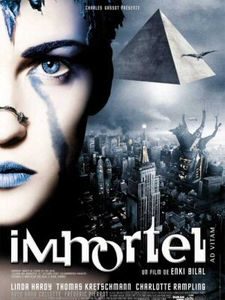
    (On DVD, August 2010) I’m usually the first one to complain when a film’s visuals take over its story, but I can sure make an exception when it comes to Immortel (ad vitam), an eye-popping French Science-Fiction movie that teases as much as it satisfies.  The first few sequences sets the tone, with Egyptian gods discussing philosophy in a pyramid hanging over 2095 New York.  A blue-haired woman, an escaped cryogenic prisoner and a bizarre mixture of mutants and aliens quickly follow, setting up a visually dense film that nonetheless manages to tell a story in-between divine possession, political intrigue, dystopian exploitation and a dash of eroticism.  But never mind the adequate story, since the plentiful visual effects thoroughly dominate Immortel.  The film, largely shot against green screen, incorporates digital sets with CGI characters and real-life human actors.  The effect is strange and wonderful even when the quality of the animation doesn’t quite reach beyond the uncanny valley.  The number of quirky background inventions is impressive, and they’re thankfully not all explained as soon as they are introduced: as a result, Immortel feels more alive than countless other SF films.  The quirky dialogue isn’t without its charms either, most of the highlights taking place in conversation between the human hero of the story and his possessor Horus.  In the end, it’s this delightfully weird sensibility, adapted by co-writer/director Enki Bilal from his own graphic novels, which makes the film work even when it shouldn’t: if nothing else, it’s another eloquent proof that French SF cinema tends to be quite a bit more visually adventurous than its US counterparts.  Any serious media-SF fan should make an effort to track down this one.

  • The Adventures of Priscilla, Queen of the Desert (1994)

    The Adventures of Priscilla, Queen of the Desert (1994)

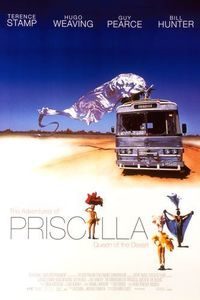
    (On DVD, August 2010) I realize that I’m fifteen years behind the rest of the world in (finally) seeing this charming Australian comedy, but then again you would be horrified at some of the other curious omissions in my personal film-viewing record.  Suffice to say that hindsight has advantages of its own: It’s hard to see The Adventures of Priscilla, Queen of the Desert now without spotting Hugo Weaving, Guy Pearce and Terence Stamp in fearless performances that are remarkably different from the kind of roles for which they have become best known.  (Go ahead; make a joke about Agent Smith in drag: “Mis-ter An-der-son, you look… fabulous”.)  The film itself has aged remarkably well: While social attitudes toward queer issues represented in this film have hopefully evolved, the exuberant quality of the characters does a lot to bring audiences into their colourful reality.  By the end, the film reaches a quasi-idyllic acceptance that acts as inspiration.  But social issues aren’t the reason why the film has become such a self-confident camp classic: You just have to look at the astonishing visuals of a scene in which a bus drives across the desert featuring a rooftop performance by a drag queen draped in long billowing silver drapes to realize how awe-inspiring this film can be.  The Australian outback makes for a spectacular background, and the script deftly moves between emotional tones without losing track of its goals.  It’s all very impressive, and you don’t have to be interested in LGBT issues to appreciate the cinematography, the script or the fun of the bus ride.

  • Walkabout (1971)

    Walkabout (1971)

    (On DVD, August 2010) Something really strange happened to me during Walkabout: As the initial look at the metropolitan bustle of early-seventies urban Australia became a surrealistic outback reverie, I started dreading the rest of the movie: I don’t respond well to non-narrative films, and the idea of spending another hour and a half in a daze of dream-like images held a limited appeal.  It got worse as the bare essential of the plot were carelessly established: a female teenager and her kid brother, stranded in the Australian outback.  Narratively, the film never holds up: characters act in painfully unrealistic ways, the visual and thematic strangeness of the film undercutting any serious attempt at establishing narrative tension as they float from one situation to another with nonsensical dialogue that never reflects the danger of their situation.  But that’s when the strangeness occurred, because rather than fight the film for what it wasn’t trying to do, I let myself slip into the oneiric state of mind best suited to appreciate the incredible cinematography, symbolism and atmosphere of the film.  It’s not about two kids returning to civilization thanks to the help of an aborigine teen: It’s about superb pictures, meditations upon nature versus civilization, teenage sexuality, the impossibility to communicate, the way we’re set in our own limitations and the longing for rites of passage.  At least that’s what I got out of it, in-between the film’s often-surprising non-sequiturs and often-audacious editing.  What does it mean?  You tell me, in between excerpts of a meteorologist sex comedy, in-your-face juxtaposition, page-flipping, moody skin-bathing, suicidal characters, animals harmed during the making of this film and a coda that almost wraps everything together.  Some reviews of the film will promise you that no one who ever saw Walkabout ever forgot about it and this, for once, doesn’t feel like hype: In the state of mind created by the film, I gasped aloud at two particularly striking shots and couldn’t help but marvel at the impeccable depiction of the Australian Outback wildlife.  If the preachiness of the film hasn’t aged very well, its impeccable images and Jenny Agutter’s performance as a teenage girl have stood the test of time.  It’s a very zen-like film: don’t expect it to make sense and it just may start doing so.

  • The Expendables (2010)

    The Expendables (2010)

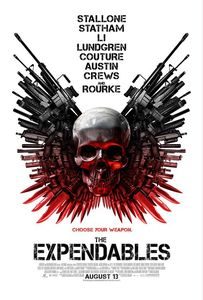
    (On DVD, August 2010) It’s said that films should be judged on the basis of their ambitions, and the least one can say about writer/director/star Sylvester Stallone’s The Expendables is that it really wants to be a gift to 1980s action movie fans.  The ensemble cast is among the most extraordinary ever assembled for an action film, in between Stallone, Jason Statham, Mickey Rourke, Dolph Lundgren, Jet Li and others, with great cameos by Bruce Willis and Arnold Schwarzenegger.  Unfortunately, the cast (Statham in particular) is about the only thing going for this film, which is so successful in recreating the eighties that it has forgotten that most action films of the era were deathly dull.  Reviving Regan-administration Latin-American politics, the film is mired in a dull banana-republic setting where only Americans can kill the right people to restore peace and deniable capitalistic hegemony.  But even worse is Stallone’s action direction, which cuts away every half-second in an effort to hide that the actions scenes don’t have a lot of interest.  The explosions are huge, but the rest is just confused: in-between the excessive self-satisfied machismo of the film, it’s not hard to grow resentful at the stunning waste of opportunities that is The Expendables.  A perfect example is a dock strafing sequence that could have been great had it actually meant something: instead, it just feels like the gratuitous hissy fit of a pair of psychopaths.  But the nadir of the film has to be found in its script, especially whenever it tackles perfunctory romance: Sixty-something Stallone may helm the film, but it’s no excuse to slobber over a girlfriend half his age.  Another dramatic monologue delivered by Rourke stops the film dead in its tracks and sticks out as the endless scene that doesn’t belong.  Too bad that the script doesn’t know what to do with what it has: despite the obvious nods and little gifts to macho cinema, The Expendables quickly indulges in the limits of the form.  Guys; don’t argue with your girlfriend if she wants both of you to see something else.

  • Pygmy, Chuck Palahniuk

    Pygmy, Chuck Palahniuk

    Doubleday Canada, 2009, 241 pages, C$29.95, ISBN 978-0-385-66629-9

    Ever since discovering Chuck Palahniuk’s brand of outrageous fiction a decade ago, I have sometime wondered what it would take for me to really dislike one of his books.  Once you’re suitably jaded at the violence, perversion and generally antisocial behaviour of his novels, it’s hard to raise an eyebrow at his ever-increasing outrageousness.  Palahniuk is a professional provocateur, and there’s an ongoing game between him and his readers to see who blinks first.

    Now, with Pygmy, I know what makes me blink… and it turns out to be bad grammar.

    From the distance of a plot summary, there’s little in Pygmy to scare away Palahniuk’s usual fans: As the novel begins, a young trained assassin from an unspecified totalitarian regime lands in America to be adopted by a typical American family.  But this turns out to be one facet of Operation Havok, a plan to place sleeper agents in American cities where they can directly attack the Midwest way of life.  Our narrator knows everything worth knowing about America, Americans and how to kill them: He’s got intricate martial arts training, the ability to smell people down to their most intimate secrets and the equivalent of a post-graduate degree in terrorism.  Now imagine him dealing with a typical High School and you can imagine the fun.  Raised in a totalitarian regime to despise everything America stands for, it’s not a surprise if our narrator describes suburban life in utterly alien terms.

    It wouldn’t be a Palahniuk novel without the usual amount of blood, sex and over-the-top personal behaviour.  Never mind the adoptive mother’s unquenchable passion for vibrators: Barely three chapters into Pygmy, our narrator takes revenge on a bully by brutally sodomizing him –thus unleashing a latent homosexual passion that, once spurned, leads to a high school shooting midway through.  This is fairly tame material for Palahniuk readers, who have come used to far more disturbing stuff.  It helps that Palahniuk never forgets to be intensely (if darkly) funny in most of what he writes: Pygmy has a splendid opportunity to comment on modern Americana and makes the most out of it.  Perhaps the best sequence of the book is a Model United Nations featuring a bunch of horny teenagers, leading to such instant-classic lines as “Sri Lanka says Afghanistan has the biggest crush and could totally jump the bones of Morocco.” [P.84]

    But one of the reasons why this sequence works is that you can actually understand much of it.  Otherwise, Pygmy is narrated in approximate broken English, a stylistic choice which quickly goes from odd to exasperating.  Eventually, as the narrator develops his own way of describing suburban normalcy, we’re asked to decode paragraphs such as this one:

    For official record, additional reside aboard bench cushion vast breathing cow, host father.  Twitching chicken, host mother.  Dual host parent unconscious splayed wide limbs spread, neck muscles lolling heads loose until rest own shoulders, lips loose, trickling long ropes translucent saliva.  Unconscious, breathing prolonged liquid inhales, loud sputtering exhales. [P.101-102]

    This is irritating enough in small doses; now imagine an entire 240-pages book of it.  Reading Pygmy gave me horrible flashbacks to my abortive attempts to read James Joyce: my eyes skipping from one familiar word to another and my brain rejecting any attempts at making sense of the sentences, eventually resolving meaning from loose associations and accumulated context.  It’s unpleasant like little of Palahniuk’s fiction has been so far –and I kind of liked “Guts”.

    Add to that the usual Palahniuk recurring motifs used with ever-lessening effect (Repeating periodical table elements?  Now you’re reaching), the uneasy tension between the satire and the dirt-serious mechanisms of indoctrination, the too-brief usage of the book’s best character (a “cat sister” worth an entire book by herself), the often-lazy satire and the flaws of the book don’t accumulate as much as they multiply… and the result seems to confirm Palahniuk’s sliding standing ever since 2007’s Rant.  There are rewards in this novel, but they’re slight and unpleasant to decode.  Maybe it was a good thing if Pygmy waited a year in my to-read pile before being revealed as a disappointment: Now I can jump over to follow-up Tell-All and hope that it gets better in a hurry.

  • Eden Log (2007)

    Eden Log (2007)

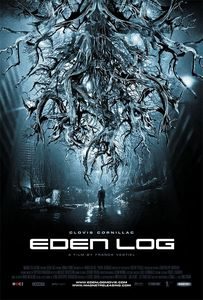
    (On DVD, August 2010) Words fail to explain the sheer tedium felt while trying to watch this film.  An ugly mix of black-and-blue cinematography, trashy set design and muddled plot elements, Eden Log at times feels like a deliberate attempt to antagonize as many members of the audience as possible.  A mostly-silent film in which one speaking actor (Clovis Cornillac, good despite the film) navigates a run-down environment in a succession of slow and moody vignettes, it’s best watched with a far more interesting book in hand, so that you can spend your time doing something useful while the thin mush of SF elements glacially drips out during something pretending to be a plot.  Never mind the misogyny, misanthropy, paranoia and lack of imagination of the script: Eden Log is a series of atmospheric set-pieces featuring one guy caked in mud.  As such, at often works pretty well, especially given what feels like a dollar-store budget: The oppressive feeling of the film is powerful enough to be repulsive in general.  As a narrative, though, it’s twice (maybe thrice) as long as it needs to be, and so never kindles along any kind of lasting interest.  French SF movies often have the tendency to look good while not actually being any good: Eden Log is no exception, albeit it is definitely weaker than most other recent French-SF films.  (It shares many problems with near-contemporary Dante 01, including a bad script co-written by SF writer Pierre Bordage)  And if you’re hoping for a longer review, forget it: I don’t even want to think any longer about this movie.

  • Dante 01 (2008)

    Dante 01 (2008)

    (On DVD, August 2010) It’s surprising how quickly promise can turn to pretention: While the first minutes of Dante 01 promise a stylish horror/SF hybrid set on an isolated space station (one that is dedicated to hosting mentally unstable criminals, no less), this promise soon turns to nonsense as the pseudo-profound dialogue piles up and the film devolves into repetitive hocus-pocus.  With acclaimed cinematographer Marc Caro directing and writing (along with French SF writer Pierre Bordage), it’s no surprise if the film often looks interesting: Despite what feels like a small budget, there are a few interesting visual ideas in the mix.  Sadly, they are not founded on anything nearly as interesting in terms of story: The protagonist is sort of a mute/amnesic magical mystery box with powers that pop up whenever needed, precipitating (after many repetitive cycles) a ridiculously overlong metaphysical ending that really wants to echo 2001: A Space Odyssey without deserving it.  The last two minutes are a loop of three sequences (two of them mirrored) repeated over and over again in the hope to pummel the audience in an unquestioning stupor.  It’s… daring, but it doesn’t work, much like the convoluted freshman-grade hellish references that pepper the script, or the dull jabs at a corporate medical conspiracy.  As far as SF/horror hybrids go, Dante 01 isn’t even as good as Supernova, let alone anything better.  Its visual polish ensure that it’s not completely uninteresting, but home viewers may find themselves gravitating toward more interesting things to do while the film repeats itself tediously over 90 minutes.