Month: November 2019

  • The Cutting Edge (1992)

    The Cutting Edge (1992)

    (In French, On TV, November 2019) Modern studio filmmaking is all about attracting as many audience quadrants (young/old, male/female) as possible, so you can see the attraction in The Cutting Edge pairing up a hockey player with a delicate figure skater to form a skating duet. It allows for some ballet fantasy, underdog formula and mismatched romance along the way. Mechanical in intention, it ends up potable largely due to decent execution. Screenwriting buffs will recognize Tony Gilroy as having penned the script (his first screen credit), which makes for a very, very off-persona debut for someone best known for thrillers both cerebral and muscular. But maybe the credit should go to director Paul Michael Glaser, as he overuses slow-motion shots and keeps some romantic tension going on between the characters played by D. B. Sweeney and Moira Kelly. The skating footage is decent and well integrated—there’s clearly some creative cutting going on to make both actors look like Olympics-level skaters, but it’s not too distracting. The fun is largely in the interludes off the ice anyway, as our two mismatched leads gradually fall for each other. Everything here is familiar and predictable, but it’s executed with a decent pacing and adequate means. Audiences with more affection for figure skating will certainly rank The Cutting Edge higher.

  • Single White Female (1992)

    Single White Female (1992)

    (On TV, November 2019) Calling a film influential is not the same as calling it good. At face value, especially when seen today, Single White Female is clearly not that successful: Ludicrous plotting, incredibly familiar plot elements, undercooked direction and an execution that seems to squander the possibilities of its high-concept premise through obvious choices. But this is nearly thirty years later, and the very qualities that made Single White Female a bit of a sleeper hit have been absorbed and endlessly repeated by a certain strain of cinema. What was novel at the time (a female-focused domestic thriller featuring a “roommate from hell,” directed by a woman, featuring two up-and-coming female leads) has become more commonplace. The premise was so compelling that it led to many, many imitators—a good chunk of made-for-Lifetime thrillers (not to mention BET original movies) veers very close to Single White Female. Watching it today is like going to the fountain from which those imitators have drunk. You won’t be surprised to see that it’s somewhat more thematically deep than surface imitations, or that some narrative beats are clunky when they are compared to later streamlined imitators. It’s clearly a B-movie, but both Bridget Fonda and Jennifer Jason Leigh (both of which have had decent careers in the years following their presence here) do well in the lead roles, as director Barbet Schroeder keeps the potboiler going. While much of the plot mechanics play about as well today as they did, the film is clearly stamped with its early-1990s by its portrayal of computer technology at the time, including an early use of the Internet. Single White Female is not a great movie and its imitators have made it far less distinctive, but it’s watchable enough today—especially as an example of female-produced thriller at a time when such things were much less common.

  • The Life of Emile Zola (1937)

    The Life of Emile Zola (1937)

    (YouTube Streaming, November 2019) I wasn’t necessarily looking forward to The Life of Emile Zola, expecting an average 1930s biopic, but that was without counting on Paul Muni’s take on Zola, and the lively indignation of the script as it focuses on l’affaire Dreyfus. It helps that this presentation of Zola portrays the French writer as a crusader fighting for justice, and that the Dreyfus story becomes a high-stakes political scandal that touches upon the corruption of the French elite. Still, there’s only so much you can do with a good premise, and so the film does quite well on execution, with a sharp script that’s not above rearranging facts for dramatic impact (or portraying an exile as heroic) and Muni’s superlative performance at a time when Muni was one of the reigning actors in Hollywood. Looking up additional details about the Dreyfus affair and Zola’s role in it, I was disappointed that the entire Jewish angle of the original scandal was completely excised from the movie … and that the tidiness of the tragic conclusion is a fabrication. Still, the film itself is largely exact in portraying the monstrous injustice that Zola contested, and very entertaining in depicting Zola himself. It all amounts to a capable early example of Hollywood firing on all cylinders—The Life of Emile Zola was the first film nominated for ten Oscars, and walked away with three Awards, including Best Picture. It’s probably one of the early Best Picture winners that has aged best.

  • The Front Page (1931)

    The Front Page (1931)

    (On Cable TV, November 2019) One of the reasons why Hollywood keeps remaking films is that in the best-case scenario, you don’t just have a decent commercial product with built-in brand recognition—you get a new classic that completely replaces the original. In theory, this can happen more easily because the remake can take a look at the original and improve upon its weaknesses. This is certainly not a new thing—Hollywood has been in the remake game since the silent era, and there was a particularly high number of remakes in the 1930 as the studios “upgraded” their silent films to more popular talkies. But I’m blurring lines, here, because if the 1931 version of The Front Page is an adaptation from a Broadway play (one co-written by Ben Hecht, who would become one of Hollywood’s first famous screenwriters), it’s not a remake. On the other hand, it was remade three times, and the first of them—1940’s His Girl Friday—has become an all-time classic eclipsing the 1931 original. (Meanwhile, the 1974 remake of the same name featuring Jack Lemmon and Walter Matthau is a pleasant but not essential diversion, while 1988’s Switching Channel is all but forgotten today.)  Where I’m going with this epoch-spanning consideration of remakes is that considering the existence of His Girl Friday (the best take on the story) and the 1974 version (the most accessible one to modern audiences), only die-hard film historians or curious cinephiles have any reason to go back to the 1931 original. And yet: Had it never been remade, The Front Page would still be remembered as a funny screwball take on the tough-and-tumble world of print journalists at the turn of the 1930s, almost breathtaking in its Pre-Code cynicism. The technical qualities of the film are a bit rough, while Adolphe Menjou and Pat O’Brien are merely fine as the protagonists. It’s not a bad movie! But when put against His Girl Friday, it’s clear that director Lewis Milestone is not working in the same world-class league as Howard Hawks did in his remake, nor are the actors as crackling as they were in the remake. The film will forever work in the shadow of its successor—part of the proof being that the easier way to purchase the film today in its best quality is as an extra in the Criterion Edition of His Girl Friday. Sure, have a look if you’re already familiar with the other films … but see the other ones first if you haven’t.

  • Twelve O’Clock High (1949)

    Twelve O’Clock High (1949)

    (On TV, November 2019) By the late 1940s, war movies had changed—it wasn’t necessary to produce propaganda pieces any more, so the way was open for filmmakers to take a somewhat more balanced look at the war. At the same time, there were plenty of hardware lying around and veterans of the war to ensure authenticity, and an audience with vivid memories of the events portrayed on-screen. Accordingly, Twelve O’Clock High is not the kind of war-hurrah films that would have been produced during the war, nor the war-is-hell antipropaganda that would emerge from the 1970s.  It’s a sober-minded film that takes a look at American aviators stationed in England and running bombing missions against Germany—with a clear emphasis on the logistics and the people-management aspect of running airborne warfare. Much stock footage (from both sides of the war) is used to complement the original material, although that material famously includes a shot of a bomber deliberately crashing. (The stunt pilot survived as planned.)  Twelve O’Clock High is a film that spends a surprising amount of time on the ground before getting up in the air: The focus here is on the tension of the group effort as entire crews never come back, as the war drags on and on, and as bomber crews are often easy pickings for nimble fighter pilots if not escorted. There’s a unique blend of period attitude, production means, lived experiences and filmmaking skill (having Gregory Peck in a lead role helps) that helps makes the film feel credible—indeed, it got top marks from real American aviators regarding its authenticity upon release and was long featured in US military training. That realism, and slightly off-combat focus still makes Twelve O’Clock High worth a watch even if you think you’ve seen most of what WW2 aviation movies have to offer.

  • Rio Grande (1950)

    Rio Grande (1950)

    (On TV, November 2019) I’m cooler than other reviewers on John Ford Westerns and John Wayne as a lead, so I wasn’t expecting much of Rio Grande … and those low expectations worked in the film’s favour. As it starts, we meet a typical Wayne protagonist (actually, the same one as in Fort Apache): a commanding officer in a faraway posting, competent and living as unremarkable a life as possible in those circumstances. But then two new characters walk in: First, his long-estranged son joins the post as a recruit sent from the East, leading to a reunion that is less emotional and more along the lines of no favouritism being tolerated. Then, to complicate everything in between the enemy attacks and peacekeeping role, his estranged wife (Maureen O’Hara, about a third less spectacular without the red hair in a black-and-white film) also walks in, demanding that her son be bought from military service. (And, um, also discuss how her plantation was burnt down by her husband’s men.)  Those familial complications do bring a lot to Rio Grande, and offer a slightly more unusual aspect to this western that the typical frontier genocide material. Because, of course, the hordes of Native Americans are out to kill everyone in this film—your average mid-century western was still horribly racist and Rio Grande doesn’t really deviate from that orthodoxy.  It certainly works better if you can ignore that aspect, but I’ll completely understand if you can’t, especially as the film’s later heroics all focus on killing as many undistinguished nonwhites as possible. This fairly important caveat does explain why Rio Grande is far more interesting today when it deals with tensions between a family and the military life. To be clear, it’s a slickly made Western by the standards of the time, but it’s not groundbreaking, nor does it offer anything spectacular from either Wayne, O’Hara or director John Ford. At times, especially when coupled with Ford’s two other “Cavalry” films—Fort Apache and She Wore a Yellow Ribbon—it often feels like another episode in a longer-running series. But it’s more interesting than I thought, and any movie that manages to overcome my overall dislike of John Wayne has to be complimented for it.

  • Separate Tables (1958)

    Separate Tables (1958)

    (On Cable TV, November 2019) It’s interesting how various genres of film age well (or not) due to different factors. Something often underestimated is thespian intensity, especially in those movies designed to be actor showcases. Separate Tables starts from strong dramatic material, being adapted from a pair of short theatre plays. This is most clearly seen in the strong dramatic unity of the result, taking place over a few days in a secluded hotel where two pairs of guests have largely separate subplots. On one side, a man (a typically intense Burt Lancaster) has to pick between his nice new girlfriend and his shrewish ex-wife (Rita Hayworth, glammed up to the point where she can be mistaken for Grace Kelly). The dialogue pyrotechnics here occasionally suggests Who’s Afraid of Virginia Wolfe?, with a conclusion that may surprise you. On the other main subplot, an officer with a mystery past (David Niven, up to his high standards) beguiles a spinster (Deborah Kerr, strongly de-glammed) trying to get away from the influence of her mother. The addition of a bit of romantic comic relief between two young lovers helps ease into the film before the dramatic intensity starts. Under Delbert Mann’s direction, the film benefits from clean images, unobtrusive direction and full leeway for actors to deliver on the material. The result was nominated for nine Academy Awards (including Best Picture) and won two acting awards. Clearly, this showcase certainly worked, and it helps Separate Tables to be worth a look even today.

  • Ivanhoe (1952)

    Ivanhoe (1952)

    (On Cable TV, November 2019) Technicolor-era historical Hollywood adventures don’t get any more exemplary than Ivanhoe, what with a 19th-century novel being loosely adapted into a Technicolor swashbuckler. It has more than its share of issues, especially from a contemporary perspective, but it also has quite a bit of charm. Robert Taylor and Joan Fontaine may star as the lead couple, but modern viewers may be forgiven for only having eyes for Elizabeth Taylor in an early yet striking supporting role. George Sanders is also up to his usual standards playing a villain. Otherwise, the rest of the film is a succession of sex appeal, sword fights, medieval jousts, and arena combat as a climactic bow. Ivanhoe is not to be trusted as a historical document, but it’s not a bad way to spend nearly two hours—the film is easy to take in, the hero is interesting (even a bit devious in his combat style), Taylor is luminous and it all builds to an effective action sequence in a film that has a few of them. As a competent Hollywood rendition of medieval adventure, Ivanhoe was nominated for three Academy Awards back then (including Best Picture) and you can see why it was both a commercial and critical success. This less-usual take on the Robin Hood legend is quite intentional, and it prefigures other films in that vein.

  • Little (2019)

    Little (2019)

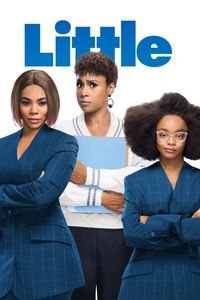
    (On Cable TV, November 2019) Not every movie has to be great to be successful, but it certainly helps if it’s consistent. Little does have quite a few good moments, but almost as many bad ones, accompanied with a side order of several disconnected self-indulgent sequences that don’t do much but let the actors mess around and pad the running time of this comedy to nearly two hours. A somewhat clever take on the body-swap premise, it features a hard-driving tech business executive magically transformed into her own 13-year-old body, and being forced back into school as nobody quite knows how to deal with the sudden appearance of a kid in her own apartment and job. Practically nothing is explained about the transformation except for narrative logic in how to ensure the protagonist’s redemption arc. Unfortunately, there’s a difference between not explaining the premise and cheating reality along the way—Little can be savvy and cutting in one scene, then lazy and cheap in the next. Of course, it’s no use wondering about the outcome of the film—that’s baked in from the start and the best thing to do along the way is to appreciate the performances. Here, at least, we’re on more familiar territory: Regina Hall makes a brief bookend impression as the adult protagonist, while Marsai Martin is a bit of a revelation in a role begging to be described as precocious, embodying the actions and dialogue of an older woman. Meanwhile, Issa Rae also does well in expanding the limits of the traditional “beleaguered personal assistant” role. The performances do much to compensate from some weak plot choices along the way, as the emotional growth of the lead character is wobbly and doesn’t quite reach the satisfaction level that could be expected.

  • Ein Unbekannter rechnet ab [Ten Little Indians aka And Then There Were None] (1974)

    Ein Unbekannter rechnet ab [Ten Little Indians aka And Then There Were None] (1974)

    (In French, On Cable TV, November 2019) As murder mysteries go, And Then There Were None is one of the darkest ones and it remains one of Agatha Christie’s best-known novels. I first read it in high school, so it keeps that timeless aura that, paradoxically, makes its various film adaptations more interesting. In the case of this 1974 version (a multinational collaboration, but shot in English), the appeal here is in a very specific 1970s take on the material, not particularly faithful to the original text but interesting in its casting and audience-friendly choices. It’s obvious from the first few frames that it’s going to be a very 1970s kind of film—the fuzzy colour cinematography, the fashions of the day played up and the actors being a multinational bunch of then-celebrities. Take a look at that cast: Charles Aznavour, Elke Sommer, Gert Fröbe, Oliver Reed, Richard Attenborough and Orson Welles. But it’s in the changes to the story (many of them reprised from the 1965 version by the same producer) that the film ends up being most interesting. Dispensing with the traditional island location, this one ends up in the Iranian desert prior to the revolution—the impact still being isolation in the middle of nowhere. Thus transplanted in a sand ocean, the story largely goes about the same way until it hits its third act, at which point the plot is rejigged in most Hollywoodian fashion to allow for foiling the book’s entire plot and allowing some characters to survive the events of the film. As a Christie enthusiast, I suppose I should be aghast at the way the entire harsh point of the novel is softened into crow-pleasing pablum. But in the end, I’m not particularly bothered by the changes—I find them interesting in the way they alter the premise, and I’m never totally opposed to happy endings anyway. The original novel remains available for all to read if you want the real deal—and considering its enduring popularity either now or in the 1960s–1970s, there’s a fair case to be made that the filmmakers were able to give something new to audiences expecting a straight-up retelling of the book. Add to that the now-delicious patina of 1970s style and the 1974 version of Then There Were None remains worth a look.

  • The More the Merrier (1943)

    The More the Merrier (1943)

    (On Cable TV, November 2019) Sure, yes, you can watch WW2 military dramas all day long, but there was plenty going on at home during that time, and The More the Merrier takes as pretext the comparatively little-known wartime housing shortage in Washington, DC, during the war, as government needs rapidly expanded past the housing supply. While, in real life, this led to tension, overcrowding and bed-sharing, this romantic comedy uses the situation as a pretext to some silly shenanigans. Jean Arthur plays a woman subletting her apartment, while Charles Coburn is all scene-stealing twinkles as an older rich man subletting his half of her apartment to a suitable soldier played by the ever-affable Joel McCrea. Sparks fly in many different directions in a plot set in a very specific situation where eligible men are scarce and privacy is in even shorter supply. Arthur and McCrea make for a fine pair, but it’s Coburn who gets the best role here as an independently rich retiree who engineers their romance. (When the film was remade in the mid-1960s as Walk, Don’t Run, that role ended up being Cary Grant’s final turn.) While The More the Merrier isn’t particularly ambitious, it’s quite successful at managing the little bit of chaos it has created for itself. The ending doesn’t quite pull all of the threads together as tightly as it should, but don’t worry: Romance triumphs and everyone finds a place of their own. You can see why the film earned a Best Picture Academy Award nomination.

  • The Angry Birds Movie 2 (2019)

    The Angry Birds Movie 2 (2019)

    (In French, Video on-Demand, November 2019) Executed with lavish means and top-notch technical credentials, The Angry Birds Movie 2 merely answers present. Taking on the most obvious sequel plot development, it features birds and pigs working together against a new enemy. Much of the film is self-consciously funnier and more cartoonish than the first, going for a less specific but more broadly accessible tone even for those who never played the original videogame or don’t want to care about its (thin) mythology. The result is arguably better than the first film—and with a more conciliatory message as it steps away from the thematic straightjacket of its source material. It can readily be watched as pure entertainment—the animation is very well done, and the writers clearly took notes on how to write blockbuster animation family movies. It does, however, give The Angry Birds Movie 2 a somewhat generic feel, hardly distinguishable from a flood of other similar films. That’s not necessarily a bad thing if you’re just looking for something funny to watch (and it’s an open question as to whether the Angry Birds franchise could support anything more ambitious) but there may be a few missed opportunities here.

  • Exam (2009)

    Exam (2009)

    (In French, On Cable TV, November 2019) I’m almost always a good sport for closed-room thrillers, and Exam does have an exemplary purity of execution, as the entire film takes place in a small examination room where eight candidates are vying for a coveted (but mysterious) corporate job. As the exam papers are revealed to be blank and the exam’s arbitrary rules are absorbed by the candidates, the stage is set for a closed-room pressure cooker. (Providing a weapon to the security guard overseeing the exam is a literal application of Chekhov’s gun.)  As is often the case with closed-room thrillers, writer-director Stuart Hazeldine’s Exam can’t quite rise to the level set by its premise and opening moments—there’s always a moment where we come to understand where the film is going, and it’s not as exciting as anticipated. Some of the dialogue/staging/acting feels stilted and unlikely, but that almost comes standard with those ensemble-cast hermetic thrillers. A more serious problem is a script where the revelations progressively establish that it’s not taking place in the same universe as ours — it’s the kind of thing that lessens whatever involvement viewers may have in the result.  Still, Exam does rather well considering its limited means and austere presentation. It’s regrettable that Gemma Chan is only in the very early part of it, but the film itself is watchable enough.

  • Ava Gardner, la gitane d’Hollywood: les années espagnoles de la Comtesse aux Pieds Nus [Ava Gardner: The Gypsy of Hollywood] (2018)

    Ava Gardner, la gitane d’Hollywood: les années espagnoles de la Comtesse aux Pieds Nus [Ava Gardner: The Gypsy of Hollywood] (2018)

    (On Cable TV, August 2018) Made-in-France TV documentary Ava Gardner, la gitane d’Hollywood: les années espagnoles de la Comtesse aux Pieds Nus has both a breathless title and a somewhat tight focus on Gardner’s years in Spain during Franco’s dictatorial regime. While there’s clearly some affection for Gardner here (expressed either through interviewees who met her over there, or star-struck commentators), she does get excoriated for her indifference to the authoritarian regime that welcomed her, and her lack of awareness for the role she played in realpolitik between the United States and the Spanish government at the time. A secondary axis of focus for the film is in describing how Gardner was possessed of a beauty that outstripped her ability to deal with it. Coming from modest rural origins, she was celebrated as a world-class beauty but it was a life-long struggle for Gardner to come to grip with what it meant and not being exploited for it. A third area of interest consists in her tumultuous marriage with Frank Sinatra, although there’s a lot left out of that segment. The rest of Gardner’s life and career gets perfunctory but disappointing mention—her apprenticeship in the studio system prior to The Killers, her stardom years, her twilight decades before her 1990 death in London all get comparatively short thrift here compared to the Spanish years. It’s not uninteresting (especially as an occasion to learn more about Gardner), but the film ends up being unsatisfying: It’s focused on too narrow a period in her life when there’s an incredibly rich career barely mentioned. I suspect that much of Ava Gardner, la gitane d’Hollywood’s shortcomings come from its origins as a time-limited TV documentary and ready access to Europe-based sources more familiar with Gardner’s Spanish years—but there’s a lot of material left untouched if anyone else wants to make a better Gardner biopic.

  • One Foot in Heaven (1941)

    One Foot in Heaven (1941)

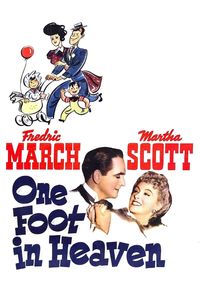
    (On Cable TV, November 2019) An almost wholly unremarkable film, One Foot in Heaven probably gets most of its viewers these days because it was once nominated for a Best Picture Academy Award (alongside Citizen Kane and The Maltese Falcon … but it was a ten-nominee slate that didn’t even include Sullivan’s Travels or The Lady Eve). Much of the film’s episodic structure revolves around a preacher and his family going from town to town, restoring ailing parishes to normalcy before moving again. The topic is ideal to pay respect to a religious leader, with tensions within the family being addressed through an extra helping of faith. Fredric March plays the protagonist in a script adapted from the preacher’s son’s autobiography. It mostly innocuous—while focused around a preacher, the film isn’t particularly insistent on religious matters, offering to viewers the choice to read the film with a secular perspective as a case study in a nomadic figure. From today’s perspective, the film offers a glimpse into a much simpler time where films were aimed at unsophisticated small-town Americans, carried on a light use of the cross and much appeal to all-American values (even if the subject of the biography was born and raised in Canada). It’s hard to get excited one way or the other about One Foot in Heaven—it’s dull but not bad, taking up obvious homilies but not really getting anywhere good with them. Remnants of thankfully extinct social mores carry through—such as the portrait of a man in a loving marriage who nonetheless doesn’t really care about what his wife thinks (in addition of calling her “mother”). The Best Picture nomination is a further piece of evidence allowing us to assess the esteem through which moviegoers (or at least the Academy) regarded the admittedly competent result. But don’t worry—future generations will openly scoff at some of today’s nominees.