Month: March 2020

  • Queen of Outer Space (1958)

    Queen of Outer Space (1958)

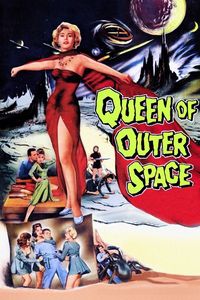
    (On Cable TV, March 2020) If there’s any comfort in watching the mess of silliness, misogyny and terrible logic in Queen of Outer Space, it’s that the film was made—even then—as a parody and not as serious Science Fiction. No, our grandparents weren’t as dumb as the films of the era suggest: contemporary reviews state that they were aware that this wasn’t to be taken seriously at all. Still, watching from 2020, it can be difficult to accurately gauge what the filmmakers were trying to do. The science and plotting are terrible in ways that cannot be detailed succinctly, but suffice to say that our male protagonists go up in a rocket, crash-land on Venus after a missile attack, and discover that not only is Venus quite inhabitable, it’s host to a misandrist dictatorship solely in need of a revolution. Working with a courtier (Zsa Zsa Gabor!), they overthrow the queen, save Earth from destruction, restore a male-friendly regime and have to await rescue from Earth on a planet filled with beautiful women. Watching this film sixty years later, despite assurances that the filmmakers knew what they were doing (the film began as a proposal from legendary screenwriter Ben Hecht), it’s tough to differentiate between male-gaze power fantasy and barely sublimed eroticism, as the film parades miniskirts, tight tops and low décolletage in Technicolor detail. No matter the original intention, Queen of Outer Space is both laugh-out funny and unbearably misogynistic—the silliness isn’t always clearly intentional, and while the ineptness can be charming, it remains ineptness in the first place. It’s not without amusing moments or clever touches (it even nails the modern flatscreen monitor form factor!) but you’ll have to work harder than usual in putting this kitschy classic back into the context of the time. Although, if you’re looking for a visually striking example of terrible 1950s Science Fiction…
  • The Little Minister (1934)

    The Little Minister (1934)

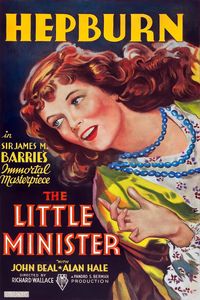
    (On Cable TV, March 2020) Look, I am a simple man: I see Katharine Hepburn looking gorgeous as a curly-haired gypsy, I like. Alas, the rest of The Little Minister is a letdown after seeing Hepburn at perhaps her all-time sexiest. It does help that, as an early dramatic role for an actress who hadn’t yet mastered her full range, this is a film that seems to run for a long time on empty conventionalities. Set in a rather strange nostalgic small-town in rural Scotland, the film is adapted from a J.M. Barrie novel (yes, the author of Peter Pan) as a somewhat serious drama with comic relief, none of which apparently reflects the source material, nor Hepburn’s then-range in romantic comedy. While there’s some heat between Hepburn (who’s not really a gypsy, but a noblewoman passing as a gypsy for some freedom) and John Beal playing a reverend taken by her wild-girl charm, the rest of this pleasant film feels both long and familiar in its take on 1840s Scottish romance. It’s not quite a misfire, even though it tarnished Hepburn’s status at the time as “box office poison.” Still, I like what I like—Hepburn is there, playing up her perennial rebellious persona and that’s quite enough for me.

    (On Cable TV, September 2021) We head over to rural Scotland in The Little Minister, and perhaps more strikingly to a young and radiant Katharine Hepburn as a local noble who enjoys passing as a lower-class gypsy girl in order to go against the action of her betrothed. In walks a young minister who catches her eye while he’s having a hard time integrating in the close-knit community. There’s a fair amount of Scottish mythology at work here, especially in its depiction of a small village with its quirks and issues. But Hepburn stands tall in a role almost custom-fit to her later personas: a liberal rebel out to tweak the establishment and a strong-willed woman who could be as determined as she was beautiful (and considering that mid-1930s Hepburn was a world-class beauty, that’s saying a lot). Everyone else pales in the rest of the film, especially considering that the execution of the plot is duller than it ought to be – reportedly more serious than the whimsical novel penned by J. M. Barrie (yes, “Peter Pan” Barrie), the film often feels laborious and forced. This is even more apparent when Hepburn shows up and seems to be playing something far more interesting. It’s not one of her finest films of the 1930s, but she frequently looks amazing and is clearly shoring up her distinctive screen persona. As such, The Little Minister remains a must-see for Hepburn fans, even if everyone else will have a harder time getting through it.

  • Bluebeard’s Eighth Wife (1938)

    Bluebeard’s Eighth Wife (1938)

    (On Cable TV, March 2020) Now here’s a dream creative pairing: Director Ernst Lubitsch working with a story co-written by Billy Wilder. That should be enough, but when Bluebeard’s Eighth Wife raises the ante by throwing in Claudette Colbert and Gary Cooper in the lead roles, well, it’s impossible to resist. Fortunately, the film does manage to meet expectations: it’s a fine screwball film with the expected wisecracks, romantic complications and remarriage humour—much of the plot, slowly revealed, has to do with a rich man trying to tame his newest (eighth) wife, as he suspects her of having married him for the money she’ll get after their divorce. (The twist, gradually revealed, is that she’s trying to break him out of his bad habits—and the film is much funnier knowing this.) The French Riviera atmosphere is lush and evocative, with Cooper turning in a more sophisticated performance than the aw-shuck material he became famous for—and Colbert being equal to her funny, sexy self. (Plus, a fourth-billed David Niven.) The script is what we would expect from a Billy Wilder collaboration with Charles Brackett—great dialogue, very clever characters (especially Colbert’s scheming young woman) and a script that’s not entirely predictable, especially during the middle act. Although not much of a commercial success at the time of its release, Bluebeard’s Eighth Wife has since then reached an enviable and much-deserved place in the pantheon of 1930s comedies.

  • Elmer Gantry (1960)

    Elmer Gantry (1960)

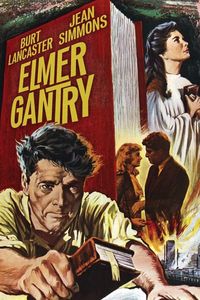
    (Criterion Streaming, March 2020) If you’re the kind of person to seek optimism in the most desperate situations, you can take a look south of the border in these desperate times and remind yourself that America isn’t solely composed of idiots—and more pointedly, there have always been sane voices in the wilderness highlighting the mistakes of the nation (past, ongoing and inevitable). Go back to 1960, for instance, and we already have Elmer Gantry as a mature, full-throated warning about the similarities between conmen and preachers. Burt Lancaster, never afraid to use his good looks in the service of questioning traditional masculinity, plays the titular Elmer, a fast-talking huckster who turns his talents to revivalist religion in order to woo a fetching young woman (Jean Simmons). Loosely adapted by writer-director Richard Brooks from a muckraking novel by Sinclair Lewis (Brooks won an Academy Award for the screenplay), Elmer Gantry isn’t content with merely making a link between confidence games and small-tent religious revivals—it’s a film that digs and digs into the characters, their unsavoury pasts, impure intentions, zealotry and mob vengeance to deliver a sobering statement on being taken by fast words and empty promises. Lancaster is terrific as a salesman turned fire-and-brimstone preacher, easily capturing audiences on both sides of the screen. (He also won an Oscar for it.) Elmer Gantry greatly benefits from his presence, and he helps the film overcome its excessive length. It probably doesn’t help that while Elmer Gantry confronts issues important to circa-1960 America, much of what it has to say is now common wisdom… or is it?

  • Doughboys (1930)

    Doughboys (1930)

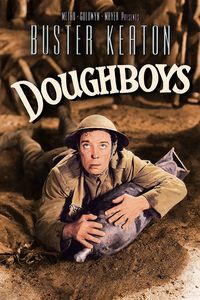
    (On Cable TV, March 2020) Buster Keaton served in World War I, and one imagines that Doughboys, which see Keaton’s idle-rich character accidentally set to the front, was an outlet of sorts for him. It certainly shows in the film’s more serious nature: while still a comedy, it’s more occasionally amusing than outright funny. Considering the bad years that Keaton had making early talkies at MGM after signing away his creative freedom, it’s a slight balm to find out that he considered this to be the best of his MGM films. Still, Doughboys was only his second sound feature, and the emphasis here is on plot rather than gags. I’m happy I saw it, but it’s not among Keaton’s best films—the ending peters out, and there’s a sense that here’s this comic monster leashed underneath a lot of constraints, both self-imposed and studio-mandated. There are some amusing gags, but it’s the overall plot that’s strong—perhaps as a deference to his own experiences in WWI, the film is not as ferociously funny nor as satirical as his other films, and that’s something to respect.

  • The Roaring Twenties (1939)

    The Roaring Twenties (1939)

    (On Cable TV, March 2020) Two things help The Roaring Twenties distinguish itself from other late-1930s crime dramas. The most superficial one is having both Humphrey Bogart and James Cagney in the same film, something that only happened three times — all within 1938–1939, as Warner Brothers was still establishing the limits of the ascendant Bogart’s screen persona. The more interesting aspect is contextual—this was Warner’s attempt to recapture some of their glory days of early-1930s gangster movies. To this end, the script takes a look back at the 1920s through a very sensationalistic lens: it posits a decade made of WWI veterans turning to crime in an attempt to climb up the economic ladder, something made easier than usual by Prohibition and its illicit opportunities. (There’s a contrast to be made here with The Best Years of Our Lives, or perhaps even the original Ocean’s Eleven.) This historical material is reshaped in somewhat classic late-1930s gangster film material, an instant homage from that era’s perspective that is lost on twenty-first century viewers. Fittingly for a Production Code film (one handicap that early-1930s gangster film didn’t have to contend with), crime doesn’t pay all the way to the melodramatic end. The Roaring Twenties is a pretty good film, no matter whether you care all that much about the Bogart/Cagney reunion—veteran director Raoul Walsh delivers what audiences then or now expect, and is easy to watch from beginning to end. Meanwhile, as I sit at home in COVID lockdown, I wonder how they’ll eventually nickname these just-beginning twenty-twenties.

  • The Twentieth Century (2019)

    The Twentieth Century (2019)

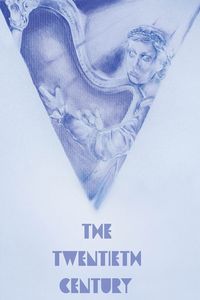
    (On Cable TV, March 2020) Oh wow. Oh wooow, what a movie. A “biography” of Canadian Prime Minister William Lyon Mackenzie King, The Twentieth Century is an acid trip through Canadian history unlike anything anyone could imagine. Writer-director Matthew Rankin uses historical fact as a springboard to a demented reimagining of turn-of-the-twentieth-century events. The more you know about the period, the funnier it becomes—characters are perverted, exaggerated and made to fit into a nightmarish vision of Canada as part German expressionism and part wartime propaganda. Sexual perversion abounds, as is very Canadian repression and Big-Brother-style visuals. This all has to be seen to be believed, whether it’s all French-Canadians portrayed as cultish pacifists, three major roles played by crossdressing actors, an accurate depiction of Winnipeg, or Canadian politics portrayed as boarding school tests of character. (In lieu of a plot summary, the film’s Wikipedia page has a hilariously thoughtful “Historical Divergence” section.) The Twentieth Century’s limited budget is bested by extreme stylization, completely off-the-wall characterization and a profoundly ironic stance. If the film sends viewers rushing back to their history books, fine—a lot more of the film is based on fact than one would think, including some seemingly overdone elements of the climax. [September 2024: While King is widely known as one of Canada’s best Prime Minister, he was quite eccentric in ways that aren’t shown by this film—his fascination for Spiritism is well known, but a visit to his former domain near Ottawa will show that he was like a crazy cat lady, except for ruins—he even pocketed part of Hitler’s bunker during a visit to Berlin!] Still, even as I audibly cackled throughout the film, I am worried that someone will take the film as stone-cold fact. Hey Canadians, let’s keep this awesome inside joke within our borders, eh?

  • Blackmail (1929)

    Blackmail (1929)

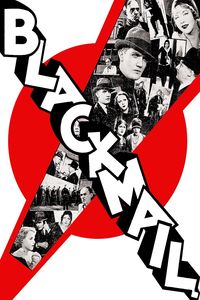
    (On DVD, March 2020) Considering that Alfred Hitchcock’s career started so early in the history of film that some cinema basics hadn’t even been figured out, it’s tougher than you’d expect to identify his “first” film. Is it The Pleasure Garden? Is it his first thriller The Lodger? Or maybe it’s Blackmail, not only his first sound film but the first one ever made in Great Britain. As one could expect from a film at the dawn of the sound age, it’s a bit of an odd duck—the film was reportedly retooled midway through to take into account that new crowd-pleasing sound technology, so it’s not a surprise to see a few title cards show up and the pacing drags in an attempt to show what that fancy new talking thing was. Even then, however, Blackmail has its share of clever touches: the central murder is shown tastefully, and the story is not bad considering what Hitchcock (who co-wrote the script) had to work with. A few of what would become Hitchcock’s trademarks also make their way into the film. This being said, let’s be clear: Blackmail is not worth picking up as a light evening’s entertainment: it remains a bit laborious to get through, and should be of more interest to Hitchcock fans and scholars of early sound cinema.

  • L’âge d’or [The Golden Age] (1930)

    L’âge d’or [The Golden Age] (1930)

    (YouTube Streaming, March 2020) Hark, dear viewer, and abandon all hope of making sense of L’âge d’or. Notable for it being a collaboration between famed surrealists Luis Buñuel and Salvador Dali, it’s absolutely not designed to make sense. (Dali wasn’t a filmmaker, and neither was Buñuel at the time—legend has it that the finished film includes nearly everything ever shot during the sequential production.) Interestingly, it was one of the first sound movies made in France and yet it’s not designed to take advantage of that either: while there’s some narrative sound, much of the so-called plot is “given” through wall-of-text title cards. Not that you should pay attention to plotting: Since there’s no narrative consistency, either shrug or try to watch L’âge d’or on another level. At least it’s short. This being said, the plot isn’t everything and in the finest surrealist tradition, the film is occasionally very funny—and also very violent. (For added laughs, try to read the Wikipedia plot summary after watching the film, as it seems intent on imposing some rational order on a film that rejects any.) I made my peace with L’âge d’or not by trying to understand it, and by seeing it as a cruel playground to explore the relationship between humour and the unexpected—there’s plenty of the unexpected, although maybe not as much of the funny as I’d like.

  • Shall We Dance (1937)

    Shall We Dance (1937)

    (On Cable TV, March 2020) As much as all Astaire/Rogers romantic comedies are to be treasured forever, not all of them are created equal, and Shall We Dance is definitely in the lower tier. The plot is just as typically irrelevant as in their other films, except that it’s convoluted and uninteresting. Worse, the musical numbers tend to be underwhelming and forgettable. Only a few—like the roller-skate sequence—stick in mind and few of them are anthology pieces. One interesting exception is the “Slap that Bass” sequence (never has a ship’s engine room has been so clean, nor so art deco!), which showcases Astaire’s ideal of racial integration in a way that’s more easily digestible than other attempts involving blackface.  The relationship between both lead characters also seems healthier than the norm for Astaire films—something probably motivated by the growing rapport between the two. Still, there are plenty of missed opportunities and underwhelming execution here: the pacing is slow, it takes a long time to see the two leads dancing, there isn’t much of a romantic duet, and the comedy is lacking. Shall We Dance is still worth a watch (1930s Astaire on an off day is still superhuman), but it does fall short compared to their other movies of the time.

  • The Beverly Hillbillies (1993)

    The Beverly Hillbillies (1993)

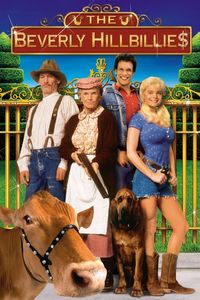
    (On TV, March 2020) I was frankly expecting the worst from The Beverly Hillbillies and ended up pleasantly surprised—the TV series that served as inspiration is known as a paragon of low-brow humour, and the very premise of Arkansas hillbillies striking oil and becoming rich enough to move to Beverly Hills seems custom-made for dumb humour. The good news isn’t that the film isn’t stupid, because it is—it’s that there’s some cleverness underlying the intentional stupidity. Of course, keep in mind that the film is directed by Penelope Spheeris, whose other films show a considerable amount of wit. The Beverly Hillbillies is clearly not as smart as in Wayne’s World here, but at least there’s the feeling that someone is paying attention to shore up what could have been worse. There’s constant self-awareness of the silliness of the script and plenty of winks at the audience even as the slapstick is going down. Making the most out of the limitations of the premise they’ve been handed, nearly every actor in the cast brings their A-game to the material. Special mention goes to Dietrich Bader, Erika Eleniak, Cloris Leachman, Lily Tomlin and Lea Thompson in various ways, some of them exceeding expectations (Eleniak), meeting them (Bader), looking cute (Thompson) or just being rocks of dependable humour (Leachman, Tomlin). Not everything works (there’s some crossdressing material that clearly reads as transphobic today) but if your tolerance for broad dumb comedy in which predictability is comforting, then The Beverly Hillbillies is a better film than you think. It works even better if your expectations are down on the floor.

  • Young Sherlock Holmes (1985)

    Young Sherlock Holmes (1985)

    (Criterion Streaming, March 2020) The main claim to fame for Young Sherlock Holmes is that it features the first-ever blend of live action and CGI character in a movie, in a short sequence that holds up surprisingly well even thirty-five years later. There’s more to that film—but not that much more, due to a few miscalculations. A fannish homage to Sherlock Holmes imagining him as a schoolboy, it goes the Spielbergian way of cramming as much stuff as the film can hold without exploding—and it’s debatable as to whether it didn’t. Not content with Holmes as a young man attending a boarding school, the film builds a less-than-credible Egyptian cult conspiracy (with a pyramid going undetected in the middle of London), adds almost-supernatural elements (hallucinogenic, but you get the gist of it), crams steampunk machinery and romance and while some of this works, the sum of it feels overstuffed. Neither director Barry Levinson nor screenwriter Chris Columbus are experienced enough to control the material, and the spillage is noticeable. Still, it’s not that bad—I liked the opening moments better than the increasingly ludicrous Egyptian material, and I suppose that reflects the focus on the film as well. Sure, Young Sherlock Holmes is reasonably entertaining—but you can’t help but think about the ways it could have been better.

  • A Woman of Paris: A Drama of Fate (1923)

    A Woman of Paris: A Drama of Fate (1923)

    (Criterion Streaming, March 2020) Interestingly enough, the first-even film written, directed and produced by Charlie Chaplin was a straight drama that did not feature him as an actor. A Woman of Paris: A Drama of Fate has a ponderous title, and a just-as-melodramatic plot with multiple missed connections for our lead romantic couple, tragedy often striking, and a conclusion meant to be moving more than anything else. Far more serious than even Monsieur Verdoux and Limelight, A Woman in Paris is a charming and definitely unknown oddball in his filmography—and you can’t even say that, “well, Chaplin wasn’t as well known as a comedian back then” because his short comedy films were quite popular by 1920: The Tramp itself dates from 1915. As for the film itself, well—A Woman in Paris is often a mean-spirited narrative, making heavy use of ironic coincidences and roughing up most of its characters. Whether you like this or not will be based partially on your tolerance for melodrama, and partly on your fortitude in tackling silent drama movies from the technically very rough early 1920s. It’s revelatory of Chaplin’s artistic intentions, but not particularly fun or entertaining.

  • Night of the Demons (1988)

    Night of the Demons (1988)

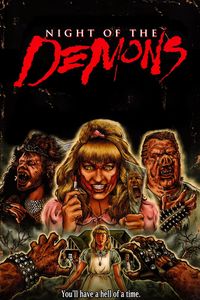
    (In French, On Cable TV, March 2020) While not the best horror movie of the 1980s, Night of the Demons is in the running for the most representative of the 1980s horror films. A rather charming blend of teenage characters, demonic possession, creepy setting, amusing dark humour, synth soundtrack, violence and nudity, it exemplifies a spirit of fun that’s been hard to recapture since the early 1990s. The story is dirt-simple enough to allow for multiple tangents—a group of teenagers decides to celebrate Halloween in an abandoned mortuary, and you simply won’t believe that there’s a demon just waiting there to possess and kill them all. Having ten teenagers around to have sex and summon the spirits ensures that there’s not only enough cannon fodder to go around, but enough variety to please a variety of favourites, further highlighted by the costumes they choose to wear. (Sure, Cathy Podewell is the designated all-American final girl—but I’m more of a Jill Terashita fan.) Don’t look for deep social themes or personal character growth or any of the niceties of the latest “elevated horror” here—it’s all about gratuitous nudity, gory (but not that gory) deaths, grotesque makeup (whew, that lipstick scene), teenagers foolishly getting into trouble and viewers having a good time. Toning down the gore is a wise choice; the over-the-top demonic possession of Night of the Demons is more fun than the realistic-ish threat of slasher psychos, and the knowing dark comedy from the filmmakers will find a ready audience among horror fans. You know who you are, you wonderful fellow degenerates.

  • The Actress (1953)

    The Actress (1953)

    (On Cable TV, March 2020) While adapted from the life of actress-playwright Ruth Gordon, The Actress (despite being scripted by Gordon herself) aims for amiable family comedy more than biographical sketch. By using Spencer Tracy as the sometimes-goofy family patriarch, it’s likely that director George Cukor meant to evoke fresh good of his then-fresh turns in Father of the Bride and Father’s Little Dividend. The theatrical origins of the story aren’t readily apparent in the film’s eagerness to vary locations, but the quality of the dialogue is there. Still, the film does feel (especially seventy years later) like a small-scale domestic comedy. The biggest conflict is whether the family will accept the daughter’s dream of becoming an actress, and this being a Classical Hollywood movie, you can guess how that ends. There’s an affectionate component to the film’s look back to 1913 Massachusetts, and an amiable tone to the family’s small-scale troubles. Anthony Perkins shows up (in his debut) as a would-be suitor. The Actress, in many ways, is charming in its mediocrity—something to watch if you haven’t got enough of Tracy’s patrician roles.