Month: March 2020

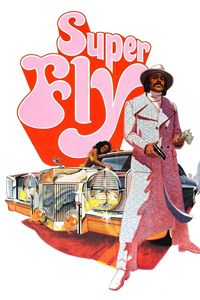
  • Super Fly (1972)

    Super Fly (1972)

    (On Cable TV, March 2020) From the peak of blaxploitation comes Super Fly, a stylish crime story that’s arguably more interesting in-context than by itself. The story of an anti-hero drug dealer trying to go straight but being discouraged from doing so by nearly everyone he meets, Super Fly emerged in the blaxploitation wave launched by Shaft and others, and represented in many ways a near-repudiation of the Production Code’s crime-never-pays credo. At a time when black economic disadvantages were increasingly noted by scholars and pundits, Super Fly offered an alternative portrait of a self-made man, flouting conventions and morals by selling drugs… and becoming rich and powerful along the way. While audiences flocked to this portrayal of sticking it to The Man, not everyone reacted as favourably—blaxploitation was getting popular enough to bother some white audiences and to infuriate black community leaders trying to promote more traditional values. It’s also essential to point out just how much of the film was borne out of black filmmakers—written by Phillip Fenty, directed by Gordon Parks Jr. (not Shaft’s director: his son) and originally financed by black investors before being sold to Warner Brothers. At the same time, Super Fly made headlines thanks to Curtis Mayfield’s top-notch soundtrack—one which still exemplifies much of the sound of blaxploitation. Compared to those contextual elements, Super Fly-the-film seems primitive. It’s useless to belabour the point that criminal anti-heroes have become cinematic staples (especially in the black cinema of the 1990s that was, in many ways, the inheritor to the blaxploitation movement) and that the shock value of its murderous protagonist is no longer what it was. Still, the period atmosphere is exceptional (showcasing the urban malaise that gripped New York at the beginning of the 1970s, now thankfully a thing of the past) and the film has flourishes of style, such as a striking heist sequence told in still pictures. Super Fly may not be as purely entertaining as late-period blaxploitation, but it’s watchable enough, and culturally important as well.

  • Whip It (2009)

    Whip It (2009)

    (On TV, March 2020) The familiarity of Whip It, which blends a girl’s coming-of-age struggle with an underdog sports comedy, isn’t really a handicap. It offers reassuring guide rails in which to set this story of a young woman from rural Texas discovering her true character thanks to… competitive roller-derbies. Okay. Directed by Drew Barrymore and featuring a heavily female cast, Whip It can be seen as a charming girl-empowerment film (and one that’s more honest about it than today’s films, but I digress) with good performances and a very good soundtrack. It features a thick Austin atmosphere, some punk girl fun and plenty of small details. Ellen Page is quite cute in the lead role, but the entire cast is remarkable in-between Alia Shawkat, Kristen Wiig, Zoë Bell, Juliette Lewis, Barrymore herself and others. (Plus, Jimmy Fallon as an announcer.) In the end, Whip It is a celebration of oddball affirmation, and I’m completely on-board with it.

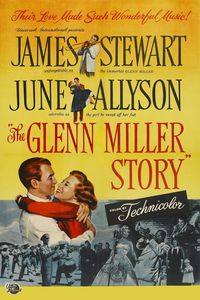
  • The Glenn Miller Story (1954)

    The Glenn Miller Story (1954)

    (On TV, March 2020) The good news when a Classic Hollywood studio hires James Stewart to play a historical figure in a biography is that, hey, you’re getting James Stewart and his likable quirks. But the double-edge sword is that you’re also getting James Stewart, far more than the character he’s supposed to play. That problem certainly affects The Glenn Miller Story—we’re seeing Stewart’s tics and affable mannerism more than the band leader who had an outside influence on American pop music prior to WW2. (Miller would die in a plane crash during the war, as he was hopping from one place to another to entertain the troops.) Not that Stewart is most major deviation from reality here—true to form for biopics of the era (perhaps any era), The Glenn Miller Story makes substantial changes to the real events in order to make a movie. Plus, Stewart gets more credible after the first few minutes, once he puts on the glasses and we get used to the role. Considering this, you have to appreciate what’s on screen—numerous cameos by real musicians, a nice 1950s Technicolor glossy sheen (albeit with showy colour effects with an obvious colour gel wheel), and screenwriting that clearly understands the nature of the assignment: The film is easy to watch and enjoyable in how it uses a big budget to deliver the goods to the viewers. (Not that it’s always perfect—it features some of the worst snow I can recall in a movie.) It all ends abruptly, especially considering Miller’s fate. Sure, you can nitpick and poke fun at the thorough Hollywoodization of Glenn Miller’s life into a very typical 1950s biopic. But as far as those go? There’s much worse than The Glenn Miller Story.

  • Super Size Me 2: Holy Chicken! (2017)

    Super Size Me 2: Holy Chicken! (2017)

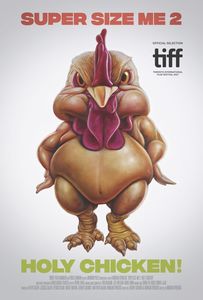
    (On Cable TV, March 2020) It took three years, but Super Size Me 2: Holy Chicken! finally made it to cable channels. Why so long? Well, it turns out that writer-director Morgan Spurlock was one of the people exposed by the #MeToo movement, and distributors got cold feet when his history of sexual misconduct and harassment was publicized. Not that this is the only piece of negative Spurlock news over the past few years, as acknowledgements of alcoholism undermined many of his “Only McDonalds for 30 days” claims in the first Super Size Me. I know, I know: Shock documentary makes incredible claims, is later found to have been mischaracterized? This time around, Spurlock goes for showboating of a different sort, as he creates a pop-up fast-food restaurant and takes us behind the scenes of how fast food is marketed, made, told, jazzed-up and ultimately claims health benefits that don’t hold up to scrutiny. (In one trivial but telling example, the “burn marks” on the chicken breasts are painted rather than charred—otherwise the meat would be too dry.) This gives Spurlock an opportunity to explore the weirder edges of food regulation (“free-range chicken” technically qualifying if they’re offered a tiny open-air area outside their hatcheries), the deliberate misstatements of marketing and the ways the industry has tried to health-wash itself. Part of the intention behind Holy Chicken is an atonement of sorts—Spurlock examining the ways the industry has changed in the dozen years since his own Super Size Me has led to increased scrutiny from fast food consumers. His conclusion is hardly reassuring, but it’s all wrapped in ironic humour as his restaurant indulges into the practices he uncovers. Is it entertaining? Sure, as long as you can get over how Spurlock is front-and-centre of the entire film. Is it honest? Maybe! It does feel as if it’s more transparent about its documentary project than the first film, but then again, it’s also a film of talking heads explaining the new-restaurant marketing process we’re seeing on-screen. It’s probably worth a look if fast-food interests you, but don’t be surprised to budget more for groceries and less for fast-food once the credits roll. [September 2024: Thoroughly disgraced by his 2018 acknowledgements of sexual misconduct, Spurlock retreated from the public eye and died in May 2024. Holy Chicken ended up being his last film.]

  • Around the World Under the Sea (1966)

    Around the World Under the Sea (1966)

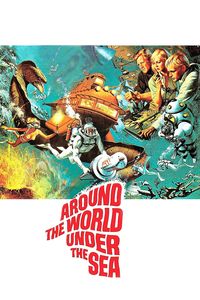
    (On Cable TV, March 2020) If you ever wanted to see what a space-age underwater exploration movie would feel like, search no further than Around the World Under the Sea, which brings the can-do spirit of the American space program to the business of deep-sea exploration. Clearly a science-fictional thriller, it supposes a near-future world in which deadly waves require the installation of five warning sensors. This becomes an excuse for a didactic presentation of underwater attractions, with the scientists of the single submarine able to complete the work bickering among themselves to add a bit of drama—and there’s one single female character for exactly the expected reasons. Lloyd Bridges stars, probably on the strength of his turn in the earlier Sea Hunt TV show. (Both share the same producer.) Shot in colourful tones, the film is at its best during the underwater sequences. Combined with the rather charming mid-1960s fashion out of water, it all makes Around the World Under the Sea interesting enough—although still not that good.

  • The Dead Don’t Die (2019)

    The Dead Don’t Die (2019)

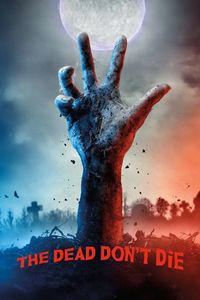
    (On Cable TV, March 2020) As far as I can remember, writer-director Jim Jarmusch has never made a conventional film, and it’s not because he gets to do a zombie movie that he’s going to change his ways. Set in a small town with characters played by a large ensemble cast of known names, The Dead Don’t Die is as proudly atypical as the rest of Jarmusch’s filmography, with odd plot beats, utterly deadpan dialogue, bewildered characters, bizarre gags, nonsensical worldbuilding and increasingly frequent fourth-wall breaking. (So much so, in fact, that I was able to call out the character saying, “because I read the script!” Other choice quotes include “Are we going improv?” and “This is the theme song.”) With an ensemble cast that begins with Bill Murray, Adam Driver and Chloe Sevigny as police officers, it would be hard to single out one specific performance—at least if it wasn’t for Tilda Swinton, who consistently steals scenes as a mortician-turned bladed executioner named Zelda Winston. Whatta Tilda! (She’s not the only one with an actor-related name, as Rosie Perez plays a news anchor called “Posie Juarez”) It’s all quite amusing, but the comedy may be more relative than anything else: we don’t usually expect Jarmusch to go this zany. But as amusing as it can be in moments, The Dead Don’t Die is not all that finely controlled as a comedy. The comic pacing is uneven, the ending sort of quits without a strong or satisfying climax and it’s not too clear how much improvisation took place. Still—and I’m grading on an unfair curve, here—this is probably my favourite Jarmusch film so far.

  • PT 109 (1963)

    PT 109 (1963)

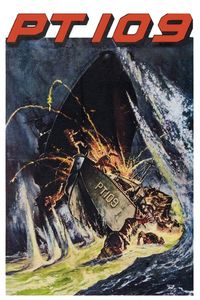
    (On Cable TV, March 2020) Twenty-first century viewers may be forgiven for not knowing that future president John F. Kennedy spent much of World War II captaining his own PT boat, even performing heroics when it was sunk by the Japanese and his crew needed to be rescued. But I can guarantee you that few Americans of voting age in 1960 did not know that story—it was an integral part of the JFK mythos, the young good-looking politician who had proven his mettle during WW2. PT 109 is a semi-hagiographic war film dramatizing those 1943 events, with Cliff Robertson playing the young and heroic president-to-be. JFK is said to have influenced the production of the film, although he insisted that the film remain historical and not without a few criticisms of his early actions. War movie enthusiasts may balk at this focus on a specific individual, but fortunately, PT 109 has more on its mind: it manages to deliver a credible depiction of a team of men during wartime. You can certainly compare it to the 1945 John Wayne PT boat movie They Were Expendable, except that this one is in colour, benefits from fifteen years’ worth of filmmaking improvements, already knows how WW2 will turn out (hence a looser tone), and is shot in colour. While not a great movie, PT 109 is reasonably interesting despite too long of a running time and not quite as heavy on hagiography as it could have been.

  • Ascenseur pour l’échafaud [Elevator to the Gallows] (1958)

    Ascenseur pour l’échafaud [Elevator to the Gallows] (1958)

    (On Cable TV, March 2020) French critics may have named the genre, but film noir is, in my mind, a clearly American art form. Still, writer-director Louis Malle’s Ascenseur pour l’échafaud shows how close French cinema ever got to the heart of noir in several decades of affectionate homages. We can see here the bridge from noir to Nouvelle Vague, strong narrative links to Godard’s À bout de souffle, and playful stylishness. The plot is roman de gare stuff, with the protagonist murdering his boss (who’s also his lover’s husband) and seeing everyone’s lives spinning out of control in the best fatalistic tradition of the genre, leading all the way to an implacable conclusion. What the plot won’t tell you, however, is Malle’s sense of cool in directing this picture (his first!), the impressive performance offered by Jeanne Moreau, Miles Davis’ score, and the great black-and-white cinematography used to depict those crucial few days of the narrative. Ascenseur pour l’échafaud is not a perfect film, and its striking elements were later perfected by similar movies by French directors (all of whom, apparently, did a noir homage at some point or another), but it’s still reasonably entertaining to watch and emblematic of where French cinema was headed by the late 1950s.

  • Sap ji sang ciu [Chinese Zodiac aka Armour of God 3] (2012)

    Sap ji sang ciu [Chinese Zodiac aka Armour of God 3] (2012)

    (In French, On TV, March 2020) Hey, why didn’t anyone tell me about this film? Just as I was thinking I had seen every classic Jackie Chan and resigned myself to his retirement, here’s a late-period Chan that’s clearly aligned with his classic era of goofy martial arts adventure. Chan is his usual deceptively amiable self, and while he’s not quite as fast or daredevil as in his earlier years, he’s still a joy to watch in action. While the result isn’t quite a complete tonal fit for the mantle of “Armour of God 3,” it’s clearly set in that tradition, with the plot being a big ball of nonsense meant to propel us from one action sequence to another. It works, though: We don’t ask too many questions, we get to enjoy Chan in France (what is it with Chinese movies set in France?), and admire the tradecraft of the numerous high points. I do have a few issues: there’s a feeling, for instance, that the best sequence of the film is not kept for last, which creates an unbalanced climax. The film also introduces some martial artists two-thirds of the way in through disconnected sequences, once against betraying an imperfect structure. Still, Chan fans will find what they’re looking for: imaginative set pieces (rolling down a hill at high speed, or being stuck in a hedge maze), silly-fun fighting sequences, a bit of historical detective work, and an entertaining atmosphere. There are even a few pleasant surprises along the way, such as Oliver Platt randomly showing up in a tertiary role, or short appearances by a Canadian stamp and some maple syrup. Chinese Zodiac, directed by Chan himself, is clearly meant to be a career capstone of a sort, the last of his purely leading roles: The end credits not only contain the usual revealing outtakes and behind-the-scenes footage (including how they filmed the skydiving sequences) but it also offers a retrospective of Chan’s career-in-action highlights. Later appearances since 2012 have seen him in more sedate supporting roles. Still, this isn’t a bad send-off for an action legend: one last kick at the can to show what he could still do in his late fifties.

  • Bølgen [The Wave] (2015)

    Bølgen [The Wave] (2015)

    (In French, On TV, March 2020) With the ever-lower costs of digital special effects, it’s now possible for creators outside Hollywood to dream big and tackle genres that previously required substantial budgets. Norway’s The Wave localizes the disaster to a small community in a Norwegian fjord—and draws upon historical precedent to portray what happens when an avalanche creates a hundred-meter wave trashing the inside of the fjord, including roads, houses and a hotel. The filmmakers behind the film have clearly taken notes from Hollywood—the techno-thrillerish accumulation of technical details helps establish the credibility of the film, and then it’s off to the races with a spectacular disaster, the catastrophic after-effects of the dangers, and how a family improbably pulls through the aftermath to survive. The Wave is slick, enjoyable, crowd-pleasing work from director Roar Uthaug: it clearly draws upon the time-tested disaster movie formula and gives it a strong Norwegian spin to make it even more interesting. Kristoffer Joner and Ane Dahl Torp are both good leads, preserving their ordinary-people likability in the face of impossible odds. The result is successful—so much so that, in even finer Hollywood homage, the filmmakers have already turned in a 2018 sequel (Skjelvet aka The Quake) about a major Earthquake destroying much of Oslo, and featuring the same family of protagonists.

  • Her Smell (2018)

    Her Smell (2018)

    (On Cable TV, March 2020) I took me a while to get to Her Smell, even though it was an easy film to notice… albeit for all the wrong reasons: When I freely associate a punk band with olfactory sense, I don’t exactly get something that smells of roses. (Just look at that poster.) Fortunately, Her Smell doesn’t stink. (Heeey, who just revoked my pun licence?) It revolves around Elizabeth Moss, who delivers a strong performance as the leader of a punk group throughout her self-destructive behaviour. Strongly structured along five acts sometimes set years apart, we get to see our protagonist and her “Something She” group on the decline as the pressures of a tour get to everyone; throughout a disastrous studio session; at the nadir of her career; quietly recuperating at home; and then staging a comeback reunion set. The rise, fall and comeback of a musical act isn’t exactly a new story, but Her Smell tackles the topic with a decidedly anti-glamorous stance. The personal challenges of being a musician are clearly shown, as is the protagonist’s often unbearable behaviour in a warts-and-all look at the challenges of a driven but toxic personality. Writer-director Alex Ross Perry keeps the camera close to his actors as they argue in confined spaces—the claustrophobia is real, as is the sensation of being stuck in close quarters with someone we’d rather run away from. At 135 minutes, the film feels much longer than it already is, not helped by very uneven material that’s not reined in. Still, even in a crowded field of musical biographies following the same arc (some of them even real!), Her Smell stands out. Oh, and the title is explained at the end of the film—it’s much nicer than my initial guess was.

  • Sinbad: Legend of the Seven Seas (2003)

    Sinbad: Legend of the Seven Seas (2003)

    (In French, Netflix Streaming, March 2020) Every so often, I end up belatedly watching a film I should have seen much earlier, and Sinbad: Legend of the Seven Seas is the newest of those. A classic swashbuckling adventure in a fantasy universe of gods and monsters, this animated film packs a punch in a too-short 80 minutes. Sinbad and his crew go looking for a magical book in order to counter the plans of a chaotic goddess, but the point of the film is found in the many episodic adventures they have along the way. The animation is a mixture of 2D cell and 3D-CGI, and like many turn-of-the-century films, the integration of the two is rarely seamless despite a few technical achievements. Sinbad is on firmer ground when it comes to dialogue, with better-than-average repartee between its characters and two fairly strong female characters to round up the cast. Considering some suggestive content and the sex-appeal of the characters, the film may be more appropriate for older kids rather than the entire family. A few anachronisms and a cosmic framing device make the film feel even bigger and more fun than the strict narration of its adventures. Sinbad: Legend of the Seven Seas is quite enjoyable despite a few flaws, so much so that it seems to end too quickly.

  • Foolish Wives (1922)

    Foolish Wives (1922)

    (YouTube Streaming, March 2020) Oof. I have a hard time making it through 1920s silent dramas, and Erich von Stroheim’s Foolish Wives is as demanding as his later Greed in that regard. At a staggering two hours and twenty-some minutes, it’s slow-paced, melodramatic, single-minded and infuriating at times. It’s a long sit even with the best of intentions, and any competent editor would be able to bring this down to 90 minutes with very little loss. But film is an education, and Foolish Wives does far better the moment you stop viewing it and start reading about it. The film was notorious back in 1922 by being the first Hollywood movie (probably the first movie ever) to have a budget higher than one million then-dollars. Much of the cost (which ballooned from an initial 250K$ budget) was attributed to writer-director von Stroheim’s perfectionism and can readily be seen on-screen: the recreation of 1920s Monte Carlo on a Hollywood backlot is detailed and often fascinating, and the film does make generous use of ambitious exteriors. Stroheim himself may be the other big reason to see the film: as a writer, director and star, the film is his in ways that anticipate auteur theory—down to the curiously modern meta-textual touch of having a character read a novel titled Foolish Wives by von Stroheim himself! Finally, one shouldn’t dismiss the decadence of the result, which freely presents a morally terrible protagonist all-too-willing to seduce rich women to maintain his lifestyle: something that would become rarer as Hollywood was forced to sanitize itself in the 1930s. While Foolish Wives may not be enjoyable, there’s certainly a lot here to contemplate and study for film historians. I really wouldn’t dare suggest it as casual viewing, though.

  • Pennies from Heaven (1981)

    Pennies from Heaven (1981)

    (On Cable TV, March 2020) There are times when I want to take a position against a film not necessarily because it’s terribly made or bad at what it tries to do, but as a statement against its very intent. I get that not everyone likes musicals, for instance (what’s wrong with you?), and there are several valid statements to be made against the way the 1930s, mired as they were in depression-era economics, still produced some exceptionally escapist entertainment that scrupulously avoided mentioning the ongoing crisis. But making a movie with the intention of dismantling 1930s musicals is not a way to get on my good side, and that’s what Pennies from Heaven wants to do. A serious dark-haired Steve Martin stars alongside Bernadette Peters and Christopher Walken, but the film proves to be a waste of all three. Determined to drag viewers through the muck in-between fantasy sequences borrowing liberally from 1930s musicals, this is a film that features economic desperation, prostitution, abortion, murder, rape, and the innocent being hanged in time for the end of the film. As a concept, this is terrible—akin to seeing someone rip up a favourite book, setting fire to a great painting or defecating on something you hold dear. I have to wonder at what they were thinking in greenlighting this project. The only explanation I can find is that this was New Hollywood’s double-fisted parting screw-you to an era they could never hope to match. Oh yes, make no mistake—I utterly despise Pennies from Heaven for having the unearned audacity to criticize something greater than itself. Ironically, the films’ set-pieces are much better than how the entire film wants to make you feel: Three musical numbers (all fantasies) stand out, whether it’s Martin’s terrific tap-dancing, Peters’ slinky classroom fancy or Walken’s dance-strip. That’s what happens when you stop being nihilistic and actually try to do as well as the thing you’re criticizing. Pennies from Heaven, for all of its considerable sins, was a significant box-office bomb, which is something that anyone aware of the film’s intention could have predicted. Unfortunately, it did not contribute to a revival of the movie musical in the 1980s. Which is reason enough to loathe the film even more. Fred Astaire hated the film, and when you annoyed Astaire, you knew you had screwed up.

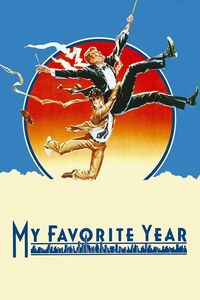
  • My Favorite Year (1982)

    My Favorite Year (1982)

    (On Cable TV, March 2020) Sometimes, I wish we had a slightly more extended film genre vocabulary to discuss grades of comedy. There’s a difference between a comedy that aims to get laughs, and a comedy that’s merely content to be pleasant. My Favourite Year may be mistaken for the first, but I found it more effective as the second. The story of a young TV writer asked to babysit (geezersit?) an older star with a propensity for excessive drinking, this is an affectionate look at the mid-1950s through the lens of 1980s filmmakers, more nostalgic than comic. Mark Linn-Baker stars as a young comedy show writer supposed to be a blend of Mel Brooks and Woody Allen, who gets saddled with ensuring that an older swashbuckling hero actor (played by Peter O’Toole in a role meant to be semi-autobiographical) makes it to broadcast in sober state. When gangsters and long-lasting romantic pursuits are thrown into the mix, the comedy increases, although the result never gets above a slow boil when it comes to outright laughter. But My Favorite Year does work better as a gentle look back in time, with the opening moments of the film exulting the wonders of 1954 and the plotting never getting overly serious at any time—well, except for the climactic motivation speech from the younger to the older man, and fixing whatever challenges they both face. It probably sounds as if I’m harsher on the film than I intend to be: After all, there are a few good lines (“I’m not an actor, I’m a movie star!”) and I always enjoy the way Hollywood looks back at itself. In the right mood, the amiable tone of My Favorite Year is satisfying in the same way that some Neil Simon stories can be. Just go in tempering your expectations as to how much of gut-buster it wants to be.