Month: April 2020

  • Kickboxer (1989)

    Kickboxer (1989)

    (On Cable TV, April 2020) I’m not a good audience for Jean-Claude Van Damme films, and it’s not Kickboxer that will make me change my mind. Sporting the thinnest possible excuse to chain together a bunch of repetitive martial arts sequences, the film heads over to Thailand for Van Damme to be part of a tournament and avenge his paralyzed brother. The rest is just one fight after another, and while the film boasts of being the first international production to feature the Muay Thai martial art to worldwide audiences, it’s not as if I can make much of a difference between this and other forms of combat. Look: I probably would have liked Kickboxer more if I had any interest in sweaty bash’em up bouts, but I don’t so—meh. This being said, even I can recognize that Van Damme is physically very good on a pure physical level. Alas, the story is basic stuff, and the execution is more grimy than exciting. Fans, you already know if you’re going to like this—but Kickboxer does not escape its own sub-genre.

  • Aftermath (2017)

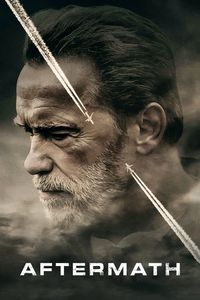
    Aftermath (2017)

    (In French, On TV, April 2020) I thought I knew all about Arnold Schwarzenegger’s filmography, but his post-political career has been far less visible than his glory years—he’s now working in low-to-medium-budget films, not quite successfully adapting to post-action-star status and often springing for cameos rather than starring roles. Unlike other actors of his generation, he hasn’t been able to completely transition into supporting roles in films where others are the action stars. Aftermath, which frankly slipped under my radar, is a near-perfect example of these new expectations. It’s a fairly dull thriller, made slightly more respectable in how it’s (loosely) based on a true story. Here, Schwarzenegger plays a grieving family man who decides to take revenge on the man who organized the plane bombing that killed his wife and daughter. The rest of the film is a revenge story, but not a triumphant one—director Elliott Lester handles the downbeat drama script appropriately, which is to say in antiheroic cinematography, slow pacing, bad character decisions and melancholic atmosphere. What doesn’t help this dispiriting premise is the film’s slow, linear and surprise-less execution, even late in the film when there’s something meant to be shocking. Aftermath is a far, far different cinematic animal than the action films that made Schwarzenegger an improbable household name. To his credit, he does deliver a fair performance as a dramatic actor (and one has to appreciate how he’s not being pushed in becoming an implausible action hero) but it raises two questions—is Aftermath a kind of film suited to someone like Schwarzenegger, and two; is this Schwarzenegger’s best use of his time?

  • The Company of Wolves (1984)

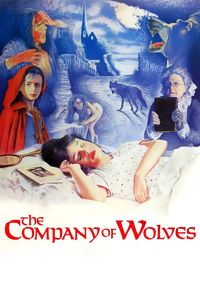
    The Company of Wolves (1984)

    (In French, On Cable TV, April 2020) Moody, dark, stylish, gauzy and fantastic more than horrific, The Company of Wolves takes a far more dreamlike (and female-gaze-friendly) approach to werewolf horror than most of its contemporaries. Director Neil Jordan works from an Angela Carter script (adapting her own short story) and delivers a collage of striking images loosely based on the Little Red Riding Hood fairytale, except with more hairless male chests and werewolves running around. Creating a misty, gothic atmosphere on a limited budget isn’t without visible seams, but Jordan makes it work. Unusually enough, the script doesn’t settle for a clear narrative as much as a mixture of episodes and shorter stories bound together as a sort-of-anthology within a realistic framing device, further adding to the surreal, oneiric feeling of the entire film. Its closest recent equivalent may be Catherine Hardwicke’s work on Twilight and Red Riding Hood. Interestingly enough, in retrospect, The Company of Wolves is a closer fit to the fantasy film boom of the early 1980s than the horror movies of the time. Fortunately, that still ensures its distinctiveness today.

  • The Unholy Three (1930)

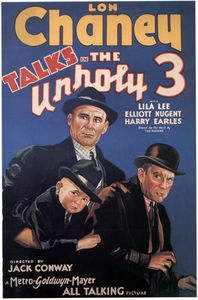
    The Unholy Three (1930)

    (On Cable TV, April 2020) While the world remembers Lon Chaney Jr. as one of the defining actors of the Universal Monsters franchise (as the Wolfman), fewer now remember his father. Part of this is that most of Chaney Sr.’s work was in silent film, inherently less popular and lesser-seen today. Alas, he fell ill and died shortly after the production of his only talking film, The Unholy Three. A sound remake of an earlier 1925 thriller, it’s a crime melodrama featuring three different men (a dwarf, a ventriloquist and a strongman—with Chaney playing the ventriloquist and showcasing his gift for vocal impersonations) joining forces to perpetrate crimes. Romance follows, along with a deadly circle of betrayals and revenge when the crimes don’t go as planned. There’s also a gorilla who ends up taking a crucial spot in the plotting. With such an unlikely mixture of elements, it almost seems redundant to say that Chaney is the single best reason to see the film—while The Unholy Three has a few freakshow-like moments to its credit, the rest is a bit dull even considering the sensationalistic premise. What’s for sure is that Chaney would likely have done very well had he had a longer career in the talkies—he was one of the silent stars who was just as well suited to the world of sound.

  • The Belle of New York (1952)

    The Belle of New York (1952)

    (On Cable TV, April 2020) If you run down the list of Fred Astaire musicals, The Belle of New York runs the distinction of being one of the least distinctive ones. Here, Astaire plays the playboy who falls for the holier-than-thou Vera-Ellen against a stylish backdrop of turn-of-the-century Manhattan and a fantastic illustration of love as making characters weightless. Despite the whimsical conceit, the film itself is slightly too staid to be wholly enjoyable. This doesn’t mean it’s a failure, though—compared to a few other lower-end Astaire musicals, The Belle of New York certainly has its attractions. It’s not churlish to note that it benefits from being shot in colour, and that Vera-Ellen, despite her age difference, is a better-than-average dance partner for Astaire (her “Naughty but Nice” solo dressing room number is nothing short of whew!) The film also demonstrates Astaire’s career-long intent to dance at the edge of special effects technology—here, a lot of green-screen work may not have aged particularly well (part of his face disappears in one shot), but still has quite a bit of charm. Then there’s also character actress Alice Pearce being very funny (and rather cute) in a comic relief role that even includes a brief song. Despite those elements taking The Belle of New York at least to the mid-tier, there is a sense that the film is spinning its wheels. The songs are hardly memorable, and don’t quite bolster the numerous dance numbers. From a plot perspective, the film hews a bit too close to the least admirable aspects of Astaire’s persistent-suitor screen persona, even if it does play a bit with deconstructing that archetype. I still liked it, but Astaire completists are definitely advised to keep The Belle of New York for later in their explorations of his filmography.

  • My Bloody Valentine (2009)

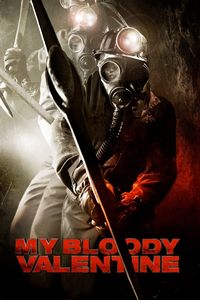
    My Bloody Valentine (2009)

    (In French, On Cable TV, April 2020) Sigh… what is there to say about this My Bloody Valentine remake? As a teen slasher reboot that boasts of its 3D cinematography, it’s like a fusion of every single bad idea that infected Hollywood circa 2009. It’s visually slick, of course (director Patrick Lussier was already a decade-old veteran of medium-budget horror films at that time), but predictably even less engaging than the original. The plot is the same slasher plot except (as the title tells you) transposed around Valentine’s Day. Clearly aping the original, My Bloody Valentine plays up the villain-with-a-gas-mask imagery far more than the original itself. The gleefully unsubtle early-3D-revival cinematography of the film (which came out a year before Avatar) is incredibly intrusive on a 2D screen, which bode poorly for the film’s future reputation now that 3D TVs are on their way out. It’s all aggressively mediocre, especially for a slasher, but it’s not really meant to be anything else than a thriller for teens so who’s going to care? I have a feeling, though, that this version of My Bloody Valentine may age into something like camp in a decade or so, with the 3D cinematography being so over-the-top and combined with 1980s-style gore effects that it may play more as a comedy for horror fans than a horror film. But time will tell.

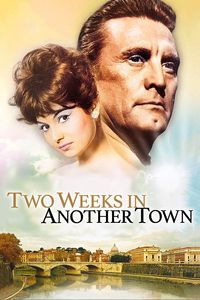
  • Two Weeks in Another Town (1962)

    Two Weeks in Another Town (1962)

    (On Cable TV, April 2020) If you want to see the results of the Hollywood-on-the-Tiber era, during which Hollywood studios headed to Rome’s Cinecittà in order to take advantage of lower production costs and a studio built by Mussolini, then watch any of the dozen sword-and-sandal epic of the era. If you want a film about that filmmaking era, however, there’s Two Weeks in Another Town to bring back, a decade later, many of the main creative forces behind The Bad and the Beautiful in a thematic follow-up examining how Hollywood stars lived in their little Roman bubble far away from California. There are differences, obviously—Two Weeks in Another Town is in colour, and not quite as purely entertaining in its examination of Hollywood. But it does star Kirk Douglas as a washed-up actor trying to find a new place for himself in the movie industry, and a behind-the-scenes fictionalization of a difficult film shoot. Douglas is surrounded by notables such as Cyd Charisse (who’s not given enough to do), Edward G. Robinson (as a director at the end of his rope), and George Hamilton hilariously cast as a brooding artiste-type actor. While the film is interesting, it also has plenty of misplaced cues and darker themes that ensure that it’s not a feel-good film despite its hopeful ending. Studio meddling is apparently to blame for not delivering the core vision, but even in its adulterated form, the film features themes of suicide, professional uselessness, jealousy and isolation—all of which clash with the Dolce Italia atmosphere occasionally showcased. It’s a shame that some terrible rear-projection work takes away some of the late-film scene’s emotional effectiveness. Let’s just say that Two Weeks in Another Town gets about three-quarter of the way there—it’s interesting to give us a glimpse at an episode of Hollywood history, but not as great as it could have been had it figured out what it wanted to say and found a more disciplined way of telling it.

    (Second Viewing, On Cable TV, June 2021) The “Hollywood on the Tiber” era is one of the most interesting episodes in film history – Hollywood going to Rome in order to take advantage of fiscal incentives and Cinecitta, a top-notch studio built by Mussolini as a propaganda instrument. Hence the slew of swords-and-sandals films of the early 1960s and the numerous American films somehow set in Rome in the 1960s. Two Weeks in Another Town is one of the few productions of that era to be about itself, as our troubled protagonist (Kirk Douglas, reliably fascinating as always) gets a new chance to help a friend complete a Hollywood production shooting in Rome. There are glimpses at moviemaking, dramatic situations alluding to the reality of how movies were made at the time, and characters almost entirely portraying a fictional film’s cast and crew. The rather good cast also helps, what with Douglas playing a recovering alcoholic former star actor, Cyd Charisse as his ex-wife, a young and trim George Hamilton as a rising actor, and Edward G. Robinson as an aging director. On paper, there are plenty of reasons why Two Weeks in Another Town shouldn’t work, starting with the lead character: Who should care about a former movie star putting back together his life after alcoholism? Who should care about Charisse’s character when she barely has any dialogue? The film was apparently cut short by fifteen minutes by the studio, and those seams are more blatant when you start looking at the dramatic structure of the film. But, fortunately, there’s quite a bit more to it – the focus on filmmaking is strong enough (similarities with The Bad and Beautiful are all over the place, from its theme to a shared team of creative leads) and the glimpse at the Hollywood on the Tiber era is frequently charming enough to create a bit of longing for what it must have been at the time. It’s also hard to go wrong with Douglas in the middle of it all – Two Weeks in Another Town probably wouldn’t have worked with another actor.

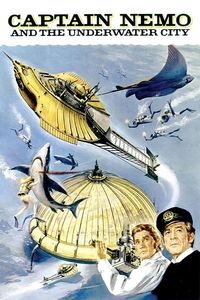
  • Captain Nemo and the Underwater City (1969)

    Captain Nemo and the Underwater City (1969)

    (On Cable TV, April 2020) Huh—I really did not have “proto-steampunk underwater adventure” on my to-watch list today, but that’s what I got in Captain Nemo and the Underwater City. Loosely based on Jules Verne’s classic novel, it’s more a branded excuse to show off Victorian underwater wonders than to let it suggest any kind of a plot. Unfortunately, whatever plot it does feature is a misguided story of escape, featuring a protagonist that comes off as a dangerous idiot less worth cheering for than worth drowning for everyone’s safety. It’s not quite the only dodgy plot elements, especially considering what feels like a kid’s film: a comic-relief character is killed off late in the film through sheer greed, and everyone seems to take with impassivity that’s meant as lifelong imprisonment. (Well, except for the dangerous protagonist, who should not be celebrated as a hero.) At least Nanette Newman looks good, and Robert Ryan shows appropriate gravitas a Captain Nemo. The film’s production history suggests that it was heavily influenced by the late-1960s Jacques Cousteau underwater craze, and that’s best reflected in how much of the film is a wide-eyed wonder at submarine cities and possibilities. Even discounting the film’s less-than-stellar narrative, there’s some rather incredible visual stuff for a film that’s largely forgotten today—novel visuals in a Victorian underwater steampunk atmosphere. There’s probably a good remake to be made from Captain Nemo and the Underwater City, but only if anyone still remembered it.

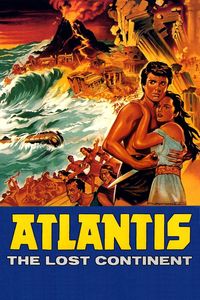
  • Atlantis: The Lost Continent (1961)

    Atlantis: The Lost Continent (1961)

    (On Cable TV, April 2020) After several spectacular science fiction films, legendary director-producer George Pal goes back in time to Atlantean mythology in Atlantis: The Lost Continent, which purports to tell the Greek-classics-inspired story of how Atlantis was destroyed. Before we get there, however, our Greek hero must travel to Atlantis, witness its retro-science fictional technology, experience its sword-and-sandal excesses (sometimes via stock footage from other films) and then run away as the third act’s climactic destruction sequence wows audiences. But what may have looked like a nice change of pace on paper ends up considerably blander than expected. It feels less like a Pal spectacle than a Hollywood-on-the-Tiber epic with funny hats. Fortunately, the film gets better as it makes its way to the expected third-act ending destruction sequence with landscape-altering earthquakes and lava flows. The rest, unfortunately, is surprisingly dull—and ludicrous at times, starting with some very bad science. Clearly, Atlantis: The Lost Continent is not the best known of Pal movies, and understandably so: despite the different setting, it lacks that spark that made his other films special. Alas, the rest of his filmography wouldn’t get any better—the 1950s were truly his best decade, and this is the film that would announce his downward path.

  • The Hoax (2006)

    The Hoax (2006)

    (In French, On TV, April 2020) Howard Hughes’ life is expansive and fascinating enough that several movies can be made about him without necessarily stepping on each other’s topics. The Hoax is Hughes-centric without even featuring Hughes himself, as it’s about the efforts of writer Clifford Irving to create a wholly fictional Hughes autobiography and being richly rewarded for it. Richard Gere comfortably stars as Wallace, a writer who turns conman when he thinks he can get away with it. It all goes swimmingly until Hughes himself emerges from his late-life silence to shut down all speculation that he wrote the book, kill the book’s publication along the way and send Irving to prison. (Amusingly enough, you can now purchase Clifford’s Hughes “autobiography” as an ebook.) Con stories are at their best with chutzpah and this one has a lot of it. Well-constructed and generally executed with style, The Hoax fills the gaps of its narrative with early-1970s pop music, snappy editing and a sustained rhythm. In an era where truth is devalued, I would normally have issues with making a hero out of a serial liar, except for one thing: The Hoax does not present the real story. It adds layers of conspiratorial and political intrigues that are far-fetched at best—so much so that Irving himself (who died in 2017) expressed his strong disapproval at this fictitious portrayal of his life, much like Hugues himself did to bring down the charade. The irony is so delicious that it must be savoured. What we’re left with is a film that, like Irving, doesn’t know when to quit—The Hoax could have been a perfectly charming comedy about a lie spinning out of control, but then it reaches for a darker third act filled with government conspiracies and evermore ludicrous speculations. Too bad—but it’s still generally worth a look, if only as an introduction to both Hughes and Irving.

  • Shadow Wolves (2019)

    Shadow Wolves (2019)

    (On TV, April 2020) Any movie that plays on Canada’s APTN has some kind of Native-American connection, and so I perhaps expected a bit too much out of Shadow Wolves. It does start promisingly by presenting a fictionalized version of the authentic Shadow Wolves law enforcement unit operating in the Tohono O’odham Nation in Arizona. A First Nations action movie? Sure, at least at first when it introduces the anti-smuggling and tracking operations of the unit. It feels slightly different from the usual straight-to-video low-budget action films, with just enough specific atmosphere to keep things interesting. Alas, that feeling doesn’t last: Before long, the story gets going in a far more familiar direction—an alliance between terrorists and narcotraficantes out of right-wing fever dreams (oh no, nuclear bomb!), plus a designated (white) protagonist coming from outside the Shadow Wolves group and an England-based subplot. It quickly becomes far less interesting than promised—whatever distinctive traits the film could have developed are slowly strangled by the clichés of low-budget DTV action films. As part of that subgenre, Shadow Wolves slightly exceeds expectations in matter of pure execution: writer-director McKay Daines is a better director than writer, and he gets good production values and mildly effective action scenes out of his budget. Alas, the script does feel like a contractually obligated action film, and it forgets what it could be doing by focusing on Indigenous-led action. Sure, having Graham Green in a supporting role is always cool (and the actresses do look nice) but it’s not enough. Too bad—Shadow Wolves could have been quite a bit better had it played on its titular distinctiveness.

  • Twice Upon a Time (1983)

    Twice Upon a Time (1983)

    (On Cable TV, April 2020) The least you can say about animated film Twice Upon a Time is that it’s a near-delirious story executed in a way that’s still distinctive even today. The almost-incomprehensible plot is a whimsical reflection on the pace of modern life blended with improv comedy (in an animated film, yes), fantasy elements and dubious humour. But never mind the plot, because the style is where it’s at—echoing Terry Gilliam’s interludes for Monty Python and anticipating Flash-based animation by a decade and a half, the animation style of the film is obtained by having animations move pieces of paper over a large illuminated board, allowing a mixture of stock photography, live action, character animation and everything in-between. The voice acting, by sets of comedians directed to do improv, is iconoclastic and seldom tonally consistent. Often absurd and definitely strange, this is one film with a very weird sense of humour. Accordingly, it was a major flop upon theatrical release, and its post-theatrical life is a mixture of bootlegs, unauthorized showings and dual competing versions (one family-friendly, the other one not so much) I’m not sure I’d recommend Twice Upon a Time, but it’s certainly a must-see for animation scholars. If you can find it—and thank goodness for TCM Underground.

  • The Man with a Cloak (1951)

    The Man with a Cloak (1951)

    (On Cable TV, April 2020) Two Classic Hollywood genres crash into each other in The Man with a Cloak: The historical drama and film noir. I mean—why not? Part 1948 costume drama, part historical fantasy involving the fate of Napoleon’s France being played out in Manhattan by Edgar Allan Poe, specifically through the vast fortune of one of the film’s characters. Alas, many people are after that fortune, and the film takes a sombre turn when wills, poisons and deaths come into play. While it takes a while to heat up (frankly, the beginning is just dull), The Man with a Cloak does get nicely dramatic after a while—all the way to a knock-down drawn-out fist-fight at the end. This being said, I suppose that most twenty-first viewers will have a look due to Barbara Stanwyck (always magnificent) in one of the lead roles, alongside Joseph Cotton as a mysterious investigator and Leslie Caron playing a visiting Frenchwoman. It’s not quite correct to call The Man with a Cloak a pure film noir, but in addition to borrowing plot elements from the genre (and a bit of gothic mystery), it also tries to ape many of its stylistic features—albeit to middling effect, as director Fletcher Markle wasn’t exactly a gifted stylist. Still, it does add a bit of atmosphere to a film that can certainly use it. The film’s final revelation feels more like a joke than a serious twist, but there it is. The Man with a Cloak is hardly a great film, but it does offer something slightly different from either pure costume drama or film noir. Plus, hey : Stanwyck.

  • The Panic in Needle Park (1971)

    The Panic in Needle Park (1971)

    (On Cable TV, April 2020) If you put it in a historical context, The Panic in Needle Park comes at an unsettling time in American history: fresh off the idealism of the 1960s, and yet confronting the scourges of rising violence, urban blight and increasing drug addiction. The film focuses on that last issue (with the others being not too far away), with Al Pacino in his first leading role, Kitty Winn, and a supporting role for Raul Julia in his screen debut. The story is simple and sordid, following two self-destructive drug addicts as they fight with the world and themselves. Typical of the early 1970s New Hollywood (even if entirely shot in New York City), it’s an incredibly gritty film, wallowing in the despair of Upper West Side poverty. Addiction soon turns to prostitution, violence, arrest and other problems, and the film doesn’t sugarcoat the consequences, nor does it offer much of an optimistic conclusion. It’s dated to the point of being a time capsule in terms of cinema and topic matter—almost a documentary, which is helped along by the film’s cinema-verité approach. Some of the scenes of drug injection were so shocking at the time that they earned the film an X rating not solely based on nudity or violence. Accordingly, The Panic in Needle Park is not fun at all to watch, but it’s generally less exploitative and more interesting than many of the more outlandish urban violence movies of the time.

  • Bombshell: The Hedy Lamarr Story (2017)

    Bombshell: The Hedy Lamarr Story (2017)

    (On TV, April 2020) The story of how a beautiful movie star invented Wi-Fi is now well-known enough to be part legend and part truth. While Bombshell: The Hedy Lamarr Story helps detail much of what happened, it does err a bit too much on putting the modern foundations of western civilization on Lamarr’s shoulders. Much of the film is about Lamarr becoming a movie star—her early career in Europe, immigration to the United States, success as an actress, and the legendary beauty that opened up many doors, whether they were professional or romantic. Since Bombshell is a hagiography, it doesn’t really mention how Lamarr’s films have not endured—Like Brigitte Bardot, she’s a movie star whose individual films aren’t that good, and unlike Bardot, she doesn’t have a signature film that people can point to and say, “This is what Lamarr was about.” Still, Lamarr was reasonably popular during World War II and if her life had been limited to her filmography, she still would have been an interesting topic for a film. But there’s more, obviously—thanks to contacts in the arms-dealing world (via her then-husband) and a musician friend, she co-patented a technique to hop between frequencies. This concept eventually became a building block for a host of later radio technologies, including the modern Wi-Fi protocol. Since Bombshell is all about Lamarr, it does draw a very thick, short and exaggerated line from Lamarr’s idea to modern-day Wi-Fi routers, ignoring the smorgasbord nature of technological development. The beauty-with-the-brain story is too hard to resist, though, and so is the tragically-victimized-woman narrative. In the third act of the film, we go over Lamarr’s less-than-impressive decline over the next five decades—how she married six times, wasn’t able to successfully transition away from the bombshell movie persona and how she eked a meagre living in difficult circumstances. The film definitely soft-pedals Lamarr’s increasing litigiousness and crankiness in later years, as well as her penchant for petty crimes such as shoplifting—although, amusingly, one of the targets of her lawsuits, Mel Brooks, ends up delivering one of her strongest defences when interviewed for the film. Still, Bombshell is equally dedicated to making a saint out of its oppressed heroine, blaming society-at-large for her use of drugs, her poverty, and her increasing obscurity until she and her achievements were essentially rediscovered during the 1990s. (Makes sense: I first heard about Lamarr in 1996 when her portrait won a CorelDraw contest—something that led to another lawsuit.) At the very least, Bombshell lays out the three main poles of interest in Lamarr’s life in compelling fashion, with several interviewees, including Peter Bogdanovich, Jeanine Basinger, Robert Osborne, her children and Lamarr herself in archival footage. It’s informative, compelling, emotional, somewhat authentic and filled with good archival footage. It’s, in other words, most of what you need to know about her. Where I’ll diverge from the usual good words, however, is in regretting that writer-director Alexandra Dean took the easy hagiographic way to cover the material, going for the cheap yet unarguable “genius woman underestimated because of her good looks” tragedy angle when there’s a lot of material unsaid or unexplored that would make this a more complex tale. But no—Lamarr is at the centre of the universe in Bombshell, so much so that it’s a wonder she’s not portrayed installing home routers.