Month: April 2020

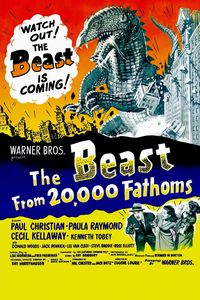
  • The Beast from 20,000 Fathoms (1953)

    The Beast from 20,000 Fathoms (1953)

    (On Cable TV, April 2020) Historically, The Beast from 20,000 Fathoms is important because it bridged the gap between King Kong (which had a very successful re-release in 1952) and later kaiju/monster films such as Godzilla and Them! Fortunately, it happens to hold up pretty well as a movie for newer audiences as well. The story is archetypical monster-movie stuff (but emerged here first)—a nuclear explosion wakes up a monster who heads for a major metropolitan area, but stops at various points of interest in-between before the urban demolition. Harry Harryhausen provides the effects, adding a sheen of charm and characterization to the stop-motion material. Generally speaking, it’s a well-handled script with conventional but well-handled plot progression. The third-act rampage through New York City is a highlight, not only of this movie but of 1950s Science Fiction films in general—it’s surprisingly effective even with the dated special effects. Unlike many of its many imitators, the scope is ambitious and there are a lot of moving parts to The Beast from 20,000 Fathoms, all of which help ensure that it remains a head above many of its imitators—Gojira excepted, obviously.

  • League of Exotique Dancers (2015)

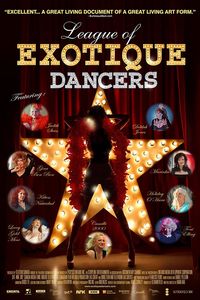
    League of Exotique Dancers (2015)

    (On TV, April 2020) The relatively upbeat documentary League of Exotique Dancers takes the examination of a retrospective revue of the same name as a springboard to ask the question—what happens to burlesque dancers late in life? The best-known of them, interviewed here, is Kitten Natividad, due to her association with the movies of Russ Meyer (as well as a, ahem, pair of memorable appearances in both Airplane! and Another 48 Hours—you know what two scenes I’m talking about). But more than a dozen women are interviewed here, reflecting on trailblazing stretching back into the 1950s. None of the women interviewed here regret their past (naturally, since they’re dancing onstage again as part of the revue) and all have settled into relatively quiet post-dancing lives. Writer-director Rama Rau offers a retrospective look at the history of Las Vegas dancing, and how its heyday ended when it got more vulgar with time. While all the women featured here are beyond the age most commonly associated with dancing, most of them still have It, whatever It is (mostly attitude). While you can approach League of Exotique Dancers as a bit of the ooh-la-la salaciousness of burlesque, it quickly leads viewers to serious discussions about money, racism and discrimination but also the fun and the empowerment (sometimes, as they had no other options) of burlesque dancing. Every interviewee is very likable, and once the credits roll, viewers will realize that this is, more than anything else, definitely a film about aging gracefully, even in one of the professions least likely to acknowledge it.

  • Beyond a Reasonable Doubt (1956)

    Beyond a Reasonable Doubt (1956)

    (On Cable TV, April 2020) Director Fritz Lang ended his American career with late noir Beyond a Reasonable Doubt, and it’s not a bad way to go out. It does have a lot of things I like—a newspaper setting, an author as a protagonist (played by Dana Andrews), a cynical view of humanity, and a corker of a final twist. The high-concept premise (framing oneself for a murder in order to expose the insanity of capital punishment) initially looks like the dumbest possible idea anyone could ever have, but it’s somewhat redeemed by a few more twists and turns along the way. It’s definitely noir, and that ending certainly highlights it. If I keep talking about the final twist, well, there’s a reason for it: it’s contrived, but it makes Beyond a Reasonable Doubt go from interesting to spectacular in only a few beats, and then wraps it all up after a mere 80 minutes.

  • 24 Hours to Live (2017)

    24 Hours to Live (2017)

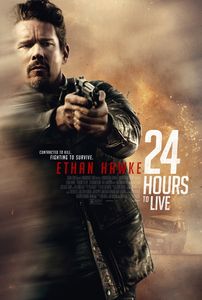
    (In French, On TV, April 2020) Work long enough as a leading man, and you’re bound to star into all sorts of movies. While Ethan Hawke is not the first name that comes to mind as “Science fiction action hero,” his filmography is so long that there are a few action movies in there, and 24 Hours to Live is the one in which he plays a dead assassin brought back to life but only given another… yup… 24 hours to live. Rather than meditate on the failings of his life and make amends, he instead embarks on a rampage of revenge, chaining one action sequence after another. If the film has a highlight, it’s not the plot—soporific despite what could have been a modestly effective high-concept premise, 24 Hours to Live loses itself in its own narrative and that’s too bad considering how forgettable it all is. Where director Brian Smrz does better is in the execution of formulaic action sequences: Able to stretch his direct-to-video budget though the bang-for-the-buck of shooting in South Africa, he manages to package a few better-than-average action sequences in a worse-than-average narrative, effectively making it a draw. 24 Hours to Live is still a direct-to-video low-budget production, but it’s not as terrible as most of them.

  • The Man with the Golden Arm (1955)

    The Man with the Golden Arm (1955)

    (On Cable TV, April 2020) From the first moments of The Man with the Golden Arm, as we see Saul Bass’s opening titles and director Otto Preminger’s name, we’re reminded of the later Anatomy of a Murder and promised a serious taboo-breaking black-and-white drama. The film does not disappoint. It features Frank Sinatra as an ex-convict who’s struggling with not relapsing into drug addiction. That’s unusual enough as a topic matter for 1955, but what sets the film apart, even today, if that it treats addiction like a disease, and the addict as a victim. The humanization of the protagonist is made easier through Sinatra’s sympathetic screen persona, in a role that wouldn’t have been the same with any other actor. (Also notable: Kim Novak, and Arnold Stang’s great performance as a friend of the protagonist.) While it does take some time to get going, The Man with the Golden Arm does offer a fascinating atmosphere of low-down mid-1950s Chicago, with smoke-filled card joints, strip clubs (sort of) and seedy apartments. What the film does better than many others, then or since, is showing how difficult it can be to break out of a bad past, transforming the story from a crime thriller to a social drama. Sure, Sinatra and/or Preminger’s name will draw viewers in, but the story itself is quite engrossing once you give it a chance to put all of its pieces in place.

  • The World, The Flesh and The Devil (1959)

    The World, The Flesh and The Devil (1959)

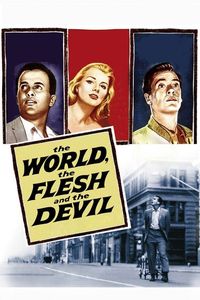
    (On Cable TV, April 2020) What an interesting film. Decades before I am Legend, here is The World, The Flesh and The Devil featuring one black man (Harry Belafonte) alone in post-apocalyptic New York City, except that he meets a white woman (Inger Stevens) at the beginning of the second act and they fall in love except when another man enters the picture (Mel Ferrer) at the beginning of the third act and then the action gets downright primal. Often meditative, but simply eloquent by the choice of featuring a lead black actor (playing an engineer, no less) romancing a white woman as the (potentially) last two people on Earth, this is a film worth remembering for its explicit acknowledgement or racism and mental illness due to isolation. Belafonte was Sidney Poitier before Poitier, and he gets to show his charisma and singing abilities here, either by himself in the early minutes of the film, alongside Stevens later on, or in an increasingly antagonistic relationship with Ferrer late in the film. Some haunting shots of late-1950s Manhattan, completely empty of people, are good for a frisson or two. The ending doesn’t quite satisfy—it seems to push things to a breaking point, then draws back for less than convincing reasons. But at least it’s an ending everyone can live with.

  • It Chapter Two (2019)

    It Chapter Two (2019)

    (On Cable TV, April 2020) To clown a phrase; there are a whole lot of conclusions in this conclusion to the It diptych. At a staggering two hours and forty-nine minutes (for a horror film!), It Chapter Two clearly sets out to provide the ultimate definitive adaptation of Stphen King’s novel and succeeds despite some middle-act fatigue. The story skips forward twenty-seven years after the events of the first film, as the killing cycle begins again and the Losers, who won a temporary reprieve in Chapter One, are called back to Derry to finish Pennywise once and for all. If there’s one thing to be said about this film, it’s that this is big-budget high-grade horror: Director Andy Muschietti gets to use plenty of good special effects in the achievement of the film’s vision, also making an effort to dig into thematic concerns (about memory) and go beyond the obvious scares to deliver something a bit deeper. Having A-grade actors also helps, with Jessica Chastain and James McAvoy providing most of the dramatic heavy lifting, with Bill Hader as the self-recognized comic relief and some fine work by others, such as Isaiah Mustafa and obviously Bill Skarsgård as Pennywise. The meta gets thick once Stephen King shows up as “The Shopkeeper” in order to criticize his stand-in writer for bad endings and the adaptation of The Shining. But, as good as It Chapter Two can be in bits, pieces, intentions and means, the overlong duration eventually takes its toll, leading to exasperation during the schematic setup of the film, and then again during the ending that can’t stop ending. On the other hand, there’s nothing more on the other side of that ending: it’s refreshing to see a horror film that dares do a definitive conclusion without any hint of a follow-up. While it has its issues, this wrap-up to the It series is a success: it knows what to adapt from the original novel and what to forget (readers know what I’m talking about), and the result is likely to be the best adaptation of that novel we’re likely to get.

  • Jing wu men [Fist of Fury] (1972)

    Jing wu men [Fist of Fury] (1972)

    (Tubi Streaming, April 2020) It’s sobering to realize that most of Bruce Lee’s feature-length filmography (aside from a few very early efforts) is a mere six films, from a supporting turn in Marlowe to Game of Death—and even that last one is a posthumous salvage job. In this list, Fist of Fury is arguably his breakout feature. Given that the plot takes us to Japanese-occupied Shanghai in 1908, much of the film’s running time is about historical context, setting up the fight sequences between a Chinese dojo and a Japanese one. There is some perceptible nationalistic material considering how the Japanese invaders are depicted not only as enemies, but perfidious, cheating ones. Considering this, it’s fine if any North American viewer finds much of the film duller than expected—it’s immersion in an unfamiliar era, and we’re here to see Lee fight, not talk. It doesn’t help that the film is a prime example of early-1970s Golden Harvest Hong Kong martial arts film—it’s technically rough, grainy and sometimes amateurish. Still, writer-director Lo Wei wisely steps back to see Lee do his thing during the fight sequences, and they make the film come alive. Watching the film, it’s obvious why Lee commanded such charismatic respect—he dominates fight sequences, putting personality where other films would have just run with the combat. Various techniques work at maximizing the coolness factor of Lee’s fights, whether it’s slow motion, overprinting, multiple bosses to defeat, tense moments in which nothing happens in-between the fights, and so on. There’s a bit of romance to round out the whole—and more nudity than I expected. Clearly, this is Lee’s showcase, even if I found Enter the Dragon significantly more memorable. The English dub is not particularly good, but it was the only option available. Jackie Chan briefly appears as an extra in one of his earliest roles. The freeze-frame ending ends up being elegiac, considering what would soon happen to Lee.

    (Second Viewing, Amazon Streaming, May 2021) It only took a look at the biographical documentary I Am Bruce Lee to get me rewatching Fist of Fury. It’s not disrespectful to note that this isn’t quite the best Lee showcase: this was an early film to feature him as lead, and writer-director Lo Wei didn’t necessarily how to best showcase his talents. Lee is clearly the hero with some impressive moves, but the camera doesn’t quite capture him as well as later films. It’s also worth noting that the overall plot of the film, going back to early-twentieth-century China to depict their struggles against foreigners, would become nearly a cliché in the following decades, as it formed the backbone of numerous martial arts epics. Fist of Fury is also noticeably grimmer than other Lee films—or other martial arts films, actually—with a freeze-frame ending right before things turn bad. Still, Lee remains remarkable here as a young Chinese martial art student who comes to fight against Japanese intruders. His wiry physicality remains impressive and while the film is rough in presenting its action sequences, there’s no mistaking his raw talent. The film remains a reference for Lee fans for a reason — not the best, but still an impressive showcase. The only problem is the same as when I contemplate the rest of his filmography — I can’t help but wonder what else Lee could have done had he lived longer. Fist of Fury is an impressive first draft, but it’s far from being the ultimate depiction of what he was capable of.
  • Sleepaway Camp (1983)

    Sleepaway Camp (1983)

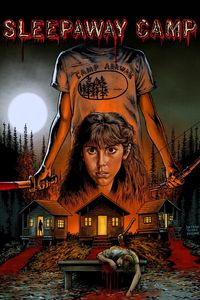
    (Tubi Streaming, April 2020) I’ll admit it—I didn’t go into Sleepaway Camp totally blind. I knew that there was a twist, and even remembered much (but not all) of it. Knowing this, I spent much of the film wondering whether the twist was enough to raise it above the many, many standard summer camp slasher movies that multiplied in the early 1980s. At first, I had a hard time believing that it would—Sleepaway Camp may eventually have shock value, but it does not have cinematic quality. The opening sequence is a flurry of shots that never seem to connect together, along with character relationships that aren’t that clear yet. The following sequence will make you question whether the film is going for a specific style or if it’s simply incompetent, with an overdone performance by Desiree Gould that highlights the titular CAMP. Things don’t necessarily get better once the action moves back to the camp, but they sure get less interesting: Our heroine (in what is actually a remarkable performance from Felissa Rose) is unresponsive to the point of catatonia, and the murders soon fall into the usual dull rhythm of slasher movies. Even my hazy memories of the twist were enough to get me to guess the killer—which isn’t all that hard, even though you run into basic physical problems in most of the kills. Still, there are, from time to time, touches of very stylized sequences—one of them being far less homophobic than you’d think, another being unusually sadistic in its cosmetic instrument of death. Sleepaway Camp doesn’t rise above its slasher nature for much of its duration… but then comes the ending. The shocking, bombastic, now-transphobic ending. The reason why the film’s final minutes dominate any discussion of Sleepaway Camp isn’t as much for its narrative merits: while it does justify the camp performance of one character, it also introduces basic believability problems that almost entirely destroy the narrative. No, the ending is a piece of work because the film revels in its glory for what feels like half a glorious minute, rubbing the viewers’ faces in the full-frontal freeze-frame evidence and insisting that we “SEE? SEE? THAT’S HOW SCREWED UP THIS IS!” Whew. Not a good movie. Not even a good twist. But I guarantee you that you won’t forget Sleepaway Camp the way you’ve already forgotten about so many other summer camp slasher movies.

  • Blurred Lines: Inside the Art World (2017)

    Blurred Lines: Inside the Art World (2017)

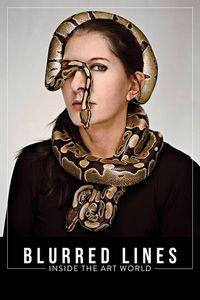
    (On TV, April 2020) I don’t know a lot about art, but I have vivid memories of reading Don Thompson’s The 12 Million Dollars Stuffed Shark and look at that—he’s one of the several experts interviewed by director Barry Avrich in Blurred Lines: Inside the Art World. It’s a documentary that gives us a snappy but fascinating 94-minute overview of the modern art world, with a heavy emphasis on the eye-watering prices that some of the best-known artists fetch. You can draw a fairly clear line between the money people and the art people throughout the film as it studies various components of that universe. The money people shrug and consider art as possession (although they acknowledge that regulating the market is practically impossible when every piece has its own distinctive history), while the artistic people are a bit embarrassed by the amount of attention that the money brings to the field. Still, there are tons of great shots here, an overview of many major players in the field and a timeline of significant events in the past few years. Blurred Lines doesn’t package everything in a transcendent story (Avrich’s subsequent Made You Look is better as a visual arts documentary) but it’s a rather good overview of the subject—frankly, I was disappointed that it had to end, because I probably could have enjoyed 15–30 minutes of it.

  • Made You Look: A True Story About Fake Art (2020)

    Made You Look: A True Story About Fake Art (2020)

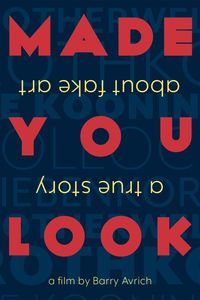
    (On TV, April 2020) My knowledge of visual art is pitiful, but I’m always enthralled with books, articles and documentaries about the modern art world. While Made You Look: A True Story About Fake Art focuses on the Art fraud scandal that led to the closure of New York City’s venerable Knoedler art gallery, it’s also a lens through which we can gauge the dynamics and the insanity of the contemporary art world, where fakes may be so rampant that people choose not to ask too many questions. Meticulously, director Barry Avrich introduces what we need to know in order to understand this incredible story, then carefully allows talking heads to explain and comment on the multi-year fraud, all the way from a talented Chinese forger to unethical middlemen to celebrated dealer Ann Freedman, who convinced herself that what was too good to be true… was, in fact, not true. It’s quite a feat to describe all of this in scarcely more than 90 minutes, but Made you Look also wants to explain what happened, bringing in an expert on confidence games to explain how these outlandish schemes work from a psychological viewpoint. There’s even some fun to be had, as two heavyweight art figures start contradicting themselves in separate interviews, edited rapid-fire. I strongly suspect that much of my fascination with art forgeries is pure schadenfreude at seeing so-called smart and rich (never forget the rich) people being fooled like rubes—greed is not specific to lower classes, explicitly says the film. It also doesn’t help that art investment is, frankly, a status symbol that is almost entirely incomprehensible to IKEA-is-good-enough rubes like me. Experts being fooled, institutions being brought down, people fired—if you’re looking for a happy ending here, there’s little to be found: nearly everyone who was forging and misrepresenting has fled the United States, were indicted, or had lawsuits brought against them. Stepping away from the story a bit, it’s striking that it is, again, is an indictment of untruth in the information age—as with so many other things, people lying and getting rewarded for it at a time where we expect much better. As for the conclusion of Made You Look—of course the guilty rich go free and unpunished.

  • The Human Factor (1979)

    The Human Factor (1979)

    (On Cable TV, April 2020) Maybe you want to watch director Otto Preminger’s last film. Maybe you’re interested in a quasi-domestic British film about the mundanity of espionage. Maybe you want to gawk as a young Iman (and who wouldn’t?) In any case, your path has led you to The Human Factor. It starts on a surprisingly dull note, with subtle British spycraft jargon, side glances, cryptic language, elliptical dialogue and a dark outlook on national betrayal—everything is beige and boring even during the colourful strip club sequence in which Preminger gets to show nudity after spending so many films wishing he could. It all feels like substandard Le Carré, his cerebral style being unusually susceptible to bad adaptations. At least there’s Iman: She looks terrific, of course, and while she’s not a gifted actress, this is probably the best performance she’s ever given. The Human Factor, as it develops and improves, belongs to the subtle low-key school of murky British counterespionage, which may not be to everyone’s taste—certainly, when compared to much better examples of the form, this one feels lifeless and far too long for its own good despite being adapted by Tom Stoppard from a Graham Greene novel. Non-Iman actors are quite good, though, what with David Attenborough, Nicol Williamson and Derek Jacobi. The third act gets slightly better as it heads to Africa via flashbacks, to tackle issues of apartheid and interracial relationships in a more vital fashion. After idling for most of its duration, The Human Factor eventually, finally, builds up to a decent conclusion. It’s a bit too late, you’ll say, and I’ll agree—Some serious retooling would be required to make this a more interesting film, but Preminger did not succeed with this one.

  • The Killer Shrews (1959)

    The Killer Shrews (1959)

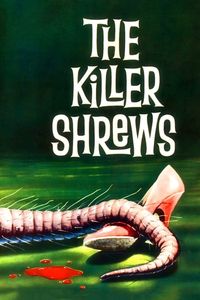
    (On Cable TV, April 2020) From The Killer Shrews’ first few bombastic moments, we’re clearly in 1950s B-grade horror movie land. There’s an interesting story behind the film, as it began as a small-scale independent regional production that was eventually distributed nationwide—and then revived by “Mystery Science Theater 3000” in the 1990s. That last fact, however, may prove more salient to modern audiences—it’s just not a good movie. Much of the first hour is spent managing the film’s budget by featuring lengthy dialogue in a living room, while the special effects were terrible even by 1959 standard. Still, it’s a time capsule of 1950s monster movies, and those are more exemplary the worse they are. The Killer Shrews is not good, but it’s not as terrible as it could have been either.

  • God Told Me To (1976)

    God Told Me To (1976)

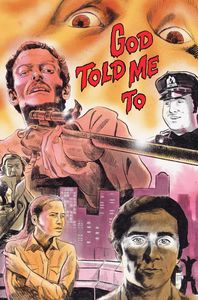
    (Criterion Streaming, April 2020) I’m several decades late coming to this conclusion, but in between Q, The Stuff, Maniac Cop, the Phone Booth/Cellular story diptych and now God Told Me To, Larry Cohen was a really interesting story teller. Not the smoothest, not the most accomplished and not really the one who was best served by directors (even when he was himself directing), but they all have something unusual and often interesting to say. God Told Me To does begin with what seems to be an intriguing but familiar premise: several strangers going on mass murder sprees, ultimately claiming as a motive that “God told me to.” As our cop protagonist investigates, things initially seem to point toward the kind of religious horror film that we’ve seen before. But then there’s the last half-hour of the film, which goes in an entirely different direction (albeit one foreshadowed by the prologue) to deliver something a bit scattered, a bit unsatisfying but so wild and crazy that no other movie since then had dared replicate. (Well, except maybe in the X-Files’ salsa blend of tropes.) I’m not going to claim that God Told Me To is good—but it’s certainly intriguing, engaging and then crazy enough to be memorable. I did like Tony Lo Bianco’s performance in the lead role, even though any actor would be driven crazy by the script’s wild turn toward the end. There’s a convincing argument to be made that Gold Told Me To best plays as a series of strong scenes not very gracefully being held by a mad collage of contradictory ideas, but compared to a lot of downbeat SF movies of the 1970s, it still holds up as being more than the usual clichés.

  • Area 51 (2015)

    Area 51 (2015)

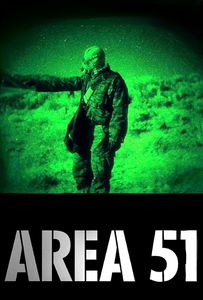
    (In French, On Cable TV, April 2020) Five years later, the only thing anyone remembers about Area 51 is that it was writer-director Oren Peli’s underwhelming follow-up to the Paranormal Activity series. After four years on the shelves (as per the final credit card clearly stating that the film has a 2011 copyright notice), Area 51 got scathing notices, dismal box-office results and no cultural impact whatsoever, landing Peli in the so-called director’s jail from which he hasn’t emerged. (Don’t cry for him—he’s making bank out of producing endless Paranormal Activity and Insidious sequels.) It has a promise that could have been interesting, as it follows a few young conspiracy theorists as they infiltrate… you’ll never guess it… Area 51. Alas, it’s all executed found-footage-style, which sounds even worse now than in 2015. The best kinds of found-footage horror movies use the form to heighten the realism of a story, but in this case, it only serves in making it seem much smaller and contrived. It doesn’t help that Area 51 merely riffs off the usual clichés of found footage and alien abductions all the way to a trite ending, not making much out of its science-fictional setting. The characters are annoying and the sets are so dark that you wonder how it’s supposed to be real. Accordingly, it’s hard to care even in what the film intends to showcase as its big moments. Some of Area 51’s concepts are good, but the execution simply irritates more than it succeeds. No wonder everyone forgot about it.