Month: April 2020

  • The Eyes of Orson Welles (2018)

    The Eyes of Orson Welles (2018)

    (On Cable TV, April 2020) I’m usually a good audience for documentaries, but The Eyes of Orson Welles lost me along the way. In theory, the idea of exploring Orson Welles through his private art (drawings, sketches, paintings) is intriguing—but then writer-director Mark Cousins takes a very stylized approach to the topic by narrating the film as if to Orson, penning thoughts and wrapping up movie excerpts, location footage, an interview with one of Welles’s daughters, and so on. I will defend that choice on novelty alone, but it is intrusive and showy to an unusual degree. As a film-length musing on a beloved subject, it’s immensely detailed: Cousins weaves in and out a dizzying number of very pointed comments about Welles’s life that clearly show his understanding of his topic. But while I can appreciate the intent, I had a surprising amount of difficulty in remaining interested. (Lack of closed captions on a noticeable Irish accent did not help.) It gets wilder: Cousins wraps a critique of his own work by having Welles (via impersonator) answer back at the end of the film. By that point, though, I was pining for dull and boring objective documentary rather than what The Eyes of Orson Welles ended up becoming. A disappointment, then, although I suppose that some will like it more than I did.
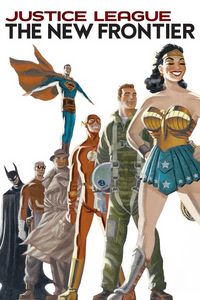
  • Justice League: The New Frontier (2008)

    Justice League: The New Frontier (2008)

    (On Cable TV, April 2020) One of the most interesting things about the creative freedom allowed to the DC Animated Movie Universe are the occasional leaps into alternate realities that play with familiar characters. In Justice League: The New Frontier, the film adapts the classic Darwyn Cooke run of the Justice League being credibly transposed in the 1950s. It’s not unpleasant to watch, but it’s familiar, rushed and busy. While I’m not that big of a DC comics fan, I do have a nice slip-cased edition of The New Frontier (Why? Because of how Cooke draws his women characters, that’s why) and I’m slightly disappointed by the adaptation. It can’t quite play by the same codes of the original, nor sustain Cooke’s very distinctive visual style. But worse is how The New Frontier tries to condense a silver-age-style story into a far-too-fast 75 minutes focused on plot. This is a film that could have used 15 more minutes of atmosphere and character development in order to let the plot breathe and the 1950s styling make more of an impact. One word of warning to casual fans: the pace at which the film goes means that it does assume a lot of knowledge about the characters: that works for some of the more familiar ones, but not so much for the niche characters. In the end, well, The New Frontier is serviceable but not particularly satisfying, and a significant step down from the comics run itself.

  • It’s Always Fair Weather (1955)

    It’s Always Fair Weather (1955)

    (On Cable TV, April 2020) A very strong selling point for It’s Always Fair Weather is that it reunites a good number of people who worked on Singin’ in the Rain: Director Stanley Donen, choreographer-star Gene Kelly, dancer-actress Cyd Charisse, and so on—this was, after all, one of the “Freed Unit” musicals handled with impeccable craftsmanship by people who knew what they were doing. The lineage from Singin’ in the Rain to The Band Wagon to It’s Always Fair Weather is not only obvious—it’s playful and very much self-aware. There is a lot to like here: Many distinctive musical numbers (trashcan tap-dancing, roller-skate tap sequence, boxing-ring serenade), innovative filmmaking (decade-passing montage, triple-split screen), some cultural commentary (poking at the advertising culture of TV, with a live-confession climax that must have felt far more innovative back then), clever musical touches (such as the brilliant use of Blue Danube as an internal musical number) and a far more wistful tone than you’d expect from a 1950s movie musical. Plus, well, there’s Cyd Charisse—her green dress is wonderful, her first long scene in a taxi is a delight, and those are only two of the reasons why she gets here one of her most substantial roles—singing, dancing, comedy and romance, almost as much as in Silk Stockings. It’s not exactly perfect—the missed opportunity to make this a sequel to On the Town still rankles—but sometimes, even its flaws are endearing. The wolf-whistling bit, for instance, is awful by today’s standards, but it’s so dated, so overdone (and kind of cute) that it becomes hilarious. The 1950s were a very strong decade for musicals, and the production history of It’s Always Fair Weather suggests that this was the beginning of the end of an era at MGM, with slashed budgets and less interest in the result. No matter—I’m ranking this film high on my list of top 1950s musicals, and if it signals the end of an incredible streak, then it’s a pretty high note on which to go out.

  • Marked for Death (1990)

    Marked for Death (1990)

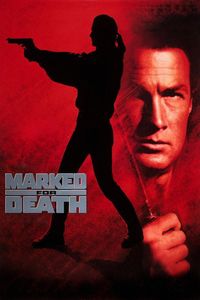
    (On TV, April 2020) In his third movie Marked for Death, Steven Seagal takes on Jamaican drug dealers because, hey, the endless body count has to come from somewhere, right? Dating from the time when Seagal’s films were still professionally made and theatrically released, this is still a somewhat average circa-1990 B-movie action thriller: don’t get your hopes when people will tell you that “it’s better than average Seagal” because the floor on those movies as a whole is incredibly low. Considering that the film takes on Jamaican voodoo-dealing criminal gangs shooting up an all-American city, it’s about as stereotypical as you can imagine, and occasionally even more so. Seagal eventually takes the fight back to the entire island of Jamaica for good measure. The Seagal persona is almost, but not completely solidified at this point of his career—although, amusingly, there’s a point when he gets in a tight spot and is still slim enough to slip through. It’s not all boring, but the rewards are rare and slight—the decent car chase midway through is notable largely because it’s a break from Seagal stone-facing his way through endless fights.

  • Just Before Dawn (1981)

    Just Before Dawn (1981)

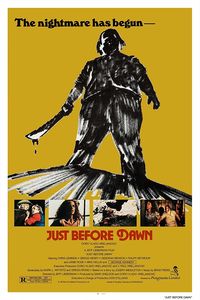
    (In French, On Cable TV, April 2020) The only thing worth noting about run-of-the-mill slasher Just Before Dawn is the location—set deep in a northwestern forest, it evokes feelings of folk horror more than urban (or summer camp-set) slasher films. But it’s still a kill-based slasher (no matter writer-director Jeff Lieberman’s protests) with an ever-dwindling cast until the Final Girl does her thing. Whatever ambitions or distinctions it may have held are lost in an absolutely undistinguished morass of 1980s slasher ennui. Not even Jamie Rose as a cute redhead can make it better. Frankly, Just Before Dawn is a pain to get through, and not solely because it’s so similar to other movies in the subgenre.

  • Harold and Lillian: A Hollywood Love Story (2015)

    Harold and Lillian: A Hollywood Love Story (2015)

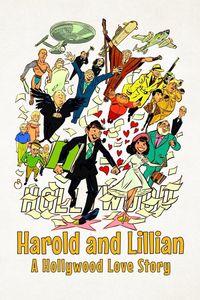
    (On Cable TV, April 2020) The best documentaries are not always about obvious topics, and so the oddly endearing Harold and Lillian: A Hollywood Love Story gives us a glimpse at a couple that occupied two crucial but little-known positions in the studio system. Lillian Michelson was a film researcher, providing archival material and answering questions that enhanced the reality that the film wanted to recreate. Meanwhile, Harold Michelson was a storyboard artist, working with great directors to also bring to life the vision behind several well-known films. Together, they married, worked, raised kids and celebrated (at the time of the film) sixty years of marriage. The blend between Hollywood nitty-gritty detail and romance strengthens both aspects of the film. What’s remarkable here is that, through the Michelsons, we’re not looking at famous directors or actors, but at the crucial behind-the-scenes work required for a team to make a movie. Hollywood history may only remember the names above the marquee, but it rests on the competence and professionalism of thousands of capable craftsmen and artists who helped enable the collaborative nature of moviemaking. In many ways, the film goes about its business like most others—archival footage, interviews with known names, and so on. But it’s the topic that distinguishes Harol and Lillian from other documentaries—such as using very cute storyboard drawings to illustrate the couple’s married life. Looking at storyboards both validates and questions the singular vision of a director—the reality of it isn’t quite so clear-cut as the director coming up with every single detail. Along the way, we get insights into Hitchcock’s process in making The Birds, and a look at The Graduate that outlines the fidelity of the storyboard to the finished him. Appropriately enough for its two stars, the film is frequently very funny, heartwarming and also a bit wistful in contemplating a pair of careers that spanned the end of the studio system into the new Hollywood and beyond. Harold and Lillian is not what I’d call an essential film, but it’s clearly something that will make Hollywood history fans happy.

  • Bulletproof (1996)

    Bulletproof (1996)

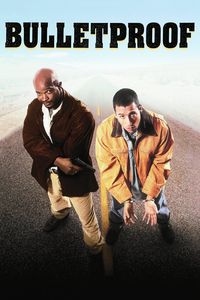
    (On TV, April 2020) In Adam Sandler’s career, Bulletproof still stands away from his comfort zone—sure, it’s a comedy, but it’s also an attempt to melt Sandler’s comic sensibilities with an action movie and the result is closer to a comedy incompetently attempting action than a true hybrid. There are clear signs nearly everywhere that the production did not have the means to execute its ambitions—action, people and dialogue don’t always match, exposing significant production shortcomings. Young Sandler does have some charm, but most of the film can feel like a contest to see just how abrasive Sandler could be. While Damon Wayans occasionally acts as a foil, there’s a limit to just how he and James Caan (playing his usual brand of heavy) can restrain him. Shorter than I expected at 90 minutes, this buddy comedy with antagonistic leads is mildly amusing, which is just about what it was aiming for. Soundtrack trivia: I found Bulletproof’s main theme using cues that sounded distractingly like the Red Hot Chili Pepper’s “Rollercoaster”… is it just me?

  • Tiny Shoulders: Rethinking Barbie (2018)

    Tiny Shoulders: Rethinking Barbie (2018)

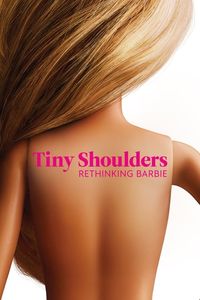
    (On TV, April 2020) The title of Tiny Shoulders: Rethinking Barbie says it all. At first glance, it’s a documentary about the Barbie doll and how successful it was—a somewhat commonplace approach for hagiography. At second glance, it’s also a documentary that acknowledges the negative messages carried by the Barbie archetype of unnaturally tall and curvy blondes. Which leads to a third glance that wrestles with complex questions of cultural influence, influence and representation. As the title says, are we simply placing too much weight on a plastic doll’s shoulders by making it stand for everything that’s wrong about cultural sexism? The documentary does get candid access to the Barbie creative team at a crucial junction in the doll’s history (trying to remake its image after a sales slowdown), and that does open it up to suspicions of being a corporatist hagiography. The discussion is often framed as Barbie creators reacting to criticism, but Tiny Shoulders does work best at showing how everyone, from the documentarian to the self-reflective interviewees and the Barbie creators themselves, has fully absorbed the debate about Barbie—this is a modern documentary that’s aware of the state of the discussion about its topic. The result is quite up-to-date, and the titular tiny shoulders are revealed as being those of the very humanized self-doubting women (and a few men) entrusted with Barbie’s future. The result is not a puff piece, not an anti-Barbie piece, but somewhere in the informed, nuanced, slightly-sympathetic middle. In the trenches with the Barbie staff, a war-room sequence takes us in the trenches of media response to the relaunch of different Barbie body types in 2014ish, complete with last-minute stress prior to launch. (Among other virtues, Tiny Shoulders will warm the heart of anyone who’s ever been involved in a long-term project.) Alas, the follow-up story to this film is murkier—the curvy dolls earned a huge amount of media attention upon release, but have since then been largely sidelined in favour of a return to the basic body type… even if more diversity has remained. (According to the latest results, Barbie sales have rebounded, plateauing from 2015 to 2017, and increasing from 2017 to 2019… right as the new Barbies body types gave way to a return to form.) Still, Tiny Shoulders offers a revelatory look inside the management of brands at an era where a slight misstep can threaten a multi-generational brand. It’s not necessarily just for Barbie fans.

  • The Stratton Story (1949)

    The Stratton Story (1949)

    (On Cable TV, April 2020) I must be overdosing on James Stewart’s movies, because there’s an impression of heavy déjà vu that hangs over the entire length of The Stratton Story and never quite goes away. Stewart as a baseball player? Yup, seen that before. Stewart in a biopic? Seen that before. Stewart playing loving couple with June Allyson? I certainly saw that already. The duality of Stewart is that he can do no wrong playing a humble likable character hailing from the heartland. Yet, at the same time, he never becomes anything else but James Stewart—he doesn’t disappear in the character as much as he makes the character him. This is fun to watch if you’re a fan of the actor, but the problem is that he forces the production to become “a Jimmy Stewart film.” Which may be for the best, given that The Stratton Story is otherwise a by-the-numbers biopic in the classical Hollywood mould, full of homegrown wisdom, conflicts between the family farm and the baseball field, terrible odds to overcome and a comeback hailed as a triumph. It’s easy to watch… but maybe harder to respect.

  • Step Up All In (2014)

    Step Up All In (2014)

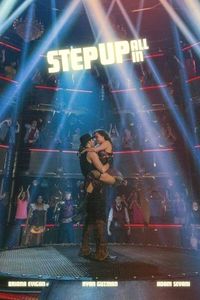
    (On Cable TV, April 2020) If I’m an unlikely fan of the Step Up series, it’s because it’s the closest that twenty-first century Hollywood (so far) has come to a series of Classic-Hollywood dance musicals. From a somewhat dull and unpromising first instalment, the series has grown into a modern showcase for dancing and spectacular choreography. Sixth instalment Step Up All In isn’t particularly interesting from a plot perspective (dance contest in Las Vegas, blablabla) but that’s not why we’re watching the film—this is about the dances, the numbers, the choreography, maybe even the recurring characters a little. (Moose definitely levelled up by growing up!) This final instalment wisely chooses to bring back as many characters from previous films as it can, which ends up giving a nice send-off to the series. Vegas makes for an exuberant backdrop to the action, and the money has clearly been spent in the lavish choreography of the dance numbers—and the soundtrack’s pretty good too. While I’m an easy audience for this film, Step Up All In is almost pure fun—and I really should make an effort to see the few instalments of the series I haven’t yet seen.

  • The Narrow Margin (1952)

    The Narrow Margin (1952)

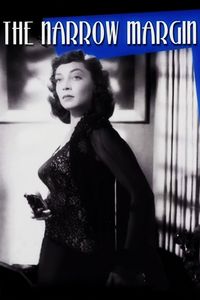
    (On Cable TV, April 2020) At 71 minutes, film noir The Narrow Margin doesn’t have a whole lot of fat on its muscled thrills. While it takes some of the archetypes of the genre (the widow of a dead criminal making her way across the country to testify at a major trial… also known as just another day in film noir world), it remixes these familiar elements with the romance of cross-country train rides—especially for twenty-first century audiences. While efficient, The Narrow Margin does take its time to build the strands of plot required for its blend of drama, romance, suspense and action. The oppressive claustrophobia of the train setting is used quite well, and there’s a bit of style in the way handheld shots are used to elevate a fight sequence—director Richard Fleischer would go on to direct some far more famous movies. A third-act twist feels surprising and arguably makes some of the late narrative feel hollow. Still, the best part of the film may be Marie Windsor, looking quite attractive in a very unusual, almost Ida Lupino-esque way. But she’s only one of the highlights in a taut, capable thriller that punches far above its weight in twists and turns and good moments.

  • 3 Men and a Little Lady (1990)

    3 Men and a Little Lady (1990)

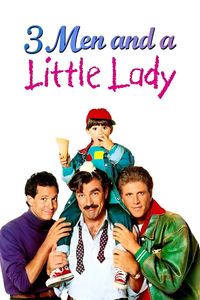
    (In French, On Cable TV, April 2020) If you’ve seen 3 Men and a Baby, get ready for the contrived sequel 3 Men and a Little Lady—a big gloppy 1990s-vintage comedy that barely cares about how ludicrous it is. Despite a capable cast, the film suffers from a bad case of sequelitis in which everything is bigger, crazier and yet less interesting than this original. In this case, our three titular men are shocked out of their poly-conjugal arrangement when the mother of the little lady abruptly announces that she’s getting married and moving to England. (Don’t ask why. A sequel is why.) Contrivances piled upon contrivances are this script’s idea of plotting, and there’s no other choice than to ride along until the predictable ending. Nothing in this film feels real, from the absurdly manipulated situations all the way to a marriage that piles clichés on top of another. This is not necessarily a bad thing as long as we know what we’re in for: A script that milks all potential jokes out of a situation before moving on to the next one. While 3 Men and a Little Lady hasn’t necessarily appreciated much in the past thirty years, it does feature some performances from actors whose star power has considerably dimmed since then. Tom Selleck does get a good role, Ted Danson hams it up in a variety of costumes and roles, while Steve Guttenberg doesn’t get much to do… and circa-1990 Fiona Shaw gets insistently coded as unattractive, which is very much up for debate for anyone away from Hollywood. Still, the film is generally watchable, even if it loses a bit of its way in the England-set second half and its madcap wedding comedy antics. But then again—afflicted with such a severe outbreak of sequeltis, where else could it go?

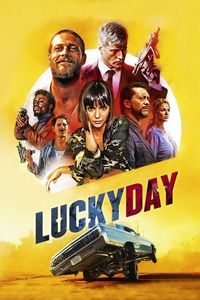
  • Lucky Day (2019)

    Lucky Day (2019)

    (On Cable TV, April 2020) While it’s far too early to call curtains on writer-director Roger Avary’s career, the first quarter-century of it has shown a filmmaker with interesting ideas that couldn’t quite get them properly expressed… and that’s in addition to a tumultuous personal life that saw him go to prison for vehicular manslaughter under the influence. Somewhat on-the-nose, his first film after his prison sentence is Lucky Day, which begins with the protagonist… getting out of prison. Said to be a belated sequel to Killing Zoe, the film quickly becomes its own thing—an action-comedy very much in the style of the 1990s wave of black criminal comedies that Avary himself pioneered by co-writing Pulp Fiction. The film is directed with some stylish glee, and Crispin Glover’s delightfully unhinged performance as a fake-French assassin can go a long way in sustaining interest in the film. But as much as my fondness for Tarantinoesque (or should that be Avaryesque?) black crime comedies grows stronger now that they’re not making nearly as many of them as they used to, even I felt that Lucky Day quickly became annoying. It certainly does itself no favour through its constant excessive violence against innocent characters, starting with a cute supporting actress shoved aside for the sake of a bad joke. But it gets worse moments later with cheap CGI gore, and again later, as what could have been a good action showcase in an art gallery becomes a repulsively violent sequence. Coupled with the film’s cartoonish humour, it demonstrates an immaturity and an inability to keep a consistent tone. If you’re looking for the ways in which Lucky Day is a clear step down from Pulp Fiction, it’s this kind of juvenile insistence than an R-rating is inherently better than more broadly accessible fare: you can be funny and rough and dark without disgusting audiences. Glover’s performance is pretty good (it had been a while since we’d seen him in this much crazy glory) but the rest of Lucky Day is dull when it’s not actively repulsive. This being a Canada-France co-production may explain the unusually high amount of French dialogue (most of it obviously not spoken by native or fluent speakers).

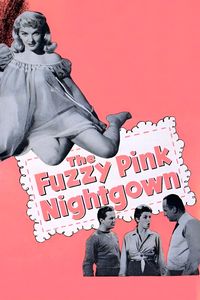
  • The Fuzzy Pink Nightgown (1957)

    The Fuzzy Pink Nightgown (1957)

    (On Cable TV, April 2020) No matter what you think about the rest of the film, The Fuzzy Pink Nightgown at a title, is wonderful. The premise (a movie star is kidnapped—except everyone thinks it’s a publicity stunt for her next movie in which she plays a kidnapped woman; she falls for the kidnapper) is fine. Jane Russell is more than fine. But the film itself isn’t. Oh, it’s still relatively amusing, and I suspect that time had been kind to it by sheer virtue or encapsulating a late-Golden-age snapshot of Hollywood. Leaden, even at less than 90 minutes, this comedy runs out of steam early on and the dialogue isn’t strong enough to sustain the repetitiveness of the premise. Despite a few funny scenes and moments (the opening is particularly strong and makes the rest of the picture look poorer in comparison), the entire thing feels more laborious than it should – it’s clearly a misfire for director Norman Taurog, otherwise known for much better pictures. Russell has the panache of a movie star, but her co-star Ralph Meeker is not always up to the role as a lovable rogue. (Lovable, fine; rogue, not. ) It doesn’t help that, by being in black-and-white by the late 1950s, The Fuzzy Pink Nightgown sends mixed signals: It’s not the kind of serious drama that was shot in black-and-white at the time, and it doesn’t feel like the kind of 1940s movies it looks like. Still, I had a decent-enough time watching it—although I’m a good game for any film in which Hollywood looks at itself. Despite the dubiousness of a captive falling for her captor, this is the kind of less-than-successful film that could use a remake—I can just imagine studio executives deciding not to pay a star’s ransom based on social media feedback.

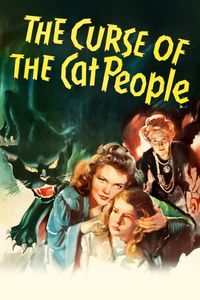
  • The Curse of the Cat People (1944)

    The Curse of the Cat People (1944)

    (On Cable TV, April 2020) You’re more than free to hail Val Lewton for his work on the still-superb Cat People, but there’s a very good argument to be made that The Curse of the Cat People is equally interesting as a showcase of his unusually sophisticated sensibilities. Billed and marketed as a follow-up to the first film, this film doesn’t settle for mere sequel rehash—it becomes an unusually heartfelt mediation on a young girl’s loneliness, executed as an ethereal ghost story. While the end result isn’t perfect (much of it due to studio meddling, this not being what they expected), it’s considerably more impressive than most of the run-of-the-mill horror movies of that time. Horror as seen from the perspective of a child is a special mixture—and one carried even today by filmmakers such as Guillermo de Toro. The Curse of the Cat People is an early example of what is possible with the horror genre as soon as you don’t focus on the scares at the expense of having something to say. Surprisingly sophisticated… unless you’re a Lewton fan, in which case it’s exactly as expected.