Month: April 2021

  • Night of the Hunter (1991)

    Night of the Hunter (1991)

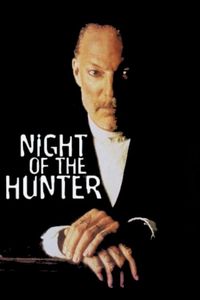
    (In French, On Cable TV, April 2021) It’s really not fair to compare a mediocre made-for-TV remake to an all-time classic, but it can be instructive. 1955’s Night of the Hunter, for classic movie fans, is the case example of how a film can be a commercial disaster upon release, only to become an acclaimed masterpiece later on, with the added tragedy that the commercial failure was so severe, and the recognition so late in coming, that the director (legendary actor Charles Laughton) never made a second movie. Even today, the original Night of the Hunter’s sense of style remains an exceptional example of film noir blended with eerie fairy-tale surrealism, the likes of which we wouldn’t see in cinema for quite a while. Considering that the other main asset of Night of the Hunter are the memorable performances of Robert Mitchum, Lillian Gish and Shelley Winters, it’s a lightning-in-a-bottle kind of film that requires a high bar for a remake — you’d have to find a gifted director and just as memorable performers and even then, the result would be unlikely to strike the same extraordinary combination. That’s why I’m ghoulishly fascinated by the thought process that went into authorizing a remake as a made-for-TV low-budget production with flat aesthetics, a director (David Greene) almost exclusively known as a TV-movie specialist, and a lead actor (Richard Chamberlain) who was past his prime at the time. How else could it have turned out but a humdrum suspense drama, perfunctorily shot and largely disposable? Almost custom-designed to be unfavourably compared to the original, this remake clearly fetishizes the original (as per the focus on the LOVE and HATE knuckle tattoos) but never even tries to strike its own way in exploiting the material — it’s undistinguishable from countless other bland TV movies striking exploitative notes (such as child endangerment) but without any of the additional charges that great acting and directorial flair could have brought to the result. Compare, contrast and despair.

  • Wake Wood (2009)

    Wake Wood (2009)

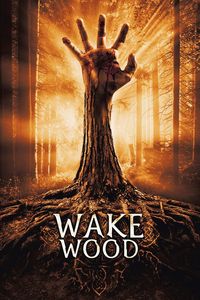
    (In French, On Cable TV, April 2021) What kind of grieving parents would be so stupid as to accept a pagan warlock’s offer to resurrect their daughter under some very specific rules… and then proceed to break those rules? Clearly, anyone dumb enough to have never seen any horror movie in their lives, no matter whether it’s Pet Semetery or any “deal with the devil” kind of thing. But the parents in Wake Wood haven’t and so they behave in ways that inevitably bring about the film’s gruesome and unforgiving third act. It’s all quite tiresome from a narrative standpoint, even though the execution is not that bad and at least there’s Aidan Gillen playing another morally compromised character, and Timothy Spall as the warlock. Still — it’s hard to care at all, and by the time the extra-sadistic ending rolls around, it comes with a free shrug. Wake Wood is the kind of film that may play very differently based on viewer indulgences toward well-worn premises with obvious complications and idiot-grade characters. Those who don’t mind that will find the result more acceptable than those who do.

  • Barb and Star Go to Vista Del Mar (2021)

    Barb and Star Go to Vista Del Mar (2021)

    (On Cable TV, April 2021) Despite the good reviews, I still wasn’t too sure what to expect from Barb and Star Go to Vista Del Mar: Featuring the acknowledged queen of awkward comedy Kristen Wiig, it starts with exactly the kind of one-note humour that passes for comedy these days: Two middle-aged women stuck in a small town with small hobbies and small ambitions. It’s very beige and reeks of Midwest gothic caricature. But keep paying attention, because the film shifts gears once its two heroines make it to Florida in an attempt to do something different for once — the initial impression left by the film is challenged by escalating moments of absurdity and ridiculousness. Suddenly, there are musical numbers, talking animals, triple-subversion plot developments and more silly comedy than we deserved. Even our Midwestern heroines get progressively more sympathetic as Barb and Star Go to Vista Del Mar advances. Cult favourite lounger singer Richard Cheese shows up a few times, the bright neon colours of the cinematography don’t go away (except when to make a comic point) and the film honestly gets a few laughs. Wiig and frequent collaborator Annie Mumolo make for an effective writing/producing/starring duo and the entire thing is simply a lot of fun. It’s the kind of comedy that eventually revs up to a joke-every-fifteen-second kind of rhythm, not really minding if it stays in a realistic, absurd or outright surreal comic register. Perhaps best of all is that the film is very, completely, exceptionally good-natured. The characters are chirpy, potentially difficult situations are defused with a laugh and even the villain gets a heaping, overwhelming dose of friendship to make everything all right. Barb and Star Go to Vista Del Mar is a bubbly, not particularly substantial movie, but it’s exactly what it needs to be.

  • The Pumpkin Eater (1964)

    The Pumpkin Eater (1964)

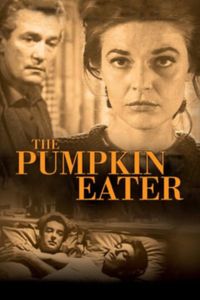
    (On Cable TV, April 2021) Terrible people generally make for more interesting movies than good dull people, but it’s a fine line in dosing the awfulness of characters and keeping audience sympathy. It’s especially challenging in films that don’t have much else going for them — neorealist black comedies like The Pumpkin Eater featuring a woman with a high-but-unspecified number of kids from three marriages wedded (for the third time) to a man juggling multiple affairs. The pacing is slow, the structure bounces back and forth in time, the epiphanies are small and the characters are more irritating than anything else. Fortunately, there are occasional moments to draw us back in. Cinephiles will have fun seeing James Mason in glasses and a moustache playing an utterly despicable character. Or seeing a young Maggie Smith play the homewrecker (even if the home was self-destructing anyway). Or the fight that triggers the third act. And then there’s Anne Bancroft, who got some critical attention at the film’s release for playing a terrible person, a woman with substantial mental health issues who has kids as a form of self-therapy and otherwise wanders aimlessly through the film. Oh, I’m aware that The Pumpkin Eater can be read on a few levels as a story of a woman forced into a role she did not want — but that hardly excuses the dull, bloodless way the film deals with its material and the almost innate revulsion these characters cause. They are terrible people—maybe not entirely through fault of their own, but they are terrible people. The film will probably be more interesting to those who like to witness self-contained character drama, abstracting notions of “likable” characters. For everyone else, though, The Pumpkin Eater may be a mixed bag.

  • Summer of ’42 (1971)

    Summer of ’42 (1971)

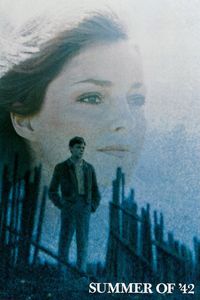
    (On Cable TV, April 2021) The subgenre in which Summer of ’42 takes place is a tricky one — the adult memoir, looking back upon a teenage coming-of-age episode. It can be universal and specific at once, relatable or dull depending on your own perspective. At times, Summer of ’42 feels like a prototype — an early example of something the baby boomer generation would later crank out by the dozens in the 1980s about the late-1960s, early-1970s period when they had their own awakening. Familiarity does dull the senses in this case — no matter how groundbreaking this sexually charged film could have been in 1971 (it was a substantial box-office and critical hit), it feels creaky and repetitive fifty years later. These are no longer the early days of New Hollywood, where franker depictions of suggestive material were changing the nature of cinema. In the 1980s alone, the “lads wanting to lose their virginity” subplot would become an entire genre, while more mature recollections of boyhood would impress in works such as Stand by Me. There’s also the aspect of a young man lusting after an older woman — try gender-flipping the roles and I’m not sure that the film would be so acclaimed these days (although 2009’s An Education comes to mind as a counter-example — I’m guessing that execution matters a lot). None of this makes Summer of ’42 a bad film. But it does make it a bit over-familiar, especially the condom-buying sequence that seems to have been copied everywhere in later years. While director Robert Mulligan one got there first, there have been many, many movies like it since. Although I suppose that the 1940s setting remains more original than a 1960s one.

  • This Land Is Mine (1943)

    This Land Is Mine (1943)

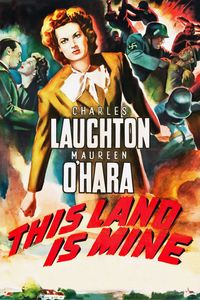
    (On Cable TV, April 2021) It took an exiled Frenchman to credibly portray the horrors of Nazi occupation to an American audience, and that’s why This Land is Mine still ranks today as one of the finest WW2 films made during WW2 itself. Narratively, it shows the Nazi occupation of France on a very personal level by focusing on a small town and some of its inhabitants. A great set of actors is up to the task — George Sanders as an informer, Maureen O’Hara as a teacher but especially Charles Laughton as a cowardly teacher who finds hidden reserves of courage under adversity. Clean directing from Jean Renoir and a striking script do the rest of the work. Renoir resists the temptation to get caricatural about both the French and the Nazis, and the result is something this lives on as something more than propaganda. The entire film works pretty well, but the ending is suitably poignant. This Land Is Mine remains a mild surprise and a great discovery.

  • Theodora Goes Wild (1936)

    Theodora Goes Wild (1936)

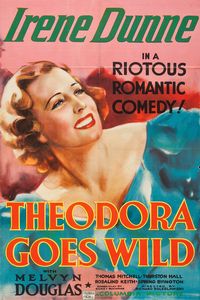
    (On Cable TV, April 2021) A slight but amusing comedy, Theodora Goes Wild introduces Irene Dunne to comedy, a field in which she’d encounter considerable success in the following years. The plot, rich in lies, half-trues and misunderstandings, has to do with a small-town Sunday School teacher who moonlights as the writer of a salacious novel that has all the town’s busybodies clutching their pearls. (There’s probably some commentary about the Hays Code in there.) The fun escalates once someone from Manhattan discovers her double identity and follows her back home to make her life difficult — especially when she has no other choice but to introduce the stranger as her gardener. The expected romance ensues, even when the action moves back to Manhattan for much of the third act. It’s all a bit silly, sometimes quite arbitrary, and Melvyn Douglas isn’t always the best as the male lead… but Dunne is quite good in an Oscar-nominated performance. If you’re looking for a better-than-average 1930s comedy with some good set-pieces and a solid lead performance, Theodora Goes Wild is a really good choice.

  • Always a Bridesmaid (2019)

    Always a Bridesmaid (2019)

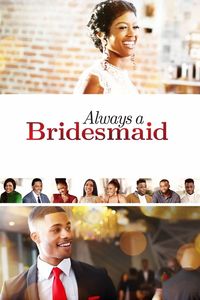
    (On TV, April 2021) This probably won’t reflect well on me, but I’m always game for a BET-broadcast romantic comedy if the heroine is cute, and I certainly got what I was looking for in Javicia Leslie as the lead actress in Always a Bridesmaid. You can probably write a good chunk of the script from the title alone: Perennially single female protagonist suddenly looking for love, with a few obstacles on the way. As such, the film plays to its strengths by focusing on its likable heroine — capable, kind-hearted, obviously popular with her friends but somehow not in a relationship. Her exploration of the contemporary dating scene is good for a funny montage, but she soon finds The One (Jordan Calloway, also likable) who will stick with her for the rest of the film, through temporary breakups and other artificial obstacles. The film sticks very close to its PG rating and it’s not a bad thing — it keeps the humour leashed to a family-friendly format. Always a Bridesmaid is innocuous, but innocuous is what I was looking for after a recent diet of heavy Oscar-nominated dramas and terrible horror films — a nice romantic comedy with an attractive lead is exactly what was needed. I would, in other circumstances, have some reservations about the narrative decision taken along the way — the straightforward lack of romantic tension in knowing how (let alone if) the two leads would end up together, the awkward time skip at the very end of the film, the bland complications, the idiot characterization for what’s supported to be an intelligent character… but as with most romantic comedies, Always a Bridesmaid is much better in its details, subplots, moments and side conversations than it is in overall structure and plotting. I didn’t care much about its flaws, even as I was constantly mentally rewriting the script along the way — it’s sweet enough as it is, and Leslie has such a winning screen presence that I was happy enough with the results. As written by co-star Yvette Nicole Brown and directed by Trey Haley, Always a Bridesmaid is not a great or even a good movie, even focusing on the black-cast romantic comedy sub-sub genre that is BET’s bread-and-butter — but sometimes you don’t need good or great: you’re just happy with something average and pleasant.

  • Resistance (2020)

    Resistance (2020)

    (On Cable TV, April 2021) The only thing weirder that Jessie Eisenberg taking on the role of famed French mime Marcel Marceau in Resistance is the realization that Marceau was an active member of the French resistance and rescued kids along the way. It’s a premise that holds up reasonably well against the historical record (even if most of the specific events feel invented for dramatic purposes) even if, as viewers, we’re left to wonder if there’s any aspect of WW2 that has not yet been put on-screen by now. The centrepiece of the film is Eisenberg, who reportedly trained quite a while to be able to convincingly portray, well, the most famous mime in history. It may or may not be the best possible casting (there’s quite a bit of Eisenberg showing through — with the role fitting in his career-long interest in Jewish characters). The rest of the film feels like a generic WW2 film, set against nice European backdrops and juiced up with evil Nazis and heroic plot points. It’s reasonably entertaining even when we find ourselves sensing that Marceau’s real story is being hammered to fit a standard Hollywood formula. Ultimately, though, I expect Resistance to fade away, like very many very similar films about resistance against the Nazis — even after seeing the film, the mime angle pay works more like a punchline than an actual element of distinction.

  • Strike up the Band (1940)

    Strike up the Band (1940)

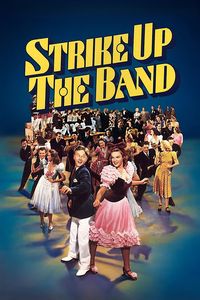
    (On Cable TV, April 2021) Fifth in a series of ten movies that paired Judy Garland with Mickey Rooney, Strike Up the Band uses the couple’s most frequent formula: a series of contrivances leading them to put on a show in order to save something or someone or other. Clearly patterned on Babes in Arms (same stars, same premise) but with a slightly bigger panache to wow the audiences, the film is clearly meant to be familiar to the audiences at the time. Early-1940s Garland and Rooney had plenty of youthful sparkle and the camaraderie that came from working together so often. The plot itself is bland, but some of the numbers are still well worth seeing: with Busby Berkeley at the helm, it’s no surprise if the lavish, complicated dance number “Do the La Conga” is the film’s highlight, with plenty of dancers moving to a catchy rhythm. (There’s also a fun number with instrument-playing fruits — and it’s announced by the opening credits.)  It’s an early production of the Arthur Freed unit that would go on to make many of MGM’s most celebrated musicals, so there’s clearly the spark (if not quite the polish) of later well-known productions. For film buffs, Strike Up the Band is a bridge between Garland/Rooney’s “Andy Hardy” teen movies and the musical super-productions she would later star in. It’s amiable enough to be worth a watch — and some of the numbers are memorable.

  • Sunrise at Campobello (1960)

    Sunrise at Campobello (1960)

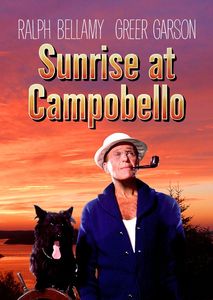
    (On Cable TV, April 2021) You can’t always predict your own reactions to a film, and my weirdly idiosyncratic hostility to Sunrise at Campobello proves it. On paper, it looks like the kind of inner-baseball political drama that I should enjoy — the origin story of future-President Franklin Delano Roosevelt, following his sudden paralysis. All of this is assorted with a look at his family, friends and political allies all the way to a triumphant podium appearance on his way to his nomination as presidential candidate. Considering that FDR ranks highly on my list of most admired presidents, I should have loved this. In practice, however, it only took a few minutes for the film to grate on my nerves. From the irritating tones of Greer Garson as Eleanor Roosevelt (another historical figure I admire in the abstract, but proves to be annoying in the flesh) to the self-satisfied family life of privileged white New England neo-aristocrats, Sunrise at Campobello started out on a very bad note that it never really recovered from. The artificial nature of circa-1960 filmmaking did not help, as this intimate drama feels stuck in this weird overblown Hollywood aesthetics it did not need. Oh, it’s not as if there’s nothing worth noticing in the rest of the film: Ralph Bellamy is fine as FDR, Hume Cronyn is a bit of a highlight as a sarcastic counsellor, the political shenanigans eventually take their place in the film, and the suspense builds up to a good conclusion. It does get better by the last act — even Greer’s characterization is meant to make her less grating. Historically, the film is also noteworthy for being more forthright than before about FDR’s medical condition, which was famously downplayed and unreported before and during his presidency. Still, I’m left curiously annoyed by the result — not being American is part of it (although, dear Americans, you really should elect people like FDR more often) but perhaps simply starting off on the wrong foot is enough. We all know how some films play differently from how they’re described on paper, and Sunrise at Campobello is a splendid example of it.

  • The Sandpiper (1965)

    The Sandpiper (1965)

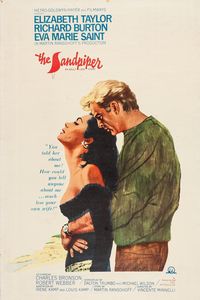
    (On Cable TV, April 2021) As far as I can determine, The Sandpiper is an average drama whose claim to fame comes from the on-screen romance between then-megastars Richard Burton and Elizabeth Taylor. As a drawing card, it’s not inconsiderable. They weren’t known as one of the most famous couples of the 1960s for no reason — both were sex symbols, box-office draws, and their union came from affairs leading to considerable tabloid gossip. They also co-starred in eleven films at various stages of their ten-plus-two years of marriage. The Sandpiper is the third of their pictures, the first one they shot as a married couple and very much focused on adultery — one can imagine how well that sold back then. Filmed in colour, largely on location in Big Sur, it features Burton as a strait-laced headmaster and Taylor as a free-spirited artist. You can guess where this is going, although the conclusion is suitably wistful. Decades later, and taking in the Taylor/Burton romance in its totality, there’s no denying that The Sandpiper has since lost much of the appeal it must have had at the time. We’re left with a well-executed romantic drama — nothing too exciting, but interesting in its own way for people who respond to such stories.

  • Castle Freak (1995)

    Castle Freak (1995)

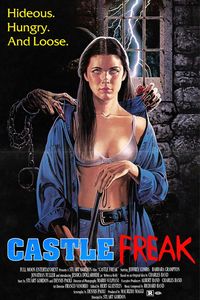
    (In French, On Cable TV, April 2021) The story behind Castle Freak is unlikely enough to be amazing: When cult-horror director Stuart (Reanimator) Gordon noticed a “Castle Freak” poster (for an unproduced film) in shlockmaster Charles Band’s office, he quickly negotiated a half-million-dollar budget and an agreement that the final result would contain both a castle and a freak. In return, he got what many filmmakers would kill for: complete creative control within those constraints. The result is, well, low-budget but not completely awful: As an American family moves to a castle they just inherited, they certainly don’t expect the murderous creature lurking in the dungeons. There are added layers of psychological and genealogical complexity in the final script, and while the result doesn’t fly particularly high, it is interesting more in a Stuart Gordon way than a Charles Band way. There’s clearly something there trying to escape the confines of its budget. Gordon stalwart Jeffrey Combs plays the male lead role, perhaps courting cult approval more than the film actually deserves. Castle Freak does have its share of obvious problems, including a far too gory scene that should have been toned down to fit with the rest of the film. There are lulls, needless complications, and a premise that arguably runs out of gas well before the film’s 95 minutes are up. Still, it’s not quite as bad as feared, largely due to Gordon’s attitude at managing even a micro-budget. Fun fact: the castle in which the film was shot was actually owned by Band himself. No, I don’t know how a low-budget horror producer can afford a castle. I suspect that’s another amazing story by itself.

  • A Perfect Plan (2020)

    A Perfect Plan (2020)

    (On Cable TV, April 2021) In discussing so-called bad movies, it’s often useful to distinguish the difference between the actual quality of the film and how strongly we feel about this lack of quality. The first factor can be surprisingly objective — you can perform the anatomy of a sequence and point out how it’s flatly directed, badly written, transparently badly acted or hampered by substandard technical means and decisions. In discussing A Perfect Plan, for instance, you’d feel obliged to talk about actors being unable to maximize the potential of their characters, the script that mishandles its own best ideas, the lackadaisical direction, the stilted dialogue, the weird structure, the plot contrivances, and so on and so on. But then there’s the subjective aspect of my reaction to those flaws, and the truth is that I still liked A Perfect Plan quite a bit. Shot in Hamilton, ON (!) and visibly hampered by a limited budget, it does have several flashes of fun peppered through it, as the script seems almost gleeful to play with genre elements, as Hamilton’s cinematic potential is presented, as the actors tackle well-worn genre archetypes and as the conclusion does everything it can to make sure we get a happy ending. It’s also a pure genre entertainment piece, unburdened by any overt attempt to tackle broader themes. (At a time when many low-budget Canadian films feel obliged to wave their identity credentials, this almost counts as refreshing.)  I think that writer-director Jesse Ikeman can do much better now that he’s got experience helming a film and being aware of his strengths — I’d certainly like to see A Perfect Plan’s energy applied to a better script and a bigger budget. It’s not that good of a film, but I liked it more than I expected.

  • Judy & Punch (2019)

    Judy & Punch (2019)

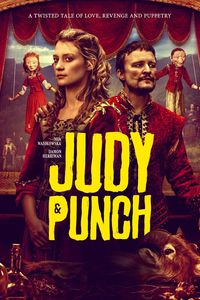
    (On Cable TV, April 2021) I wasn’t all that fond of writer-director Mirrah Foulkes’s Judy & Punch, and half of it has to do with ignorance, and the other half with mood. The ignorance part first: While I know the Punch & Judy puppet show is an integral part of mainstream Anglo-Saxon culture, I was never exposed to those at an impressionable age, nor did I find much to like when I was finally made aware of it. As a result, an entire film built on a feminist subversion of the puppet show conventions is largely lost on me. The other half of my lack of enthusiasm for the result is plainly a matter of mood — I simply wasn’t in a mood for black comedy featuring the death of a baby and the violent dismemberment of its antagonist by the protagonist. While there are nice odd touches of humour in the opening moments of Judy & Punch, I stopped caring shortly afterwards, and stopped liking not much later. Neither Mia Wasikowska nor Damon Herriman impress much in the lead roles. Some films are like that — no matter how well they’re made, they just don’t work on specific people at specific times.