Month: April 2021

  • Nomadland (2020)

    Nomadland (2020)

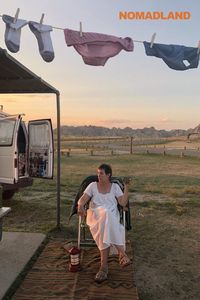
    (Disney Streaming, April 2021) Something very expected happened in the twenty-four hours between seeing Nomadland and writing this review — it won the Academy Award for the Best picture of 2020. Working from the theory that the Academy Awards are a gigantic Public Relation exercise in which Hollywood tells the world how it wants to be seen, it was an incredibly predictable win. In a year where the COVID-19 pandemic upended nearly everything about the movie industry, in which the number of major studio releases plummeted to nearly nothing, in which diversity became a rallying cry, in which economic anxiety peaked even more as millions of Americans slid into poverty, well — Nomadland seemed like a distillation of many, many things. A film (inspired by a growing trend) about a woman choosing to live in her van, going from one seasonal job to another, it seemed like a distillation of decades’ worth of gradual civilizational decline. Written and directed by Asian-American woman, visually composed to emphasize the widescreen aspect ratios of American landscapes, Dickensian in its depiction of people overcoming misery, Nomadland doesn’t just check off all the boxes — in such a miserable year, it seems almost tailored to make Academy voters think that this is the film that they want people to think about when they think about Hollywood. But now that we’ve explained why it won the Big Trophy, let’s get to the heart of the matter: it’s actually a good movie. Not the most enjoyable one, certainly not my own favourite of the nominees (currently a race between The Trial of the Chicago 7 and Mank), probably not a film that people will flock to over and over again, but a good film nonetheless. It is, admittedly, a slow burn. I wouldn’t blame anyone for overloading on the misery of the first half-hour, as our protagonist finds herself driven to a “houseless” lifestyle that would be intolerable to most viewers, as we’re once again reminded of the inhumanity of Amazon, as the cold blue winter cinematography makes everything feel so much worse. Things get a bit better as she starts making inroads in the nomadic community, getting tips and help about the lifestyle. As the film goes on, it becomes clearer that this rootless existence is a choice more than an obligation: she not only turns down two offers for a permanent residence, she starts taking in the freedom that comes with a moving dwelling, taking in the spectacle of America and finding her friends here and there. The film ends on a much better note than it began, and Frances McDormand’s performance is about as raw as the film can get close to documentary. The mixture of actors and non-actors playing “themselves” reinforces writer-director Chloé Zhao’s intention to avoid conventional filmmaking technique, something echoed in the script’s refusal to highlight pivotal moments and instead dwell in the spaces in between. It’s not a perfect film—characters have the grating tendency to explain themselves as if to a journalist, which is so very much not the protagonist—call it a holdover of adapting a non-fiction book. But even in its imperfect, often uncomfortable state, Nomadland (No mad land?) is a sobering reflection, hopefully not a portent, and a striking piece of cinema in its own right. It highlights something new, humanizes it and leaves us to consider the flip side of the situation. Yes, that’s the film that people will see when the open up those “Cinema in 2020” retrospective articles.

  • Bleed with Me (2020)

    Bleed with Me (2020)

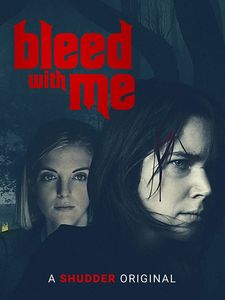
    (On Cable TV, April 2021) The same elements of a film can be interpreted very differently by various people. What’s meant as a slow-burn psychological horror with an ambiguous conclusion to some can be perceived by others as meandering pile in indecisive mumbling with no clear point. Bleed with Me certain courts that ambiguity — a low-budget horror film with three characters isolated in a cabin, it deliberately multiplies hints and suggestions that either the unreliable narrator is going crazy, or her friend is a blood-sucking vampire. Riding the Todorovian Express until the end, Bleed with Me isn’t doing itself any favours with low-end production values and a hazy directorial vision. The film’s elements are incredibly familiar, and the grimy execution adds very little interest to the proceedings. Some will probably like it a lot more than I did, but to me it exemplifies a kind of hellish indie-horror experience where nothing much happens even as writer/director Amelia Moses keeps trying to nudge us with “see? See? Aren’t you supposed to be spooked right now?” Alas, this is painfully trite stuff, and the film never has the guts to deliver a real finale. When an entire film takes place in unfocused dream logic, it can’t even go for a strong conclusion, because it just trained us to doubt anything it has to show us. Bleed with Me probably has a receptive public somewhere — but it’s not me.

  • Who You Know aka All About Who You Know (2019)

    Who You Know aka All About Who You Know (2019)

    (On Cable TV, April 2021) I’m an enthusiastic and forgiving audience when it comes to movies about writers, but—wow—was that stance stress-tested while viewing Who You Know, a film which attempts to be a showy self-aware take on screenwriting romantic clichés by featuring a protagonist who’s himself a smarmy smarter-than-thou screenwriter. Production values are toward the low end, even though the cinematography is usually decent and the directing is better than the writing. But this is a film that lives and more frequently dies by its script. Dialogue-heavy to an unusual extent, it describes the romance between a young screenwriter and the daughter of an Oscar-winning filmmaking legend: he initially wants to date her in order to get closer to her dad and use his influence to further his career but (stop me if you’ve heard this before — oh, right). Obviously, a screenwriter arranging for romance will be acutely aware of genre clichés and do whatever he can to not fall into them. Now, as someone who was (and still is, less frequently) that kind of smarmy smarter-than-thou person, it pains me to say that the protagonist is completely insufferable. Intolerable. Even worse given the miscasting of baby-faced high-schooler Dylan Everett in the role. For a film entirely focused on the character, that’s a major problem. No amount of bon mots can compensate for the charisma void at the core of the film, even though Niamh Wilson escapes unscathed through a much better portrayal of the female lead. But it’s not solely a matter of a bad protagonist: Who You Know is constantly, exhaustingly tugging at your sleeve, asking if you recognize how clever and smart and unique it is. Having been that person, I can tell you that the only way to deal with such a situation is to pat them on the back and tell them that they’re the cleverest, smartest and uniquest. So: Well done, writer/director Jake Horowitz, you are the cleverest, smartest and uniquest. Of course, you will deny viewers the closure of a happy ending — after all, that would not be clever, smart or unique. Of course, you’ll throw in the cleverest, smartest and uniquest dialogue you can find. Except by the time the female lead (who, not to put it subtly, is far more likable than the male lead) explains she’s been on to his entire scheme, we don’t care. By the time they break up, we not only agree, but wish he’d die in a freak self-immolation incident. By the time the picture wraps up, we’re just relieved. I usually want to be positive and enthusiastic about low-budget Canadian movies that rely on strong writing, but I’m going to make an exception for Who You Know.

  • The Prisoner of Zenda (1937)

    The Prisoner of Zenda (1937)

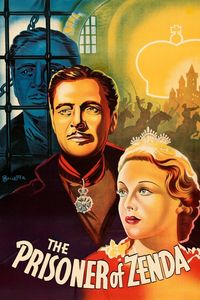
    (On Cable TV, April 2021) It’s really no accident if Anthony Hope’s Victorian adventure novel The Prisoner of Zenda was filmed two-and-a-half times: Once in 1937, a second time in a near shot-for-shot colour remake in 1952 (with James Mason) and again as one of the episodes in 1965’s The Great Race, although the pie-throwing bit in that last example was most definitely not in the original novel. It’s a very solid action-adventure romance hitting the full four-quadrant spectrum, what with an Englishmen being drawn, due to his close resemblance to the sovereign of another nation, into a web of romance, attempts to capture the throne and (crucially) impersonation of the incapacitated sovereign. It’s all quite good, and much of the fun in having several versions is in looking at the casting. Here, we do have an intriguing selection of 1930s stars, from Douglas Fairbanks Jr., Ronald Coleman, Mary Astor and a very young David Niven. The inclusion of romance and fencing ensures that the film will appeal broadly, and remains an enjoyable piece of entertainment today. It’s technically acceptable by the time’s standards, but it’s the story that carries it even today.

  • Pride of the Marines (1945)

    Pride of the Marines (1945)

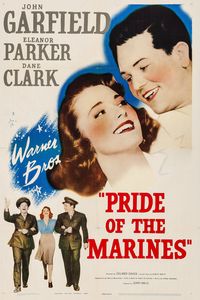
    (On Cable TV, April 2021) While the 1945 release date straddles the line, it’s not entirely true to call Pride of the Marines a post-WW2 film — it was conceived (from a biography), shot and released during the war. But in depicting the adaptation of a soldier blinded in battle and then brought home, there’s certainly a dramatic intent here that goes beyond the propaganda pictures of the war’s earlier years. It’s not quite to the level of The Best Years of our Lives, but there’s clearly an attempt to meld the war picture with an inspiring drama, even as the country was sobering up to the reality of disabled veterans coming back home at a time when victory seemed more certain than ever. The star of the film is John Garfield, whose performance carries the film from romantic innocent to depressed war wounded. Pride of the Marines is close to melodrama but not quite one, lending it a more absorbing quality than expected. It’s a more sobering war film than usual, but not a depressing one.

  • Pete Kelly’s Blues (1955)

    Pete Kelly’s Blues (1955)

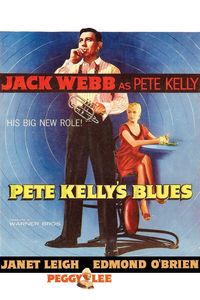
    (On Cable TV, April 2021) There’s a quirky mixture of musical comedy and gangster film at play in Pete Kelly’s Blues, which uses 1927 Kansas City as a backdrop for a tale of speakeasies, mob bosses, and a jazz house band trying to maintain its independence—and keep its cut of the earnings. The film itself is a bit bland and misguided — in setting up the band leader as this person going toe-to-toe with organized crime, the film can’t find an appropriate tone between comedy or thriller. Mechanically, people get murdered, the band leader fights back, the boss is brought down but the film never quite narratively sparks to life. The setting itself is intriguing but never more than perfunctorily rendered — a rather common problem in 1950s movies trying to portray earlier decades, almost as if Hollywood couldn’t shake the stylistic weight of that era. Fortunately, plotting isn’t the entire film — there’s quite a bit of music, and that’s when the film hits its stride. A highlight includes a performance from none other than Ella Fitzgerald, and other musical numbers (including a really good opening sequence) briefly revive interest in the film. As directed by (and starring) Jack Webb, Pete Kelly’s Blues is a bit of a missed opportunity and, frankly, not much of a movie for most audiences. But its odd mixture of sensibilities may be just effective enough for jazz fans or gangster movie buffs.

  • Period of Adjustment (1962)

    Period of Adjustment (1962)

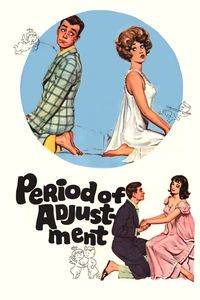
    (On Cable TV, April 2021) Tennessee Williams left quite a mark on American cinema of the 1950s–1960s, but one thing he wasn’t known for was comedy—his focus was more on hard-hitting dramas, gay subtext and explosive confrontations. (Even at his most bowdlerized, modern audiences can still watch films like Cat on a Hot Tin Roof and wonder, “Hey, is this character supposed to be…”)  While Period of Adjustment can’t very well be called an outright comedy with its focus on two couples having marital problems, it is considerably lighter than many other Williams adaptations. Featuring Jane Fonda and Jim Hutton, the story contrasts a newlywed couple with another with more mileage but different issues. It’s certainly atypical Williams — far looser and at least putatively funny. But even as a comedy, it’s a bit more serious than the norm, as it puts characters through a wringer they don’t especially appreciate (especially not in that typical-comedy fake annoyance way) before making it to the other end. On the other hand, there’s a happy ending and plenty of comic set-pieces, not to mention better-than-average dialogue for this kind of film and some interesting characterization in this tale of uncomfortable couples. Fonda is a southern doll here, which explains why this film is often mentioned as one of the ones that led her to stardom. The result is not exactly easy to classify — Period of Adjustment is not as intense as other Williams films, and it’s not as carefree as other romantic comedies of the era. But it’s got an interesting quality of its own, especially if (like me), you’ve started paying interest to Tennessee Williams through the films adapted from his work.

  • A Patch of Blue (1965)

    A Patch of Blue (1965)

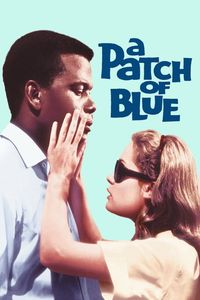
    (On Cable TV, April 2021) There’s a completely unsubtle romance at the core of A Patch of Blue — a literal illustration of “love is blind” in which a blind white girl falls for a black man. For 1965, this was courageous stuff, but what saves the film for modern audiences is the utterly likable performance from Sidney Poitier, who carries the film without missteps even at this early stage of his career. The cast around him is quite good as well—Elizabeth Hartman is suitably sympathetic as the blind girl, while Shelley Winters is striking as her incredibly unpleasant mother. The narrative isn’t much—and for all of its progressive intentions, the film isn’t allowed to go very far—but the acting is great and the individual scenes avoid hammering the already-unsubtle nature of the narrative. It doesn’t take much more than that to transform A Patch of Blue from what could have been an overbearing Oscar-baiting film into something quite watchable.

  • Pacific Liner (1939)

    Pacific Liner (1939)

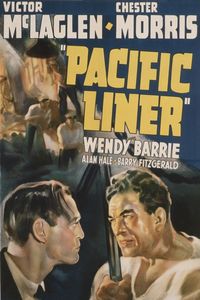
    (On Cable TV, April 2021) One of the things I like best about Classic Hollywood films is their depictions of things that, “thanks” to technology or economics, don’t exist anymore. A robust passenger train system with overnight berths. Bygone Manhattan elites enthusiastically indulging in their matrimonial shenanigans. Automats. Steam liners crossing the oceans. Much of this usually comes with a big, big dose of romanticism: I suspect that liner cruises from New York to Europe were seldom as charming as depicted. Pacific Liner is a welcome antidote to the romance of the high seas — much of it takes place in the boiler room of a luxury cruiser crossing the Pacific and dealing with a cholera outbreak. There’s a welcome shift of perspective away from the carefree lives of the passengers to the rough-and-gruff working men working below decks, especially as the epidemic rages on and working conditions become dangerous. (To say that this film has exceptional relevance in the middle of a COVID-19 pandemic in which minimum-salary workers are most exposed is understating things quite a bit.)  Victor McLaglen provides the film’s standout performance as a loud and tough engineer. Pacific Liner is a short 76-minute thriller, perhaps a bit too quick (one wonders if the upper decks could have provided a poignant counterpoint) but definitely refreshing. Amazingly enough, it’s significantly under-seen — but everyone who sees it will appreciate the unusual perspective it brings to familiar tropes and the no-nonsense pacing.

  • Volver a Morir [Wake up and Die] (2011)

    Volver a Morir [Wake up and Die] (2011)

    (In French, On Cable TV, April 2021) At this point, I’m not even complaining whenever I see another film riffing on closed time loops à la Groundhog Day: I now embrace the subgenre and actively seek out any new example I can find. Wake up and Die takes a very horror-centric approach to the idea: what if a woman woke up to another man, obviously after a one-night stand, only to be killed by him… and wake up in the same situation? Admittedly, this doesn’t make for a very lengthy time loop, so the initial interest of the film is in seeing how this can be stretched to fill a full feature-length film. There is, to be fair, some distinctiveness to the result: The film doesn’t mess around in terms of violence (she’s killed three times in the first fifteen minutes) nor sex and nudity, as the film’s two sole actors spend much of the time nude and/or having sex. Writer-director Miguel Urrutia goes for style in an attempt to keep things visually interesting, and there’s something to be said for a made-in-Colombia film (I would have a really hard time even telling you about another Colombian film.). Unfortunately, being distinctive is not quite the same thing as being good, and once the novelty of the concept wears off, the film seems to have trouble deciding where to go, especially in resolving the inherently exploitative starting point. This arguably could have been better as an anthology segment than a full-length film, especially with the ending that it ends up choosing, not quite as good as the premise. The stylish approach is often more showy than evocative, and the film’s arthouse sympathies are not always in-line with what would best suit a strong narrative. While it’s true that I’d rather settle for imperfect distinction rather than dull mediocrity, there’s something missing from Wake up and Die that prevents it from being as good as it could have been.

  • Hell’s Angels (1930)

    Hell’s Angels (1930)

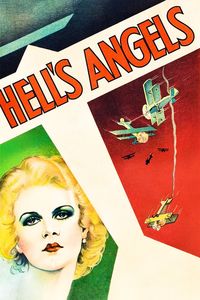
    (On Cable TV, April 2021) For movie buffs and viewers of Martin Scorsese’s The Aviator, his 1930 war epic Hell’s Angels doesn’t need much introduction: It was Howard Hughes’ ambitious fusion of his interests in aviation and moviemaking and (perhaps apocryphally) the movie in which he realized the use of clouds in filming exciting aerial sequences. The film’s famously long production process straddled the silent and the sound era, meaning that the film aesthetically feels a bit weird, especially in its use of title cards for the German dialogue. It’s hard to avoid comparisons with that other WW1 aerial war film Wings — both in topic matter and in approach, although Wings is probably the best overall film. What Hell’s Angels does have going for it, though, is spectacle. Even for modern viewers, the film’s action sequences still pack a punch. Stuff blows up real good, to borrow a phrase (oh, that zeppelin sequence!) and the aviation footage does look exciting—considering that three people died filming it and Hughes himself got seriously injured flying one of the scenes, you have to appreciate the result. Jean Harlow shows up in her feature film debut, and she’s directed by the noteworthy James Whale, whose next films would be classic Universal Monster movies. The Pre-Code nature of the film (especially coming from Hughes, a known huckster) can be seen in unusually frank dialogue and sexual refences. All of this boils down to a film that still holds quite a bit of thrills and interest even today — it’s clearly an early sound film, but you can see (especially in the colour sequences!) how it was pushing the envelope of what was possible at the time and how it was meant to be a blockbuster from the get-go. Hell’s Angels, despite its significant narrative shortcomings, completely deserves its reputation as an essential film of its era.

  • Hotel (1967)

    Hotel (1967)

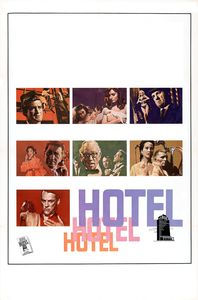
    (On Cable TV, April 2021) As someone who read almost all of Arthur Hailey’s novels as a teenager, I knew what I was getting into in approaching Hotel: A sprawling, ensemble-cast look at a particular environment, with a narrative built of subplots exploring that environment. Some call it didactic fiction — I just liked the stuff. Now, novels like Hailey’s can’t very well be replicated in film: viewers won’t stand for it in the same way that readers do, and there’s only so many subplots you can fit in a two-hour film (as opposed to, say, a miniseries). So, it’s not a surprise if Hotel-the-film is a markedly simpler thing than Hotel-the-novel, nor if the depths of the docufiction aren’t as satisfying. Accordingly, I got far more fun out of the film’s first half than the second, as the job of the hotel manager protagonist is demonstrated, as the subplots are set in motion, as the film takes some time (even fleetingly) to explore its setting. There’s a beautiful one-shot, for instance, coming out of an elevator into the hotel lobby, tracking the protagonist as he takes care of business, then goes back into the elevator. After that, well, the subplots take over and don’t necessarily converge toward a happy ending, and the hotel itself is not allowed to remain the central character like it did in the book. Still, I liked the final result quite a bit — Rod Taylor brings his square-jawed charm to the role of the hotel manager, Catherine Spaak plays a great femme fatale in very 1960s style, the incredible racism of the hotel owner is a reminder of how far we’ve come in fifty years, the production design is impressive and Richard Quine’s direction has its moments. There probably wasn’t room to fit anything more in the film short of turning it into a TV show (which is still not a bad idea, hint). Fleetingly, Hotel did take me back to earlier days reading through Hailey’s brick-sized novels, and that’s also a plus.

  • Mogambo (1953)

    Mogambo (1953)

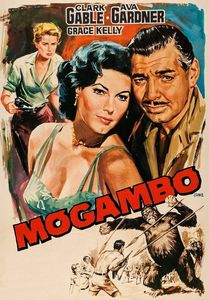
    (On Cable TV, April 2021) It’s hard not to think about Howard Hawks’ 1962 Hatari in seeing Mogambo. The comparisons are more than superficial: Both are American films from legendary directors (here, John Ford) starring aged screen legends (here, Clark Gable) as strong men living on the African savannah and falling in love with a passing American. Both make the most out of their on-location shooting, both presenting a very familiar safari-based portrayal of Africa. There were other famous African-set studio pictures in the early 1950s (The African Queen, The Snow of Killimajaro and King Solomon’s Mines come to mind) but it’s the later Hatari that comes closest to it. In a role almost custom-made for an actor of his stature, Gable plays the great white hunter, with the amazing backing of a captivating Ava Gardner, and a star-making turn from a young Grace Kelly. It’s almost pointless to say that the film does feel quite racist today, as white protagonists have free rein over the savannah for a gorilla hunt (!)… but there you go. Not quite as technically polished as Hatari, Mogambo nonetheless benefits greatly from its location shooting, interaction with animals and Ford’s eye for capturing widescreen landscapes. The film is not that good, but it’s easy enough to watch in between the love triangle (wobbly but effective) and the nice location footage. Plus, I don’t recall another film in which Gardner shares the screen with a baby elephant and (later) a big cat.

  • We Are Still Here (2015)

    We Are Still Here (2015)

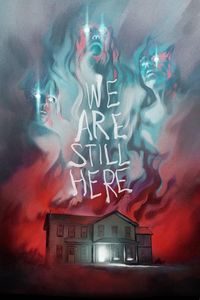
    (In French, On Cable TV, April 2021) I started hoping for writer-director Ted Geoghegan’s We Are Still Here to be good from its opening moments, as it heads deep in wintry upstate New York and, in doing so, looks a whole lot like the rural Quebec and Ontario landscape in which I grew up. The idea of horror in a farmhouse, isolated in the middle of winter, carries a far more familiar weight for me than countless warmer settings, and I really wanted We Are Still Here to be good. Alas, it takes more than snowdrifts and iced windows to make a good horror film: the cinema-vérité style of the direction quickly became irritating, and the pile-up of familiar elements did nothing to help. The premise, as thin as it is, has a middle-aged couple moving to a house while grieving for their son, and slowly coming to realize that the house demands sacrifices. I’m not necessarily against horror clichés when they’re well done, but I found myself more bored than entertained by We Are Still Here. The revelations seemed obvious, the acting too naturalistic for my tastes, and the entire thing too dull to be interesting. The setting is great and the cinematography (by noted Quebec-based Karim Hussain) is often wonderfully evocative, but the rest… not so much.

  • The Old Man and the Sea (1958)

    The Old Man and the Sea (1958)

    (On Cable TV, April 2021) If you didn’t already know that Ernest Hemingway’s The Old Man and the Sea was a classic of American literature, simply watching the 1958 film adaptation will clue you in. Handled with an omnipresent reverence for the written text, this film often feels like a narrated novel given the amount of slavish adherence it shows toward Hemingway’s voice. Spencer Tracy delivers both the lead performance as the titular Old Man (appearing in nearly every shot of the film) and the voice-overs taken from what I presume must be excerpts of the novel describing his actions as well. Most commentators agree that the film is not only slavishly faithful to the text, but is among the most faithful screen adaptations ever made. Of course, being slavishly faithful does not mean a great movie — especially given the technical requirements of showing a drawn-out fishing battle between man and marlin. The special effects clearly don’t hold up today, and even threaten to overwhelm the rest of the film. Still, Tracy gives it all he’s got, and he got an Oscar nomination out of it. Still, The Old Man and the Sea is a more interesting film than most, if only because of the way it illustrates the pitfalls of an overly reverential screen adaptation. By the end of it, you won’t agree so much with the “original text is sacred’ school of Hollywood adaptation commentary.