Month: April 2021

  • Story of G.I. Joe (1945)

    Story of G.I. Joe (1945)

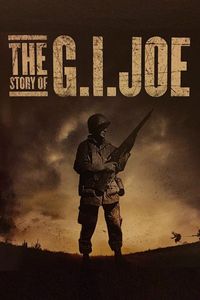
    (On Cable TV, April 2021) You could be forgiven for assuming, from the opening credits, that Story of G.I. Joe is going to be focused on Pulitzer-winning American journalist Ernie Pyle, who famously reported while embedded in WW2 campaigns in Tunisia and Italy. The film contains narration inspired (or copied) from Pyle’s columns and was filmed as Pyle was reporting from the Pacific Front. (Pyle, who was involved in the film’s production, was killed on Okinawa two months before the film premiered.)  But when you get into the film, you eventually notice that Pyle’s character ends up a supporting character reporting the actions of the company he’s with, and so Story of G.I. Joe indeed becomes the story of the grunts working the frontlines. Robert Mitchum gets a first great role as an officer who provides material for the reporter’s columns, easily (and by design) outshining the less flamboyant Burgess Meredith playing Pyle. Entirely produced during WW2, the film ends up being a convincing portrayal of ground troops during the campaigns of Tunisia and Italy. It does have some added interest in having a journalist act as a narrator (one who finds out, in the field, that he won the Pulitzer), giving an additional dimension to what could have been another war movie.

  • Tender Mercies (1983)

    Tender Mercies (1983)

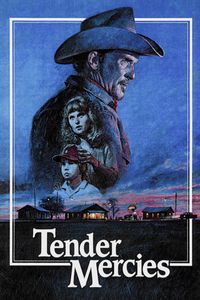
    (On Cable TV, April 2021) There’s an entire swath of movies I don’t like, and Tender Mercies is squarely in the middle of them: Slow-paced realistic dramas that are heavy on personal recriminations, atmosphere and sadness. Much of the film is focused on a middle-aged alcoholic who used to have a career as a country singer, but finds himself hitting rock-bottom in the middle of Texas. The narrative describes his slow way back up, thanks to God, the love of a good woman and other things found in country songs. It’s not the kind of film I willingly watch unless there’s a reason for it, and that reason here was the film’s nomination for a Best Picture Academy Award. Still, I’d be churlish not to recognize a few things worth noticing. First off would be Robert Duvall’s performance, as he sports an unusual beard and plays off-persona with a sad-sack role (albeit with dignity). The other thing is the all-encompassing Texan atmosphere, with only yellow plain and blue skies to see anywhere you look around. It’s quite an immersive film at times, and it’s an atmosphere that weighs heavily on the slow-moving plot as well, underscoring people stuck in place despite a horizon of possibilities. Otherwise, Tender Mercies is the kind of film that will make more audiences happy and others bored out of their skulls. But then again, take a look at what did win the Best Picture Oscar in 1983: Terms of Endearment. What should have won if I had my way? The Right Stuff, of course.

  • Beware! The Blob (1972)

    Beware! The Blob (1972)

    (On Cable TV, April 2021) Some actors turned director reach for profound artistic statements, or create the conditions required for other actors to perform at the best. Then there’s Larry Hagman (star of TV shows Dallas and I Dream of Jeannie), whose sole film directing credit (in addition to many TV show episodes) is the B-grade monster movie sequel Beware! The Blob. It’s far from being an honour, although he presumably enjoyed the incongruous humour of it all. This sequel to the classic Steve MacQueen monster feature begins explicitly from the conclusion of the first film, as a pipeline worker brings back a mysterious sample from the Arctic. Soon enough, a fly, a cat and a wife are missing, absorbed into the ever-expanding blob. It just gets worse from there, both in-story and on-screen. Production values are low, narrative coherency is hazy and compulsive watchability is practically non-existent. It is a pure low-budget monster feature, and it achieves its objectives. Despite the cheapness of the production, there are actually some good moments to the direction, as characterized by unusual camera angles. But there’s really nothing remotely essential about Beware! The Blob at the exception of Hagman directing — it’s all bland and forgettable, neither funny nor horrifying.

  • The Spanish Main (1945)

    The Spanish Main (1945)

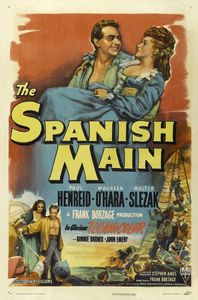
    (On Cable TV, April 2021) Ah, pirate movies: For a long time in Hollywood, seeing one of them meant that you’d seen half of them. They’d have a capable hero, a good person forced in service of a pirate until he became the pirate, largely to have the allure of piratical protagonists without, well, being as repellent as a real pirate. Adventures on the high seas would follow: ship battles, sword fights, swinging for the rigging, capturing the corrupt governor, navigating through a storm, but especially romancing a reluctant beauty, progressively seducing her through good deeds and fearless action. In this context, The Spanish Main is no outlier. Perhaps its most distinctive trait is the unusual casting of Paul Heinreid (not normally known as a swashbuckling hero) in the lead role. Oh, there are other niceties as well: Maureen O’Hara is wonderful as the heroine, especially when the colour cinematography does justice to her red hair. Some of the action sequences are thrilling. The dialogue is not bad. In other words, you get what you expect from a pirate adventure in seeing The Spanish Main. Where the film doesn’t do as well is in distinguishing itself from similar films — it’s an average example of the form, without the extra flourish of other better-known examples. But that’s already not bad (and have I mentioned O’Hara?), especially if you know what you’re getting yourself into.

  • Won’t You Be My Neighbor? (2018)

    Won’t You Be My Neighbor? (2018)

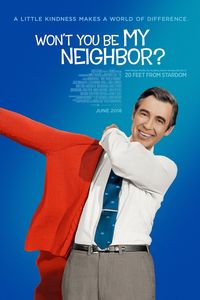
    (On TV, April 2021) I was very, very late in understanding the accomplishments of Fred Rogers as a kid’s TV host. Much of it is due to the fact that I didn’t speak much English when I was in Mr. Rogers’ target audience. Obviously, I became aware of his saintlike reputation over the years, but it wasn’t until a year or two ago that I actually watched a rerun of the show and was astonished at how… calm and gentle it was. I happened to catch the Tom Hanks biopic a few months ago, but it’s only now that I sat down to watch the documentary Won’t You Be My Neighbor?, exploring Roger’s life, accomplishments, and entire philosophy. Using interviews, show footage and some animated segments featuring Daniel Tiger (explicitly presented as an alter ego for Rogers), this is a documentary that starts from the same question as the Hanks docufiction: Was Mr. Rogers for real? Was he as benevolent and kind-hearted as his reputation made him out to be? As the documentary eventually points out, this seems to be difficult for people to accept — we’d rather believe that he was a Navy SEAL who swore off killing than accept that such a genuinely nice person could exist, incidentally suggesting that we are not as nice as we could be. One of the most intriguing aspects of the film is how it tracks the strong association between Rogers’ approach and his own faith—an ordained minister, Rogers sometimes referred to his show as a ministry, and it’s not rare for the documentary to use spiritual or religious language in describing his actions—anyone calling him a saint, for instance, because the modern vernacular does not have other words descriptive enough. Won’t You Be My Neighbor? does fully engage with the notions of absolute goodness, and as time goes by, I suspect that its 2018 release date will weigh more and more heavily as a reminder of where it came from, two years into a nakedly malevolent American presidency that had viewers struggling to accept how someone without moral qualities could be voted into the highest office of the land. In this light, the example of Mr. Rogers becomes essential. Rogers was kind because he operated from a set of core principles: respect the child, protect the child and be honest with the child. Some of the show footage is gobsmacking in its forthrightness — who would now even dare discuss political assassinations on a kid’s show? What makes a lot of adults very uncomfortable, however, is when Rogers used this same basic honesty on adults — essentially treating adults the way he’d like kids to be treated, and the effect was usually disarming (even against prickly US senators). Won’t You Be My Neighbor? does poke and prod at the legend, but the worst it can find about Rogers is a childhood of being bullied, a bit of dissociation with his puppets, and an increasing righteousness as he became older — not exactly anything embarrassing, nor out-of-character for his public persona. Asked if Mr. Rogers was the real thing, all interviewers agreed that he was. Clips of people criticizing Rogers without even understanding what he was trying to do reflect badly on the criticizers (and may induce some outrage in viewers). But where Won’t You Be My Neighbor? further distinguishes itself from other standard biopics is in its willingness to try using some of Mr. Rogers’ humanity on its interviewees and audience: the film ends on an incredibly poignant note as, in countering despair about the lack of kindness, interviewees are asked to spend one silent minute thinking about kind people who helped them become who they are. Tears well up, the silence holds and the sequence ends with many interviewees thanking director Morgan Neville for the moment. It’s an incredible finish to an exceptional film about an extraordinary man. Yes, Mr. Rogers was exactly who he appeared to be. Yes, he was better than most of us. Yes, we can do better in aspiring to be like him.
  • Somebody Up There Likes Me (1956)

    Somebody Up There Likes Me (1956)

    (On Cable TV, April 2021) I don’t generally like boxing movies, but there are plenty of exceptions, and Somebody Up There Likes Me is one of them. Based on the life of middleweight legend Rocky Graziano, it’s a film that greatly benefits from early Paul Newman’s streak for rebellious yet somehow likable characters. It’s also a film that, while clearly boxing-centric, has most of its dramatic action take place outside the ring, offering a well-rounded portrait of the lead character. Newman plays Graziano (in a star-making turn) with uneducated roughness but a great deal of charm even if his early life is one of teenage delinquency, troubles within the army and defiant attitude. Things start turning around for him when he discovers an aptitude for boxing and meets his future wife (a good turn from Pier Angeli). Newman is surprisingly good at the physical part of the role — he convincingly plays the boxer and channels the rebelliousness into physical aggression. But more than that is the film’s balancing of personal life and professional life (that is, boxing), all the way to a surprisingly dramatic third act that doesn’t solely depend on the outcome of a big match. In other words, there’s more than boxing in Somebody Up There Likes Me to keep even non-boxing fans happy.

  • Rasputin and the Empress (1932)

    Rasputin and the Empress (1932)

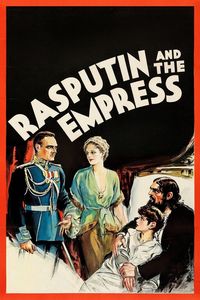
    (On Cable TV, April 2021) There are films that are a lot more fun to read about than to watch, and Rasputin and the Empress comes close to earning that distinction. As an early-sound-era depiction of Rasputin’s reign of terror over Russia, it’s suitably melodramatic but, in the end, the narrative feels dull and meandering on its way to a somewhat more gripping ending. The technical credentials are about as good as they get for the time, what with the film being a prestige MGM production — excellent sets and costumes, but with the limitations of early-sound-era filmmaking limiting the camera movements. For film fans, this has the distinction of featuring three members of the Barrymore family in the same film, although it’s clear that Lionel Barrymore is the one having the most fun playing Rasputin. There wouldn’t be much more to say about Rasputin and the Empress itself — it’s a decent costume drama, but not much more. When you start reading about the film, however, the making of it and what happened after its release become far more interesting as an illustration of Hollywood’s growing pains than what was shown on-screen. For one thing, there’s the rushed production of the film, which went forward with an unfinished script and a screenwriter who only agreed to work on it when threatened by Ethel Barrymore breaking things in his bungalow. Then there’s the monstrous ego of the three Barrymores, including Ethel coming back to the big screen at 53 due to financial woes, not having experience working on a sound film, and being concerned about how the camera would portray her. Finally, there are the lawsuits that followed Rasputin and the Empress’s release: MGM got sued by two Russian families for including a historically inaccurate rape scene, leading to expensive fines, the shelving of the film for decades, and the addition of the now-standard “all characters are fictional” disclaimer in films going forward. Now that’s a making-of that almost deserves its own movie.

  • The Secret of Santa Vittoria (1969)

    The Secret of Santa Vittoria (1969)

    (On Cable TV, April 2021) In a film universe of recycled premises, it’s always interesting to find something that has not (yet) been overused, yet remains reasonably accessible. In The Secret of Santa Vittoria, we find ourselves in Post-Mussolini WW2 Italy, in a small village patiently awaiting the arrival of allied troops. Except that… the Nazis have taken a keen interest in the town’s well-known wine, and they arrive in town with the intention of confiscating the entire stock. Except that… the villagers are not idiots, and have taken steps to hide four fifths of the reserve. Except that… the Nazis are not idiots either and have noticed the accounting discrepancy. The stage is thus set for a battle of will between the eccentric new mayor (Anthony Quinn) and the ice-cold Nazi commander (Hardy Krüger). There are many complications, some of them sentimental. Directed by Stanley Kramer and constrained by the tone of the novel from which it’s adapted, the comedy of the film is curiously restrained, sometimes veering into wartime drama with real dangerous stakes. Still, the biggest attraction of the film is probably the setting — the producers worked hard to find a picturesque WW2-style Italian town in the late 1960s, and the proof of their success is found on the screen, with a rather good sense of place and the town fountain acting as a central showpiece for much of the action. You can see how The Secret of Santa Vittoria could have been much funnier if it had tried, but it had something else in mind and it’s hard to argue with the results.

  • I Am MLK Jr. (2018)

    I Am MLK Jr. (2018)

    (On Cable TV, April 2021) After establishing its identity as a biographical series focused on deceased figures in the world of entertainment, Network Entertainment’s “I Am” series takes a political turn by focusing on Martin Luther King Jr., whose assassination in 1968 marked yet another trauma for a shell-shocked nation. Now, there are two ways to talk about MLK Jr.: The first one is the way he’s discussed in K-12 textbooks, as an admirable apostle of racial tolerance who was on the frontlines of the Civil Rights movement and became a martyr for it. It’s a portrait that mythologizes him without quite delving into a full portrayal. The other way to talk about MLK Jr. is considerably riskier. It’s one that talks about his problems, his doubts, his womanizing, his later turn toward class issues as a superset of racial issues and his opposition to the Vietnam War. Those are the facets of the man that are far less lauded by both sides of the American political spectrum on MLK day. Talking about him in a more even-handed fashion is also incredibly risky considering the iconic status he has since attained — even mild criticism can be seen as providing comfort to the racist elements. But even those who think MLK was a beacon of light (as I do) benefit from a broad critical examination of his life — the very thing that made him an icon comes from the entirety of his character. To its credit, I Am MLK Jr. does go there, at least halfway. You won’t hear much about his womanizing, but you do hear about his periods of self-doubt and the benefits he would have gained from therapy… if he had been comfortable enough to go to therapy. (As the film reminds us, MLK was an enemy of the state at the time, and there was considerable fear that any therapist would have been turned against him by the FBI.)  MLK’s eventual turn to class issues is given fair mention, though, as was the growing backlash against him in the late 1960s by those who weren’t pleased that the class structures of America were being challenged. (I expect this aspect of MLK’s work to be gradually re-popularized over the next few years as class issues get a fairer discussion.)  The rest of the documentary, as narrated by various friends and admirers, doubles as a primer on the civil rights movement. Unusually stylish for an “I Am” series entry, this film makes copious use of churches — nearly every interviewee is filmed in a pastoral setting, and the film features a few hymns performed specifically for the film. Notable interviewees include the always-insightful Van Jones, Civil Rights icon John Lewis, actor Nick Cannon, Al Sharpton, and many others. While other films and documentaries have tackled MLK and the events surrounding him, I am MLK offers a decent summary, and one that does not solely present him as an icon. I can think of a few ways in which it could have been better, but it’s already quite admirable as it is.

  • Vivre sa vie: Film en douze tableaux [My Life to Live aka It’s My Life] (1962)

    Vivre sa vie: Film en douze tableaux [My Life to Live aka It’s My Life] (1962)

    (Criterion Streaming, April 2021) At this point in my exploration of Nouvelle Vague cinema, I’m content to just let the movies wash over me, not trying too hard to find meaning or satisfaction in my film education. In Jean-Luc Godard’s halfway experimental Vivre sa Vie, we’re stuck with a young woman as her dreams of stardom as she leaves her husband and child to become an actress and, when that doesn’t pan out, gradually turn toward prostitution. Even before its gratuitously violent ending, Vivre sa vie is not meant to be an uplifting film — the protagonist’s descent through desperation is portrayed clinically, as she methodically has to abandon her dreams and, even then, has trouble surviving. Anna Karina (then Godard’s wife) is often impassible, as much of the film plays in her head. As a narrative, it doesn’t do much hand-holding — we’re left to infer much of the plot from clues and one showpiece sequence after another. There are intertitles, unconventional editing, jump cuts, deliberately artificial sets, an explicit shout-out to Jules et Jim, and what I’d call cinematic humour so dry as to be undistinguishable from style. This is a film of moments more than sustained storytelling: One montage scene tells us more than we’ve ever wanted to know about the legalities and practices of early-1960s prostitution in Paris. Another has Karina dancing around a pool table to the delight of viewers and disinterest of the characters sharing the room with her. One last highlight is a lengthy conversation between the protagonist and an older man on philosophical topics. Then there’s the hilariously violent scene that takes the film and (not without a bit of earlier foreshadowing, mind you) shoves it brutally into the crime genre, sparing no one. It’s going to linger in memory for sure, and it clearly shows Godard’s preoccupations in between other career landmarks, such as À bout de souffle and Le Mépris. Good? Bad? Who cares — it’s Godard.

  • Girl (2020)

    Girl (2020)

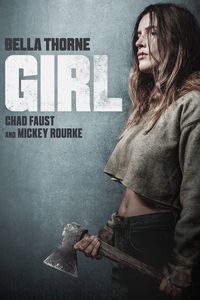
    (On Cable TV, April 2021) I don’t particularly like Girl, but there is something admirable about how crazy it’s willing to become in order to deliver thrills on a budget. Shot in Sudbury and set in AnyNorthernSmallTown, North America, it’s a thriller whose minimalist execution contrasts with its sensational plotting. From the first few moments, it’s obvious that this won’t be like most other movies: As a girl gets off the bus at an isolated stop on a two-lane road and walks to the nearest town, we’re set to understand that this is not meant to be a fun film. And yet, as the minutes advance, the screenplay seems at odds with the directing. The absurdities and implausibilities accumulate, such as the girl finding her father dead and being angry that she didn’t get to finish the job. It gets weirder as the film advances, as she discovers not one but two hitherto unknown uncles, who coincidentally end up being the two men she’s spent the most time antagonizing since the beginning of the film. It gets even better, what with a hidden treasure, the sudden arrival of a missing character, a small-town conspiracy, capture, torture and escape. Girl features revenge, fiery death, a fatal stabbing and near-universal abuse by and to all characters. It could have been an exploitation film, but it’s not always directed as such. Other than a dynamic laundromat fight and some suspense sequences, much of the film plays at a slow, gritty pace, somehow going for grimy naturalism when it should go big and wild in order to match its script. A few more characters may have helped round off the unreality of the result, but I’m not so sure that’s a good idea. The cast somehow includes Bella Thorne as the titular girl and Mickey Rourke as the final antagonist — both do well but not that well. There are some fitful attempts to go for big philosophical material throughout, but it’s clear that the film is most at ease in the suspense and action department — a rewrite could have leaned a bit more in that direction. As a result, I’m generally cool to Girl — there are promising elements here, but they seem mishandled in such a systematic way that I’m even wondering if writer-director Chad Faust understood the kind of film he was making, or the kind of film he could have made.

  • Paydirt (2020)

    Paydirt (2020)

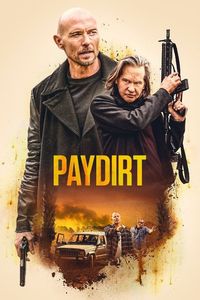
    (On Cable TV, April 2021) The best-case scenario in writing a bad film according to formula is that the formula will carry much of the film on its shoulders, compensating for other flaws by sheer force of familiarity. I don’t have any issue with admitting that I like Paydirt’s formula a lot — the idea of putting together a crew of hoodlums (especially ones known for their nicknames) for one last score, the sunny California setting, the booming use of music during montages, nestled flashbacks, the gorgeous women, the final twists and turns that transform a defeat into a complete victory— this is all good stuff as far as I’m concerned, and Guy Richie alone has probably forgotten some of his own movies following this formula. Paydirt clearly follows it blindly, all the way to the predictable twists at the end. It really does not have the wit or the finesse to make it look natural — everything looks laboured, deliberate and almost exhausting even when it’s mechanically assembling the pieces it needs. Writer-director Christian Sesma dictates it as if he knew what works, but only being half-right about that. Many people attack formula films by saying it’s all gloss, but Paydirt doesn’t even have that: it operates at half-throttle all the time, going through the motions of something compelling without actually being compelling itself. Luke Goss is, in keeping with the rest of the film, fairly bland throughout. Val Kilmer impresses for all the wrong reasons in a supporting role: He looks really old and overweight here, no doubt a result of his recent health problems. But the problems are everywhere in this film, and the worst are in the script. The sloppy plotting can’t be bothered to convincingly nail down the details, and by the time the coda laboriously explains with a self-satisfied wink what we’d guessed anyway due to (again) the formula, it all feels even more contrived than usual. Despite all of these flaws, I still half-enjoyed Paydirt: it should be much, much worse, but thanks to the formula, it manages to paddle hard enough to keep its head above water. That’s not exactly a ringing recommendation, but at least it got halfway there.

  • Storage 24 (2012)

    Storage 24 (2012)

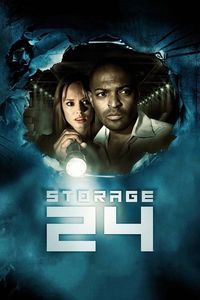
    (In French, On Cable TV, April 2021) I like it when movies work better on-screen than on paper, even if the starting point is low. Storage 24, at first, looks exactly like the cheap horror movie it is, with a handful of characters stuck in a cheap shooting location. Here, a few friends are in a vast storage facility on the outskirts of London when something falls from the sky into the facility. Before long, yes, you guessed it, a dangerous alien creature starts slaughtering the cast in reverse credit order. This is incredibly familiar horror fare, the kind of which can be found by the screenful at the cheapest streaming site. Clearly, this won’t win any awards — but the question is, is it competent enough to be entertaining? Fortunately, yes — barely (don’t expect to remember much of the film in the morning) but yes. There’s been much worse using that plot template, and writer-director Johannes Roberts has the good sense to provide just enough of a happy ending before going full Science Fiction in time for the final shot. As a low-budget Alien clone, Storage 24 holds its own chiefly through its actors and better-than-expected dialogue. Again: nothing refined, but just enough to rescue the film from terminal awfulness. Noel Clarke is not too bad in the lead role, although what’s written for him could have used an extra dose of likability. It’s just enough to relieve anyone expecting the very worst. It could have been better with more wit or humour, but let’s not ask too much of something clearly produced out of laziness and convenience. It is better than most SyFy movies, though, if that gives you a yardstick.

  • Open Graves (2009)

    Open Graves (2009)

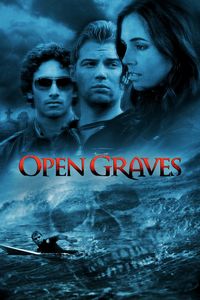
    (In French, On Cable TV, April 2021) I had a bit of trouble making it to the end of Open Graves without falling asleep. Let’s see if I do any better describing it to you. A straight-to-video release from 2009, Open Graves has to do with a few surfer post-teenagers who discover a strange old game that… zzzz… okay, that didn’t take long. As I said: an old game in which the order in which they die in the game is reflected in what happens to them soon afterwards, as if the screenwriter threw the Jumanji script in a blender with one of the Final Destination sequels. (Fun fact: every single review of this film elsewhere on the web makes the exact same reference to Jumanji and Final Destination. This review also obliges.) I’ll admit that this description almost makes Open Graves sound interesting (although many, many screenwriters have blended those two scripts before), but the film doesn’t quite have what it takes, either in the writing or the directing, to keep things interesting. The cool-blue cinematography and soothing rhythms soon make viewers… zzzz… right. Occasionally, the film does something halfway interesting, like throwing in a car stunt that makes no sense in terms of physics but at least shows some budget shown on-screen and/or CGI flames. Plus, there’s Eliza Dushku in a prominent role, which reassures us that she was at least alive at the time of the film’s production. (But seriously: Wikipedia tells us that her gradual disappearance from acting over the past ten years obscures a return to school and motherhood. Congratulations!)  Still, she’s very much not enough to save Open Graves from terminal boredom and cheap CGI overuse. This is the kind of by-the-numbers horror film featuring young adults being killed that you can plot in your sleep and… zzzz… well that was a trigger all right. Open Graves is really not worth any effort. Your finger may slip on the remote and you’ll end up watching it without much of a reaction. Thanks to director Álvaro de Armiñán, It’s not funny, it’s not overly gory, it’s not good, it’s not terrible: It just is.

  • The Wolf of Snow Hollow (2020)

    The Wolf of Snow Hollow (2020)

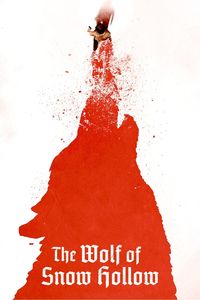
    (Disney Streaming, April 2021) My typical commentary on horror/comedy hybrids is that the balance between the two can be incredibly tricky at times, and not all filmmakers can pull it off. Accordingly, perhaps the most suspenseful aspect of The Wolf of Snow Hollow isn’t as much the small-town police hunt for a werewolf, but the tightrope act that writer-director-star Jim Cummings has to navigate between the demands of horror thrills, comedy chuckles and his own idiosyncratic deadpan sensibilities. The result, fortunately, is a success — something too quirky to be embraced widely, but a more ambitious-than-usual take on familiar genre elements. Much of the attraction of the film comes from its lead character, a policeman in a tight-knit community who has ambitions to succeed his father as the town’s sheriff, but significant anger issues (to the point of repeatedly hitting colleagues), an alcoholic past and difficult relationships with his ex-wife and daughter. Any lesser movie would have done some sleight-of-hand to ensure that he is the killer being hunted (and the film does initially nod in that direction as a red herring), but instead we get a bit of alter-ego reflection between the dual nature of werewolves (here cleverly rationalized as misogynist men hunting women when it’s bright at night) and the hero’s own issues in keeping both aspects of his personality under control. A big dose of visual style does help, especially in grounding The Wolf of Snow Hollow’s sometime-anachronistic execution that rapidly jumps back and forth in time to show cause and effect. The result is as slick as the dialogue can be deliberately rough. Cummings does pretty well in the lead role, with some honourable mentions going to Robert Forster in his final role, and Riki Lindhome as another level-headed police officer. The dialogue is self-consciously “realistic” in all of its awkwardness, but it does help ground the reality of the film to its small-town atmosphere, where nothing of importance is ever supposed to happen. Still, much of the fun of the film comes not from the werewolf hunt, but the way the protagonist buckles under pressure coming from all sides. (The film is not subtle about it at all, with a whistling kettle taking over the soundtrack at least twice.)  The Wolf of Snow Hollow could have benefited from a few additional minutes to straighten out its second-half revelations and play a bit longer in the jumpy atmosphere of a small town terrified by an average police force unable to cope with a serial killer. But the result is still quite good as it is, and well worth a watch. It’s not your average horror film, and not your average horror/comedy film either.