Month: July 2021

  • Sea Fever (2019)

    Sea Fever (2019)

    (On Cable TV, July 2021) There’s something delightful in recognizing a completely science-fictional narrative structure to Sea Fever, despite it largely taking place today(ish) in a boat in the middle of the Atlantic Ocean. See if this feels familiar: A scientist aboard a ship filled with blue-collar workers grows concerned when a chance encounter with a mysterious creature produces unexplainable phenomenon. The ship then encounters another ship, abruptly deserted with its communication and propulsion equipment sabotaged. And then the crew starts experiencing medical issues… Oh yes — Sea Fever is an Alien clone on the northern seas, almost point-for-point sticking to the ur-structure of such stories. As such, it’s not badly made, especially as a low-budget Irish film. Narratively tired and disappointing in the nihilistic conclusion it chooses, but generally handled with some competence when it comes to the atmosphere, pacing and visuals. Hermione Corfield is not bad in the lead role, with some assistance from Ardalan Esmaili and a spectacularly de-glammed Connie Nielsen. While Sea Fever is a disappointment, there’s something very promising in writer-director Neasa Hardiman’s work here, and it’s going to be interesting to see what’s next for her.

  • The Fugitive Kind (1960)

    The Fugitive Kind (1960)

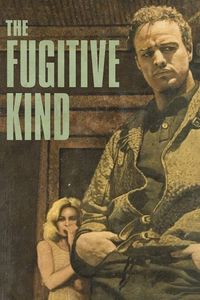
    (On Cable TV, July 2021) It’s not hard to see how The Fugitive Kind was an envelope-pushing film back in 1960 — Tennessee Williams writing, Sydney Lumet directing and Marlon Brando in the lead role, with a plot that has a drifter arousing passions in the small town where he stops for a while. (That plot summary also covers Picnic five years earlier, which was also considered edge-of-the-envelope.)  If you’re familiar with films of the time, it does remain a bit shocking to see Joanne Woodward make her entrance, dishevelled, unmannered and quite possibly inebriated: while unremarkable by today’s standards, female leads simply didn’t do that kind of thing back then. As the film advances, malevolent undercurrents suggest that it’s not going to end well… and it doesn’t. Still, what was effective sixty years ago is not always as fresh now, and it doesn’t take a long time for The Fugitive Kind to show its limits. Brando’s acting almost feels like a parody of itself, and Williams’s writing isn’t among his best. As with many films of its era, its desire to push the edge of permissible subject matters in an environment where the Hays Code was holding back honest drama lands it in a weird demimonde of unsatisfying compromises. It amounts to a film that’s certainly interesting as a representative of its era, but not completely satisfying as a viewing experience these days.

  • Thank Your Lucky Stars (1943)

    Thank Your Lucky Stars (1943)

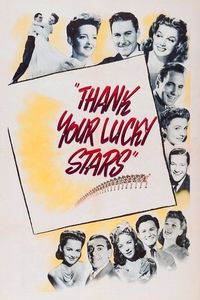
    (On Cable TV, July 2021) The more you learn about Hollywood history, the more you discover sub-sub-genres with maybe a handful of titles. Sometimes, they even prove to be a lot of fun… for the right audience. Thank Your Lucky Stars can be loosely included in the “wartime musical revue” subgenre, pleasantly overlapping with the “studio self-satire” one. In other words, here we have Warner Bros putting together a loose collection of sketches featuring their own stars, loosely connected with a slight and amusing plot. There’s one important caveat for twenty-first century audiences, though: This kind of satire, heavily based on screen personas, is completely dependent on audiences knowing quite a bit about what is being parodied. So it is that Thank Your Lucky Stars largely depends on audience knowledge of Eddie Cantor, as Cantor sends up his screen persona by playing a dual role as his self-obsessed self and a humbler look-alike. Much of the humour in the narrative is in the mistaken identities, but far more of the film’s laughs come from the various sketches and musical numbers scattered in-between — especially when they feature performers not known for singing, such as Ida Lupino (!) and Betty Davis (!!). Other highlights have S.Z. Sakall intimidating Humphrey Bogart, and Erroll Flynn as a blowhard soldier. Thank Your Lucky Stars served as a fundraiser for the Hollywood Canteen, which also spawned another film of the same name that is very much in the same genre. Cantor himself is fearless in sending himself up (and has a few good comic moments, such as when he finds himself on an operating table), while the sight of Davis crooning about the lack of eligible men is a sight upon itself. The caveat is that the comic revue is only a fraction as enjoyable if you’re not familiar with the names that are featured in it — but if you are, it’s a lot of fun. Like most movies of that subgenre, Thank Your Lucky Stars is worth revisiting regularly as you learn more about Hollywood History.

  • Dear White People (2014)

    Dear White People (2014)

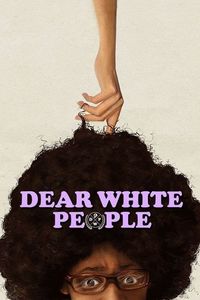
    (On Cable TV, July 2021) My motives in watching Dear White People were not noble or progressive: Like many, many (white?) people, I’ve had a crush on Tessa Thompson for years and here was one of her movies that I hadn’t seen. Arguably the movie that made a number of critics take notice of her, Dear White People features Thompson as a film student and provocative campus activist, notably through her radio show addressed at, well, “dear white people.”  Clearly taking on racism on American college campuses in the early 2010, the film hasn’t lost any of its provocativeness seven years later. Its fast pace, sardonic sense of humour, interesting characters and refusal to be righteous in its racial commentary still give it a distinctive edge over more recent and far more numerous works tackling race relations in America (including a successful spinoff episodic show on Netflix). There’s a welcome vivaciousness to the film’s editing, which flips between title cards, an ensemble of characters, and a framing device taking in the aftermath of a party leading to a race riot. It’s a film that pokes at racists and activists alike, but not in a hypocritical both-sides fashion — the racists are clearly to blame for the racism (even if, at times, the film clearly caricatures them), but even the loud activists take a moment late in the film to reconsider if they’re really making progress, or making themselves feel better for shouting back. It’s a significantly more textured and nuanced look at social activism than the self-satisfied progressiveness that often comes out of recent productions, and there’s something to be admired in the film’s refusal to claim to have all the answers. It also helps the film become a dramedy in its own right rather than a soapbox — the characters have complexities that define them more than stereotypes or roles, and the actors have quite a bit of material to use. Thompson is clearly the highlight, but she has the most flamboyant role even as Tyler James Williams, Brandon P. Bell and Teyonah Parris also have great material and know how to play it. Writer-director Justin Simien’s vision for Dear White People still feels fresh and relevant even after seven years of tumultuous events in American race relation discourse. Go in for Thompson, stay for the witty filmmaking.

  • Allagash aka Blood and Money (2020)

    Allagash aka Blood and Money (2020)

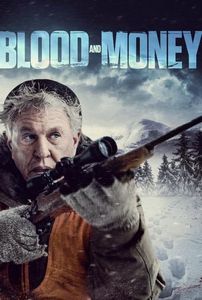
    (On Cable TV, July 2021) There’s a great little thriller buried in the back end of Blood and Money — too bad it takes forever to get there. Oh, I’ll grant that movies should take the time to develop their characters and setting… but this one simply keeps repeating the same points over and over before getting to the good stuff. It’s not as if the basics need much explanation: Northern Maine features a very large, very empty hunting territory, and that’s where our elderly protagonist spends a lot of wintertime hunting. He’s apparently estranged from his family, which doesn’t serve many purposes other than giving him enough of a stake later to care about his enemies but not enough to bequeath them a prize. Taking something like thirty minutes (of a 90-minute film) to set this up is far too long, especially given how the story shifts in a much higher gear once he accidentally shoots a woman in the woods. This, obviously, has something to do with the casino theft that left a few people dead, the criminals on the run, and a few million dollars missing. By the time the protagonist returns to the dead woman, her co-conspirators get involved and it’s several of them against one lone but resourceful old man. The meat of Blood and Money is in the hunt between the elderly protagonist and his younger-but-not-smarter opponents — using every trick at his disposal to even out the odds. It’s a film that squarely fits in the geezer thriller subcategory (as unfortunate an expression as it is) in which aging action stars get one more kick at the can. Here, Tom Berenger does his best to echo his action credentials in portraying a character hobbled by his own body and quite conscious of his mortality. Unfortunately, the film’s pacing issues highlight a lack of economy (even in a 90-minute film!) and a mishandling of the elements at its disposal — there’s enough here to make Blood and Money a passable choice for an unassuming thriller, but it’s not difficult to see how its narrative threads could have been tightened or heightened.

  • Falling (2020)

    Falling (2020)

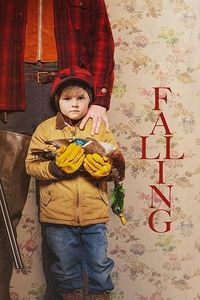
    (On Cable TV, July 2021) As usual, it’s interesting to see what actors pick as material when they go for their first film as director. In Viggo Mortensen’s case, with his directing debut Falling, the stakes are even higher considering that he’s also writing the script, co-producing the film and starring in it. Aiming at low-key drama, the film features Mortensen as an airplane pilot dealing with a hideously ultraconservative father teetering on the edge of dementia. Lance Henriksen plays the father as a quasi-caricature of the worst possible person in the world made even worse by the onset of dementia — crudely intolerant of his son’s lifestyle and homosexuality, quick to lash out at everyone he sees, alternately confused and aggressive. It’s almost too good a portrayal: it certainly justifies the other characters washing their hands from him, makes the inevitable confrontation sweeter and softens an ending that could have been considered tragic if it had featured a nicer character. In terms of writing and directing, Mortensen does well — this is clearly a project for showcasing actors and dramatic situations with raw intensity, meaning that it’s not really meant for a wide audience. Still, it’s gracefully handled and in-between Mortensen and Henriksen (plus Laura Linney in a supporting role), there’s an interesting interplay between the actors. (Canadian cinephiles will laugh as how the film’s two proctologists are played in cameo roles by national filmmaking titans David Cronenberg and Paul Gross.) While there’s clearly a limited audience for this kind of unpleasant low-stakes drama, Falling does mark an honourable performance for Mortensen behind and in front of the camera.

  • Les visiteurs [The Visitors] (1993)

    Les visiteurs [The Visitors] (1993)

    (On TV, July 2021) By French cinema standards, Les visiteurs was an unquestionable hit — the highest-grossing French film of 1993, a multi-nominee for the César Awards, followed by two sequels, and one of the films that solidified Jean Reno’s status as one of the leading French stars of the 1990s (all the way to his steady roles in Hollywood movies by the end of the decade). Despite its 2001 American remake, it’s also an irreducibly French film — by virtue of being a time-travel comedy in which denizens of the twelfth century are sent forward to 1992, it gets to play with France’s medieval past and its then-contemporary present. The fish-out-of-temporal water comic premise quickly leads to accessible gags (hmmm, toothpaste…) and Reno’s charisma does the rest even with a terrible haircut. Still, I had a harder time than expected in getting interested and staying interested in the result. Part of it may be that Frenchness doesn’t always carry over very well on this side of the Atlantic— anything having to do with French nobility, for instance, carries absolutely no power in the former colonies. (A friendly reminder—the gulf between the French and French Canadians is significantly wider than the one between the English and English-Americans.) The time-travel justification is strictly fantasy-based—something about mishandling potions—which does land the film into whatever-land where anything and everything is possible without much justification. Clearly aiming at large French audiences, you can see how Les visiteurs works on its intended target… but it’s not guaranteed that you will be part of that target.

  • Father Goose (1964)

    Father Goose (1964)

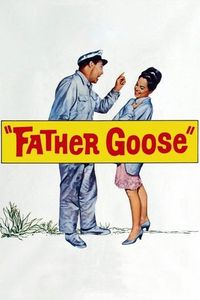
    (On TV, July 2021) By the mid 1960s, sixty-something Cary Grant was seriously contemplating retirement. Having played romantic leads for the near entirety of his career and unwilling to change by taking on supporting or non-romantic roles, his options were getting more limited and his on-screen partners increasingly ludicrous. Leslie Caron, for instance, was 27 years his junior when shooting Father Goose — while the film (his penultimate) doesn’t necessarily look like a romantic comedy in its first half, the second quickly reverts to form, as his crusty beachcomber protagonist eventually marries the schoolteacher in desperate circumstances just to, ahem, goose up the film’s tension. It’s a shame, because the first half does a few interesting things — chiefly by taking Grant out of a suit and into a scraggly alcoholic hermit’s role, manipulated by acquaintances into contributing to the Allied resistance against the Japanese on the Pacific front. Grant’s charming mumbling remains as entertaining as ever, and the script is ingenious in contriving an interesting situation when eight schoolgirls and their caretaker disrupt his new routine. It’s afterwards that Father Goose gets far more conventional at a breakneck speed. While there are a few worthwhile moments (including a very funny response to a schoolgirl getting a crush on a sixty-year-old man), the film seems so preoccupied in creating, advancing and resolving the romance between Grant and Caron’s character that this only highlights its artificiality. Oh, Grant is his usual compelling self, and Caron looks better than in other movies with longer hair. The interplay between the two is not bad, and the screenplay does hit its mark. I’m probably being overly critical of the film — a Cary Grant film is worth a look even when it doesn’t hit the heights of the rest of his filmography. Still, Father Goose does demonstrate why Grant retired when he did, rather than take on roles that diminished his persona.

  • The Bounceback aka Love & Air Sex (2013)

    The Bounceback aka Love & Air Sex (2013)

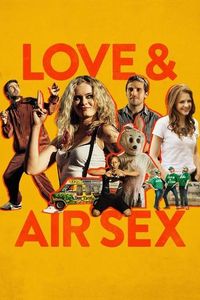
    (On Cable TV, July 2021) I have visited Austin, TX only once, and spent less than twelve hours in the downtown core. Still, the one place I remember vividly is the movie mecca The Alamo Drafthouse. So, imagine my pleasure in seeing the downtown establishment being used as a focal point for the independent romantic comedy Love & Air Sex as it hosts the Air Sex championship (it’s a thing) and, incidentally, provides one of the backdrops to the story of two young ex-couples contemplating getting back together or not. From a narrative perspective, there really isn’t anything new in Love & Air Sex — if your viewing is interrupted after twenty minutes (as mine was), you will still have a pretty good idea of who ends up with whom or, more crucially, who doesn’t — and this is the kind of romantic comedy that has you rooting for the leads not to end back together so that they can move on. Clearly aimed at twentysomething viewers, it often reaches for vulgarity in-between more romantic moments: never mind the crude air sex pantomime when lust and love are sometimes tough to separate for one of the ex-couples. (Tellingly, though, it’s the B-couple that has hormonal issues and gets back together — the A-couple deals in longing, new romances and growth.)  Fortunately, Love & Air Sex does work quite well when it gives itself permission to go for romance without crudity — the resolution of the film is more mature than you’d guess from the onset, and there are a few cute scenes here and there. My main problem with the film is elsewhere — specifically, the male protagonist, who can’t stop moping around like a sad dog and who seems both incapable of succeeding in Los Angeles and not much of a match for a far more attractive female lead. I get that Love & Air Sex, being slightly more aimed at male audiences, probably thought it best to leave the male protagonist (played by a likable but unremarkable Michael Stahl-David) bland in order to facilitate self-identification, but the resulting character is, frankly, not much more than a walking blank canvas. A nice guy, but hardly someone who creates much attachment. Ashley Bell (who reminds me of a young Julie Hagerty, for some reason) does much better as the med student finding a possible match in a far superior “vet vet”.  In comparison, Sara Paxton and Zach Cregger have a lot more fun as the comedic supporting players. Writer-director Bryan Poyser doesn’t do too badly here — Love & Air Sex is reasonably entertaining to watch, and it brought me right back to a really good day in downtown Austin and a great evening at the Alamo Drafthouse.

  • Small Town Girl (1936)

    Small Town Girl (1936)

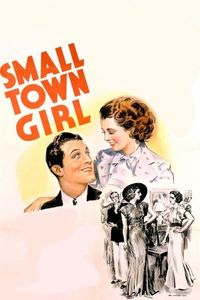
    (On Cable TV, July 2021) There is a pleasant matter-of-fact treatment of an outlandish premise in Small Town Girl that’s both a reflection of the common tropes of the time, and a charming reminder that 1930s Hollywood screenwriters played by different rules. The story of a, well, small-town girl swept off her feet by a dashing Boston surgeon, the film quickly goes to a familiar place: the quick whirlwind marriage, preceding romance by quite a margin. What would be truly weird today ends up being just another Hollywood trick to force our characters into an intimate relationship without riling up the Hays Code. Since they are married, they can go all the way at the slightest moment and that’s where the romantic tension emerges. Otherwise, though, there isn’t much more to the film. A still-unknown James Stewart shows up as a distant supporting character—the boring suitor who gets dumped as soon as the surgeon drives into town. Janet Gaynor and Robert Taylor are presented as the protagonists, but neither of them have much of a spark — they do what lead actors are supposed to do and get the film to the finishing line. By 1930s romantic comedy standards, Small Town Girl is ordinary: slightly weird seen eighty years later, but mildly charming at the same time and quite representative of the way marriage would be used as a plotting device in the shadows of the Hays Code.

  • The Crowded Sky (1960)

    The Crowded Sky (1960)

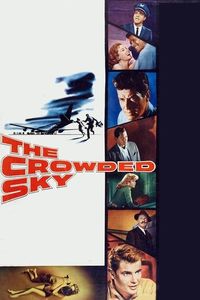
    (On Cable TV, July 2021) In most respects, The Crowded Sky is a turgid drama, with so many thoughts-as-voiceovers that it becomes a device fit to create more hilarity than introspection. (I suspect that it inspired some of Airplane! funnier moments.)  It’s creaky, interminable, naïve and disjointed. But there is one aspect in which it’s utterly fascinating: as a proto-catastrophe movie, not quite understanding how to best fit the pieces at its disposal for a far more streamlined thrilling experience. The basics are simple enough: Over the increasingly busy airspace of 1960 (the melodramatically dubbed “crowded sky”), a military plane collides with a passenger jet, killing a few, and endangering many. If that premise sounds familiar, you’re not crazy — it was reused almost as-is as a basis for later catastrophe film Airport 1975. But that was fourteen years later, after the runaway success of Airport, after Hollywood better understood how to build a thrill machine, after audiences had grown used to ordinary disasters and started asking for sustained catastrophes. You can clearly see the difference here: The idea of presenting characters that are then put in jeopardy is sound, but The Crowded Sky spends far too much time on character development and nearly nothing on how they react to their peril. The narrative structure itself is lopsided, putting the catastrophe at the very end of the film, cutting short any sense of lingering danger. Director Joseph Pevney repeatedly places emphasis on the “wrong” elements, spending some time creating wonderful dramatic subplots (such as a young pilot/painter rediscovering his father’s heritage) that have nothing to do with the impending disaster. In a few words, The Crowded Sky still thinks of itself as a drama with a few genre elements, rather than as a genre piece by itself. That wouldn’t have been so bad had the script been more elegant in how it approached its narrative structure. Here, unfortunately, we have the characters looking pensively into space as a voiceover reveals their thoughts to the audience, a theatrical device that could have been effective (and actually is, the first time it’s used, by lowering the light around the thinking character) but is here presented in such a ham-fisted way that it becomes unintentionally hilarious. It’s the additional touch that makes the final film hard to take all that seriously, even despite some interesting period material and brief moment of effective drama. Too bad that the character development and the catastrophe don’t interact as well as they should. If you want to see The Crowded Sky done right—or at least better—, then have a look at the Airport series: The disaster takes place earlier, the characters have the opportunity to react to it, and the pacing goes much faster without any intrusive monologues. But that’s the nature of genre evolution — there has to be someone doing it half-badly for someone else to pick up and rearrange the pieces more effectively.

  • The Miracle of Morgan’s Creek (1943)

    The Miracle of Morgan’s Creek (1943)

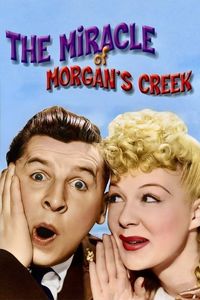
    (On Cable TV, July 2021) Writer-director Preston Sturges famously made his mark in the early 1940s with an impressive string of comedies that fired on all cylinders, and The Miracle of Morgan’s Creek is clearly part of that run, even if it’s not quite up to the standard set by at least three of Sturges’ previous films. I suspect that some of that lessened impact has to do with social mores — the idea of having a young woman pregnant from an unknown father and desperately trying to save her reputation by marrying the nearest hapless clerk was reportedly a scandal back then, but not quite as hard-hitting today. (And probably not as comic either.)  Betty Hutton stars as the party-loving girl who drinks too much and wakes up both married and pregnant (albeit without a clue as to her husband’s identity), but for once the brassy Hutton gets upstaged by Eddie Bracken, whose tics-ridden performance as an exceptionally nervous young man walks a fine line between sympathy and exasperation. The script here is a thing of beauty (even if it was reportedly re-written on the fly to accommodate apoplectic censors) — flashbacks, satire, character-driven comedy with absurd flights of fancy affecting even the highest personalities of the time: Hitler gets outraged at “the miracle,” Mussolini resigns and, most hilariously of all, Canada protests (in a clear echo of the Dionne quintuplets). Managed at a pace that still impresses, The Miracle of Morgan’s Creek isn’t quite as madcap as Palm Beach Story, as cutting as The Lady Eve or as philosophical as Sullivan’s Travels, but it still packs a punch today and should play well even with jaded audiences.

  • Tiger Shark (1932)

    Tiger Shark (1932)

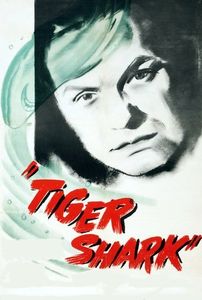
    (On Cable TV, July 2021) Hollywood is arguably at its best when combining the familiar in slightly intriguing doses, an approach that finds its drawbacks when imitators pile up. From a contemporary perspective, there’s something well-worn to much of Tiger Shark, as it creates a love triangle between a tough man (Edward G. Robinson, playing a tuna fisherman who loses a hand in an accident), his wife and a man closely associated to them both. It all takes place in a dangerous, high-risk, manly environment, clearly fitting with director Howard Hawks’ career-long preoccupations. At a slim 77 minutes, Tiger Shark does make in brevity what it never really possessed in originality, but again it’s all about how the elements are combined. Hawks is playing to his strengths by taking a sometimes-documentary approach to men in a dangerous job — there are some fascinating moments here as we get a look at 1930s commercial fishing, echoing the later Come and Get It look at lumberjacks. Robinson goes all-out playing a rough and quick-to-anger character and the result does add quite a bit to the already decent film. The only two Hawksian trademarks that don’t quite fit in this early film are the Hawksian woman (Zita Johann is remarkably tame here) and the fast-paced comic dialogue, although let’s be reasonable: Hawks was still a few years away from hitting the heights of screwball comedy. The result is a bit more laborious than Hawks’ upper-tier films, but still a bit more action-packed and faster-paced than similar films of the era. Tiger Shark doesn’t have much to its title in terms of distinction, but it’s not a bad example of the form.

  • Love on the Run (1936)

    Love on the Run (1936)

    (On Cable TV, July 2021) Neither Joan Crawford, Clark Gable or Franchot Tone step far away from their established screen personas in Love on the Run, a kind of silly romantic comedy that had its start in the 1930s but certainly didn’t end there. The premise will be dead familiar to anyone who’s ever seen a screen romance: a millionaire (Crawford) wants to get away from the attention she’s getting, while an undercover reporter (Gable) is only too willing to help her… as long as there is a good story in it. The tension created by the lies sustains much of the film, as is the rivalry between reporters Gable and Tone. To contemporary viewers, what makes Love on the Run more than a romantic comedy is the 1930s atmosphere: With hard-nosed print reporters in the lead, colourful characters such as aviator (how exciting!), communication by cablegrams, the allure of a glamorous European getaway, and the menace of international spies, it’s almost more interesting now than it must have been at the time. Still, there isn’t much to the foundations of the story — it’s clearly a derivative of It Happened One Night (back then a box-office and Oscar sensation) and it plays in the same comic space as many films of its era. It’s fun to watch but not overly gripping even if you like the actors involved in it. Still, Love on the Run is perhaps best not appreciated by itself, but as a representative example of a genre — the 1930s Hollywood comedy, light on the screwball and heavy on the romance between marquee names.

  • Once Upon a Time in Hollywood, Quentin Tarantino

    Harper, 2021, 416 pages, C$12.99 mmpb, ISBN 978-0063112520

    Novelizations live in a strange corner of the literary universe. They literally exist to adapt in prose a story told in another medium, usually as squarely mercantile effort. I won’t belittle the authors of novelizations – while they’re rarely the authors of the original screenplay on which the novelization is based, they’re asked to do a quasi-impossible task on tight deadlines, transforming an outline of a story into a readable novel. Some of them do better jobs than others, fixing plot points, making the technical details more plausible, adding credible backstories and executing in prose form moments that were designed for the screen. I still have a fond memory of the very entertaining Down with Love adaptation, and Orson Scott Card’s legendary work on adapting The Abyss actually fed into the movie itself. Cinephiles often looked at novelizations to get glimpses of scenes cut during editing, or get a second-hand glimpse at information included in the script that may not have been all that clear in the finished product. In the luckiest of cases, you had the screenplay author writing or co-writing the novelization.

    Novelizations, inevitably, are not what they once were. Originally produced in a context where movies played on the big screen for a few weeks and then disappeared forever, they became far less important once home video offered wider availability and endless replays. In an age of streaming, they often feel like relics of a rougher age, like VHS video stores and DVD audio commentary. (Keep in mind that I liked all of those and wish they’d be back.)

    Quentin Tarantino’s Once Upon a Time in Hollywood gloriously revels in the nostalgia aspect of, well, nearly everything about it. Movie or novel, it remains a story set in 1969, looking back at the fashions, obsessions and characters of the time, and the quaintly charming feeling of a novelization clearly plays along the same lines. Much as Tarantino paid homage to a past generation of actors and filmmakers, it makes sense that a novelization would also tap into the movie marketing of an earlier age. Even the design of the book harkens back to the yellowing paperbacks of the era – the only thing missing being the Bantam rooster.

    But this isn’t a simple novelization. For one thing, obviously, it’s from Tarantino himself – the book is from the same creative mind as the movie, and it doesn’t take a long time for the book to show that it’s a different riff. Whatever stories, anecdotes, telling details and strange connections that Tarantino couldn’t fit in the movie are brought forth here. From the acknowledgement page (which thanks notables such as Bruce Dern and Burt Reynolds), we understand that the project, filmed or written, was largely driven by conversations with acting legends who were active back in 1969, and there’s a clear intention to capture those recollections in more permanent form. (If you’re aware of Reynolds’ past as a stuntman, you can almost feel his stories weaved into the narrative.)

    As with most novelizations, we get a deeper look at the characters themselves – Rick Dalton’s inner struggles as an actor are far more detailed, as is the very troubled past of his deuteragonist Cliff Booth. We get access to their inner monologue, and the characters become richer for it. Dalton’s innate goodness is amplified, but the biggest surprise here is Booth’s violent streak. From a record body count in World War II to the violent murder of two mafiosos to the confirmation that he did intentionally kill his wife (an event often referred to in the film, but here detailed in gruesome detail), Booth does not come across as well in the book – absent Brad Pitt’s charisma and his biggest heroic moment (I’ll explain in two paragraphs), he comes across as a very scary, utterly ruthless character who just happens to be hanging with a likable protagonist. Ironically, the one moment that annoyed many people in the film, his confrontation with an atypically arrogant Bruce Lee, is considerably softened here – it’s obvious from the narrative that Lee’s lack of coordination over his “mock” fights with other stuntmen had left many bloodied, and Booth is on set as a “ringer” explicitly to teach Lee a bruising lesson.

    But there’s more to it. Tarantino, basking in the creative freedom of his literary debut (he’s had many screenplays published in book form before, but never a prose narrative), gets to add scenes, digressions and heartfelt rants. When Booth reflects upon his cinematic likes and dislikes, it’s as if we get a good film critic’s rant from Tarantino himself. When Polanski showboats as a director, it’s hard to say whether this is Tarantino reflecting on his own art. There’s a sequence featuring a deeply alcoholic Aldo Ray that allows Tarantino to expound on his admiration for the fallen actor. If you wanted to learn more about Charles Manson’s improbable musical career as he turned murderous cult leader, it’s right here even if, thankfully, the novel doesn’t spend a lot of time with Manson and his acolytes. There are even two chapters written as if from a western novel, as even the pilot-show-within-a-movie Lancer gets its own expansion.

    More crucially, Tarantino also gets to mess around with his own story. If you’re expecting a retelling of the film with additional details, page 123 will slap you across the face, as it summarizes not only the event of the film’s third act and climax, but gives a flash-forward to Dalton’s revitalized career throughout the 1970s. In other words, the climax of the novel is not going to be the climax of the film, and the two works diverge considerably. Don’t expect different events – but expect a climax with a different emphasis, preoccupied not with a hippie-face-smashing action climax, but with Dalton regaining confidence in his own powers as an actor. Technically, the novel ends two thirds of the way into the film — The rest is handled in flashforwards, including one chapter skipping six months later inserted at the fourth-fifth mark. For fans of the film, you can clearly see the appeal of the book – it’s recognizably from the same origin, but it eventually does its own thing.

    One of the big questions for a story set in 1969 and about 1969 is how credible it is in its references. I obviously can’t tell from first-hand experience, but after years of immersion in Hollywood history, I was impressed at the depths of some of Tarantino’s references throughout the film. There’s a deft interweaving of fact and fiction here, with some very deep cuts to lesser-known films (geez, Cukor’s The Chapman Report?) that don’t feel like Tarantino merely repeating reference works. (Which is surprisingly obvious – you can tell they’re references, but they don’t jell together. Here they do.)

    I quite liked the result. Tarantino’s prose style is not always smooth – his strength is clearly in dialogue and storytelling, not necessarily in strong descriptive writing. The novel is told at the present tense, which echoes the way that screenplays are written, but quickly becomes useful as the novel skips back in time to tell stories of 1950s/60s Hollywood, then flashes forward for glimpses of what the future awaits for some characters (including one who gets nominated three times for Oscars in the 1980s/90s – first for a role played in our reality by Elizabeth McGovern, another by Meg Tilly, and a final one in a Tarantino film that doesn’t exist in this timeline). But as an alternate take on a pretty good film, it’s a rather wonderful companion that bifurcates just enough to keep things interesting. It’s obviously indulgent, digressive and showy – in other words, qualities that we’ve come to associate with Tarantino’s films themselves. It could have been a better-controlled narrative with more polished prose that stuck closer to the film, but then it may not have been a Tarantino novel. If his longstanding promise of retirement from directing comes to pass (it won’t), I can see a pretty good career ahead of him as a writer.

    In the meantime, there’s the novelization that’s more than a novelization – it’s a great book about 1969 Hollywood as well, a quirky novel and a gift to fans of the film. In fact, it may make you like the film even more – I revisited it right after finishing the novel and, coupled with more reasonable assumptions about the film’s pacing and narrative structure, had arguably an even better time than the first viewing.