Month: August 2021

  • Fire Maidens from Outer Space (1956)

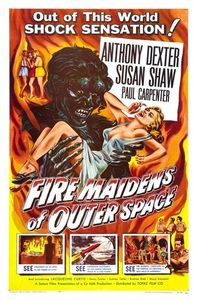
    (On TV, August 2021) I’ve seen at least one mention of Fire Maidens from Outer Space as being the worst movie even made and that’s nonsense — yes, it’s terrible and cheap and ludicrous and exploitative by 1950s standards. A made-in-Britain science fiction adventure in which astronauts going to Jupiter discover an Earth-like planet (as in: we’re filming in our backyard) inhabited by seven lusty maidens, one mad scientist and a monster. It’s as primitive a science fiction concept as possible. The plot threads are naïve, the dialogue banal and the special effects cribbed together from spare parts. But, as usual, hyperbole destroys everything — there are far worse films out there, whereas Fire Maidens from Outer Space does have a plot of sorts, some baffling watchability and some scene-to-scene momentum. One thing that I found surprisingly charming about the result (thus giving it at least one star of interest) is how, by today’s standards, writer-director-producer Cy Roth quaintly dances around its exploitative premise. The girls are cute, curvy and in short skirts, but the film (coming from the prudish 1950s) winks and nudges at its audience (a planet with five men and sixteen women, eh, eh, eeeh) in ways that seem almost wholesome by twenty-first century standards. At 78 minutes, it barely outstays its welcome. You can (and should!) compare it to near-contemporary Queen of Outer Space, then skip over to Barbarella and other 1960s naughty space movies. In the so-bad-it’s-good realm, Fire Maidens from Outer Space is… there.

  • The Adventures of Huckleberry Finn (1960)

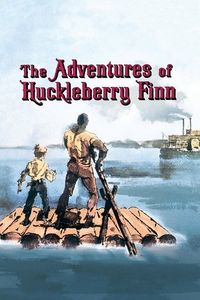
    The Adventures of Huckleberry Finn (1960)

    (On Cable TV, August 2021) I tried staying interested in The Adventures of Huckleberry Finn. I did. But as much as the original novel has become a respectable part of American culture (being old and a childhood favourite of previous generations), this adaptation is aiming to be as unremarkable as possible. It doesn’t do anything wrong: the period atmosphere is credibly re-created, and the film’s lavish colour cinematography clearly marks it as a prestige project for MGM and director Michael Curtiz. The Mississippi River remains an imposing presence, and the actors help tie the episodic nature of the novel into a coherent whole. On the other hand, well, the film feels perhaps more educational than entertaining — it’s there, it’s meant to translate the novel to the screen and it does exactly that. Enthusiasm is not necessarily supplied. The Adventures of Huckleberry Finn could have been worse, of course, but it’s not as if the result is gripping.

  • These Wilder Years (1956)

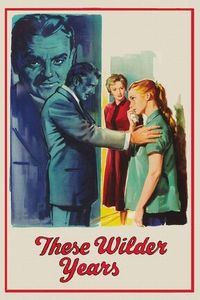
    These Wilder Years (1956)

    (On Cable TV, August 2021) It’s curious that, considering their lengthy careers spanning roughly the same decades, there is only one screen pairing of James Cagney and Barbara Stanwyck—These Wilder Years, a straightforward drama that barely makes use of their most distinctive skills. Oh, it’s not bad and it does start with a strong scene, as a steel magnate advises his board of directors that he’s taking an indefinite leave of absence and will go as far as the moon if he needs to. The mystery is soon cleared up — having given up his son for adoption twenty years earlier, he’s out to find him and reunite. This being the 1950s, there are considerable obstacles in his way, most of them incarnated by a steely orphanage administrator (Stanwyck) who will simply not allow him to bribe, bully or force his way in their files. A romance develops, although that’s really not the end of the story. As a drama, it’s surprisingly compelling — the plotting is straightforward, and there are a few intriguing last-film twists. Cagney sells the remorseful business tycoon characters, and Stanwyck is in fine determined form in a late-career role. Still, there isn’t much here to make their roles suited to their screen persona — it’s a script that could have been handed to any pair of actors without too much trouble. Still, it is fun to see those screen veterans in antagonistic/romantic roles, prodding at each other in ways that add depth to the words on the page. Make no mistake: These Wilder Years would be almost instantly forgettable if it wasn’t for those two leads. But given that it does offer the sight of Cagney and Stanwyck sharing the screen, I’m glad it exists.

  • Rats—Notte di terrore [Rats: Night of Terror] (1984)

    Rats—Notte di terrore [Rats: Night of Terror] (1984)

    (In French, On Cable TV, August 2021) Often mentioned as one of those so-bad-it’s-good cult favourites, Rats: Night of Terror is actually more fun than expected, albeit for narrow definitions of “fun.”  The film’s opening half-minute slams you in the face with paragraphs of narrated exposition boiling down to: this is a post-apocalyptic film. The following ten minutes are dedicated to introducing (in a fuzzy sense) the rather unlikable characters of the ensemble film: stylishly-dressed bikers stumbling into a bar that has some food and basement hydroponics, and then fighting off an unusually large number of flesh-eating rats. Like: bucketful of rats thrown at the actors, many of them (the actors) screaming senselessly. None of this makes sense, from the redundant exposition to the actress getting eaten to death by a single rat in a sleeping bag. It’s certainly not good, but it can be entertaining in wacky ways: watch the ineptness of writer-director Bruno Mattei, laugh at the absurd death scenes, leer at the pretty actresses (no, I can’t pick between Geretta Geretta or Moune Duvivier either), scream at the lousy seen-it-from-a-mile ending, gasp at the awfulness of the special effects or shrug at the endless pacing issues of a film that barely makes it to 97 minutes. Here’s the thing: it may not be good, but it is rather fun, and that’s not always obvious when discussing bad movies — too bad and no one’s having fun. Rats: Night of Terror has just enough to it (oh boy, that “computer” scene) to be entertaining.

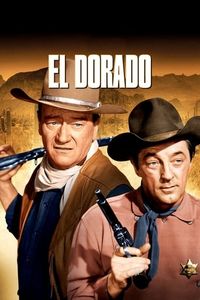
  • El Dorado (1966)

    (YouTube Streaming, August 2021) When watching classic western films, I often have the impression of déjà vu, and that’s even more pronounced for El Dorado considering that it seems built from many of the same elements as director Howard Hawks’ previous Rio Bravo. Once again, John Wayne is presented as a hero, as he assembles a group of helpers to help fend off the film’s antagonist. It’s an interesting crew, though: In-between the protagonist (Wayne) being subject to bouts of paralysis due to an injury, he’s joined by an alcoholic sheriff played by Robert Mitchum, an unbelievably young James Caan as a naïve gunslinger and Arthur Hunnicutt playing one of his usually grizzled mentors. That four-man crew is the focus of the various action sequences, occasionally enlivened by a good supporting cast — perhaps the most remarkable being Michele Carey’s eye-catching turn as a vengeful daughter. It’s all conventional, sure, but rather well-executed. If it takes too long for the crew to get together, El Dorado really starts working once they are, and there are a few modest twists on the formula to keep things entertaining. I’m not that enthusiastic about the result, but it steadily gets better as it goes on, and does manage to wrap everything up in a satisfying fashion. I doubt I’ll remember much more than Carey within a few days, though.

  • Love, Romance & Chocolate (2019)

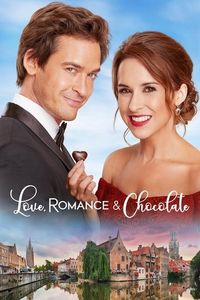
    Love, Romance & Chocolate (2019)

    (On Cable TV, August 2021) Straight from the Hallmark romantic movie factory comes Love, Romance & Chocolate, with an utterly unremarkable narrative that manages to benefit from being set in Bruges and focusing on generous helping of chocolate. Lacey Chabert stars as an accountant with serious kitchen skills travelling to Belgium and getting involved with a chocolatier as he aims to win a contest organized by Belgian royalty. The romantic plot is, as usual, completely formulaic — Hallmark wouldn’t have it otherwise. But as it happens on their better movies, the setting and details do manage to make it more compelling. Generous depictions of chocolate-making pepper the entire film, clearly aiming for a chocoholic audience. The added appeal of the Belgian surroundings also does help — for once, we’re out of the typical Midwestern small-town setting and that works to Love, Romance & Chocolate. No, it’s not great art: the blandness of the dialogue and the familiarity of the plot limit the film’s effectiveness. But within these restrictions, it does manage to distinguish itself better than many of its Hallmark equivalents.

  • Scared Stiff (1987)

    Scared Stiff (1987)

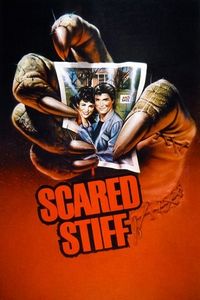
    (In French, On Cable TV, August 2021) The more I learn about movie history, the more I develop mental shorthands—and one of those is the feeling I get once I combine “decade+genre.” For instance, 1930s comedy is far more fun than 1970s drama, but not all combinations are equally significant. One of the most potent ones is 1980s horror — once you strip away the slashers from the corpus, that decade’s horror has a very definite flavour, and they quite literally don’t make them like that any more. Scared Stiff, in most ways, is an utterly ordinary product of a genre that was reborn during the first decade of mass-market home video: It uses a generic premise (a small family moves into a house possessed by the spirit of its evil previous owner) as an excuse to throw in as many weird, gross or cliché sequences it can fit. Little of it makes sense even before the film tries a cheap, “was she crazy after all?” twist — in-between the racist slave-owner ancestor, ancient artifacts, computer graphics escaping in the real, numerous gore effects and such, the film goes wonderfully crazy in its home stretch. The production values are low, but not so low as to avoid numerous special effects and zigzagging events. (There’s even a car crash, albeit not a very well edited one.)  Yes, the result is a mess and not always an enjoyable one — it takes a long time for all the stops to be pulled. But in a way very characteristic of 1980s horror, Scared Stiff can be fun to watch, not for its horrific potential but for writer-director Richard Friedman just having fun with his budget and seeing what he could pull off during the shoot. That’s not quite a recommendation, but you already know if that’s the kind of thing you like.

  • Bridge to Terabithia (2007)

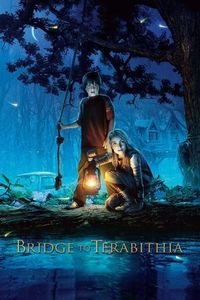
    (Disney Streaming, August 2021) There’s this annoying sub-strain of YA fantasy that merely plays with fantastic genre elements without committing to them. The approach is usually that the fantastical elements are meant to spring from the young protagonist’s mind, often to help deal with trauma. Such movies are not fantasy in the purest sense — they’re psychological dramas with genre decorations, and they usually end up disappointing genre fans who just want the filmmaker to commit. Bridge to Terabithia predates the recent spate of such examples (A Monster Calls, etc.) and is based on a book by Katherine Paterson that’s quite straightforward about not being genre fantasy. But seen cold, little of that matters: it’s about a boy and a girl, both misfits, coping with their alienation with a folie à deux of a fantastic land within reach. Director Gábor Csupó is not all that bad in portraying their awful circumstances, but then the film gets more and more arbitrary in its third act, killing off a character out of plotting necessity and then going for a wholly unconvincing grieving conclusion, followed by another half-hearted folie à deux meant to make us feel better about the whole thing. It’s… all a bit disappointing, as even the excursions to fantasyland are handled with so much restraint that we don’t care. Maybe Bridge to Terabithia plays better to a younger crowd — I just had the impression that I’d seen it all before, and better.

  • Kenny aka The Kid Brother (1987)

    Kenny aka The Kid Brother (1987)

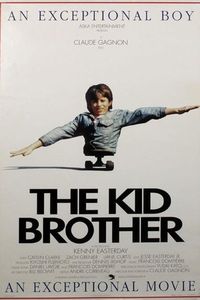
    (In French, On Cable TV, August 2021) Coming from a French-Canadian background, it always amazes me when a big movie from my childhood ends up being almost unknown to the rest of the world. I should know better, of course, but discovering that 1987’s Kenny, a staple of French-Canadian culture in the late 1980s, is practically unknown elsewhere is still a surprise. Of course, there are a few reasons why the film would have left such a mark. As a French-Canadian co-production with a very colloquial dub, it was ideally suited for CanCon-friendly reruns. But we’re really dancing around the film’s main claim to fame here, and that’s featuring the young Kenny Easterday in a semi-autobiographical role as a boy without a lower body. Getting around on his hands, his skateboard or the kindness of his family and friends (riding in the front basket of his brother’s bike, for instance), he was a striking case of a disabled person showcased in a film without special effects or camera tricks. Strong stuff for a grade-school boy such as myself living in an ordinary small town! Watching the film again much later, it did strike me, midway through the film, how quickly Kenny’s condition takes a back seat to the film’s family drama. Cleverly using the plot device of a TV crew making a documentary to answer basic questions about its protagonist and air out some of the obvious gawking, Kenny then moves to more heartfelt domestic drama, and it rather works at being more than just a look-at-that show. The working-class suburbs of Pittsburgh are very effectively used, and French-Canadian writer-director Claude Gagnon brings a middle-class sensibility to the way the characters are portrayed. It’s not a great movie, but it’s a decent one despite using non-actors (Kenny and his real-life brother) and a very gritty style. Revisiting the film also led me to the end of the real-world story as well: Kenny Easterday died in 2016 of complications related to his condition at the respectable age of 42, and one of his most detailed obituaries remains one from… French-Canadian media.

  • Il gattopardo [The Leopard] (1963)

    Il gattopardo [The Leopard] (1963)

    (YouTube Streaming, August 2021) There’s a fun blend of international elements in The Leopard, being an Italian film from writer-director Luchino Visconti, with Claudia Cardinale, American Burt Lancaster and French Alain Delon in the starring roles. The plot takes us deep in Italian history, as a late-19th century Italian prince contemplates the way the world is changing (a nearby war doesn’t help) and wanders forlornly around a palace. That’s roughly all there is to the point of the film — the rest is window dressing, albeit technically successful window-dressing, as the film really shows its historical recreation budget. It’s sort-of-fun to see Lancaster with impressive facial hair, going up against both Delon and Cardinale — three actors not normally associated with each other. The much-ballyhooed ballroom sequence is the film’s finest moment. On the other hand, it’s a long sit at more than two hours, seemingly even longer considering the slow pacing of the thing and the interiority of the plot. I can admire that intention, but I can’t say that the execution of The Leopard is all that entertaining.

  • De Palma (2015)

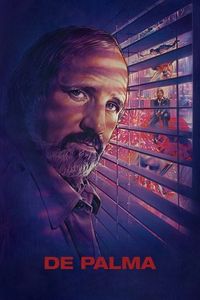
    (Tubi Streaming, August 2021) The standard mode for documentary movies about directors is hagiography (considering the effort, time and clearances required for a documentary, no one is going to go ahead with a critical look at someone who may still be influential) but De Palma is at least honest about it. It’s really a two-hour-long speech from writer-director Brian de Palma, interview footage interspaced with relevant footage of his films as he chronologically goes through his filmography, from film student days to his post-Hollywood European phase. There’s a bit of autobiographical material to kick things off and some concluding thoughts on his career, but considering that the now-80-year-old de Palma has only made one film since the documentary and isn’t likely to make many more, this is about as close as we’ll get to a definitive self-assessment. Despite narrating all the material, De Palma can be surprisingly dispassionate in the way he assesses his films — one of his running themes is how many compromises one must make by working within the Hollywood system. (As he observes astutely, what critics don’t get is that most directors don’t get to plan their careers: they’re working on this or that at the whim of others with money.)  The film does come with a few warnings. One for violence, obviously — you can’t talk de Palma without showing his films, and his films are largely in the thriller genre. But there’s also a contextual warning: This film makes very little effort to contextualize de Palma or his films. If you’re expecting plot summaries and a cool academic take on the films, this isn’t for you: this is de Palma reflecting on his own work, and what’s unfortunate is that with a thirty-item slate in a 107-minute film, we don’t always have time for more than glancing anecdotes… especially for his lesser-known or off-brand efforts. Still, what’s in there is interesting: his filmography has highs and lows, touching upon a good variety of stars, producers or critical reactions. It’s an easy film to watch if you’re moderately aware of his biggest hits. I’m missing a handful of his films since Carrie, plus his pre-Sisters titles, but this is the kind of film that makes me want to seek them all out. It does help that I consider de Palma to be an interesting director. His level of violence is excessive, his themes can be repetitive and his wilder ideas don’t always cohere, but his visual style is often amazing, and on his best titles he’s clearly going for broke, always pushing how hard or how far he can go. That’s much, much more than many of his contemporaries can say and at the end of his career (as we seem to be now), there’s a wistful sense that even a thirty-title filmography isn’t quite enough — we could have had more had a few things turned out differently. Again, I’m not sure we can say that about many other directors of his time. There’s a particular flavour and appeal to a typical de Palma film, and this documentary does much to try to explain what it is. One notes that the self-effacing director behind the film is none other than independent darling director colleague Noah Baumbach, and there’s some fun in trying to make links between De Palma and While We’re Young.
  • Mayday (2019)

    Mayday (2019)

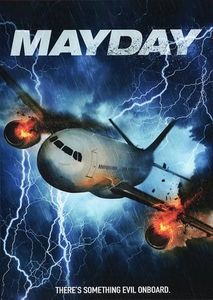
    (On Cable TV, August 2021) It takes maybe thirty seconds to understand that Mayday is a cheap, cheap film made on a tiny budget with subpar talent. There’s something immediately off-putting in the static camera movements, indifferent acting, tasteless writing and substandard production values. The only thing that helps is the mystery, once it gets started almost fifteen minutes in. We’re in a plane going from Los Angeles to London, and suddenly passengers vanish into thin air. What could possibly be the cause of this is the question that preoccupies our protagonist, an air marshal rather decently played by Michael Pare. If you’re intrigued, good, because that’s pretty much all that Mayday has going for it, especially as it develops its plot into something increasingly unsatisfying. Helped by a mysterious brunette who never seems to lose her cool (perhaps because she’s not a good actress, perhaps because of Botox), our protagonist discovers a mysterious magic tome. (It’s in old languages, but air marshal training apparently prepared him to read it.)  Then the plot leaps off the deep end in presenting an out-of-control demon taking people away (where?) for… reasons. The internal mythology presented in the film isn’t even consistent on at least two levels, and a dismayingly down-to-earth ending makes a mockery of whatever came before it. But don’t worry, because Mayday sabotages itself well before the underwhelming ending and its unconvincing CGI: it’s badly plotted, dumbly conceived and ineptly executed. The dialogue is terrible, the characters don’t have consistent motivations and it’s so badly handled that any working hypothesis viewers may have regarding what’s going on is guaranteed to be better than what actually happens later in the film. I still can’t quite square the purpose of it all, or the role played by the brunette character. There are tons of missed opportunities left on the table, and it’s a good thing that Pare is an old hand at saving bargain-bin movies like these because he’s often the least objectionable thing on-screen. Mayday does have a bit of that bad-movie ridiculousness about it — it’s terrible in a mildly entertaining way (wait until you get a longer glimpse at the demon!), and you can see opportunities that a better film would have taken. I’m not necessarily against this kind of low-budget thriller at all: I can recall a few other films using the confines of an airplane as an effective way to make good use of a tiny budget. But Mayday simply fumbles the elements at its disposal, or simply doesn’t want to do the work to get to the next level up.

  • Frosty the Snowman (1969)

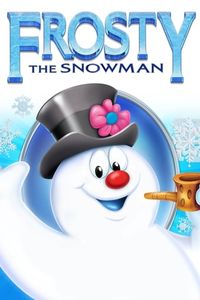
    (YouTube Streaming, August 2021) I’m not sure I had ever seen Frosty the Snowman before — although I can certainly recognize the song and be amazed that it’s Jimmy Durante acting both as the film’s narrator and its lead singer. Made for TV, the animation style is simplistic and cheap… but it’s based on some very cute designs, which have certainly helped the result hold up even today. The story is an agreeable piece of nonsense mixing magic, fantasy and comedy — it’s not much, but it works. The Rankin/Bass pair responsible for putting together Frosty the Snowman had a long career producing holiday specials for TV, but few of them have the enduring popularity of this one. No wonder it still pops up every holiday season.

  • Romeo and Juliet (1968)

    Romeo and Juliet (1968)

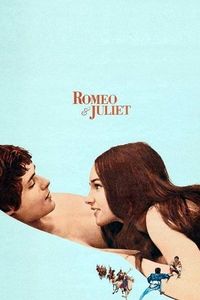
    (Second Viewing, YouTube Streaming, August 2021) I last saw Franco Zeffirelli’s Romeo and Juliet in high school in the mid-1990s, and by that, I mean in high school: it was a teacher’s best bet for teaching the Shakespeare play to a bunch of overwhelmingly Francophone teenagers in a mandatory English course, and it has stuck in my mind since then as a mostly educational film. A second middle-aged viewing doesn’t really change my mind: if you want a basic version of the play in film form, this is it. It blends an old play with a now-old cinematographic style to produce something that feels very much like a didactic presentation. (Lurhman’s vastly more dynamic Romeo + Juliet came didn’t even exist when I was shown the Zeffirelli version in class.)  What does play a little better is the banter between Romeo and his group of friends — shot with a more mobile camera and featuring the play’s best action sequences, it’s the only part of the film that rises above simply showing the play on-screen. Considering that my brain doesn’t cope very well with Shakespearian dialogue, I find myself both underwhelmed and yet satisfied by the Zeffirelli Romeo and Juliet: It’s exactly what it wants to be in presenting the play on-screen without wilder expressionistic takes. I almost expect it to be shown to the next generation of high-school students.

  • Caligola [Caligula] (1979)

    (YouTube Streaming, August 2021) Even in the vast universe of wild movies in cinema history, there has never been and will never be anything quite like Caligula. Produced at the end of the 1970s by pornography mogul Bob Guccione with the intention of bridging the mainstream movie world with the “porno chic” movement of the permissive decade, this is a film that has both well-known actors (Malcolm McDowell, Helen Mirren) and pornographic footage. Even knowing all about Caligula’s reputation, I still blinked whenever the X-rated material showed up on-screen, gradually pushing back the familiar limits of what we’re used to seeing on-screen: Nudity: Yes. Erect phalluses: Yes. Graphic Oral Sex: Yes. Full penetration: Yes. Ejaculation: Yes. And that’s not even getting into the far less entertaining gore and violence. But wait, because the film’s production is one for the history books as well. Offering perhaps the purest example of how movies are written thrice, we here have a script by Gore Vidal (!) meaning to explore the concept of total power leading to total corruption, being handed over to exploitation director Tinto Brass meaning to show luridly how a corrupt individual becomes even more corrupt once powerful, being handed over to producer Guccione, who shot the X-rated footage that was then added after the main actors had left the film, blending everything into a bizarre mash-up of sex, violence and some remaining satire. Caligula is fascinating, but it’s not a good film: The many hands that rewrote the film just end up producing an incoherent historical drama with jolts of hard-core sex. On the other hand, it does offer the irresistible trivia that Mirren once starred in a film with unsimulated sex — and she still to this day seems amused by it, which is appropriate considering that her character is probably the most appealing in the film. Still, it’s a surprisingly dull movie, and its length is made even worse by the way the film repeatedly stops to highlight hardcore sex with no relationship to the plot. A unique viewing experience and a wild filmmaking history don’t always end up equalling a good film. The idea that there will never be another film like Caligula is frankly more of a relief than something to mourn. Fun fact: Midway through watching Caligula, the police came knocking at my door… but the explanation (it turns out that leaving a fully-lit garage door open at 1:30 AM in my quiet neighbourhood will get the police to come knocking to ask if everything is all right) is not quite as satisfying as the fun fact itself.